
What Is a Wallet Address in Crypto? Definition and Examples

Key Takeaways
- 💳 A wallet address is a blockchain destination identifier used to receive cryptocurrency, tokens, or NFTs. It is not exactly the same thing as the cryptocurrency wallet, which can refer to software or hardware that manages keys and generates these addresses;
- 💳 Wallet addresses are network-specific. Bitcoin, Ethereum, Tron, and other blockchain networks use different address formats, and the same asset symbol, such as USDT, can exist on several networks at once;
- 💳 Public addresses are generally safe to share, but they are pseudonymous rather than anonymous. Anyone can look up visible on-chain activity connected to an address;
- 💳 Address validation can confirm format, checksum, and on-chain activity, but it cannot prove that the recipient is the intended person or platform;
- 💳 The most common wallet address mistakes come from wrong network selection, missing memo or tag fields, address reuse, and confusing a public address with a private key or seed phrase.
Disclaimer
This guide is educational and does not constitute financial, legal, or security advice. Cryptocurrency transactions are usually irreversible once confirmed on-chain. Always verify the asset, network, wallet address, memo or tag requirements, and destination platform instructions before sending funds. When in doubt, use a small test transaction first and cross-check the address on the correct block explorer.
Whether you have not the slightest idea what a crypto address even looks like or you want to learn more about why they are like that, this guide is for you. By definition, a wallet address is a destination identifier on a blockchain used to receive assets. Different networks use different address formats and deposit requirements, such as memos or tags, and this guide explains how addresses work, what common formats look like, and how to validate them before sending a transaction.
Wallet Address Definition and Purpose
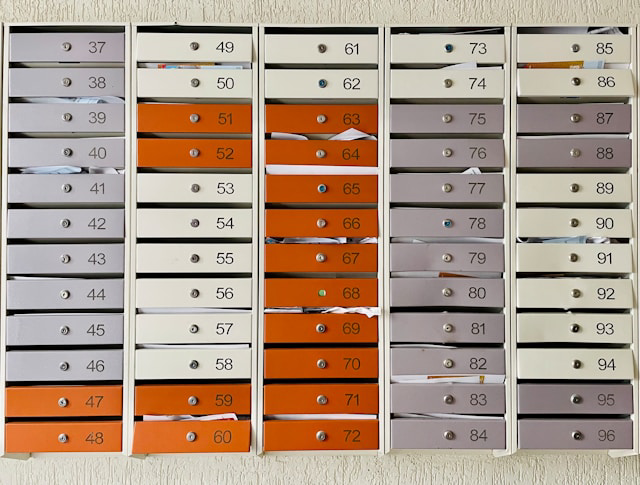
A wallet address identifies a destination, which the name implies, but on a blockchain. It is a network-specific string of characters used to receive cryptocurrency, tokens, or NFTs, and it functions strictly as an identifier — not as the wallet itself, the keys, or the account that controls those keys. In other words, by itself, it does not store anything, despite being called a “wallet”.
Blockchain Destination Identifier
In practice, a destination identifier is the value you place in the “to” or “recipient” field when a transaction is created. The network’s validation rules read that field, confirm the address is correctly formatted for that chain, and route the transfer to the matching location on the ledger. This routing function is the entire job of an address: it does not store funds by itself and does not execute logic beyond being the recorded recipient.
Importantly, an address is specific to the blockchain network it was generated for. A BTC address follows Bitcoin’s rules and cannot receive assets sent on Ethereum, and an ETH address will not work on a chain with different formatting or validation logic. Assuming any address can receive any asset is one of the most common entry-point mistakes in crypto.
Crypto and NFT Receiving Address
Receiving cryptocurrency and receiving tokens or NFTs are related but not identical processes, even when the destination address looks the same. On account-based chains like Ethereum, a single address can receive many different token types. The address itself does not decide what can arrive. What determines what a transfer actually represents is the token or NFT’s underlying smart contract, which defines its rules and behavior separately from the receiving address.
In other words, you send tokens to a wallet address, but the asset you are receiving is defined by the token address, meaning the contract identifier, on that network. Contract addresses themselves are covered later in the sections on formats and examples.
For a transfer to complete, the sender generally needs:
- The correct recipient address for the asset being sent;
- Confirmation that the address matches the correct blockchain network;
- Any additional required fields, such as a memo or tag when the destination requires one.
Wallet Address vs Crypto Wallet
There is some overlap between the terms that trips up even experienced crypto users. In different contexts, “wallet” can refer either to a blockchain address or the interface you use to manage crypto assets (an app or device). For the purposes of this guide, “wallet address” will refer exclusively to the former.
| What it is or does | What it cannot do or does not control | |
|---|---|---|
| Wallet address | A destination identifier recorded on a blockchain network; used to receive assets | Cannot sign transactions, hold private keys, or manage funds on its own |
| Crypto wallet app/device | Software or hardware that generates addresses and manages the keys tied to them | The wallet itself is not the identifier; it is the tool that produces and controls access to addresses |
Another frequent point of confusion is mistaking an “account name” or “wallet name” shown in an exchange or app interface for the actual blockchain address. That label is just a human-readable reference inside the platform or app. It is not the on-chain identifier. The real destination is the deposit or receive address displayed underneath that label, and that string is what the network actually uses to route the transfer.
How Wallet Addresses Work
Every wallet address starts with cryptography, not with a signup form. You do not register a blockchain address the way you would register a username; a wallet derives it from keys, and the network recognizes it when it appears in transaction data.
Address Generation
At a high level, address generation follows three steps:
- Key pair generation — the wallet software creates a private key and its corresponding public key;
- Address derivation — the wallet applies network-specific rules to the public key to produce an address;
- Address output — the result is the string you see as your receive address, ready to be shared.
This means a wallet can generate many addresses, in many formats even, from a single root or backup rather than being limited to one fixed identifier. An address simply becomes relevant once it appears in an on-chain transaction, typically as a recipient or output, after which it can be observed in a block explorer like any other on-chain data point.
This ability to produce multiple addresses is not arbitrary. Deterministic wallets can derive many keys and addresses from one mnemonic backup phrase, following the BIP-39 standard. That is the mechanism behind the “generate new” or “fresh address” option in most modern wallets: instead of storing dozens of separate backups, the wallet mathematically derives each new address from the same underlying seed, on demand. Put a pin into the distinction for later in this guide.
Public Address and Private Key Relationship
The relationship between a public address and a private key is intentionally one-directional. Your public address is derived from your public key, and that public key is derived from your private key, but the process cannot be reversed. Knowing an address does not give anyone a feasible path back to the private key that controls it.
What this means practically is that possessing an address, or even knowing it exists, proves nothing about ownership. Control over funds is demonstrated only when the private key holder produces a valid digital signature authorizing a transaction. The address is where funds are recorded as sitting; the signature is what proves the right to move them.
This leads to a simple but important rule: anyone can send assets to an address, but only the person holding the corresponding private key can authorize spending from it. This logic translates to ownership from the ledger point of view, and the reverse: “not your keys—not your coins.” On Bitcoin and similar networks, this asymmetry — open to receive, locked to spend — is exactly why addresses can be shared publicly.
Sending and Receiving Transactions

When you initiate a send in a wallet interface, three pieces of data usually drive the process: the recipient’s address, the amount being sent, and the network’s transaction fee, often shown as gas on some chains. Behind the scenes, the wallet constructs a transaction using these inputs, signs it with the private key associated with the sending address, and broadcasts the signed transaction to the network for validation and inclusion.
Not every network structures this data identically. On some chains, a transaction may require additional fields, such as a memo or tag, to correctly route funds to their final destination. Other chains need no such field at all.
Additionally, the underlying transaction model varies by network. Some blockchains track balances directly on accounts, while others use a UTXO-style approach, where transactions create discrete outputs that can later be spent. This is why the transaction details you see in an explorer — inputs, outputs, or balance changes — can look noticeably different depending on which network you are using.
Wallet Address Examples and Formats by Network
Wallet address formats are best understood through pattern recognition. Prefix, approximate length, and character set can help you identify which network family an address probably belongs to. This, however, does not verify that the address is correct, controlled by the intended recipient, or safe to send to.
Bitcoin Address Formats
BTC addresses come in several distinct format families, and each one can usually be identified by its leading characters.
| Format | Prefix | What it implies | Examples* |
|---|---|---|---|
| Legacy (P2PKH) | 1 | Original Bitcoin address encoding, oldest format still in use | 1A1zP1eP5QGefi2DMPTfTL5SLmv7DivfNa |
| P2SH (Pay-to-Script-Hash) | 3 | Script-based addresses, often used for multisig; newer than Legacy | 3J98t1WpEZ73CNmQviecrnyiWrnqRhWNLy |
| Bech32 (SegWit) | bc1q | Newer encoding standard, generally more efficient and cheaper on fees | bc1qar0srrr7xfkvy5l643lydnw9re59gtzzwf5mdq |
| Taproot | bc1p | Newest Bitcoin format, built on updated signature and scripting rules | bc1p5d7rjq7g6rdk2yhzks9smlaqtedr4dekq08ge8ztwac72sfr9rusxg3297 |
*These example strings are shown purely to illustrate the shape and prefix pattern of each format. They are not destinations to use for real transfers.
Do not assume a bc1q address belongs to a particular platform just because that is the format you have seen there before. A Bitcoin prefix tells you about the address type and encoding, not which exchange or app issued it. Multiple valid Bitcoin address types can exist for the very same wallet because one wallet can generate Legacy, P2SH, and Bech32 addresses side by side.
One more limitation is worth acknowledging: Bitcoin address length is not fixed. It varies by format, generally ranging from about 26 to 62 characters depending on which type you are looking at. Character count alone is a weak way to identify a Bitcoin address; the prefix is the stronger signal.
Ethereum Address Format
Ethereum addresses are built around three visible cues: they typically start with the 0x prefix, they run to a fixed length of 42 characters total, and every character after the prefix falls within the hexadecimal set, meaning 0–9 and a–f (case-sensitive). An illustrative example would look like this: 0x742d35Cc6634C0532925a3b844Bc9e7595f0bEb.

Because this format is not unique to Ethereum itself, the same address style is used across multiple EVM-compatible networks. An address that looks right for Ethereum may also be structurally valid on other EVM chains, which is why network selection remains a separate check.
It is also worth separating two values that get confused often:
- Wallet address — the recipient identifier where funds are sent;
- Token contract address — the identifier tied to the token itself, not to you as the receiver.
You can send or receive ETH and Tether USD on Ethereum and find that the destination address is the same. The funds have moved but the records of changing balances live in different places in this case.
USDT Address Formats Across Networks
USDT is not issued on a single blockchain, so there is no universal USDT address format. The correct pattern depends entirely on which network the USDT was issued on. Ethereum-based USDT uses a standard Ethereum-style address, Tron-based USDT uses Tron’s own address format, and other networks follow their own respective patterns.
Examples for comparison:
- Ethereum-based USDT: 0x742d35Cc6634C0532925a3b844Bc9e7595f0bEb
- Tron-based USDT: TXYZabc123DEF456ghi789JKLmnop0QRStu
Notice the contrast. The Ethereum-style string starts with 0x, while the Tron-style string starts with T. Same token ticker, visibly different address shapes.
Every time you make a USDT deposit, perform a three-part match: token, network, and address format all need to align. An address that looks legitimate but does not match the format expected for the network you selected is a red flag. It usually means the token, network, and address do not belong together, and that is worth stopping to check in a block explorer before sending anything.
In all three cases discussed above, even if an address is recognized as a valid format, it does not confirm the address is correctly copied, active, or belongs to your intended recipient. Even if it is correct on the blockchain level, the destination can still be wrong on other levels.
Deposit and Withdrawal Requirements
Once an address is correctly formatted, the next failure point is operational: the asset, the network, and any required secondary fields all need to line up before the transaction is confirmed. This is where many technically valid transactions become unrecoverable mistakes.
Network Selection
Before pasting any address, run through a short decision workflow instead of relying on habit:
- Identify the asset you are moving. Confirm exactly what you are sending. USDT and BTC, for example, are not interchangeable and do not share network rules.
- Identify the destination platform’s supported network or networks for that asset. Most exchanges, apps, and wallets list which networks they accept for a given token, and some support more than one.
- Match the withdrawal network to the destination’s deposit network label exactly. The network selected on the sending side must correspond precisely to the network label shown on the receiving side.
- Confirm the address format visually matches that network family. This ties back to the prefix and format patterns covered earlier.
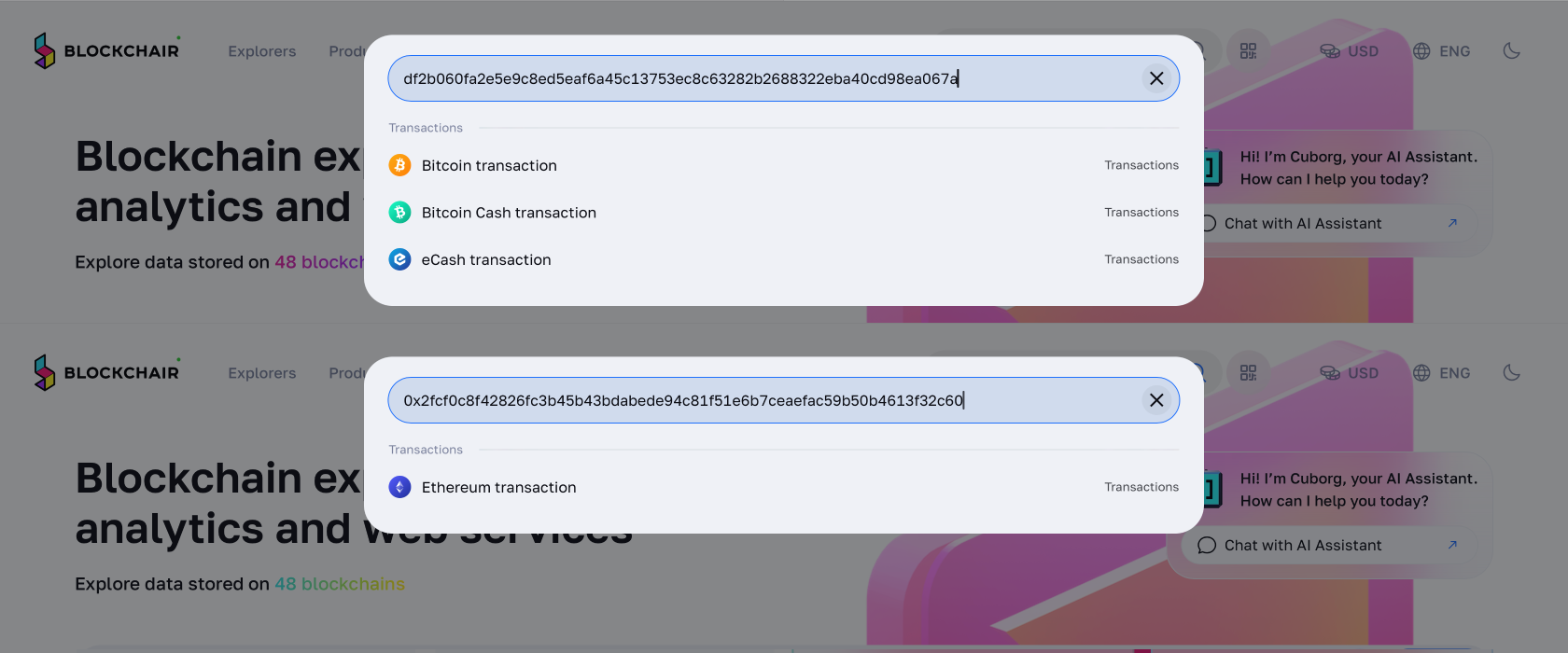
A concrete mismatch to watch for is sending USDT to an Ethereum-style 0x address when the receiving platform actually expects USDT on a Tron-style T address, or vice versa. Visually, these address formats are unmistakably different, which is exactly why the final format check matters. Even more confusing is when you send USDT on an EVM-compatible network or L2 without bridging, because in those cases, you can catch the mismatch only at the step 3.
Platforms occasionally blur two distinct concepts in their interfaces:
- Asset ticker — what you are sending, such as USDT;
- Network or chain — rails where it is being sent, such as Ethereum or Tron.
Interfaces label this distinction inconsistently. Common UI terms include “Network,” “Chain,” “Receive via,” or “Transfer network.” Selecting the correct ticker but the wrong network is one of the most common reasons deposits do not arrive, because the asset and the rail it travels on are two separate choices.
Memo and Tag Requirements
A memo or a destination tag is an extra routing identifier used by some custodial systems to credit a deposit to the correct internal account, beyond what the address alone communicates. Unlike an Ethereum-style or Bitcoin-style address, which is self-contained, certain networks and platforms rely on this additional field to know exactly which account a transaction is meant for.
Three rules apply without exception:
- If a platform shows a required memo/tag field, it must be included. Skipping it is not optional just because the address is correct.
- The address alone may not be sufficient for the transaction to be credited properly.
- The memo/tag is separate from the address and must be copied exactly into its own designated field, not appended to the address string.
Different blockchain networks label this same concept differently:
- Destination Tag (XRP or XRPL assets)
- Memo (XLM, HBAR, ATOM)
- Payment ID
- Message (TON, XEM)
- Reference
The underlying concept stays the same across all these labels: it is an additional piece of data, separate from the address, that some systems need to route a deposit correctly. For a more in-depth explanation, read our guide to destination tags and memos.
Exchange and App Deposit Addresses
Centralized exchanges and custodial apps do not all handle deposit addresses the same way. Depending on the platform’s internal architecture, a deposit address may be reused across multiple deposits, may rotate periodically, or may be generated uniquely per user, per asset, and per network combination. None of these approaches is inherently wrong. They reflect different backend account structures. However, they do mean you cannot assume an address used before will still be valid or complete for a new transaction.
Before copying deposit details from an exchange or app screen, confirm:
- The correct asset is selected;
- The correct network is selected;
- The address shown matches the current deposit screen;
- Any required memo/tag is visible and captured.

A common gotcha is pulling an address from transaction history or a previously saved address book entry rather than the live deposit screen. The network or memo/tag expectation for a new deposit may differ from what was valid previously. The mitigation is straightforward: always generate or view the address from the current “Deposit” or “Receive” screen for that specific asset and network, rather than reusing older records.
QR codes shown on these screens typically encode the same underlying address, and sometimes bundle in additional fields like a memo/tag. Needless to say, a QR code is not a substitute for verification. Scanning it does not guarantee the network or any required secondary field is correct; those still need to be checked against what the destination platform specifies.
Cash App Wallet Addresses
Cash App primarily presents Bitcoin receiving details, and depending on feature availability and region, it may also offer network-specific receive options. It does not universally support deposits across multiple blockchain networks, so do not assume broader multi-chain compatibility than what is actually shown.
Before initiating a withdrawal from another wallet or exchange into Cash App, locate Cash App’s own “Deposit” or “Receive” screen for the relevant asset and confirm the exact network label displayed there. Treat the address or QR code Cash App displays as specific to the network shown at that moment. It should not be assumed capable of receiving the same ticker if that asset exists as a token version on a different network, because receiving details tied to one network format typically are not interchangeable with another.
If you want to learn how to send Bitcoin on Cash App, read our linked article.
PayPal Wallet Addresses
PayPal operates as a custodial wallet, meaning any receive address it shows is tied to the specific assets and networks PayPal has chosen to support for that deposit flow. It is not a general-purpose address usable for anything with a matching ticker.
The operational requirement is narrow but strict: only send assets and networks that PayPal explicitly lists as supported within that deposit screen. Before sending from an external wallet or exchange, open PayPal’s interface and confirm both the asset and the network it expects, rather than assuming compatibility based on what other platforms allow.
To learn how this works the other way round, read our guide on how to send Bitcoin from PayPal.
Address Validation and Checkers
Address validation is useful, but its scope is narrower than many users assume. It can catch structural problems such as entirely incompatible or impossible strings. It cannot prove much else, be it relationship, intent, or identity behind a wallet address.
Format and Checksum Validation

Before sending anything, use a short preflight sequence rather than eyeballing an address once and moving on. Three distinct checks catch different problems.
- Network-format match: prefix, length, and character set. This confirms the address starts with the right prefix, runs to the expected length, and uses the correct character set for that network. It catches an address copied for the wrong network, an obviously truncated string, or characters outside the allowed set.
- Checksum/encoding validation, when applicable. Many address formats embed a checksum — a built-in mathematical check digit derived from the rest of the address — specifically to catch typos. Bitcoin’s Bech32 format and Ethereum’s mixed-case checksum (EIP-55) both work this way: if a single character is mistyped, the checksum calculation fails and the address is flagged as invalid before anything is broadcast. It catches accidental typos, dropped characters, or copy errors.
- Platform-required fields validation. Some destinations also require a memo or tag alongside the address. That check is separate from format and checksum validation, but it still belongs in the same send-side checklist.
Validation appears through generic signals in wallets and exchange interfaces: an “invalid address” error when the format does not match the selected network, a checksum mismatch warning when a character appears mistyped, or automatic capitalization/normalization applied to the string as you paste it.
These signals are useful, but they only work in one direction: they catch clearly broken input. The absence of an error is not proof that the recipient is correct. It simply means the string passed a structural test.
Block Explorer Lookups
A blockchain or block explorer lets you look up what, if anything, has happened on-chain at a given address. It is a useful second check after format validation passes.
You can learn to read blockchain transactions in a dedicated guide we made but to verify an address through an explorer, follow this procedure:
- Choose the explorer that matches the intended network. A Bitcoin explorer reflects Bitcoin’s ledger, and an Ethereum explorer reflects Ethereum’s. Pick the one that corresponds to the network you are actually sending on.
- Paste the address into the explorer’s search field.
- Interpret what you see. You may find transaction history, token transfer activity, and a current balance. None of this proves identity; it only shows that the address exists and has, or has not, interacted with that chain.
As expected, looking up an Ethereum-style 0x address on an explorer for an unrelated chain can return misleading or empty results. The same address format can technically appear across multiple EVM-compatible networks without meaning anything on the one you are checking.
When you land on the right explorer, keep the review focused on decision-critical cues:
- Does the address show any activity on that chain?
- Does the asset type align with what you intend to send, such as native coin activity versus token transfer activity?
- Does the destination platform require a memo or tag?
Validation Limits

Validation cannot prove:
- That the recipient controls the address. Format and checksum validation confirm the string is well-formed; they say nothing about who holds the private key behind it.
- That the address belongs to the intended person or platform. A block explorer can show that an address exists and has transaction history, but it cannot confirm that history belongs to the specific person or exchange you meant to pay.
- That a valid address is meaningful for the asset and network selected. An address can be perfectly valid on its own network while still being the wrong destination if it does not match the asset and network chosen in a withdrawal interface.
None of this is cause for alarm. It is simply the operational boundary of what validation means. These checks catch structural errors, not relationship errors between you and the recipient.
Moreover, copy-paste or clipboard substitution can still produce a string that is fully valid and checksum-correct, yet not the address you intended to send to. Because format and checksum checks evaluate the string itself, a substituted address can pass every automated check while still being wrong. The practical mitigation is simple: before sending, manually verify the first and last several characters of the pasted address against the destination you actually intended.
Wallet Address Safety and Common Mistakes
Most wallet address mistakes are not exotic. They come from confusing what is safe to share, what must never be shared, and which send-side errors can cause permanent loss.
Public Address Sharing
A wallet address exists to let others send you funds. Sharing it enables receiving; it does not enable spending from that address, because spending requires the private key, not the address itself. Currently, no technology can reverse-engineer a private key from the public wallet address.
The tradeoff to focus on is privacy, not direct security. Once an address has been shared or used publicly, anyone can plug it into a block explorer and view the on-chain activity associated with it, including balances and transaction history.
Safe to share publicly:
- Invoices or payment requests. Posting an address so a client or customer can pay you is exactly what the address is designed for.
- Donation addresses. Publishing an address for a project, stream, or cause works the same way. It only grants the ability to send, not touch your funds.
Best avoided, even though it is technically “just an address”:
- Tying the address to your legal identity. Pairing a wallet address with your real name, employer, or home address in the same public post links your on-chain activity to you personally, even though the address alone is pseudonymous.
- Reusing one address across multiple public communities. Posting the same address on a forum, a social profile, and a donation page lets anyone cross-reference those contexts and build a fuller picture of your activity.
Private Key and Seed Phrase Protection

Self-custody, or full responsibility for ownership of digital assets, is challenging enough thanks to utilizing concepts that seemingly overlap yet require utter caution in handling:
- Private key — the cryptographic secret that controls spending authority over a specific address. Whoever holds it can sign transactions and move funds.
- Seed phrase, recovery phrase, or mnemonic phrase — a human-readable backup, typically 12 or 24 words, that can regenerate all associated private keys and addresses if the device is lost.
- Wallet address — the public identifier used to receive funds. Sharing it carries no spending risk on its own.
Where these appear in real interfaces:
- A receiving screen shows an address and usually a QR code. This is the one meant to be shared.
- A backup or recovery screen displays the seed phrase. This should never be shared, screenshotted, or entered anywhere outside your own wallet’s recovery flow.
- An export or “show private key” area is rare in most non-custodial wallets and should be treated as a high-risk zone. If an interface asks you to reveal this outside of a deliberate backup action you initiated, treat it as a red flag.
Recognizing which screen you are on is the practical skill here. If you are not sure whether you are about to reveal an address or a recovery phrase, stop and check the screen’s label before proceeding.
The differences in credentials make it so you might need separate guides for securing crypto wallet and its backup. Seed phrase storage is even more important than safeguarding the wallet apps you use since it can be imported into new devices and environments; losing it can mean losing access forever.
Wrong Address Transactions
By this point in this guide, from what we have discussed, the checklist should follow as such:
- Confirm the network label in the send UI matches the destination’s network label, not just the asset name.
- Verify the address format family matches that network, using the recognition patterns covered earlier.
- Compare the first and last 4–6 characters after pasting, rather than trusting that a paste succeeded correctly.
- Send a small test transaction first when the amount and platform make it feasible, then confirm receipt before sending the remainder.
Two specific failure modes are worth naming directly:
- Sending to a valid-looking address on the wrong network. The address may be perfectly well-formed and pass every format check, yet belong to a different chain than the one selected.
- A typo that still produces an address passing basic validation. On some systems, a mistyped character can still generate a string that satisfies format or even checksum rules, while pointing to an address you never intended.
On most chains, once either of these transactions confirms, it is irreversible. There is no recipient, support desk, or protocol-level mechanism that can reliably reclaim funds sent to the wrong network or the wrong string. What is worse, users looking to recover lost or stolen cryptocurrency are more likely to be repeatedly defrauded by fake crypto recovery scam.
Address Reuse

Circling back to address reuse and pseudonymity, reusing the same receive address repeatedly is convenient, but it comes at a cost. Every transaction sent to that address becomes easier to link together because they all point to one identifier. When privacy matters, generating a fresh receive address for each transaction breaks that linkability without requiring deeper protocol knowledge.
Many non-custodial wallet apps actually rotate your receive address automatically each time you request one. This can look like you are being given a new wallet, but you are not. Every rotated address still traces back to the same underlying backup, so nothing about your recovery process changes.
The exception is custodial deposit addresses, such as those on an exchange, which often remain fixed and unavoidable by design. In that case, the platform — not you — controls how those addresses are issued and reused internally.
Conclusion
In short, a blockchain address is self-explanatory: a destination identifier. It can be called a wallet or crypto address but the gist is the same. To an untrained eye, these strings of random characters can appear chaotic but there is a rhyme and reason. Now that you know more about wallet addresses, the next step is to learn how to create a crypto wallet—and we’ve got you covered.
Keep learning with other guides from the ChangeHero blog! Let us know what else you want to learn on Telegram, X, and Facebook (and don’t forget to follow to keep learning every day).
Frequently Asked Questions
Is It Safe to Share Your Public Address?
Yes. A public address is specifically designed to be shared so others can send you funds, and doing so carries no spending risk on its own. The nuance is privacy: sharing an address also makes any associated on-chain activity visible to anyone who looks it up, since addresses are generally pseudonymous rather than anonymous.
Can I Use the Same Address for Multiple Transactions?
Yes, in many cases, but it depends on the wallet or platform. Technically, nothing prevents you from receiving multiple payments at the same address, and many custodial platforms rely on this by default. The tradeoff is privacy rather than function: reusing one address repeatedly makes it easier for anyone observing the chain to link those transactions together as belonging to the same recipient.
What Happens if I Send Cryptocurrency to the Wrong Address?
Usually, it is irreversible. Once a transaction confirms on-chain, there is no built-in mechanism to reverse or redirect it. If the address you sent to exists and is controlled by another person or a smart contract, recovering those funds typically depends entirely on that party’s willingness to cooperate — not on any technical fix.
Are Wallet Addresses Case-Sensitive?
Sometimes. Whether letter case matters depends on the specific address format and the rules it encodes, which can vary even within the same network. Because of this, the safest practice is always to copy and paste an address exactly as given rather than retyping it manually, since some formats use case as part of their built-in error-detection or encoding logic while others ignore it entirely.