
Which Crypto to Buy Today for Long-Term? Coins to Hold to 2030

Key Takeaways
- 🔘 For a long-term horizon through 2026 and beyond, Bitcoin (BTC), Ethereum (ETH), Solana (SOL), and Chainlink (LINK) stand out as core candidates because of liquidity, market depth, adoption, and clearer thesis durability.
- 🔘 “Long-term” does not mean low-risk. It means accepting volatility over multiple years while judging assets by fundamentals, tokenomics, security, development activity, and adoption.
- 🔘 A low token price is not the same thing as a cheap valuation. Market capitalization, fully diluted valuation, liquidity, and unlock schedules matter far more than the price of one unit.
- 🔘 Bitcoin and XRP serve different roles: BTC is primarily a monetary hedge and core reserve asset, while XRP is a thematic payment-rail adoption bet.
- 🔘 Portfolio construction matters as much as asset selection. Core holdings, satellites, and speculative positions should be sized according to maximum drawdown tolerance, not enthusiasm.
Disclaimer
Nothing in this guide constitutes investment advice, legal advice, or a recommendation to buy or sell any crypto asset. Cryptocurrency markets are volatile, and even fundamentally strong assets can experience deep drawdowns. Always cross-check market capitalization, circulating supply, token unlock schedules, liquidity, and on-chain metrics directly before committing capital. When in doubt, the blockchain record, exchange order books, and official project documentation should be treated as primary sources.
Best Cryptocurrencies to Buy for the Long-Term Today
Long-term crypto investing is not day trading with a slower clock. It means holding through 2026 and beyond based on durable fundamentals rather than short-term hype. In practical terms, that means asking whether an asset can survive multiple market cycles, retain liquidity under stress, and keep a credible role in the broader crypto economy.
For core holdings, four assets stand out: Bitcoin (BTC), Ethereum (ETH), Solana (SOL), and Chainlink (LINK). This is not the full investable universe, though. It is a starting point for position-building around assets with deep market capitalization, strong liquidity, and a defined reason to exist.

Before you ask which crypto to buy today for long-term, ask the harder question first: what level of volatility can you actually hold through without abandoning the plan?
Bitcoin (BTC)
Long-term thesis, 2026 horizon: Bitcoin’s durable value driver is its role as a decentralized, fixed-supply monetary asset. It competes more directly with gold and sovereign currency hedges than with Ethereum or Solana. Its network effect is the deepest in crypto: the largest holder base, the longest uninterrupted operating history, and the most battle-tested security model.
Unlike Ethereum, Solana, or Chainlink, Bitcoin’s thesis does not depend on developer activity (at least entirely) or smart-contract adoption. It depends on persistent demand for a scarce, censorship-resistant store of value. In a portfolio context, BTC typically functions as the base-layer reserve asset around which other crypto exposure is built.
Primary demand drivers:
- Long-term holders treating BTC as digital gold or inflation hedge
- Corporate treasury allocations adding BTC as a balance-sheet asset
- Spot Bitcoin ETF inflows from traditional finance investors seeking regulated exposure
- Cross-border and remittance use in regions with unstable local currencies
- Macro hedging demand during periods of currency debasement fears
Moat and differentiation:
- First-mover brand recognition that functions as a trust premium
- Decentralization at the node and miner level, making forced protocol changes extremely difficult
- Fixed 21 million supply cap with no equivalent in any top-10 competitor
- Deepest liquidity of any crypto asset, reducing slippage for large trades
Key risks or thesis breakers:
- If a quantum computing breakthrough undermines its cryptographic security before mitigations are deployed
- If miner centralization concentrates hash power dangerously
- If regulatory bodies in major economies restrict custody or ETF access
- If a superior store-of-value asset captures institutional mindshare
What to monitor quarterly:
- Spot ETF net flows
- Realized and active address growth
- Hash rate and miner concentration trends
- Long-term holder supply percentage
- Regulatory developments around custody and ETFs
Ethereum (ETH)
Long-term thesis, 2026 horizon: Ethereum’s durable value driver is its position as the leading smart-contract settlement layer. It is the base infrastructure for decentralized finance, tokenized assets, and a large share of stablecoin activity.
ETH’s value capture is directly tied to network usage. Transaction fees are paid in ETH, and a portion of those fees is burned. Staking participation also locks up supply and aligns validator incentives with network security. The result is a feedback loop where growing on-chain economic activity can tighten circulating supply rather than simply inflate it.
The thesis is less about any single upgrade and more about whether builders keep choosing Ethereum and its scaling layers as the place to deploy capital and code.
Primary demand drivers:
- DeFi protocols requiring ETH for gas and collateral
- Stablecoin issuers settling transactions on Ethereum and its rollups
- Institutions tokenizing real-world assets on Ethereum-based rails
- Stakers locking ETH to secure the network and earn yield
- NFT and gaming platforms building on Ethereum-compatible chains
Moat and differentiation:
- Largest developer ecosystem and most mature tooling in smart contracts
- Deepest liquidity across DeFi protocols, making it the default settlement venue
- Layer-2 scaling ecosystem extending its reach without fragmenting security
- First-mover advantage in programmable money and composable finance

Key risks or thesis breakers:
- If layer-2 networks siphon fee revenue away from the base layer without returning value to ETH
- If a competing smart-contract platform captures a lasting majority of new developer activity
- If staking centralization among a few large providers raises censorship concerns
- If gas fees become structurally irrelevant due to fee market changes, the burn mechanism’s deflationary effect could diminish
What to monitor quarterly:
- Network fee revenue and burn rate trends
- Total value locked across DeFi protocols
- Staking participation rate and validator distribution
- Layer-2 activity and its relationship to mainnet settlement volume
- Active developer counts and new contract deployments
Solana (SOL)
Long-term thesis, 2026 horizon: Solana’s durable value driver is its high-throughput, low-cost architecture. It is built for consumer-scale applications: payments, high-frequency trading, gaming, and real-time on-chain activity that can congest other slower chains.
The Solana thesis rests on becoming the preferred execution layer where speed and cost matter more than maximal decentralization. However, ecosystem growth and token performance are not the same thing. A thriving app ecosystem and rising user counts do not automatically translate into proportional SOL price appreciation. Token value depends on how activity flows back into demand for the token itself through fees, staking, or scarcity effects.
Primary demand drivers:
- Retail and consumer apps needing near-instant, low-fee transactions
- On-chain trading platforms and decentralized exchanges built for speed
- Crypto payment processors experimenting with Solana for settlement
- Stakers securing the network and earning yield on SOL
- Mobile and gaming projects targeting mainstream, non-crypto-native users
Moat and differentiation:
- Architecture optimized for parallel transaction processing, giving it a throughput edge over most general-purpose chains
- Strong developer mindshare for consumer-facing and high-frequency use cases
- Growing network of validators improving over time, though historically more concentrated than Bitcoin or Ethereum
- Established brand as the “fast chain” in a market where user experience increasingly matters
Key risks or thesis breakers:
- If network outages or reliability issues recur, undermining confidence in uptime for mission-critical apps
- If validator concentration raises credible decentralization concerns among institutional users
- If a competing high-throughput chain matches its performance while offering better decentralization
- If ecosystem growth continues without corresponding token-level value accrual from an investment standpoint even if usage rises
What to monitor quarterly:
- Network uptime and frequency of outages
- Transaction volume and active wallet growth
- Validator count and stake distribution
- Staking participation rate
- Developer activity and new application launches
- Divergence or correlation between ecosystem usage metrics and token price action
Chainlink (LINK)
Long-term thesis, 2026 horizon: Chainlink’s durable value driver is its role as blockchain oracle middleware. It connects smart contracts to real-world data and off-chain systems rather than competing as a base-layer settlement network.
This is fundamentally a different exposure from Bitcoin, Ethereum, or Solana. Chainlink’s success is not tied to its own chain’s usage but to how many other blockchains, protocols, and enterprises choose to route data and cross-chain messaging through its network. The thesis is a bet on Chainlink becoming the default trust layer connecting fragmented blockchain ecosystems and traditional finance.

Primary demand drivers:
- DeFi protocols requiring reliable price feeds for lending and derivatives
- Enterprises and banks piloting tokenization projects that need verified off-chain data
- Cross-chain protocols using Chainlink’s interoperability infrastructure to move assets and messages
- Insurance and prediction market platforms relying on external data triggers
- Node operators staking LINK to participate in and secure the oracle network
Moat and differentiation:
- Entrenched integration across the majority of major DeFi protocols, raising switching costs for developers
- First-mover advantage in decentralized oracle infrastructure with years of reliability data
- Expansion into cross-chain interoperability, broadening its role beyond simple price feeds
- Partnerships with traditional financial institutions exploring tokenized asset settlement
Key risks or thesis breakers:
- Dependency risk: because Chainlink’s success depends on adoption by other ecosystems and protocols rather than its own user base, if major DeFi platforms build proprietary oracle solutions in-house, the thesis weakens
- If a competing oracle network undercuts it on cost or speed for high-volume use cases
- If enterprise tokenization pilots fail to progress beyond proof-of-concept stages
- If smart contract activity broadly declines, demand for oracle services declines in tandem
What to monitor quarterly:
- Number of active integrations and partnerships
- Total value secured by Chainlink price feeds
- Cross-chain messaging volume, including CCIP adoption
- LINK staking participation among node operators
- New enterprise or institutional pilot announcements
At the end of the day, these four assets do not carry the same risk profile. Bitcoin leans toward monetary preservation. Ethereum leans toward settlement and application infrastructure. Solana leans toward high-performance execution. Chainlink leans toward middleware and interoperability. So far we have established the candidates; now we need the rubric should you set out to cover more ground.
Which Crypto Should You Choose for Long-Term Holding
Ideally, a strong long-term crypto thesis should survive more than one narrative cycle. The same framework can be applied to Bitcoin, Ethereum, Solana, Chainlink, XRP, BNB, Cardano, Avalanche, Polkadot, or earlier-stage assets.
The point of this process is not to label a coin “safe.” In crypto, that word is usually too broad. The point is to score assets through four lenses:
- Market capitalization and liquidity
- Network adoption and sector leadership
- Usage, revenue, and product demand
- Security, regulation, and development activity
Market Capitalization and Liquidity
Market capitalization tells you the size of a project at a glance. Liquidity tells you whether you can actually enter or exit a position without moving the price against yourself. These are related but nowhere near interchangeable.
How to measure:
- Order book depth at various price levels on major exchanges
- Bid–ask spreads during normal and volatile conditions
- Spot volume versus perpetuals/derivatives volume
- Quality and number of exchange venues listing the asset
- Availability of stablecoin quote pairs, especially USDT/USDC pairs
Green flags:
- Tight spreads that hold up even during volatility
- Deep order books across multiple top-tier exchanges
- Healthy spot volume relative to derivatives volume
Red flags:
- Spreads that blow out the moment volume increases
- Liquidity concentrated on a single low-quality exchange
- Volume dominated almost entirely by perpetuals with thin spot markets
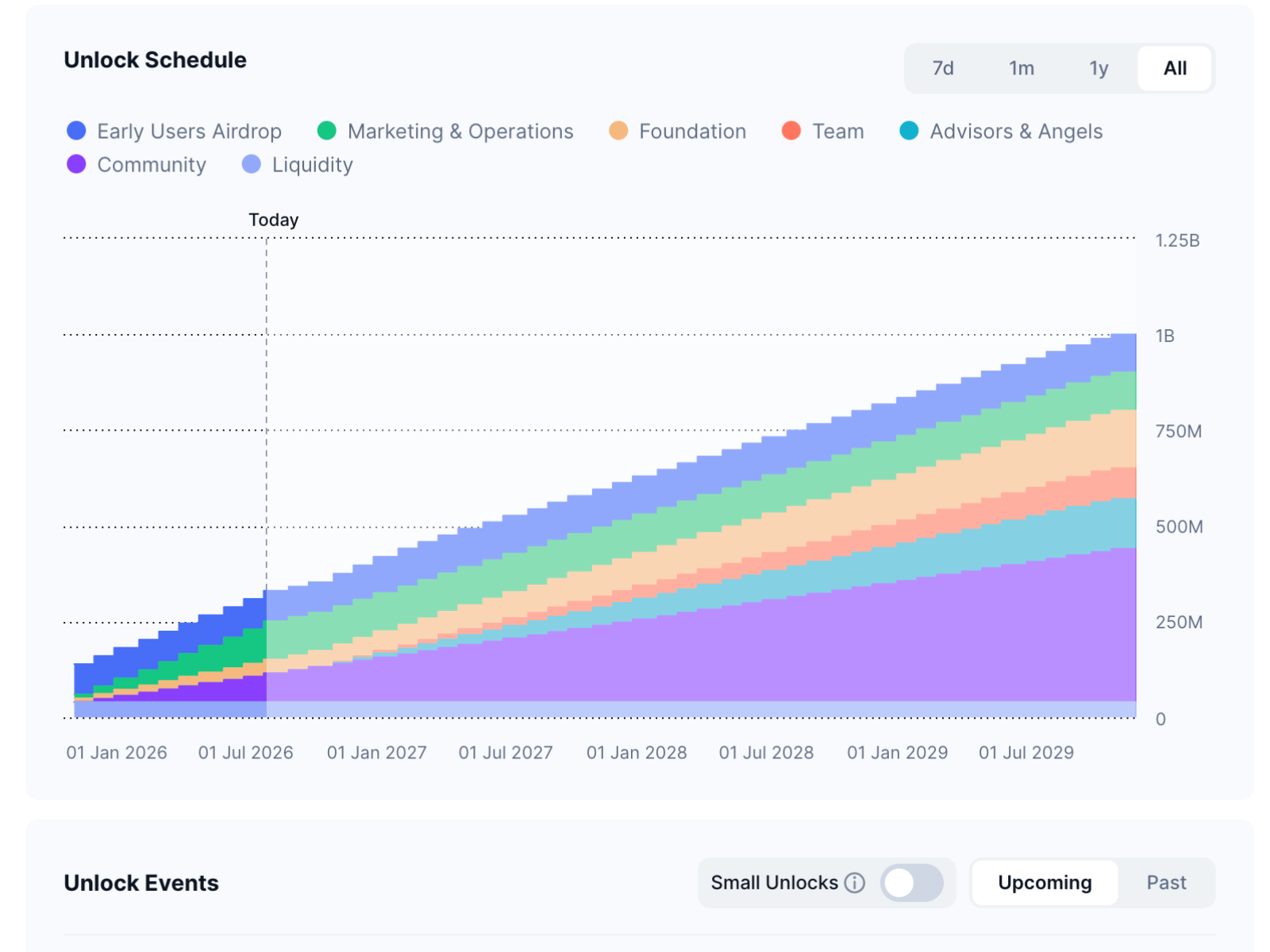
Common misconception: Fully diluted valuation (FDV) is frequently misunderstood. Market cap is circulating supply multiplied by price and reflects the current state of the project. FDV assumes every token that will ever exist is already circulating.
FDV is useful when large token unlocks are scheduled and predictable because it previews future sell pressure, among other things. It becomes less useful when emissions schedules or vesting terms are vague or subject to governance change.
A practical retail sanity check is simple: compare your intended position size against typical daily volume. If your trade would represent a meaningful percentage of one day’s volume, expect slippage and spread widening, especially during market stress.
Network Adoption and Sector Leadership
Even for the most promising projects, price action and user adoption can diverge sharply. A coin can dominate social media while its actual network usage stagnates.
How to measure:
- Active address trends across multiple quarters
- Transaction counts adjusted for spam or low-value bot activity
- Stablecoin or native-asset usage circulating within the ecosystem
- Integrations, partnerships, and the number of independent projects building on top
- Breadth of the ecosystem and how many distinct use cases rely on this network’s on-chain activity
Within a token’s category — L1, oracle, L2, DeFi primitive, RWA infrastructure — ask whether the project commands disproportionate mindshare relative to peers. Leadership is not just “biggest.” It is “hardest to route around.”
Green flags:
- On-chain activity metrics that grow steadily even without incentive campaigns
- Deepening integration density
- Developer and community engagement that persists across market cycles
Red flags:
- Adoption numbers that spike only during reward or airdrop campaigns
- Thin integration footprint despite high market capitalization
- Declining mindshare relative to newer entrants in the same category
Where present, airdrops, liquidity-mining incentives, and wash trading can temporarily inflate on-chain activity. The real test is whether usage persists after incentive programs wind down.
Usage, Revenue, and Product Demand
You might already notice a theme: “revenue” in crypto is an overloaded term. If you do not separate the definitions, you can easily overestimate how much value a token captures—the key component of what tokenomics is, not just supply dynamics.
How to measure:
- Distinguish fees paid from protocol revenue and value accrued to token holders
- Track fee totals over time, not from a single snapshot
- Check fee-payer concentration
- Examine TVL quality — sticky, organic capital versus mercenary liquidity chasing temporary yield
- Review repeat usage and user cohort retention over multiple months
Green flags:
- Fee revenue diversified across many users rather than a few whales
- Staking rewards sourced primarily from real usage fees, not purely from new token emissions
- TVL that remains stable when incentive programs taper off
Red flags:
- Revenue concentrated among a small number of fee-payers
- Staking yields subsidized almost entirely by inflationary emissions
- TVL that evaporates when liquidity mining rewards end
High usage does not automatically mean token value capture. Before assuming a busy network translates to token demand, verify the value-capture path. Does fee revenue get burned, distributed to stakers, or simply accumulate in a treasury with no mechanism connecting it back to the token?
Security, Regulation, and Development Activity
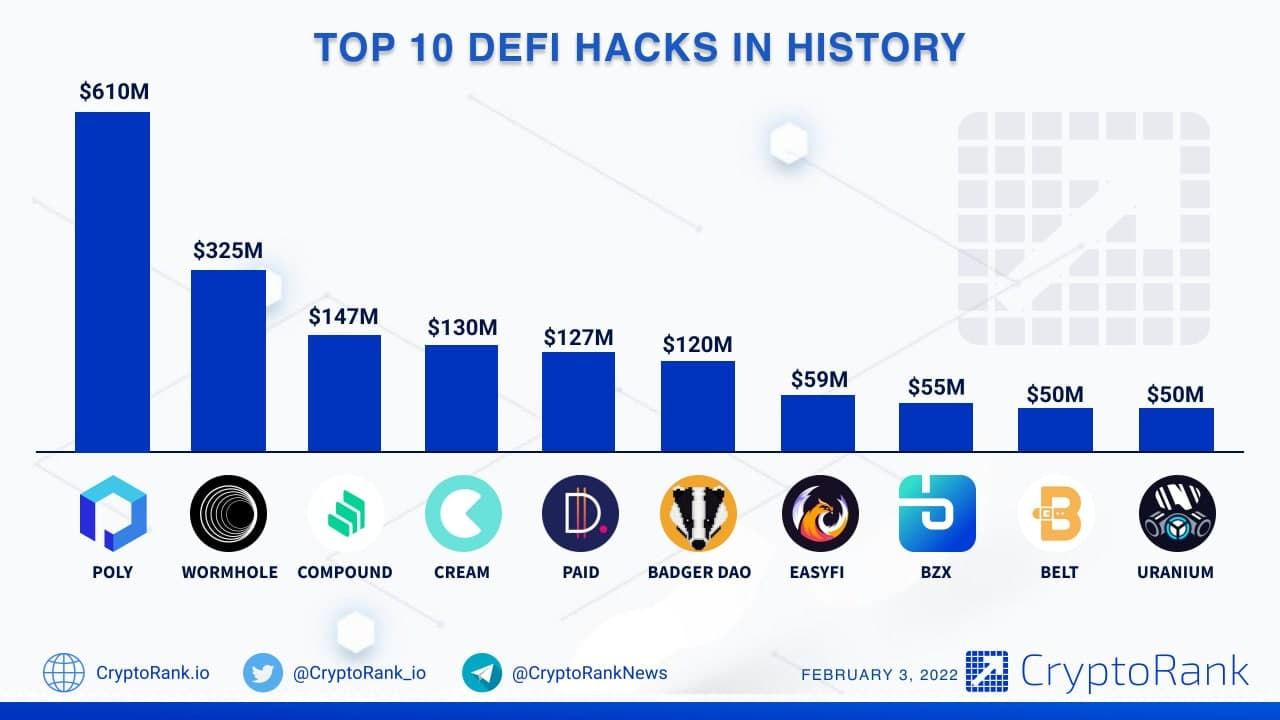
A network can have adoption, liquidity, and revenue, yet still carry structural risk. Security assumptions, regulatory exposure, and developer decline can all undermine a multi-year thesis.
Security posture:
- Consensus mechanism assumptions, including Proof-of-Work and Proof-of-Stake attack cost models
- Validator or miner concentration, including slashing risk and centralization among staking providers
- History of critical incidents, exploits, chain halts, or bridge hacks
- Audit culture and quality of third-party security reviews where relevant
Whether you are evaluating candidates we highlighted or your own picks, focus on what increases risk rather than trying to predict legal outcomes. Centralized issuer control, heavy reliance on a single company for operations, or an unclear token role all increase regulatory surface area. Regulators like the U.S. Securities and Exchange Commission have scrutinized these questions in prior enforcement actions. Decentralized operation, clear non-security utility, and broad distribution of control tend to reduce that exposure.
Development activity:
- Core repository commit trends over time
- Cadence of improvement proposals and implementation rate
- Number of independent teams contributing
- Client diversity for major networks
Green flags:
- Multiple independent teams contributing code and proposals
- Growing client diversity reducing single-point-of-failure risk
- Clean incident history or transparent post-mortems when issues occur
Red flags:
- Development activity concentrated in one team or company
- Reliance on a single client implementation for a major network
- Unclear or contested token classification creating regulatory overhang
Do not misunderstand what “developer activity” means: raw commit counts are not the same thing as meaningful progress. A high volume of trivial commits can look active while substantive protocol improvements stall. Look at what is actually shipping.
Apply this four-step framework before touching any low-priced or high-upside coin, especially if you intend to hold it long-term. Otherwise, a cheap-looking unit price can distract from weak liquidity, poor adoption, inflationary tokenomics, or no real value-capture mechanism.
Bitcoin vs XRP for Long-Term Holding
Circling back to our candidates, Bitcoin and XRP in particular are often compared because both are large, liquid crypto assets with long operating histories. However, they are clearly not the same and are not trying to solve the same problem.
| Dimension | Bitcoin (BTC) | XRP |
|---|---|---|
| Primary value proposition | Scarce, decentralized store of value and settlement network | Fast, low-cost cross-border payment and liquidity-bridging asset |
| Dependency on a single org | No controlling entity; protocol changes require broad consensus | Historical association with Ripple Labs raises centralization optics, even as the XRP Ledger itself runs independently |
| Supply policy and issuance | Fixed, predictable, disinflationary issuance schedule | Fixed total supply, with a portion held in escrow and released on a programmed schedule |
| Security model | Proof-of-work, secured by globally distributed mining | Federated/validator-based consensus, not proof-of-work |
| Typical investor role | Core reserve asset / monetary hedge | Thematic bet on payment-rail adoption |
| Key regulatory sensitivity | Mostly about custody and ETF access | Lasting uncertainty around token classification and issuer oversight |
| Liquidity profile | Deepest liquidity of any crypto asset across spot and derivatives | Solid liquidity on major venues, but thinner than BTC once you move past top pairs |
| What would change the thesis | Loss of monetary demand narrative or a superior store-of-value asset gaining institutional mindshare | Major financial institutions abandoning XRP-based corridors, or regulatory clarity resolving unfavorably |
Investment Thesis
Bitcoin is a bet on Bitcoin remaining the dominant, censorship-resistant settlement network and monetary hedge. Its worth comes from scarcity and the difficulty of changing its rules, not from any single company’s execution.
The proof-of-work security model matters here because the cost of attacking the network scales with real-world energy and hardware expenditure. That is part of why long-term holders treat Bitcoin as a base-layer reserve rather than a speculative growth position.
Thesis fit: BTC tends to anchor a portfolio as the asset you hold regardless of which narrative dominates a given cycle.
XRP is a bet on becoming a preferred bridge asset for cross-border payments and institutional settlement. In this thesis, financial institutions and payment providers route liquidity through the XRP Ledger instead of relying on slower correspondent-banking rails.
This depends less on monetary premium and more on real-world transaction volume moving through payment corridors.
Thesis fit: XRP tends to serve as a thematic, adoption-driven satellite position rather than a core reserve holding.
Risk Drivers
For BTC,
- Reliance on proof-of-work security, which can concentrate influence among large mining pools over time. The investor-visible symptom is a rising share of hash rate controlled by a handful of pools. The likely impact is a reassessment of decentralization assumptions, not necessarily an immediate price event.
- Regulatory risk around custody and spot ETF access in major economies. The investor-visible symptom is policy proposals or enforcement actions targeting regulated BTC products. The likely impact is reduced institutional on-ramp access.
For XRP,
- Dependency and centralization optics tied to Ripple Labs’ historical role in escrow management and ecosystem development. The investor-visible symptom would be Ripple scaling back ecosystem support or escrow releases outpacing organic demand. The likely impact is weakened confidence in XRP’s independence from a single corporate actor.
- Regulatory overhang from unresolved questions about XRP’s classification in various jurisdictions. This is ongoing uncertainty, not a settled legal conclusion. The investor-visible symptom is continued exchange delistings or relistings tied to jurisdiction-specific rulings. The likely impact is episodic liquidity disruption.
Liquidity and Adoption
Bitcoin’s adoption case rests on institutional and market-infrastructure depth: custody providers, regulated trading venues, and a broad holder base spanning retail wallets to corporate balance sheets.
XRP’s adoption case hinges on payment corridor and partner usage: financial institutions and payment providers actively settling through XRP-based rails, plus sustained on-ledger transaction activity that is not purely speculative trading.
Liquidity reality check:
- Compare bid-ask spreads for BTC and XRP on the same venue during both calm and volatile sessions
- Check order book depth at the price level you would actually trade, not just the top-of-book quote
- Note how much of each asset’s volume is spot versus perpetual futures
- Confirm the asset trades against multiple stablecoin pairs across more than one reputable exchange
Decision Framework
- Do you want minimal dependency on any single organization’s decisions? If yes, prioritize BTC. If you are comfortable with issuer-linked optics in exchange for a specific use case, continue.
- Is your thesis built on monetary premium or utility-driven demand? Monetary premium points toward BTC; utility-driven demand points toward XRP.
- How much regulatory uncertainty can you tolerate over a multi-year hold? Lower tolerance favors BTC. Higher tolerance for unresolved classification questions keeps XRP in play.
- Do you want core-reserve exposure or thematic satellite exposure? Core-reserve preference points to BTC. Thematic conviction in payment-rail adoption points to XRP.
- If your answers split across both assets, the outcome is Blend/Watchlist: hold a BTC core while tracking XRP adoption evidence before sizing up.
High-Upside and Low-Priced Cryptocurrencies

All of the above is not to say that assets beyond the top of the market do not belong in a long-term portfolio. A small allocation can be dedicated to “high-upside” assets with asymmetric return potential paired with a meaningfully higher probability of failure. Naturally, these are not core holdings. They are satellite bets sized for the possibility of being wrong.
Likewise, “low-priced” does not mean cheap. A token priced at fractions of a cent can still represent a fully valued large project. A token priced at hundreds of dollars can still be early. A more appropriate label to look for would be “undervalued.” What matters is market value relative to the opportunity, adoption stage, liquidity, and tokenomics, not the price tag.
Price Per Token vs Market Capitalization
As we have mentioned, market capitalization is price multiplied by circulating supply. This single equation explains why unit price is a poor signal on its own.
Consider a token trading at $0.01 with 500 billion tokens circulating. That is a $5 billion market cap, placing it alongside established mid-cap projects despite looking “cheap” on an exchange listing. Now compare a token priced at $1,000 with only 2 million tokens circulating. That is a $2 billion market cap — smaller than the first example, despite a unit price 100,000 times higher. The $0.01 token is, in market-cap terms, the more expensive asset.
A second distortion comes from circulating supply gaps. Two tokens can both trade at $2.50, but if one has 100 million tokens circulating and the other has 3 billion, their market caps are $250 million and $7.5 billion respectively. Same price tag, entirely different risk profile.
Always compare price to market cap before comparing candidates. Price alone tells you almost nothing.
Market Size and Narrative Fit
Before sizing a satellite position, test the thesis itself.
- Narrative clarity: Can you state the thesis in one sentence structured as “This wins if category demand grows by 2026”? If not, the thesis is not clear enough to size around.
- Right-to-win: What concrete mechanism gives this token a durable edge in capturing that demand? Look for distribution channels, live integrations, switching costs, or protocol dependencies. “Strong team” and “great community” are not enough.
- Narrative timing risk: What would cause this category to arrive too late, or fade before 2026 plays out? A category can be technically correct and still be a poor investment if adoption takes a decade instead of a cycle.
Run every small-cap thesis through these questions before tokenomics. If the narrative is unclear or unfalsifiable, the rest of the diligence process is already compromised.
Tokenomics and Unlock Schedules
Small-cap tokenomics need a sharper lens. The question is not only “what is the supply?” but “how does supply change between 2026 and years to come?”
Supply checklist:
- What is circulating supply today, precisely?
- What is the maximum or total supply the project can ever reach?
- What events increase circulating supply: vesting cliffs, emissions, liquidity provider rewards, staking rewards, or ecosystem incentives?
- Is the unlock schedule publicly documented and fixed, or subject to governance votes?

Sell-pressure pathways to map:
- Team and early-investor vesting, especially large cliff unlocks
- Ecosystem incentive emissions that may overwhelm thin order books
- Treasury or foundation sales, especially if timing and venue are unclear
FDV matters even more for small-cap tokens because concentrated unlock windows can dominate price action. This simply does not happen in the same way with large-cap assets that already have most supply circulating.
The practical instruction is straightforward: locate the token unlock schedule and compare each unlock size against expected liquidity and upcoming catalysts. Concentrated unlock windows are where sell pressure is most likely to overwhelm demand.
On-Chain Traction and Developer Activity
“Adoption” is often touted as a magic pill but not all traction signals carry equal weight. Treating them as interchangeable is one of the most common mistakes in small-cap evaluation.
Tier 1 — Repeat usage proxies: Sustained active addresses and transaction counts over several consecutive months. This is the strongest signal because it is harder to fake over time.
Tier 2 — Economic activity proxies: Fees paid, decentralized exchange volume, and TVL. Sanity-check all three against incentive-driven behavior.
Tier 3 — Builder signals: Developer activity is useful but weak as a standalone signal. Raw commit counts can be gamed with trivial or automated commits. Prefer evidence of multiple independent repositories, multiple teams, and consistent releases.
The most useful filter across all three tiers is persistence after incentives. Does usage, volume, or developer output hold up once a reward program or promotional campaign ends? Activity that only exists while incentives are flowing is not traction but simply rented demand.
Survivability Signals and Red Flags
Survivability signals:
- Transparent treasury runway and spending disclosures
- Liquidity diversified across multiple reputable exchange venues
- A clear token utility and value-capture path, not just “governance”
- Visible trajectory toward decentralization
- Evidence of incident response maturity
- Real users transacting for non-speculative reasons
- Multiple independent teams or contributors building on the protocol
Red flags:
- Extreme holder concentration among a small number of wallets
- Vague or undisclosed unlock schedule details
- Dependency on a single market maker or exchange for most liquidity
- Frequent narrative pivots
- Demand that only appears alongside incentive programs or liquidity mining
- Unexplained changes to circulating supply
- Governance structures where a small insider group can override community votes
- Repeated delays or vague communication around roadmap milestones
Long-Term Crypto Narratives
A narrative is not usually represented by one coin. It is a whole demand driver category — a thesis about which activities will pull capital and usage into crypto over the next several years.
Treating narratives this way helps you source candidates without being captured by one project’s marketing. The four ideas below are not an exhaustive list, but they are durable enough to organize research even past 2026.
AI Tokens
AI crypto tokens in 2026 are a bet that AI workloads will increasingly route payment, coordination, or verification through crypto rails instead of traditional cloud billing.
The thesis is not just “AI is big.” Plenty of non-crypto companies can capture AI growth. The crypto-specific thesis is that decentralized compute marketplaces, verifiable inference, data provenance, or agent-to-agent payments become structurally necessary.

Where demand could come from:
- Compute marketplaces matching idle GPU supply with model training or inference demand
- Developers paying for decentralized storage or bandwidth tied to AI datasets
- Autonomous agents needing settlement rails for API calls, data, or compute
- Enterprises seeking tamper-resistant logs for model outputs or training provenance
- Data labeling or data-licensing marketplaces using on-chain payment and attribution
- Researchers or startups priced out of centralized cloud compute
Token value-capture paths:
- Fees paid in the token for compute, storage, or inference requests
- Staking requirements for node operators providing compute or data services
- Token-denominated collateral or bonding requirements
- Governance rights over parameters that materially affect fee distribution
Keep in mind: many “AI tokens” are governance-only or speculative wrappers with no mechanism tying AI usage back to token demand. Confirm the link is there before just assuming it does.
Key risks and failure modes:
- Centralized AI providers out-compete decentralized alternatives on price and reliability
- “AI” branding gets attached to tokens with no real compute, data, or model infrastructure
- AI-related regulation spills over into crypto-AI projects
- Usage remains dominated by speculative trading or airdrop farming
- Token emissions dilute holders faster than usage grows
- The narrow developer talent pool slows real infrastructure progress
Reality check:
- Can you point to a specific compute, data, or inference job that settles through the token?
- Is there a verifiable count of active compute providers or nodes?
- Does fee or usage volume move independently of social-media AI hype?
- Would the protocol still have a reason to exist if you removed the word “AI” from its marketing?
What to monitor quarterly:
- Active compute/data providers
- Compute or inference jobs settled on-chain
- Fee revenue attributable to AI-related activity
- Developer tooling adoption
- Token emission rate relative to verified usage growth
- Partnerships or integrations with actual AI labs or compute providers
Layer 2 Networks
As of 2026, Layer 2 networks are a bet that everyday transaction volume will move to scaling layers while settlement and security remain anchored to a base layer like Ethereum.
There are two separate bets here. The first is scaling demand: users and applications migrate to L2s because base-layer fees or throughput limits make direct usage impractical. The second is token demand: the L2’s own token captures value through ecosystem incentives, governance, or sequencer economics.
Also, a thriving L2 does not automatically mean a thriving L2 token.
Where demand could come from:
- Retail users priced out of base-layer gas fees
- DeFi protocols deploying on L2s for cheaper execution
- Gaming and consumer applications requiring low-cost transactions
- Enterprises piloting tokenized asset settlement on cheaper rails
- Cross-L2 bridging and liquidity aggregation
- Developers choosing ecosystems for grants, tooling, or community support
Token value-capture paths:
- Sequencer fee revenue shared with token holders or stakers
- Staking requirements tied to network security or data availability guarantees
- Governance control over fee parameters, grants, or treasury allocation
- Token-denominated gas or priority-fee mechanisms
The common mismatch is high transaction counts with weak token value capture. Many L2 tokens exist mainly for governance or incentives, with no mechanism converting usage into token demand.

Key risks and failure modes:
- Fee revenue retained by a centralized sequencer operator
- Fragmentation across too many competing L2s
- Base-layer upgrades reducing the L2 cost advantage
- Centralized sequencers creating a censorship or failure risk
- Incentive-driven usage inflating transaction counts
- Bridge exploits or failures
What links usage to token demand:
- Does the L2 publish what percentage of sequencer or fee revenue flows to the token?
- Is there a buyback, burn, or staking yield funded by fees?
- Does transaction volume correlate with any token-level metric?
What to monitor quarterly:
- TVL and transaction volume adjusted for incentive-driven spikes
- Sequencer revenue and any distribution to token holders or stakers
- Degree of sequencer decentralization
- Bridge security track record
- Developer and application migration trends
- Fee comparison versus base-layer and competing L2s
Modular Blockchains
Modular blockchains are a bet that execution, settlement, and data availability will increasingly be separated into specialized layers instead of handled by one monolithic chain. The thesis is that specialization improves scalability and flexibility. Projects can choose best-in-class components rather than inheriting one integrated architecture.
To clarify, a monolithic chain handles execution, settlement, and data availability within one system. This simplifies security assumptions but limits specialization. A modular architecture separates those functions. Execution layers process transactions. Settlement layers provide finality and dispute resolution. Data availability layers ensure transaction data is published and retrievable. Each layer can be improved without forcing a hard fork of the entire stack.
Evaluating moats requires asking which specific layer a token secures or serves. Execution environments can be easier to fork or replace. Settlement layers can become harder to displace once ecosystems depend on their finality guarantees. Data availability layers depend heavily on cost and reliability at scale.
Where demand could come from:
- Execution-layer projects needing cheap data publication
- Rollups or appchains seeking shared settlement
- Developers launching application-specific chains
- Projects requiring high data throughput
- Enterprises exploring permissioned execution environments settling on public layers
- Cross-rollup interoperability demand
Token value-capture paths:
- Staking required to secure settlement or data availability
- Fees paid by execution layers or rollups
- Governance over parameters that affect network participation
- Auction or bidding mechanisms for data availability or settlement bandwidth
Some modular infrastructure tokens are mainly governance tokens. Thus, growth in connected execution layers does not automatically mean token value accrual.
Key risks and failure modes:
- Monolithic competitors achieve comparable scalability
- Fragmentation across competing data availability or settlement layers
- Execution layers self-host data availability
- Interoperability proves fragile or exploit-prone
- Switching costs are lower than expected
- Complexity across layers increases attack surface
What to monitor quarterly:
- Number of execution layers or rollups using the network
- Fee revenue from settlement or data availability services
- Staking participation and validator/operator concentration
- Developer tooling maturity
- Interoperability incidents and security track record
- Growth or churn in projects using the modular stack
Real-World Asset Tokens
In 2026, real-world asset tokens are a bet that traditional financial instruments will migrate on-chain for settlement speed, composability, and broader distribution.

This narrative splits into two different categories: tokenized treasuries and cash-like instruments on one side, and tokenized private credit, equities, or other less liquid assets on the other. As is the case with the original assets, the risk profiles are not the same.
Where demand could come from:
- Institutions seeking faster settlement and 24/7 liquidity for cash-equivalent holdings
- DeFi protocols wanting yield-bearing collateral backed by real-world instruments
- Asset managers reducing administrative overhead in issuance and transfer
- Cross-border investors seeking access to instruments outside local market hours
- Private credit or equity issuers seeking broader distribution
- Corporate or protocol treasuries seeking on-chain yield from tokenized government debt
Token value-capture paths:
- Fees paid for issuance, redemption, or custody
- Staking or collateral requirements for node operators
- Governance rights over approved assets or issuers
- Revenue-sharing mechanisms where protocol fees flow back to token holders
Mind that many RWA infrastructure tokens capture fees for the platform or issuer without passing value back to the token itself, for instance.
Key risks and failure modes for tokenized treasuries and cash-like instruments:
- Counterparty or issuer dependence
- Regulatory classification uncertainty
- Redemption mechanics that rely on off-chain processes
Key risks and failure modes for tokenized private credit, equities, and illiquid assets:
- Liquidity and market-hours mismatches
- Valuation opacity
- Legal enforceability of on-chain claims against off-chain assets
What to monitor quarterly:
- Total value of assets tokenized, broken out by category
- Redemption volume and any delays
- Regulatory developments specific to tokenized securities or cash-equivalents
- Issuer or custodian concentration
- Integration of tokenized RWAs as collateral within DeFi protocols
- Audit or attestation frequency confirming asset backing
Use these narratives to source candidates, then run each one through the Selection Criteria rubric and a tokenomics/unlocks check before sizing anything.
Long-Term Portfolio Construction
Asset selection is only half of building a portfolio. The other half is a process: how much to allocate, how to add capital over time, when to rebalance, and when to exit.
The core (pun not intended) distinction is simple:
- Core holdings are high-conviction, highly liquid assets that anchor the portfolio.
- Satellite and speculative positions are thematic or small-cap bets sized for asymmetric upside with a real chance of failure.
Portfolio diversification across these categories, not conviction in any single asset, is what determines whether you can hold through a full cycle.
Conservative, Balanced, and Aggressive Allocations
A practical structure uses three allocations:
- Core — highest-conviction, most liquid holdings.
- Satellites — narrative exposure tied to AI, L2s, modular chains, RWAs, and similar categories.
- Speculative — small-cap, high-upside, high-failure-risk positions.
| Profile | Core | Satellites | Speculative |
|---|---|---|---|
| Conservative | 70–85% | 10–25% | 0–5% |
| Balanced | 50–70% | 20–35% | 5–15% |
| Aggressive | 30–50% | 25–40% | 15–30% |
Conservative rationale: prioritizes capital preservation and cannot tolerate deep, prolonged drawdowns.
Balanced rationale: accepts moderate volatility for more upside exposure without abandoning a core anchor.
Aggressive rationale: accepts large, sustained drawdowns in pursuit of higher risk-adjusted return over a multi-year horizon.
Set allocations using maximum drawdown tolerance, not expected return. Crypto return projections are notoriously unreliable. Your ability to sit through a 50%, 70%, or 90% decline is easier to assess honestly.

Self-check:
- Conservative: Could you hold if your satellite fell 60%?
- Balanced: Could you hold if your speculative allocation fell 80% while your core also dropped 40%?
- Aggressive: Could you hold if the portfolio as a whole fell 70% and stayed there for over a year?
Dollar-Cost Averaging
Dollar-cost averaging (DCA) reduces timing risk by spreading purchases over time instead of committing a lump sum at one price point.
Choose a schedule based on two factors: income cadence and behavioral adherence. Buy when you are actually paid, and choose the frequency you can sustain for years.
Two useful variants:
- Fixed-amount DCA: the same dollar amount every period, regardless of price. Simple, mechanical, and easy to automate.
- Value-averaging (banded DCA): adjusting the buy amount within a predefined band based on how far price has moved from a target trajectory. More responsive, but also easier to turn into discretionary trading if rules are unclear.
DCA guardrail checklist:
- Never increase buy size specifically to “win back” recent losses
- Predefine a maximum monthly contribution
- Keep an emergency fund separate from DCA capital
- Automate the buy schedule where possible
- Review the schedule only on a fixed calendar basis, not in reaction to price swings
Rebalancing and Profit Taking
Portfolio maintenance in the long run relies on two triggers and two actions.
Triggers:
- A calendar-based check, quarterly or semiannual
- A threshold-based check when a position drifts 5–10 percentage points from target
Actions:
- Rebalance back to target by trimming the overweight allocation and adding to the underweight one
- Take profits into a predetermined destination, such as the core or a lower-risk holding
One distinction matters more than any specific percentage: rebalancing is a response to drift, while an exit is a response to an invalidated thesis. Do not conflate the two. If a thesis-breaker signal appears, that is a cue to exit altogether.
Position Sizing and Exit Rules
Position sizing should be controlled by maximum loss per position, expressed as a percentage of total portfolio value you are willing to lose if that position goes to zero.
This naturally ties sizing to a holding type. A core holding can represent a larger share because its failure probability is lower. A speculative position should be sized so that a total loss is a non-event for the overall portfolio.
Exit rules fall into three categories:
- Thesis exit: triggered by predefined thesis-breaker signals
- Risk exit: triggered when a position grows beyond its sizing cap
- Time-based review: scheduled reassessment independent of price action
To prevent over-concentration in your portfolio, cap any single non-core position at roughly 5–10% of total value. Cap combined exposure to correlated bets — for example, several AI-infrastructure tokens — at around 15–20%, even if each position stays within its own cap.
Time Horizon and Risk Tolerance
A five-question self-assessment can map you to a risk profile:
- Have you panic-sold a volatile asset at a loss before?
- How stable is your income over the next 2–3 years?
- How soon might you need this capital for non-crypto purposes?
- Could you watch a position fall 50–70% without liquidating it out of panic?
- How much time can you realistically commit to monitoring and rebalancing?
Tally your answers toward whichever profile dominates. A mixed result generally defaults to balanced as the safer starting point.
Time horizon and maintenance intensity are not the same thing. A longer horizon can justify fewer trades, but it does not excuse skipping scheduled rebalancing and monitoring. “Long-term” means fewer impulsive decisions, not fewer check-ins.
Conclusion
The question of which crypto to buy today for long-term does not have one permanent answer. It has a process.
Bitcoin, Ethereum, Solana, and Chainlink each offer a clearer long-term thesis than most of the market, but they do not play the same role. Beyond those core assets, high-upside opportunities are valid but require stricter discipline, not looser standards.
In summary, the best long-term crypto portfolio is not the one with the most exciting tickers. It is the one you can hold, monitor, rebalance, and exit according to predefined rules while the market moves through 2026 and beyond.
Frequently Asked Questions
Which crypto is best for long-term holding?
The best long-term crypto is not a single ticker. It is the asset that functions as a core holding within your portfolio — a high-conviction, liquid position you are comfortable anchoring exposure around through multiple cycles.
For one investor, that may mean Bitcoin as a store-of-value hedge. For another, it may mean Ethereum for smart-contract platform exposure. For another, it may include infrastructure like Chainlink. Validate the choice against market capitalization, liquidity, adoption, usage, security, regulation, and development activity.
Are stablecoins worth holding for the long-term?
Stablecoins can be worth holding, but for a specific purpose: managing volatility and keeping dry powder available. They are not usually long-term, return-seeking positions in their own right.
The “stable” label refers to the peg, not guaranteed purchasing-power preservation. Inflation can still erode real value even while the peg holds. Evaluating stablecoins looks more like reserve, counterparty, and redemption due diligence than growth-asset analysis.
How do Ethereum upgrades impact the market?
Ethereum upgrades affect the market by changing network mechanics: capacity, fee dynamics, staking economics, validator operations, and scalability. The announcement itself is less important than whether the upgrade produces sustained usage and value capture.
Separate short-term volatility around an upgrade from long-term signals such as fee demand, burn rate trends, developer activity, and ecosystem growth. Those are the indicators that matter for a long-term ETH thesis.
Is XRP better than Bitcoin for long-term holding?
XRP and Bitcoin fit different theses. Bitcoin is primarily a scarce, decentralized store-of-value asset. XRP is a thematic bet on cross-border payment and liquidity-bridging adoption.
If you want core reserve exposure with minimal dependency on one organization, BTC usually fits better. If you have strong conviction in payment-rail adoption and can tolerate greater regulatory and issuer-linked optics, XRP can be evaluated as a satellite position.
How should beginners approach high-upside low-priced crypto?
Start with market capitalization, not token price. Then check liquidity, FDV, unlock schedules, holder concentration, active usage, and whether the token actually captures value from the network’s activity.
A low-priced token can still be expensive. A high-priced token can still be early. The unit price is the least useful number in the analysis.