
What is Dollar-Cost Averaging (DCA)? Beginner’s Guide


Key Takeaways
- 🪙 Dollar cost averaging crypto is a systematic accumulation strategy: you invest a fixed fiat or stablecoin amount at fixed intervals instead of trying to time a single entry;
- 🪙 DCA reduces timing risk and entry-price variability, but it does not remove downside exposure, asset volatility, fees, spread, slippage, custody risk, or tax-lot complexity;
- 🪙 Bitcoin and Ethereum are usually the most practical assets for recurring buys because they have deeper liquidity, tighter spreads, and cleaner custody workflows than most altcoins;
- 🪙 DCA can underperform lump-sum investing during strong bull markets because capital is deployed gradually. Its main advantage is behavioral discipline and drawdown control, not guaranteed outperformance;
- 🪙 A successful DCA plan depends on execution details: exchange selection, order type, interval, fee drag, wallet storage, private key hygiene, and accurate tax records.
Disclaimer
Nothing in this article constitutes investment, tax, legal, or financial advice. Cryptocurrency is volatile, and dollar cost averaging does not guarantee profit or prevent losses. Tax treatment varies by jurisdiction, and readers should consult a qualified tax professional before relying on any lot identification method or reporting workflow. When in doubt, the blockchain record, your exchange statements, and your own transaction ledger are the primary sources for verifying balances, transfers, and cost basis.
Dollar cost averaging crypto in 2026 looks simple from the outside: invest the same amount at regular intervals and let volatility work through the schedule. In practice, your results are shaped by automation setup, fees and spreads, custody choices, asset selection, allocation rules, and tax-lot tracking.
The core tradeoff that this guide will address is: DCA can reduce timing risk and smooth out volatile entries, but it may underperform a lump-sum investment during sustained bull runs. You will also learn how to build the plan as an operating system rather than a slogan.
DCA Mechanics in Crypto

DCA mechanics in crypto discussed here apply most cleanly to spot accumulation, which is buying and holding actual Bitcoin, Ethereum, or another cryptocurrency as a long-term digital asset on a CEX or DEX without leverage. If you are running a recurring plan on perpetuals or other derivatives, the mechanics below do not transfer cleanly: leveraged positions involve funding rates, liquidation risk, and no actual coin custody.
Fixed Investment Amount
The fixed amount in a crypto DCA plan is best defined as a fiat amount, such as USD or EUR, or as a stablecoin amount, such as USDT or USDC, per interval. Defining it as a fixed quantity of crypto is technically possible but due to volatility, is not an investment strategy a basic guide for the wide audience can cover.
The price is the point: a fixed fiat or stablecoin budget means the number of units you receive fluctuates with it. More BTC or ETH when price falls, fewer units when price rises. Again, vice versa is possible, just not the same investment strategy at all. DCA aims to anchor the strategy against price fluctuation, not exacerbate it.
You also need to decide whether your fixed amount is pre-fee or post-fee. With a pre-fee setup, $100 order means you spend $100 gross, and the exchange deducts the fee from what actually converts into crypto. The alternative is you receive $100 worth of crypto after fees, with costs covered separately.
Most exchanges default to pre-fee deduction, so confirm the platform’s handling before assuming your recurring buy is accumulating the exact amount shown in the headline order size.
Of course, it does not have to be $100. A few more key points to this strategy besides the amounts and cadence are choosing an amount you could sustain even in a lean month, so one missed paycheck does not force you to skip a buy, leaving enough margin in the funding account so trading fees or a sudden price spike do not cause a failed or partial purchase, and if the fixed amount is large enough that you would need to liquidate other assets or dip into savings to sustain it, it is too high. In other words, use disposable income and a buffer for emergencies.
Purchase Frequency
How often you buy crypto as a part of this strategy is a mechanical lever. It does not make a plan automatically better or worse but how often the strategy interacts with the market and the exchange.
Weekly, bi-weekly, and monthly are common cadences used by crypto investors. Each interval changes three mechanics: a number of order fills and fee events, sensitivity to intraperiod volatility and failure points.
One by one, these mean that first, since most exchanges charge a fee per trade, higher frequency means more cumulative fee events, even when the total fiat invested is identical. A weekly plan generates roughly four times more individual purchase transactions than a monthly plan over the same period.
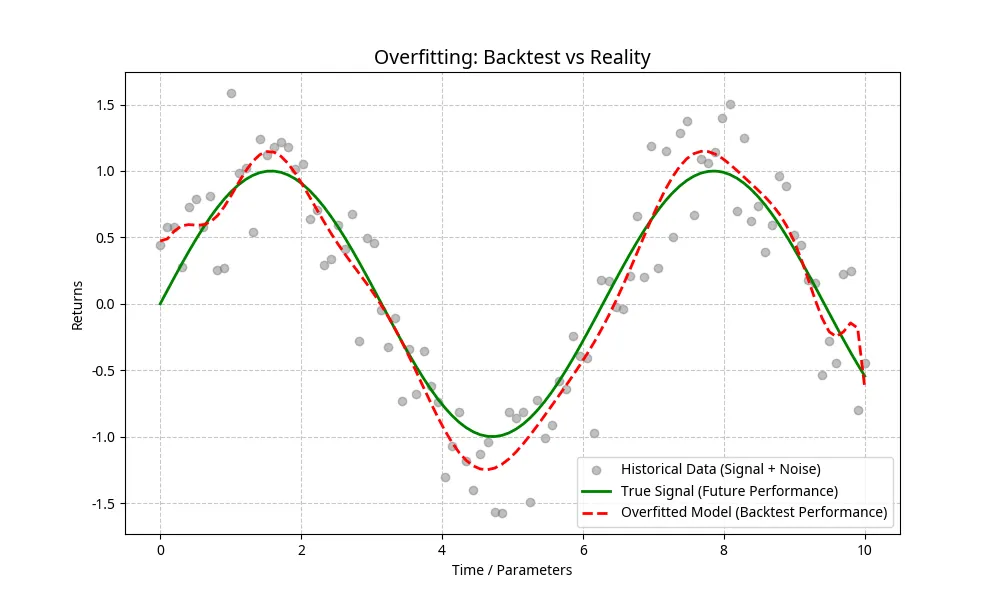
Second, more frequent buys average out short-term price swings within a shorter window. Monthly buys are exposed to a full month’s price movement in one fill, which increases the chance of buying near a local peak or trough.
And third, relatively frequent schedules like weekly or bi-weekly increase the number of chances for something to go wrong — insufficient funding balance, delayed bank settlement, or an exchange outage on the scheduled day. Monthly plans have fewer failure points, but each missed buy represents a larger gap in the accumulation schedule.
Average Cost Basis
Average cost basis is the anchor metric in any DCA plan, calculated as total fiat amount invested divided by total units acquired, not the times the purchases have been made or the price of an asset. An example should make this clear: suppose you invest $100 into Bitcoin on the first of each month for three months:
| Buy | Amount | Price per BTC | Units Bought |
| Month 1 | $100 | $40,000 | 0.00250 BTC |
| Month 2 | $100 | $30,000 | 0.00333 BTC |
| Month 3 | $100 | $50,000 | 0.00200 BTC |
- Total fiat invested: $300
- Total units acquired: 0.00783 BTC
- Average cost basis: $300 ÷ 0.00783 BTC ≈ $38,315 per BTC
Price Volatility Effects
Crypto market volatility, in this context, means how much and how quickly an asset like Bitcoin or Ethereum moves up or down over a defined period. During sharp volatile moves, the spread — the gap between buy and sell price — and slippage — the difference between the quoted price and the actual execution price — can widen, especially in lower-liquidity markets. The price you see on screen is not always the price you receive when the order fills.
Volatility can mechanically benefit a DCA plan because a fixed fiat or stablecoin amount buys more units when price drops even if when the price rises, the same amount buys less. This means the average cost basis naturally skews toward periods of lower prices, assuming there are enough down periods to accumulate meaningfully cheaper units. Translation: DCA performs best in bear markets in crypto.
However, volatility cannot rescue a DCA plan from a real downtrend. If the asset trends persistently lower across the entire investment horizon, each subsequent buy lowers the average cost basis but does not necessarily create profit. The mechanical benefit of buying dips does not offset a structural decline, when there is no recovery in sight.
Moreover, two price paths can start and end at the same price but produce different outcomes: if price drops sharply in the middle of the period and then recovers, you accumulate more units at lower prices. But if price rises first and then falls back to the same starting point, your units are weighted toward higher prices. Same start, same end — different average cost basis, different total units. This and the previous argument prove that you can still go wrong with a conservative and ‘safe’ strategy that DCA is without proper research and fundamental analysis.
DCA Setup Process

A DCA plan becomes useful only when it can run without constant intervention. That means the exchange, funding method, order type, and custody workflow must be chosen before the first full-size recurring buy is activated.
Exchange and Platform Selection
This choice determines whether your DCA plan runs smoothly or quietly loses efficiency through fees and friction. Use a simple decision rubric to choose between a centralized exchange (CEX), a decentralized exchange (DEX), or a broker-app:
- Recurring-buy support — does the platform offer native scheduled purchases, or will you need to automate manually?
- Fee model — are you paying maker/taker fees on a CEX, or absorbing a spread built into the quoted price on a broker-app or DEX aggregator?
- Liquidity for your target pair — thin liquidity widens spreads and increases slippage, especially on a DEX.
- Fiat on-ramp availability — can you fund the account directly with a bank transfer, or do you need an intermediary step?
- Regional access/KYC friction — some crypto exchange platforms restrict services or add verification delays depending on jurisdiction.
- Automatic withdrawals to self-custody — can the platform push coins to your own wallet on a schedule, or does every withdrawal require a manual step?
Before committing to a platform, compare spot pricing vs. “instant buy” pricing — instant buy often carries a hidden premium. Check the quoted spread at small order sizes, not only the advertised rate for large trades. Confirm whether recurring buys carry a fee premium over manual market orders. Verify deposit and withdrawal costs across bank transfer, ACH, wire, SEPA, and crypto network fees.
These costs compound because DCA repeats the same transaction pattern over and over.
Automated Recurring Buys
There are three practical ways to automate DCA purchases, each with a specific failure mode to guard against:
- Native recurring buy inside the exchange — the simplest option; the CEX or broker-app pulls funds and executes on schedule.
Failure mode: insufficient fiat balance on the trigger date silently skips the buy. - Bank transfer + calendar reminder + manual order — you fund the account manually and place a market or limit order yourself at a set time.
Failure mode: a paused or delayed bank transfer leaves you without funds when the reminder fires. - API/bot automation — custom scripts or third-party bots execute trades via API keys.
Failure mode: an expired or revoked API key silently halts the entire schedule unless monitored.
Regardless of the path chosen, confirm the funding source has sufficient balance ahead of each trigger, the time zone and exact trigger time. Set up price and filled-order notifications. Run one small test cycle before scaling up to the full order amount.
Order Amount and Schedule
Sizing the DCA amount is a straightforward calculation once you anchor it to three inputs: time horizon, risk tolerance, and cash-flow stability. Set a monthly budget ceiling based on what you can allocate without affecting essential expenses. Pick an interval: weekly, bi-weekly, or monthly, for example. Compute the per-order amount by dividing the monthly ceiling by the number of intervals within that month.
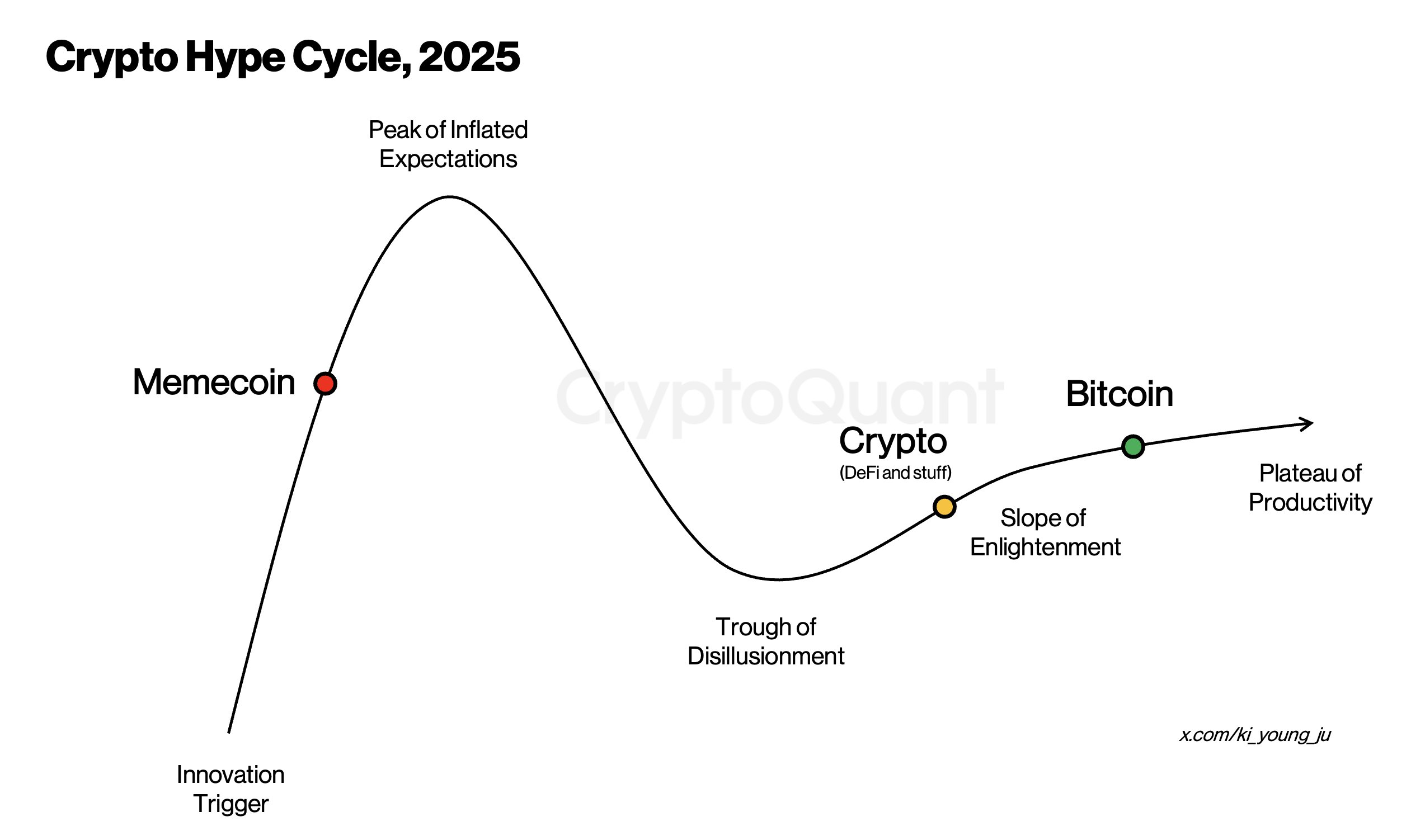
Crypto markets move in boom-bust cycles historically spanning roughly 4 years, so only invest money you can leave untouched for this amount of time or more. This buffer prevents a temporary cash-flow squeeze from forcing you to sell during a downturn, which would disrupt the entire averaging effect of the plan.
When choosing between weekly, bi-weekly, and monthly execution, focus on implementation trade-offs. Align the interval with your paycheck cadence so funding is never a bottleneck, and avoid intervals so frequent that fee drag from many small buys erodes returns. Monthly buys minimize operational complexity and fee frequency; weekly buys add more touchpoints and slightly more fee exposure in exchange for finer-grained smoothing.
Wallet Storage
Custody, or who owns and manages the digital assets, should be tied to how much operational responsibility you are willing to accept. Leaving it on exchange is suitable for short-term holdings or low amounts; lowest overhead, but you do not control the funds on the protocol level. Moving to a non-custodial wallet is for medium-term holdings; you hold the private key, which removes exchange counterparty risk but adds personal responsibility. Cold storage fits long-term, high-conviction holdings; highest security, highest overhead.
If you choose self-custody, back up your seed phrase offline, on paper or a metal backup — never digitally. Never store it as a screenshot or in cloud storage. Test the receive address with a small transfer before moving larger amounts. Periodically perform a restore test using your seed phrase on a spare device to confirm the backup actually works. For a longer version of crypto wallet security best practices and safe seed phrase backup, read our guides.
To reduce friction on a recurring DCA schedule, batch withdrawals monthly rather than after every buy to minimize cumulative network fees. Choose networks carefully — sending to the wrong chain from a crypto exchange withdrawal can result in permanent loss of funds. Confirm withdrawal fees and minimum limits before selecting a platform, since these costs compound with each batch moved to your wallet.
Once the mechanism is automated and custody is settled, the next question is not “how often?” but “what exactly are you accumulating?”
Which Crypto Asset to Choose for DCA?
Choosing which crypto assets to dollar-cost average into is arguably more consequential than choosing the schedule. Asset selection determines liquidity exposure, custody burden, and how much idiosyncratic risk you are layering on top of market volatility. The right approach maps each asset class to a risk profile and an execution reality, so the plan survives bear markets, bull markets, and the long stretches in between.
Bitcoin DCA
Bitcoin remains the default core holding for many crypto DCA plans because it offers the deepest liquidity in the market, tight spreads on major exchanges, and fewer protocol-specific operational risks than tokens built on smart contract platforms.
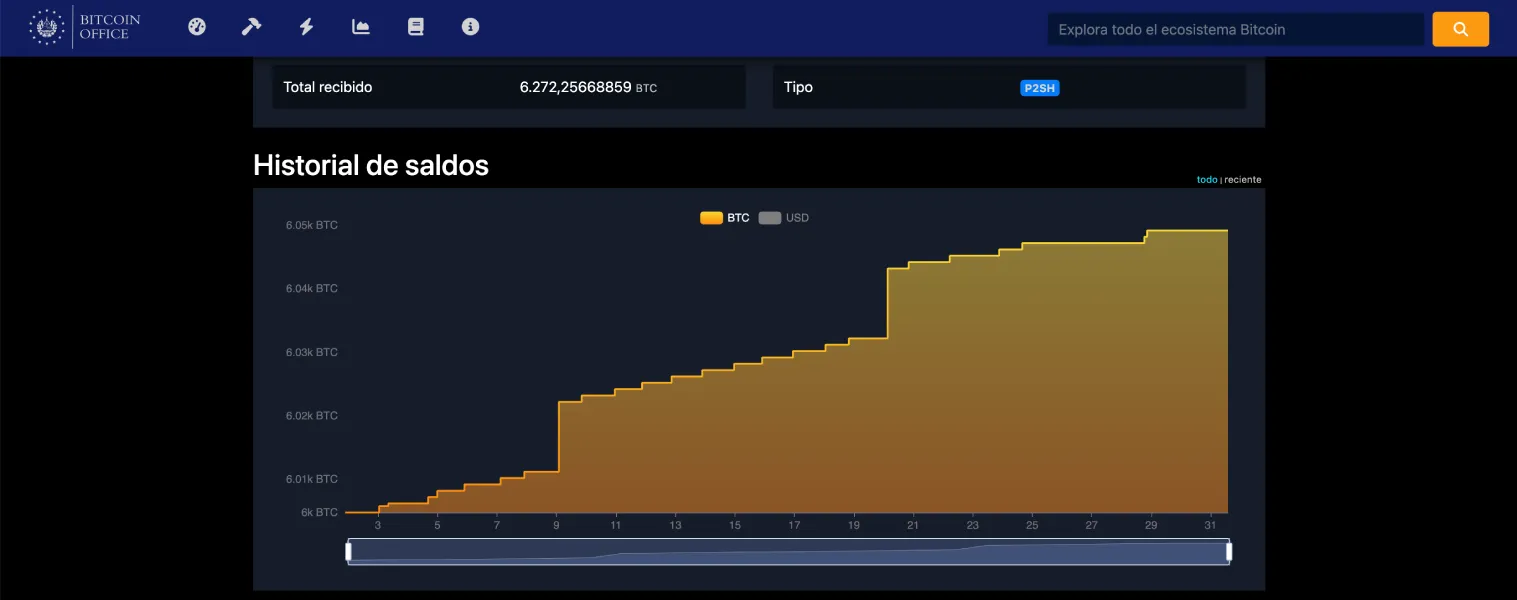
BTC trades with tighter spreads on virtually every CEX than most altcoins, reducing the slippage cost baked into each recurring buy. BTC as the core position means fewer smart-contract risks, no bridge exposure, and no token migration events to track. That being said, in strong bull phases, BTC DCA can lag a lump-sum entry made near the start of the rally because averaging smooths out the same upside spikes that drive lump-sum outperformance.
Research on DCA performance across market regimes puts a number on that tradeoff: BTC dollar-cost averaging has underperformed lump-sum investing by an average of roughly 3–5% during strong bull phases, but in exchange it reduces portfolio drawdowns by around 20–30% during downturns — a counterbalance that matters more to risk-averse accumulators than to traders chasing peak timing.
Ethereum DCA
Ethereum introduces cost and custody constraints that Bitcoin mostly avoids. Buying ETH on a CEX is functionally similar to buying BTC: you are exposed to the exchange’s spread and trading fee, nothing more. Buying ETH through on-chain purchases, such as a DEX swap, adds gas costs, MEV exposure, and slippage that scale independently of your order size.
A simple rule applies: if gas and slippage together consume more than a low-single-digit percentage of the order value, route that purchase through a CEX instead. On-chain DCA only makes sense when ticket size is large enough that fixed gas costs become a rounding error relative to the trade.
It is also worth separating ETH thesis exposure from Ethereum ecosystem token exposure. DCA-ing into ETH itself means betting on the base asset and its role as settlement layer and gas token. DCA-ing into DeFi or Layer-2 tokens built on top of Ethereum is a different bet, carrying higher idiosyncratic risk: bridge risk when moving assets between L1 and L2, smart contract risk from the protocol itself, and token migration risk if the project relaunches or changes its token structure.
Altcoin DCA
For reasons already mentioned before, altcoins (i.e. anything other than Bitcoin) require a stricter screening framework before they earn a recurring-buy slot. Their failure modes are different from BTC or even ETH.
Thin order books mean every recurring buy pays a slippage tax that compounds over dozens of purchases. An asset available only on one CEX or DEX carries concentration risk if that venue delists it or halts withdrawals. Smaller market capitalization usually means sharper drawdowns and less efficient price discovery. In terms of token supply dynamics, where present, scheduled unlocks dilute holders regardless of demand, and DCA does not offset dilution. After all, many altcoins stop existing in any meaningful form within a few years; a DCA plan needs an exit trigger for this scenario.
When an altcoin combines a persistent downtrend with ongoing token unlocks, recurring purchases average into a shrinking pie rather than a temporarily discounted one. Each new buy absorbs supply that dilution keeps expanding, so the position can underperform indefinitely even as you “buy the dip” on schedule. This is a tokenomics problem, not a volatility problem.
Portfolio Allocation

A workable allocation method for DCA contributions is core/satellite. The majority of each contribution goes to a small number of core assets, typically Bitcoin and Ethereum, while a smaller satellite allocation is reserved for higher-risk altcoins that passed the screening framework above.
Rebalancing can be band- (price range) or calendar-based, and they are not complementary. You can either rebalance when an asset drifts more than a set percentage from its target weight or rebalance quarterly regardless of drift.
How do you choose? Band-based triggers react faster to volatility. Calendar-based triggers require less monitoring.
One example allocation is 60% BTC, 25% ETH, and 15% altcoin satellites, rebalanced whenever any position drifts more than 10 percentage points from target. What changes those percentages is risk tolerance and time horizon. A longer horizon and higher risk tolerance can justify a larger satellite allocation; a shorter horizon or lower risk tolerance should push weight back toward BTC and ETH.
In this strategy, stablecoins have a narrow but legitimate place: staging contributions between paychecks and scheduled buy dates, not functioning as the long-term investment itself. If you do opt for this, bear in mind the risks associated with the particular asset: issuer solvency, custody transparency, and depeg risk vary meaningfully between stablecoins, so do not park funds in one without checking those factors first.
Asset choice ultimately changes the best platform and custody setup. BTC and ETH are easiest to DCA on a major CEX with straightforward self-custody options. Smaller altcoins may force you onto exchanges with higher fees or weaker custody support — a constraint worth weighing before the recurring schedule starts.
Benefits, Limitations, and Behavioral Risks
DCA is often presented as a calmer alternative to market timing, and that is fair as far as it goes. However, the benefit is specific. It smooths the entry process but does not sanitize the asset, remove volatility, or guarantee a positive outcome.
Volatility Smoothing
Dollar-cost averaging is often described as a way to “smooth volatility,” but this definition lacks nuance. DCA reduces the volatility of your contributions by spreading purchases across many price points instead of committing capital at one potentially unfavorable moment. It does not reduce the volatility of your portfolio’s value once you hold the asset.
A DCA’d Bitcoin position is just as exposed to a 30% drawdown as a lump-sum position of the same size. The asset’s underlying volatility does not change because of how it was acquired, and DCA does not guarantee a higher return.
Where DCA does show a measurable edge is drawdown behavior during the accumulation phase. Backtest data referenced in industry research indicates that DCA strategies have historically reduced maximum drawdown relative to lump-sum investing during volatile entry periods — a historical observation, not a forward-looking promise. The takeaway: DCA manages timing risk and entry-price variability, not the asset’s inherent risk profile.
Emotional Discipline and Behavioral Rules

The behavioral case for DCA is often stronger than the mathematical one. Automating purchases removes daily decision-making from an emotionally charged market, but discipline only works if it is converted into rules that can be followed.
Pre-commit to a fixed schedule and amount before you start. This prevents both panic-selling and FOMO buying by removing discretionary timing decisions. Do not change cadence or size based on headlines. A 20% single-day move, positive or negative, is not a trigger to pause or double contributions.
Define rebalance bands in advance, such as only rebalancing if an asset drifts ±10% from target allocation. Review the strategy quarterly, not daily. Frequent monitoring increases the temptation to intervene emotionally, while quarterly reviews are frequent enough to catch structural issues without inviting overreaction. Pause contributions only if income or financial circumstances change, not because the market dropped.
DCA is only as durable as your ability to sustain contributions through multi-year drawdowns without needing that capital for other purposes. An investor with a short time horizon or unstable income is structurally unsuited to DCA, regardless of discipline.
Fees and Spread Costs
Crypto-specific frictions can quietly erode the benefits of DCA if the cost stack is ignored. A recurring buy is not just “the price of the asset.” It typically includes several layers:
- Maker/taker fees (CEX): most centralized exchanges charge a taker fee for market orders and a lower maker fee for limit orders that add liquidity to the book.
- Spread: the gap between bid and ask price, which widens during low-liquidity periods or for less-traded pairs.
- Slippage / price impact: on thin order books, a buy order can move the price against you before it fully fills, especially on DEX trades where liquidity pools may be shallow.
- Network/gas fees: on-chain purchases or transfers, particularly on Ethereum-based DEXs, incur gas fees that fluctuate with network congestion.
Because DCA involves small, frequent purchases, these costs can compound disproportionately relative to trade size. A $50 weekly buy with a $5 gas fee creates a 10% cost drag. The same $50 batched into a monthly $200 purchase spreads that fixed cost across a larger base and meaningfully reduces the effective fee percentage.
You do not have to take fees for granted: favor low-fee trading pairs, avoid market orders during low-liquidity windows, use limit orders where the exchange supports them, and set a minimum order size threshold so small buys do not get dominated by fixed fees.
Downside Exposure
Another thing to keep in mind is DCA is not a stop-loss. By design, the strategy keeps buying through drawdowns, which means it can increase exposure to a thesis that is deteriorating rather than merely discounted. Averaging into a falling asset only makes sense if the underlying investment case is still intact.
To avoid averaging down forever into a failing position, pair DCA with an invalidation framework: track if a project’s core team disbands, a protocol loses adoption, regulatory action impairs the asset’s use case, or a security failure changes the thesis. Relative to price, a pre-defined maximum allocation cap or a sustained break below a technical or structural level that signals the original thesis is no longer supported by market behavior.

Separately, DCA carries a market-regime limitation. Because capital is deployed gradually, it tends to lag lump-sum investing during sharp, sustained bull runs. Research quantifying this gap shows DCA strategies underperforming lump-sum by a measurable margin during strong uptrends. The practical implication: if you have high conviction, a longer time horizon, and capital available at the start of a confirmed uptrend, lump-sum deployment may be more capital-efficient than a staged buy-in.
Real-World Investor Pitfalls
Crypto’s structure — its exchanges, liquidity profiles, and custody model — creates pitfalls that are distinct from traditional DCA in equities.
Common pitfalls and prevention mechanisms:
- Increasing DCA amount after price pumps → lock contribution amounts into an automated schedule that can only be changed during quarterly reviews.
- Stopping contributions after a crash → set up automatic recurring buys so cadence continues without requiring an active decision.
- Overconcentrating in illiquid altcoins → cap any single low-liquidity asset at a fixed percentage of total DCA allocation.
- Ignoring spread on small-cap tokens → check bid-ask spread before adding a new token to the recurring buy list, and favor pairs on established CEX or deep DEX pools.
- Recurring buys on high-fee, gas-heavy routes → batch on-chain purchases into larger, less frequent transactions or use exchanges and networks with lower gas costs.
- Confusing DCA with active dip-buying → keep the DCA schedule and any discretionary “dip-buy” capital in separate, clearly labeled allocations.
- Failing to self-custody or mismanaging private keys → establish a documented custody workflow before accumulation reaches a meaningful size.
- Neglecting taxable lot records → maintain a running log of each buy’s date, price, and amount, or use portfolio-tracking software that generates lot records for tax reporting.
Historical Performance Evidence
Historical DCA evidence should be read carefully. A chart that looks persuasive without assumptions is not analysis; it is decoration. Every example needs a defined time span, contribution amount, interval, execution price proxy, and fee treatment.
Bitcoin DCA Performance Examples
Across rolling 12-month windows tested on historical Bitcoin price data, monthly DCA beat lump-sum investing in 8 of 12 windows (67%), reduced maximum drawdown by ~22% on average, and underperformed lump-sum by an average of -18% during bull markets (Source: TechTexts, 2026). The 67% win rate shows DCA wins more often than it loses across mixed conditions; the 22% drawdown reduction shows it meaningfully lowers downside exposure; the -18% return drag shows the cost of that safety during strong uptrends. DCA’s edge comes from risk reduction, not from beating lump-sum on raw returns.
Using a simple forward-looking schedule, $250 contributed weekly from January 2026 through March 2030 totals approximately $54,250 contributed (Source: TradingView/Cointelegraph, 2026) — a useful budgeting sanity check independent of any return assumption. Before evaluating performance, confirm the contribution math itself is realistic for your cash flow.
Example or not, no DCA performance claim should be trusted without specifying:
- Start date and end date of the measurement window
- Frequency — weekly, bi-weekly, or monthly
- Execution price proxy — daily close vs. intraday average
- Fees/spread included or excluded
- Whether contributions are invested immediately or held briefly before execution
Skipping any of these turns a specific historical result into a misleading generalization.
Bear Market Accumulation

The mechanism is simple: during a drawdown, a fixed dollar contribution buys more units of Bitcoin per dollar as price falls, lowering the average cost basis relative to a single lump-sum entry made before the decline. This directly ties to the measurable ~22% average reduction in maximum drawdown cited above. The outcome is not merely “smoother”; it is a quantifiable risk reduction versus a one-time buy at the top.
However, accumulating through a prolonged bear market can still leave a portfolio negative on a mark-to-market basis for months or even years. Because of this, the right evaluation metric is not short-term return. It is time-to-recovery, or the breakeven window: how long it takes cumulative contributions plus growth to cross back above total capital invested. Judging a bear-market DCA plan on a 3-month return snapshot will almost always produce a misleading conclusion.
Bull Market Entry Timing
In a persistent uptrend, DCA typically lags lump-sum investing. The average -18% underperformance in bull markets noted above is not a sign of a broken strategy. It reflects cash drag from delayed exposure, since unspent contributions sit on the sidelines while the market rises.
If you already have a lump sum of cash earmarked and a multi-year horizon, expect lump-sum to often win during strong bull phases because it removes the drag of gradual entry. Use DCA when behavioral risk — panic-selling, timing regret, or hesitation to invest a lump sum at all — is the bigger threat to your outcome than the return drag itself.
DCA Underperformance Cases
There are three common conditions where DCA measurably underperforms. Each has a mitigation that stays inside a DCA framework rather than becoming market timing:
- If the market enters a strong, sustained uptrend after the start date, DCA underperforms lump-sum because unspent capital creates cash drag.
Mitigation: shorten the ramp-up period so a larger share of capital is deployed earlier. - If a V-shaped recovery follows a brief dip right after the plan begins, DCA misses most of the rebound because later contributions buy at already-higher prices.
Mitigation: pre-commit to a higher initial tranche so the first purchase captures more of the early recovery. - If a large rally occurs early in the schedule, average cost basis stays elevated for the rest of the plan.
Mitigation: increase contribution frequency, such as weekly instead of monthly, so entries adjust faster to the early move.
What readers often mis-measure is this: a lower average cost basis is not the same as a higher total return. DCA can improve where your average entry sits relative to price history while still underperforming lump-sum investing on total portfolio value. The two metrics answer different questions.
A concrete “DCA can be down” example makes this visible: an $800 total contribution scheduled from December 2025 through July 2026 produced an example ending value of $710.30 in one calculator run (Source: Uphold DCA Calculator) — a result explicitly dependent on that tool’s price assumptions, shown here only to illustrate that underwater outcomes are possible, not a modeling error.
DCA Comparisons
Naturally, DCA is not the only way to deploy capital into crypto. Its usefulness becomes clearer when compared with lump-sum investing, buying the dip, and value averaging.
| Factor | Lump-Sum | Buying the Dip | Value Averaging | DCA (baseline) |
|---|---|---|---|---|
| Required skill/effort | Low | High (needs technical judgment) | Medium-High (monthly math) | Low |
| Reliance on market timing | High (single entry point) | Very high (entry + exit judgment) | Medium (reactive to price) | None |
| Drawdown profile | Full exposure from day one | Variable, depends on entry accuracy | Smoother, but forces buys into declines | Averaged, smoothed over time |
| Bull-market opportunity cost | Lowest | Medium-High (missed entries) | Medium | Higher (cash sits waiting) |
| Behavioral risk | High (all-in regret) | Very high (fear/greed at the trigger point) | Medium (discipline to sell rallies) | Low (automated, less emotional) |
| Implementation complexity on crypto exchanges | Simple (one order, but slippage risk on size) | Manual, needs alerts; slippage spikes during volatility | Manual top-up/sell calculations, less automation-friendly | High automation-friendliness (most exchanges support recurring buys) |
DCA vs Lump-Sum Investing
Deploying the entire investable amount into Bitcoin or another asset in a single transaction is the most direct opposite of DCA. The core tradeoff of lump-sum investing versus DCA is market timing: the former avoids the opportunity cost of waiting, but it exposes the entire position to volatility and drawdown risk from day one.
Lump-sum investing tends to win when the market is in a strong, immediate uptrend and you have conviction that further downside is unlikely. In that scenario, waiting to average in costs upside. The risk is obvious: if the trend call is wrong, lump-sum investing has no smoothing mechanism.
How to choose in practice:
- If your time horizon is short, under 12 months, favor DCA because you have less time to recover from a mistimed lump-sum entry.
- If you cannot tolerate a 20%+ drawdown without panic-selling, default to DCA regardless of your market view.
- If your funds are available today, lump-sum investing is viable; DCA is the more natural default when contributions come from ongoing income.
- If you have strong evidence of an established uptrend and can stomach volatility, lump-sum investing has better expected returns.
- If in doubt, split the difference: deploy a portion as lump-sum and DCA the remainder.
DCA vs Buying the Dip
Buying the dip in crypto usually means discretionary entries triggered by a signal: a percentage drop from a recent high, a retest of support, or a move below a moving average. Unlike DCA, there is no fixed schedule. You wait for a condition, then deploy capital.
Dip-buying requires getting timing right twice — once to identify the entry, and again to avoid catching a falling knife. Crypto adds an execution problem on top: during volatility spikes, spreads and slippage widen sharply on many exchanges, meaning the price you actually pay can be materially worse than the quoted price at the moment you decide to buy.
What you can do is keep a baseline DCA schedule running unconditionally, and add a capped extra buy only when price drops past a predefined threshold. For example, an additional 10% of your normal contribution size if price falls more than 20% from a recent high. The cap prevents the extra buy from turning into an oversized, emotionally driven bet.
DCA vs Value Averaging
Value averaging targets a specific portfolio value path over time rather than committing a fixed contribution on a schedule. Each month, you calculate three inputs: target portfolio value for that period, current portfolio value, and a required top-up or sale to close the gap.
This means value averaging can force larger buys after price declines because a bigger top-up is needed to hit the same target value. It may also require selling after sharp rallies when the portfolio overshoots the target.
In crypto, this creates a variable-contribution burden. You need either larger available capital or a standing cash buffer to cover months where the required top-up spikes after a drawdown. It also introduces tax lot complexity whenever selling is triggered by a rally.
Long story short, if you want tighter control over portfolio value and do not mind variable contributions or occasional selling, value averaging can outperform DCA at the cost of complexity.
Tracking and Forecasting DCA Outcomes
Once a DCA schedule is running, the work shifts from execution to measurement. Two questions matter: where do you actually stand right now, and what can you reasonably expect going forward?
The first question requires a calculator or ledger that tracks units, cost basis, and unrealized profit or loss. The second requires scenario thinking rather than prediction. DCA does not tell you where an asset’s price is going; it tells you how your entries are distributed along the way.
DCA Calculators
A useful cryptocurrency DCA calculator needs to accept a specific set of inputs, which we partially already brought up as relevant to evaluating the strategy:
- Start date and end date for the contribution period
- Contribution amount per interval
- Contribution frequency — daily, weekly, or monthly
- Asset price series reference — which exchange or index feed the prices are pulled from
- Fees/spread toggle — whether trading costs are included or excluded
- Fiat vs. stablecoin contribution basis — whether each buy converts from fiat currency or from an existing stablecoin balance
Before trusting any output, run a quick sanity check: total contributed equals contribution amount multiplied by the number of intervals, units purchased in each interval, summed together, match total units held, and average cost basis equals total contribution divided by total units. If any of these do not reconcile, the calculator logic — or your inputs — are off.
One common failure mode is that many calculators quietly exclude trading fees, spread, or slippage. This can materially distort average cost and headline performance, especially for smaller, high-frequency contributions where fees eat a larger relative share. Consider the same $100 weekly schedule run two ways: at 0% fees, units accumulated may cleanly match contribution divided by price; add a modest 1% fee per trade, and the effective average cost basis rises enough to turn a marginal gain into a marginal loss.
Price Path Scenarios
Because no calculator can realistically tell you what price will do next, it helps to reason through price paths and understand how DCA behaves mechanically following each one.
Units accumulated per interval during a steady uptrend shrink as price rises because each fixed contribution buys less. Average cost basis climbs steadily but stays below current price for most of the run.
Units accumulated in choppy conditions swing significantly interval to interval — more units bought during dips, fewer during spikes — which pulls average cost basis toward the middle of the trading range. This is where DCA’s averaging effect is most visible, but it can also mask the fact that the asset is not going anywhere net of fees.
Units accumulated in optimal conditions for DCA, prolonged drawdown then recover, grow steadily as price falls, lowering average cost basis with each buy, but unrealized P/L stays negative for an extended period. Just remember that in a deep drawdown, DCA concentrates more exposure into a falling asset before any recovery arrives. The averaging benefit only materializes if recovery actually happens.
You can build all three scenarios in a spreadsheet even without real historical data. Represent price as an index starting at 100, then apply a percentage change per interval: +2% per week for an uptrend, alternating ±5% for chop, or -3% per week for twelve weeks followed by +4% recovery weeks for a drawdown-then-recovery path. For each interval, divide the fixed contribution by the current index value to get units bought, then keep a running total of cumulative units. This keeps the exercise asset-agnostic while still producing a useful forecast model. Forecasting your expectations to each scenario, that is.
Return Expectations
On its own, DCA does not create returns. It shapes entry timing and the drawdown profile of the position. The underlying asset still has to perform for the position to gain value.
Rolling-window research gives useful, if imperfect, guardrails. It shows that DCA trades some upside capture for a smoother ride, and the size of that tradeoff depends heavily on the market regime.
Plan around that regime-dependence:
- Bull markets: expect relative underperformance versus lump-sum. Watch opportunity cost.
- Sideways/high-volatility markets: averaging tends to show its clearest benefit. Watch average cost basis relative to current price.
- Bear markets: staged entry reduces risk versus a single lump-sum entry, but the position is still subject to drawdowns. Watch drawdown depth and duration.
Finally, set a review cadence. Per buy, check fee percentage and units purchased. Monthly, review average cost basis trend. Quarterly, review allocation drift and rebalance triggers. Mixing these up — obsessing over daily unrealized P/L while ignoring quarterly allocation drift — produces anxiety without producing better decisions.
Tax Lot Tracking
Last but not least, every recurring buy in a DCA schedule creates its own tax lot, and each lot needs to be tracked individually to calculate capital gain or loss correctly when units are eventually sold.
Readers will typically encounter three lot identification methods:
- FIFO (first-in, first-out): the oldest lot is sold first.
- LIFO (last-in, last-out): the newest lot is sold first.
- Specific identification: the holder chooses exactly which lot to sell, allowing deliberate management of gain or loss recognition.
Whichever method applies, each lot needs the same underlying data: timestamp, units acquired, unit price, fees paid, and wallet or exchange location. Missing any one of these makes it difficult to reconstruct the cost basis later, particularly after a transfer.
A practical workflow connects execution to reporting: export fills from your crypto exchange regularly; record on-chain transfers to self-custody along with transaction IDs so movements across the blockchain can be reconciled later; reconcile cost basis that goes missing during transfers; and maintain a single source-of-truth ledger instead of relying on multiple platforms’ individual histories.
Since each recurring buy is its own tax lot, a weekly DCA schedule run over a year can easily generate fifty-plus lots. This is manageable with disciplined record-keeping, but genuinely difficult to reconstruct after the fact. Regardless, should the situation be challenging beyond expectations or reason, get qualified tax advice, since the author is not a tax professional and everything provided in this last section is only for information and educational purposes.
Conclusion
Dollar cost averaging crypto is not a promise of better returns. It is a framework for deploying capital under uncertainty. Its value comes from removing the pressure of perfect timing, reducing entry-price concentration, and making accumulation repeatable through volatile markets.
However, the strategy only works if the operational layer is sound. The amount must be sustainable, the interval must not create excessive fee drag, the asset list must survive basic liquidity and tokenomics screening, and custody must be handled before balances become meaningful. Just as importantly, every buy creates a tax lot, so record-keeping is part of the strategy, not an administrative afterthought.
At the end of the day, DCA is best understood as a discipline mechanism with mechanical benefits. It can help investors keep buying when emotions would otherwise interfere, but it cannot turn a weak asset into a strong one or make crypto volatility disappear. The plan is only as good as the asset thesis, the execution route, and the investor’s ability to keep following the rules when the market stops being comfortable.
Learn more about investing in crypto from the ChangeHero blog! Follow ChangeHero on X, Facebook, and Telegram for daily updates, cryptocurrency investment tips, and more content.
Frequently Asked Questions
Is dollar-cost averaging good for beginners?
Yes, DCA is generally considered a good starting strategy for beginners because it removes the pressure of picking a perfect entry point. The practical constraint is important: only commit money you can hold for 4+ years, and avoid allocating funds you may need soon. Crypto markets can stay depressed for extended periods.
DCA does not remove volatility from the market. It systematizes your entries so you are not trying to time them manually.
Is DCA better than buying the dip?
The tradeoff is straightforward: DCA reduces dependence on timing the market correctly, while buying the dip requires you to identify when a dip has actually bottomed out. That is difficult even for experienced traders.
One nuance to watch for is under-deployment. Investors waiting for a “better” dip often sit on cash while the market moves without them. DCA sidesteps that psychological trap by committing to a schedule regardless of price action.
Can you lose money with DCA?
Yes. DCA does not guarantee profits and cannot prevent losses if the underlying asset trends downward over the investment period. A concrete illustration: a DCA calculator result showed $800 in purchases worth only about $710.30 later, demonstrating that a DCA plan can be down even after consistent investing.
DCA can reduce drawdown risk on average — one Bitcoin-focused analysis found it lowered maximum drawdown by about 22% — but it also underperformed lump-sum investing by about 18% during strong bull markets. It is not a loss-proof strategy. It is a cost-basis and timing-risk management strategy.
Is weekly or monthly DCA better?
The practical rule is to choose the cadence that balances fee/spread drag against volatility smoothing for your situation. Standard interval options offered by many crypto exchanges include weekly, bi-weekly, and monthly purchases.
Higher-frequency buys can increase cumulative transaction and spread costs because each purchase usually incurs some fee or spread. More frequent buying is not automatically better if those costs outweigh the smoothing benefit.
Which cryptocurrencies are best for DCA?
The selection heuristic is simple: favor high-liquidity, high-market-cap assets with demonstrated long-term survivability, such as Bitcoin and Ethereum. These assets are more likely to remain viable over multi-year holding periods and usually offer tighter spreads.
The warning is just as important: thin-liquidity altcoins can amplify slippage and widen the spread on each purchase, which makes DCA less effective because every recurring buy may execute above fair market pricing. Sticking to established, liquid assets helps ensure the systematic entries are not quietly undermined by execution costs.