

 Support


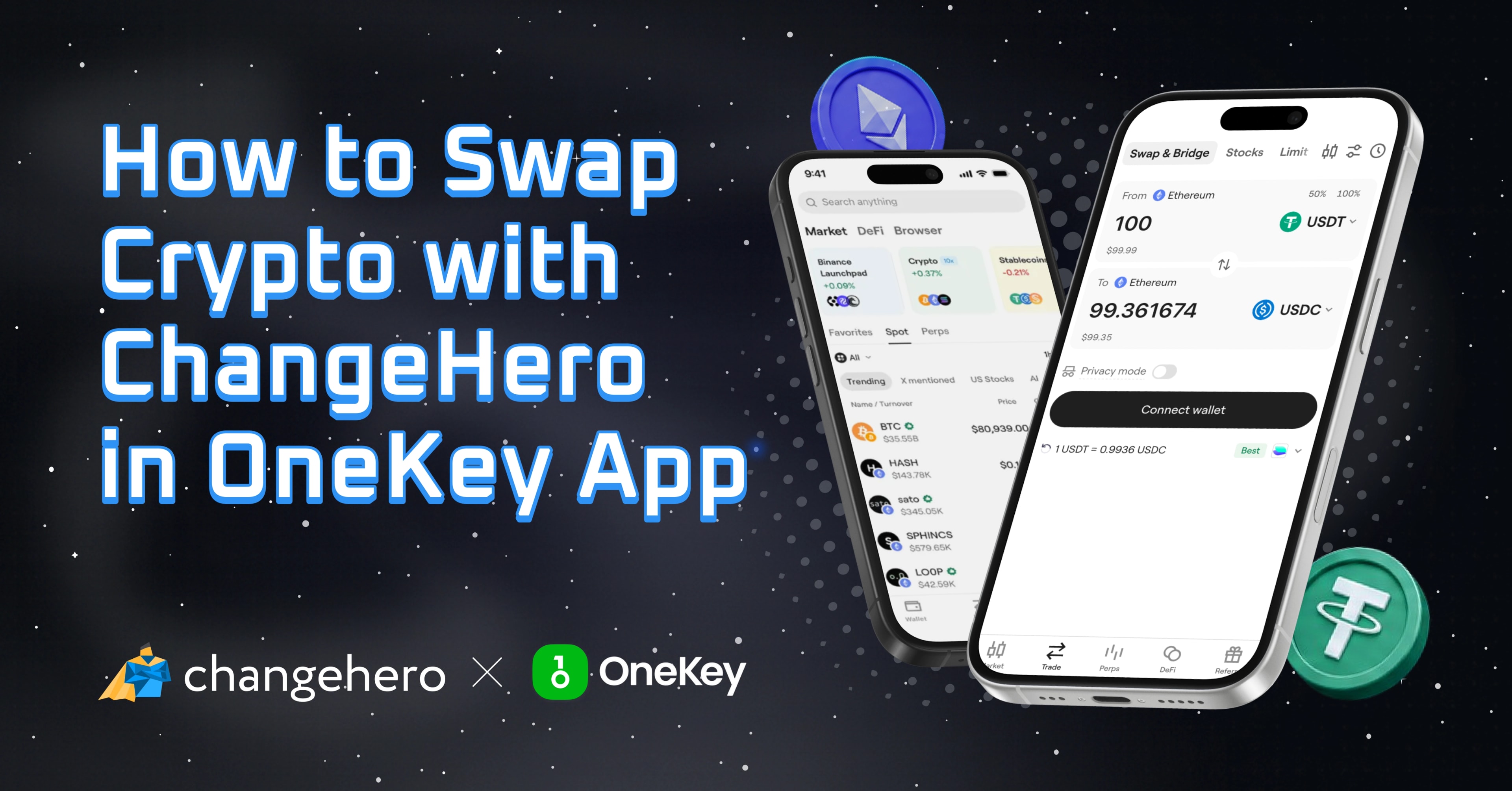
How to Swap Crypto with ChangeHero in OneKey App?
The ChangeHero team reviews OneKey hardware wallets and explains how our integration helps users swap crypto safely and easily.
Author: Rey
INR/AUD(Australian dollar) |
INR/BRL(Brazilian real) |
INR/EUR(Euro) |
INR/USD(US Dollar) |
Buy Ethereum with ChangeHero in just a couple of clicks. Use your credit or debit card to purchase ETH with USD, EUR, or many other fiat currencies. Follow a few simple steps, complete a quick verification process, and secure your Ethereum in minutes.
With ChangeHero, you can sell ETH for USD or EUR quickly and without hassle. A simple one-time verification is all it takes to receive your money directly to your bank account in minutes.
No wallet yet? Choose Exodus for simplicity and flexibility, or rely on Trezor or CoolWallet S for maximum security. Track the live Ethereum price and other crypto assets anytime, and swap Ethereum at the best market rates directly via ChangeHero — all in one smooth experience.


Ethereum (ETH) is a decentralized, open-source blockchain platform that lets developers build and run smart contracts and decentralized applications (dApps). Often called "the world computer," Ethereum was first proposed in a 2013 white paper by Vitalik Buterin and launched in 2015. Unlike Bitcoin, which is limited to peer-to-peer payments, Ethereum was designed to let anyone build and deploy their own applications on a shared, permissionless network.
Ethereum's core innovation is the smart contract: a self-executing program with its terms written directly into code, running without a central server. This capability enabled decentralized finance (DeFi), non-fungible tokens (NFTs), and blockchain gaming to grow into major sectors built on top of Ethereum.
Ether (ETH) is Ethereum's native token, used to pay transaction costs called "gas," that fund smart contract execution and network security. In August 2021, the London upgrade introduced EIP-1559, which burns a portion of each transaction's gas fee, adding deflationary pressure to ETH's supply during periods of high network activity.
On September 15, 2022, Ethereum completed "The Merge," switching its consensus mechanism from energy-intensive Proof-of-Work (PoW) to Proof-of-Stake (PoS); the Ethereum Foundation estimated this cut network energy use by about 99.95%. A minority of miners forked the pre-Merge chain into EthereumPoW (ETHW) to keep using Proof-of-Work. ETH has no fixed maximum supply. As of late June 2026, circulating supply was about 120.7 million ETH, with a market cap of roughly $196 billion, ranking #2 by market capitalization according to CoinGecko and CoinMarketCap. As of early 2026, roughly 30% of circulating ETH was staked to help secure the network, according to CoinGecko.
The ETH/INR exchange rate is driven by supply and demand across global cryptocurrency markets. Key factors include trading volume, market liquidity, macroeconomic events, regulatory news, and overall investor sentiment. Since crypto markets operate 24/7, the ETH to INR rate can shift at any moment based on real-time market activity.
On ChangeHero, the ETH to INR price is updated in real time. We continuously aggregate data from leading exchanges and liquidity providers to ensure you always see the most accurate and up-to-date Ethereum rate.
Cryptocurrency markets never close — they operate around the clock, 365 days a year. The ETH price reacts instantly to global trading activity, news events, whale transactions, and shifts in market sentiment. This constant activity means the Ethereum price can fluctuate within seconds.
The market price of ETH is a reference value based on aggregated data from multiple exchanges. The exchange rate is the actual price at which you can buy or sell Ethereum in a specific transaction — it may include network fees and a small service margin. On ChangeHero, we minimize this difference by sourcing rates from multiple providers to offer you the most competitive ETH/INR rate.
ChangeHero automatically compares ETH to INR rates across multiple trusted liquidity providers and exchanges in real time. Our system selects the best available rate for your transaction, so you always get the most value when exchanging Ethereum — with no extra effort on your part.
Each exchange has its own order book, liquidity pool, and user base, which leads to slight price variations for Ethereum. Differences in trading volume, geographic demand, and withdrawal fees all contribute to these discrepancies. ChangeHero solves this by aggregating rates from multiple providers, ensuring you get the best ETH/INR rate without having to compare exchanges yourself.
ETH/XRP(XRP) |
ETH/DOGE(DOGE) |
ETH/LINK(LINK) |
The ChangeHero team reviews OneKey hardware wallets and explains how our integration helps users swap crypto safely and easily.
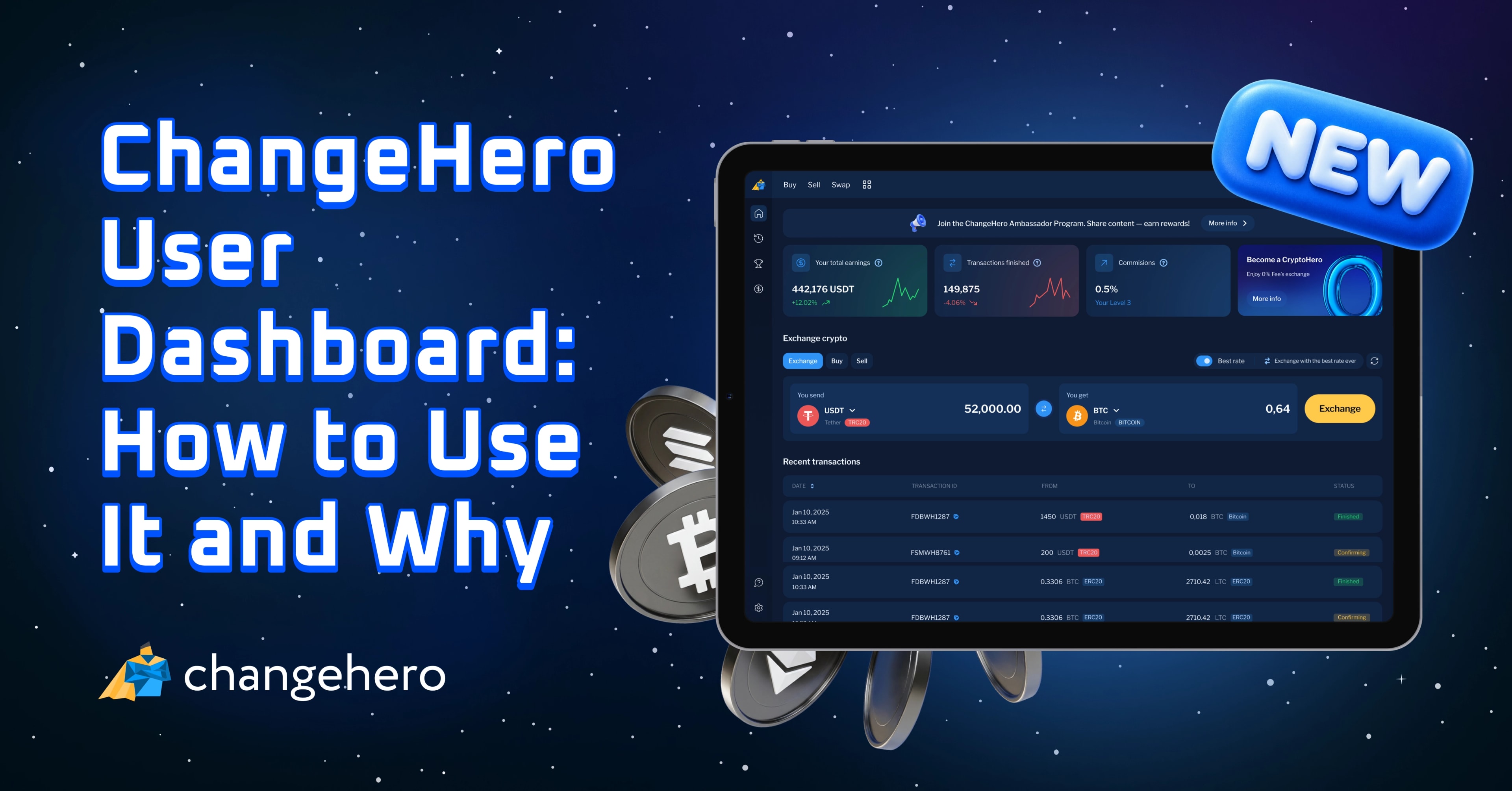
ChangeHero is rolling out optional user accounts. Learn why even if you do not have to, you should consider registering.
Which Solana wallet reigns supreme in 2026? ChangeHero's crypto experts break down security, features, and compatibility across leaders in the market. Read to choose the right wallet!

Explore expert Ethereum price forecasts for 2026, 2027, 2028, 2029, 2030, 2035 and 2040, diving into ETH potential in the evolving cryptocurrency market. Make informed investment decisions with ChangeHero!

Explore expert Avalanche price forecasts for 2026, 2027, 2028, 2029, 2030, 2035 and 2040, diving into AVAX potential in the evolving cryptocurrency market. Make informed investment decisions with ChangeHero!

Explore expert Dogecoin price forecasts for 2026, 2027, 2028, 2029, 2030, 2035 and 2040, diving into DOGE potential in the evolving cryptocurrency market. Make informed investment decisions with ChangeHero!