

 Support


Beginner's Guide to Hedera Hashgraph & HBAR
Learn what HBAR is, how hashgraph enables fast transactions & DApps on Hedera, and its enterprise solutions, DeFi, and identity management. Start your journey today!
Author: Catherine
EUR/AUD(Australian dollar) |
EUR/BRL(Brazilian real) |
EUR/CAD(Canadian dollar) |
EUR/CHF(Swiss franc) |
EUR/GBP(British pound) |
EUR/IDR(Indonesian rupiah) |
EUR/INR(Indian Rupee) |
EUR/PLN(Polish złoty) |
EUR/USD(US Dollar) |
Buy Solana with ChangeHero in just a couple of clicks. Use your credit or debit card to purchase SOL with USD, EUR, or many other fiat currencies. Follow a few simple steps, complete a quick verification process, and secure your Solana in minutes.
With ChangeHero, you can sell SOL for USD or EUR quickly and without hassle. A simple one-time verification is all it takes to receive your money directly to your bank account in minutes.
No wallet yet? Choose Exodus for simplicity and flexibility, or rely on Trezor or CoolWallet S for maximum security. Track the live Solana price and other crypto assets anytime, and swap Solana at the best market rates directly via ChangeHero — all in one smooth experience.


Solana (SOL) is a high-performance Layer 1 blockchain designed to support smart contracts and decentralized applications (dApps) at high speed and low cost. Anatoly Yakovenko, a former Qualcomm engineer, first outlined the concept in a 2017 whitepaper and co-founded Solana Labs with Raj Gokal, Greg Fitzgerald, and Stephen Akridge; the network's mainnet beta launched in March 2020. Solana was built to address blockchain's "trilemma" — the tradeoff between scalability, security, and decentralization that has constrained networks like Bitcoin and Ethereum.
Solana combines Proof of History (PoH), a mechanism that cryptographically timestamps transactions before they're grouped into a block, with Proof of Stake (PoS) validation to order and confirm transactions quickly. Additional components, including the Gulf Stream transaction-forwarding protocol and the Sealevel parallel-processing runtime, help Solana process transactions in parallel. Solana Labs has described the architecture as theoretically capable of tens of thousands of transactions per second, though real-world throughput depends on network conditions.
SOL is Solana's native token, used to pay transaction fees, interact with smart contracts, and participate in network security through staking. SOL holders can delegate tokens to validators, who process and confirm transactions and earn staking rewards in return. SOL has no fixed maximum supply; new tokens are issued through a disinflationary schedule that reduces the annual issuance rate over time. As of late June 2026, SOL had a circulating supply of approximately 580 million tokens and a market cap of about $47 billion, ranking #7 among cryptocurrencies, according to CoinGecko.
Solana's low fees and high throughput have made it a hub for decentralized finance (DeFi) protocols, NFT marketplaces, and Web3 gaming projects, alongside a growing number of spot Solana ETFs that launched in late 2025.
The SOL/EUR exchange rate is driven by supply and demand across global cryptocurrency markets. Key factors include trading volume, market liquidity, macroeconomic events, regulatory news, and overall investor sentiment. Since crypto markets operate 24/7, the SOL to EUR rate can shift at any moment based on real-time market activity.
On ChangeHero, the SOL to EUR price is updated in real time. We continuously aggregate data from leading exchanges and liquidity providers to ensure you always see the most accurate and up-to-date Solana rate.
Cryptocurrency markets never close — they operate around the clock, 365 days a year. The SOL price reacts instantly to global trading activity, news events, whale transactions, and shifts in market sentiment. This constant activity means the Solana price can fluctuate within seconds.
The market price of SOL is a reference value based on aggregated data from multiple exchanges. The exchange rate is the actual price at which you can buy or sell Solana in a specific transaction — it may include network fees and a small service margin. On ChangeHero, we minimize this difference by sourcing rates from multiple providers to offer you the most competitive SOL/EUR rate.
ChangeHero automatically compares SOL to EUR rates across multiple trusted liquidity providers and exchanges in real time. Our system selects the best available rate for your transaction, so you always get the most value when exchanging Solana — with no extra effort on your part.
Each exchange has its own order book, liquidity pool, and user base, which leads to slight price variations for Solana. Differences in trading volume, geographic demand, and withdrawal fees all contribute to these discrepancies. ChangeHero solves this by aggregating rates from multiple providers, ensuring you get the best SOL/EUR rate without having to compare exchanges yourself.
Learn what HBAR is, how hashgraph enables fast transactions & DApps on Hedera, and its enterprise solutions, DeFi, and identity management. Start your journey today!
At the crossing between preferred platforms and blockchain networks, find out which crypto wallet apps are the best for USDT in 2026. Keep reading to optimize your setup!
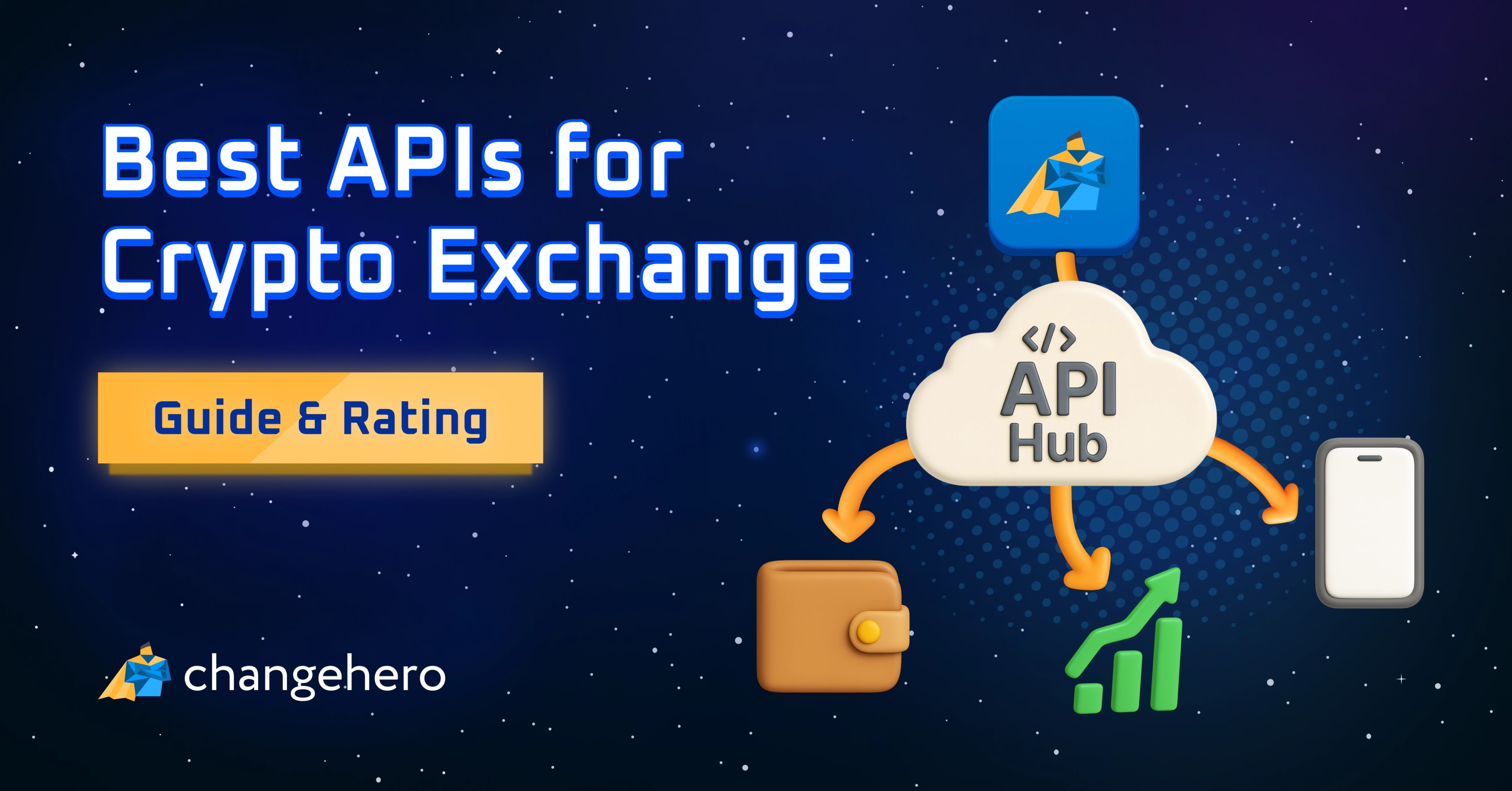
Looking for the best crypto exchange API in 2026? ChangeHero compares free vs paid plans, market data vs trading APIs, plus swap integration for apps and wallets. Discover more.
Discover how to short Bitcoin and crypto safely Compare margin, futures, options, leveraged tokens and inverse ETFs with ChangeHero’s expert tips. Learn today.

Explore expert Ethereum price forecasts for 2026, 2027, 2028, 2029, 2030, 2035 and 2040, diving into ETH potential in the evolving cryptocurrency market. Make informed investment decisions with ChangeHero!

Explore expert Avalanche price forecasts for 2026, 2027, 2028, 2029, 2030, 2035 and 2040, diving into AVAX potential in the evolving cryptocurrency market. Make informed investment decisions with ChangeHero!