
Best Crypto Exchange Liquidity Providers in 2026

Key Takeaways
- 🍹 The best crypto exchange liquidity provider depends on the execution problem you are trying to solve: tight stablecoin swaps, deep general-purpose markets, custom portfolio exposure, or CEX-managed pool access;
- 🍹 Centralized exchanges offer order-book depth, matching engines, and market makers, while decentralized exchanges rely on liquidity pools and automated market makers (AMMs);
- 🍹 Liquidity should be evaluated at the pair or pool level, not by platform-wide volume figures alone;
- 🍹 Slippage, price impact, fee structure, security record, and custody model matter more than a headline APR or total value locked figure.
Disclaimer
Nothing in this guide constitutes investment advice. Liquidity conditions, fee tiers, incentive programs, proof of reserves, and exchange availability can change quickly, especially across jurisdictions. Before trading or providing liquidity, verify pool data, order-book depth, contract addresses, reward terms, and withdrawal conditions directly through the venue you intend to use.
Have you ever wondered where the liquidity for ChangeHero comes from? It is a little more complicated than our own pocket but not exactly convoluted either. On one side, there are on-chain liquidity pools powered by automated market makers (AMMs). On the other, there are centralized exchanges that rely on order-book depth, matching engines, and active market making.
The best liquidity provider should give acceptable execution quality: low slippage, tight spreads, reliable fills, and a risk profile you actually understand. In this guide, as a team closely familiar with the subject, we will compare leading venues and share a framework for choosing between them, grounded in experience.
What are Liquidity Providers?
When we claim ChangeHero uses 10+ liquidity providers, what exactly does it mean? In communications like these and for the purposes of this guide, liquidity providers (LPs) should be understood as venues that offer access to liquidity through API integrations. In this sense, LPs are closer in meaning to liquidity pools.

Liquidity provisioning is also a term and activity in trading in general and decentralized finance (DeFi); in this case, it usually refers to participants who contribute to market depth either through market making or liquidity pools. However, in this guide, we will explain LPs as liquidity sources, since this is more relevant to how ChangeHero works.
What will follow is our team’s picks for the best crypto exchange liquidity providers in 2026 and a sneak peek into the criteria that we use to choose our own sources.
Top Crypto Exchange Liquidity Providers in 2026
A top venue in this context is one whose liquidity structure fits the trade you are trying to execute or the yield position you are trying to build. The four providers below each win on a different axis: fee-tiered general liquidity, stable-asset price stability, custom pool weighting, and centralized-exchange pool access.
Uniswap
Best for: Broad, fee-tiered markets where you want to pick your own risk/reward exposure as a liquidity provider, or need deep general-purpose swap liquidity as a trader.
Liquidity mechanism: A concentrated liquidity AMM where LPs supply a liquidity pool within a chosen price range rather than across the full curve.
Fee/incentive handle to check: The fee tier on the pool—0.05%, 0.30%, or higher. This is the real selection lever. A 0.05% tier attracts high-volume, tight-spread swaps and tends to draw in LPs comfortable with thinner per-trade margins. A 0.30% or higher tier suits more volatile or less-traded pairs where LPs demand more compensation for risk.
Picking the tier changes who shows up to provide liquidity and how swaps get routed, which directly shifts price impact and slippage for a given trade size.
Main tradeoff: Range-bound liquidity means LPs can end up out of range during volatile moves, temporarily reducing effective depth right when traders need it most.
You can familiarize yourself better with how Uniswap works and learn about its token UNI along the way with our Beginner’s Guide.
Curve Finance
Best for: Stable-to-stable or wrapped-asset swaps where minimizing price impact near the peg matters more than broad market coverage.
Liquidity mechanism: A pool design optimized for like-priced assets, using a curve that stays flatter than a standard AMM near parity so pricing stays tighter for similarly valued tokens.
Fee/incentive handle to check: Before depositing, verify the pool’s asset composition. Confirm it is genuinely a stable-focused pool or wrapped-version pool rather than a mixed-volatility pool, since Curve Finance’s pricing advantage only holds when the underlying assets are meant to trade near the same value.
Main tradeoff: That tight pricing advantage erodes quickly if the pool’s assets de-peg or if you mistakenly treat a non-stable pool as if it behaved like one.
Balancer
Best for: Traders and LPs who want exposure or liquidity provision skewed toward specific assets rather than an even split.
Liquidity mechanism: A configurable-weight AMM where pools can hold multiple assets in custom ratios, not limited to 50/50. This lets the pool itself function closer to an index than a simple pair.

Fee/incentive handle to check: Pool weights, front and center. If you want exposure skewed toward one asset, check the pool weights before providing liquidity, since an 80/20 pool behaves very differently from an even split in terms of both earnings and price sensitivity.
Main tradeoff: Custom weighting adds flexibility but also adds a layer of pool-specific complexity that flatter, single-ratio pools do not require you to think through.
Binance Liquidity Pools
Best for: Traders and yield-seekers who want a CEX-run pool program rather than managing an on-chain position directly.
Liquidity mechanism: A centralized-exchange pool program where Binance aggregates user funds into pools that support trading pairs on the platform, distinct from the self-custodied AMM pools above.
Fee/incentive handle to check: How rewards are actually presented. Look closely at the APR/APY display, the asset you are paid out in, and any lockup period or eligibility requirement. Headline yield figures can look very different once payout asset and lockup terms are factored in.
Main tradeoff: Reward rates and terms are set and can be adjusted by the exchange, so the pool’s yield profile is not something you control the way you can with on-chain pool selection.
Centralized vs Decentralized Liquidity Providers
The core distinction is simple: centralized venues match buyers and sellers through an order book, while decentralized AMMs price trades against pooled reserves. Everything else—custody, fill behavior, fees, and failure modes—follows from that split.
| Dimension | CEX Order Book | DEX AMM |
|---|---|---|
| Pricing mechanism | Matching engine pairs resting bids/asks | Formula prices trade from pool reserves |
| What “depth” means | Order book depth: volume resting within a % of mid-price | Pool size (TVL) at current price plus liquidity distribution across ranges |
| Typical slippage behavior | Grows as market orders walk the book past resting liquidity | Grows continuously with trade size relative to pool reserves (price impact) |
| Fill certainty | High for liquid pairs; partial fills possible on thin books | Near-certain if transaction confirms within slippage tolerance; can fail otherwise |
| Fee model | Maker-taker fee (maker rebate/lower fee, taker pays more) | Flat pool swap fee (e.g., 0.05%–1%) paid to LPs |
| Tooling | API/FIX connectivity, order types, account dashboards | Wallet + gas, DEX front-end or router, on-chain transaction signing |
| Common failure mode | Partial fill / thin book on illiquid pairs | MEV (sandwich attacks) / pool imbalance during volatility |
Order Book Liquidity
Depth of market is best understood in measurable terms: how much bid and ask volume sits within a defined band—commonly ±2% of the mid-price. That framing matters because it is the same lens venue-monitoring reports use.
According to CoinMarketCap’s April 2026 exchange monthly report, Coinbase held the deepest BTC order book among major venues and Binance held the deepest ETH order book, both measured using median ±2% depth. A tight bid-ask spread combined with strong depth means limit orders can sit close to the touch with a good chance of filling, while market orders can execute near mid-price without much cost.

The trouble starts when a market order is larger than what is resting at the best price. Consider a large market buy on BTC: the order consumes the top ask, then the next, then the next, each successive fill occurring at a worse price. Traders call this “walking the book.”
The visible spread you saw before submitting the order understates your true cost once the order has to reach deeper into the book. Mitigations, including those applicable to product integrations, include switching to limit orders, accepting the risk of no fill in exchange for price control; splitting the order into smaller pieces over time; routing size through an OTC/RFQ desk that can source liquidity off the visible book entirely, either via an OTC crypto exchange or institutional brokerage-style venues like Coinbase Prime.
Underneath all of this sits execution plumbing unique to centralized venues. A matching engine pairs incoming orders against resting liquidity, assigning each side a maker or taker role depending on whether it added or removed liquidity from the book.
Because maker-taker fee schedules often charge takers more than makers, or even rebate makers, two venues with near-identical headline spreads can produce different net costs for the same strategy. Fee tables published across major exchanges routinely show maker fees near zero or negative alongside taker fees in the 0.10%–0.20% range.
In practice, traders often compare fee and depth conditions across multiple order-book venues—such as Kraken Pro, Bitstamp, OKX, and Bitfinex—because the best net execution can rotate by pair, region, and time of day. A strategy that repeatedly takes liquidity can find itself better off on a venue with a slightly wider spread but a lower taker fee.
Automated Market Makers
AMMs skip the matching engine entirely. Instead, price is quoted algorithmically from the ratio of assets held in a pool’s reserves. No counterparty order needs to be resting on the other side for a trade to execute.
Two concepts should be separated before comparing AMMs:
- Price impact is the mechanical price movement a trade itself causes by shifting the reserve ratio;
- Slippage tolerance is a user-set setting that caps how much worse the executed price is allowed to be versus the price quoted at submission.
Set the tolerance too tight and a normal amount of price movement between submission and confirmation can cause the transaction to fail outright. Set it too loose and the trade can execute at a materially worse price than expected, especially on volatile or thinly pooled assets.
The swapper’s experience and the liquidity provider’s experience are not the same position. From the swapper’s side, a swap is one transaction priced deterministically off the curve at the moment it executes. Straightforward, if occasionally unforgiving on tolerance settings. From the LP’s side, supplying to that same pool means continuous exposure to inventory drift as the pool’s asset ratio shifts with every trade, offset by the swap fees earned along the way.

These are two different risk positions sitting on top of the same mechanism. Conflating them leads to confusion about why a pool can look efficient to swap through while still feeling uncertain to provide liquidity into.
Custody and Counterparty Requirements
| CEX | DEX |
|---|---|
| Account creation + KYC/KYB verification | Self-custody wallet + gas for transaction fees |
| Withdrawal limits and settlement timing set by the exchange | On-chain settlement finality, controlled by network confirmation |
| Counterparty risk (exchange solvency, custody practices) | Smart contract risk (code bugs, exploits, pool design flaws) |
Custody means different things depending on which side of the liquidity stack you use.
On the CEX side, it matters when you need fiat on/off-ramps or corporate treasury controls—multi-approver withdrawal policies, for instance—that only a regulated custodial account can offer. On the DEX side, it matters when you need permissionless access with no account approval step, or when you want to avoid the risk of an account freeze or withdrawal hold entirely.
Investor Fit
| Archetype | Preferred model | Typical order size/frequency | Required tooling | Primary constraint |
|---|---|---|---|---|
| Retail passive LP | DEX AMM | Small-to-mid, infrequent deposits | Wallet, DEX front-end | Gas costs, pool selection |
| Active trader | CEX order book | Frequent, small-to-mid orders | Exchange account, order types | Speed, spread + fee cost |
| Professional/institutional desk | CEX order book (with OTC/RFQ) | Large, size-sensitive orders | API/FIX, OTC desk relationships | Fill certainty, minimizing price impact |
| DeFi-native builder | DEX AMM | Variable, protocol-driven | Wallet, smart contract integration | Custody control, composability |
As a rule of thumb, anyone needing to move large size discreetly, or requiring institutional compliance and custody controls, should generally avoid relying solely on AMM liquidity. Price impact and pool depth limits can make size execution costly.
Conversely, anyone who wants to avoid KYC, account freezes, or centralized custody should generally avoid CEX order-book liquidity. Account-based access is a structural requirement of that model, not an optional feature.
Selection Criteria
So far we have established that “liquidity” is not one metric. Once you have narrowed your options to a shortlist of venues or pools, the next step is turning that shortlist into a repeatable checklist.
For each venue or pool, builders assess the following metrics:
- A liquidity size proxy: pool TVL for an AMM, or order-book depth at your relevant size for a CEX/order-book venue;
- A trading activity proxy: recent volume on that specific pool or pair, not the platform’s aggregate figure;
- An execution proxy: simulated slippage or price impact at the trade size you actually intend to use;
- An LP economics snapshot: fees plus incentive rewards, minus the drags—price impact/IL expectation, gas, program haircuts—you would realistically absorb.
Total Value Locked and Trading Volume
TVL or order-book depth tells you how much liquidity is available right now. Volume tells you how fresh and active that liquidity actually is. A pool can carry a large TVL but see almost no trading, which means quoted depth may not reflect how the market actually behaves under real flow. The inverse is also true: a smaller pool with consistent volume can sometimes execute more predictably.
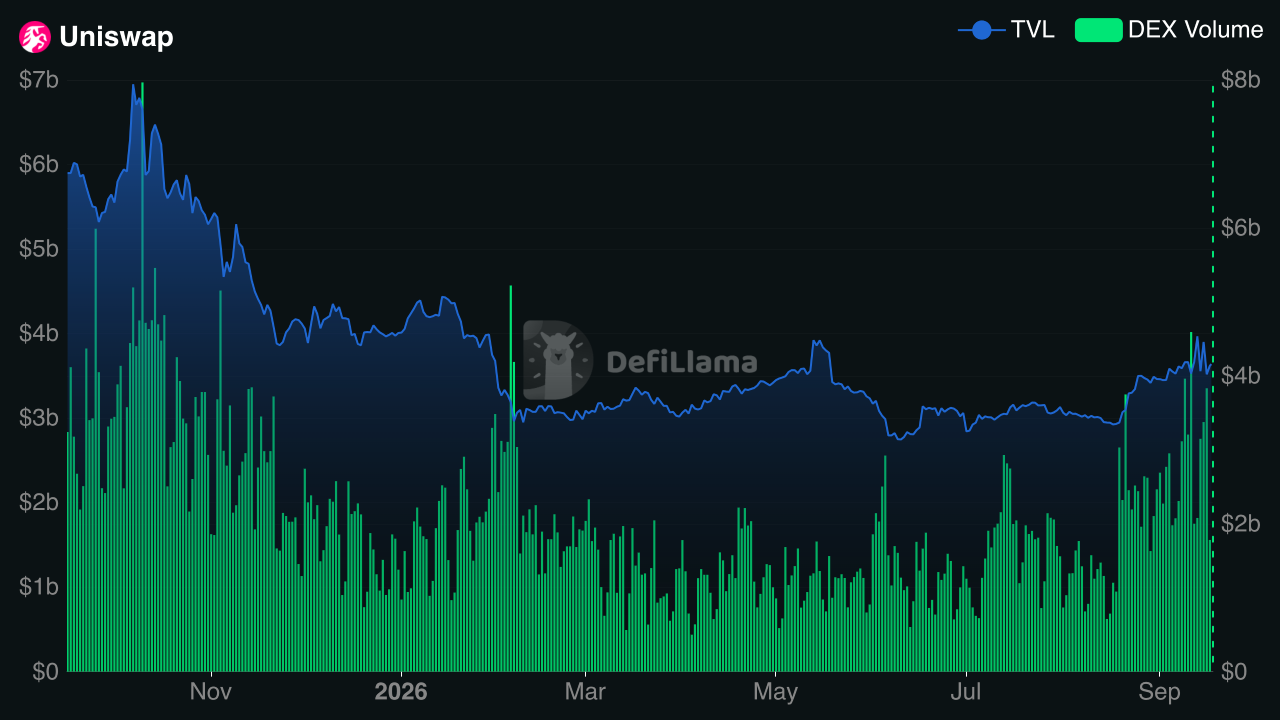
For AMM pools, pull two numbers directly from the pool’s page or analytics dashboard: pool TVL and 24h volume on that specific pool.
For CEX or order-book venues, the equivalent pair is depth within ±X% of mid-price, where X matches your trade size and 24h spot volume on that exact market page, not the exchange’s homepage summary.
That last distinction matters more than it looks. Aggregated, exchange-wide figures can be misleading: tracked exchanges collectively show roughly $58.2B in 24h volume and $272B in reserves, but neither number tells you anything about the specific pair or pool you are about to trade or provide liquidity into.
A venue with a high volume tier overall can still have a thin, stale market for the one asset pair you care about. Always drill down to the pair/pool level before treating a platform-level statistic as evidence of tradeable liquidity.
Slippage and Price Stability
Slippage is the gap between the price you expected when you submitted a trade and the price you actually got filled at. Price stability is how much the quoted price moves as your order size increases, independent of whether the trade has executed yet.
You can test both without risking capital. Simulate a swap or order at your normal trade size, then simulate again at 5–10x that size, and compare the quoted price impact between the two.
On a DEX, this is the quote shown before you sign. On a CEX or order-book venue, it is the depth view showing how far your order would have to walk into the book.
What you are looking for is not only the size of the impact at your normal size. The real signal is whether the impact jumps disproportionately at the larger size. A roughly linear increase suggests stable, well-distributed liquidity. A sharp, non-linear spike signals that the pool or book is thin just beyond your typical trade size, which is exactly the kind of hidden fragility that does not show up in headline TVL or volume figures.
Fees, Incentives, and Net APY
Headline yield numbers are the least comparable figures across venues unless you break them into a common formula: Net = trading fees earned + incentive rewards (if any) − expected costs (price impact/IL expectation + gas/transaction costs, for on-chain positions + any CEX program haircut).
For each venue or pool, four things are recorded before comparing:
- The fee rate, whether swap fee tier or maker/taker schedule;
- The reward token plus its emission rate and any eligibility conditions;
- Your compounding assumptions;
- The payout asset.
That last item is easy to skip and expensive to ignore. An advertised APY paid out in a volatile reward token is a materially different proposition than the same headline number paid in a stablecoin like USDT or USDC.
Two pools can advertise identical APRs and still produce very different realized returns once vesting schedules, lockups, and payout-asset volatility are factored in. Do not treat headline APR/APY as comparable across venues until you have checked all three.
Security Record and Reputation

Last but not least, a liquidity source’s reliability is as important as its security. It’s evaluated by answering questions such as:
- Does the pool or venue have a long-lived, continuously active market for the exact pair you intend to trade or supply, rather than a recently launched or thinly traded listing?
- For DEX pools, is there evidence of independent smart contract audits and an active bug bounty program covering the relevant contracts?
- For centralized venues, does the platform publish verifiable proof of reserves or custody attestations that can be checked against an independent source, rather than relying on a self-reported balance?
- Has the pool or venue experienced any prior exploits, depegging events, or insolvency incidents involving the specific asset pair you are evaluating?
- Is liquidity concentrated among a small number of providers or wallets, which can make depth and price stability unreliable if a large position exits?
- Does the venue disclose its incentive program terms—emissions, lockups, eligibility—publicly, rather than adjusting them without notice?
Tradeoff Lens
No venue wins on all four criteria at once, so prioritize based on what you are actually optimizing for.
If routing a large order size, overweight depth and slippage testing stands above all else. TVL or headline volume will not save you from a bad fill. If you are a yield-seeking LP, overweight the net APY stack, but treat reward-token risk as part of the cost, not a bonus.
If you are providing liquidity to or trading a stablecoin pool, overweight price stability, since your entire thesis depends on the quote staying near parity under size. And if capital preservation is the primary goal, overweight security record and reputation over any yield or depth advantage. No fee tier or incentive program compensates for a contract exploit or a venue that cannot substantiate its reserves.
Risk Management for Liquidity Provision
Impermanent Loss
For DEX users, a key risk is impermanent loss (IL): the value gap between holding two assets in a liquidity pool versus simply holding them outside it. It appears whenever the price ratio between pooled assets moves.
A quick way to see the direction of the effect: start with a 50/50 pool of Asset A and Asset B. If Asset A doubles in price relative to Asset B, the pool’s rebalancing mechanism sells A into B as arbitrageurs bring the pool back in line with the market price. The LP ends up holding more of the now-underperforming asset B and less of the outperformer A than they would have by simply holding both assets outside the pool.
The exact magnitude depends on the pool’s curve, but the direction is consistent: whichever asset trends, the pool leaves you with less of it and more of the laggard.
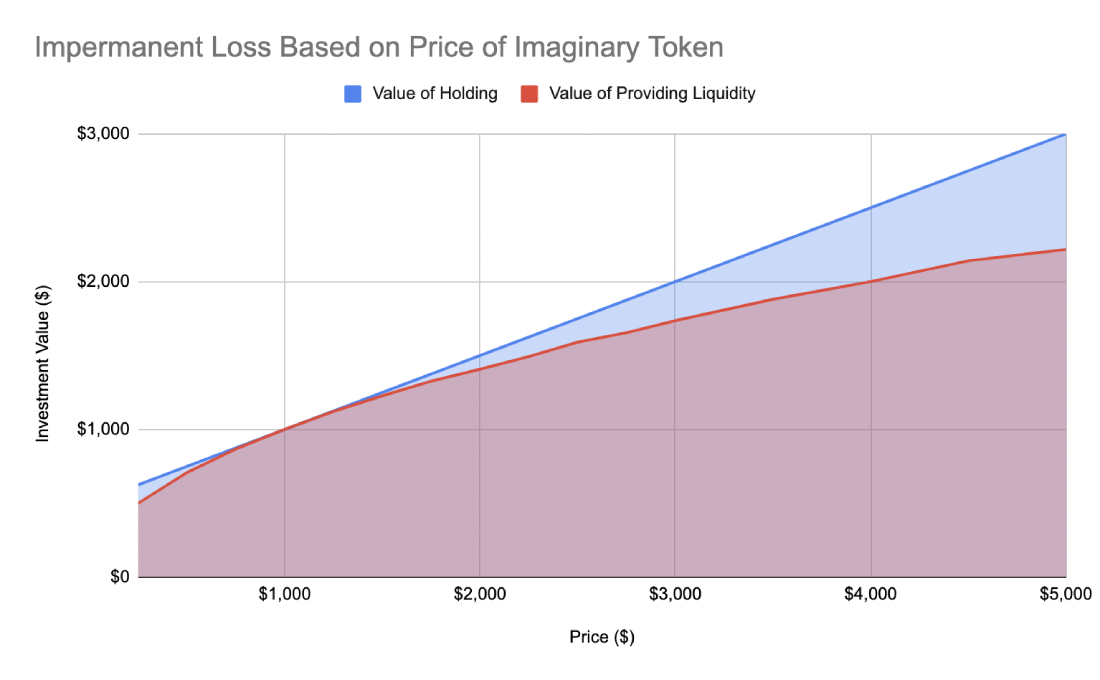
The decision consequence is straightforward. IL is only an acceptable cost when the fee income, plus any incentive rewards, plausibly outweighs the divergence drag between the two assets over the holding period. If a pair is prone to large, sustained price divergence and the pool’s trading volume is thin, the fees collected are unlikely to offset that drag. Otherwise, holding the assets directly may outperform providing liquidity into that pool.
Smart Contract Vulnerabilities
Smart contract risk is categorically different from price-based risk. It does not erode returns gradually. It can eliminate the principal outright if the contract is exploited.
That distinction should drive how much diligence you do before depositing and how much you are willing to put at stake.
A due-diligence pass specific to the LP contract itself looks like this:
- Verifying audits exist for the exact pool or contract version you are depositing into. An audit of an earlier version, or of the protocol in general but not this specific pool, does not cover you.
- Checking whether a bug bounty program exists and is currently active. A lapsed or unfunded bounty offers little practical protection.
- Determining whether the contract is upgradeable, and if so, who controls upgrades. Admin keys held by a small team and a timelocked, multisig-governed upgrade path carry very different risk profiles.
- Confirming whether an emergency pause mechanism exists, and understanding what triggering it would mean for your ability to withdraw funds during an incident.
Because a contract exploit can mean a near-total loss of deposited capital, size your position based on that worst case, not on the expected-case yield. Treat position size as a function of “what can I afford to lose entirely,” and use a small initial deposit as an operational test—approve, deposit, then attempt a partial withdrawal—before committing larger amounts to a new pool or contract you have not used before.
Market Volatility and Token Risk
This section covers two separate risks that get conflated too often, so it is worth labeling them distinctly.
Price volatility risk is the swing in the dollar value of your position as the underlying assets move. Beyond the direct effect on your portfolio’s mark-to-market value, volatility can force adverse rebalancing inside the pool, amplifying the impermanent loss effects covered above.
Track this by monitoring the price change or volatility of each pooled asset over your intended holding window. A pair that looks stable in daily terms can still show meaningful drift over a multi-week horizon.
Token-specific risk is different. It is the risk that a particular asset itself fails to behave as expected, independent of general market direction. This includes peg risk for a stablecoin, a token designed to track $1 or another reference asset, depeg events, risks specific to wrapped or bridged versions of an asset, and issuer or blacklist risk where a centralized issuer can freeze or restrict specific addresses.
For any stablecoin or pegged asset in a pool, peg deviation is tracked—how far the market price drifts from its $1 or reference target—since sustained drift is often the earliest visible sign of a depeg in progress.
Diversification Across Pools

Arguably the most effective risk management measure a team can take is not putting all eggs in one basket. Diversification for an LP means spreading exposure across more than one axis, not just adding more positions.
A workable allocation approach spreads across three dimensions:
- Pool types: mixing stable-focused pools with volatile-pair pools rather than concentrating in one;
- Venues: using at least two independent protocols or programs rather than relying on a single AMM or platform;
- Assets: making sure rewards and fees are not all denominated in one token, which would concentrate token-specific risk even if the pools themselves are different.
A simple position cap rule ties this together in practice: no single pool should be sized large enough that its failure—whether through IL, a depeg, or a contract exploit—could meaningfully damage your entire LP allocation. At the same time, diversifying by pool count alone is false diversification; the right way to proceed is to cover as much ground as you can with the LP set.
Conclusion
The best liquidity providers reviewed in this article—Uniswap, Curve Finance, Balancer, and Binance Liquidity Pools—each solve a different problem: fee-tiered general swaps, tight stable-asset pricing, custom-weighted exposure, and CEX-managed yield. The “best” provider is therefore the one whose mechanism aligns with the trade size, asset pair, custody preference, and risk tolerance you are working with.
Frequently Asked Questions
What is a crypto liquidity provider?
A crypto liquidity provider is either a person or entity supplying liquidity to a product through a CEX order book, or a DEX liquidity pool governed by an automated market maker (AMM).
“Liquidity provider” is often conflated with “liquidity pool” or provider venue is where that liquidity sits and gets matched against trades. Keeping this distinction clear prevents confusion when comparing CEX programs to DEX pools.
How do liquidity pools generate profit?
Liquidity pools generate profit mainly through swap fees paid by traders, plus incentive rewards when a platform offers them on top of base fees.
These profits are variable, not fixed. Actual returns depend on trading volume and the fee rate for that specific pool, not on the size of the pool’s TVL alone. A large pool with low activity can underperform a smaller, busier one.
What is impermanent loss in crypto?
Impermanent loss is the difference in value between holding two assets in a liquidity pool versus simply holding them outside it, caused by the prices of the pooled assets diverging from each other.
Swap fees earned along the way can partially or fully offset this loss, but that offset is not guaranteed. See the Risk Management section above for specific mitigation strategies.
Is providing crypto liquidity free?
No. Costs vary by venue.
DEX liquidity provision involves on-chain transaction and gas costs, while CEX liquidity programs carry platform spreads, fees, or opportunity costs built into the program structure. Before committing capital, check the pool or program’s displayed fee rate along with any withdrawal or claim steps, since those can add extra transactions and extra cost on top of the headline rate.
Who are the top crypto liquidity providers in 2026?
“Top” depends on what you mean. It can refer to the platforms and pools retail users deposit into—covered in this guide’s “Top Crypto Exchange Liquidity Providers” list—or to institutional market makers and OTC firms operating at a different scale entirely.
For platform selection, use Uniswap, Curve Finance, Balancer, and Binance Liquidity Pools as starting points, then run your chosen option through the Selection Criteria section to confirm it fits your specific pair and trade size.