
What Does Fiat Mean in Crypto? Is Crypto Fiat?


Key Takeaways
- 💷 Fiat simply means government-issued money, such as USD, EUR, GBP, or JPY. In crypto, it usually appears in deposits, withdrawals, exchange balances, and fiat-to-crypto trading pairs;
- 💶 Cryptocurrency is not fiat because it is not issued by a sovereign monetary authority, usually does not carry legal tender status, and settles on-chain rather than through bank rails;
- 💴 Stablecoins often act as a bridge between fiat and crypto markets, but they are not fiat themselves. They are blockchain tokens designed to track fiat-denominated value.
Disclaimer
This article is for educational purposes only and does not constitute investment, legal, tax, or financial advice. Fiat access, crypto regulation, banking rails, and exchange policies vary by jurisdiction and platform. Before depositing, trading, or withdrawing funds, readers should review the specific terms, fees, verification requirements, and risk disclosures of the exchange or wallet provider they use.
In crypto talks, you often hear fiat but what is it exactly? Fiat simply means government-issued money, while crypto refers to blockchain-native digital assets that exist outside traditional banking systems. Translated from Latin, ‘fiat’ means “[I] declare” and refers to the fact that unlike commodity money, it is not inherently backed by valuables like gold. But neither is most crypto! So are cryptocurrencies fiat? This article will unpack this definition to demonstrate that they are not the same.
Fiat Meaning in Crypto
Government-Issued Money
From a daily usage standpoint, when you see “fiat” in a crypto app, you are looking at money that meets three specific criteria. First, it is issued by a sovereign government or its monetary authority, such as a central bank. Second, it carries legal tender status, meaning it is officially recognized for settling debts and paying taxes within that jurisdiction. Third, it moves through traditional banking and payment rails rather than existing natively on a blockchain.

It is also worth being precise about the interface language. “Fiat” in crypto products usually points to the currency unit itself, such as USD or EUR, rather than to a specific transfer method. So when a platform displays a “fiat balance,” it is referencing the denomination of your money, not whether you funded it through wire, ACH, card, or another payment rail.
Value Based on Trust
Fiat currency by definition does not derive its worth from a physical commodity. Why is it even valuable then? It derives it from trust in two interlocking systems:
- Trust in the issuing government, which can enforce payment and tax obligations in its own currency, giving that currency built-in demand;
- Trust in the central bank, which is expected to manage monetary policy responsibly, including decisions about interest rates and the money supply.
Modern fiat systems are called “fiat” precisely because there is no promise of redeeming the currency for a fixed amount of gold or silver. The U.S. made this shift explicit in 1971 when it ended the dollar’s convertibility into gold, cementing the dollar — and by extension much of the global financial system — as fully fiat-based.
The practical implication is because fiat value rests on trust rather than a universal commodity peg, its worth is not constant across borders. Exchange rates exist precisely because trust in the US dollar and trust in the euro are separate judgments made by separate markets. Therefore, $100 does not translate to a fixed, unchanging amount in euros; it fluctuates with the exchange rate.
Fiat currencies remain the backbone of the global economy, and traditional fiat markets are enormous, to nobody’s surprise. Daily trading volume across major currencies like the USD and EUR is estimated at roughly $7.5 trillion.
Fiat vs. Cryptocurrency
With the defining components we have just discussed in mind, we are only one side-by-side comparison away from making the difference between fiat currencies and cryptocurrency really evident. Keep in mind that the properties of cryptocurrencies highlighted next are only those relevant in this comparison; for the full rundown of basic cryptocurrency concepts and how it works, you will need our other guide.
| Dimension | Fiat Currency | Cryptocurrency |
|---|---|---|
| Issuer | Central bank/government authority creates new units | Protocol rules determine issuance; no single issuer |
| Supply governance | Supply can expand via policy decisions, including rate changes and quantitative easing | Supply follows protocol rules, sometimes with a hard limit on units that can ever exist |
| Settlement layer | Bank and payment networks, such as ACH, SWIFT, and card networks | Blockchain ledger; transactions settle peer-to-peer |
| Reversibility | Transactions can often be reversed or disputed via chargebacks | Transactions are final once confirmed on-chain |
| Confiscation/freezing | Accounts can be frozen or funds seized by court order or bank policy | Funds can only be moved by whoever holds the private key |
| Typical custody model | Bank holds and administers your account balance | Self-custody through a private key or custodial exchange-held balances |
| Transparency/auditability | Ledgers are private and audited internally by banks/regulators | Ledger is public and independently verifiable by anyone |
| Unit-of-account role | Legal tender for taxes and debts within its jurisdiction | Used as a trading or settlement asset, rarely legal tender |
Issuance and Control
Who can create new units? Who can change the rules governing that currency? Who can block or allow a given transaction?
For fiat, all three answers typically point to centralized institutions. A central bank or treasury sets monetary policy, mints or authorizes new money, and works alongside commercial banks to approve, reject, reverse, or freeze transfers.
For cryptocurrency, these functions are usually split apart. New units are created according to protocol rules, such as mining or staking rewards. Rule changes require consensus among core developers, miners or validators, and node operators. Transaction approval happens through decentralized validation rather than a single gatekeeper.
This is why policy control and protocol governance are not interchangeable. Policy control describes a centralized authority, such as a central bank, making discretionary decisions about money supply and interest rates. Protocol governance describes a distributed process where changes to the rules — for example, block size or transaction fees — need broad agreement across the network’s participants before they take effect.
Bitcoin is the clearest example of protocol governance applied to supply. Its issuance schedule is fixed in code and enforced by network consensus, not by any single institution’s discretion. In between pure fiat and pure crypto, some governments are exploring central-bank-issued digital currencies (CBDC), which would be a state-issued digital form of national currency rather than a decentralized cryptocurrency.
Operationally, decentralization refers to how decision-making and transaction validation are distributed across many independent participants rather than concentrated in one entity. It does not mean there are no intermediaries once real users get involved. If you deposit crypto on an exchange or convert it back to fiat through a bank, you are interacting with centralized intermediaries again, even if the underlying asset’s issuance remains decentralized.
Value and Supply
The scarcity-versus-stability tradeoff is the mechanical heart of the fiat-crypto contrast.
Fiat systems use an elastic money supply as a policy tool. Central banks adjust interest rates and conduct open market operations to influence borrowing, spending, and inflation. The goal is usually price stability, not a fixed quantity of currency.
Cryptocurrencies, by contrast, often issue new units according to often fixed, rule-based schedules. In some cases, there is a hard cap. That rule-based scarcity removes discretionary supply management entirely. It is one reason crypto can be highly volatile: demand can swing sharply without a central policy lever to smooth it out, and speculative activity often amplifies those swings.
A numeric anchor makes the contrast concrete. Bitcoin has a fixed maximum supply of 21 million coins, hard-coded into its protocol as the clearest and very much intentional supply-constraint contrast with fiat issuance. Fiat supply, on the other hand, changes over time because central banks actively expand or contract the money supply in response to economic conditions like employment, growth, and inflation targets.
Regulation and Ownership
Even what “ownership” means differs sharply between these two systems.

Fiat ownership is typically a claim recorded in a regulated banking ledger. Your balance is an entry that the bank maintains and can adjust, reverse, or restrict. This is why chargebacks and reversals are possible on fiat rails.
Crypto ownership is typically defined by control of a private key that can authorize transfers directly on-chain. This is a bearer-like model: possession of the key is functionally equivalent to possession of the asset, and transactions are final rather than reversible.
On top of that, the two types of money have jurisdictional and rights implications:
- Legal tender status: Fiat is recognized for settling debts and taxes within its issuing jurisdiction; crypto generally is not, except in a handful of specific cases.
- Consumer protections/recourse: Fiat transactions often come with dispute resolution, deposit insurance, or chargeback options; crypto transfers generally do not offer an equivalent recourse pathway once confirmed.
- Reporting/tax visibility: Bank accounts are subject to established reporting requirements; crypto holdings increasingly face similar scrutiny, but visibility depends heavily on the platform and jurisdiction involved.
- Enforceability: Fiat accounts can be frozen by court order or bank policy; crypto’s equivalent risk is losing the private key, which is unrecoverable and unrelated to any court action.
The lines can get blurred a little in specific cases: crypto held on an exchange behaves more like an account claim — custodial and subject to that platform’s policies — than true self-custody.
Why Cryptocurrency Is Not Fiat
In short, cryptocurrency fails the legal-tender test that defines fiat money. No government issues Bitcoin, Ethereum, or most other cryptocurrencies, and no sovereign authority backs their value or mandates their acceptance for settling debts and taxes. The fundamental dividing line between the two systems is not the backing but the properties of money.
No Central Issuer, No Legal Mandate
Fiat currency exists because a government says it does; it’s even in the name. A central bank authorizes its creation, and law recognizes it for payment obligations within that jurisdiction.
Cryptocurrency has neither of these anchors. Bitcoin’s issuance follows code, not policy. No treasury stands behind its value. Merchants and institutions that accept crypto do so voluntarily, not because a legal mandate compels them to. That is why crypto’s legal tender status remains the exception rather than the rule, with El Salvador’s brief experiment being one of the few instances where a government tried to blur the fiat/crypto line.
Value Is Not Anchored to Sovereign Trust
Even without the gold standard, fiat’s worth is inseparable from confidence in the issuing government’s ability to tax, spend, and manage monetary policy. Cryptocurrency’s value is driven by a different mix of factors: network adoption, perceived scarcity, speculative demand, or utility within decentralized applications.
Even then, supply and demand are not mandates but mere factors that may contribute to, not set in stone, the value of cryptocurrency. It is true that Bitcoin’s value grows over the years but not only because less bitcoins are up for grabs.

There is no central bank managing interest rates to stabilize a cryptocurrency’s purchasing power, and no treasury standing ready to intervene if its price collapses. That absence of a policy backstop is a feature for decentralization purists but still a risk factor for everyone else.
Settlement Happens On-Chain, Not Through Banks
Fiat moves through a layered system of banks, clearing houses, and payment networks that verify, authorize, and reverse transactions when needed.
Cryptocurrency settles directly on a blockchain, where transactions are validated by distributed network participants rather than a single financial institution. This is not only an infrastructure difference. It changes who can act as a gatekeeper. Pay attention to the phrasing here: there are still gatekeepers, it’s just not banks or governments but miners or validators, or stablecoin issuers.
With fiat, a bank or regulator can freeze an account. With crypto, at least conceptually, control rests with whoever holds the private key — for better or worse.
If you are holding a cryptocurrency, you are holding a bearer-asset claim secured by cryptography, not a government-backed monetary instrument. The distinction matters most when things go wrong. There is no deposit insurance, no chargeback mechanism, and no central authority to appeal to if a transaction is disputed.
Recognizing cryptocurrency as fundamentally distinct from fiat — rather than a digital variant of it — is the first step toward understanding both its risks and its appeal.
How Fiat Works in Crypto Transactions
Moving money between a bank account and a crypto exchange involves more infrastructure than the “buy” or “sell” button suggests. Behind every trade sits a chain of payment rails, verification checks, and settlement windows that determine when funds actually become usable. This mechanics-level flow explains why an “instant” crypto purchase does not always mean instant access to your coins or your cash.
Bank Account Connections
Linking a bank account to a crypto exchange is usually a short operational sequence behind a simple-looking form:
- Identity match — the exchange checks that the name on the bank account matches the name on your exchange profile.
- Account ownership verification — this typically happens through a bank-connection provider or through micro-deposits, where the exchange sends small test amounts and asks you to confirm the values.
- Data capture — the exchange records the details needed to move money, such as account and routing numbers or an IBAN, along with the account holder name.
- Payout profile creation — once ownership is confirmed, the exchange saves this bank account as a trusted destination for withdrawals and, in some cases, deposits.
This process is about connecting the payment rail correctly. It is not the same as verifying who you are as a person; broader identity checks are handled separately under custody and account verification.

Even a properly connected account can fail or later stop working. Common failure modes include:
- Name mismatch — the bank account holder name does not match the exchange account name.
- Unsupported bank type — some institutions, including certain credit unions, business banks, or foreign banks, are not compatible with the exchange’s bank-connection provider.
- Joint or business accounts — shared or entity-owned accounts sometimes fail automated ownership checks designed for individual accounts.
- Bank blocks or revoked permissions — the bank may flag or block transfers to crypto platforms, or the user may have revoked API-based access without realizing it.
- Regional rail not supported — if the bank operates on a payment rail the exchange does not support in that country, withdrawals may be disabled even if the account looks linked.
Crypto Purchases with Fiat
Buying crypto with fiat is actually two separate events layered together:
- A funding event, where fiat is deposited or authorized through card, bank transfer, wire, or another supported method;
- An asset purchase, where that fiat is exchanged for crypto at a trade execution price.
Users often experience these as one action, but the exchange treats them as distinct steps internally.
The distinction matters most when you buy “instantly.” If you fund a purchase with a card or instant bank transfer, the exchange may let the trade execute immediately while the underlying fiat is still settling in the background. To manage that settlement risk, platforms sometimes apply temporary withdrawal holds or limit the transferability of the purchased crypto until the funding transaction fully clears.
| Method | Speed to Buy | Speed to Withdraw | Typical Fee Drivers | Common Limits/Holds |
|---|---|---|---|---|
| Card | Instant | Delayed until funds clear | Card processing fee, higher risk premium | Lower daily limits, temporary holds |
| ACH transfer | Near-instant to buy | 3–5 business days | Low or no transaction fee | Withdrawal hold until ACH settles |
| Wire transfer | Same-day, bank-dependent | Fast once received | Wire fee from sender and/or receiving bank | Higher minimums, no instant option |
| Instant bank transfer | Instant | Delayed pending settlement | Transaction fee for instant service | Temporary transferability limits |
Crypto Sales into Fiat
Selling crypto for fiat also happens in two legs. First, the sale converts your crypto into a fiat balance held on the exchange’s internal ledger. This is not the same as having money in your bank account. Second, a separate withdrawal instruction is needed to send that fiat balance over bank rails into your linked account.
In other words, “selling to fiat” can leave your funds sitting on the exchange indefinitely until you initiate a withdrawal.
One nuance is worth knowing: the price you see quoted and the price you actually receive can differ. This happens because of spread, slippage, and the order type used. A market order fills quickly at the best available price, which can move during execution. A limit order fills only at your specified price or better, but may not execute immediately.
That gap between quoted and executed price directly changes the net fiat amount that lands in your on-platform balance before withdrawal fees are even applied.
Fiat in Crypto Wallets and Exchanges
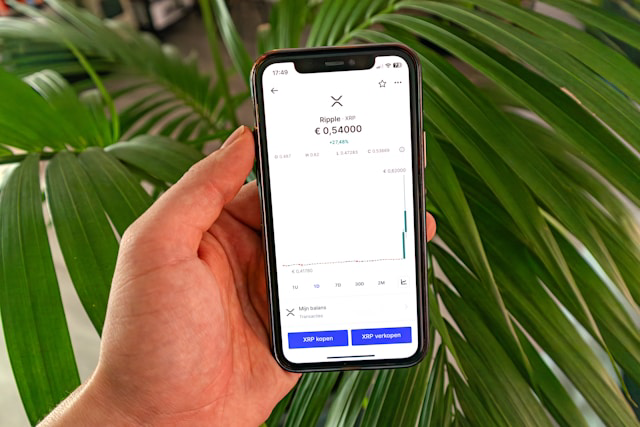
Fiat Balances on Centralized Exchanges
The fiat number you see in a crypto exchange app is not sitting in a vault somewhere with your name on it. It is an off-chain account balance — a ledger entry the exchange maintains internally rather than a token living on a blockchain.
That distinction matters because it shapes what you can actually do with it. You cannot “send” that balance to an on-chain address the way you would send cryptocurrency, because it never existed on-chain in the first place. Moving it requires the exchange’s supported bank/payment rails, or converting it into crypto or a stablecoin.
A fiat balance on a centralized exchange typically enables several actions:
- Placing buy orders for crypto assets;
- Holding uninvested cash between trades;
- Converting between supported fiat currencies, such as USD to EUR where offered;
- Withdrawing to a linked bank account;
- Paying exchange fees in fiat, where the platform supports it.
What is available depends on the exchange’s banking partners and compliance setup in your region. Not every platform offers every action in every jurisdiction.
It is also worth being precise about what this balance is not. An exchange fiat balance is not the same as a personal bank deposit account. A bank account is a regulated deposit relationship with protections like deposit insurance attached to it. An exchange ledger entry is a claim against the platform, subject to that platform’s policies.
Withdrawal eligibility can also be affected by method-specific holds. A balance showing as “available” is not always immediately withdrawable.
Crypto Wallet Limitations
“Wallet” gets used loosely across crypto products, and that loose usage is where confusion starts.
A non-custodial wallet is one where you control the private key, and that key authorizes on-chain assets directly. There is no intermediary holding the assets on your behalf.
The crypto exchange “wallet” is different. It is a custodial account, meaning the exchange holds the underlying keys and your balance is really an entry in its system, similar to the fiat ledger described above.
The main constraint is simple: non-custodial wallets cannot natively store government-issued fiat like USD or EUR, because those currencies are not on-chain assets. There is no blockchain ledger for a dollar itself to live on. When users want something that behaves like fiat value while staying on-chain, they usually hold stablecoins instead, such as Tether or USDC. That is a separate model with its own issuer and reserve considerations.
Long story short, a “$” displayed in a non-custodial wallet is usually a price conversion for reference, not an actual USD balance sitting in the wallet. Hitting “Send” in a non-custodial wallet sends on-chain assets to another wallet address; it does not send bank money. Converting crypto into spendable fiat generally requires an off-ramp: sending the asset to a crypto exchange or broker with bank rails, then withdrawing from there.
Fiat Pricing and Trading Pairs
Fiat Quotes and Market Prices
When a crypto exchange displays “BTC = $67,000,” that figure is shorthand for a trading pair: BTC/USD.

In any pair, the first asset listed is the base currency — the thing being priced. The second is the quote currency — the fiat currency used to express that price. On a BTC/USD price tile, USD is the ruler, and BTC is what is being measured against it.
Every fiat price you see on an exchange is this base/quote relationship compressed into a single number.
That compression hides an important detail: the fiat price is not universal. BTC/USD and BTC/EUR can show different values at the same moment. Bitcoin might trade at $67,000 against the dollar and €61,800 against the euro. These are not just static currency conversions of each other. The difference is driven by the prevailing exchange rate between USD and EUR and the liquidity conditions on the market venue generating each quote.
Two exchanges, or two currency pairs, can diverge slightly even after adjusting for foreign exchange rates, simply because order books are not identical across venues.
Fiat-to-Crypto Pairs
Not all fiat-facing pairs behave the same way. The category you are trading in changes what to expect:
- Fiat-spot pairs, such as BTC/USD, trade directly against a government-issued fiat currency. User consequence: liquidity and spreads vary widely by exchange and by which fiat quote is on the other side.
- Stablecoin-quoted pairs, such as BTC/USDT, trade against a dollar-pegged token rather than actual USD. User consequence: you are exposed to stablecoin-specific liquidity and, in principle, de-peg risk. Converting back to real fiat requires an extra step.
- Local fiat pairs, such as BTC/JPY, trade against a non-USD national currency. User consequence: your profit-and-loss reporting currency is whatever fiat the pair is quoted in, which matters for tax reporting and performance comparison.
A common source of confusion sits right on top of this taxonomy. Many exchanges display a USD-equivalent price even when your order actually executes against a stablecoin pair like BTC/USDT. That USD figure is a display currency — a reference conversion for readability. The execution pair is the actual order book your trade fills against.
If you are trading BTC/USDT, you have not touched the fiat-spot BTC/USD market at all, even if the screen shows a dollar amount throughout.
Conclusion
Fiat is a claim backed by government authority and administered through regulated banking relationships. Cryptocurrency is a bearer-asset claim secured by cryptography and controlled by whoever holds the private key. Neither model is inherently safer or more convenient in every context. They allocate control, recourse, transparency, and responsibility differently.
Frequently Asked Questions
What does fiat mean in crypto?
In a crypto app, “fiat” means the government-issued currency unit used for pricing, deposits, and withdrawals. Examples include USD, EUR, GBP, and JPY.
A fiat balance on an exchange is not an on-chain asset. It is an off-chain ledger balance maintained by the platform. Additionally, a wallet showing a “$ value” is often only a conversion display for reference, not an actual fiat balance held in the wallet.
Is cryptocurrency a fiat currency?
No. Cryptocurrency is not fiat because it is not issued by a sovereign monetary authority and usually does not carry legal tender status as government-backed money.
The nuance is stablecoins. Some cryptoassets are pegged to fiat values and often described as fiat-referenced, but they remain crypto tokens on a blockchain rather than the actual fiat currency they track.
What happens if trust in a fiat currency disappears?
When trust in a fiat currency collapses, the typical chain reaction is accelerating inflation, a falling exchange rate, and a shift toward alternative stores of value or units of account. Germany’s 1923 papiermark hyperinflation is the textbook illustration, with the currency collapsing to roughly 4.2 trillion papiermarks per US dollar.
In comparable modern scenarios, crypto markets sometimes see a local uptick in demand for USD-pegged stablecoins or major cryptoassets as alternatives. However, actual access still depends on the local banking rails and exchanges available in that region.