
Best Crypto Airdrops in 2026: Review & Guide


Airdrops are one of the most popular methods to get new crypto before listing with little to no capital involved. However, scammers gravitate toward the promise of "free money", and very few projects end up making anything worthwhile, if they ship at all. With this guide, we hope to equip you with everything you need to avoid both pitfalls and give that confidence boost you may need to start airdrop hunting.
The analysis in this guide is approached through an on-chain and security-first lens — meaning campaign legitimacy is evaluated using contract data and verifiable on-chain activity, and scam-risk signals are treated as a primary filter, not an afterthought.
This guide cannot guarantee that any reader will receive an allocation from any campaign listed. Airdrop eligibility is determined entirely by each project. Always verify claim links against official project sources before connecting a wallet.
What Are Crypto Airdrops?
Crypto airdrops distribute free or conditional tokens directly to wallet addresses, typically to bootstrap a user base, reward early adopters, or decentralize token ownership. A project team defines eligibility rules, captures a snapshot of qualifying accounts, and delivers tokens either automatically or via a user-initiated claim on-chain or through an exchange.
Definition
A crypto airdrop is a distribution of tokens by a blockchain project to a set of wallet addresses, requiring no direct purchase from recipients—though "free" is not always accurate. They can push tokens to broad audiences with minimal criteria to generate awareness and expand a project's holder base, allocate tokens to wallets that already interact with a protocol, or be tied to sign-up activity, trading volume, or promotional campaigns of an exchange or platform.
At scale, the behavior these distributions incentivize is measurable: according to DappRadar, billions of dollars in TVL sit in tokenless protocols actively tracked by users anticipating future airdrop events, illustrating how significantly airdrop expectations shape on-chain activity.
How Airdrops Work

The end-to-end flow of a typical airdrop involves several actors—the project team, a smart contract, and the recipient's wallet—moving through a defined sequence:
- Project team defines eligibility criteria — rules are established (e.g., minimum token balance, specific contract interactions) and an eligibility list is compiled from on-chain data.
- Snapshot is taken — the blockchain state is captured at a specific block height, freezing wallet balances and activity records that determine who qualifies.
- Eligibility list is published — the finalized list, often encoded as a Merkle root committed to a smart contract on Ethereum or another blockchain, becomes the immutable record of qualifying addresses.
- Claim site or distribution mechanism goes live — a Web3 front end or exchange interface opens, allowing eligible users to connect their wallet and verify inclusion.
- User submits a claim transaction — the user's wallet signs and broadcasts a transaction; the claim function on the smart contract verifies the Merkle proof and records the claim.
- Smart contract releases tokens — upon successful verification, the contract transfers the token allocation to the user's wallet address, creating an on-chain record of the transfer.
- Distribution window closes — unclaimed tokens are typically returned to the project treasury or burned after a set deadline.
When an airdrop is delivered through a centralized exchange, the platform credits tokens to a user's account balance internally—no on-chain transaction occurs from the user's perspective, because the exchange holds the tokens in its own custodial wallet and updates its internal ledger. In a non-custodial on-chain claim, every step—from the claim call to the token transfer—is recorded on the blockchain and verifiable by anyone. Users relying on custodial drops may not see an on-chain transaction because the exchange batches or holds assets without broadcasting individual transfers to each recipient.
Eligibility and Snapshots
A snapshot is a record of blockchain state captured at a specific block height or timestamp. At that exact moment, the balances, transaction histories, and contract interactions of all wallet addresses are frozen for eligibility evaluation—activity before or after the snapshot block does not affect the outcome.
Common and testable eligibility conditions include minimum token balance, specific contract interaction or governance participation. Nevertheless, a wallet that satisfies all stated rules can still be excluded due to: sybil filtering (algorithmic detection of addresses linked to coordinated farming behavior), geographic or regional exclusions embedded in the distribution terms, dust-threshold rules that disqualify wallets below a minimum activity or balance floor, or the use of contract wallets that the distribution mechanism does not support.
Distribution Methods
Airdrops reach wallets through several distinct mechanisms, each requiring a different action from the recipient:
| Method | How It Works | User Action Required |
|---|---|---|
| Automatic on-chain airdrop (push) | The project's smart contract sends tokens directly to eligible wallet addresses without any action required from recipients. | None — tokens appear in the wallet automatically. |
| User-initiated claim (pull) | Tokens are held in a smart contract; eligible users must connect their Web3 wallet to a claim site and submit a claim transaction. | Submit a claim transaction on-chain. |
| Exchange credit | The centralized exchange identifies eligible accounts and credits tokens to internal balances, handling custody on the user's behalf. | Log in to the exchange account; may require KYC completion. |
| Vesting or streaming distribution | The full allocation is not released at once; tokens unlock incrementally over time according to a schedule, sometimes after an initial cliff period. | Time-based unlock; some implementations require a periodic claim transaction per vesting tranche. |
Some extra friction you can anticipate for each is:
- Receiving unsolicited tokens from unknown contracts carries interaction risks—verify the token contract before engaging with it.
- Gas fees on Ethereum and other networks can make claiming small allocations economically unviable; calculate net value before submitting the transaction.
- Tokens credited to an exchange account depend on the platform listing and supporting the token—a delisted or unsupported token may become inaccessible.
- Misunderstanding the cliff period (the initial lockup before any tokens unlock) leads users to expect liquidity that is not yet available; read the vesting schedule before making financial decisions.
Airdrop Types Explained
Understanding which type of crypto airdrop you're looking at determines everything: how you qualify, how much effort you'll spend, and what risks to watch for. They roughly fall into the six categories outlined below.
Standard Airdrop
The most straightforward entry point into Web3 token distribution. A project announces an open enrollment window, users submit a wallet address (and sometimes complete a basic verification step), and tokens are distributed en masse.
- How eligibility is determined: Registration during an open enrollment window, sometimes combined with a simple on-chain or off-chain action such as joining a mailing list or connecting a wallet to a project's claim page.
- What the user must do: Navigate to the official claim page, connect a compatible blockchain wallet, and submit the required information before the deadline. Some drops require holding a minimum balance or being on a specific network.
- Selection method: Every qualifying wallet that completes registration within the window receives an allocation, assuming eligibility criteria are met.
- Common distribution method: Claim page (user-initiated transaction) or automatic airdrop directly to qualifying wallet addresses.
- Typical proof artifacts: Wallet signature confirming address ownership; occasionally an email confirmation or Discord role.
- Primary scam/risk pattern: Phishing clone sites that mimic the official claim page and drain wallets when users approve a malicious smart contract interaction.
- Who it's best for: New users entering crypto who want low-barrier exposure to a token without significant upfront commitment.
One more distinction to keep in mind here is open enrollment drops, which accept registrations with no hard cap on participants, versus limited-window drops that close registration after a set date or participant count is reached — missing the window means no eligibility. Common eligibility invalidators include sybil filter detection (multiple wallets linked to one identity), incomplete task steps, and submitting a wallet on the wrong network.
Bounty Airdrop
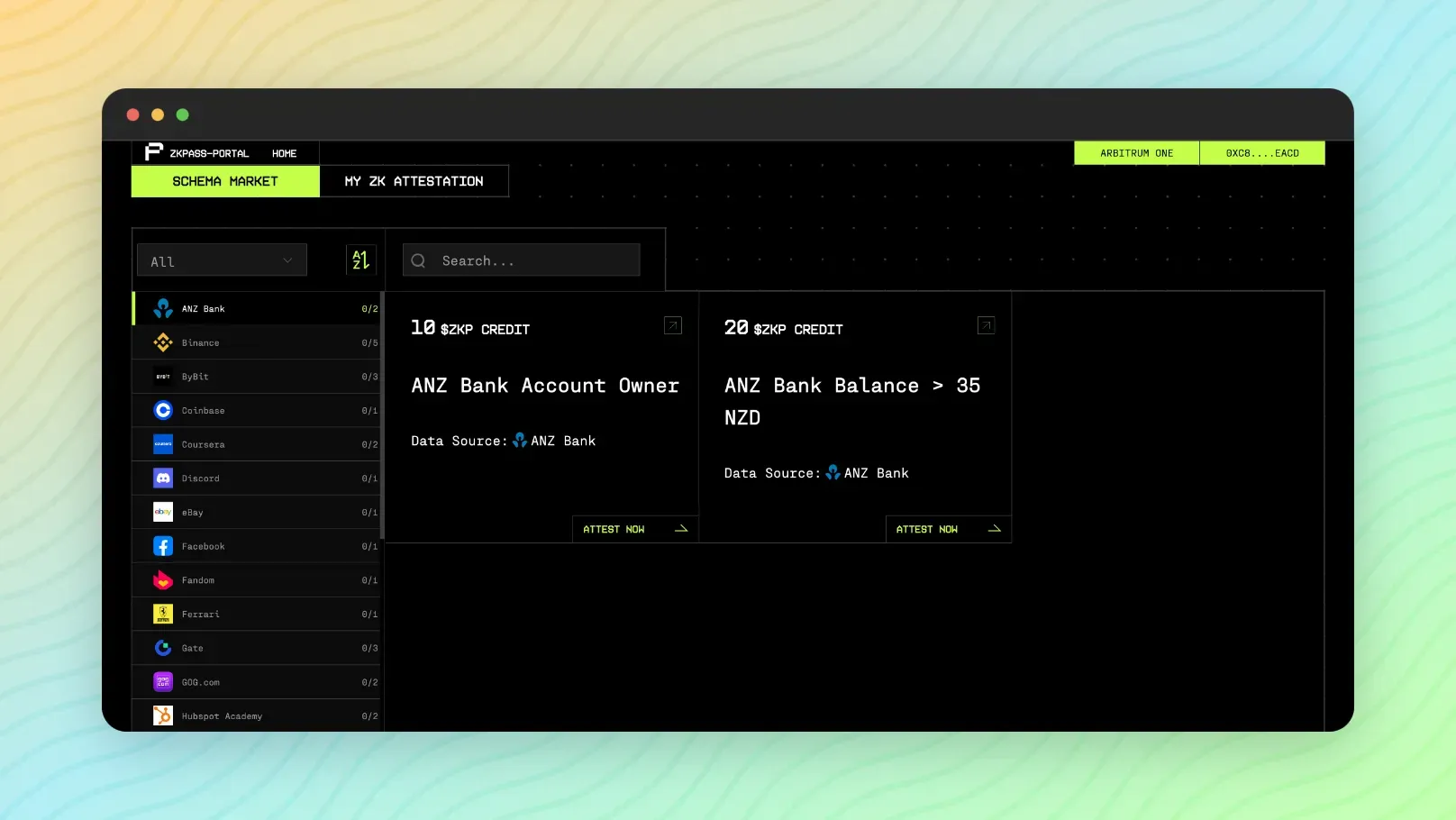
Bounty airdrops reward effort. Instead of simply holding an asset or registering, users complete a defined set of tasks and earn points or a token allocation proportional to their contribution.
- How eligibility is determined: Completion of one or more tasks from a published bounty list, verified either automatically (on-chain or via API) or through manual project review.
- What the user must do: Select tasks from the bounty taxonomy, execute them, and submit proof through the project's campaign platform before the deadline.
- Selection method: Ranked or points-based — higher task completion or higher-weighted tasks yield a larger allocation. Selection is not random but may have a minimum threshold below which no reward is paid.
- Common distribution method: Claim page after campaign close, with allocations calculated from accumulated points.
- Typical proof artifacts: Tweet URLs, Discord role screenshots, referral tracking links, on-chain transaction hashes, or submitted content links reviewed by the team.
- Primary scam/risk pattern: Fake bounty platforms that collect personal data or social account credentials without ever distributing tokens.
- Who it's best for: Active community members and content creators who are comfortable trading time and social visibility for token exposure.
Bounty campaigns typically span several meaningfully different categories: social amplification (following accounts, retweeting, tagging friends), content creation (writing articles, producing videos, translating materials), bug reporting (submitting documented vulnerabilities or UI issues), referrals (driving new user sign-ups via a tracked link), testnet usage (interacting with a protocol's test environment on a blockchain testnet), and liquidity or volume contribution (providing liquidity to a DeFi pool or reaching a trading volume threshold).
Projects score tasks using either a fixed-point system, in which each task has a predetermined value, or subjective review when a team member grades quality, common for content-related tasks. Disputes and rejections are typically handled through a support ticket or Discord channel during a short post-campaign review period; decisions are rarely reversed unless a clear platform error occurred.
Holder Airdrop
Holder airdrops reward users who already own a specific asset at a defined point in time. For example, Flare Network that operates within the XRPL ecosystem has held numerous airdrops of various tokens for XRP holders. The mechanics hinge on snapshots — blockchain-recorded balance checks at one or more block heights.
- How eligibility is determined: Ownership of a qualifying asset (token, LP token, or NFT) recorded at the snapshot block(s).
- What the user must do: Hold the eligible asset in a self-custody wallet before and through the snapshot date. No active claim action may be required if the distribution is automatic, but users should confirm their wallet is on the correct network.
- Selection method: Guaranteed and proportional — larger holdings typically yield a larger allocation, though some drops use a flat per-wallet amount with a minimum balance threshold.
- Common distribution method: Automatic airdrop to qualifying addresses, or a claim page opened after snapshot verification is complete.
- Typical proof artifacts: Snapshot block record (publicly verifiable on a blockchain explorer); no user-submitted proof is usually required.
- Primary scam/risk pattern: Fake "bonus claim" announcements sent after a real holder drop, instructing users to connect their wallet to a fraudulent site to "unlock" additional tokens.
- Who it's best for: Long-term holders who already own qualifying assets and prefer passive eligibility over active task completion.
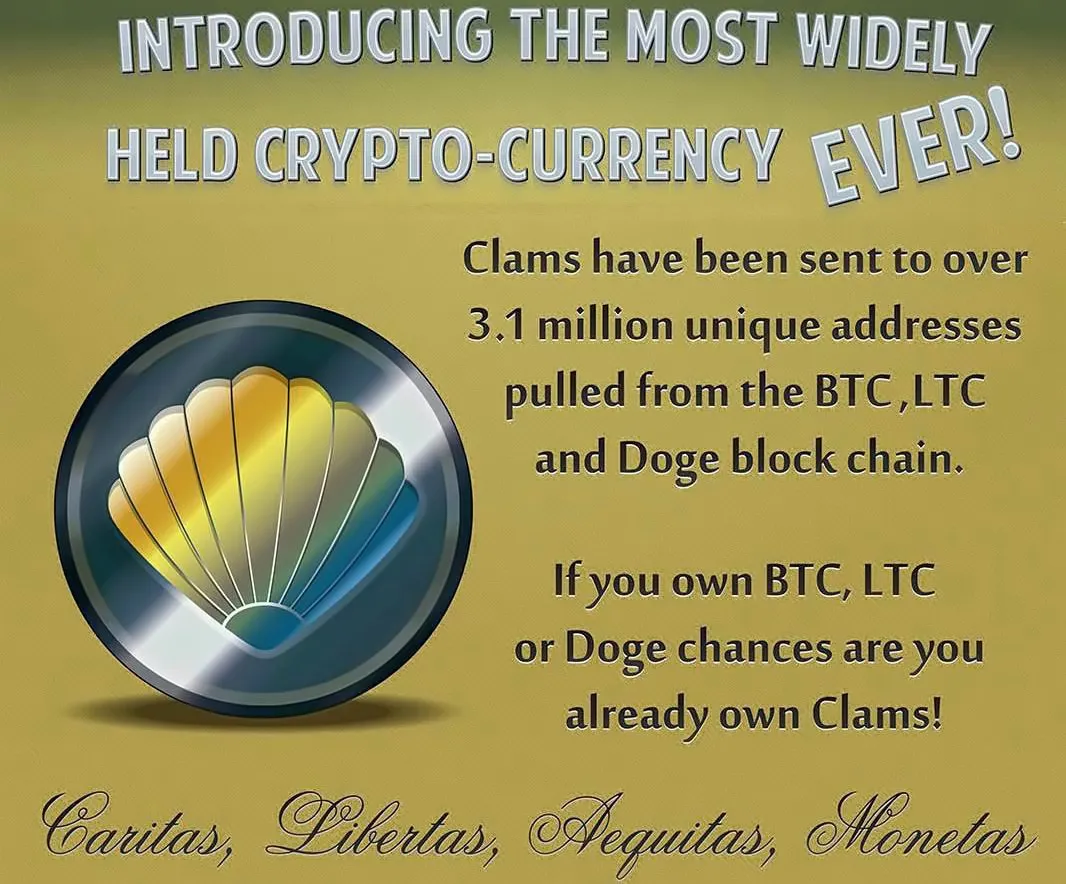
Some projects take one snapshot at a specific block; others take multiple snapshots over several days or weeks and reward the average balance, which penalizes users who acquire the asset only briefly around a known snapshot date. The qualifying asset may be a native token (e.g., a governance or utility token), an LP token representing a DeFi liquidity position, or an NFT from a specific collection. Each type signals a different user behavior the project wants to reward. Holding an asset on a centralized exchange means the exchange holds the private keys and may or may not pass the airdrop through to users — this decision lies entirely at the exchange's discretion. Self-custody wallet holders, however, receive the distribution directly from the smart contract, with no intermediary.
Exclusive Airdrop
Exclusive airdrops are distributed to a predefined, invite-controlled group. This is the prime example use case for whitelists in crypto. Access is gated before distribution even begins, and eligibility is non-transferable in most implementations.
- How eligibility is determined: Membership in a specific group verified on-chain (allowlist contract) or off-chain (role assignment in a partner community or internal contributor list).
- What the user must do: Obtain the required gate — this is typically done before the airdrop is announced, through early participation, community contribution, or NFT ownership. Once the gate is set, late attempts to qualify are rarely accepted.
- Selection method: Guaranteed for those on the allowlist — no lottery or ranking is involved. The challenge is getting on the list, not winning a draw.
- Common distribution method: Claim page restricted to allowlisted wallets; the smart contract rejects transactions from non-eligible addresses.
- Typical proof artifacts: On-chain allowlist inclusion (verifiable by querying the contract), Discord role (e.g., "Early Contributor" or "Partner Community Member"), or NFT in wallet.
- Primary scam/risk pattern: Impersonators selling fake "allowlist spots" or "whitelist access" via DMs, exploiting the perceived scarcity of exclusive access.
- Who it's best for: Early adopters and ecosystem insiders who are already deeply embedded in specific Web3 communities or partner protocols.
Exclusivity gates commonly used are allowlist (wallet address pre-registered in a smart contract), early contributor roles (Discord permissions granted for founding-era participation), regional restrictions (geographic eligibility enforced via KYC or IP check), partner community membership (holding a role in an allied project's server), NFT ownership from a specific collection, or invite-only beta participation (verified via product usage data).
To verify its legitimacy, cross-reference the exclusivity claim against the project's official announcements (pinned Discord posts, official Twitter/X account, or the project's documentation site). For on-chain allowlists, query the contract address published in the official announcement to confirm your wallet address appears before interacting with any claim page.
Raffle Airdrop
Raffle airdrops introduce randomness to the picture. Eligibility to enter may be open or gated, but the final allocation is determined by a random draw, not guaranteed by participation.
- How eligibility is determined: Entry into the raffle pool by completing a qualifying action (following an account, holding a minimum token balance, or passing an anti-bot check). Eligibility to enter does not guarantee a token reward.
- What the user must do: Complete the entry requirements and submit within the raffle window. Some raffles require a wallet signature; others require on-chain interaction.
- Selection method: Probabilistic — winners are selected randomly from the eligible pool. Explicitly random; the outcome cannot be influenced by effort level beyond meeting the entry threshold.
- Common distribution method: Claim page opened for winners after the draw, or automatic airdrop to winning wallet addresses.
- Typical proof artifacts: Wallet signature, entry transaction hash, or raffle platform confirmation of registration.
- Primary scam/risk pattern: Fake "you've won" notifications sent to non-winners via Discord DMs or email, directing them to a phishing claim page.
- Who it's best for: Users willing to accept binary outcomes (win or lose) in exchange for low-effort entry, particularly when the token reward is high relative to the time cost of entering.
Raffle airdrops generally present one of two profiles: high-reward/low-probability (large token allocation, small winner pool relative to entrants — worth entering only if the effort cost is minimal) or low-reward/high-probability (smaller allocation, larger winner percentage — lower upside but better odds). Neither profile is universally better; the decision depends on your time cost per entry relative to the token's estimated value.
To combat bots, projects commonly deploy captcha verification, wallet age requirements (wallets created below a minimum age are disqualified), and on-chain activity thresholds (a minimum number of prior transactions) to filter automated entries. These measures reduce the total eligible pool, which improves the probability of winning for legitimate users who meet the thresholds — making activity-gated raffles have meaningfully better odds than they appear to at first glance.
Retroactive Airdrop
Popularized by UNI distribution back in 2020, retroactive airdrops reward behavior that already happened. Users did not know they were being evaluated at the time of their on-chain actions; the project analyzes historical blockchain data and distributes tokens to wallets that demonstrate genuine usage.
- How eligibility is determined: Historical on-chain activity on a specific protocol or ecosystem, assessed against criteria defined after the fact by the project team.
- What the user must do: Nothing — at claim time. Eligibility was determined by past behavior. Users typically verify eligibility on a claim page and sign a wallet transaction to receive the allocation.
- Selection method: Criteria-based and guaranteed for qualifying wallets, but the criteria are set unilaterally by the team and may not be fully disclosed until after the snapshot period ends.
- Common distribution method: Claim page with a defined claim window (unclaimed tokens are often returned to the treasury after expiry), or direct airdrop to qualifying addresses.
- Typical proof artifacts: On-chain transaction history (publicly verifiable on a blockchain explorer); no user submission required.
- Primary scam/risk pattern: Fake eligibility checker sites that request wallet connection and signature approval to "check" eligibility, then drain assets via a malicious smart contract approval.
- Who it's best for: Power users of DeFi, NFT platforms, and cross-chain infrastructure who interact with protocols regularly without specifically farming for rewards.

The most commonly rewarded actions include but are not limited to executing token exchanges on a DEX, moving assets between blockchain networks, depositing assets into a DeFi liquidity pool, participating in on-chain governance proposals, publishing a smart contract to mainnet or testnet, creating an NFT or interacting with a minting contract, locking tokens in a staking contract, operating validator or RPC infrastructure, opening positions on perpetual DEXs or borrowing/supplying on lending protocols, or interacting across several protocols in the same ecosystem rather than a single contract repeatedly. The natural conclusion here is that the rewarded action depends on the type of platform or product.
Retroactive distribution lets a project identify and reward wallets that used the protocol when it had no token — the users with the strongest signal of genuine interest rather than incentive-driven behavior. It aligns token ownership with real users and creates a more distributed, engaged initial holder base. The most common disappointment factor is criteria opacity: users who interacted extensively often discover their specific actions were not weighted, or that activity after an undisclosed cutoff block was not counted because it was deemed late farming rather than authentic usage.
Best Crypto Airdrops in 2026
If you are scanning for the best crypto airdrops, what matters is not hype; it is the mechanism (snapshot vs. points), your cost-to-participate, and the verification path you will use before you ever connect a wallet.
Every campaign below is evaluated against five filters before it appears here:
- Cost-to-participate: Free, gas-only, or capital required — stated explicitly for each entry.
- Time commitment: Estimated weekly effort so you can match campaigns to your schedule.
- Eligibility mechanism: Snapshot, quests, points, referral, or testnet — the mechanic that determines who qualifies.
- On-chain footprint required: Which chains and dapps you need to interact with to be considered.
- Main risks: Scams, sybil detection rules, KYC requirements, and withdrawal or lockup limits.
Active Airdrop Campaigns
To understand the scale of what "active" looks like in 2026, consider a few real benchmarks drawn from live campaign data: RateX reported 42,000+ eligible addresses, Dreamcash Season 1 offered participants a share of $200,000 USDT weekly, and dMeet announced a $2.6M reward distribution (Source: Dropstab Activities). These examples illustrate that active campaigns range from broad wallet-count eligibility to high-frequency weekly reward pools.
Before the individual entries, it helps to separate what you will actually observe in-app:
- Points/quests active right now: You will see a live point balance page or quest dashboard (e.g., a "Tasks" or "Earn" tab) inside the protocol's app. Completed quests update your counter in real time. Evidence: your point balance increases after each qualifying action; incomplete quests remain visually flagged.
- Snapshot-based active right now: There is no dashboard to watch. Eligibility is determined by your wallet state at one or more past or future block numbers. Evidence: your on-chain transaction history and current token/liquidity balances are the only record that matters. Check block explorers (Etherscan, Solscan, Polygonscan) to confirm your activity timestamps.
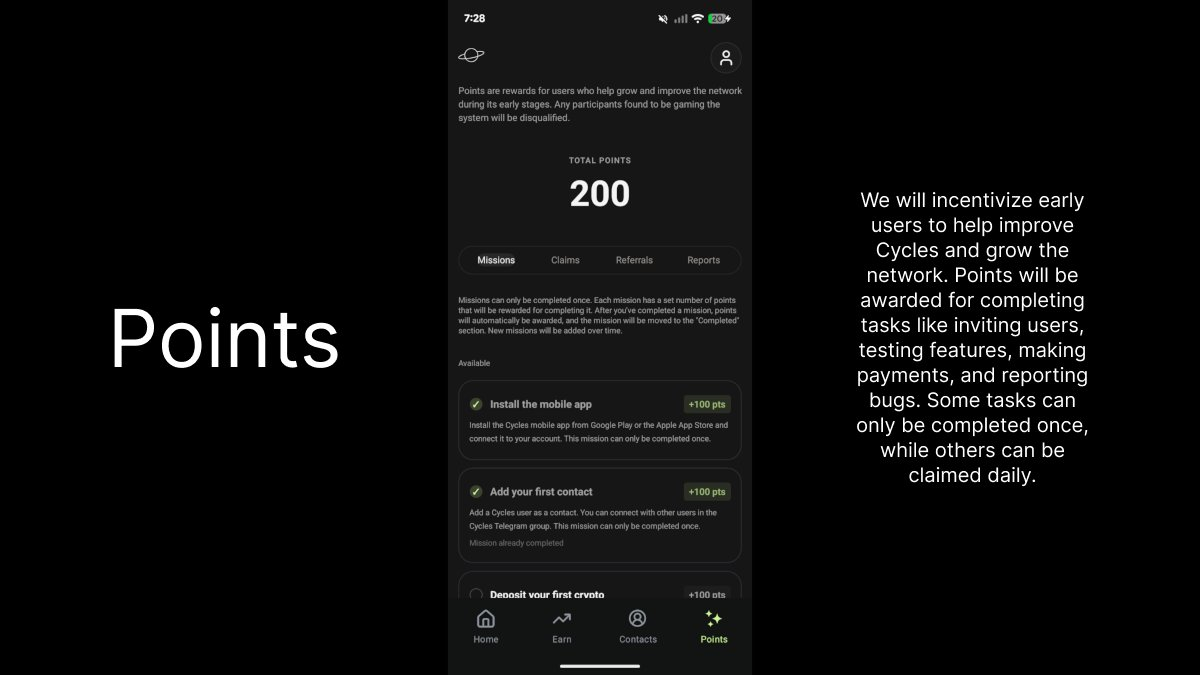
Campaign: Cycles
- Status: Active
- What to do:
- Create an account on the Cycles beta website.
- Download the app for iOS or Android.
- Create your wallet inside the app.
- Start farming points by completing missions and exploring the available features during beta.
- Monitor the official announcement channel for snapshot or claim date updates.
- Eligibility signal: Inclusion in the eligible portion of the leaderboard; on-chain interaction with RateX smart contracts prior to snapshot.
- Costs: No capital lockup required beyond the transaction itself.
- Where to verify: Official Cycles website and their verified social channels only. Cross-reference at Dropstab Activities.
- Stop/avoid conditions: Do not interact with any site claiming to be Cycles app that is not linked from the official domain. Stop if prompted to approve unlimited token spend to an unverified smart contract. Avoid if KYC requirements conflict with your jurisdiction.
Campaign: Dreamcash
- Status: Active (Season 1 ongoing)
- What to do:
- Register on the Dreamcash platform using a non-custodial wallet.
- Complete weekly quest tasks visible on the quest dashboard to accumulate entries.
- Track your point balance after each task — the dashboard updates in real time (points/quests mechanic).
- Confirm your share eligibility before each weekly $200,000 USDT pool distribution closes.
- Withdraw winnings only to a wallet you control; do not use exchange deposit addresses.
- Eligibility signal: Active quest completion visible on your in-app dashboard; weekly participation streak maintained.
- Costs: Free to participate; gas fees apply for any on-chain claim on Ethereum or Polygon.
- Where to verify: Official Dreamcash app and announced social handles. Reference campaign details at Dropstab Activities.
- Stop/avoid conditions: Do not pay any upfront fee to "unlock" winnings — legitimate weekly pools never require payment to claim. Stop if the site requests your seed phrase.
Campaign: dMeet
- Status: Active
- What to do:
- Create a verified dMeet account linked to your Web3 wallet.
- Complete the onboarding tasks listed in the in-app quest section.
- Participate in community or social actions flagged as reward-eligible.
- Monitor the $2.6M reward distribution timeline via official channels.
- Eligibility signal: Completed onboarding and social engagement tasks; wallet linked to a participating account prior to distribution snapshot.
- Costs: Free; no capital required. Minor gas fees may apply for on-chain claim transactions.
- Where to verify: Official dMeet website and verified social profiles. Campaign listed at Dropstab Activities.
- Stop/avoid conditions: Avoid third-party "dMeet claim" sites. Do not sign any blockchain message from an unverified source claiming to distribute dMeet rewards.
Upcoming Airdrop Campaigns
Event triggers to watch are the signals that typically indicate a campaign is transitioning from "prep phase" to "live." Each trigger has a natural home where it first appears:
- Testnet phase changes — Watch the project's developer blog or GitHub for "mainnet readiness" announcements; testnet deprecation often precedes TGE.
- TGE (Token Generation Event) announcements — First appears in official Discord announcements and governance forums; also surfaces on DappRadar's new listings feed.
- Mainnet launch — Confirmed on the project's official site and blockchain explorers (new smart contract deployment visible on Etherscan or Solscan).
- Bridging incentives — Announced in protocol Discord or on the bridge's own incentive page; watch for "bridge X to earn" campaign posts.
- New quest seasons — Quest platforms (Galxe, Layer3, Zealy) post new campaign seasons; follow these platforms directly and set project-specific alerts.
- Exchange listings — CEX listing announcements appear on exchange official blogs; a confirmed listing often precedes or coincides with airdrop claims opening.
- Governance forum proposals — Snapshot.org and Tally show new proposals; a tokenomics or airdrop allocation proposal is a strong forward signal.
- Token contract deployment — A new ERC-20 or SPL token contract deployed by a known project address is verifiable on-chain before any official announcement.
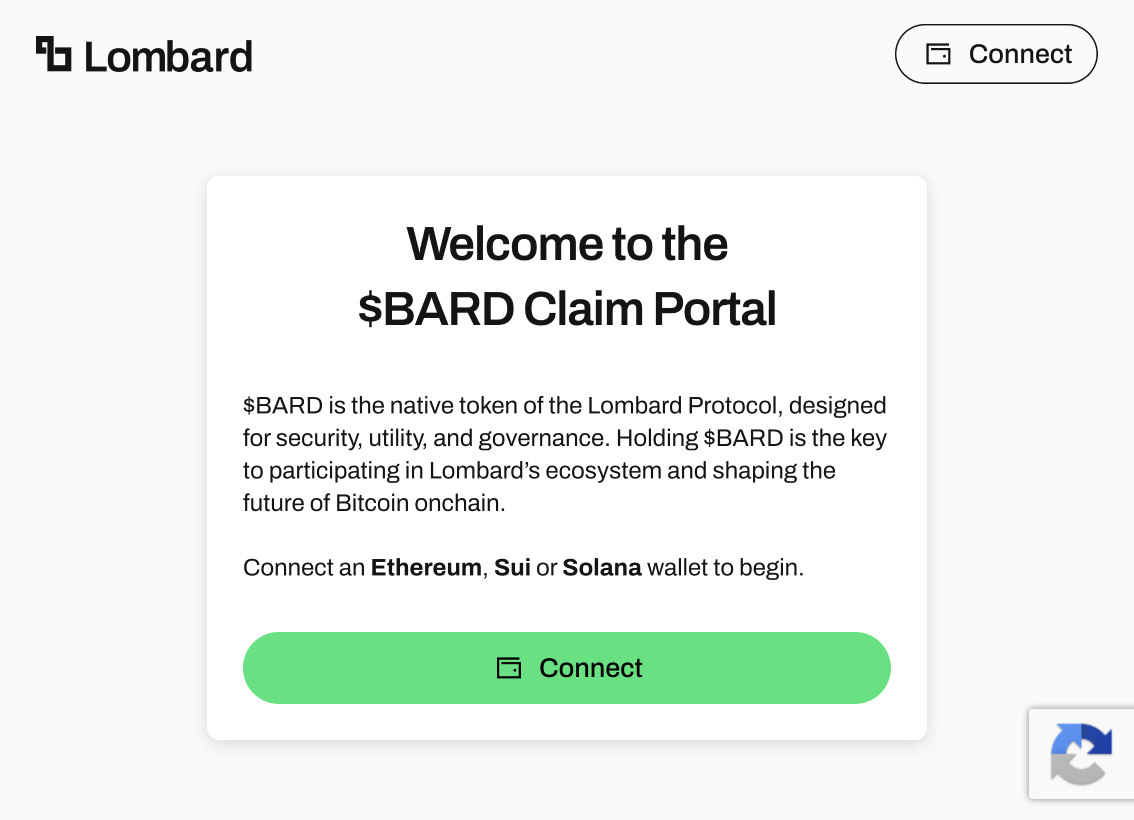
Upcoming Entry: Lombard Protocol & $BARD
To prepare for this one:
- Wallet/network setup: Install a Solana-compatible wallet (e.g., Phantom or Backpack) and fund it minimally for transaction fees (SOL for gas). If the project bridges to Avalanche or Polygon, set up those networks in MetaMask as well.
- Minimum interactions to be ready: Execute one or two small, genuine interactions with the protocol's testnet or early mainnet (swap, deposit, or liquidity provision as documented officially). Keep transaction counts organic — not repetitive.
- What NOT to do prematurely: Do not visit or connect to any "early claim" or "pre-launch airdrop" page — these are almost always scams at this stage. Do not sign any message from unofficial sources. Do not bridge large capital based solely on airdrop speculation before official confirmation.
Upcoming Entry: Aligned & $ALIGN
- Wallet/network setup: Ensure your MetaMask is configured for the relevant Ethereum L2 (Arbitrum, Optimism, or Base) and that you have a small ETH balance for gas.
- Minimum interactions to be ready: Interact with ZKArcade to farm points.
- What NOT to do prematurely: Avoid minting NFTs or purchasing tokens from unofficial contracts claiming to be affiliated with the project before a token contract is publicly announced. Do not share wallet details in Discord DMs even if the sender appears to be a moderator.
No-Token Projects to Watch
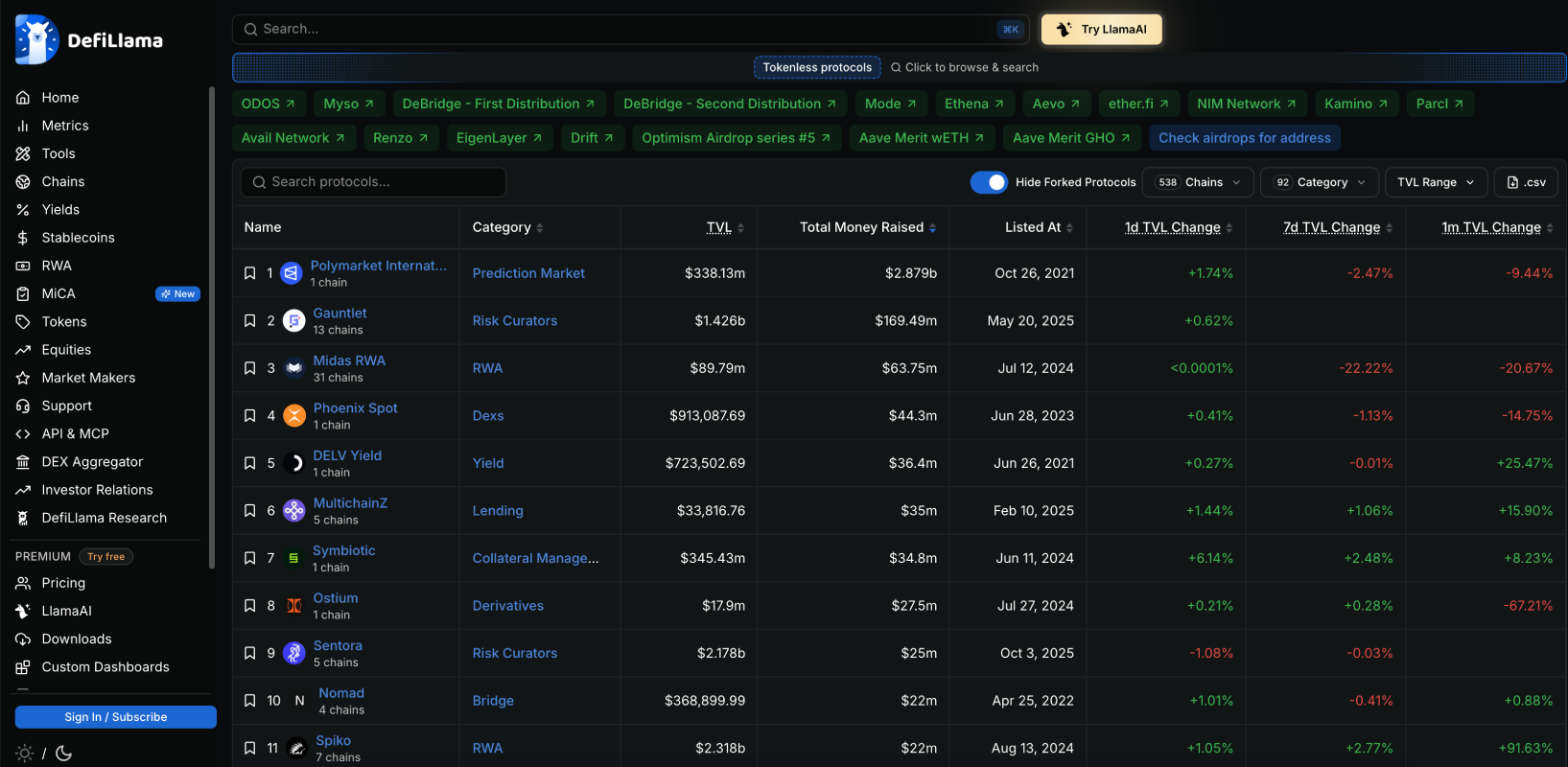
As of the latest DappRadar data, there are 154 tokenless protocols with a combined TVL of $19.35B — meaning a significant share of DeFi and Web3 activity is happening in ecosystems that have not yet issued a token.
Before spending time on any tokenless project, separate projects that can issue their own tokens from those that have explicitly confirmed no launch plans. The next step should be to confirm strong adoption signals for the former category: high and growing TVL, active weekly users, multiple partner integrations, and at least one prior incentive season. Worth consistent, low-cost interaction. Interact with the latter only if you use the product for its own value.
How do you recognize strong adoption trends? Check DappRadar or DeFiLlama for 30-day and 90-day TVL trajectory. Rising TVL without a token is a strong forward signal. Weekly active wallets (visible on DappRadar protocol pages) growing month-over-month indicates genuine user retention, not just airdrop farming. New integrations with established protocols (e.g., listed as collateral on a major lending platform, added to a major DEX aggregator route) appear in official announcements and on-chain. Alternatively, a protocol that has already run one testnet incentive or points season and announced a second is signaling long-term user acquisition intent. GitHub commit frequency and audit completions from reputable firms are publicly visible and indicate a project with operational runway.
For capital-light interactions with tokenless projects, use low-fee networks first — Polygon, Avalanche, or Solana-based deployments cost a fraction of Ethereum mainnet gas. Execute small, genuine transactions: a single small swap or a minimal liquidity deposit is sufficient to establish an on-chain history. Vary your actions across sessions — avoid executing the exact same transaction type at the exact same time each day, which triggers sybil detection filters. Bridge only if the protocol's documented activity explicitly requires it — bridging for its own sake adds cost and on-chain noise without clear eligibility benefit. Space interactions over real calendar time (days or weeks apart) rather than batching all activity in one session.
Points and Quest Systems
| Common point systems in 2026 | How Points Accrue | Optimization Lever | Common Pitfall |
|---|---|---|---|
| Volume-based | Points scale with trading or liquidity volume | Concentrate volume in verified eligible pairs or pools | Wash trading triggers sybil filters and may result in full disqualification |
| Time-based streaks | Daily or weekly login/interaction maintains a multiplier | Set a calendar reminder for minimum qualifying action each period | Missing one streak window can reset a multiplier built over weeks |
| Liquidity duration | Points accumulate per dollar per day of liquidity provided | Provide liquidity early and hold rather than chasing the highest APY pool | Removing and re-adding liquidity frequently reduces duration score and may signal farming behavior |
| Social/referral | Points awarded for verified referrals or social task completion | Focus on genuine referrals with active wallets; fake accounts are purged | Referred accounts with zero on-chain history are often retroactively disqualified, removing the referrer's points |
| Multi-chain breadth | Points for activity across multiple supported chains | Spread genuine interactions across 2–3 chains rather than repeating on one | Over-diversifying across 6+ chains with minimal activity on each can look bot-like and dilute eligibility |
Maintaining your own records matters because eligibility disputes are common: protocols have excluded wallets due to data errors, and users with documented proof of activity have successfully appealed. Track the following for every project you participate in:
- Wallet address(es) used — Note which wallet interacted with which protocol; mixing wallets across projects without documentation creates confusion at claim time.
- Dates and timestamps — Log when you completed each task, including the approximate block number where possible.
- Tasks completed — Keep a simple checklist (spreadsheet or notes app) of each quest or action marked complete, matched to the in-app quest name.
- Points balance snapshots — Take a screenshot of your point balance at regular intervals (weekly or after each major task). Point balances have been retroactively adjusted or reset without warning.
- Transaction hashes (tx hashes) — Copy the tx hash from your wallet or block explorer for every qualifying on-chain action. A tx hash is immutable proof that an action occurred at a specific time, which is the strongest evidence in any eligibility dispute.
- Official source of each task — Note the URL or Discord message link where the task was announced so you can verify it was a legitimate campaign requirement and not a third-party imitation.
Where to Find Legit Airdrops
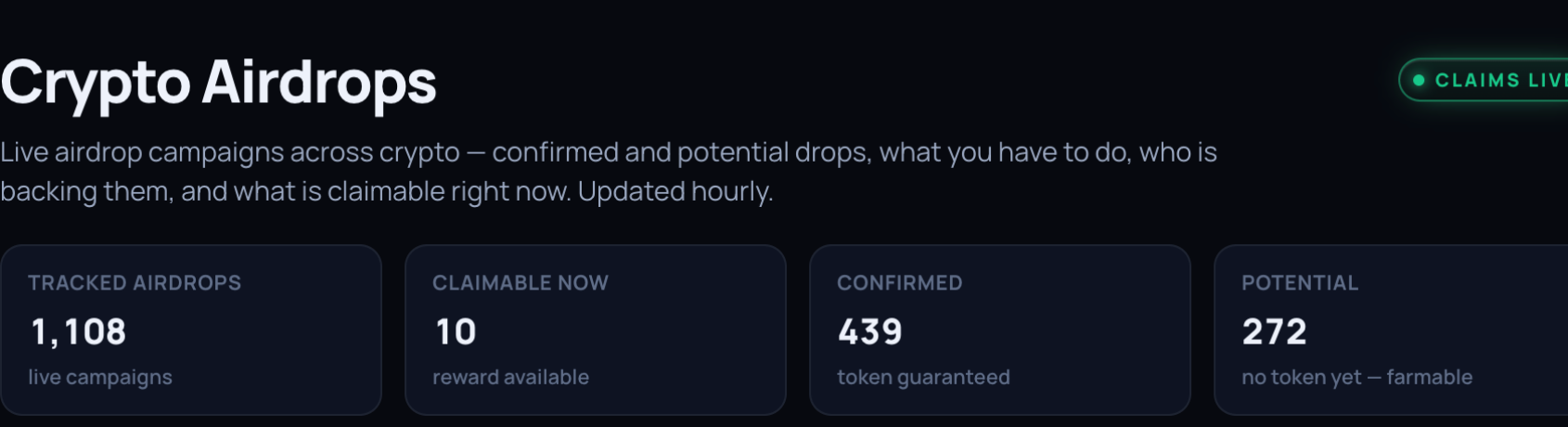
Finding legitimate airdrops requires a repeatable workflow—not tips from anonymous Telegram groups or paid "alpha" channels. The process breaks down into three stages: discovering candidates through tracking platforms, verifying them through official project channels, and monitoring your eligibility status over time. What you should also know before even starting is that tracking or aggregating does not necessarily imply due diligence or endorsement—your proverbial homework remains up to you, not a tracking page.
Airdrop Tracking Platforms
Airdrop trackers—platforms like those listed on DappRadar's rewards page and Dropstab's activities feed—aggregate live and upcoming campaigns across Web3 in one place. Before you rely on any tracker, spend 60 seconds running these checks: check where the links go, if the announcement is in the official channels, and if the chain matches your wallet network.
On a trustworthy tracker, links redirect to official project domains (not affiliate or referral bridges), entries are clearly labeled, each listing shows chain/network, required tasks, and snapshot or claim windows; the tracker has a visible update cadence—stale listings with no timestamps are a warning sign, and their linking policy is transparent (no undisclosed paid placements).
Trackers are good for airdrop calendars and deadlines, broad discovery across ecosystems, and estimating your competition should you participate. What they do not do is verify the safety of claim portals or links, confirm contract addresses, validate team or project legitimacy, or generally remove the need for DYOR. Every opportunity you find on a tracker must be verified against official project channels before you connect a wallet or sign a transaction.
A significant portion of the potential airdrop pipeline sits in protocols that have not yet launched a token. According to data tracked on DappRadar's rewards page, tokenless protocols represent a large and active segment of Web3 projects worth monitoring—making it worthwhile to track engagement with these ecosystems now, before any token is announced. Discovery tools like tracker pages help surface these projects early, so monitoring them alongside confirmed campaigns is a reasonable strategy.
Legitimate airdrop opportunities are free to discover and monitor. However, claiming or becoming eligible may still require paying gas fees for on-chain interactions such as bridging, swapping, or staking. That is normal. What is not normal—and is a firm red flag—is any platform or person asking you to pay to "unlock," "activate," or "access" an airdrop. Discovery and monitoring should cost nothing beyond your time.
Official Project Channels
Even after a tracker flags an airdrop as confirmed, you need to verify it independently. The verification sequence below is designed to avoid circular confirmation—where one unofficial source simply copies another.
- Start from the project's own website domain. Go to the URL you can independently confirm (e.g., via CoinGecko or CoinMarketCap project pages, which list official links). Do not use a URL you received in a DM or saw in a comment thread.
- Identify the exact social handles linked on that website. The project's own site should list its official X account, Discord, and any other channels. Note the exact handles—character by character.
- Find the same announcement posted on at least two of those official channels. For example, the airdrop should appear both on the project's website or blog and on its verified X account or Discord announcements channel. If you can only find it in one place, treat it as unverified.
- Confirm that contract addresses and claim links are published only in those official posts. Any claim link or token contract address you use should trace directly back to a post made by the verified account—not a repost, a reply, or a "helpful" community member sharing it.
Community platforms—especially Discord and Telegram—are where impersonation is most aggressive. Ignore all DMs about airdrops, especially unsolicited, pay attention to only announcements in the official channels posted by verified team members, and avoid shortened links (bit.ly or even t.co). These steps can help you avoid airdrop-related scams like fake "airdrop checker" sites, cloned domains and spoofed handles, cross-post mismatches and unrelated accounts posing as official.
Snapshot and Eligibility Monitoring
Once you've identified and verified a legitimate opportunity, the work shifts to monitoring your eligibility. Campaigns vary significantly in their rules, timelines, and required actions—missing one detail can mean missing the airdrop entirely.
For each campaign you're tracking, maintain relevant info in a simple spreadsheet or notes table. Tracking multiple campaigns without a record-keeping system leads to missed windows and duplicate effort.
Even eligible participants sometimes don't appear on claim lists. Here are the most common causes and what to do:
- Multiple wallets: If you interacted with a protocol from more than one address, eligibility may apply to only one—or each may qualify independently. What to do: Check each wallet address separately on the official eligibility checker.
- Wrong network: A blockchain interaction made on a testnet, or on a different chain than the one being snapshotted, typically won't count. What to do: Verify which network the snapshot covers and confirm your activity occurred there using a block explorer.
- Centralized exchange vs. self-custody wallet: Interactions made through a centralized exchange are attributed to the exchange's wallet, not yours. If the project required self-custody activity (via MetaMask, Trust Wallet, or another non-custodial wallet), CEX-routed transactions likely won't qualify. What to do: Review the project's eligibility criteria carefully; contact the project through official channels if the criteria are ambiguous.
- Smart contract upgrades changing eligibility: Some protocols update their smart contract or retroactively adjust eligibility criteria. What to do: Re-check the official eligibility page after any announced contract migration or update, and verify against the most recent announcement rather than an older cached version.
- Geo/region restrictions: Some projects exclude users in specific jurisdictions due to regulatory requirements. What to do: Review the official terms of the airdrop for any geographic exclusions; if restricted, there is generally no workaround—attempting to circumvent restrictions via VPN may violate the project's terms.
How to Claim a Crypto Airdrop

Claiming a crypto airdrop involves more than clicking a link and connecting a wallet. Done incorrectly, it can result in lost funds, missed eligibility windows, or malicious contract approvals. The workflow below is designed to be execution-ready: verifiable, chain-aware, and structured to minimize common errors at each stage.
Wallet Setup
Before interacting with any airdrop claim, run through this decision checklist to confirm you are using the correct environment:
- Which chain/network is the airdrop on? Identify whether the token is being distributed on an EVM-compatible chain (Ethereum, Polygon, Avalanche, Binance Smart Chain, etc.) or a non-EVM chain (Solana). This determines which wallet software and network configuration you need.
- Do you need a burner wallet or can you use your primary wallet? For high-risk or unaudited claims, a dedicated burner wallet limits exposure. Reserve your primary wallet for protocols you have fully verified.
- Is a hardware wallet recommended? For claims involving significant value, a Ledger or similar hardware device adds a physical confirmation layer. Assess the claim's risk profile before deciding.
- Does your wallet support the chain? MetaMask and Trust Wallet support EVM chains natively. Solana requires a Solana-native wallet (e.g., Phantom). Confirm compatibility before proceeding.
For EVM chains: Add the network manually in MetaMask (Settings → Networks → Add Network). Verify the Chain ID against the official chain registry (e.g., chainlist.org) before saving. Do not trust chain IDs provided in airdrop announcements alone. For Solana specifically, confirm you are connected to Mainnet Beta (not Devnet or Testnet) unless the project explicitly specifies otherwise.
| Minimum safe baseline configuration: | Requirement |
|---|---|
| Wallet profiles | Use separate browser profiles or wallet instances for airdrop activity vs. primary holdings |
| Approval/revoke tooling | Install or bookmark a revoke tool (e.g., Revoke.cash for EVM, Solana FM for Solana) before claiming — plan to use it immediately after |
| Seed phrase backup | Write seed phrases on paper; store offline in a physically secure location. Never store in cloud notes, email drafts, screenshots, or password managers synced online |
| Pre-claim backup confirmation | Verify you have access to your backup before connecting to any claim interface |
Task Completion
Many airdrops require completing on-chain or off-chain tasks to qualify. Retain proof artifacts for every task category — these are essential if eligibility is disputed or requires manual review.
To control the costs associated with using the blockchain:
- Estimate gas before executing tasks. Use your wallet's built-in gas estimator or a tool like ETH Gas Station (Ethereum) or the Solana explorer fee preview. If fees are disproportionate to the expected airdrop value, defer until network congestion drops.
- If a transaction fails or reverts: Check the revert reason on the block explorer (e.g., Etherscan → transaction → "Revert reason"). Common causes include insufficient gas limit, slippage tolerance too low, or the task window having closed. Fix the specific parameter and retry — do not simply resubmit the same transaction blindly.
- Avoid duplicate task spend: Some smart contract task trackers record completion on first success. Resubmitting a completed task wastes gas and does not increment your points or eligibility score. Before retrying, confirm on the project's task dashboard or contract whether the task is already marked complete for your wallet address.

Completing qualifying tasks on a secondary wallet while your primary wallet holds the tracked assets or Web3 activity history is a common mistake. Confirm the exact wallet address the project is tracking before executing any tasks — cross-check against the project's eligibility checker if one exists.
Eligibility Tracking
Eligibility verification must start from authoritative sources. Clicking unknown links shared in social feeds or DMs is one of the highest-risk actions in the airdrop process.
- Start from the official project channel. Navigate to the project's official website, Discord, or Twitter/X account directly (not via search ads or DM links). Locate the announcement post for the airdrop.
- Cross-check on an airdrop tracking platform. Platforms like DappRadar (dappradar.com/rewards) aggregate airdrop data. Use these to confirm the claim exists and is active — not as your primary navigation source.
- Confirm the snapshot or season window. Identify the exact date range that determines eligibility. Note whether the project uses a single snapshot, multiple snapshots, rolling average calculations, or points epochs (see "Snapshot math" below).
- Check your address on the official eligibility page. Enter your wallet address only on the URL confirmed in step 1. Verify the page's domain character-by-character.
- Record your allocation and the claim contract address. Note the token amount, vesting or lock terms, and the smart contract address for the claim. Verify the contract address against the project's official documentation or GitHub.
What to do if eligibility differs across sources? Wait for an official post from the project team clarifying discrepancies — do not act on data from unofficial mirrors. Compare the claim contract address shown on the tracking platform against the address published in the official announcement. If they differ, do not proceed. Report discrepancies in the project's official support channel and await confirmation before connecting your wallet.
Token Claim Steps
Follow this ordered sequence for every claim. It is chain-agnostic and applies whether you are claiming on Ethereum, Solana, Polygon, Avalanche, or another blockchain.
- Verify the official claim URL. Retrieve the URL exclusively from the project's official website or pinned announcement. Confirm the exact domain — look for character substitutions (e.g., "rn" replacing "m").
- Connect your wallet. Connect only the wallet address that holds your eligible activity. Use MetaMask, Trust Wallet, or your hardware-backed wallet depending on your setup decision from the Wallet Setup phase.
- Verify the active network. Before the claim interface loads any data, confirm your wallet is on the correct network. Check the network name and the Chain ID (EVM) or cluster (Solana) one more time.
- Read the claim parameters. The claim interface should display: the token name and contract address, the amount allocated to your address, and any vesting schedule, lock period, or cliff date. Do not proceed if any of these are absent or unverifiable.
- Simulate or preview the claim if available. Some claim interfaces and wallets (or tools like Tenderly) allow transaction simulation. Run it to confirm the expected token receipt and gas cost before submitting.
- Review the wallet signature or transaction details. Before approving, read what your wallet is asking you to sign. Confirm it is a claim transaction (or a typed message), not an open-ended token approval or a setApprovalForAll call.
- Submit the claim. Confirm the transaction and note the gas fee you are accepting.
- Confirm on the block explorer. Once submitted, copy the tx hash and verify it on the relevant explorer (Etherscan, Solscan, Polygonscan, etc.). Confirm the transaction status is "Success" and that the token transfer event matches your expected allocation.
- Immediately review and limit approvals granted during the claim. After the claim is confirmed, open your revoke/approval tool and check what contracts were granted spending permissions. Revoke any approvals that are not required for ongoing use.
After the claim, confirm you have received the token in app and block explorers; avoid “dusting” by checking if the tokens you received come from an officially verified address, and keep hashes with timestamps for recordkeeping—might come in handy once tax season comes.
Key Considerations, Risks, and Scam Prevention

Claiming airdrops carries real financial risk. The steps below are designed to help you evaluate any airdrop opportunity, recognize the attack patterns bad actors use, and interact with unknown smart contracts without exposing your primary funds or wallet keys.
Common Scam Patterns
Airdrop-specific scams follow repeatable playbooks.
1. Fake Claim Sites Mimicking Official Domains
- Attacker goal: Capture wallet signatures or approvals on a site the user believes is legitimate.
- User action triggered: Connecting a wallet and signing a transaction on a cloned or typosquatted domain (e.g., uniswap-airdrop.com instead of app.uniswap.org).
- Damage path: The malicious site submits a token approval or permit signature the moment the user signs, draining approved tokens instantly.
2. Malicious Token Approvals and Allowances
- Attacker goal: Gain an unlimited or high-value spending allowance over your tokens via a smart contract interaction.
- User action triggered: Confirming an "approve" transaction presented as a required step to claim.
- Damage path: The attacker's contract holds an open allowance and can drain the approved token at any future time, even days later.
3. Signature Phishing (Permit / Seaport-Style Signatures)
- Attacker goal: Obtain a valid off-chain signature that authorizes token transfers without a visible on-chain approval step.
- User action triggered: Signing a message in MetaMask or another wallet that appears to be a harmless login or eligibility check.
- Damage path: The signature is a valid EIP-2612 permit or marketplace order. The attacker submits it on-chain and transfers assets without any further user action.
4. "Airdrop Support" Impersonation via Telegram / Discord DMs
- Attacker goal: Extract a seed phrase, private key, or remote wallet access under the guise of customer support.
- User action triggered: Responding to an unsolicited DM from an account posing as project staff and following their instructions.
- Damage path: Seed phrase or key is disclosed; wallet is emptied completely and irreversibly.
5. Dusting / Poisoned Airdrop Tokens
- Attacker goal: Lure the recipient into interacting with a malicious smart contract by sending a small, unsolicited token to their wallet.
- User action triggered: Attempting to sell, swap, or interact with the unexpected token, which routes through an attacker-controlled contract.
- Damage path: The interaction triggers a malicious approval or drains gas and associated tokens via reentrancy or hidden contract logic.
6. Fake Snapshot / Eligibility-Check Tools
- Attacker goal: Collect wallet signatures or approvals from users who believe they are simply checking eligibility.
- User action triggered: Connecting a wallet to an unofficial "check your eligibility" site and signing a prompt.
- Damage path: The connection prompt is actually an approval or permit request; assets are drained immediately or allowances are set for later exploitation.
Red Flags to Avoid
| Red Flag | What to Do Instead |
|---|---|
| Domain doesn't match verified social links — The URL differs from the one linked in the project's official Twitter/X bio, Discord announcement channel, or GitHub. | Navigate directly from a verified bookmark or the project's official GitHub. Never use links from DMs, ads, or search engine results. |
| "Connect wallet to check eligibility" on a non-official page — Any third-party site asking for a wallet connection to verify eligibility. | Eligibility checks from legitimate projects are typically read-only (they use your public address). Enter your address manually on the official site; do not connect. |
| Request to disable security features — The site or support contact asks you to turn off your browser extension's security warnings or MetaMask's phishing detection. | Treat this as an immediate disqualifier. Close the page. |
| Claims requiring you to send ETH, SOL, USDT, or any token to "activate" — Any airdrop that demands a payment to unlock or release tokens. | Legitimate airdrops do not require you to send funds. Any payment requirement is a scam. |
| Urgency timers and countdown pressure — "Claim expires in 00:14:32" messaging designed to rush your decision. | Slow down. Real deadlines are published well in advance. Open the official announcement and verify the actual date independently. |
| Unusual permission prompts — MetaMask or Trust Wallet shows setApprovalForAll, an unlimited spend allowance, or a spender address you don't recognize. | Reject the transaction. Look up the spender address on a block explorer before reconsidering. |
| "Manual claim" messages from newly-created accounts — A Discord or Telegram account created recently (check join date / account age) contacts you with a claim link. | Ignore and report. Project teams never DM users first with claim instructions. |
Wallet Security Best Practices
Airdrop hunting requires a distinct operational security model. For a start, your primary holdings should never be in a wallet that touches unknown dApps. Read more on crypto wallet security on our dedicated guide.
More on creating a separate wallet address used exclusively for interacting with airdrop claim sites and unknown smart contracts on Ethereum, Solana, Polygon, and other networks: this wallet should hold only the minimum funds needed for gas. Think of it as a sacrificial account: if it is compromised, your core holdings are unaffected.
Logically, keep earned or claimed tokens in a different wallet that has never interacted with any dApp. Transfer tokens out of your burner wallet after every successful, verified claim before accumulating anything of value there.
Use separate wallets for separate ecosystems. Your Ethereum / Polygon EVM wallet should not be the same as your Solana wallet. Cross-chain exposure means a compromise on one network doesn't cascade to another.
After every claim interaction, revoke any token approvals granted. Never leave standing unlimited approvals to contracts you used only once—they have the potential to become attack vectors when you don’t expect.
Never import a seed phrase into any website, browser extension you don't recognize, or any form that asks for it. Your seed phrase should only ever be entered into the wallet application itself during initial setup or restore.
Before connecting to any unknown dApp, move all funds out of the interacting wallet into your secure storage wallet first. The interacting wallet should be empty except for gas. Confirm this before clicking anything.
Transaction and Signature Review
Before you sign anything, identify what type of action is being requested. Each type carries a different risk.
Step 1 — Identify the Request Type
- (1) Token Approval Transaction: An on-chain transaction where you grant a smart contract the right to spend your tokens. Look for the word "Approve" in the MetaMask prompt, the spender contract address, the specific token being approved, and the allowance amount. If the amount reads "Unlimited" or a very large number, treat it as high-risk.
- (2) Contract Interaction: An on-chain transaction calling a function on a smart contract (e.g., "claim," "mint," "stake"). Check the "To" address (is it the verified contract?), the ETH/SOL value field (should it be sending any native token?), and the function being called if your wallet displays it.
- (3) Off-Chain Message Signature: A request to sign a readable message that does not itself cost gas. These appear as a text prompt. Read the full message text. If it contains contract addresses, token amounts, deadlines, or spender fields, it is not a simple login — it is likely a permit or authorization.
- (4) Permit Signature (EIP-2612 or similar): A structured off-chain signature that, once submitted by an attacker, acts as a token approval on-chain. Wallet prompts for these often show fields like owner, spender, value, deadline, and nonce. If you see these fields in a signature request on any airdrop claim site, reject it unless you have independently verified the contract and destination.

Step 2 — Check These Specific Fields
- Spender address: Does it match the verified contract address published by the project?
- Token: Is it the token you expect to approve? Attackers sometimes request approval for high-value tokens unrelated to the airdrop.
- Allowance amount: Is it the exact amount needed, or is it set to maximum/unlimited?
- setApprovalForAll: If this appears anywhere in the transaction data, reject immediately unless you are knowingly operating in an NFT context you have fully verified.
- Value field: Any ETH/SOL/MATIC being sent in a "free" airdrop claim is a red flag.
Step 3 — When to Reject Reject any transaction or signature if: the spender address is unverified, the allowance is unlimited and you don't understand why, the value field is non-zero when it should be, setApprovalForAll is present unexpectedly, or the permit deadline is extremely long (months or years away).
After any airdrop claim, review and revoke token approvals you no longer need. Use a token approval manager (search for "token approval checker" for your chain — tools exist for Ethereum, Polygon, Solana, and other networks) to audit active allowances. Do this after every claim session, not just when you suspect a problem. A clean approval list is a habit, not a one-time fix.
⚠️ If You Already Clicked: Rapid Response
Act in this order — speed matters:
- Disconnect wallet sessions immediately via your wallet's "Connected Sites" settings (MetaMask, Trust Wallet, or equivalent).
- Move funds to a safe wallet — transfer all tokens and native assets from the compromised wallet to a clean address right now, before the attacker can act.
- Revoke all active token approvals on the affected wallet using an approval manager for the relevant chain (Ethereum, Polygon, Solana, etc.).
- Rotate keys if the seed phrase was exposed — if you entered your seed phrase anywhere, that wallet is fully compromised. Create a new wallet with a new seed and move everything immediately.
- Scan your device for malware or unauthorized extensions if you downloaded anything or followed unfamiliar instructions.
Conclusion
Navigating crypto airdrops comes down to a handful of repeatable habits: finding legitimate sources, tracking your eligibility and snapshot windows, claiming safely, and keeping your risk tolerance and expectations grounded in reality. The projects worth your attention reward preparation, not impulse—so the systems you build now compound over time. With dozens of established Web3 protocols still running without a native token, the pipeline of potential distributions remains substantial; DappRadar data suggests that tokenless protocol activity continues to grow heading into 2026, reinforcing that patient, methodical participants are best positioned to benefit.
Most airdrops distribute tokens that are small in dollar value at the time of claim, illiquid for weeks or months, or subject to vesting schedules that delay access entirely. Claiming itself often requires a gas transaction, meaning you may spend $5–$20 in fees to receive tokens worth less—or worth more only after a lock-up you didn't anticipate. Timelines are also unpredictable: snapshot dates slip, claim windows open without notice, and token generation events are delayed routinely.
Share what you think about our list on our Telegram, X, and Facebook. Subscribe to not miss out on any news while you’re at it! For even more content to explore the crypto world, read the exclusive insights in ChangeHero blog.
Frequently Asked Questions
What is the difference between participating in an airdrop campaign and actually receiving tokens?
These are two distinct stages that often get confused. Airdrop campaign participation covers points programs, quests, testnet interactions, and on-chain activity — all the behaviors a protocol tracks to evaluate users. Token claim/airdrop distribution is the later stage where allocations are announced, a claim window opens, and eligible addresses can actually receive tokens. A simple rule of thumb: if you're completing tasks or earning points, you're still in the participation stage — the claim stage only begins when the project publishes a public allocation and a claim interface.
What is a snapshot, and what should I do if I don't know when it's happening?
A snapshot is a point-in-time record of blockchain state — which wallets held which tokens, performed which actions, or met which criteria — used to determine airdrop eligibility. Projects sometimes take multiple snapshots across a campaign to reward consistent behavior rather than last-minute activity. If you don't know the snapshot date, the safest approach is to maintain qualifying behavior continuously: keep interacting with the protocol regularly, avoid moving funds out of key wallets abruptly, and don't attempt to "game" thresholds at the last minute, since sudden wallet movements can break sybil-detection heuristics and flag your address.
My address shows "not eligible" — what should I check?
Work through this checklist before concluding you were excluded:
- Wrong wallet: Did you connect the address that actually performed the qualifying activity? Many users have multiple wallets.
- Wrong network: Some claim portals are network-specific — confirm you're on the correct chain (e.g., Ethereum mainnet vs. an L2).
- Missed activity type: The project may have rewarded a specific action (e.g., providing liquidity, not just swapping) that you didn't complete.
- Sybil/anti-farming filters: Automated heuristics can flag wallets linked to bulk farming behavior or funded from the same source address.
- New wallet used too late: Wallets created after the snapshot date or with no meaningful history before the cutoff are routinely excluded.
If none of these apply, check official Discord or governance forums — eligibility criteria are sometimes updated or contested post-announcement.
How to claim an airdrop safely?
"Avoid scams" is too vague to be actionable. Before interacting with any claim interface, take these concrete steps: verify the domain against the official project website and social accounts (bookmark it; don't use links from DMs); confirm the chain ID and network in your wallet before signing anything; inspect the token contract address against what the project published officially; review every signature prompt carefully — reject anything requesting unlimited token approvals unless you fully understand the contract; and if you're uncertain about a new protocol, use a dedicated burner wallet funded only with enough gas to complete the claim, keeping long-term assets in a separate address.
Do I need to pay gas to claim an airdrop?
Yes, most airdrop claims require you to submit an on-chain transaction, which means paying gas fees in the network's native token. On Ethereum mainnet, gas can range from a few dollars to over $50 during congestion — check current estimates on Etherscan's gas tracker before claiming. On Solana and most L2 networks, fees are typically a fraction of a cent to a few cents. The practical risk: if your wallet holds the airdropped token but no native gas token, you can't move anything. Always keep a small buffer — even $5–$10 worth of the native token — so you're not stuck holding assets you can't transfer.
Does my Binance or Coinbase account qualify for airdrops, or do I need a self-custody wallet?
In most cases, custodial exchange accounts on Binance or Coinbase do not qualify for on-chain airdrops, because the exchange controls the private keys — you don't own the address. Snapshots capture on-chain addresses, and if your funds sit in an exchange's pooled wallet, there's no individual address to match against eligibility criteria. Self-custody wallets — MetaMask, Trust Wallet, Ledger, and similar solutions — give you a wallet address you control, which is what protocols snapshot. Some exchanges run their own airdrop distribution programs for listed tokens, but that's a separate process decided by the exchange, not the protocol.
How long does it take from campaign activity to actually receiving tokens?
Timelines vary significantly and are rarely published in advance. A typical sequence — campaign activity → snapshot → team analysis → announcement → claim window — can take anywhere from a few weeks to over a year. When tokens do arrive, they may not be immediately liquid: many distributions include vesting schedules (tokens released gradually over months), time locks (full amount locked until a date), or limited claim windows (miss the deadline and the allocation is forfeited). Don't assume that completing campaign tasks means tokens are imminent or freely tradable on receipt.
What to record for tax purposes when I claim an airdrop?
This is general guidance only — consult a tax professional for advice specific to your jurisdiction. At the moment of claiming, record: the timestamp of the claim transaction, the fair market value of the token at that moment (in your local fiat currency), the token amount received, the wallet address used, and the transaction hash as proof. Many jurisdictions treat airdropped tokens as ordinary income at the time of receipt, with capital gains applying to any price movement after that. Keeping these records at claim time is far easier than reconstructing them later, especially if the token's price fluctuates significantly.
How should I realistically think about the value of an airdrop before committing time and gas?
Treat airdrop expected value as genuinely uncertain, not as guaranteed upside. Your allocation size is unknown until announcement; the token's price at distribution depends on market conditions, liquidity depth, and whether insiders or early investors have shorter unlock periods than public recipients. Vesting schedules can mean you hold paper gains that evaporate before you can sell. Factor in real costs: gas fees across all participation transactions, hours of time, and the opportunity cost of capital deployed to meet eligibility thresholds. "Free tokens" is a misleading frame — participation has real costs, and most allocations are small relative to the effort involved.
What does "tokenless" mean?
A tokenless project is one that has not yet issued a native token — no ticker, no contract, no market. Many of these projects run points programs or structured usage campaigns in the interim, building a record of user activity that can inform a future retroactive distribution. According to DappRadar, there are currently 154 tokenless protocols with a combined TVL of $19.35B — a scale that illustrates how significant these ecosystems can be. High TVL and consistent usage can correlate with larger future incentive programs, but neither metric guarantees an airdrop will happen or what form it will take. Behaviors that historically correlate with eligibility include consistent, meaningful on-chain interaction — not one-time or bot-like activity.
How big can airdrop programs actually get, and how do I set realistic expectations?
The range is enormous, and past campaigns should not be treated as benchmarks for future ones. Some campaigns have published eligibility lists with tens of thousands of qualifying addresses; others have structured weekly USDT reward pools or announced multi-million dollar distributions tied to specific participation criteria. Data aggregated on platforms like Dropstab illustrates this variation across active campaigns. These figures are campaign-specific — a large reward pool in one project tells you nothing about what another project will distribute. Use this information to understand the landscape, not to forecast your personal outcome.
What should I do after claiming an airdrop?
Post-claim hygiene matters as much as pre-claim safety. First, revoke any token allowances you granted during the claim process — use tools like Revoke.cash or your wallet's built-in approval manager to remove permissions you no longer need. Second, audit your browser extensions and remove anything you don't recognize or no longer use, since malicious extensions are a common vector for wallet drains. Third, if you have any reason to believe a wallet was compromised during the process, rotate to a new address immediately and move remaining assets. Finally, keep a structural separation between wallets: use dedicated addresses for airdrop hunting and keep long-term holdings in a separate, less-exposed wallet.
Where do Bitcoin and BTC fit into airdrops if they don’t use token contracts?
Bitcoin (and BTC) generally isn’t “airdropped” via claim contracts in the same way EVM or Solana tokens are; instead, campaigns that advertise BTC rewards typically run through an exchange credit, a custodial promo, or an off-chain rewards system tied to account activity on a crypto exchange (for example, Kraken) rather than an on-chain claim page.
Are play-to-earn rewards like Axie Infinity “airdrops,” and should I treat them differently?
Not always. Programs tied to a game economy like Axie Infinity are often better understood as in-game rewards or ecosystem incentives rather than classic airdrops; the due-diligence rules still apply, but eligibility may be driven by gameplay activity and asset ownership instead of snapshots and claim contracts.
Do DEX and chain choices change my eligibility footprint in a measurable way?
Yes. If a project’s criteria require activity on a specific chain, then where you interact matters: a swap on an Ethereum DEX may not count if the program is tracking activity on Binance Smart Chain, and vice versa—even if the action “looks” identical in your wallet.
Is “cryptocurrency” airdrop hunting meaningfully different across ecosystems?
The mechanics are broadly similar across cryptocurrency ecosystems, but the details vary: chains with different fee models and tooling will change your cost-to-participate and the kind of on-chain footprint you leave, which is why chain-aware record-keeping and verification discipline matters.
Disclaimer
This article is not a piece of financial or investment advice. No price prediction is guaranteed to provide exact information on the future price.
When dealing with cryptocurrencies, remember that they are extremely volatile and thus, a high-risk investment. Always make sure to stay informed and be aware of those risks. Consider investing in cryptocurrencies only after careful consideration and analysis of your own research and at your own risk.