How to Make an NFT? A Beginner’s Guide


Key Takeaways
- Creation ≠ minting: create the digital asset off-chain (your file), then mint on-chain to stamp a unique fingerprint and make it tradable in a marketplace.
- Rights first, always: mint only what you can document—source files, licenses, releases, and written agreements; NFT ownership doesn’t transfer copyright unless you explicitly license it.
- Know the full fee stack: separate gas (network), marketplace commission (e.g., OpenSea 2.5% vs SuperRare 15% primary), and post-mint costs; do a small test transaction and budget a 20–30% buffer.
- Pick chain + marketplace like a strategy decision: Ethereum for collector depth and higher-end liquidity, Layer 2s/Polygon/Base/Zora for low per-item cost; ensure your marketplace supports the chain to avoid painful re-mints or bridging later.
- Prep like a real release: export correct formats (sRGB for images, cover art for audio, poster frames for video), keep master + mint + promo copies, and ship consistent metadata (names, attributes, license note) to avoid broken filters and credibility hits.
- Wallet security is non-negotiable: seed phrase offline, dedicated browser profile, consider a hardware wallet as value grows, and treat prompts differently—Connect (read), Sign (no gas), Approve/Spend (permission risk), Mint (irreversible).
- Listing is math, not vibes: choose fixed price when comps exist, timed auctions for price discovery; calculate net proceeds = sale price − marketplace fee, and treat royalties as marketplace-dependent (often 5–15%, not guaranteed).
By now, non-fungible tokens meaning NFTs are no longer a novelty that boggles the minds of millions of people; these tokens are of more interest to the demographic more likely to actually use them. So, let’s try something different from a simple NFT explainer that every blog does: let’s walk through the process of making one to unpack how it actually works.

What digital asset can you use as the content? How to make and manage the non-fungible token with this digital asset? Which blockchain and marketplace to pick? How to price and monetize it? These are the types of questions that this guide will answer!
Planning Your NFT
Planning is where you buy yourself peace of mind. When you evaluate copyright, costs, taxes, and blockchain selection before minting, you avoid the most common creator mistakes: rights disputes, fee surprises, and network mismatches that turn a simple upload into an expensive do-over.
Copyright
Before minting, identify what kind of work you’re tokenizing and what proof you may need later.
- For creator-owned work, keep dated source files (layered PSDs, raw video footage, timestamped drafts) that demonstrate authorship and authenticity.
- For commissioned work, get a written assignment of rights from the client that explicitly transfers copyright to you for NFT purposes.
- For collaborative work with multiple rights-holders, secure a signed agreement from each contributor permitting the mint and sale, and clarify how proceeds or royalties are split.
- For work containing third-party elements (fonts, stock images, sound samples, model likenesses), keep license receipts, model releases, or property releases that allow commercial use and derivatives.
If you can’t document rights cleanly, pick a different asset, remove the problematic element, or don’t mint. Takedowns and legal claims are not “rare edge cases” in NFTs—they’re routine.
Minting an NFT also does not automatically transfer copyright to the buyer. The token is the ownership record of the NFT itself, while the underlying IP stays with you unless you license it. Common licensing structures include:
- Personal display (buyer can show it, no commercial use)
- Commercial use (often with caps, attribution, or limitations)
- CC-style public license (broad reuse, often with attribution/share-alike requirements)
Whatever you intend, spell it out in your listing description or in a linked license document so token ownership isn’t confused with IP ownership.
Costs
NFT costs feel confusing only when they’re lumped together. Separate them into categories so you can budget accurately.
- One-time creation costs: software subscriptions (Adobe Creative Cloud, Procreate, DAW licenses), editing services, hosting/IPFS pinning, commissioned elements, and graphic design support for branding assets like banners or collection art.
- Minting and network costs: Ethereum mainnet gas can spike from $5 to over $100 per transaction, while Polygon or Arbitrum often sits under $1.
- Marketplace fees: listing fees (if any) and sale commissions. OpenSea takes a 2.5% commission on secondary sales, while curated platforms like SuperRare charge 15% on primary sales.
- Post-mint costs: promotion, community tools (Discord Nitro, Twitter ads), potential legal support, plus gas for transfers or burns.
What drives volatility? Congestion, chain choice, and whether you mint one-by-one or batch. Moreover, you can de-risk this by doing a small test transaction, minting off-peak (weekends, late night UTC), and verifying the full “fee stack” before you act: marketplace commission, wallet gas estimate, and the royalty settings screen.
Regulations and Taxes

Naturally, rules differ by jurisdiction, but your best move is universal: keep clean records from day one.
- Taxable income at mint may apply if you receive an NFT as payment (airdrop, commission, reward), where fair market value at receipt can count as ordinary income.
- Taxable income at sale typically applies when you sell, with profit over your cost basis (including minting fees) potentially treated as a capital gain or ordinary income depending on jurisdiction and holding period.
Keep transaction hashes, dates, fiat value at the time of each transaction, and marketplace statements or wallet exports documenting every mint, transfer, and sale.
Be extra cautious with large volumes, business entity use, cross-border sales, and airdrops or royalty income. If any apply, speak with a tax professional who understands digital assets.
Key terms, in plain English:
- A taxable event is an action that triggers reporting (selling, trading, compensation).
- A capital gain is profit from selling an asset (sale price minus cost basis).
- Ordinary income is compensation/revenue treated like wages/business income.
- Recordkeeping is your evidence trail: dates, amounts, counterparties, fiat values.
Blockchain
Your blockchain choice shapes fees, speed, collector behavior, and the trust model of your NFT. Use these four criteria:
- Transaction speed: Ethereum mainnet averages 12–15 seconds per block but can stall during congestion; Solana is sub-second; Polygon offers sub-minute finality. Ask: can you tolerate multi-minute confirmation windows?
- Transaction cost: Polygon often under $0.01; Ethereum can hit $20–$100 during peaks. Ask: will your buyers tolerate high gas?
- Ecosystem and collector demand: Ethereum dominates higher-value art; Polygon and Base attract cost-conscious or newer users. Ask: where does your target buyer already browse and hold funds?
- Security and trust assumptions: Ethereum’s proof-of-stake plus large validator set provides strong guarantees; smaller networks may have fewer validators or shorter track records. Ask: do you want maximum security or lower fees?
Marketplace support matters too. OpenSea supports nine blockchains: Ethereum, Polygon, Klaytn, Arbitrum, Optimism, Avalanche, Zora Network, Base, and Blast. If you mint on a chain your marketplace doesn’t support, you’ll have to either switch platforms or add bridging complexity later.
Finally, consider privacy. A cryptographic address is your public identifier (0xABC123...). Your address, transaction history, and contract interactions are public. If you want separation, use a dedicated creator wallet and keep it unlinked from your main holdings or real-world identity.
Preparing Your Digital Asset
Uploading “a file” is easy. Uploading a file that displays correctly, reads professionally, and holds up long-term is where creators separate a quick mint from a real release. Your goal is simple: clean technical execution, consistent metadata, and strong provenance signals.
Digital Asset
Your media type determines your prep steps:
- 1/1 art: finalize composition, export high-resolution, decide on unlockable content (master files, process notes).
- Open edition NFTs: decide edition size early, since some platforms lock it on-chain.
- Generative art: prepare layers/scripts, test randomization, decide on-demand vs pre-generated outputs.
- Photography NFTs: preserve EXIF where possible; consider prints or signed certificates as unlockables.
- Music NFTs: prep audio file and a cover image; missing the cover image often creates a blank marketplace tile.
- Video NFTs: include poster frame or preview; test playback across browsers.
If you work in digital design, it helps to treat a collection like a story—digital storytelling through consistent themes and metadata makes a series feel intentional instead of like isolated uploads.

A practical pre-mint checklist:
- Rights clearance confirmation
- Final title and naming conventions
- Edition count (1/1, limited, or open edition)
- Unlockable content plan
- Backup and export plan (local + redundant cloud)
File Formats
Match format to your media so collectors see what you intended.
| Media Type | Recommended Upload Format(s) | Trade-Offs | Preview Asset Notes |
|---|---|---|---|
| Image | PNG (lossless), JPEG (lossy) | PNG preserves transparency; JPEG compresses size but loses detail | Not required; marketplace generates thumbnail |
| Video | MP4 (H.264/H.265), WebM | H.264 maximizes compatibility; H.265 reduces size but less universal | Require poster frame or animated preview loop |
| Audio | MP3, WAV, FLAC | MP3 balances size/quality; WAV/FLAC for audiophile markets | Require cover image (square format, good resolution) |
| 3D | GLB, GLTF, FBX | GLB is web-ready; FBX for Unity/Unreal but less portable | Require static render or turntable animation |
Before exporting, verify resolution, bitrate, and color profile. For images, use sRGB to avoid weird shifts. For video, keep frame rate consistent. For audio, normalize levels to avoid clipping.
Keep three copies to prevent “wrong file” disasters:
- Uncompressed master (offline archival)
- Web-optimized minting copy (what you upload)
- Display and marketing copy (social previews)
Metadata
Metadata is what turns an upload into a discoverable, collectible asset. Common fields include Name, Description, External Link, Properties (attributes), Levels/Stats, and Unlockable Content.
Minimum viable metadata:
- Name
- Description (2–3 sentences: concept, medium, story)
- Creator name (consistent across tokens)
High-value optional fields:
- Attributes (Medium, Series, etc.)
- Creation date
- External link (portfolio/project site)
- License note (what buyers can do)
Consistency matters. “Background: Blue” in one token and “BG Color: Blue” in another breaks filters and rarity tools.
Also decide your permanence model:
- On-chain metadata: most permanent, but limited and costly.
- Off-chain metadata: stored on IPFS/Arweave/servers; token stores a link or hash.
To reduce link-rot (phenomenon that occurs when links stop working), back up media and JSON locally and in cloud storage; give preference to IPFS where possible; and pin on multiple nodes or use long-term pinning services.
Wondering how to make money with NFTs and making one sounds like too much? Minting isn't even necessary for all strategies; check out our guide for investors and traders for valuable insights.
NFT Wallet Setup and Funding
Wallet Setup
Your wallet is your publishing tool, not just a storage app. So the goal is top-notch security without turning every step into a headache.
Start by choosing your custody model:
- Browser-extension wallets like Metamask: best for frequent desktop minting and dApp use.
- Mobile wallets: great for on-the-go management and biometric features.
- Hardware wallets: essential once value stored is meaningful (often $1,000+), because private keys, which equal ownership, stay safe away from online threats off the internet-connected device.
Before you create/import a wallet, check your device hygiene. Update OS and browser, run a malware scan, avoid public Wi-Fi, and if possible, use a dedicated browser profile for Web3.
First-time setup sequence:
- Create wallet — create new, don’t import
- Write down seed phrase offline — pen and paper, no digital copies
- Set a strong password — 16+ characters, mixed types
- Enable biometric/lock options — if available
- Verify seed phrase — confirm order
- Create a second "test" account/address — for trial transactions
The test address is your rehearsal stage. Send a small amount, observe gas behavior, and do a test mint before you scale up.
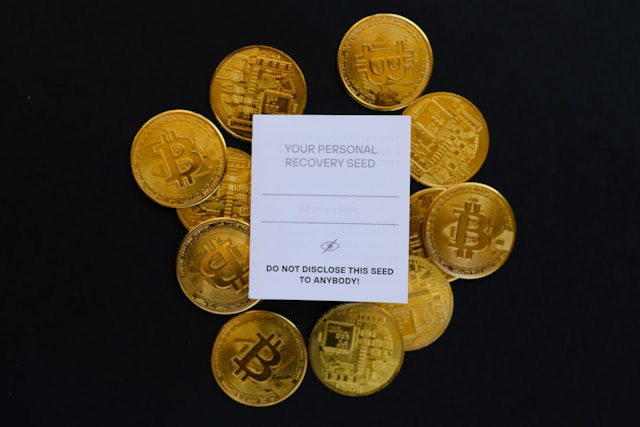
By the way, seed phrase also requires security measures: since it can be used to restore all associated addresses, losing it is even worse than a compromised private key. Best practices for recovery phrase safety: never store it in screenshots/cloud notes (the files can leak from cloud storage). Never share it with anyone, especially impostors pretending to be tech support. Do not type it into websites, because it is almost always phishing. It’s best to keep two offline backups stored separately for higher chances of successful recovery.
Connection safety:
Wallet prompts usually fall into:
- “Connect” (reads your public address and balances)
- “Sign” (proves ownership, no gas)
- “Approve/Spend” (grants contract permission, can be dangerous if unlimited)
Before approving: verify domain/contract and keep spend limits explicit whenever possible.
Wallet Funding
Funding is not just “buy some ETH.” You’re budgeting for gas, approvals, listings, and future transfers.
Fees depend on chain and timing: Ethereum mainnet might be $5–$50 per transaction during peaks, while Polygon is fractions of a cent. Keep a 20–30% buffer for retries or speed-ups.
On-ramp vs transfer decision:
Buying crypto directly in-wallet:
- Pro: Fast onboarding
- Pro: Self-custody immediately
- Con: Higher fees (3–5%)
- Con: Lower card limits
Buying on an exchange and transferring:
- Pro: Lower fees (0.1–0.5%)
- Pro: Higher limits and trading tools
- Con: Identity verification delays (24–72 hours)
- Con: Withdrawal holds (3–10 days)
Whichever chain or network you choose, always match the withdrawal network to what your wallet expects. Do a $5–$10 test transfer first, confirm arrival, then send the full amount.
Don’t expect blockchain payments to work the same as traditional payments. For one, there are confirmations, which are blocks added after your transaction. Ethereum often shows funds quickly, but full finality is stronger after more confirmations. Low gas can leave transactions pending for hours if demand spikes.
Troubleshooting when funds don't appear:
- Wrong network selected in wallet UI
- Pending transaction (check hash on etherscan.io or polygonscan.com)
- Explorer check using your public address
Cost drivers relevant to wallet prep:
- Network congestion
- Transaction complexity
- Chain choice
Plan initial deposits accordingly—$100 on Ethereum may cover a handful of mints; on Polygon it can cover a lot more.
Choosing an NFT Marketplace
Marketplace choice determines visibility, fees, and how much control you keep. Use these criteria:
- Supported blockchains — OpenSea supports nine blockchains (Ethereum, Polygon, Klaytn, Arbitrum, Optimism, Avalanche, Zora Network, Base, Blast).
- Marketplace fee/commission — OpenSea commission is 2.5% of sale price; SuperRare takes 15% commission on the primary sale.
- Creator royalties support/enforcement model — mandatory vs optional.
- Curation vs open listing — curated platforms limit access but attract serious collectors.
- Target collector audience/liquidity — match your buyers’ habits.
- Listing/minting cost profile — upfront gas vs lazy minting.
- Security/account protections — phishing resistance, 2FA, audits.
- Withdrawal/payment options — fiat conversion vs external wallet dependency (MetaMask).
Is cost your primary constraint? Prioritize Polygon or lazy minting. Need an established collector base? Choose Ethereum-native platforms. Quality over volume? Apply to curated platforms like Foundation. The other way around, with multi-chain flexibility and testing? Pick OpenSea. Are royalties a core part of your plan? Verify royalty enforcement.
Wallet Connection
Next up is connecting your wallet. It should feel routine, but it’s also a moment that scammers love.
- Use the correct wallet type (MetaMask extension vs WalletConnect)
- Verify the marketplace domain
- Confirm the wallet network matches the chain you’ll mint on
- Understand that “sign message” is off-chain (zero gas)
- Expect gas estimates only for true on-chain actions (approvals, mints)
Troubleshooting Failed Connections:
- Wrong network selected in wallet
- Popup blocked by browser
- Stale session needing disconnect/reconnect
- Insufficient balance for approvals (add 0.01–0.05 native token)
- Hardware wallet not unlocked (Ledger + Ethereum app open)
- Browser extension conflict
- Outdated wallet software
Collection
A collection is your project’s “home.” Clean collection setup improves search visibility, credibility, and buyer confidence. Common fields to carefully fill include:
- Collection name — unique and searchable
- Description — 2–4 sentences, clear concept; include keywords naturally
- Image/banner — square (350×350 px) + banner (1400×400 px)
- Category — Art, Photography, Music, etc.
- Links — website, Twitter, Instagram, Discord
- Optional properties/traits schema — plan trait naming upfront
These choices ripple forward. Trait consistency enables filtering and rarity tools. Royalty percentage often won’t retroactively apply to already-minted NFTs. Chain choice locks expected transaction speed and transaction cost; switching later usually means a new collection and re-minting.
Minting Your NFT
Minting is where everything becomes real and (mostly) irreversible. The best mindset is simple: go slowly, verify twice, sign once.
Upload
Upload forms set how your NFT will display and behave. Required fields usually include file, name/title, and network. Optional fields include description, collection assignment, supply/editions, royalty percentage, and unlockable content.
Before you mint, run this verification checklist:
- Preview renders correctly (no corruption)
- The displayed cryptographic address is your intended creator wallet
- Network matches your planned chain
- Creator attribution and collection assignment are correct
Broken preview due to format issues (fix by canceling before signature and re-exporting); wrong collection (often editable in draft, expensive post-mint); and unlockable content accidentally becoming public (can become irreversible once minted) are common failure modes at this step.
Blockchain Selection
This is where strategy meets execution.
- Choose Ethereum for institutional collectors and maximum liquidity; avoid it when gas fees exceed your price point.
- Choose Arbitrum or Optimism when speed matters and you want a familiar EVM ecosystem.
- Choose Polygon, Base, or Zora Network for large collections where per-unit costs must stay low.
- Avoid isolated chains if your audience relies on more mainstream crypto wallet support.
Transaction Signing
Minting often triggers multiple prompts, and each carries a different risk.
- Connect wallet (no gas)
- Sign message (no gas)
- Approve token spend (gas; sets permissions)
- Send on-chain mint transaction (gas; creates the NFT)
The signature vs transaction distinction prevents both budget surprises and security mistakes. Signatures prove ownership; transactions change blockchain state.
For every prompt, check if:
- Domain is correct (opensea.io vs 0pensea.io)
- Contract/spender address matches official documentation
- Approval scope is limited (avoid unlimited where possible)
- Total cost including gas makes sense
Unlimited approvals are a common convenience trap. If you can set a custom spending cap, match it to the immediate need (approve 0.1 ETH, not unlimited).
Gas Fees

Most blockchains with NFT support call their network fees gas. Gas fees compensate blockchain validators for computation and storage. They spike when congestion forces a bidding war for block space. Therefore, to control your costs:
- Use low-fee chains or Layer 2 networks where it fits your market
- Mint off-peak (weekends, late UTC evenings)
- Set max fee and priority fee carefully in wallet advanced settings
- Keep enough balance for both the mint and the worst-case gas estimate
- Remember speed-ups and cancellations also cost gas
Marketplace fees (platform’s cut) and creator royalties (secondary-sale settings, not part of initial mint cost) are entirely separate from the gas fees. Better budget all of those!
Listing and Pricing Your NFT
Pricing
Pricing should not be a guess—it’s a strategy tied to scarcity, audience, urgency, and demand certainty.
Use these four inputs:
- Collection size and uniqueness
- Creator notoriety and audience size
- Urgency to sell
- Demand uncertainty
Here are a couple of pointers to give you the idea. If you’re a new creator with a 1-of-1 piece and moderate urgency, choose a fixed price anchored to comparable work. If you’re established with high-demand uncertainty, opt for a timed auction with a conservative starting bid.
Your Net Proceeds equal Sale Price minus Marketplace Fee minus Creator Royalty (on future resales). Royalties are usually not deducted from your first sale (they apply to secondary sales), while marketplace fees apply immediately.
Example: 1 ETH sale on OpenSea with 2.5% fee and 10% royalty set for future resales:
- Sale price: 1 ETH
- Marketplace fee: 0.025 ETH
- Creator royalty (future sales only): 0 ETH
- Take-home: 0.975 ETH
Fixed Price
Fixed price is ideal when comps exist and collectors want instant purchase.
| Best for | Upside | Risk/Downside |
|---|---|---|
| Known demand, clear comps | Instant sale if priced correctly; no waiting | Leaves money on table if demand spikes |
| Limited audience time | Removes friction for busy collectors | Overpricing stalls the listing indefinitely |
| Established creators | Preserves brand value through consistent pricing | Underpricing signals desperation or lack of confidence |
Timed Auction
Timed auctions excel for price discovery when you have attention and uncertainty.
Parameters:
- Starting bid (often 30–50% below target)
- Reserve vs no-reserve
- Duration (24–72 hours)
- Promotion window (announce 3–5 days early)
Be mindful of liquidity and time zones—ending at 3 AM for your core audience kills momentum.
Unlimited Auction
Unlimited auctions keep listings live until you accept an offer.
Works well for:
- Evergreen listings
- Waiting for a specific collector
Hurts when:
- Listings go stale
- No urgency exists for buyers
Offer handling:
- Accept only above your floor
- Counter to test ceiling
- Ignore extreme lowballs
- Don’t let the first offer anchor your expectations
Royalties
Royalties, or creator payouts on secondary sales, are meaningful, but they are not a guaranteed feature across all marketplaces.
If they are a part of your plan, there are three components to consider: Royalty percentage (often 5–15%, with 10% common), liquidity impact (higher royalties deter resales), and enforcement variability (OpenSea made royalties optional in 2023).

Some options for instance:
- Low (5–7%) for art-only, liquidity-first
- Medium (8–12%) for moderate utility/community involvement
- High (13–15%) for ongoing high-touch or utility-heavy projects
Smart Contracts and Token Standards
Smart contracts are self-executing agreements embedded on blockchain that define how your NFT behaves across wallets and marketplaces. Get these basics right and everything downstream becomes smoother.
Non-fungible Token Standards (Ethereum)
In addition to the ERC-20 standard codifying fungible tokens such as stablecoins or crypto assets on Ethereum, two major token standards are associated with NFTs in that particular ecosystem:
- ERC-721: unique (non-fungible) tokens; best for 1/1 art and distinct generative collections.
- ERC-1155: batch minting identical (semi-fungible) items; best for editions, game items, and mixed assets.
Interoperability means your NFT displays correctly in wallets, lists across markets, and renders metadata consistently. What breaks it? Non-standard metadata fields, unusual royalty logic, transfer restrictions, or fragile hosting.
Every NFT contract relies on tokenURI, returning JSON fields like name, description, image, and attributes. Optional but helpful fields include external_url, animation_url, and background_color.
For royalties, ERC-2981 signals expectations, but marketplaces decide whether to enforce them. Treat royalties as marketplace-dependent, verify support where you plan to list, and manage community expectations accordingly.
Contract Deployment
“Deploying a smart contract” can sound daunting but there are actually three paths to make an NFT:
- Marketplace/shared contract (little to no coding expertise required)
- Template or minter contract (low-code; handy tools include Manifold, Thirdweb, OpenZeppelin's Defender)
- Fully custom contract (needs smart contract developer expertise + code audit)
No matter the path, general deployment steps are:
- Choose blockchain
- Configure parameters (name, symbol, base URI, royalty receiver, caps)
- Deploy and record contract address + transaction hash
- Verify code on the block explorer (Etherscan for Ethereum)
- Test-mint one token
- Confirm display in a wallet and marketplace
Security safeguards aren’t just a numbered step in a list, they are a full-time commitment. At the very least, access control (OpenZeppelin Ownable or roles), supply caps, pause/emergency stop, proper mint checks and clear transferability rules are smart contract traits to check and set.
Then there is upgradeability, which comes with its own tradeoffs: Non-upgradeable = maximum trust, no changes later. Proxy-upgradeable = flexibility, but with admin key risk. Beginner rule: choose non-upgradeable for simple, tested collections; reserve upgradeable for complex projects with strong governance controls.
Risks, Legality, and Key Considerations
Before minting or listing your first NFT, keep five risks front and center: weak security can lead to total loss, scams can drain wallets through signatures, poor tax records can become a compliance headache, copyright disputes can trigger takedowns, and volatile network fees can erase profitability.
Security
NFT creation expands your attack surface because you sign more interactions than a typical holder. So, include this in your security best practices:
- Wallet hygiene: separate a minting wallet from long-term storage; consider hardware wallets as value grows; keep seed phrases offline; use a dedicated browser profile.
- Transaction safety: verify domains, contract addresses, permissions, and network selection every time.
- Permission management: revoke unused approvals via Etherscan token approval checker or Revoke.cash; do monthly audits if you mint often.
- Incident response: disconnect, move assets to a new wallet, revoke approvals, rotate marketplace accounts, and contact support fast.
Scams and Fraud

Even five years later, the NFT space is full of bad actors. Common creator-focused scams:
- Fake marketplace links via DMs or ads
- “Support” impersonation asking for seed phrases
- Malicious minting contracts and signature phishing
- Wash trading and fake offers that distort pricing signals
In most cases, falling victim to one of those is as simple as not pausing to think. But what exactly does “pause to think” imply? Verify identity → verify links (bookmark/manually type) → verify transaction details before signing.
Copyright Disputes and Takedowns
You wouldn’t want your NFT to lead to a DMCA notice instead of your digital creation, would you? Before minting, you must have rights to:
- The artwork
- Trademarks/brands depicted
- Fonts, stock assets, audio samples, 3D models
- Publicity/privacy rights for identifiable people
Maintain evidence packs: source files, process documentation, receipts, releases, and agreements. Marketplaces typically delist quickly upon complaint, so your documentation is what protects you. Also be explicit about the token/IP mismatch: NFT ownership does not equal commercial rights unless you grant them.
Use Cases for NFTs
Individuals
NFTs make the most sense when blockchain ownership solves a real problem: authenticity, access, provenance, scarcity, or programmability.
- Digital art creators seeking passive income (royalties vary by enforcement; OpenSea 2.5% commission vs SuperRare 15% primary sales)
- Photographers documenting limited editions (edition properties, EXIF context, unlockable high-res files)
- Musicians releasing exclusive tracks (use animation_url, define licensing in description)
- Collectors building portfolios (standardized properties increase filterability; verify contract_address)
- Independent authors tokenizing book chapters (properties like chapter_number, unlock_date; Layer 2s reduce cost)
- Event organizers creating digital memorabilia (ERC-1155 for batch; low royalties; mobile wallet UX)
- Hobbyists preserving personal milestones (mint for sentiment; low-fee chains; focus on backups)
Businesses
Business NFTs succeed when the implementation is operationally realistic:
- Brand marketing and community building (membership tiers, wallet authentication)
- Ticketing and access passes (anti-counterfeit, resale logic, real-time validation)
- Digital product licensing (license terms in metadata, wallet-gated downloads)
- Loyalty and rewards programs (scale demands low fees; custodial UX reduces friction)
- Supply chain and provenance tracking (IoT + oracles; immutable records)
- B2B credentials and memberships (often non-transferable tokens)
- Event sponsorship and branded collectibles (gasless minting, analytics)
- Product authentication and warranty tracking (serials, ownership history, claim status)
If your audience already uses crypto wallets or will tolerate onboarding friction; the value proposition (access, ownership, scarcity) cannot be replicated with traditional databases; and you have a budget for smart-contract audits ($5,000-$50,000) and ongoing gas fees, NFTs as a solution will fit your strategy. Contrary to that, if >20% of users will need wallet setup help, custodial solutions or traditional tech may be better. Or, there is regulatory uncertainty in your jurisdiction (SEC views some NFTs as securities), and the NFT adds no functional value beyond "it's on blockchain" (novelty wears off fast), it may be best to reconsider.
Conclusion
You now know how to make an NFT end-to-end: connect a funded wallet, upload your file with clean metadata, select the right blockchain, mint, and list. The real advantage, though, comes from the decisions you make before you hit “Create”—because those choices determine security, credibility, and whether your pricing survives real marketplace fees.
Frequently Asked Questions
What intellectual property rights do I keep when I mint an NFT?
Minting an NFT transfers ownership of the digital token, not the copyright to the underlying artwork. When you create and mint an NFT, you retain full copyright and reproduction rights unless you explicitly transfer them through a separate legal agreement. If someone purchases your NFT, they own the token and typically receive a non-exclusive license to display the artwork for personal use, but they cannot reproduce it commercially, create derivatives, or claim authorship. Keep dated source files (PSD, AI, original recordings) and export metadata to prove creation timeline if disputes arise later.
What should I do if my artwork contains third-party elements like stock photos or font licenses?
You must verify that all components in your NFT—stock images, fonts, music samples, 3D models—allow commercial use and blockchain distribution before minting. Check each asset's license terms; many free resources prohibit NFT use or require attribution in the metadata. If you incorporate licensed elements without permission, the original rights holder can file DMCA takedowns with marketplaces, resulting in delisting and potential legal claims. When in doubt, use only assets you created entirely yourself or purchase extended commercial licenses that explicitly cover blockchain and NFT applications.
How do NFT marketplaces handle copyright disputes between creators and minters?
Marketplaces distinguish between "creator equals minter" (you made and uploaded the work) and "minter equals rights holder" (you have legal permission to tokenize someone else's work). If a third party reports your NFT for copyright infringement, platforms like OpenSea typically delist the item immediately and require you to submit counter-evidence: signed transfer agreements, licensing documents, or proof of original creation. The burden of proof falls on you as the minter. Document every element's provenance before listing, especially if you collaborated with others or adapted existing work, because once delisted, restoring visibility requires lengthy appeals.
What evidence should I keep to defend against copyright takedowns?
Maintain a timestamped archive that includes layered source files (not just final JPEGs), purchase receipts for licensed assets, email threads with collaborators granting permissions, and blockchain transaction records showing mint date and wallet address. If you commissioned the artwork, keep the signed contract specifying IP transfer. For photography, retain RAW files with EXIF metadata proving you captured the image. This documentation becomes critical when responding to marketplace disputes, as platforms require verifiable proof within 48–72 hours to reinstate delisted NFTs and avoid permanent account restrictions.
Where are NFT royalties actually enforced—on-chain or by marketplaces?
Royalties are encoded in the NFT's smart contract metadata, but enforcement depends entirely on the marketplace where resales occur. Ethereum-based platforms like OpenSea historically honored creator royalties by automatically deducting the percentage you set (typically 5–10%) from each secondary sale and sending it to your crypto wallet. However, many newer marketplaces now make royalty payments optional, allowing buyers to skip them to reduce transaction costs. This means your royalty revenue is marketplace-dependent and not guaranteed on every resale, even though the setting exists in your contract.
What royalty percentage can I set for NFT sales?
The typical resale royalty range is 5–10%, with most creators choosing 7.5% as a balanced middle ground. You can configure this percentage as a parameter during minting, but higher percentages may reduce marketability by discouraging collectors from reselling your work. If you set royalties above 10%, potential buyers perceive lower profit margins and hesitate to flip the digital asset, which can limit secondary market liquidity. Conversely, royalties below 5% leave significant value on the table if your work appreciates over time. Evaluate the trade-offs based on whether you're targeting long-term collectors or active traders before finalizing your rate.
How do royalties differ between primary sales and secondary resales?
Primary sales—the first transaction where a buyer purchases directly from you—do not involve royalties; you receive the full listing price minus marketplace commission (typically 2.5–5%). Royalties only activate on secondary resales, when one collector sells your NFT to another collector on the open market. At that point, the smart contract automatically calculates your royalty percentage on the resale price and transfers it to the crypto wallet address you specified during minting. This structure incentivizes creators to build long-term value, as your earning potential extends beyond the initial sale if the work circulates and appreciates.
What should I verify in the listing UI before publishing to ensure royalty settings are correct?
Before confirming your listing transaction, check the "Creator Earnings" or "Royalty Percentage" field in the marketplace's upload interface. Verify that your crypto wallet address is entered correctly as the royalty recipient—mistakes here are irreversible and will send future earnings to the wrong wallet. Confirm the percentage matches your intent (many platforms default to 10%, which you may want to adjust). On Ethereum-based platforms, ensure the royalty standard (EIP-2981) is supported if you plan to list on multiple marketplaces, as this increases cross-platform compatibility for automated royalty enforcement.
What are the minimum prerequisites I need before minting my first NFT?
You need three things: a funded crypto wallet (MetaMask is the most beginner-friendly), a small amount of cryptocurrency to cover network transaction costs (gas fees), and a finalized digital file ready to upload. For Ethereum, expect to hold $20–50 worth of ETH to cover minting and listing; for Polygon, under $1 is usually sufficient. Your file must meet the marketplace's format requirements (JPEG, PNG, MP4, or GIF under 100MB for most platforms). If you skip any step—using an unfunded wallet, choosing the wrong blockchain in settings, or uploading an incomplete file—you'll encounter errors mid-process that force you to restart.
What does "signing a transaction" mean when I'm minting an NFT?
Signing a transaction is your crypto wallet's cryptographic approval that authorizes the blockchain to execute an action—in this case, creating your NFT token and linking it to your metadata. When you click "Mint" or "Create" in a marketplace interface, a pop-up appears in MetaMask or your hardware wallet asking you to confirm. This signature proves you own the wallet address and consent to the gas fees and contract terms. The signature does not transfer cryptocurrency unless you explicitly set a price; it simply registers your NFT on the blockchain. Rejecting the signature cancels the entire minting process without penalty, but approving it makes the action permanent.
What mistakes are irreversible once I mint an NFT?
Three errors cannot be undone after minting: selecting the wrong crypto wallet address (the NFT will be permanently assigned to that address), choosing the wrong blockchain network (you cannot migrate an Ethereum NFT to Polygon post-mint), and uploading incorrect metadata (title, description, or media file). If you mint to the wrong wallet, you'll need to manually transfer the NFT later, incurring additional gas fees and potential transaction cost implications. Metadata mistakes require delisting, burning the original token, and re-minting—a costly and reputation-damaging process. Always double-check wallet addresses, network selection, and file uploads in the preview screen before signing the final transaction.
What does a "safe first run" checklist look like for someone who's never minted before?
Complete these steps in order: (1) Set up your crypto wallet following Wallet Setup instructions and back up your seed phrase offline. (2) Fund your wallet with enough cryptocurrency for gas fees as outlined in Funding Your Wallet. (3) Prepare your digital file and metadata, verifying format and size requirements. (4) Navigate to Minting Your NFT → Gas Fees to understand current network costs and choose a low-traffic time if possible. (5) Use the marketplace's "testnet" feature if available (Goerli or Mumbai) to practice the process without spending real money. (6) Mint one low-value test NFT on a cheap network like Polygon before committing expensive Ethereum gas to a high-stakes project.
What does "free minting" actually mean in the context of creating NFTs?
Free minting eliminates the upfront fee to create the NFT token itself, but it does not remove all transaction costs from the process. Platforms like OpenSea offer "lazy minting," where the NFT is created off-chain and only written to the blockchain when someone purchases it—at which point the buyer typically pays the gas fees. However, you will still incur costs when listing the digital asset for sale, transferring it to another crypto wallet, or interacting with the smart contract in other ways. "Free" refers narrowly to the initial creation step, not the entire lifecycle of owning and selling the NFT.
What hidden costs should I expect with free minting services?
Even on free-mint platforms, you'll encounter network transaction fees (gas) when listing your NFT for sale or accepting an offer, marketplace commission fees (usually 2.5–5% of the sale price), and potential blockchain bridge fees if you later move the asset to a different network. If you use a Layer 2 solution like Polygon within OpenSea, gas fees drop dramatically, but you may still pay small fees to withdraw earnings back to Ethereum mainnet. Additionally, promotional costs—Twitter ads, influencer shoutouts, or premium marketplace features—are optional but often necessary to drive visibility and sales in crowded categories.
How does blockchain choice affect whether minting is truly free?
On Ethereum mainnet, free minting usually means deferred gas fees, not eliminated fees—you or the buyer will pay them eventually. On Polygon or other Layer 2 networks, transaction costs are so low (often under $0.10) that platforms can absorb them, making minting and listing genuinely free for creators. However, assets minted on sidechains may have lower perceived value or liquidity compared to Ethereum NFTs, which can affect your ability to attract serious collectors. Before claiming "free" as your deciding factor, check the platform's FAQ for which actions remain free after minting and whether those fees shift to you or the buyer at sale time.
What fee fields should I look for in the interface before confirming a free mint?
Before you click "Create" or "Mint," scan the transaction summary screen for these line items: "Gas Fee" (should show $0 or "Paid by buyer" for true lazy minting), "Marketplace Fee" (will apply at sale, not mint), and "Listing Fee" (some platforms charge to make the item publicly visible). If the Gas Fee field shows a dollar amount, the mint is not free—you'll pay that transaction cost immediately. Also check for any "Initialization Fee" the first time you use a marketplace; this one-time charge (typically $10–30 on Ethereum) authorizes your crypto wallet to interact with the platform's smart contracts and is separate from per-item minting costs.
What are the different cost categories to budget for when minting an NFT?
NFT creation costs fall into four buckets: (1) one-time creation and preparation costs (design software, asset licenses, file optimization tools), (2) network transaction costs (gas fees for minting, listing, and transfers), (3) marketplace fees and commissions (platform charges 2.5–5% of sale price), and (4) optional marketing and promotion expenses (social media ads, influencer partnerships, premium marketplace features). The relative weight of each category depends on your blockchain choice—Ethereum gas can dominate total cost, while Polygon or Tezos shift the expense toward creation and marketing since transaction fees are negligible.
How to calculate total NFT costs?
Use this formula: Total Cost = Gas Fees + Marketplace Commission + Creator Costs + Optional Promotion. For example, on Ethereum: Gas ($30 mint + $20 listing) + Marketplace fee (2.5% of $100 sale = $2.50) + Creator costs ($50 for design tools and licenses) + Promotion ($100 Twitter ads) = $202.50 total to create and sell one NFT. On Polygon, the same calculation becomes: Gas ($0.50 total) + Marketplace fee ($2.50) + Creator costs ($50) + Promotion ($100) = $153 total. This formula helps you compare networks and decide where to allocate budget before you begin the minting process.
How do gas fees vary and what strategies can reduce them?
Gas fees fluctuate based on Ethereum network congestion, ranging from $10 during off-peak hours to over $100 during high-traffic events like major NFT drops. Transaction costs are calculated per computational step: minting a simple image NFT costs less than deploying a complex smart contract with programmable features. To minimize gas, mint during weekends or late-night UTC hours when fewer users are competing for block space, use Layer 2 networks like Polygon where fees average under $1, or choose platforms with lazy minting that defers gas to the buyer. Monitor real-time gas prices on Etherscan before confirming any transaction.
What NFT marketplace commissions should I expect as part of my total cost?
Example marketplace commissions are platform-dependent—check current fee schedules before listing. OpenSea typically charges 2.5% of the sale price, while other platforms may range from 2.5% to 5% depending on their business model and included services. These fees are deducted automatically from your payout when a buyer completes the purchase, so factor them into your pricing strategy. If you sell a $1,000 NFT on a platform with 2.5% commission, you'll receive $975 minus any gas fees associated with the transaction. Always review the fee structure in the marketplace's documentation before committing to list your digital asset there.
What one-time NFT minting costs to expect beyond blockchain transaction fees?
First-time NFT creators often overlook software and asset licensing: Adobe Creative Cloud subscriptions ($20–50/month), premium stock image licenses ($10–100 per asset), custom font licenses for commercial use ($30–200), and file hosting services if your NFT includes off-chain components like high-resolution video ($5–15/month). Additionally, the initial crypto wallet setup may require an "initialization" transaction on platforms like OpenSea (around $10–30 on Ethereum) to authorize your wallet address for future trading. Budget these costs separately from per-item minting fees, as they amortize across multiple projects once paid.
What is the difference between a primary sale and a secondary sale?
The primary sale is the initial transaction where a buyer purchases your NFT directly from you (the creator) at the price you set during listing. This is your only guaranteed revenue moment, and you receive the full listing price minus the marketplace commission (typically 2.5–5% on platforms like OpenSea). Secondary sales occur afterward, when one collector resells your NFT to another collector on the open market. You do not control secondary prices, but you earn a royalty percentage (if the marketplace enforces it) on each resale. Primary sales fund the creator; secondary sales validate the work's market demand and generate ongoing passive income through royalties.
What happens after someone purchases my NFT for the first time?
When a buyer completes the purchase, the blockchain executes a transfer function that moves the NFT token from your crypto wallet address to the buyer's address, permanently recording this ownership change on the ledger. The marketplace deducts its commission and deposits the remaining sale proceeds into your wallet as cryptocurrency, usually within seconds for Layer 2 networks or a few minutes on Ethereum mainnet. The transaction creates a provenance trail—a publicly visible record on block explorers like Etherscan showing sale price, timestamp, and both wallet addresses. Buyers can immediately display or resell the NFT; you retain copyright unless explicitly transferred.
What settings to finalize before listing my NFT for the first sale?
Before clicking "List for Sale," confirm these parameters: (1) listing price or auction format (fixed price, timed auction, or declining Dutch auction), (2) royalty percentage for future resales (typically 5–10% as noted in Royalties), and (3) metadata completeness (title, description, external links, properties/traits). If you set a reserve price on an auction, ensure it covers your minimum acceptable return after marketplace fees and gas costs. On Ethereum, decide whether to accept ETH or wrapped ETH (WETH)—the latter is required for auction bids and has different liquidity implications. Review the preview page to verify all fields before signing the listing transaction.