
What Is a Smart Contract? Beginner’s Guide


Key Takeaways
- 🧮 A smart contract is code deployed and stored on a blockchain that executes predefined rules automatically when conditions are met;
- 🧮 Smart contracts are deterministic, meaning the same valid input and blockchain state should produce the same result across the network;
- 🧮 They are useful for DeFi, NFTs, supply chain tracking, insurance payouts, escrow-style workflows, and other rule-based processes;
- 🧮 Smart contracts can reduce manual coordination and intermediary roles, but they still depend on secure code, reliable inputs, and clear governance;
- 🧮 Code execution and legal enforceability are separate questions. A smart contract can run correctly on-chain and still raise off-chain legal or dispute-resolution issues.
Disclaimer
This guide is for educational purposes only and does not constitute legal, financial, or investment advice. Smart contract risk varies by codebase, blockchain platform, oracle design, administrator permissions, jurisdiction, and user behavior. Before interacting with a contract, verify the contract address from primary sources, review available audits and documentation, and understand what permissions your wallet transaction is granting.
If you have ever felt even a tiny bit confused about what is a smart contract, don’t feel too bad. Even if you correctly recognize that “smart” implies “autonomous” (like in “smart devices”), “contract” evokes something legal and can understandably trip you up.
Actually, a smart contract is software on a blockchain that automatically executes agreed actions when specified conditions are met. The vending machine analogy is still the cleanest starting point: insert the correct input, meet the rule, and the machine delivers the defined output. Except for in crypto, that “machine” is code running on a blockchain.
Smart Contract Definition
A smart contract is code deployed and stored on a blockchain that executes agreed actions automatically when predefined conditions are met. It creates a shared, rule-based record of what should happen next, so the network can run the same instructions consistently.
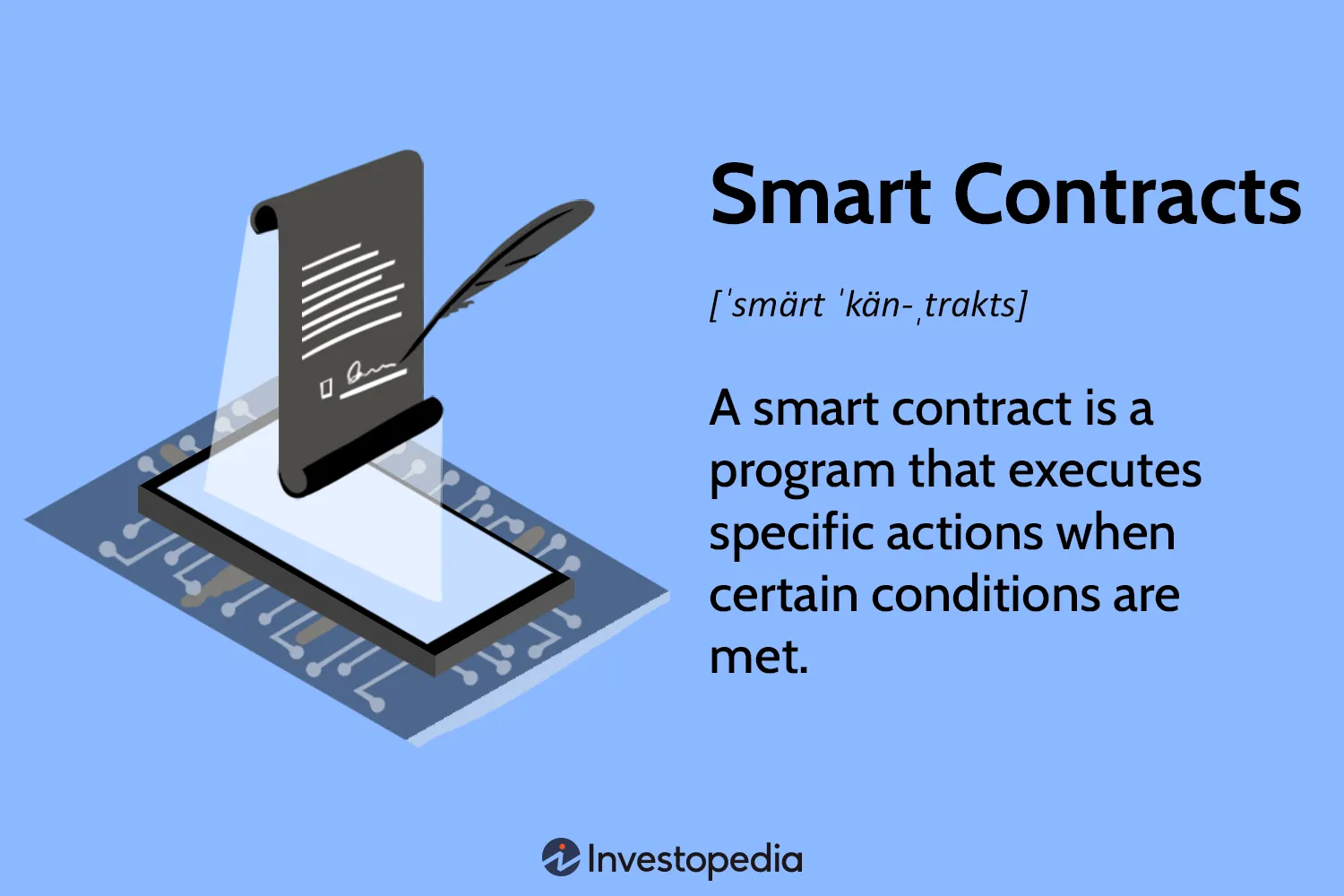
Self-Executing Code
Self-executing means the smart contract carries out its programmed outcome once its conditions are satisfied, rather than waiting for a person to manually approve each step. For example: if payment is received, then release the asset.
That sounds simple, but the distinction matters. The contract does not decide what is fair, reasonable, or intended. It executes what the code says.
Blockchain Storage
How is the code stored on a blockchain? “Stored on a blockchain” means the contract code, and often its related state and transactions, are recorded on a distributed ledger (e.g. Ethereum) rather than kept on a single server. That matters because participants can reference the same visible record, and the network can apply deterministic execution to the same contract rules.
This is precisely why a smart contract is not an unlimited program. Real platforms place practical deployment limits on what can be stored on-chain, such as Ethereum’s 24KB maximum contract size limit before deployment can run out of gas.
Vending Machine Analogy
The aforementioned vending machine comparison is useful because it shows how a rule-based system can respond to a valid input with a defined output:
- Input → token payment, delivery confirmation, or another required signal;
- Condition check → the smart contract checks whether the predefined rule has been satisfied;
- Output → funds release, ownership transfer, or another agreed action occurs automatically.
A smart contract is “smart” because it automates execution, not because it can interpret intent, resolve ambiguity, or reason like a human contract reviewer.
Smart Contract Mechanics
A smart contract works by combining code, stored state, user inputs, and network execution. So far we have established the definition; now the important part is how that definition behaves once it is deployed on-chain.
Coded Rules and Conditions
A smart contract starts as rules written in code. Those rules define what the contract is allowed to do, which conditions it checks, and how it updates its stored information when a valid action occurs.
It helps to separate three layers:
- Code and logic: the rules the contract follows, such as who is allowed to transfer an asset or when funds can be released;
- State: the information the contract stores and updates, such as account balances, ownership flags, approval status, or whether a task is complete;
- Inputs: the transactions or calls that ask the contract to evaluate a function.
For example, if a buyer sends the required amount and the item is still marked as available, then the contract changes the item’s ownership flag to the buyer and updates the item status to sold. The important point is that the contract does not only produce an answer; it can also change its stored state.
Users typically interact with smart contracts by sending a transaction that calls a specific function. The basic chain is: call → function runs → conditions are checked → state changes if the rules allow it
Contracts can also call other contracts, which means one on-chain program may trigger logic in another as part of a larger transaction flow.
Deployment and Network Execution
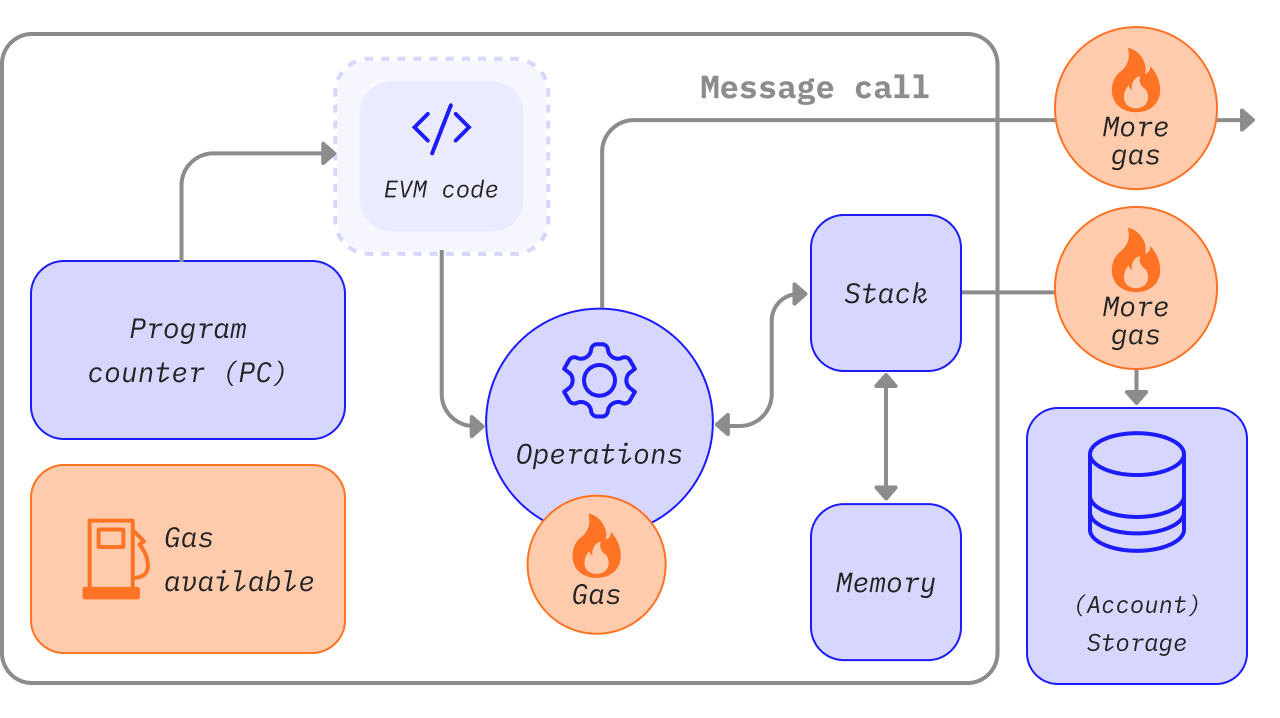
Before a smart contract can run on-chain, its human-readable source code is compiled into bytecode that a blockchain’s execution environment can process. On Ethereum, that environment is the EVM, or Ethereum Virtual Machine. Deployment publishes that bytecode on-chain and creates a contract account with its own address.
Deploying a contract means creating that on-chain contract address for the first time. Calling a contract means interacting with an already-deployed address by invoking one of its functions.
Once deployed, execution is deterministic. What it means is given the same inputs and the same blockchain state, every node running the same virtual machine rules should arrive at the same result. This is what allows the network to validate contract execution without trusting a single server to decide what happened.
Execution also has enforced limits. On Ethereum and similar networks, computation is measured with gas, and each transaction has a gas limit. If a contract tries to perform too much work, or enters computation that cannot finish within the available gas, execution can fail mid-transaction and the intended state change will not be applied. For more information on how gas fees work, read our guide.
Oracles and Real-World Data
A known limitation of smart contracts is they cannot directly access off-chain data on their own. They require an oracle mechanism to bring external facts on-chain in a format the contract can read.
A DeFi contract, for example, may depend on a price feed oracle to determine the current value of ETH, stablecoins, or another asset before allowing a liquidation or swap. In an insurance or supply chain context, a contract may depend on an event confirmation, such as whether a delivery arrived or whether a flight was delayed.
The mechanics gotcha is that oracles are an extra input dependency in the stack. Even if the contract code is correct, an inaccurate, delayed, or poorly updated data source can cause the contract to make the wrong state change because it is evaluating the wrong input. Chainlink is a project that tackles this issue with decentralized oracles that reach consensus before providing answers.
Immutable Transaction Records
When smart contracts run, the blockchain records the deployment transaction, later function calls, emitted events or logs, and the resulting state transitions. These records create the on-chain history of what was deployed, who interacted with it, which functions were called, and how the contract state changed.
Immutability means that this history is not casually rewritten after the fact. It does not mean the current state never changes. Current state can change over time through new valid transactions, while the earlier transactions remain part of the auditable record. Likewise, this means past errors can be corrected with the full history still visible.
Smart Contract Benefits
The main benefits of a smart contract come from deterministic execution, shared blockchain visibility, and reduced reliance on centralized intermediaries. In practice, those benefits are strongest when the rules are clear, the required inputs are available on-chain or through reliable oracles, and participants need the same verifiable record.
Automation and Speed

The smart contract evaluates the programmed conditions as part of the transaction flow, instead of waiting for manual approvals at each step. In a manual workflow, a payment might trigger internal review, approval routing, reconciliation between systems, and a later settlement update. In a smart-contract workflow, a transaction can trigger immediate condition-checking and a state update if the rules are satisfied.
That does not mean every smart contract process is instantly final. “Speed” is conditional on network capacity, confirmation time, and any oracle update cadence when the contract depends on external data.
Transparency and Verification
Any third party can independently inspect the contract address, on-chain transactions and calls, emitted events or logs, and the resulting state. That is different from relying on a private database, where outsiders usually need the operator to export records, explain changes, or confirm that a reported status is accurate.
This creates a more verifiable workflow, especially when multiple parties need to check the same blockchain record without giving one party unilateral control over the evidence. However, transparency of execution does not guarantee clarity of intent: readers may still misinterpret what the code does if they only see inputs and outputs.
This is why code audit is a big deal in blockchain development: even if the contract code is always publicly available for scrutiny, not every user is equipped with the knowledge to parse it and notice the flaws. Proof of a professional team reviewing the code is a strong trust signal, and also one that can itself be verified.
Intermediary Removal
Smart contracts are supposed to reduce certain intermediary roles by moving specific functions into code. Common examples include an escrow holder that releases funds, a reconciler or clearing party that matches records between participants, and a back-office settlement coordinator that updates status after conditions are met.
This is disintermediation of certain functions, not eliminating all trust. Roles often remain for oracle or data providers, UI or platform operators, and legal enforcement outside the chain when an off-chain dispute or remedy is needed.
Security and Tamper Resistance
Decentralization and immutability help prevent unilateral record alteration, but they cannot prevent losses caused by flawed business logic or access control in the smart contract itself.
Research also shows why security claims need nuance rather than absolutes. In one large study, most flagged contracts were not actually exploitable (75.25%), and among contracts judged exploitable, only a small fraction had been exploited (6%). That context matters because “trustless” execution reduces the need to trust a central operator, but it does not make every contract safe, correct, or economically sound.
Smart Contract Examples and Use Cases
Decentralized Finance

A common decentralized finance, or DeFi, example is a lending/borrowing contract where a user deposits collateral and borrows against it.
- Actors: A borrower sends transactions to the lending contract; lenders or liquidity providers supply assets to the liquidity pool;
- Trigger: The borrower deposits approved collateral and calls the borrow function;
- On-chain state change: The contract records the collateral balance, debt balance, collateral ratio, and updated pool liquidity;
- Outcome: The borrowed asset is transferred to the borrower if the contract’s collateral rules are satisfied.
One execution dependency is that the collateral value may rely on a price oracle, so an update before confirmation can change whether the borrow transaction succeeds or fails.
NFTs and Digital Ownership
For a non-fungible token (NFT), minting creates a new token record for the first time, while transferring changes the recorded owner of an existing token. This scenario focuses on transferring an existing NFT.
- Actors: The current NFT owner signs or sends the transfer transaction; the recipient address receives the token;
- Trigger: The owner calls the transfer function or approves a marketplace contract to transfer the NFT;
- On-chain state change: The token ownership mapping is updated from the sender’s address to the recipient’s address, and the transfer is recorded on-chain;
- Outcome: The recipient becomes the on-chain owner of that token.
“Ownership” here means the blockchain’s token ownership and transfer record. Related media, metadata files, or hosted images may still remain off-chain.
Supply Chain Tracking
A supply chain contract can record a shipment milestone when an authenticated carrier scan, IoT checkpoint, or ERP attestation is submitted as the trigger.
- Actors: A carrier, warehouse operator, IoT data provider, or ERP system submits the authenticated update to the contract;
- Trigger: An oracle or authenticated data feed reports that the shipment reached a defined checkpoint;
- On-chain state change: The contract marks the milestone as reached, stores the timestamp or status update, and may mark an escrow condition as satisfied;
- Outcome: Participants can verify the auditable shipment status, and a linked payment or release condition can be unlocked.
The implementation gotcha is operational: if the input attestation is wrong or delayed, the contract will still execute deterministically on that input. Process design has to control who can attest, when updates are submitted, and how exceptions are handled.
Insurance Payouts
A parametric insurance contract can automate a flight-delay payout when a flight delay crosses an objective threshold.
- Actors: The insured customer buys the policy; the insurance contract receives flight status data from an oracle-fed source;
- Trigger: The oracle provides the flight’s delay duration, such as a delay of 120 minutes or more;
- On-chain state change: The contract records that the policy’s payout condition has been met and marks the policy as paid or payable;
- Outcome: The payout amount is transferred to the insured wallet according to the policy rules.
This is a parametric payout because it depends on an objective threshold, not claims adjudication, where a reviewer evaluates subjective facts, losses, or evidence.
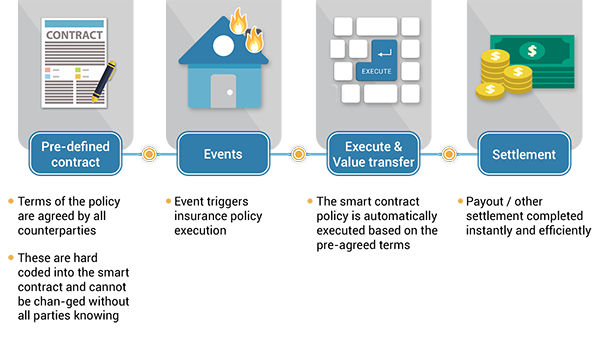
These examples show how smart contracts can automate performance once defined inputs and conditions are satisfied. However, traditional contracts still matter because they express intent, handle ambiguity, and support enforcement outside the chain.
Smart Contracts vs. Traditional Contracts
| Decision dimension | Smart contracts | Regular contracts |
|---|---|---|
| Expression of terms | A smart contract expresses terms as code that a blockchain can execute. | A traditional contract expresses terms in natural language that people and institutions interpret. |
| Execution | Execution creates an automatic state change when programmed conditions are met. | Execution depends on human or organizational performance, such as paying, delivering, approving, or signing. |
| Enforcement | Enforcement often means on-chain finality after a valid transaction runs. | Enforcement usually means courts, arbitration, negotiation, or other off-chain processes. |
| Handling ambiguity | Smart contracts are brittle when a condition is subjective or not machine-checkable. | Traditional contracts can handle ambiguity through context, intent, evidence, and interpretation. |
| Change/termination | Changes usually require upgrade paths, admin controls, migration, or new deployments. | Changes usually happen through amendments, waivers, termination rights, or replacement agreements. |
| Evidence/audit trail | Evidence comes from on-chain logs, events, calls, and state changes. | Evidence comes from signed documents, emails, invoices, records, testimony, and conduct. |
| Failure modes | Failures often come from bugs, bad oracle inputs, access-control errors, or unintended code paths. | Failures often come from breach, nonperformance, unclear drafting, insolvency, or factual disputes. |
Code-Based Execution
Smart contracts work best when the condition is objective and digitally attestable. A clause such as “if payment is received by the deadline, then release escrow” maps cleanly into code because the payment status, deadline, and escrow release can be checked as defined inputs and outputs.
A clause such as “the supplier must use commercially reasonable efforts” does not map cleanly into code. That phrase depends on context, industry practice, intent, evidence, and judgment, not just a binary state change on a blockchain.
Moreover, on-chain execution is deterministic, so bad inputs still yield consistent bad outcomes. If an oracle-fed fact is wrong, stale, or manipulated, the contract can still process the transaction exactly as programmed and produce the wrong practical result.
Human Enforcement
“Enforcement” does not only mean making something execute. It includes both compelling performance or compensation after breach and resolving disputes about meaning, intent, or facts.
Traditional contracts uniquely provide tools that code generally does not:
- Interpretive flexibility: Humans can evaluate context, course of dealing, intent, and unclear wording;
- Equitable remedies: A court or tribunal may order remedies such as an injunction instead of only money or state changes;
- Dispute resolution processes: Parties can use negotiation, mediation, arbitration, litigation, or contract-specific escalation steps;
- Allocation of liability: The agreement can assign responsibility for real-world harms, losses, delays, defects, or misconduct.
This is why traditional contracts remain useful when obligations happen off-chain, when facts are contested, or when the right outcome requires judgment rather than deterministic execution.
Smart Legal Contracts
A smart legal contract is a hybrid: legal prose plus operational code that automates performance where possible. For one, execution on a blockchain does not automatically satisfy the requirements of a legal contract in the United States; that distinction is a core reason hybrid smart legal contracts exist.
Two common implementation patterns are:
- Legal contract references code: The signed legal agreement identifies a smart contract address, ABI, network, and relevant functions as the performance mechanism for payment, escrow, token transfer, or another automated obligation;
- Code mirrors legal terms: The smart contract contains key parameters such as parties, price, dates, quantities, or deadlines, and those same parameters are mirrored in a signed legal agreement.
The caution is that code execution and legal enforceability are separate questions. A smart legal contract aims to align them, but it does not eliminate disputes about consent, authority, interpretation, or whether the legal prose and code actually match.
Development and Blockchain Platforms
Smart contracts do not exist in isolation. They run inside specific blockchain environments, which means the platform choice shapes the language, tooling, security model, fee profile, and user experience.
Smart Contract Programming Languages
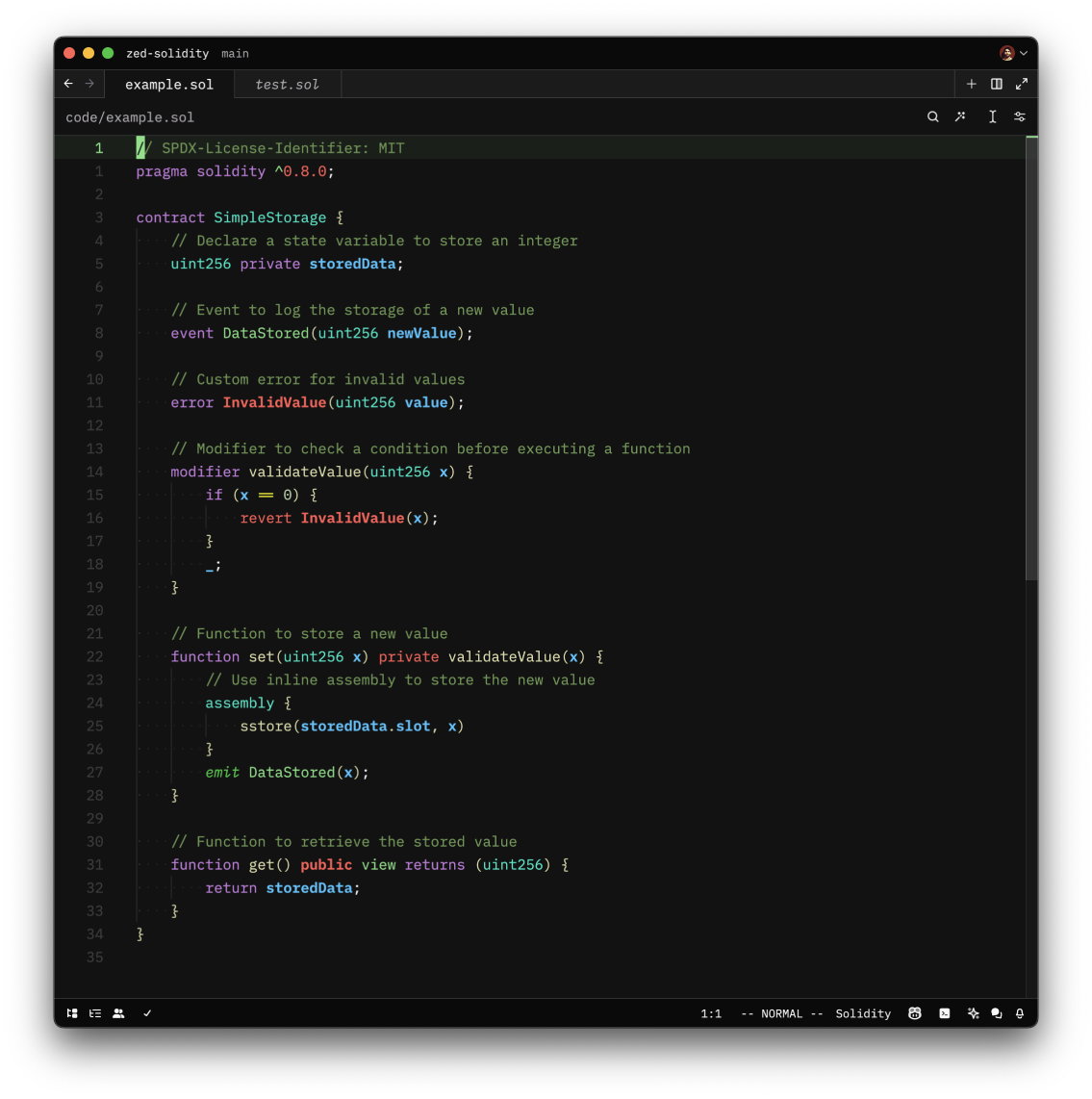
Smart contract languages are usually tied to the execution environment where the contract will run. At a high level, the taxonomy looks like this:
- EVM-oriented languages: Languages that compile to EVM bytecode, with Solidity as the dominant example;
- Non-EVM smart contract languages: Languages designed for other blockchain runtimes, often with different account models, execution rules, and security patterns;
- Domain-specific or framework-oriented approaches: Higher-level tools that may simplify certain application types, but still compile down to the runtime’s required format.
The practical implication is that the language choice is rarely just a syntax preference. It typically locks the project into a runtime and toolchain: compiler, testing frameworks, deployment scripts, bytecode target, debugging tools, and audit conventions. It also shapes hiring availability and auditability, because more widely used languages tend to have larger developer pools, more battle-tested libraries, and more security reviewers familiar with common failure modes.
It also helps to separate contract source code from compiled bytecode. Developers write and review source code, but the blockchain network executes the compiled bytecode after deployment. Most users never interact with either directly; they use a wallet, website, or decentralized application interface that prepares transactions calling the contract’s functions, often through a DApp.
Ethereum and Solidity
Ethereum is the default reference implementation in many smart contract discussions because it has strong ecosystem gravity.
- Tooling depth: Ethereum and EVM development have mature compilers, testing frameworks, deployment tools, wallets, block explorers, and monitoring services, which reduces implementation friction;
- Libraries and audits: Many common contract patterns have existing libraries, audit knowledge, and documented vulnerabilities, making it easier to compare a new design against known practice;
- Composability: A contract can often integrate with existing contracts, tokens, liquidity pools, governance systems, and infrastructure, which matters especially for DeFi-like applications.
Solidity is the dominant language for EVM chains, but it is not synonymous with “smart contracts” broadly. Other platforms use different runtimes and languages for different design goals.
Market structure reinforces why readers often evaluate Ethereum and public chains first, then broaden to alternatives. Grand View Research reported that Ethereum represented about 50% of 2025 smart-contract market revenue, while public blockchains represented more than 60% of 2025 smart-contract market revenue. That does not make Ethereum the right default for every product, but it explains why tooling, audits, and integrations often start there.
Blockchain Platform Selection
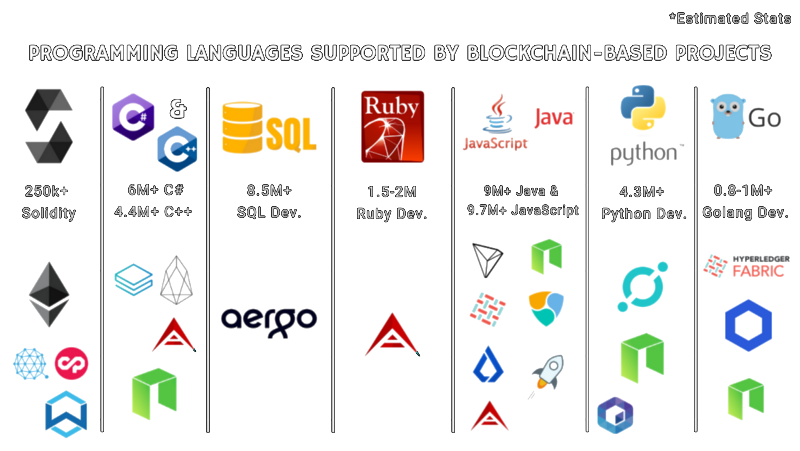
Choosing a platform is a design decision, not only a branding decision. A practical checklist should include:
- Security assumptions: validator set, decentralization level, and consensus model, because the contract inherits the network’s trust and censorship-resistance assumptions;
- Developer ecosystem maturity: tooling, documentation, libraries, testing support, and auditor availability, because immature tooling increases build and review risk;
- Composability/liquidity adjacency: existing liquidity, tokens, marketplaces, or protocols nearby, because a DeFi-oriented product may depend on integrations that are already live;
- Transaction finality and latency: how quickly transactions become practically reliable, because user experience and settlement risk depend on confirmation behavior;
- Fee predictability: how stable or variable the gas fee environment is, because unpredictable costs can make routine user actions harder to price or explain;
- Upgrade and governance constraints: whether contracts can be upgraded, who controls upgrades, and how network governance works, because long-lived applications need a clear change-management model;
- Availability of required primitives: oracles, bridges, identity tools, stablecoins, custody integrations, and indexing services exist where needed, because these are infrastructure dependencies rather than optional extras;
- Layer-2 scaling fit: Consider whether a Layer-2 scaling environment meets the product’s cost, throughput, and security needs, because lower fees may come with different bridging, finality, or operational assumptions.
Moving a live contract or application between platforms is often non-trivial because state, addresses, token balances, integrations, and user approvals are platform-specific. Teams commonly redeploy on the new platform and provide migration paths for users rather than literally “moving” the same contract.
Deployment Costs and Network Congestion
Cost has two separate layers: one-time deployment cost and ongoing interaction cost. Deployment cost is paid when the contract is first published on-chain. Ongoing interaction cost is paid when users call functions, such as minting, swapping, approving, borrowing, claiming, or updating state.
Several cost drivers map directly to reader intuition:
- More storage writes generally cost more because the contract is adding or changing persistent on-chain data;
- More computation generally costs more because validators must process the contract logic;
- More complex contract interactions generally cost more because one transaction may call multiple contracts or trigger several checks before completion.
Network congestion changes the user experience. When demand spikes, gas fees can rise, users may delay actions, and a transaction may take longer to reach block confirmation. Product teams respond by reducing required on-chain steps, batching actions where appropriate, simplifying contract paths, or choosing a different network when the application’s economics cannot tolerate frequent high-fee interactions.
Safety and Legal Issues
None of the benefits of smart contracts make them automatically safe. Practical risk clusters into code risk, interaction/authentication risk, privilege and governance risk, and legal or jurisdiction risk.
Code Vulnerabilities and Audits

OWASP’s 2025 Smart Contract Top 10 is a useful anchor for thinking about vulnerability classes rather than treating security as a loose checklist. Common failure modes can be grouped into four practical categories.
Business-logic mistakes mean the rules are wrong, such as a rewards contract that lets users claim more tokens than intended until the pool is drained. Access-control or authorization mistakes mean the wrong party can call a sensitive function, such as an attacker changing an owner setting and freezing withdrawals. External dependency, oracle, and integration assumptions fail when the contract trusts a bad input or connected system, such as price-oracle manipulation causing collateral to be liquidated incorrectly. Low-level implementation pitfalls include issues such as reentrancy, where repeated calls during one transaction can withdraw funds before the balance is updated.
OWASP’s categories include examples such as logic errors, access-control weaknesses, inadequate input validation, price-oracle manipulation, and reentrancy, but the deeper point is that different risks require different controls. A code review that focuses only on syntax may miss the economic rule being implemented, while a business review that ignores authorization paths may miss who can actually trigger the rule on-chain.
The risk magnitude is not theoretical. OWASP’s analysis dataset covered 122 protocols and identified $905.4 million in losses, excluding phishing, centralized-exchange incidents, and rug pulls, which scopes the figure to smart-contract and protocol-level failure modes rather than every crypto-related loss.
A smart contract audit is usually a scope-defined review of specific code, commits, deployments, assumptions, and integrations. The output is typically an issue list with severity ratings, explanations of impact, recommended fixes, and sometimes remediation verification after the team updates the code. An audit does not mean the contract is safe forever, and it does not guarantee that every bug has been found.
These audits reduce risk or make them visible, but they cannot prove the absence of bugs beyond any doubt. Nevertheless, the risk is even higher when contracts are unaudited, newly upgraded, or composed with many dependencies, because new code paths and integration assumptions can create failure modes that were not present in the original review.
The DAO incident on Ethereum in June 2016 is the classic vignette: a smart contract bug was exploited for roughly US$50 million worth of ether at the time. Once an exploit has been executed, recovery is difficult and often depends on social coordination such as pauses, upgrades, or migrations rather than simply “reversing” the transaction.
Contract Verification and Legitimacy Checks

Before interacting with a contract, non-developers can still perform basic legitimacy checks:
- Verify the contract address from an official primary source, such as the project documentation or official social channels, because the address is the actual on-chain destination your transaction will call;
- Confirm the address matches across multiple independent references, because a single page, post, or interface can be outdated, compromised, or copied incorrectly;
- Check whether the source code is published and verified for that address in a block explorer, because verified source code lets reviewers compare human-readable code with the deployed contract bytecode;
- Confirm the UI you are using is pointing to that same address, because an address mismatch is a red flag even if the website looks familiar;
- Sanity-check whether permissions and admin functions exist before depositing value, because privileged functions can change the risk profile after you have already interacted with the contract.
A legitimate-looking website or UI can still route users to a different contract address. Branding, design, and domain familiarity are not the ground truth; the contract address is. A digital signature from a wallet address proves that a transaction was authorized by that key, but it does not prove the destination contract is the one you intended to use.
Administrator Permissions
“Admin” in a smart contract usually means that certain privileged roles, keys, or governance mechanisms can perform actions ordinary users cannot. Depending on the design, those roles may be able to pause the system, upgrade implementation logic, change parameters such as fees or allowlists, or move funds. These capabilities may be intentional for safety and maintenance, but they introduce trust assumptions.
Common privileged capabilities include:
- Pause or unpause contract functions during incidents or maintenance;
- Upgrade contract logic through a proxy or similar upgrade pattern;
- Change parameters such as fees, limits, collateral ratios, or reward rates;
- Manage allowlists or blocklists that control who can interact with certain functions;
- Move, sweep, or recover assets if the design grants treasury or rescue powers;
- Change oracle, integration, or dependency addresses that the contract relies on.
The reader decision lens is simple: immutable or no-admin contracts offer less flexibility but fewer human trust assumptions, while upgradeable or admin-controlled contracts offer more flexibility but more governance risk. In context, early-stage protocols may keep stronger controls to fix problems quickly, while more mature protocols may move those controls to multisig administration, timelocks, or governance processes.
Legal Enforceability
Once again, at the legal layer, code execution and legal enforceability are separate questions. Enforceability depends on jurisdiction, formation elements such as offer, acceptance, and consideration, capacity and authority of the parties, and evidence of assent. None of these are guaranteed merely because a transaction executed on-chain. This is a general risk frame, not legal advice.
Common legal questions include:
- Identity of parties: A wallet address may not clearly identify the legal person or entity behind the transaction;
- Authority to bind an entity: A signer may control a key but still lack authority to commit a company or organization;
- Consumer protections and disclosures: Automated execution may not satisfy disclosure, cancellation, or fairness rules that apply in a given jurisdiction;
- Dispute forum and choice of law: The code may run globally while the parties have not clearly agreed where disputes should be resolved;
- Treatment of bugs and exploits: A code outcome may conflict with user intent, raising uncertainty about whether the result is valid performance, a mistake, or misconduct.
This is where the earlier idea of smart legal contracts becomes practical. Teams often pair legal prose with on-chain code so that intent, consent, dispute resolution, and automated performance are aligned instead of leaving the smart contract to carry all legal meaning by itself.
Conclusion
A smart contract is best understood as a rule-based execution layer: code deployed on a blockchain, called by transactions, and validated by the network. It can automate transfers, update ownership, enforce collateral rules, release escrow, or trigger payouts when the required conditions are met.
However, the same feature that makes smart contracts powerful also makes them unforgiving. They execute code, not intentions. A clean contract design has to account for the code itself, oracle inputs, administrator permissions, platform constraints, user verification, and the legal layer around the transaction.
Frequently Asked Questions
Is a smart contract always a legal contract?
No, a smart contract is not always a legal contract. The code may execute automatically on a blockchain, but enforceability depends on context, jurisdiction, consent, authority, and other external legal factors, not the mere presence of blockchain execution.
Can smart contracts be changed after deployment?
Deployed smart contract code at a specific address is typically not changed directly, but behavior can sometimes change through new deployments or upgrade/proxy patterns. “Immutability” refers to the on-chain history and deployed code record, while state can still change through valid transactions.
What is Solidity?
Solidity is a smart-contract programming language primarily used to write contracts for Ethereum and other EVM-compatible chains. It is not synonymous with smart contracts generally, because other platforms use different languages, runtimes, and execution models.
Do I need to know how to code to write smart contracts?
End users typically do not need to know how to code to interact with smart contracts, because they usually use apps and wallet interfaces to manage a digital asset like a token, NFT, or other cryptocurrency. Builders and auditors do need coding literacy, and teams still need to understand what the contract does even if they do not write it themselves.
You can still evaluate contracts conceptually by understanding triggers, state changes, and dependencies such as oracles or admin controls.