
Top White-Label Fintech Solutions (2026): Review & Comparison

Key Takeaways
- 🧰 “White-label” is not a license. It is branding and packaging of software and workflows; regulated standing still comes from a sponsor bank, an e-money institution, or your own license.
- 🧰 Most launch failures are accountability failures. The technical stack can be fine while KYC/AML ownership, dispute handling, and regulatory reporting responsibilities are unclear.
- 🧰 Integration depth and data portability are an exit strategy. Your API surface quality, webhook coverage, and export formats define whether you can switch vendors without a full rebuild.
Risk disclaimer: Implementation outcomes depend heavily on your licensing arrangements, compliance ownership model, and data residency requirements. Nothing in this guide constitutes legal or regulatory advice—regulated financial activities require review by qualified legal and compliance professionals in your jurisdiction.
The white-label fintech market is expanding rapidly, projected to grow from an estimated $9.8 billion in 2025 to approximately $12.3 billion in 2026. This year-over-year growth underscores why vendor choice has become a high-stakes decision for any team launching a financial product. Choosing the wrong pre-built banking platform at this stage can mean months of rework, compliance gaps, or a product that doesn't map to your regional regulatory environment. This guide is designed to cut through the noise and function as a practical decision aid instead of a vendor pitch.
What "White-Label Fintech Solutions" Means in This Guide
For the purposes of this article, "white-label fintech solutions" covers two categories: (a) digital banking software and platforms—full-stack or modular products that can be rebranded and deployed to serve end users—and (b) API-first infrastructure providers where the API layer materially accelerates launch by abstracting licensing, ledgering, card issuance, or payment rails. Consumer finance apps without regulated rails (e.g., budgeting tools with no money movement), pure accounting or ERP software, and point solutions that don't function as part of a broader financial product are not reviewed.
Definitions and Core Concepts
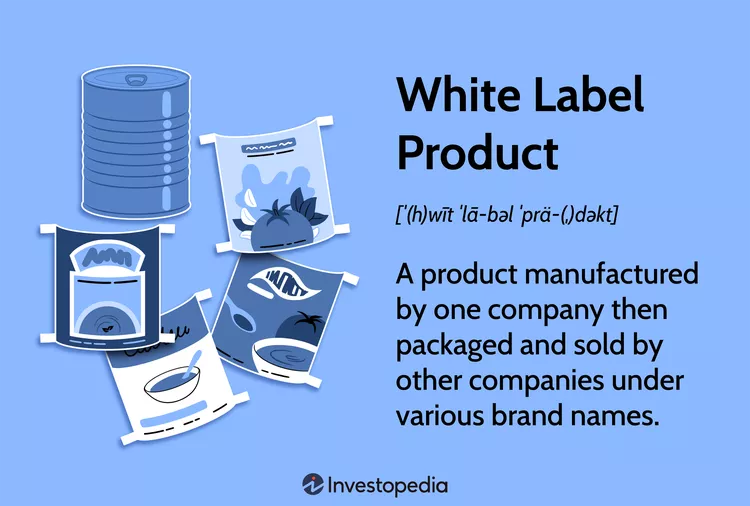
A white-label fintech solution is a pre-built, rebrandable financial product or service stack that a business deploys under its own brand without having to handle the underlying technology. The three terms—solution, software, and platform—are not interchangeable: "solution" covers the full delivered outcome (technology plus services plus partner relationships), "software" refers to the deployable application layer alone, and "platform" denotes a modular, extensible product surface with an integration layer, multi-tenancy, and configurable workflows.
The white-label neobanking platform market was valued at approximately USD 2.3 billion in 2025 and is projected to reach USD 3.1 billion by 2026. (Source: Intel Market Research) Speaking practically, a white-label launch typically ranges from $50,000 to $500,000 in total initial cost depending on configuration depth and compliance setup, compared to a build-from-scratch ceiling that routinely exceeds $1–5 million before a regulated product reaches market—though compliance, licensing, and integration overhead can shift both figures considerably. (Source)
White-Label Fintech Solution
First, a white-label fintech solution is the broadest classification. It encompasses the technology stack, the operational services wrapped around it, and the third-party partner relationships (banking, card network, compliance) bundled into a single commercial offer delivered under the buyer's brand.
| Who Owns What? | |||
|---|---|---|---|
| Responsibility | Customer / Program Manager | White-Label Vendor | Banking Partner |
| KYC/AML policy | Approves and signs off | Provides configurable rule sets | Sets regulatory floor; retains ultimate liability |
| KYC execution | May handle if self-serve tier | Typically runs decisioning engine | Audits outcomes; may require re-review |
| Transaction monitoring | Configures thresholds and alerts | Operates monitoring infrastructure | Receives SAR filings; regulatory interface |
| Card program compliance | Program manager of record | Supports with tooling and reporting | Card network contractual counterparty |
| Incident response | First-line customer communication | Technical triage and resolution | Regulatory notification if material breach |
White-Label Digital Banking Software
In turn, white-label digital banking software refers specifically to the application layer: the mobile and web channel interfaces through which end users interact, plus the back-office and admin tooling through which operators manage accounts, permissions, and reporting. The software layer depends on external core infrastructure to function—a core banking system or ledger management engine, payments rails (ACH, wire, real-time payments), and a card processor or issuer processor—but it does not itself provide or constitute those services. Most importantly, "software" can be deployed, demoed, and even piloted without providing regulated banking access; a buyer can run the SaaS delivery model in a sandbox against a mock ledger before a banking partner is ever contracted.

Procurement conversations for digital banking software routinely mix distinct concepts into a single vendor conversation but the following terms require precise, separate treatment:
- Core banking system — The system of record for account balances, transaction history, and product configuration. For procurement, the white-label software must integrate with or replace it; a mismatch here creates ledger reconciliation problems.
- Ledger (management) — The double-entry accounting layer that posts debits and credits. Distinct from core banking in cloud-native architectures where ledger-as-a-service is a standalone API. SaaS delivery model vendors may or may not include a ledger, changing the total integration scope. Mind that the meaning of ledger in crypto is related but not entirely the same.
- Issuer processor — The entity authorized to authorize card transactions against a cardholder's account in real time. The white-label software vendor and the issuer processor are almost never the same company; the buyer must contract both.
- Program manager — The company that manages the operational relationship between the bank and the end customer, including compliance oversight, dispute management, and card network reporting. Some white-label deals the vendor acts as program manager; in others the buyer must become one or contract one.
- Orchestration layer — Middleware that routes events and API calls between the channel software, core banking, issuer processor, KYC provider, and other services. A missing or immature orchestration layer forces the buyer to build custom integration logic, which is a significant hidden cost.
- Digital channels — The mobile app, web app, and (increasingly) conversational/API-first interfaces exposed to end users. "Software" vendors vary widely in which channels they deliver.
- Customer identity / KYC — The identity verification and onboarding workflow (document scan, liveness check, watchlist screening). It is frequently a plug-in from a third-party provider, and the composability of that integration determines how quickly the buyer can swap vendors or update compliance logic.
White-Label Fintech Platform
Finally, a white-label fintech platform is a modular, extensible product surface that combines multiple functional modules, an API gateway or integration layer, role-based administration, multi-tenant support, and configurable workflows into a single governed environment. The word "platform" is only appropriate when the product meets all of the following minimum criteria:
- Module catalog — Discrete, independently activatable functional units (e.g., savings accounts, lending, card issuance, FX).
- API gateway — A managed integration surface that exposes all core functions as documented, versioned APIs, enabling the buyer to connect external systems or build proprietary features.
- Role-based admin — Granular permission tiers that separate operator roles (compliance officer, product manager, customer support) without requiring code changes.
- Multi-tenant support — The architecture must support more than one brand, program, or sub-entity running on the same infrastructure with logical data segregation.
- Configurable workflows — Business logic (onboarding steps, transaction limits, approval chains) that can be modified through configuration UI rather than vendor engineering tickets.
By definition, a vendor that delivers a single white-label mobile banking app with a fixed feature set, a shared admin login, and a professional-services engagement required for every product change is selling software-as-a-product, not a platform—regardless of how their marketing copy describes it.
White-Label Models and Deployment Options
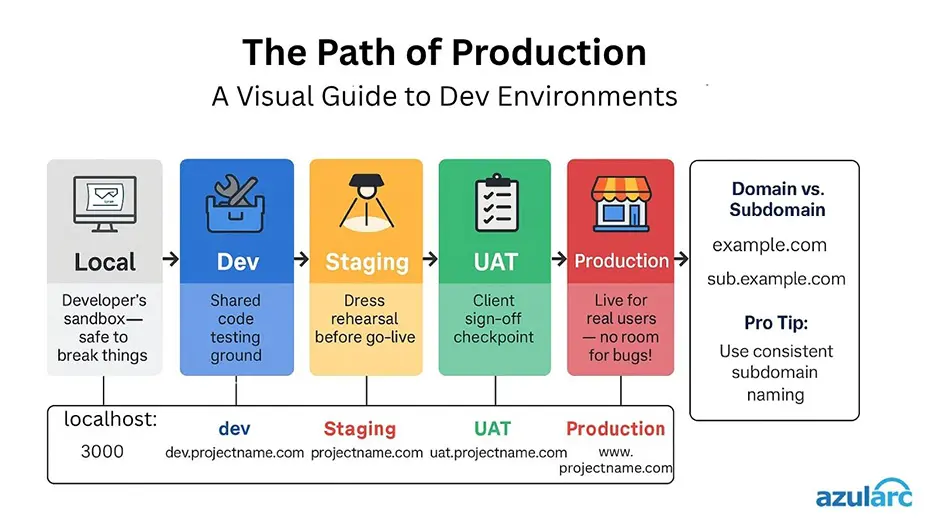
Before choosing a platform, you need to decide how you want to receive it. The delivery model you pick determines who owns compliance, how fast you can launch, what you can customize, and what you're locked into for the next several years.
Something worth getting out of the way from the very start is while "white-label" refers to software and UI packaging—a vendor's technology stack rebranded as your product, "BaaS" (Banking-as-a-Service) refers to regulated banking capabilities (deposit accounts, card issuance, payments) delivered via API through a licensed provider. A "white-label bank" is not a licensed bank; it is a white-labeled front-end sitting on top of a licensed bank's infrastructure.
White-Label Banking Software
What you typically get:
- Pre-built mobile and web UI (onboarding flows, dashboard, transaction history)
- Admin and operations console for your internal team
- Back-office tools (account management, fee configuration, customer support views)
- Ledger or core banking module for balance tracking and transaction processing
- Card and payment connectors (issuer processor integrations, payment rails)
- Reporting and analytics dashboards
- Core banking system integration points via API
As for what you typically do not get:
- A banking license or e-money institution license
- A sponsor bank relationship
- Guaranteed BIN access or card program approval
- Local regulatory reporting for every jurisdiction you plan to operate in
- AML/KYC program ownership (you still need to build or buy that)
Knowing this boundary prevents a common mistake: assuming a white-label platform makes you a regulated entity. It does not. It gives you the technology stack; regulatory standing is a separate arrangement.
You will generally encounter two deployment modes when evaluating white-label banking software: SaaS (hosted by vendor) operates the infrastructure, manages releases, and runs monitoring and incident response. For your team, this means faster deployment timeline, lower upfront infrastructure cost, and minimal DevOps burden. The trade-off is limited data residency control, dependency on the vendor's release cadence, and audit workloads that require vendor cooperation (SOC 2 reports, penetration test results, shared responsibility matrices). Integration effort is typically lower because the vendor pre-connects their own modules—but connecting to your own external systems still requires API work.
The other option is customer-managed / private cloud / on-premises with the obvious tradeoff of data residency—critical if you operate in jurisdictions with strict data localization requirements— versus security hardening, patching, monitoring, and incident response, owned by your team. Release cadence is yours to manage, which is an advantage if you need to decouple from the vendor's roadmap, but a burden if your engineering team is small. Integration effort is higher, and the total cost of ownership rises accordingly. This option suits enterprises with existing cloud-native platform infrastructure and mature DevOps practices.
Banking-as-a-Service
BaaS separates the delivery of regulated banking capabilities from the product experience built on top of them. Before signing a BaaS agreement, take the time to sort out who owns what.
| Responsibility Area | Fintech (You) | BaaS Provider | Sponsor Bank |
|---|---|---|---|
| Product UX / feature delivery | ✓ Own | Enables via API | No role |
| KYC / AML program design | Partial (configure) | Tooling / monitoring | Ultimate oversight |
| Transaction monitoring | Partial (rules config) | Platform-level screening | Regulatory obligation |
| Disputes and chargebacks | First-line handling | Process support | Final arbitration |
| Safeguarding / fund segregation | N/A (pass-through) | Structural support | Direct obligation |
| Regulatory reporting | Data provision | Aggregation / filing support | Filing obligation |
| Card network compliance | Program adherence | Program management | Program sponsor |
Should you choose it, BaaS dramatically reduces your infrastructure burden but does not eliminate your compliance burden. You are still responsible for configuring KYC flows, monitoring thresholds, and handling customer disputes at the first line.
All that being said, BaaS is not a switch you flip. Several constraints are decision-critical:
- Sponsor bank approval timelines: Expect 3–6 months for initial program approval, sometimes longer for novel business models or higher-risk verticals. If your launch date is fixed, this timeline can become a blocker.
- Program policy constraints: Sponsor banks impose MCC restrictions, transaction limits, geography limits, and acceptable use policies. Your product roadmap must fit within those bounds—or you negotiate exceptions, which takes time.
- De-risking and offboarding risk: Sponsor banks can exit relationships, sometimes with short notice windows. If you have not built portability into your architecture (e.g., keeping core data exportable, maintaining secondary vendor relationships), a bank exit can halt your product.
BaaS can accelerate launch when you have a clear, compliant use case that fits the sponsor bank's existing program parameters, your market is a single geography, and speed to market outweighs long-term unit economics optimization but become a bottleneck if you need multi-country expansion, your product requires custom ledger behavior outside standard program parameters, or you are scaling to a volume where per-transaction BaaS fees significantly erode margin.
Build vs White-Label vs BaaS
| Decision Factor | Build from Scratch | White-Label Software | BaaS |
|---|---|---|---|
| Time-to-market | 18–36+ months | 3–9 months | 1–6 months |
| Upfront cost | >$5M (dev + compliance) | $50K–$300K | Low (rev-share or per-transaction fees) |
| Ongoing cost | High (engineering, infrastructure, compliance headcount) | Medium (license + internal ops) | Variable (scales with transaction volume; margin compression at scale) |
| Customization | Full—every layer of the technology stack is yours | High UI/UX, limited core logic without vendor support | Low-to-medium; constrained by sponsor bank program rules |
| Compliance ownership | You own everything | You own everything; software supports it | Shared; sponsor bank holds ultimate regulatory obligation |
| Portability | None | Medium (data portability depends on contract) | High; sponsor bank and BaaS provider are structural dependencies |
| Scalability | Full control | Dependent on vendor's cloud-native platform roadmap | Dependent on both BaaS provider and sponsor bank |
| Integration workload | High—dozens of API and vendor relationships to manage | Medium—vendor pre-integrates modules; external APIs remain your work | Low-to-medium—BaaS provider aggregates banking APIs; product integrations are yours |
Choose to Build when…
- You need custom ledger behavior that no vendor supports out of the box
- Your business model requires full data residency control across multiple jurisdictions
- You are operating at a scale where per-unit BaaS or license fees structurally damage unit economics
- You have 24+ months of runway and an experienced fintech engineering and compliance team
- Your long-term competitive differentiation lives in the core banking logic itself
Avoid building when…
- You need to reach market in under 12 months
- Your compliance team is not yet staffed for full regulatory ownership
- You are still validating product-market fit and may pivot core features

Choose White-Label when…
- You want significant brand and UX control without a multi-year build
- You must meet strict data residency requirements and can negotiate a private cloud deployment
- Your product requires frequent experiments on the customer-facing layer without changing core banking logic
- You have an existing SaaS delivery model partnership and internal DevOps capability
Avoid White-Label when…
- You need regulated banking capabilities (accounts, cards) bundled into the same vendor relationship
- Your target market requires deep core customization the vendor's roadmap does not support
- You cannot absorb the upfront $50K–$300K cost range at your current funding stage
Choose BaaS when…
- You need the fastest possible deployment timeline with minimal infrastructure ownership
- Your use case fits cleanly within a standard sponsor bank program
- You are building in a single geography and regulatory environment
Avoid BaaS when…
- You need multi-country expansion within 12 months (sponsor bank approval timelines compound per jurisdiction)
- Your product depends on custom transaction logic or MCC categories outside standard program parameters
- You are scaling to a volume where transaction-level fees create a structural margin problem
Top White-Label Fintech Solutions of 2026
As a cost reality-check before you evaluate individual vendors: white-label launch costs typically range from $50,000 to over $500,000 depending on scope and compliance requirement but building from scratch can cost multiple of that. Worth stating once clearly: "white-label" means different things across these vendors—from a UI/branding layer dropped onto an existing core, to a full-stack banking platform, to discrete API components you assemble yourself.
ChangeHero
On the B2B side, ChangeHero is mainly an API-powered solution rather than a white-label platform. Therefore, it mainly occupies the back end of an integration, while the bulk of customer experience with support or interfacing remains in the partner’s hands.
Best for: Crypto services worldwide that need a crypto payment processing stack with flexible deployment options.
Core capabilities to verify: Multi-currency wallet and ledger management, fiat payment integration, eKYC workflow, transaction routing configuration, and data API layer.
Integration surface: API for complete swap transaction workflow and data points. ChangeHero provides the product layer and expects third-party specialist connections for regulated functions.
Constraints / trade-offs: API integration provides only the native crypto-to-crypto functionality; data points for fiat currencies and rates are available but for referential purposes.
Diligence questions:
- Is your target market included in ChangeHero’s supported jurisdictions?
- Does your product have sufficient feature coverage to turn transaction history exports into full-fledged ledger management?
- What SLA and uptime commitments apply to your specific arrangement?
Backbase
Backbase is a digital banking front-end and engagement platform, not a core banking system—it sits above your ledger and orchestrates the customer experience layer.
Best for: Banks and credit unions migrating legacy digital channels to a modern, composability-driven engagement layer without replacing the core banking system underneath.
Core capabilities to verify: Omnichannel journey builder, open banking API connectivity, digital onboarding workflows, product catalog management, and integration hooks into existing core banking ledgers.
Integration surface: API-first architecture; expect to integrate with your existing core banking system integration layer, KYC vendors for identity verification, and payment rails for transaction initiation—Backbase supplies the engagement shell, not the transaction engine.

Constraints / trade-offs: Implementation complexity is enterprise-grade and typically requires a systems integrator; licensing costs scale with user volume and can become prohibitive for early-stage fintechs; the platform is not designed as a standalone neobank launch stack without a pre-existing or separately licensed core.
Diligence questions:
- What is your median go-live timeline for a greenfield digital banking channel deployment, and what SI partnerships do you mandate?
- How is the open banking API layer versioned and maintained across regulatory changes in our target market?
- Where can customer data residency be configured, and which cloud regions are currently certified?
Not ideal if: You are a startup without an existing core banking relationship—Backbase assumes a core already exists or is being sourced separately.
SDK.finance
SDK.finance is a pre-built banking platform delivered as licensable software, sitting at the intersection of core ledger management and product configuration—not purely a front-end layer.
Best for: Fintechs and regional banks that want a deployable, white-label digital banking product with built-in ledger management and multi-currency support, without commissioning a bespoke core build.
Core capabilities to verify: Multi-currency ledger, transaction routing logic, eKYC module integrations, card management capabilities, and fee/product configuration engine.
Integration surface: API-first with SDKs for mobile and web; integration points include card processors for card issuing, AML screening providers, and external payment rails—the platform is designed to be the connective layer between these components.
Constraints / trade-offs: Cloud deployment flexibility exists, but on-premise or private-cloud options require additional scoping; out-of-the-box UI components are functional but may require significant design investment to meet brand-differentiated standards; the ecosystem of pre-built connectors is narrower than enterprise suite vendors.
Diligence questions:
- Which card processors and payment rails are pre-integrated, and what is the connector certification timeline for new ones?
- How is the ledger management module audited and reconciled in a multi-currency environment?
- What does the SLA look like for hosted deployments, and what is the historical uptime record?
Mambu
Mambu is a cloud-native core banking engine—its job is the ledger, loan lifecycle, and product engine, not the customer-facing UI or card issuing layer.
Best for: Neobanks and lenders that need a composable, SaaS-delivered core banking engine with fast deployment timeline for loan, deposit, and account products.
Core capabilities to verify: Cloud-native platform architecture, product builder for deposit and lending products, open API layer for third-party composition, regulatory reporting hooks, and real-time transaction processing.
Integration surface: API-first; Mambu is explicitly designed for composability—buyers should plan integrations with a separate digital front-end, KYC/AML screening vendor, card issuing processor, and payment processing rails, all wired via APIs.
Constraints / trade-offs: Mambu does not provide a customer-facing UI, card issuing infrastructure, or payment processing natively—you are assembling a stack around it; full composability increases third-party dependency and vendor coordination overhead; enterprise pricing tiers can make it cost-intensive for sub-scale fintechs.
Diligence questions:
- How are breaking API changes managed across major version releases, and what is the deprecation notice period?
- Which regulatory reporting formats are natively supported in our target jurisdiction?
- How is data residency enforced across your multi-tenant cloud-native infrastructure?
Temenos

Best for: Tier-1 and Tier-2 banks requiring a full-suite, globally deployable core banking system with deep regulatory coverage across multiple jurisdictions.
Core capabilities to verify: Core banking ledger, multi-currency support, payment processing modules, regulatory reporting frameworks, and open banking API compliance.
Integration surface: API and pre-built connectors; Temenos integrates with core banking system peripherals including card processors, payment rails, and compliance data feeds—its marketplace lists pre-certified third-party connectors.
Constraints / trade-offs: Implementation complexity is among the highest in the market, with multi-year deployment timelines common for full-suite rollouts; total cost of ownership at enterprise scale requires dedicated internal program management; SaaS and on-premise delivery models exist, but SaaS feature parity varies by region—verify explicitly.
Diligence questions:
- What is the average full-suite implementation timeline for a bank of our asset size, and what does the SI resourcing model look like?
- How is compliance ownership split between Temenos and the client for jurisdiction-specific regulatory reporting changes?
- What are your SLA metrics and uptime history for the SaaS-delivered core in our target region?
Finastra
Best for: Financial institutions seeking a modular, open-platform approach to upgrading specific banking functions—lending, payments, or treasury—without a full core replacement.
Core capabilities to verify: Open banking API framework (FusionFabric.cloud), payment processing modules, loan origination workflows, AML screening integration points, and ledger management connectors.
Integration surface: API-first via FusionFabric.cloud marketplace; Finastra's model is explicitly open—buyers integrate third-party KYC vendors, card processors, and payment rails through a shared API fabric rather than a proprietary connector layer.
Constraints / trade-offs: The modular model requires significant internal architecture decisions upfront—buyers who want a turnkey stack will find Finastra's openness a liability rather than an asset; regional product availability varies, and not all modules are GA in every jurisdiction; vendor lock-in risk is lower than closed-suite peers but marketplace dependency introduces its own concentration risk.
Diligence questions:
- Which modules are generally available versus roadmap items in our target market?
- How is API versioning governed across the FusionFabric marketplace when third-party connectors update independently?
- Where does compliance ownership for regulatory reporting sit when using third-party modules on your platform?
Crassula
Best for: Fintechs and payment companies in Europe launching a white-label digital wallet or payment processing product on a shorter deployment timeline.
Core capabilities to verify: Multi-currency wallet ledger, IBAN issuance, card management integration, eKYC flow configuration, and transaction routing rules.
Integration surface: API-first; integrates with card issuing partners, payment rails, and KYC/AML screening vendors—Crassula acts as the product layer that connects these components under a single branded interface.
Constraints / trade-offs: Primarily EU-focused, with limited documented support for non-European regulatory frameworks; the platform is optimized for payment and wallet products rather than full deposit-taking or lending use cases; customization beyond the core wallet and payment flows requires bespoke development.
Diligence questions:
- Which EU payment rails and IBAN jurisdictions are currently supported, and what is the onboarding timeline for new ones?
- How is AML screening orchestrated—native engine, third-party integration, or client-supplied?
- What are your uptime SLAs and incident response commitments for transaction routing failures?
EBANQ
Best for: Smaller financial institutions, EMIs, and private banking operators that need a self-contained, branded online banking portal without a complex enterprise integration project.
Core capabilities to verify: Client portal white-labeling, multi-currency account management, transaction management interface, document management, and compliance reporting exports.
Integration surface: Pre-built integrations with core banking system back-ends and payment processors via configurable connectors; the integration surface is intentionally narrow compared to enterprise platforms—suitable for institutions with a stable, limited product set.
Constraints / trade-offs: EBANQ is a front-end portal layer, not a core banking engine—it depends entirely on a connected back-end for ledger and payment processing; limited API extensibility constrains custom product development; implementation complexity is low, but that simplicity comes at the cost of scalability for high-transaction-volume operations.
Diligence questions:
- Which core banking system integrations are pre-certified, and what is the timeline to certify a new back-end connection?
- How are regulatory reporting exports structured, and which formats are natively supported?
- What is the maximum transaction volume per account that the portal layer has been load-tested to support?
Finhost
Best for: Startups and fintechs in Eastern Europe and CIS markets that need a ready-made BaaS infrastructure with local regulatory alignment and fast deployment timeline.
Core capabilities to verify: Multi-currency account infrastructure, card issuing program support, eKYC and AML screening workflow configuration, payment processing connectivity, and regulatory reporting for target jurisdictions.
Integration surface: API-based connectivity to card processors, payment rails, and KYC vendors; Finhost positions itself as the compliance-aware infrastructure layer, so buyers should verify which specific rails and processors are live versus in development.
Constraints / trade-offs: Geographic focus on Eastern Europe and CIS limits readiness for Western European or North American regulatory frameworks without additional scoping; the vendor ecosystem is less publicly documented than global peers, increasing diligence effort; partner bank dependencies for certain product types add a layer of counterparty risk.
Diligence questions:
- Which jurisdictions are currently live for regulatory reporting, and what is the roadmap for expansion?
- How is compliance ownership structured for AML screening obligations in our target market?
- Where is customer data hosted, and how is data residency configured per jurisdiction?
nCino
Best for: Banks and credit unions that need a cloud-native, Salesforce-native loan origination and commercial banking workflow platform rather than a general-purpose digital banking stack.
Core capabilities to verify: Loan origination workflow automation, document management, AML screening integration points, regulatory reporting outputs, and CRM-native pipeline management.
Integration surface: Built natively on Salesforce; integration surface connects to core banking system ledgers for booking, KYC/AML screening vendors, and credit bureau data feeds—buyers must account for Salesforce licensing as a dependency.
Constraints / trade-offs: nCino is not a full-stack banking platform or card issuing solution—its scope is lending and commercial banking workflows; the Salesforce dependency creates a compounded vendor lock-in risk and pricing sensitivity; implementation complexity is high for institutions without existing Salesforce infrastructure.
Diligence questions:
- How is the core banking system integration structured for loan booking, and which cores are pre-certified?
- What Salesforce edition and licensing tier is required to access the full nCino feature set?
- How is compliance ownership split for regulatory reporting outputs across jurisdictions?
Comparison and Evaluation Criteria

Choosing a white-label fintech vendor without a structured framework is how budgets blow out and launches slip. The criteria below give you a reusable, decision-grade approach to short-listing and justifying a vendor choice across product scope, geography, cost structure, and delivery risk.
Feature Comparison
Core Ledger / Account Management
- Must-have: Multi-currency ledger, real-time balance updates, transaction history with full audit trail, sub-account / wallet support, reconciliation tooling
- Nice-to-have: Programmable ledger rules, savings pot logic, virtual IBAN issuance at the platform level
- Red flag if missing: No real-time ledger visibility; reconciliation requires manual export; no multi-entity support when your model requires it
KYC / AML Tooling Boundaries
- Must-have: Configurable KYC workflow (document + liveness), sanctions screening, transaction monitoring rules engine, SAR filing support or clear handoff point
- Nice-to-have: Risk scoring customization, adverse media integration, tiered KYC for different customer segments
- Red flag if missing: Vendor bundles a single third-party KYC provider with no swap option; no visibility into false-positive rates; AML rules are black-box and non-configurable
Card Issuing / Processing Dependencies
- Must-have: Clear disclosure of BIN sponsor relationships, scheme certifications (Visa/Mastercard), processor contractual chain, chargeback management workflow
- Nice-to-have: Virtual card issuance, spend controls at card level, tokenization support (Apple Pay / Google Pay)
- Red flag if missing: Single BIN sponsor with no fallback; scheme certification held by vendor only (not portable); no chargeback tooling in the admin console
Admin Back-Office Maturity
- Must-have: Role-based access control, customer management console, transaction investigation tools, manual override capability, audit log of admin actions
- Nice-to-have: Bulk operations, reporting builder, configurable alert thresholds for ops teams
- Red flag if missing: Back-office requires direct database access for routine ops; no audit trail for admin actions; limited to a single admin user role
API Surface (Auth, Webhooks, Sandbox)
- Must-have: OAuth 2.0 or equivalent auth, documented webhook events with retry logic, a fully functional sandbox environment available pre-contract, versioned API with deprecation policy
- Nice-to-have: OpenAPI/Swagger spec, Postman collection, dedicated developer portal, webhook event filtering
- Red flag if missing: No sandbox without a signed contract; undocumented or inconsistently versioned endpoints; webhooks exist but lack a delivery guarantee or retry mechanism
Integration Patterns (Direct vs. Via Partners)
- Must-have: Clear documentation of which capabilities are native vs. brokered through a third party; explicit SLA ownership for partner-dependent features
- Nice-to-have: Pre-built connectors for common cores (Mambu, Temenos, Finastra, nCino, Backbase); iPaaS compatibility
- Red flag if missing: Integration map is verbal only; third-party dependencies are undisclosed until implementation scoping; no contractual SLA coverage for partner-layer failures
Proof Artifacts to Request
Before scoring any vendor above a 3 on capability claims, require:
- API docs + Postman collection — verify endpoint coverage matches the sales deck
- Sample webhook event payloads — confirm event granularity and schema stability
- Uptime / availability reports — trailing 12-month data, not a contractual target in isolation
- Penetration test summary — scope, date, remediation status; reject summaries older than 18 months
- SOC 2 Type II and/or ISO 27001 certificate — confirm scope covers the modules you are buying, not just the corporate entity
- Reference customer contacts — at least two in a comparable regulatory jurisdiction and use case
Regional Availability

Layer 1 — Jurisdictions Served (Legal Launch Support)
This is where the vendor's platform is actively used in production by regulated entities today — not where they claim to be expanding.
Questions to ask:
- In which jurisdictions do you have live, regulated customers operating on this platform today?
- What is your process if local regulatory guidance changes after our launch?
- Do you hold or facilitate any licenses, or are you purely infrastructure?
Layer 2 — Banking Partner / Card BIN Sponsorship Coverage
A vendor may support a jurisdiction legally but lack the banking relationships needed to actually move money or issue cards there.
Questions to ask:
- Which BIN sponsors and partner banks do you have active agreements with in our target market?
- Are those relationships exclusive to you, or do we have direct contractual visibility?
- What is the fallback if a BIN sponsor relationship ends?
Layer 3 — Data Residency Guarantees
Where data physically lives, and whether that residency is contractually enforceable, is a distinct question from where the vendor is headquartered or where their servers are nominally located.
Questions to ask:
- In which cloud regions can you guarantee data residency, and is this contractually binding?
- Does data residency apply to backups and logs, or only primary data stores?
- Can you support in-country data residency for markets with strict localization rules (e.g., Russia, India, certain Gulf states)?
Cross-Border Pitfalls
These issues surface during evaluation but are often only caught in due diligence:
- Multi-currency settlement: Confirm whether the platform handles FX natively or routes through a third party — and who owns settlement risk and timing differences.
- Local payment rails: Ask specifically which local rails are supported in your target market (e.g., SEPA, FPS, ACH, PIX, UPI) — "international wires" is not a substitute.
- Sanctions screening coverage: Verify which sanctions lists are screened (OFAC, EU, UN, HMT), update frequency, and whether the vendor covers your jurisdictional obligation or only their own.
- Local ID type support in onboarding: Confirm that KYC flows accept the specific ID documents required in your target market — a platform built for EU national IDs may not handle GCC residence permits or LatAm voter cards without custom integration.
Pricing Models
White-label fintech pricing is rarely simple and almost never apples-to-apples across vendors. The five core pricing components that require understanding are:
1. Setup / Implementation Fees
A one-time charge covering platform configuration, initial integration work, and go-live support. This can range from negligible (SaaS delivery model with self-serve onboarding) to six figures for complex deployments. Watch for scope creep clauses — what is not included in setup is often more important than what is.
2. Platform Subscription (SaaS)
A recurring monthly or annual fee for access to the platform. This is the baseline and typically covers core module access. Confirm exactly which modules are in scope — some vendors (including SDK.finance, Crassula, and EBANQ) offer modular pricing where KYC tooling, back-office, or reporting are separate line items.

3. Per-Active-User / Per-Account Fees
Many platforms charge per active user per month or per account maintained. These fees scale with your growth and can represent the largest cost component at scale. Clarify the definition of "active" — a user who logs in once vs. one who transacts.
4. Per-Transaction Fees by Rail
Fees vary by payment rail and can differ substantially:
- Card transactions (interchange-funded vs. fee-per-transaction)
- ACH / SEPA credit and direct debit
- Wire / SWIFT
- Real-time payment rails (RTP, Faster Payments)
Vendors including Mambu and Temenos typically price transaction fees as pass-through plus a platform margin. Confirm whether your contract reflects actual rail costs or a blended estimate.
5. Revenue Share / Interchange Share
Some vendors — particularly those providing BIN sponsorship or issuing infrastructure (common with platforms like Finhost) — take a share of interchange revenue rather than charging per-transaction fees. This can appear favorable at low volumes but erodes margin at scale.
Time-to-Market
The deployment timeline is a sum of dependencies, many of which are outside the vendor's control, rather than a number set in stone. The section below converts those dependencies into a risk register and a phased delivery template.
| Risk / Driver | Typical Time Impact | Mitigation |
|---|---|---|
| KYC and onboarding | 2–6 weeks | Begin configuration during contract negotiation; pre-agree document type scope |
| Partner bank or BIN sponsor approval | 4–16 weeks | Initiate bank applications in parallel with vendor scoping; confirm existing sponsor relationships cover your jurisdiction |
| Integration scope (number of external systems) | 2–12 weeks per system | Limit Phase 1 integrations to critical path only; defer non-essential core banking system integration |
| Payment rail certification testing | 6–14 weeks | Confirm vendor's existing certifications; assess whether re-certification is required for your entity |
| Compliance readiness gates | 4–20 weeks | Engage legal counsel before vendor selection; confirm regulatory pre-approvals required in your jurisdiction |
| Customization depth | 2–16 weeks | Validate customization ceiling early; scope changes mid-build are the leading cause of timeline overrun |
| API integration testing | 2–6 weeks | Require sandbox access before contract close; run a proof-of-concept integration during evaluation |
| Regulatory sandbox or pilot approval (if applicable) | 8–24 weeks | Identify if a regulatory sandbox is available in your jurisdiction and apply early |
Risks above are rarely sequential. A delay in BIN sponsor approval blocks card issuance certification, which delays compliance sign-off. Build compounding scenarios into your project timeline.
Risks, Legality, and Key Considerations
Choosing a white-label banking or Banking-as-a-Service platform is not purely a product decision—it is a compliance, operational, and contractual commitment that shapes your exposure for years. The failure modes in this category are rarely technical; they are organizational. The questions below are designed to surface accountability gaps before you sign anything.

Remember who is accountable versus who merely executes is the first step in any white-label or BaaS evaluation. Delegated functions are not the same as transferred liability.
- Licensing posture: Vendor or partner bank holds the regulated license; your company operates under their umbrella and inherits their constraints.
- KYC/AML operations: Vendor typically provides the workflow and tooling; your company (as program manager) commonly owns the policy decisions and ultimate accountability.
- Sanctions screening: Usually executed by vendor or bank infrastructure, but your company must validate coverage, list versions, and escalation procedures.
- Transaction monitoring tuning: Thresholds and rules are often jointly managed; responsibility for model risk management typically rests with the regulated entity or program manager.
- Dispute and chargeback handling: Operationally handled by the vendor or bank, but your company owns the customer relationship and, in many programs, the financial exposure.
- Regulatory reporting: The licensed entity files; your company must supply accurate, timely data and maintain supporting documentation.
- Model risk management: Governed by the regulated entity, but if you use custom scoring or decisioning, you may inherit validation and documentation obligations.
Regulatory Licensing and Partner Bank Dependencies
Your product's legal existence depends entirely on who holds the relevant banking license and what that entity permits. Before signing any agreement, get explicit written answers to the following questions:
- Who is the sponsor bank or regulated entity, and what is their supervisory status?
- Which specific product types are permitted under this program: debit, prepaid, credit, deposit accounts, lending, or others?
- What underwriting or approval gates apply to your business before you can go live?
- Are there prohibited business categories, merchant types, or customer segments in the program agreement?
- What geographies and jurisdictions does the program cover, and are cross-border issuances supported?
- What onboarding policy constraints apply to your end-customers (e.g., identity verification requirements, acceptable ID types)?
- How is the change-control process managed for product feature changes that require bank approval?
- What is the contractual notice period and transition plan if the bank relationship ends?
- Who owns the BIN, ICA, or equivalent identifier, and can it be ported if you change partners?
- What is the bank's own financial stability and regulatory track record?
- Is there a secondary bank relationship or contingency plan in place?
- What regulatory reporting obligations does the bank pass through to your program?
Depending on the licensing posture, you may end up with either of three relevant distinct risk profiles:
(1) Using the vendor's existing regulated entity or sponsor bank relationship. The key benefit is speed: your deployment timeline compresses significantly because the regulatory infrastructure is already in place. The key risk is constraint—you are bound by that entity's program rules, prohibited categories, and risk appetite, which may not match your long-term product vision.
(2) Bringing your own bank partner. The key benefit is negotiating leverage and the ability to tailor program terms to your business model. The key risk is integration complexity: you take on the technical and operational work of connecting your platform to a separate regulated entity, and you are exposed to that relationship's own stability.
(3) Operating under your own banking license. The key benefit is full control over product design, customer terms, and regulatory relationships. The key risk is the substantial time, capital, and operational overhead required to obtain and maintain a banking license—a commitment that is independent of any vendor cost.
Data Security, Privacy, and Data Residency

Generic assurances about security are not sufficient for due diligence. Request specific, dated artifacts:
- SOC 2 Type II report (and/or ISO 27001 certification): Confirm the scope covers the specific services you are purchasing, and review the findings and management responses.
- Penetration test summary and remediation SLAs: Ask for the most recent external pen test executive summary and evidence that critical findings were remediated within defined timelines.
- Encryption scope: Confirm encryption at rest and in transit across all data stores, including backups and logs.
- Key management approach: Determine whether customer-managed keys (CMKs) are available and what the key rotation policy is.
- Audit logging retention: Confirm the retention period for access logs, transaction logs, and administrative actions, and whether logs are immutable.
- Incident response timelines: Request the incident response plan and contractually committed notification timelines (e.g., hours to notify you of a breach).
- Subprocessors list: Obtain a current list of all subprocessors and their functions, with a commitment to notify you of additions.
Where your data lives is a legal and operational question, not a preference. Clarify the following before signing: where is PII stored, and in which cloud regions or data centers? Where are transaction data, audit logs, and backups stored, and are those regions configurable? Does analytics or observability data leave the primary region for processing or storage? How is cross-border support access controlled, and is access logged and auditable?
Inability to specify or contractually fix the backup region, undefined or unenforceable log retention periods, broad and unlogged support team access to production data, subprocessors listed only in aggregate, with no detail on function or location, or no contractual commitment to notify you before adding new subprocessors with data access are major signals of excessive risk.
Compliance Ownership and Audit Readiness
Vendors provide tooling and workflow but they do not absorb your compliance accountability. In most regulated programs, the program manager or the financial institution of record remains the accountable party in the eyes of regulators—regardless of how much of the operational work a vendor performs. Tooling might make compliance easier to execute but the obligation does not transfer.
What exactly do you need for an audit?
| Item | Why It Matters |
|---|---|
| Policies and procedures inventory | Regulators expect written, current policies for every material risk area; gaps become findings. |
| Compliance training records | Evidence that staff understand their obligations is often requested in examinations. |
| KYC/AML model documentation | If you tune thresholds or use custom rules, you need documented rationale and validation. |
| Vendor risk assessments | You are responsible for third-party oversight; documented assessments demonstrate due diligence. |
| Change management evidence | Regulators expect a traceable record of material changes to products, systems, and controls. |
| Access reviews | Periodic reviews of who can access customer data and core systems are standard examination expectations. |
| Customer communications templates | Pre-approved templates for adverse action, disclosures, and fee notices reduce compliance risk at scale. |
| Complaints handling log and procedures | Complaint data is a primary supervisory signal; an organized log and escalation path is essential. |
| Regulatory reporting runbooks | Step-by-step procedures for each filing obligation ensure consistency and reduce key-person dependency. |
| AML screening and eKYC process documentation | Demonstrates that your identity and screening controls are deliberate, tested, and periodically reviewed. |
Vendor Lock-In, SLAs, and Exit Strategy
The appropriate time to negotiate exit terms is before you are locked in. Assume migration will happen—either by choice or by necessity—and build the exit path into the contract from day one.
- What formats are available for exporting transaction data, ledger entries, KYC files, and audit logs (e.g., CSV, JSON, structured database exports)?
- How frequently can bulk data exports be requested, and is there a fee per export?
- Is migration assistance included in termination, or is it a paid professional services engagement?
- Are API schemas and data dictionaries provided to support migration to another platform?
- Is there an IP escrow arrangement or source license provision for any custom code built on your behalf?
- What is the vendor's API versioning and deprecation policy, and how much notice is provided before breaking changes?
- Is sandbox parity with production maintained throughout the contract term?
- Are there termination assistance fees, and how are they calculated?
- What are the vendor's post-termination data retention and deletion commitments, and in what timeframes?
- Are there data portability obligations defined in the contract, or only deletion rights?
- What happens to in-flight transactions, pending disputes, and open balances during a migration period?
- Are customizations or configurations exportable, or are they proprietary to the platform?
- Is there a contractual right to audit the vendor's data deletion process after termination?
- What are the consequences of early termination, and is there a cure period before termination fees apply?
A complete SLA defines more than uptime percentages. Negotiate the following dimensions explicitly, and treat the ranges below as typical negotiation points—not guarantees.
- API latency and error rate targets: Core API response times and acceptable error rate thresholds (e.g., P99 latency, 5xx error rate below a defined ceiling).
- Incident severity definitions: Written definitions for P1/P2/P3/P4 with agreed criteria so there is no ambiguity during an outage.
- Support response and resolution times: Time-to-first-response and time-to-resolution commitments by severity tier.
- Scheduled maintenance windows: Pre-agreed windows with advance notice requirements, typically 48–72 hours for non-emergency maintenance.
- RPO and RTO: Recovery point objective and recovery time objective targets for disaster recovery scenarios.
- Credit and penalty structure: What service credits are available for SLA breaches, and whether credits are capped or structured as a meaningful remedy.
Total Cost of Ownership and Hidden Fees
The subscription fee is rarely the whole number. White-label and BaaS platforms typically involve layered pricing across setup, usage, compliance, and support—and the gap between the quoted price and the total cost of ownership can be material.
Before signing, map the pricing model to your own business model:
- How do costs scale with active users versus total registered users versus transaction volume—and which driver dominates your growth model?
- What is the minimum monthly commitment, and how long until your volume makes that commitment efficient?
- How is FX spread handled on cross-currency transactions, and who retains the breakage or spread revenue?
- What interchange revenue, if any, is shared with you, and how is the sharing rate structured and verified?
- Who pays scheme fees and bank network fees—are they passed through at cost, marked up, or absorbed by the vendor?
- At what transaction or account volume does the per-unit pricing model become more expensive than an alternative structure, such as a flat fee or rev-share?
- Is pricing indexed to any external benchmark, and can the vendor reprice unilaterally within the contract term?
Conclusion
Before you finalize any platform decision, anchor on these three non-overlapping tradeoffs. First, your build vs. white-label vs. BaaS selection hinge determines not just your deployment timeline but your long-term ownership of the product roadmap—validate which model your team can actually support operationally before choosing a vendor. Second, compliance and banking license ownership sits with your partner bank in most white-label and BaaS arrangements, meaning a program change or partner exit can halt your operations overnight—confirm exactly who owns audit evidence and regulatory standing in every contract you sign. Third, API compatibility and integration depth define both your launch scope and your exit strategy—draft an API inventory before you commit, so vendor lock-in is a known, priced risk rather than a discovery made post-launch.
Frequently Asked Questions
What is the difference between White-Label Banking Software vs BaaS?
White-label banking software gives your team a brandable UI and orchestration layer built on top of an existing licensed infrastructure, while Banking-as-a-Service (BaaS) delivers a regulated stack, sponsor bank relationship, and program management as a bundled service. Your choice depends on what compliance ownership, speed, and core banking system control you need.
How to define the Launch Timeline with a White-label Fintech Solution?
A typical white-label or BaaS deployment timeline runs 3–12 months from contract to production, but the range is wide because each phase is gated by third-party dependencies—not just internal engineering effort. Knowing which dependencies apply to your build is the fastest way to stress-test a vendor's promised timeline.
Do White-label solutions have better Security?
A credible pre-built banking platform must demonstrate security across three distinct layers: platform controls that protect data in transit and at rest, operational controls that govern who can access what and when, and documented compliance evidence that lets you verify claims independently. Vendor assurances without evidence are a red flag.
Providers can produce SOC 2 Type II or ISO 27001 certification, share pen test report summaries, demonstrate tenant isolation in a multi-tenant architecture, and sign a Data Processing Agreement (DPA) with explicit data residency commitments.
Shared-infrastructure platforms deliver faster deployment timeline and lower cost but require you to trust the vendor's tenant isolation; single-tenant deployments give you dedicated controls at higher cost and operational complexity.
What is cheaper, White-label vs In-House Build?
White-label banking software typically costs $50,000–$300,000 to launch, while building a core banking system from scratch can exceed $5M—but both figures exclude sponsor bank fees, card scheme fees, and ongoing staffing, which are often the largest long-term cost drivers. The real comparison is total cost of ownership across a 3–5 year horizon, not the initial build number.
White-label compresses time-to-revenue and reduces upfront engineering cost but introduces volume-based pricing tiers, vendor lock-in, and limited ledger customization; in-house build maximizes control but front-loads risk, capital, and compliance overhead.
How to evaluate a White-label Solution’s Scalability?
A pre-built banking platform must scale both technically—handling throughput, latency, and multi-rail transactions—and operationally, meaning your ops team, compliance function, and customer support tooling can grow without the platform becoming the bottleneck.
Multi-tenant platforms scale cost-efficiently but limit customization depth; single-tenant deployments give you throughput and isolation control at higher operational cost and longer deployment timeline.