
Top 10 Meme Coins in 2026: Beginner's Guide

Key Takeaways
- 🐶 Meme coins in 2026 are not one uniform category. Dogecoin, Shiba Inu, and Pepe behave like large-cap meme leaders; Bonk, dogwifhat, and Popcat reflect faster Solana rotation; Floki, Pudgy Penguins, Brett, and cat in a dogs world rely more on brand, NFT, or ecosystem identity.
- 🐸 Meme coins are narrative-led assets. Price action is usually driven by attention cycles, community identity, liquidity conditions, and holder behavior rather than a durable product loop.
- 🐮 Before buying any meme coin, verify the chain, contract address, withdrawal status, gas requirements, slippage tolerance, and holder concentration. Small technical mistakes can become expensive very quickly.
Disclaimer
Nothing on this page constitutes investment advice. Meme coins are highly volatile assets, and even tokens with strong communities can experience sharp drawdowns when attention fades or liquidity thins. Always verify token contracts, exchange withdrawal availability, wallet network settings, and liquidity conditions before making a trade. Past popularity, exchange access, or social momentum does not guarantee future performance.
For the crypto community, which has always been a mostly online phenomenon, memes are serious business. What started out as a joke has spun into a part of the crypto industry that is impossible to ignore and where “memetic staying power” and the quality of the community are all but legitimate fundamental analysis components. At the same time, meme coins are still bold-faced speculative assets, subject to the whims of almost any external factor one can think of.
This article will dive into the state of meme coins in 2026, reviewing major representatives in several categories. The angle this article takes is aimed toward crypto enthusiasts evaluating investing in one or more meme coins: what they are all about and where your attention should be with each one.
Established Meme Market Leaders

Even these coins can sound ridiculous to people outside of crypto circles but within them, they hardly need an introduction. Dogecoin, Shiba Inu, and Pepe sit at the top of the meme coin hierarchy because of exchange access, deep liquidity, and cultural staying power. However, the investment thesis for each could not be more different.
Each one earned its place through a different mix of timing, community behavior, and network effects, so their “leader” status should not be confused with identical risk profiles. In other words, the first rule of evaluating meme coins: the label is not enough. You need to know what keeps the asset relevant and what can break the narrative.
| Coin | Primary driver | What to monitor monthly |
|---|---|---|
| Dogecoin | Liquidity and cultural persistence | Exchange depth, social attention cycles |
| Shiba Inu | Ethereum-based meme with ecosystem optionality | Exchange listings, on-chain transfer/gas costs |
| Pepe | Reflexive, culture-first momentum | Social momentum, drawdown severity |
Dogecoin
Dogecoin remains the legacy anchor of the meme coin market. It is not an ERC-20 token and it does not function like most newer meme tokens; a true and blue meme coin.
The fact that Dogecoin runs on its own native blockchain means it does not plug into DeFi protocols the way many newer meme tokens do. Do not assume wrapped-asset compatibility without checking first.
It remains one of the most consistently available meme coins across major exchanges. That broad exchange listing footprint tends to produce deeper order books, meaning trading volume is usually easier to execute at scale than with smaller-cap alternatives.
Watch for social/celebrity-driven attention cycles as the primary catalyst category for DOGE in 2026. These tend to arrive in bursts tied to public figures (for example, Elon Musk) or mainstream media moments rather than steady organic growth. As a result, narrative cooling or capital rotating into newer-chain memes is the typical failure mode. DOGE’s thesis tends to weaken when attention shifts elsewhere rather than through any single negative catalyst.
Best fit if: you want a liquidity and legacy anchor in a meme basket — something with reliable exchange access rather than the highest upside potential.
Shiba Inu
Also known by its ticker symbol SHIB, it is an Ethereum-based token, distinct from the broader brand and ecosystem components, including its associated Layer-2 or related projects, that sometimes get bundled into the same conversation. That distinction matters. Buying SHIB the token is not the same as gaining exposure to everything under the Shiba Inu ecosystem umbrella.
As prominent as SHIB is, it still needs to be checked on a few fronts: exchange access and liquidity, for one, are already uneven — confirm it is listed where you actually trade and that order book depth supports your position size.
There are also on-chain transfer cost considerations, since moving SHIB during Ethereum network congestion can carry noticeably higher gas fees than during quieter periods.
Are you seeking pure meme beta or not? Shiba Inu price correlation with meme-sector sentiment, or ecosystem optionality, meaning exposure to whatever additional utility the broader brand builds over time.
Best fit if: you want meme exposure with some optional upside tied to ecosystem development beyond the token alone.
Pepe

Pepe behaves differently from Dogecoin and Shiba Inu even at large-cap size because its momentum is almost entirely culture-first and reflexive. Price action feeds the narrative, and the narrative feeds price action, often faster than legacy meme coins move.
This creates shorter, sharper cycles. Attention can spike quickly on a viral moment, then retrace hard once social momentum cools, because there is less of an established liquidity floor built up over years to cushion the move down. Basically, sudden spikes are almost always attention events to evaluate rather than confirmation of a lasting trend. Similarly, retraces are a part of Pepe’s cycle rather than immediate evidence that the coin is “broken.”
Sharper drawdowns are the tradeoff for the faster upside moves that pure culture-momentum tokens can produce. If you are allocating toward Pepe, sizing the position with that volatility in mind matters more than trying to time entries around any single catalyst.
Best fit if: you want pure culture-momentum exposure and can tolerate sharper drawdowns in exchange for faster narrative-driven upside.
Solana and Ecosystem Favorites
Solana broke the mold in many ways, including changing the rhythm of meme coin trading. Low fees and near-instant confirmations mean traders can enter and exit positions multiple times in a single session without transaction costs eating the trade. As a result, Solana meme coins often rotate faster than Ethereum-based memes.
However, speed is not the same as safety. The signals worth watching shift from headline hype alone to execution quality, slippage, route quality, and on-chain activity. These are the indicators that tell you whether liquidity behind a rally is real or just noise.
| Token | Primary narrative driver | Main execution risk on Solana |
|---|---|---|
| Bonk | Ecosystem-bellwether sentiment | Route/price impact risk when depth is misjudged |
| Dogwifhat (WIF) | Reflexive social momentum | Violent whipsaws after attention spikes |
| Popcat | Viral-to-liquid conversion | Liquidity stickiness failing across sessions |
Bonk
Even before Pump.fun pumping out (pun intended) meme coins on Solana, there was Samoyedcoin. It tried to become Solana’s Dogecoin, and while the community was not growing as quickly, now infamous Sam Bankman-Fried’s Alameda Research was in on the meme coin nearly as much as it was in on Solana when it started. However, after the 2022 collapse of FTX and other SBF’s projects, amid the low morale in the community, another dog coin emerged: Bonk. This one became a real success just a year later.
What is Bonk and why, you ask? Simply because it’s a meme that involves Internet-famous dogs like Shiba Inu called Cheems, as well as the original Doge.
As far as Solana memecoins go today, it’s BONK that functions as an ecosystem-native meme and is often treated as a bellwether for overall Solana meme sentiment. In other words, BONK does not always trade purely on its own isolated narrative; it can move with the broader Solana meme market.
DEX versus CEX access to BONK is your first liquidity reality check. Where you are likely to encounter BONK liquidity first will shape your entry, so confirm which venue actually has the depth before assuming availability.
One more thing: you can safely expect fast fills on Solana DEXs, but do not skip validating price impact and route quality before swapping. Speed does not guarantee clean execution.
Best fit if: you want ecosystem-bellwether exposure that tracks broader Solana meme sentiment rather than a single-meme viral bet.
Dogwifhat

Not to be confused with any dog with a hat, it’s a dogwifhat, coined in gaming circles referring to this particular Shiba Inu in a woven beanie that took the social media spaces over back in 2019. Four years later, the shorthand to describe the essence of what WIF in crypto media was “the next Bonk”.
Dogwifhat is a high-attention Solana meme, and that matters because attention can concentrate quickly. WIF can gap upward once social momentum builds, but because the move is reflexive, pullbacks after the initial spike tend to be violent rather than gradual.
A short-lived social spike is not enough. Sustained volume and liquidity depth are the confirmation signals that actually matter, not just trending mentions. If on-chain activity holds up after the initial burst fades, that is a better indicator of staying power than the size of the first move itself. Conversely, when volume dries up right after a spike, the move was likely attention-driven rather than structurally supported.
Liquidity depth and price impact on typical trade sizes, since thin books can turn a normal-sized swap into a costly one are worth monitoring weekly should you decide to hold and trade WIF. Social momentum trends can also be reviewed no more frequently than that: see whether mentions and engagement are building steadily or spiking and fading on a shorter time scale. Finally, as is often the case with meme coins, holder concentration and whale movement, which can trigger outsized volatility in either direction, are worth keeping an eye on.
POPCAT
Popcat was first minted in December 2023, a month after WIF, inspired by a 2020 meme with the same moniker. Its description on data aggregators such as CoinMarketCap hints at the purpose of the token: to capitalize on FOMO that Bonk or WIF successes may have induced in the Solana community. The current website does not use that language and instead describes Popcat token for what it is: a meme token with no intrinsic value, other than how adorable or funny one finds the titular meme mascot.
Popcat is a clean example of the viral-to-liquid transition. A meme’s viral moment does not automatically translate into tradeable liquidity. Sometimes attention spikes while the actual order book stays thin, leaving anyone trying to size into it exposed to poor fills.
Before committing to real size, check the spread and price impact for your intended trade size, recent transaction activity to confirm the market is actually being used, not just talked about, and whether liquidity looks sticky across multiple sessions rather than appearing only during the initial spike.
Expanding Brands and Alternatives
To no one’s surprise, these meme coins work differently from both the large-cap leaders and the Solana rotation plays above. These tokens lean on recognizable IP, NFT tie-ins, or a distinct ecosystem identity rather than pure culture-momentum or exchange liquidity alone.
The real evaluation question is not whether a brand is trending this week. It is whether the loop connecting brand attention to liquidity to sustained trading interest holds up once the initial news cycle fades.
| Token | Primary brand/identity anchor | Main sustainability risk | Best monitoring cadence |
|---|---|---|---|
| Floki | Meme-to-utility brand expansion | Utility claims failing to show up as tradable demand | Monthly |
| Pudgy Penguins | NFT brand linkage | Brand spillover dragging the token down when NFT news cools | Weekly |
| Brett | Base ecosystem culture identity | Chain-wide rotation overriding token-specific demand | Weekly |
| cat in a dogs world | Cat-vs-dog category counter-positioning | Differentiation narrative losing novelty over time | Monthly |
Floki
2022 was the time when Elon Musk’s posting spawned a dozen of meme tokens every week. Once the crypto community learned that he named his Shiba Inu after Gustaf Skarsgård’s character in Vikings, the Floki meme coin was a foregone conclusion.
Floki’s core tension is meme origin versus attempted utility/brand expansion, not too dissimilar to Shiba Inu’s. The token started as a straightforward dog-meme entrant, then pushed into branded products and ecosystem initiatives meant to give it standing beyond a viral name.
The useful sanity-check here is whether those utility claims are translating into tradable demand. Look for observable liquidity and volume persistence around announcement dates rather than taking the announcement itself as confirmation.CEX-led flow is the usual first point of access, with DEX liquidity trailing behind for most retail-sized trades.
Sustained trading volume across multiple weeks rather than isolated spikes tied to a single product announcement, holder distribution that is not dominated by a small number of early wallets, since concentration undercuts the “utility expansion” narrative, and liquidity depth that holds up — minimal price impact — when sell pressure hits rather than thinning out immediately are the three durability signals.
Conversely, what breaks the thesis can be utility announcements that generate headlines but no measurable follow-through in on-chain activity or brand attention fading once the initial expansion news cycle ends, leaving the token to trade purely on legacy meme sentiment again.
Best fit if: you want exposure to a brand actively trying to bridge meme status and utility, and you are comfortable verifying that bridge yourself rather than taking it on faith.
Pudgy Penguins
The token’s identity is tied directly not to any Internet meme but to the Pudgy Penguins NFT brand. That means its attention cycle is often set by NFT-market news and pop-culture placements rather than crypto-native catalysts alone.
That linkage cuts both ways. Brand spillover risk means an NFT collection’s rising or falling profile can amplify the token’s upside or downside beyond what the token’s own trading activity would justify on its own. A strong NFT news cycle can pull the token along; a quiet NFT quarter can drag it down.
CEX-led flow tends to dominate first access, given the brand’s mainstream visibility, with DEX venues picking up the more active trading volume.
As an NFT project, brand-driven attention, such as NFT sales and media placements, versus token-driven, meaning organic trading volume independent of NFT news, holder distribution among long-term wallets versus short-term flippers riding NFT-linked news spikes, and liquidity depth that does not evaporate — minimal price impact — during the lulls between NFT-brand catalysts all signal durability.
If the NFT brand’s cultural relevance is cooling, which tends to drag token attention down with it given the tight linkage, or liquidity is thinning once brand-driven inflows stop and the token is left to trade on token-native demand alone, consider the thesis broken.
Best fit if: you want exposure that rides an established NFT brand’s mainstream visibility rather than a purely crypto-native narrative.
Brett
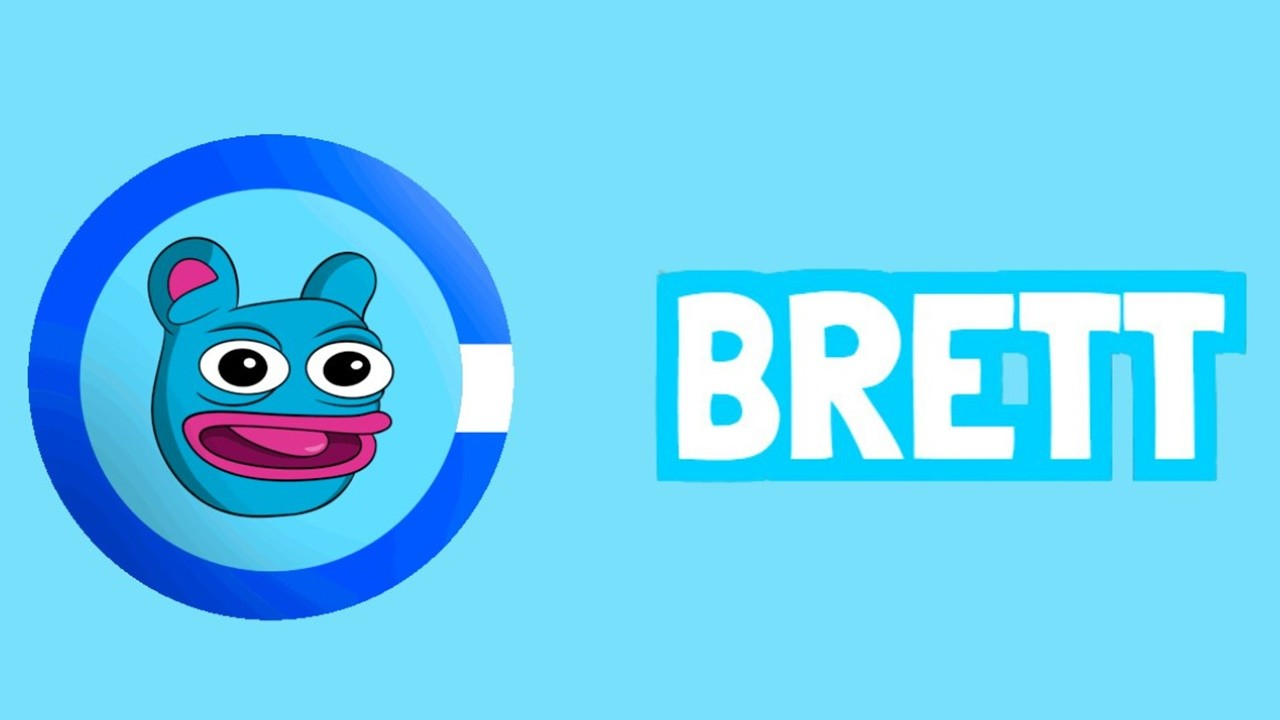
Brett is best understood as a Base ecosystem culture token. Its identity is clearly not dog-based but hails to the Pepe meme, as the mascot is one of the Matt Furie’s Boys Club characters, and is tied less to a standalone brand and more to being a recognizable face of Base-chain meme activity.
That ecosystem framing matters practically. Chain-wide sentiment on Base can dominate Brett’s price action through simple rotation, where capital moving into or out of Base-based tokens broadly tends to carry Brett along regardless of token-specific news.
In cases like with Brett, DEX-led flow is the more likely first encounter, reflecting how much of Base ecosystem activity concentrates on-chain rather than through centralized listings.
Durability signals to look for:
- Trading volume that holds up independent of broader Base ecosystem rotation, signaling token-specific demand rather than pure chain beta.
- Holder distribution that is not overly concentrated in wallets tied to a single Base-ecosystem rotation wave.
- Liquidity depth sufficient to limit price impact even when Base-wide sentiment sours and capital rotates elsewhere.
Thesis-breakers:
- Watch for Base ecosystem rotation into newer chain-native memes, which can quietly erode Brett’s relative attention even without a negative catalyst.
- Watch for liquidity thinning during broader Base sentiment downturns, since chain-wide risk-off moves tend to hit ecosystem culture tokens first.
Best fit if: you want targeted exposure to Base ecosystem culture and are comfortable with the token’s fate being partly tied to chain-wide sentiment rather than isolated fundamentals.
cat in a dogs world
The core narrative mechanic behind cat in a dogs world (always lowercase) is category counter-positioning: it positions itself as the cat-themed alternative in a meme market still dominated by dog-based tokens.
Proof of differentiation would look like a sustained community identity and liquidity base that persists well after the initial “cat vs. dog” meme wave. If attention simply mirrors whatever dog-token cycle is happening at the time, the differentiation thesis is weaker than it looks.
Where the trade usually happens: DEX-led flow is the more typical first venue, with CEX access lagging depending on listing momentum.
Durability signals to look for:
- Trading volume that persists independently of dog-meme cycles, rather than rising and falling in lockstep with the broader dog-token narrative.
- Holder distribution showing a base that stuck around past the initial counter-positioning wave rather than rotating out immediately.
- Liquidity depth adequate to absorb sell pressure without outsized price impact once the novelty phase passes.
Thesis-breakers:
- Watch for the counter-positioning narrative losing novelty once other cat-themed entrants dilute the differentiation.
- Watch for community attention fading entirely once the initial meme-wave curiosity wears off, with no independent identity left to sustain it.
Best fit if: you want a contrarian angle on meme-market category dominance and are specifically evaluating whether differentiation can outlast a single viral wave.
Meme Coin Fundamentals and Evaluation
Despite what it looks like, a meme coin is not simply any token that trends on social media. The boundary between trending coins and memes affects position sizing, exit planning, and the way you interpret catalysts.

Meme Coin Definition
Three test questions help draw the line, and each one is answerable without insider access:
- Is price primarily narrative-driven, meaning it moves more on attention and sentiment than on any product release or usage metric?
- Is there a non-speculative demand loop — some reason to hold or use the token beyond expecting the price to rise?
- Is ownership primarily social or community-motivated, where holding the token functions more as identity or participation than as a claim on cash flows or utility?
A token that answers “yes” to the first and third questions while answering “no” to the second is behaving like a meme coin regardless of what its whitepaper claims.
Hybrid cases complicate this. Some meme coins layer on utility, a branded ecosystem, or NFT tie-ins after launch, yet continue trading like memes in practice. Two observable indicators tell you a token is still meme-first even after a utility pivot: the price reacts more sharply to social catalysts, such as a celebrity mention or viral post, than to actual product usage or adoption metrics; secondly, liquidity or volume spikes are attention-led — concentrated around announcement dates or viral moments rather than building steadily alongside real usage. If both patterns persist, treat the token as a meme coin for risk-sizing purposes, even if it markets itself as something more.
Market Capitalization and Liquidity
Three numbers get conflated constantly: market capitalization, fully diluted valuation, and liquidity. Market capitalization, which is circulating supply times price, tells you the market’s current valuation of tokens already in circulation. It says nothing about what happens as more supply unlocks.
Fully diluted valuation (FDV) is the value if every token that will ever exist were circulating today. A low market cap sitting next to a massive FDV usually signals heavy future dilution that can suppress price regardless of demand.
Liquidity means the depth of the order book on a centralized exchange or the size of the liquidity pool on a decentralized one. It determines whether you can actually enter or exit at the price you see quoted.
Before committing size to any meme coin, run this liquidity reality check using free tools like CoinMarketCap or CoinGecko:
- Approximate bid/ask spread on a centralized exchange, or price impact for a typical trade size on a decentralized exchange.
- Recent trading volume compared to the token’s typical volume, which helps you spot whether you are looking at a hype spike or a stable baseline.
- Depth near the current price — thin order books or a shallow liquidity pool mean even modest trades can move the price significantly.
- Routing or venue concentration, meaning whether one exchange or pool dominates available liquidity, which creates a single point of failure if that venue has problems.
- Withdrawal and deposit availability, since a token that is easy to buy but hard to move or exit cleanly carries execution and portability risk you will not see just by looking at price.
Community and Social Momentum

Social momentum signals split into leading and lagging categories. The former precede price moves while the latter follow. Think of them as “buy the rumor, sell the news”.
Leading indicators:
- If you observe accelerating mention velocity across multiple independent channels, it usually implies attention is building before price fully reflects it.
- If you observe new wallet creation or first-time buyer activity increasing, it usually implies fresh capital is entering ahead of a broader move.
- If you observe engagement concentrating around a specific upcoming catalyst, such as an event or listing rumor, it usually implies speculative positioning is happening in advance.
Lagging indicators:
- If you observe price already up significantly before mention volume peaks, it usually implies the move was driven by early insiders rather than broad community awareness.
- If you observe trading volume spiking only after a price move has already occurred, it usually implies the rally is attracting late momentum chasers rather than originating from organic interest.
- If you observe holder count rising steadily well after a price peak, it usually implies distribution is happening into retail demand rather than accumulation.
A common failure mode is momentum divergence. Social buzz can stay loud even as liquidity pool depth quietly thins out, because posting and talking about a token costs nothing while providing liquidity does. The reverse also happens: liquidity can look healthy while genuine social interest has already faded, propped up by a handful of active traders rather than broad participation. Treat momentum as confirmed only when social attention and liquidity depth agree.
Holder Distribution and Exchange Access
Holder distribution, on the other hand, interacts directly with liquidity. When a small number of wallets control a large share of supply, any one of them deciding to sell can move the price disproportionately, especially if the liquidity pool backing that token is shallow.
A useful concentration heuristic is simple: ask whether the top holders could move the market on their own if they decided to exit at once. It becomes a red flag specifically when that concentration coincides with shallow liquidity and volume that is attention-driven rather than organic. That combination means a single large sell can cascade into a broader liquidity crisis rather than getting absorbed quietly.
Exchange access also shapes risk in a predictable progression — an exchange access ladder with four tiers:
- DEX-only microcap: execution quality is unpredictable, price impact is high, discovery happens almost entirely through word-of-mouth or on-chain trackers, and exit risk is severe.
- DEX-led with aggregator visibility: execution improves modestly as routing tools find better prices, discovery broadens as the token appears in more aggregator searches, and exit risk remains elevated but slightly more manageable.
- Mid-tier CEX listing: execution quality improves meaningfully with tighter spreads, discovery expands to a mainstream trading audience browsing a crypto exchange, and exit risk drops as order book depth grows.
- Top-tier CEX saturation: execution quality is at its best with minimal slippage even on larger trades, discovery reaches its widest possible audience, and exit risk is at its lowest since deep, distributed liquidity can absorb significant selling without collapsing price.
Top 10 Crypto Coins vs. Top 10 Meme Coins
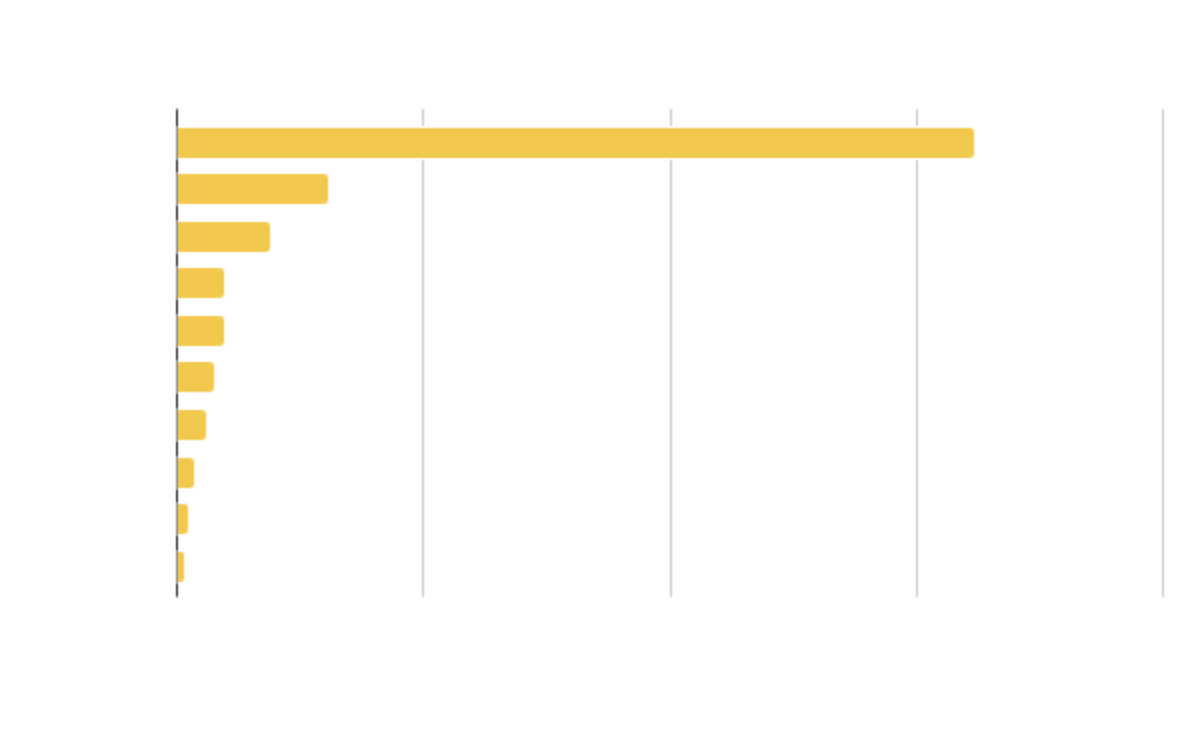
Whatever they are at any given moment, the top 10 meme coins do not behave similarly to the 10 largest cryptocurrencies, and likely never will. Dogecoin at the moment falls into both categories but on its own, it does not serve as a reflection of either. The top 10 crypto coins by market capitalization are usually large-cap, utility-led networks and tokens where demand is tied to actual usage: settlement, staking, fees, or application activity. The top 10 meme coins, by contrast, are narrative-led assets where price action is driven primarily by attention cycles and community identity rather than a product loop.
Utility-led assets benefit from network effects more than meme coins; in meme tokens, a loud community does not always mean more actual users. Fee generation and staking yield give holders a reason to hold the asset independent of short-term price sentiment but if they are present for a meme coin, they are more likely tacked on rather than provide genuine economical purpose. Holding a meme coin is largely a social or cultural signal, so the “reason to hold” is community belonging rather than a cash-flow or usage claim.
Volatility and liquidity are not the same thing. A token can be highly liquid and still extremely volatile, or thinly liquid and relatively calm during quiet periods. Either quality is more predictable in 10 largest coins and tokens than in meme tokens.
As a result, in a portfolio, the role of core fits any top 10 crypto coin better than a meme. Satellite allocation is more adequate for the meme coin category, and even then, not to a single one.
Buying, Storage, and Risk Checks
Buying a meme coin is rarely the risky part. Mishandling the steps around the trade usually is.
The practical risks are repetitive: wrong chain, wrong contract, bad fees, paused withdrawals, sloppy slippage settings, and poor wallet hygiene. Fortunately, most of them are preventable if you treat execution as part of the investment process rather than an afterthought.
Centralized Exchanges
A centralized exchange (CEX) is often the easiest on-ramp for a meme coin, but “it is listed” is not the same as “it is simple to move.”
Before you place an order, run through this checklist:
- Confirm the ticker actually maps to the chain you intend to hold it on. Many meme coins exist as both a native asset and a wrapped version, and buying the wrong one breaks your cross-chain plans later.
- Check deposit and withdrawal availability for the specific network you want — Ethereum, Solana, BNB Chain, etc. — not just whether trading is live. Trading can be open while withdrawals for a given network are paused.
- Compare the withdrawal fee to your expected position size; a flat fee that is negligible on a large buy can quietly eat a meaningful percentage of a small one.
- Prefer a limit order over a market order for volatile memes, since a market order fills at whatever price is available and can slip badly during fast moves. A limit order protects your entry price at the cost of a possible non-fill.
- Treat spread and order-book depth as your practical liquidity test. Wide spreads or thin depth near your trade size signal that even a “listed” token may not execute cleanly.
- After buying, decide between withdrawing to self-custody and leaving the position on the exchange as a trade-off: self-custody reduces exchange/counterparty risk but adds personal key-management responsibility, while staying on the exchange keeps things simple at the cost of relying on that platform’s solvency and withdrawal policies.
The most common CEX mistake is assuming that a listing equals easy portability. A token can be fully tradable on an exchange while withdrawals to certain networks are paused, limited, or delayed. If your plan involves moving the token to a wallet or bridging it to another chain, confirm withdrawal status before you buy, not after.
Decentralized Exchanges
A decentralized exchange (DEX) gives you direct, permissionless access to a token’s liquidity pool, but it shifts nearly all the verification work onto you.
Follow this swap flow in order:
- Confirm you are connected to the correct chain/network before doing anything else.
- Verify the token’s smart contract address from a primary source — official project channels or the token’s verified listing — rather than a search result or link someone shared.
- Fund your wallet with the correct gas token for that chain before attempting the swap.
- Check which pool or router the trade is routing through, since not all routes offer the same price or depth.
- Preview the price impact and minimum received amount before confirming anything.
- Execute the swap once the route, price impact, and minimum received all look acceptable.
- Verify the received token in your wallet matches the intended contract, then add it to your watchlist for future tracking.
DEX-specific gotchas:
- Wrong chain selection: double-check the network in your wallet before swapping; a correct token address on the wrong chain will fail or send funds nowhere useful.
- Fake token contracts: cross-reference the contract address against an official source every time, since scam tokens often copy a project’s name and ticker exactly.
- Insufficient gas: hold a small buffer of the native gas token beyond what the swap itself requires, so the transaction does not fail mid-execution.
- MEV/sandwich risk: use a reasonable slippage setting and, where available, a private transaction route to reduce the chance of being sandwiched around your trade.
- Approvals risk (unlimited allowances): review and limit token approvals after swapping, since an unlimited allowance left active gives a contract ongoing access to your tokens.
Wallets and Network Fees
Which wallet you use should follow from how you actually plan to trade, not the other way around.
For frequent trading on one chain, use a hot wallet, prioritize speed and ease of connecting to a DEX, and confirm as your setup check that the wallet’s network settings match the chain you are trading on before every session.
Occasional holding across multiple chains is also common for meme coins. Use a hot wallet configured for multi-chain support, prioritize convenience and correct network switching, and confirm as your setup check that each chain’s address format is correct before sending funds.
Larger position size or long-term holding: Use a hardware wallet, prioritize safety and key isolation over convenience, and confirm as your setup check that your seed phrase backup has been verified offline before transferring meaningful value.
Conclusion
Dogecoin, Shiba Inu, and Pepe anchor the list through liquidity and cultural staying power, but each carries a distinct risk profile once you look past the shared large-cap meme label. Solana-native names like Bonk, Dogwifhat, and Popcat move on a different rhythm, where execution quality and on-chain activity matter as much as social buzz. The expanding-brand tier — Floki, Pudgy Penguins, Brett, and cat in a dogs world — forces you to ask whether brand attention is actually converting into durable trading demand or just borrowed hype from an adjacent news cycle.
What ties all of this together is the fundamentals framework: market cap versus fully diluted valuation, leading momentum signals versus lagging ones, and holder concentration checked against real liquidity depth before position sizing. None of that is unique to meme coins, but it matters more here because the swings are faster and the liquidity floor is thinner than with utility-led crypto assets.
Enjoyed this coverage? We have more content about news, trends, and projects of the crypto world in ChangeHero blog. Our team is also providing riveting content and crypto memes on Twitter, Facebook, and Telegram — check those out, too!
Frequently Asked Questions
What are meme coin presales?
A presale is an early token sale that happens before broad public trading or liquidity exists on any exchange. The key distinction from simply buying early on a DEX is that presales often occur before a liquid market has formed at all, and they frequently involve claim or vesting mechanics. In practice, you commit funds now but only receive, or fully unlock, tokens later on a schedule set by the project.
Which meme coin could explode in 2026?
Rather than naming a single token, it is more useful to know the conditions that typically precede an explosive move: an attention catalyst strong enough to pull in new buyers, liquidity or venue expansion that makes the token easier to trade at scale, and a distribution pattern where holders do not immediately dump into the initial demand.
When all three line up at once, that is when a meme coin tends to see outsized moves. Without one of them, a viral moment usually fades without translating into a lasting trend.
Which meme coin could reach $1 in 2026?
A nominal price target like $1 is less informative than it seems, since price alone says nothing about circulating supply or the resulting market capitalization. A token with a small circulating supply can hit $1 far more easily than one with tens of billions of tokens outstanding. Check tokenomics and liquidity conditions rather than anchoring on the round number itself.
What risks should I consider before investing in meme coins?
Liquidity and exit risk matter first, since price impact can spike sharply once attention fades and order books thin out. Concentration or whale risk is the second factor, as skewed holder distribution means a small number of wallets can move price disproportionately if they decide to sell. Narrative or rotation risk rounds out the picture, since attention, and the capital that follows it, can shift quickly to newer memes or chains, leaving a previously hot token to cool without any single negative catalyst.