
Best Telegram Channels for Crypto News and Signals (2026)


Key Takeaways
- 📫 Telegram channels, Telegram groups, and Telegram bots are mechanically different products—and in crypto, that difference determines your exposure to scams, spam, and misinformation.
- 📫 A usable crypto Telegram stack is built in layers: a news layer (institutional/regulatory), a market movers/listings layer, an on-chain confirmation layer, and an incident/risk layer.
- 📫 Signal groups are not for news primarily but are execution guidance with materially higher risk, especially when leverage is involved.
- 📫 Verification is an operational skill: confirm exact @handles via official websites and verified social profiles, treat unsolicited DMs as security threats, and never connect wallets from Telegram prompts.
Disclaimer
Telegram is a distribution layer, not a source of truth. Nothing in this guide constitutes investment advice. News headlines, signals, and on-chain alerts can be incomplete, delayed, manipulated, or outright fraudulent. Always verify claims against primary sources (regulators, project announcements, block explorers) and apply your own risk management. Never share seed phrases, private keys, or 2FA codes—no legitimate channel, group, or admin needs them.
Telegram sits at the center of the crypto market race: it is arguably the fastest distribution layer for crypto news, but it is also one of the most cluttered and scam-prone environments in the space. This guide exists to cut through that noise. It covers the best news channels, vetted signals groups, and on-chain alert feeds, alongside a practical framework for verifying what you’re joining and understanding the risks before you act.
For those who want curated, sourced crypto news delivered in real time, we review news channels. If you want trade entry/exit alerts from an analyst or algorithm, you’re looking for signals groups—a category that carries significantly higher risk and is covered separately here with that context.
What Is Telegram and How Crypto Channels Work
With over a billion monthly active users worldwide, incidentally largely coming from countries and regions ranking near or at the top in The Chainalysis 2025 Global Cryptocurrency Adoption Index (namely India, the US, Brazil, Vietnam, and Russia), it’s not surprising Telegram has become one of the primary distribution networks for cryptocurrency news, signals, and community discussion.
Channel Formats
If you are not familiar with the app, Telegram organizes communication into three distinct formats:
Channels are one-to-many broadcast tools. Only admins can post; subscribers receive updates in their chat list. Content is discovered through search, invite links, or forwarding. Channels are the dominant format for crypto news wires, on-chain whale alerts, token listing announcements, trading signals, etc.
Groups are many-to-many spaces. Usually any member can post, making them suited for community discussion, AMA sessions, and trade setup debates. Discovery works the same way—search or invite link—but the open posting model dramatically increases spam and scam exposure.
Bots are automated accounts that post, respond to commands, or push alerts programmatically. In cryptocurrency contexts, bots handle on-chain monitoring (wallet movement triggers, liquidation alerts), price notifications, and portfolio tracking. They’re joined by starting a conversation directly or being added to a group/channel by an admin.
Public vs. Private access cuts across all three formats. Public channels and groups are searchable and joinable by anyone; private ones require an invite link. For crypto use, private channels are often positioned as premium or exclusive—a signal that can indicate either genuine curation or a pay-to-enter scam funnel.
A single piece of information—a listing announcement, a regulatory filing, a whale transaction—typically appears across dozens of Telegram channels within minutes:
Forwarded posts carry the original channel’s name and timestamp, so you can trace where content originated. When you see the same post forwarded repeatedly, you’re watching network effects in real time: one source, many amplifiers.
Cross-posting is different. An admin manually reposts content without the forwarding attribution, which strips the origin signal. This is where aggregation silently displaces original reporting.
Network effects mean a single credible post can reach hundreds of thousands of subscribers across unrelated channels before any correction or context is added. Speed is the feature but same as in many other places, accuracy verification is your responsibility, not the channel’s.
You don’t need external tools to evaluate a channel’s credibility at a basic level. Telegram surfaces several signals directly:
- Verification badge: Telegram’s own verification is rare and narrow in scope. Its absence proves nothing, but its presence (where applicable) confirms identity with Telegram’s own records.
- Pinned messages: Legitimate channels pin their rules, data sources, disclaimer language, or admin contact. Absence of any pinned message in an active channel is a minor red flag.
- Linked discussion group: A channel that links to a companion group allows you to assess community quality and admin responsiveness. Channels that disable this entirely may be avoiding accountability.
- Admin transparency: Is there a named admin or team? Can you find them outside Telegram? Anonymous admins aren’t automatically suspect in cryptocurrency spaces, but zero external presence should raise your threshold for trust.
- Post frequency consistency: Irregular bursts followed by silence can indicate a channel that posts reactively rather than maintaining a publishing standard. Consistent cadence—even if infrequent—is a positive signal.
- Comments enabled or disabled: Disabling comments prevents discussion but also prevents spam and coordinated manipulation in the channel itself. Neither choice is inherently good or bad; context matters.
Notification Settings

It may be best for you to know from the get-go that an unconfigured Telegram account in an active crypto news environment will generate enough noise to make the tool unusable within days. For your own sanity, sort out the notifications as soon as you start joining channels.
Open any channel, tap the channel name at the top to access its profile, and select Notifications. From here you can:
- Mute the channel entirely or for a set duration (1 hour, 8 hours, 2 days, or indefinitely). Muting does not remove unread counts; you still see new posts when you open the app.
- Enable or disable alerts independently of mute—useful when you want sound/vibration for a channel but only during certain hours.
- Choose alert tone and vibration pattern per channel on mobile, allowing physical differentiation between a Tier 1 alert and a background update.
One method that can help you both stay updated and prioritize information is to mentally sort your subscriptions to three tiers before configuring anything:
| Tier | Type | Examples | Notification Setting |
|---|---|---|---|
| Tier 1 | Must-see alerts | Exchange listings, on-chain liquidation alerts, major protocol exploits | Unmuted, distinct tone, badge on |
| Tier 2 | Daily summaries | Morning market digests, weekly research roundups | Muted with unread count visible |
| Tier 3 | Discussion / sentiment | Community groups, general chat channels | Muted indefinitely, checked on your schedule |
The categories should not be arbitrarily attributed either. No more than three to five channels should ever be in Tier 1 at any time. As you add channels, default new subscriptions to Tier 2 or Tier 3 and promote them only after observing their actual signal quality for at least a week.
Best Telegram Channels for Crypto News (2026)
For this section, “crypto news” means timely updates, on-chain data alerts, research summaries, and incident reports—the information that helps you understand what is happening in the Blockchain industry and Cryptocurrency markets right now. Trade calls, signals, and pump groups are a separate category covered later in this guide.
24/7 Crypto News | ChangeHero

Official link and handle: https://t.me/CHCryptoNews
Best for: Curated crypto industry news and updates, educational content, market insights.
What you’ll actually get:
- Weekly recaps of crypto news and market trends
- Quick updates on breaking news and emerging trends
- Short-form altcoin guides and long-form reposts from the ChangeHero blog
- Service updates and special offers
How to use it: ChangeHero’s channel occupies a niche between crypto news aggregation and market analytics in Tier 2. Checking in daily will not make you miss anything urgent but provide a good look into the state of the market at a reasonably frequent cadence. Alternatively, should you decide it belongs in Tier 3, the channel can be a solid source of catching up weekly at just one glance.
Watch-outs: ChangeHero most frequently uploads curated recaps or reposts editorial content, not raw data, signals, or on-chain activity, so pairing it with data providers and alert channels fills the data layer this channel does not cover.
CoinDesk
Official link and handle: https://t.me/CoinDeskGlobal
Best for: Breaking institutional and regulatory cryptocurrency news.
What you’ll actually get:
- Regulatory announcements (SEC, CFTC, global frameworks)
- Major exchange and protocol headlines
- Market structure updates and macro-level industry coverage
- Summaries of investigative and long-form reporting
How to use it: Enable notifications for this channel and treat every breaking item as a starting point, not a conclusion. Verify against the primary source—the regulator’s official press release, the exchange’s own blog, or the project’s announcement account—before acting on any headline. CoinDesk surfaces the story; the primary source confirms the details.
Watch-outs: CoinDesk on Telegram reposts editorial content, not raw data. It does not cover signals or on-chain activity, so pairing it with Glassnode or Whale Alert fills the data layer this channel intentionally omits.
CoinMarketCap News
Official link and handle: https://t.me/CoinMarketCapAnnouncements
Best for: Real-time token listings, market movers, and broad Cryptocurrency market updates on Telegram.
What you’ll actually get:
- News updates on major market events
- Token and exchange listing alerts
- Market mover notifications when assets see significant price or volume changes
- Brief editorial summaries of trending stories
How to use it: News updates tell you what happened; listing alerts tell you what’s newly available; market mover posts tell you what’s moving. When a token spikes and a market mover alert fires, pair it immediately with an on-chain channel from this list—Whale Alert or Glassnode—to validate whether the move is wallet-driven or purely sentiment-driven before drawing conclusions.
Watch-outs: Volume and coverage are high, which means so is noise. Not every alert requires action; use the market mover posts as a prompt to investigate, not a signal to trade.
CryptoRank News
Official link and handle: https://t.me/CryptoRankNews
Best for: Daily and weekly analytics recaps, funding rounds, and IDO/launch calendars.
What you’ll actually get:
- Market cap change summaries by sector
- Sector performance snapshots
- Funding and IDO calendars with project context
- End-of-day or end-of-week digest-style posts

How to use it: CryptoRank News is a much better end-of-day recap tool rather than a first-alert source. Its structured summaries—sector performance tables, funding round rollups, IDO schedules—are most valuable when reviewed once or twice daily to consolidate what faster channels (CoinDesk, Whale Alert) surfaced throughout the day.
Watch-outs: It is not optimized for breaking news. If you need to know something within minutes of it happening, this channel will rarely be the source.
Coin Bureau
Official link and handle: https://t.me/CoinBureau
Best for: Macroeconomic-focused crypto news coverage.
What you’ll actually get:
- Market commentary tied to broader macro narratives
- Institutional and adoption signal news
- Quick, bite-sized critical news cross-posts
How to use it: A significant portion of informational value from Coin Bureau’s coverage comes from curated weekly recaps and occasional longer analytical posts. The outlet’s educational content remains a strong feature.
Watch-outs: Despite a high focus on alerts, treating it as a steady or primary source will create confusion; treat it as a confirmation layer instead.
Whale Alert
Official link and handle: https://t.me/whale_alert_io
Best for: Large on-chain transfer monitoring across major blockchain networks.
What you’ll actually get:
- Alerts for large Cryptocurrency transfers (BTC, ETH, stablecoins, and others)
- Exchange inflow and outflow notifications
- Stablecoin minting and movement alerts
- Cross-chain large-value transaction flags
How to use it: When an alert fires, read the direction: a large transfer to an exchange (inflow) suggests a holder may be positioning to sell or trade; a large transfer from an exchange (outflow) suggests movement to self-custody, which is often a longer-term hold signal. Stablecoin minting alerts are distinct—they indicate liquidity being created, not necessarily an imminent trade. Combine large inflow alerts with CoinMarketCap’s market mover posts to see whether price is already responding.
Watch-outs: A large transfer is not necessarily a sell-off. Transfers reflect movement, not intent. Context from Glassnode’s on-chain metrics adds confirmation that a raw transfer alert cannot provide on its own.
Glassnode
Official link and handle: https://t.me/glassnode
Best for: On-chain metrics and Blockchain data updates for macro-level Cryptocurrency analysis.
What you’ll actually get:
- Exchange balance trend updates (rising balances = potential selling pressure; falling = accumulation signal)
- Profitability indicator snapshots (SOPR-style metrics showing whether holders are selling at profit or loss)
- Long-term and short-term holder behavior breakdowns
- Weekly on-chain insights summarizing key metric shifts
How to use it: Use Glassnode posts as confirmation after a price move has already occurred, not as a standalone trigger to act. If BTC drops 8% and Whale Alert shows large exchange inflows, then a Glassnode update showing rising exchange balances and short-term holder capitulation creates a coherent, multi-source picture. One metric in isolation is context; three aligned metrics are a more meaningful signal.
Watch-outs: On-chain data is inherently lagging—it reflects what has happened on-chain, not what will happen next. It is an evidence layer, not a prediction layer.
LunarCrush Announcements
Official link and handle: https://t.me/lunarcrush
Best for: Social sentiment and community engagement metrics across Cryptocurrency assets.
What you’ll actually get:
- Social volume spikes for specific tokens
- Engagement rate and influencer activity summaries
- Trending asset announcements based on social momentum
- Sentiment shift alerts across major social platforms
How to use it: When LunarCrush flags a sentiment spike for a specific asset, cross-check it with CoinMarketCap’s market mover data and Whale Alert’s transfer alerts before reacting. A token trending on social media without a corresponding on-chain move or volume increase is often a hype cycle in early formation—not necessarily a fundamental event.
Watch-outs: Social sentiment channels are prone to amplifying hype cycles, including coordinated promotion. High social volume is a data point, not a buy signal. Verify the underlying cause before assigning it weight.
ICO Analytics
Official link and handle: https://t.me/ico_analytic
Best for: ICO, IDO, and token sale research for information on crypto presales on Telegram.
What you’ll actually get:
- Upcoming token sale announcements with dates and terms
- Project analytics and fundraising context
- IDO platform and launchpad coverage
- Token generation event (TGE) summaries
How to use it: Even though this source is curated and a step above spam on social media, before engaging with any ICO or IDO post from this channel, run through a minimum checklist:
- ✅ Verify the team (LinkedIn, prior projects, public identities)
- ✅ Review tokenomics (allocation, vesting schedules, unlock timelines)
- ✅ Confirm a third-party smart contract audit exists
- ✅ Check jurisdiction and legal structure
- ✅ Navigate to the project only via the official domain—not via links in the post itself
Watch-outs: Although normally not the case with this particular channel, phishing links can be embedded in fake “token sale” announcements that mimic legitimate project formatting. Never click a participation or “buy now” link directly from a Telegram message. Always go to the verified project website independently.
Disclose TV
Official link and handle: https://t.me/disclosetv
Best for: Macro and geopolitical news with potential cryptocurrency market implications on Telegram.
What you’ll actually get:
- Government policy and regulatory headline aggregation
- Geopolitical developments with potential crypto market impact
- Central bank and monetary policy updates
- Broad macro news that intersects with digital asset markets
How to use it: Disclose TV is one of the sources that aggregate at speed, which means unverified or partially verified claims occasionally surface as well. Before incorporating any macro or geopolitical headline into a trading or portfolio decision, give it the Whale Alert treatment and confirm the news through at least one primary source (official government release, central bank statement) or one tier-1 general news outlet. The Telegram post tells you something may be happening; the primary source tells you what is actually confirmed.
Watch-outs: Verification is non-negotiable here. Disclose TV has published content that was premature, miscontextualized, or later corrected. Acting on an unverified macro headline—especially one with direct Cryptocurrency market implications—carries meaningful risk. Cross-check before you react.
How to Build a Balanced Crypto News Stack

No single channel covers the full picture. A practical Telegram news stack combines complementary signal types:
- Mainstream news layer: CoinDesk for regulatory and market structure headlines, verified before acting
- Listings and market movement layer: CoinMarketCap News for token alerts and market movers
- On-chain confirmation layer: Whale Alert for transfer monitoring + Glassnode for Blockchain metric context
- Incident and risk layer: Rekt News to catch exploits and protocol failures that directly affect user funds
For readers who want to explore beyond this curated selection, broader directories exist—including lists of 130+ best crypto Telegram channels for 2026—that serve as expansion resources rather than replacements for a focused stack. One such directory is available at CoinGape’s Telegram channel list.
Top Crypto Signals Telegram Groups (2026)
Crypto signals, as used throughout this article, are trade alerts shared via Telegram that specify when and how to enter or exit a position—covering both spot markets and futures/perpetuals, and ranging from human-discretionary calls to fully bot-driven automation. Groups differ meaningfully by trade style: some focus on short-term scalps while others target multi-day swing setups, some cover Bitcoin exclusively while others hunt altcoin opportunities, and leverage levels vary from zero to highly aggressive.
Be warned: signals distributed on Telegram—whether free or paid—are not financial advice, regardless of how they are framed. Past performance shown in screenshots cannot be independently verified and may reflect selective reporting rather than a complete trade history. Always size your positions and set your own risk parameters independent of any signal you receive.
CryptoNinjas
Official link and handle: https://t.me/cryptoninjas_trading_ann
- Best for: Altcoin-focused traders who want broad market coverage beyond Bitcoin.
- Signal cadence: Intraday to a few times per week depending on market conditions.
- Transparency check: Look for pinned recap posts, documented loss reporting, and evidence of forward-testing rather than cherry-picked historical screenshots.
- Red flags to watch: Exclusive emphasis on win-rate percentages with no published losing trades is a common low-quality signal pattern—treat it as a warning sign.
- Differentiator: Market focus—broad altcoin coverage distinguishes this group from BTC-centric channels.
Binance Killers
Official link and handle: https://t.me/binancekillers
- Best for: Active traders who want high-volume altcoin signals paired with a large community.
- Signal cadence: Intraday; the group is known for a relatively high signal frequency.
- Transparency check: Look for a pinned track record and public loss reporting; cross-reference performance claims against independent aggregators.
- Red flags to watch: Impersonator channels are prevalent for high-profile groups—joining a fake channel is one of the most common scams in this category.
- Differentiator: Delivery—the group operates at a scale that makes community moderation quality a key differentiator from smaller manual-alert channels.
- Verification note: Before paying for any premium tier or connecting an exchange account, confirm the official Telegram handle by cross-referencing a reputable signals directory or the creator’s verified social profiles. Member counts reported by directories can differ.
CoinCodeCap Signals
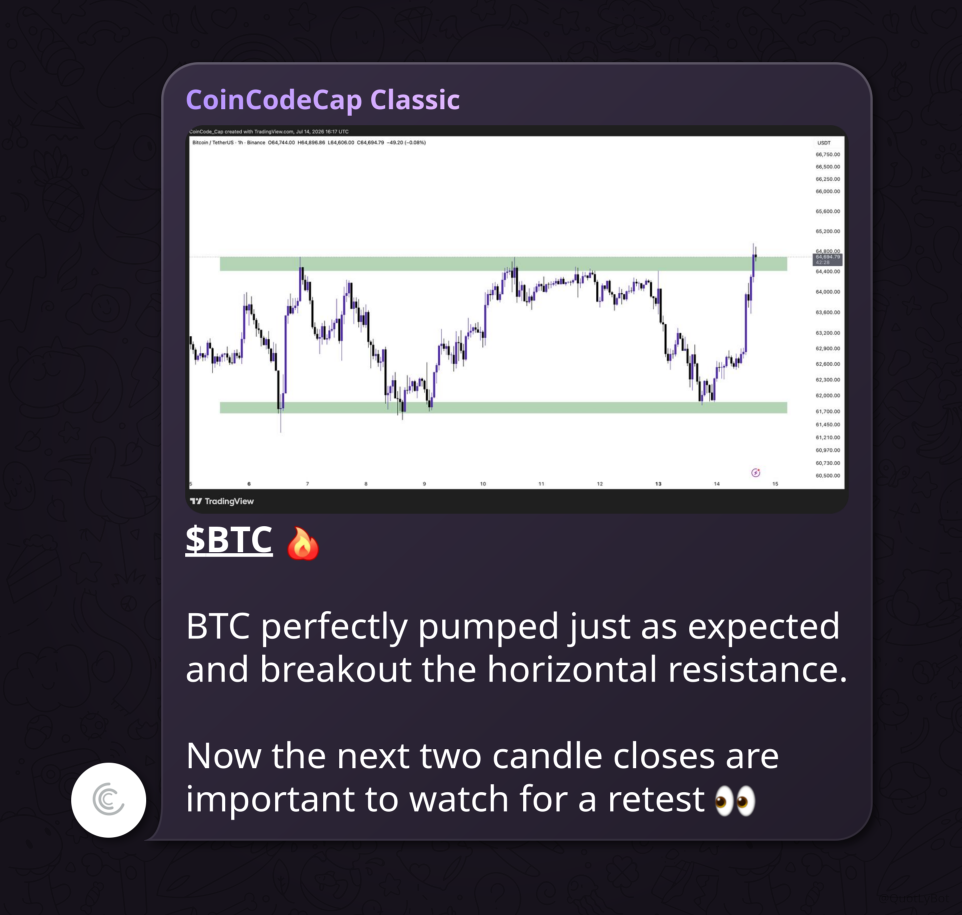
Official link and handle: https://t.me/coincodecap (free group)
- Best for: Traders who want signals connected to a broader research and analytics ecosystem.
- Signal cadence: Moderate; signal frequency appears tied to specific market opportunities rather than a fixed daily schedule.
- Transparency check: Because this group is affiliated with an analytics platform, cross-reference signal performance against any published platform data and look for independently verifiable recaps.
- Red flags to watch: Affiliation with a data platform does not guarantee signal accuracy—watch for selective reporting that highlights wins while burying losses in platform metrics.
- Differentiator: Delivery—signals are embedded within an analytics context, unlike standalone manual-alert channels.
Wolf of Trading
Official link and handle: https://t.me/wolfoftrading
- Best for: Traders seeking signals from a personality-driven channel with a public social presence.
- Signal cadence: Varies; cadence appears tied to the creator’s market outlook rather than a fixed schedule.
- Transparency check: Public social profiles can provide additional context on calls made outside Telegram—cross-reference to confirm consistency between public commentary and actual signal history.
- Red flags to watch: Personality-driven channels are frequent targets for impersonator accounts; always join via a link sourced from the creator’s verified social profile. Do not assume the advertised offers to be vetted for safety in this particular channel.
- Differentiator: Community moderation quality—the channel’s identity is closely tied to a named creator, which raises the bar for moderation accountability compared to anonymous group admins.
- Verification note: Before paying for any premium access or connecting an exchange account, confirm the official Telegram handle directly from the creator’s verified social profiles or a reputable signals directory.
Wall Street Queen Official
Official link and handle: https://t.me/wallstreetqueenofficial
- Best for: Traders who want signals from a public-facing analyst with a documented community presence.
- Signal cadence: Moderate; signal frequency appears discretionary and tied to the creator’s market reads.
- Transparency check: Cross-reference the creator’s public posts on other platforms against signals posted in the group to assess consistency and transparency.
- Red flags to watch: Named personality channels are high-value impersonation targets—a proliferation of similar-sounding channels is common; always verify via official links. Like before, the advertisement policy in this channel seems to leave all due diligence on the end user.
- Differentiator: Educational depth—the channel includes market commentary and context alongside trade alerts, not just raw signal data.
- Verification note: Before paying or connecting an exchange account, confirm the official Telegram handle from the creator’s verified social profiles or a reputable directory.
Fed Russian Insiders
Official link and handle: https://t.me/FedRussianInsiders
- Best for: Traders interested in a long-established channel with a reported history dating to cryptocurrency’s earlier growth phase.
- Signal cadence: Cadence is reported as intraday to several times per week; verify current activity inside the group before subscribing.
- Transparency check: Longevity alone is not a performance guarantee—seek publicly posted loss reports and forward-tested recaps rather than relying solely on channel age.
- Red flags to watch: Long-running channels sometimes leverage their history as social proof while quietly changing strategy or admin team—confirm current management transparency.
- Differentiator: Time horizon—claiming to have been active since around 2017, spanning multiple Bitcoin cycles, which offers a longer potential track record than most channels.
Crypto Inner Circle
Official link and handle: https://t.me/cryptoinnercircle
- Best for: Traders who want a curated, moderated environment with a defined subscriber community.
- Signal cadence: Moderate and community-moderated; signal pace appears selective rather than high-volume.
- Transparency check: A moderated community should show evidence of admin accountability—look for pinned track records and loss reporting as baseline standards.
- Red flags to watch: “Inner circle” branding is commonly used by low-quality channels to imply exclusivity without delivering verifiable performance—confirm a public track record.
- Differentiator: Community moderation quality—explicit moderation standards are the stated differentiator here versus anonymous or lightly managed groups.
Comparison: News Channels vs Signals Groups
Choosing between a Telegram crypto news channel and a signals group comes down to what you actually need from the feed—raw information or actionable trade instructions.
| Dimension | News Channels | Signals Groups |
|---|---|---|
| Primary objective | Information delivery — context, market narratives, regulatory updates | Execution guidance — specific entry, stop-loss, and take-profit levels |
| Typical message structure | Headlines, article links, brief commentary from sources like Cryptonews or Blockchain media outlets | Structured calls: asset, direction, entry zone, SL, TP1/TP2, sometimes leverage |
| Latency sensitivity | Breaking news speed matters; a 10-minute delay on a regulatory headline can shift a position | Trade timing is critical; a delayed signal entry can mean a completely different risk/reward profile |
| Accountability | Editorial brand — outlets like Cointelegraph maintain public reputations and corrections policies | Typically a pseudonymous admin; accountability is self-asserted and rarely externally audited |
| Verification burden | Source-checking: cross-reference claims against primary sources, check bylines and outlet credibility | Performance auditing: demand a track record with timestamps, including losing calls, not just wins |
| Failure modes | Misinformation or sensationalism that prompts premature buys or panic sells | Liquidation risk from blindly following leveraged calls without independent position sizing |
Who should focus on what?
- Long-term investor: Prioritize news channels. Set up a curated feed of 2–3 credible Telegram news channels (e.g., established Cryptocurrency and Blockchain outlets) alongside a separate price-alert watchlist. Signals groups add noise without matching your time horizon.
- Day trader: Signals groups are more relevant, but use them as one input, not the sole trigger. Pair a signals group with your own technical analysis setup; never execute without checking the chart yourself.
- Beginner: Start with a news channel to build market literacy. If you join a signals group, enable paper trading first—track every call in a spreadsheet before risking real capital.
- DeFi/NFT niche follower: Seek niche-specific Telegram channels that cover protocol updates, governance votes, and NFT floor movements. General signals groups rarely have the granularity you need.
- Risk-averse user: News channels only, at least initially. If you eventually use signals, apply strict position-size limits (e.g., no more than 1–2% of portfolio per call) and treat every signal as a research prompt, not an instruction.
- Active swing trader: A hybrid setup works—news channel for macro context, signals group for specific setups—but vet the signals source rigorously using the checklist below before committing capital.
Paid vs Free Access
Let’s be clear: not all paywalls signal quality, and not all free content is worthless. The real question is whether the paid tier unlocks something structurally useful or simply moves the same low-quality calls behind a fee wall.

Paid tiers unlock extras like full trade plans with precise entry zones, multiple TP levels, and explicit invalidation criteria; early posts before signals are posted to the free tier (timing advantage, though this also increases slippage in large groups) are another feature commonly paywalled. Private chat or direct-line access to the admin for context on open trades or even structured education—recorded sessions, risk management frameworks, or market analysis breakdowns—can also be worth the price of admission.
It is not uncommon for a free channel to exist only to promote a paid one. In that case what you get when you subscribe can be limited: teaser signals with incomplete parameters (entry only, no SL/TP), delayed calls posted after the move has already started, promotional content pushing affiliated exchanges or token launches, and cherry-picked winning trades with no mention of losses. If you see repeated urgency messaging (“upgrade now before this trade closes”), showcase of extraordinary percentage gains without context on position size or risk, deletion or editing of losing calls after the fact, or mostly screenshots of paid-tier wins, what you have subscribed to might give you FOMO instead of any useful info.
Large Channels vs Small Channels
Scale has real mechanical consequences on Cryptocurrency markets. A signal sent to 400,000+ members behaves very differently from the same signal sent to 2,000 members—not because the analysis changes, but because the execution crowd does.
| Dimension | Large Channels (100,000+ members) | Small Channels (<10,000 members) | When to choose |
|---|---|---|---|
| Signal slippage | High — thousands of buyers hitting the same entry simultaneously pushes price before latecomers fill | Low — fewer concurrent orders mean entries closer to the posted price | Choose small if precise entry execution matters to your strategy |
| Front-running / crowding risk | Significant — admins or insiders may enter before the public post; market makers can anticipate the crowd | Lower, though still possible — smaller crowd means less detectable front-running | Choose small if you suspect the large group’s signals are already priced in by the time you see them |
| Moderation quality | Often automated or delegated — spam and low-quality replies are harder to filter at scale | Admin can personally moderate; community discussion is more substantive | Choose large only if you don’t rely on the comment section for signal context |
| Impersonation risk | High — large audiences attract fake “admin” accounts, mirror channels, and phishing bots | Lower baseline risk, but not zero — small channels can still be cloned | Choose large with extreme caution; verify admin contact through pinned official links only |
| Noise-to-signal ratio | High — promotional content, filler posts, and off-topic discussion dilute genuine signals | Lower — fewer contributors means less ambient noise, assuming active curation | Choose small if you want a cleaner feed with fewer posts to filter |
| Personalization / feedback loops | Near zero — the admin cannot acknowledge individual questions or adapt to member skill levels | Possible — smaller communities sometimes allow direct Q&A with the admin | Choose small if you want feedback on your interpretation of a signal |
A subscriber count alone is not enough to definitively separate a small channel from a truly large one. Telegram displays subscriber or member counts directly under the channel or group name—but the number alone is not sufficient due diligence. You should also check:
- Subscriber count vs. engagement ratio — A channel with 200,000 subscribers but 50 views per post has an artificially inflated audience, likely from purchased followers.
- Posting frequency consistency — Legitimate active channels post on a predictable cadence. Gaps of weeks followed by sudden bursts often indicate inactivity or manipulation.
- Comment availability — If comments are disabled or heavily restricted on a channel claiming “community,” that limits your ability to see unfiltered member feedback.
- Forwarded message patterns — If most posts are forwarded from another channel rather than original content, the channel is an aggregator, not a primary source—adjust your expectations accordingly.
Large audiences actively increase scam and impersonation risk. High subscriber counts make a channel a more attractive target for clone accounts and phishing bots that mimic the admin’s username or channel name. Always access a channel through a verified link, and never send funds or share private keys based on a message from someone claiming to be a channel admin in a direct message—legitimate admins do not initiate private outreach for trades.
How to Find and Verify Crypto Telegram Group Links
Discovery Methods
Finding a legitimate Cryptocurrency group on Telegram starts with going to the right sources first. Each path below produces a primary-source confirmation rather than relying on a random search result.
- Project’s official website (navigation, footer, or Community/Support pages)
Check the project’s own domain first—look for a “Community,” “Social,” or “Support” link in the header navigation or site footer. This is the single most reliable path because it requires an attacker to compromise the project’s own website to mislead you.
When to use: Start here for any project you’re researching. If no Telegram link appears on the site, treat that absence as a signal and do not search for one independently until you’ve exhausted other first-party surfaces. - Verified social profiles (X/Twitter, YouTube, Discord)
Official project accounts on X (look for the blue or gold verified checkmark), YouTube channel descriptions, and pinned Discord announcements frequently link directly to Telegram. Cross-referencing at least two of these gives you independent confirmation.
When to use: Use this as a second check after visiting the official website, or as a primary path when the website is under maintenance. A link appearing on both the website and a verified X profile is strong evidence of legitimacy. - Reputable curated listing sites
Some publishers maintain large, regularly updated lists of crypto Telegram channels that can serve as a useful starting discovery layer, although do keep in mind the directories often serve promoted links. These lists narrow your search quickly, especially for well-known projects.
When to use: Use curated lists for initial discovery only—never as your final confirmation. Even a well-maintained list can lag behind a compromised or impersonated channel. Always verify via first-party sources before joining.
Verification Steps
Once you have a candidate link, follow this sequence inside the Telegram app before interacting with any content or member.
Step 1 — Confirm handle spelling vs. the project name
Open the channel or group and look at the handle displayed at the top of the profile (e.g., @ProjectName_Official). Compare it character-by-character against what appears on the official website. Look for swapped letters, added underscores, or Unicode lookalikes (e.g., “rn” substituted for “m”). If the spelling does not match exactly, leave immediately and report the link as suspicious.
Step 2 — Review the group/channel description for an official domain and support policy
Scroll to the bio/description. A legitimate group typically references the project’s official domain (e.g., projectname.io) and states clearly that admins will not DM users first. If the description is vague, absent, or contains only promotional language with no domain reference, treat this as a yellow flag and do not proceed to join.
Step 3 — Open the profile details and check creation signals
Tap the group/channel name to open its full profile. Assess: How old is the channel? Is there a consistent, uninterrupted posting history that corresponds to the project’s public timeline (launches, announcements)? Newly created channels claiming to be long-running projects are a strong warning sign. If the account was created recently but the project is months or years old, do not join yet.
Step 4 — Scan pinned messages for rules and official resources
Legitimate Cryptocurrency communities almost always pin a rules message, a welcome message linking to official docs, or both. Check that any links in pinned messages resolve to the official domain you confirmed in Step 2. If there are no pinned messages, or pinned messages link to unknown domains, do not join.
Step 5 — Cross-check the handle on at least one other first-party surface
Confirm that the exact handle you’re looking at (@handle) appears on the project’s official website or a verified social profile. This is the closing check that ties all previous steps together. If you cannot find this handle confirmed anywhere outside of Telegram itself, do not join.
The way Telegram distinguishes between channels (one-way broadcast; only admins post) and groups (all members can send messages) matters for verification:
- Channels are harder to fake at scale because posting history is visible and admin-controlled. However, a scam channel can still mimic an official broadcast feed.
- Groups introduce more risk because member chat is open. Scammers frequently create fake “support groups” where bad actors pose as admins or moderators and initiate private contact.
If a link leads to a “support group” rather than an official channel, apply stricter scrutiny. Confirm the group is explicitly listed as such on the project’s official website. Never assume a support group is legitimate simply because it has a large member count or appears professional.
Scam Avoidance

How exactly do you avoid impersonators and fraudulent groups, then? Treat any single one of the behaviors below as a reason to disengage immediately:
- Admin DMs offering recovery or airdrops: No legitimate cryptocurrency project admin contacts members privately to offer fund recovery, free tokens, or airdrops.
- Requests to connect your wallet or share your seed phrase: Any prompt—bot, admin, or member—asking you to connect a wallet via an external link or provide seed words, private keys, or recovery phrases is a theft attempt.
- Links to APK or EXE files: Official projects do not distribute software through Telegram. Any .apk or .exe link should be treated as malware.
- Urgency language (“last chance,” “expires in 10 minutes,” “act now”): Artificial time pressure is a manipulation tactic designed to prevent verification.
- Imitation handles with swapped characters: Look for @Pr0jectName (zero instead of “o”), @ProjectNarne (rn instead of m), or extra underscores.
- “Verification bot” prompts requesting credentials or external downloads: Any bot that asks you to log in via an external site, download a file to “verify your account,” or enter a phone number or password is a phishing or malware vector.
If you followed a suspicious link or interacted with a potentially malicious group:
- Leave the group and block the source. In Telegram, open the group, tap the group name, scroll down, and select “Leave group.” If an individual account contacted you, block it directly.
- Revoke permissions and change credentials. If you connected a wallet, visit the wallet’s connected apps/dApps settings and revoke any permissions granted. Change your Telegram password and enable two-step verification under Settings → Privacy and Security → Two-Step Verification. Update passwords for any other accounts where you use the same credentials.
- Report within Telegram. Forward the suspicious message or use the “Report” option on the group/channel profile. Select the appropriate category (spam, scam, or fake account).
Risks and Key Considerations
Scam Patterns
For better or worse, most Telegram cryptocurrency scams tend to follow recognizable archetypes:
- Pump-and-Dump Coordination. A channel or group promotes a low-cap token as an imminent breakout, often with urgency and “insider” framing; you are pushed to buy immediately to “get in before the move.” Check the token’s on-chain volume history before the alert. A sudden volume spike with no fundamental catalyst is the signature of coordinated accumulation.
- Paid VIP Upsell Bait-and-Switch. A free channel shows a run of seemingly profitable calls over a short window; you are invited to a paid VIP tier where the “real” high-conviction signals are shared. Ask for a verifiable public track record (not screenshots) covering at least 90 days, including losing trades.
- Fake Airdrop / Token Claim. A pinned post or forwarded message announces a token airdrop from a recognizable project name; you are directed to an external site to “claim,” requiring wallet connection or a gas-fee deposit. Navigate directly to the official project domain (not via the Telegram link) and confirm the airdrop exists there first.
- Fake Exchange Support / Refund Recovery. Someone in a group or via DM claims to be exchange support and offers to help recover lost funds; they request a “processing fee,” account credentials, or remote access. No exchange support operates through Telegram DMs proactively. Contact the exchange only through its official website’s support portal.
- “Signal Accuracy” Screenshot Fabrication. A channel posts a series of screenshots showing winning trades with large percentage gains; you subscribe to a paid service or copy their trades in real time. Screenshots are trivially editable, though. Require calls posted before price moves, with entry, stop-loss, and take-profit levels visible in the original message timestamp—not after the fact.
- Copy-Trading Bot Bait. A bot or channel claims to replicate trades from a top-performing wallet automatically; you deposit cryptocurrency into a smart contract or send funds to a wallet address to “activate” copying. Any deposit requirement with no auditable contract is a direct theft mechanism.
- “Front-Running MEV Bot” Deposit Trap. A channel shares what appears to be a functional MEV or arbitrage bot script, often with a video demonstration; you are told to deposit ETH or BNB into the contract to fund gas fees and start earning. The catch here is legitimate MEV infrastructure does not require retail deposits. Any contract asking you to send funds before receiving returns is a drain contract.
Impersonation

Cloned Channels Using Lookalike Handles
Scammers create channels with usernames that differ from the original by one character—a lowercase “l” replacing a capital “I,” an extra underscore, or a slight word reorder.
What to do inside Telegram: Tap the channel name at the top of the screen to open its profile. Verify the @username character by character against the one published on the project’s official website or verified social accounts. Also check the subscriber count and channel creation date—clones are usually recent with inflated or suspiciously round follower numbers. Look at whether the pinned message contains a link hub that matches the official domain.
Admin / Support DMs
A Telegram account impersonating an admin or support agent messages you directly, often immediately after you post a question in a group.
What to do inside Telegram: Tap the account’s name to open their profile. Check whether they are listed as an admin in the group’s member list (tap the group name → Administrators). Scam accounts will not appear there. Do not act on any instruction received in a DM until you have verified the sender’s admin status through this path.
Forwarded-Message Spoofing
A forwarded message appears to originate from a trusted channel or public figure, but the source has been manipulated or the forward chain obscures the true origin.
What to do inside Telegram: Tap the “Forwarded from” label on the message. This opens the originating channel or account profile. Verify the @username of that source the same way you would a direct channel—character-by-character against an external reference. If the forward source is an account rather than a public channel, treat it with elevated suspicion.
Malware
Telegram is used as a delivery channel for several categories of malicious software. The basic lesson of not downloading any suspicious files or attachments usually gets the job done but just for education’s sake, let’s review some examples and learn what exactly you would like to avoid and why.
Executable files that run malicious code on your devices most commonly come as EXE or APK files with corresponding file extensions (“.exe” or “.apk” in the file name). Through Telegram in particular, these malicious apps can get distributed under the pretense of “exclusive” trading apps or a beta version of a known wallet. If installed, uninstall immediately, revoke all Telegram sessions (Settings → Devices → Terminate All Other Sessions), and rotate all passwords that were accessed on that device.
If you want to use signals or trading bots, you might run into fake “Portfolio Tracker” apps that request read access to your exchange API keys or clipboard. Legitimate portfolio trackers are well-documented with public codebases or established reputations—not shared via Telegram channels. If you did download one and granted the access it requested, revoke all API keys immediately through your exchange’s API management page. Scan the device with a reputable mobile security tool.
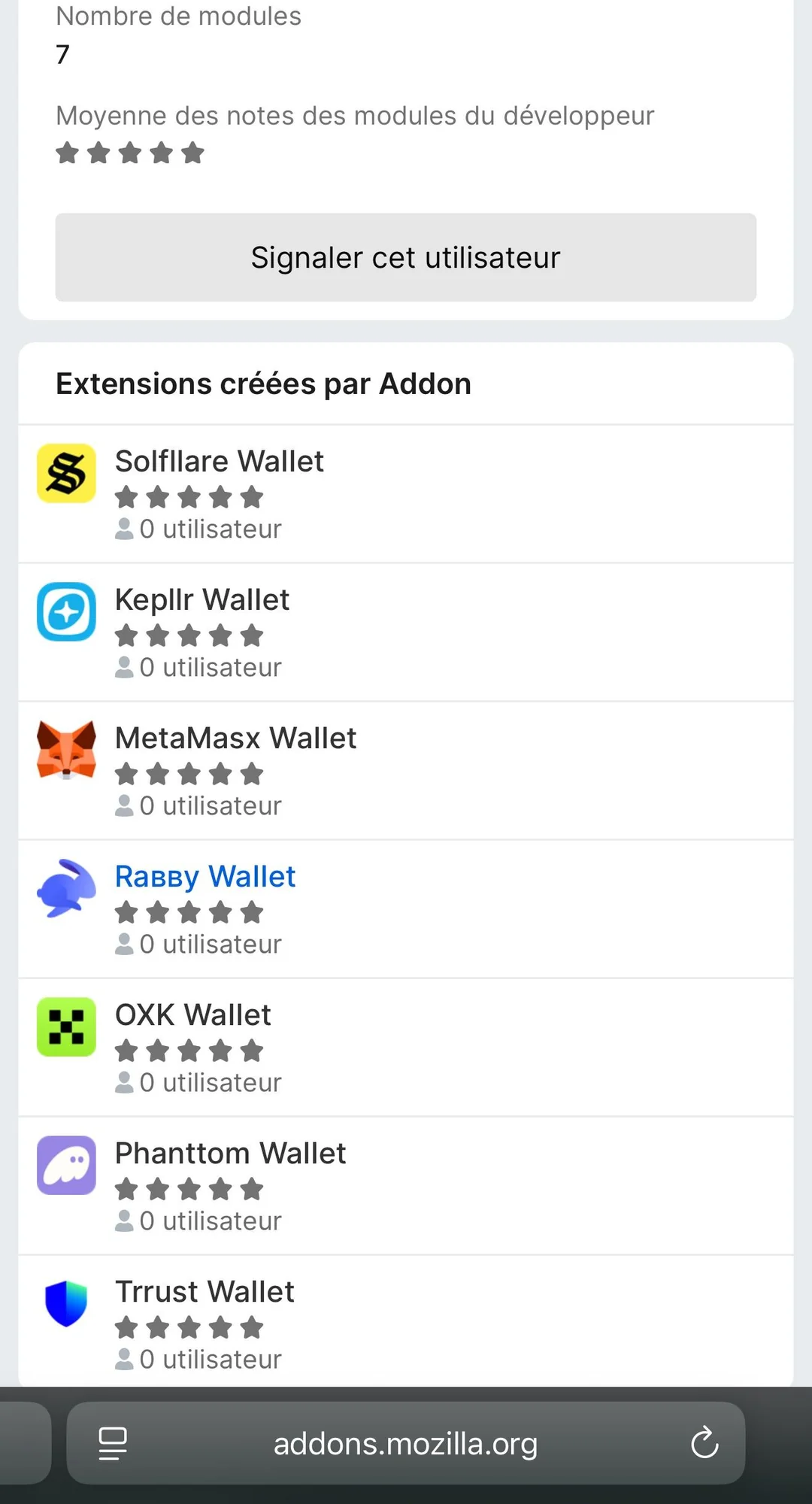
The same would go for a “signal assistant” or “auto-trade helper” browser extension shared as a link in a Telegram group. Prevention is the same as usual—install only from official sources, preferably with review and update history. Recovery involves removing the extension, clearing browser session cookies, revoking web sessions on any exchange or wallet accessed during the period the extension was active, and rotating passwords.
Another file type that security guides often warn to watch out for are archives such as ZIP files. The reason for this is malware payload, and it can get distributed as PDFs, too. Open “research report,” “trading guide,” or “signal archive” from unknown Telegram contacts in an isolated environment (a virtual machine or Google Docs upload) rather than a local application. Never execute files extracted from a ZIP received via Telegram.
In any case, if a file was executed, assume the device is compromised. Disconnect from the internet, run a full malware scan, and consider the nuclear option of a clean OS reinstall before using any financial accounts on that machine.
Given the risk of falling for a threat on Telegram, there are a few measures that its users can take to harden their security, which become nearly essential if you are also a crypto user:
- Enable 2-Step Verification: Settings → Privacy and Security → Two-Step Verification. Set a strong password distinct from your email password.
- Review Active Sessions: Settings → Devices. Terminate any session you do not recognize immediately.
- Lock SIM / Enable Port-Out Protection: Contact your mobile carrier to add a PIN or passcode requirement for any SIM swap or number transfer request.
- Disable Automatic Media Download in sensitive chats: Settings → Data and Storage → Automatic Media Download. Disable for photos, videos, and files in groups and channels you did not personally vet.
- Isolate cryptocurrency activity: Where possible, use a dedicated browser profile or a separate device for all crypto-related Telegram channels, wallet access, and exchange logins.
Privacy
As a messaging app that happens to have a social media element to it, Telegram requires you to present at least some form of identity and in some cases, it has to be verified. Therefore, not to risk getting doxxed or tracked with the information you intentionally or inadvertently share with the app or in the chats, you have to put some work and discipline in.
Telegram accounts are usually tied to a phone number, although publicly an account can have a unique @username/pseudonym. You can hide the former in Settings → Privacy and Security → Phone Number → set “Who can see my phone number” to Nobody; set “Who can find me by my number” to My Contacts at the very least. If you want to keep your activity compartmentalized, avoid using the same @username across Telegram and public crypto forums.

To keep your wallet addresses pseudonymous and not linked to you, never post a wallet address in a Telegram group that is linked to your primary holdings and use a dedicated receiving address for any group-level activity (airdrops, verifications) that is isolated from your main wallets. Do not post transaction hashes that could be traced back to wallets connected to your identity either.
Every message in any Telegram group is potentially public and permanent; “you can’t delete something from the Internet” is a maxim for a reason. The conclusion? Do not share KYC documents, portfolio sizes, specific holdings, or personal identifying information in any group chat. If signal groups or trading communities, sharing screenshots of trades or portfolio, identity-related discussions, or support interactions are going to be included in your activities on Telegram, consider setting up a burner account not linked to your real identity or primary phone number. Otherwise, if the community knows who you are or you do not post any identifying information about your finances or crypto holdings, main is fine.
If You Already Clicked (Incident Response)
a) You sent funds
Cryptocurrency transactions are irreversible. Contact the platform or exchange immediately to flag the destination address. File a report with your local financial crime authority and preserve all message records. Recovery through Telegram or the scammer is not possible; any offer to help recover crypto funds for a fee is a secondary scam.
b) You installed an app
Uninstall immediately. Go to Telegram Settings → Devices and terminate all active sessions except your current one. Revoke any API keys the app may have accessed. Run a full device scan. Change all passwords for accounts you accessed on that device after the installation.
c) You shared your seed phrase or private key
This is an irreversible compromise. Assume every asset in every wallet derived from that seed phrase is already lost or accessible to the attacker. If funds have not yet moved, transfer them immediately to a wallet generated from a new seed phrase on a clean device. Do not use the compromised phrase again for any purpose.
d) You connected your wallet to a site
Navigate to a token approval revocation tool (such as Revoke.cash for EVM-compatible chains) and revoke all permissions granted to that site’s contract address. Check your wallet’s transaction history for any approvals that were submitted during or after the connection. If you signed a transaction you did not initiate, assume the approval is unlimited and revoke immediately.
Conclusion
Even if you are not an active Telegram user yet, joining its billion-strong user base for crypto-related news and discussions might be of value to you. To not get lost in the sauce, pick 3–5 Telegram channels by information type (market news, regulation, or on-chain data), configure notification rules so high-volume channels don’t bury time-sensitive updates, and re-validate every link against the source’s official website before joining. While you are at it, don’t forget to subscribe to the ChangeHero Telegram channel for news round-ups, market insights, educational content and more.
If you know your primary use case, start there: follow the news-focused path for market context and regulatory awareness, the whale alert path for on-chain positioning signals, or the ICO and early listings path if early-stage cryptocurrency projects are your focus—and apply the verification steps above before committing to any channel.
Frequently Asked Questions
Do Crypto Signals Work?
Crypto signals work when they are transparent, verifiable, and applied with disciplined risk management—but they fail when treated as guaranteed outcomes. The difference between a useful signal and a costly one often comes down to how the provider documents entries, exits, and losses, and whether you have the execution speed to act on them.
Where Can I Get Crypto Signals?
Telegram helps deliver crypto signals faster than almost any other channel, but it is one of several sources with meaningfully different risk and accountability profiles. Understanding where signals originate and how each source handles verification determines whether you are getting informed guidance or recycled noise.
Note that directories and curated lists exist and introduce their own verification burden: CoinGape lists 130+ best crypto Telegram channels for 2026 (source), which means even finding candidates requires a filtering layer before you can evaluate any individual group.
Is Telegram Good for Crypto?
Telegram serves cryptocurrency traders well as a fast-delivery layer for alerts and community discussion, but it becomes a liability when used as the sole input for trading decisions. The platform’s architecture—large broadcast groups, no native edit logs, pseudonymous admins—creates information advantages for providers and accountability gaps for followers.
Which Trading Signal Group Is Best on Telegram?
No single Telegram group is objectively best for all traders—the right group depends on your strategy, timeframe, and risk tolerance. Telegram groups with hundreds of thousands of members—including those listed in directories—have large followings because of marketing, longevity, or viral growth, none of which correlates with signal accuracy or accountability.
Is It Safe to Follow Telegram Crypto Signals?
Telegram crypto signals carry real financial and security risk. The platform itself is not the primary danger—unverified providers, impersonation scams, and undisciplined execution are.