
Best OTC Crypto Exchange: 2026 Rating & Guide


Key Takeaways
- 🔘 OTC is for size: Once you’re moving $500K+, public order books turn into slippage and strategy leakage—OTC gives you negotiated pricing, less market impact, and more confidentiality.
- 🔘 The 2026 filter is the same as always: Prioritize liquidity depth, settlement flexibility (on-chain + custody + bank rails), and regulatory standing—that’s what keeps execution clean and compliance uneventful.
- 🔘 Using these criteria plus several more key quality indicators, our team has narrowed the pool to seven best OTC exchange providers as of 2026:
- ▫️ Binance OTC—the liquidity champion for retail and OTC alike;
- ▫️ Coinbase Prime—multi-strategy offering for institutional clients;
- ▫️ Kraken OTC—solid choice for U.S.-based customers;
- ▫️ Crypto.com OTC—overall best user experience;
- ▫️ FalconX—sophisticated execution tools with margin trading support;
- ▫️ Fidelity Digital Assets—unparalleled security standards;
- ▫️ ChangeHero—strong alternative choice with deep liquidity and extensive choice of assets.
Contents
- 1. Why OTC Trading Matters for Large Orders
- 2. OTC Market Basics
- 3. Main Features to Compare in OTC Exchanges
- 4. What Makes a Strong OTC Platform in 2026
- 5. Best OTC Crypto Exchanges and Desks (2026)
- 6. OTC Desk Models and Market Landscape
- 7. OTC Desks vs OTC Brokers
- 8. USA-Specific Considerations in 2026
- 9. Key Considerations, Risks, and Drawbacks
- 10. How to Get Started (Step-by-Step)
- 11. Risk Management Best Practices
- 12. Conclusion
Over-the-counter (OTC) trading is not something that every trader needs, crypto or not, but at a certain point some won’t be able to do without. Without these platforms facilitating large-scale cryptocurrency transactions outside public order books, connecting institutional investors, high-net-worth individuals, and corporate treasuries with counterparties willing to trade substantial amounts, trades worth millions—sometimes billions—in digital assets won’t have the price stability to shield both buyers and sellers from the slippage and market impact that would occur on regular exchanges, preserve confidentiality and operational accountability.
If you are one of the traders regularly involved in high-volume trading of digital assets, you don’t just need to know where to trade over-the-counter: if you can find the best OTC crypto exchange, why settle for less? Our guide aims to help you ascertain the criteria to be used for evaluation and highlight a few options that match several profiles of trading needs and preferences.
Why OTC Trading Matters for Large Orders

Photo by Treddy Chen on Unsplash
When you’re moving $500,000 or more in cryptocurrency, placing that order on a public exchange has a good chance of creating problems for everyone. Your buy order can push prices up before it fills completely, or your sell order can trigger a price drop that eats into your exit value.
OTC desks solve this by matching you directly with a counterparty at a negotiated price, typically within 0.5% to 2% of spot rates depending on the asset and volume.
The other advantage is discretion. Public order books broadcast your trading intentions to the entire market. For institutional players managing large portfolios, that transparency can be a liability—especially when dealing with less liquid altcoins or executing multi-leg strategies where price discovery on thin venues is costly.
OTC Market Basics
How the OTC Market Works
In crypto, OTC markets operate as decentralized networks where buyers and sellers negotiate directly, unlike centralized exchanges that use order books for automated order matching. Think of it this way: on a regular exchange, you place an order and wait for the system to match you with someone willing to take the other side. In OTC markets, you’re essentially sitting across the table from your counterparty (or their representative), discussing terms in real time.
This peer-to-peer structure gives participants more control over transaction details. Instead of accepting whatever price the market offers, you can negotiate specific terms—price, settlement timeline, payment method—based on your needs. For institutional investors or high-net-worth individuals moving large positions, this flexibility is crucial, but it’s also why OTC is rarely meaningfully anonymous once serious account verification is required.
The negotiation process typically involves brokers or trading desks who facilitate communication between parties. These intermediaries maintain relationships with multiple buyers and sellers, which helps them find suitable matches quickly. Because there’s no public order book broadcasting your intentions, you can execute sizable trades without telegraphing your strategy to the entire market.
Pricing, Spreads, and Slippage
Pricing in OTC markets follows a different logic than exchange pricing. Market depth—the volume of buy and sell orders at various price levels—directly impacts what you’ll pay for large transactions; on centralized venues, this is closely tied to order book depth and the visible market order book. On exchanges with thin liquidity, a million-dollar buy order could push prices up several percentage points before filling completely. That’s slippage in action.
OTC desks’ primary goal is to counter this by quoting custom prices based on current market conditions, the size of your order, and their own inventory. The spread, i.e. the difference between the buy and sell price, compensates the dealer for taking on risk and providing liquidity. Larger orders typically command wider spreads because the dealer needs to source more assets or hedge their position.

For example, imagine buying $5 million worth of Bitcoin. On an exchange, that order might execute across dozens of price levels, with the final average price significantly higher than where you started. An OTC desk, however, could quote you a single price with a 0.5% spread, giving you certainty and potentially better execution even despite the markup.
Request-for-Quote (RFQ) Workflow
The RFQ is a process that structures how OTC trades happen. You (the buyer) submit a request specifying what you want to trade and how much. The broker or trading desk then shops this request to potential sellers in their network, collecting competing quotes.
Within minutes, you receive firm quotes—prices that are guaranteed for a specific timeframe, usually 30 seconds to a few minutes. You review the options, select the best price, and confirm the trade. The broker facilitates the exchange, coordinating payment and asset delivery between both parties.
Platforms like Kraken's OTC desk offer 24/7 competitive execution and settlement with private, personalized service, meaning you can request quotes and settle trades any time, not just during traditional market hours. This continuous availability matters for global participants operating across time zones.
Naturally, settlement speed varies by platform and asset. Some trades settle within hours; others take one to two business days depending on payment methods and blockchain confirmation times.
Settlement and Trade Finality
Speaking of it, settlement finalizes the transfer of assets and funds between counterparties. In OTC markets, this typically happens directly between wallets or accounts, sometimes with an escrow mechanism to reduce counterparty risk. Unlike exchanges where trades settle instantly within the platform’s internal ledger, OTC settlement involves actual blockchain transactions or wire transfers in fiat currency.
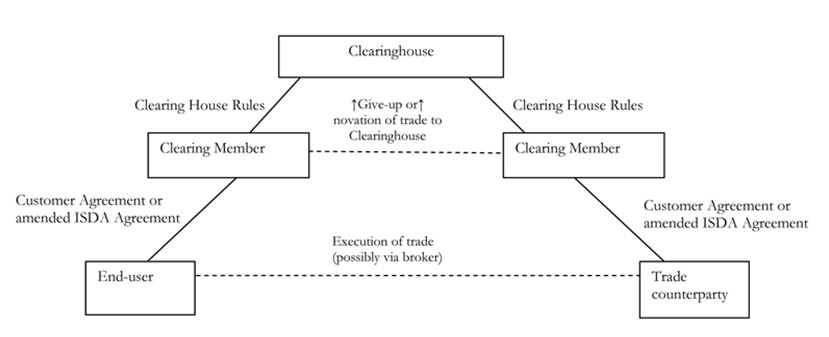
An extra party to an OTC transaction, clearing houses may occasionally facilitate larger institutional OTC trades, acting as neutral third parties that guarantee both sides fulfill their obligations. This adds a layer of security but can extend settlement times.
Trade finality—the point where the transaction becomes irreversible—for transactions involving crypto depends on the blockchain being used and the number of required block confirmation events. For example, Bitcoin trades achieve practical finality after several confirmations (usually six blocks, roughly one hour). Ethereum and other chains have different confirmation requirements. The key difference from exchanges: you control when you consider the trade final based on your risk tolerance and the number of confirmations you’re willing to wait for.
Main Features to Compare in OTC Exchanges
OTC crypto exchanges differentiate themselves through eleven core operational characteristics that determine their suitability for specific trading requirements. Analyzing all these criteria to comprehensively match institutions’ and high-net-worth individuals’ needs with the right platform’s capabilities requires more time than we can afford in this guide but we can still outline the framework for independent research.
Liquidity Depth and Sourcing

Deep liquidity ensures that large orders execute without significant price impact. Top-tier OTC desks maintain liquidity through multiple channels: direct relationships with market makers, aggregated order books from multiple exchanges, proprietary trading desks, and institutional counterparty networks. The important detail is whether a desk sources liquidity exclusively from one exchange or aggregates across venues. Multi-source providers typically offer better pricing for exotic pairs and larger block trades, and can also support arbitrage-aware routing to reduce all-in costs.
Fill Reliability and Re-Quote Policy
Fill reliability measures how often a quoted price actually executes at the agreed rate. During high volatility, some OTC desks implement re-quote policies where they adjust prices between quote and execution. The most reliable desks honor their quotes with minimal slippage even during market turbulence, though this comes at a premium.
Re-quote frequency varies significantly. Some platforms re-quote on orders above certain thresholds, while others guarantee execution within a time window regardless of market conditions.
Execution Speed and Availability
Execution speed ranges from near-instantaneous (under 30 seconds) to several minutes for large block trades requiring manual approval. Availability matters equally: the best OTC desks operate 24/7 with dedicated relationship managers across time zones. Downtime during critical market hours can cost millions in missed opportunities or unfavorable moves, especially when transaction speed becomes a competitive advantage for time-sensitive flows.
Fees, Spreads, and All-In Costs
Fee structures vary dramatically between OTC providers. Some charge transparent fixed fees (0.1%–0.5%), others embed costs in wider spreads, and a few combine both approaches. Hidden costs often include payment processing fees, wire transfer charges, and premium pricing for after-hours execution.
The true measure is the all-in cost: the difference between mid-market price and your final execution price, including every fee. When comparing venues, ask how trading fees are composed (for example, whether a maker fee/taker fee model applies on any routed legs), and confirm any standalone transaction fee charged by the desk.
Security Controls
Security practices separate professional desks from vulnerable ones. Industry-standard controls include cold storage for the majority of assets (typically 95%+), multi-signature wallet requirements, hardware security modules (HSMs) for key management, mandatory two-factor authentication (2FA), and IP whitelisting for API access. Advanced providers implement time-locked vaults and require multiple internal approvals for withdrawals above certain thresholds, with formal threat detection, periodic vulnerability assessment, and tested incident response playbooks as part of mature cybersecurity programs.
Custody Options
Custody solutions fall into three categories: self-custody where clients control private keys, integrated custody where the OTC desk holds assets in segregated accounts, and third-party custody through regulated providers like Coinbase Custody or BitGo. Third-party custody offers the strongest regulatory protections and insurance coverage but introduces counterparty risk and typically costs 0.5%–2% annually.
Compliance and KYC/AML Standards

Photo by Vitaly Gariev on Unsplash
Compliance frameworks vary by jurisdiction. U.S.-based OTC desks operating under FinCEN registration implement strict KYC/AML procedures including identity verification, beneficial ownership documentation, and ongoing transaction monitoring. Some desks maintain licenses in multiple jurisdictions, while others focus on specific regulatory regimes. Enhanced due diligence applies to politically exposed persons (PEPs) and high-risk jurisdictions, and leading firms formalize both AML compliance and KYC compliance controls to satisfy banking partners.
Asset Coverage
Asset coverage ranges from Bitcoin and Ethereum only at conservative desks to 200+ cryptocurrencies at more aggressive providers. Altcoin availability matters for diversified portfolios, though exotic tokens often carry wider spreads and minimum order sizes. Stablecoin variety (USDT, USDC, DAI, BUSD) affects settlement flexibility.
Fiat Rails and Banking Partners
Fiat integration determines how easily you move between traditional and crypto markets. Top OTC desks maintain relationships with Tier 1 banks, enabling USD, EUR, GBP, and CHF transactions via wire transfer or SWIFT. Some providers offer same-day settlement through specific banking partners, while others require 2–5 business days. Limited fiat rails force expensive workarounds through stablecoin bridges, so confirm whether the desk offers a reliable fiat gateway in your operating region.
APIs and Integrations
API robustness matters for institutional integration with treasury management systems, accounting platforms, and algorithmic trading infrastructure. Enterprise-grade APIs provide REST endpoints for order placement, WebSocket feeds for real-time pricing, FIX protocol support for institutional traders, and comprehensive documentation with sandbox environments. Authentication methods, rate limits, and error handling separate professional from basic implementations, and desks increasingly offer a crypto gateway layer that standardizes connectivity across custody providers.
Reporting, Statements, and Auditability
Comprehensive reporting capabilities include transaction histories with timestamps and execution prices, monthly statements for accounting reconciliation, real-time portfolio valuations, and audit trails meeting institutional standards. The best platforms provide customizable reports exportable in multiple formats (CSV, PDF, API) and maintain immutable records for regulatory examination and tax reporting purposes, including required disclosure fields for internal controls.
What Makes a Strong OTC Platform in 2026
Although the full picture requires comprehensive analysis, preliminary estimation can eliminate a lot of options not fit for your requirements and save time and effort to let you focus on more suitable choices.
Three factors separate top-tier OTC services from mediocre ones: liquidity depth, settlement flexibility, and regulatory standing. A platform with deep liquidity can fill $10 million orders without significant price negotiation delays. Settlement flexibility means supporting both on-chain transfers and custodial solutions that fit your operational workflow, including compatibility with enterprise treasury tooling and bank rails. Regulatory standing—especially licensing in jurisdictions like the U.S., EU, or Singapore—determines whether you can trade without compliance headaches.
In this guide, we evaluate the leading OTC crypto exchanges based on these criteria, along with user experience factors like response times, supported assets, and minimum trade thresholds. Whether you’re a fund manager diversifying into digital assets or a crypto-native treasury manager looking for reliable execution, the right OTC partner can mean the difference between smooth operations and costly mistakes.
Best OTC Crypto Exchanges and Desks (2026)
OTC crypto exchanges and desks provide institutional-grade trading infrastructure for large-volume transactions that require personalized execution and deep liquidity. Here’s how the leading platforms stack up in 2026:
Binance OTC
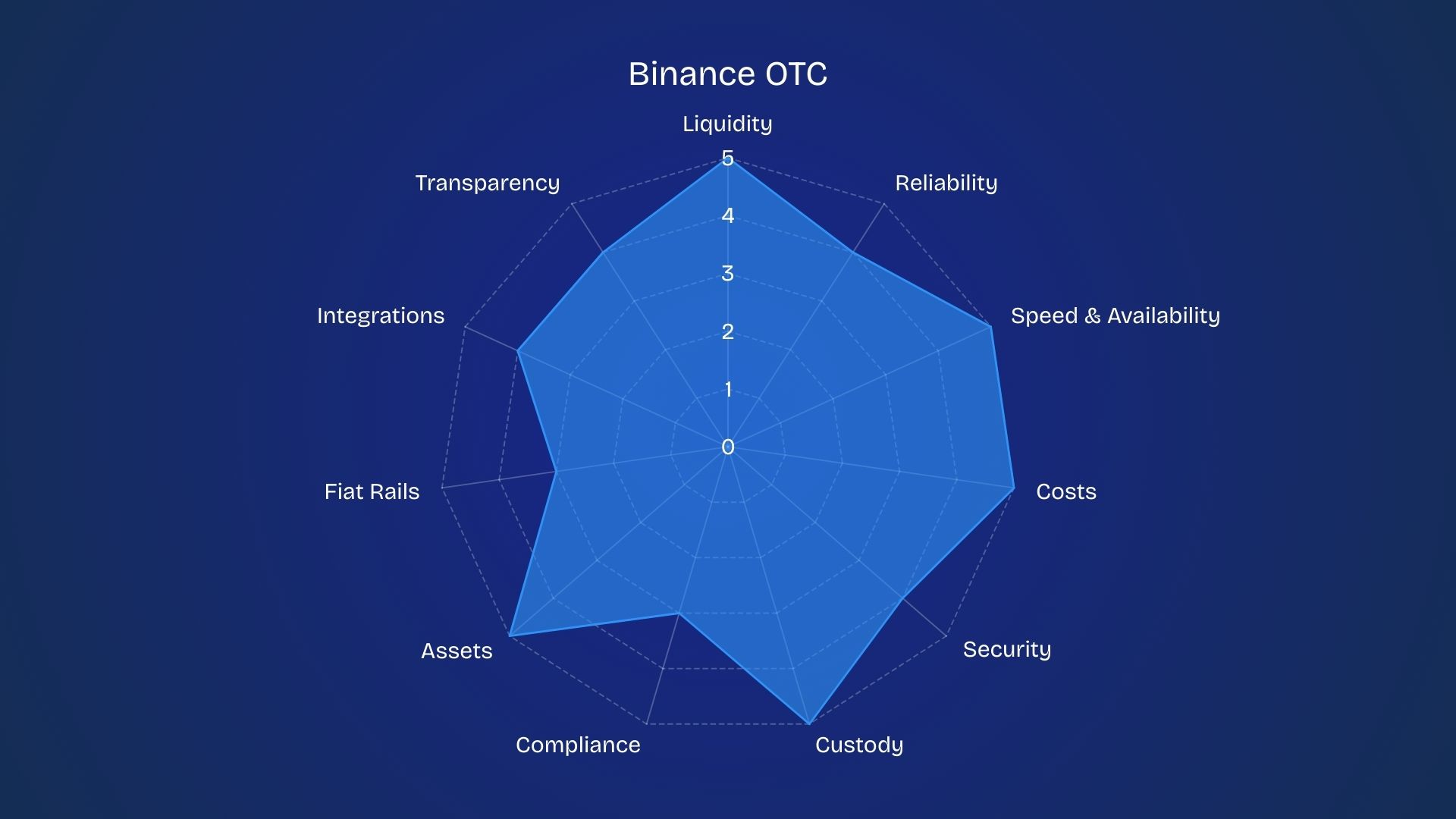
Binance OTC caters to VIP traders and institutions executing orders worth $100,000 or more. The platform’s primary strength lies in its liquidity depth—Binance processes billions in daily volume across spot and derivatives markets, which translates into competitive pricing for block trades. Their dedicated account managers authenticate each client and build custom execution strategies based on trading patterns. The secure service operates 24/7 with settlement times that can be as fast as minutes for verified accounts, with clear account security controls and configurable withdrawal limit policies for risk management.
Coinbase Prime
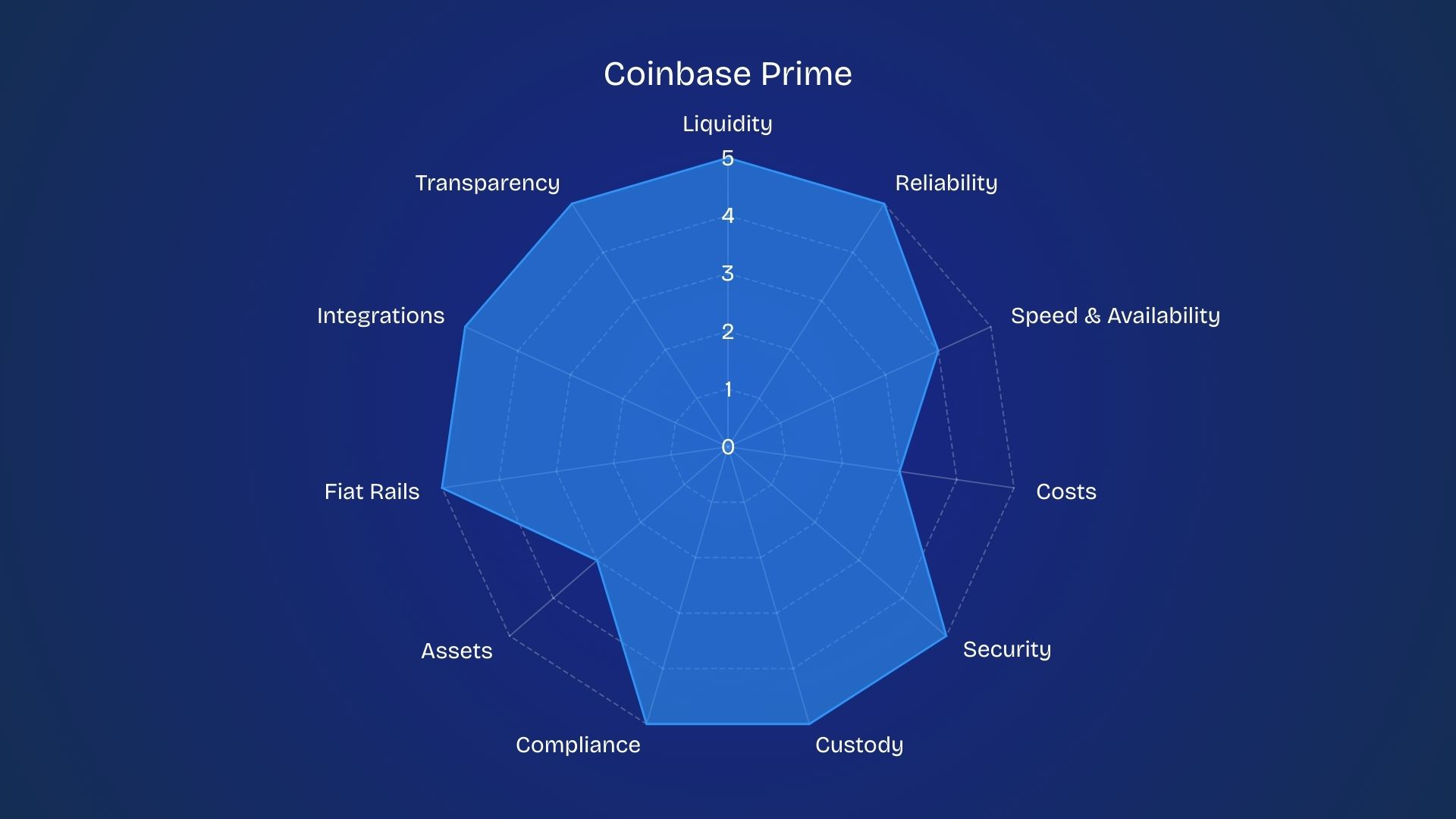
Coinbase Prime focuses exclusively on institutional clients, offering secure OTC execution with regulatory compliance as its cornerstone. U.S.-based funds and corporates favor Prime for its SOC 2 Type II certification and insurance coverage on assets in their custody. The platform integrates trading, custody, and prime brokerage services into a single interface, which streamlines operations for multi-strategy firms. Their smart order routing splits large orders across liquidity pools to execute trades while minimizing slippage and optimizing performance.
Kraken OTC
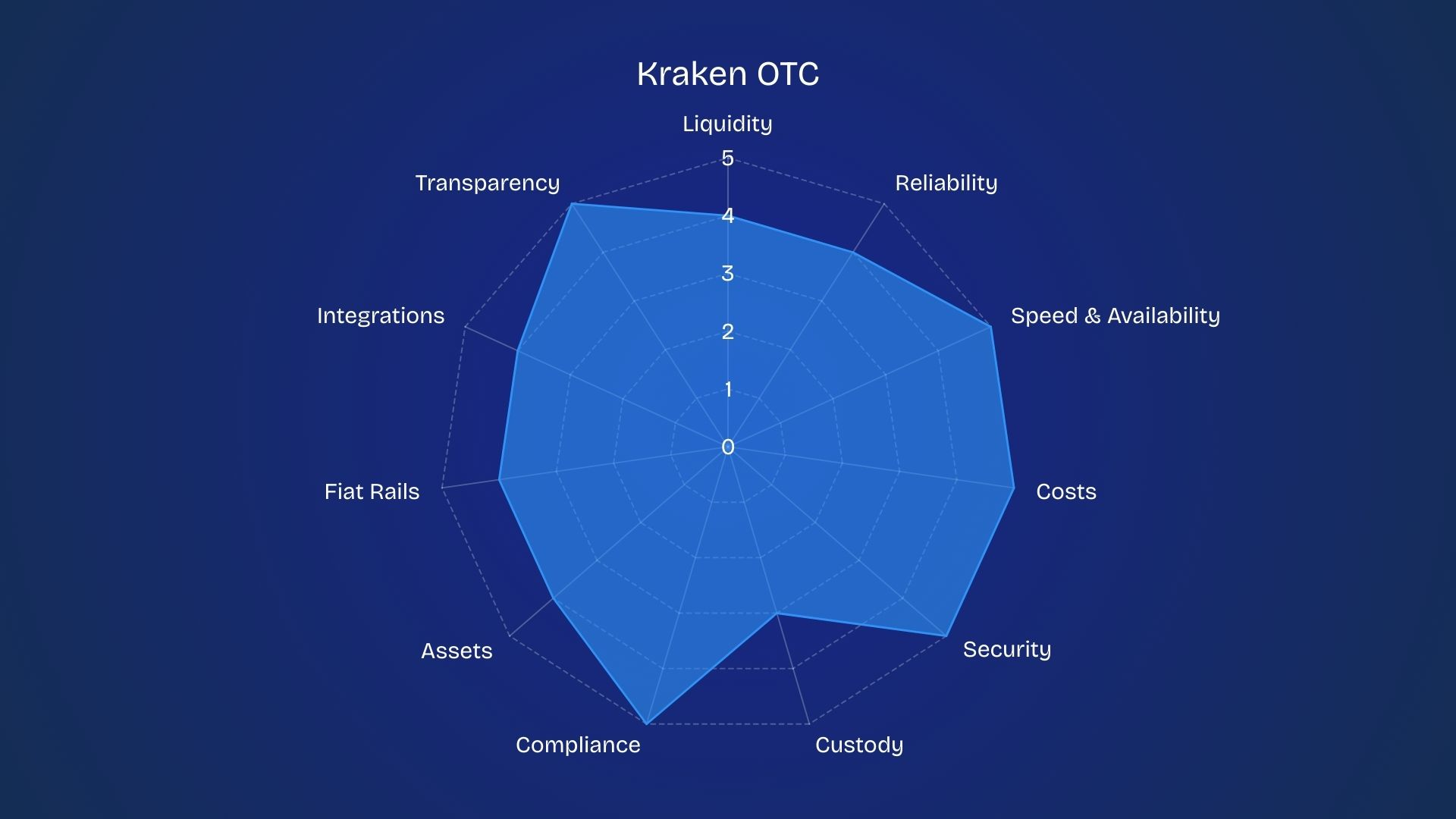
Kraken OTC delivers 24/7 personalized services for large crypto orders with competitive execution that rivals top-tier desks. Following their acquisition of Circle Trade, Kraken expanded liquidity access across more than 100 trading pairs and improved settlement infrastructure. Their account managers work directly with clients to execute block trades while maintaining tight spreads, and the compliant platform supports same-day settlement for qualifying transactions. Kraken’s compliance framework covers major jurisdictions, making it a reliable choice for institutions navigating regulatory requirements.
Crypto.com OTC
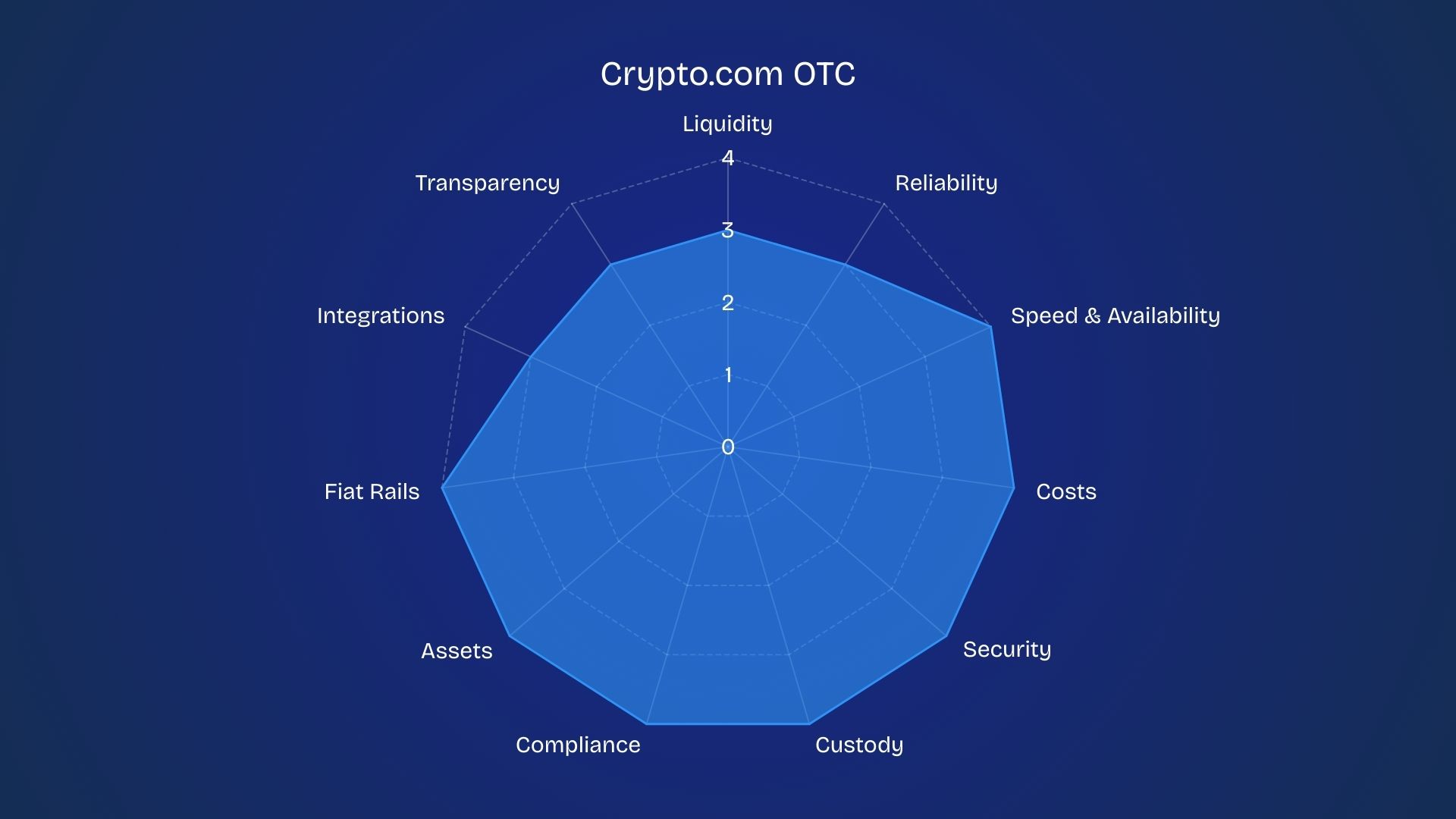
Crypto.com OTC targets mid-to-large institutional traders with minimum order sizes starting around $100,000. The desk provides access to over 150 cryptocurrencies with transparent pricing and dedicated relationship managers. Their performance analytics dashboard helps clients track execution quality and market impact across historical trades, enabling data-driven strategy refinement and post-trade analysis workflows.
FalconX
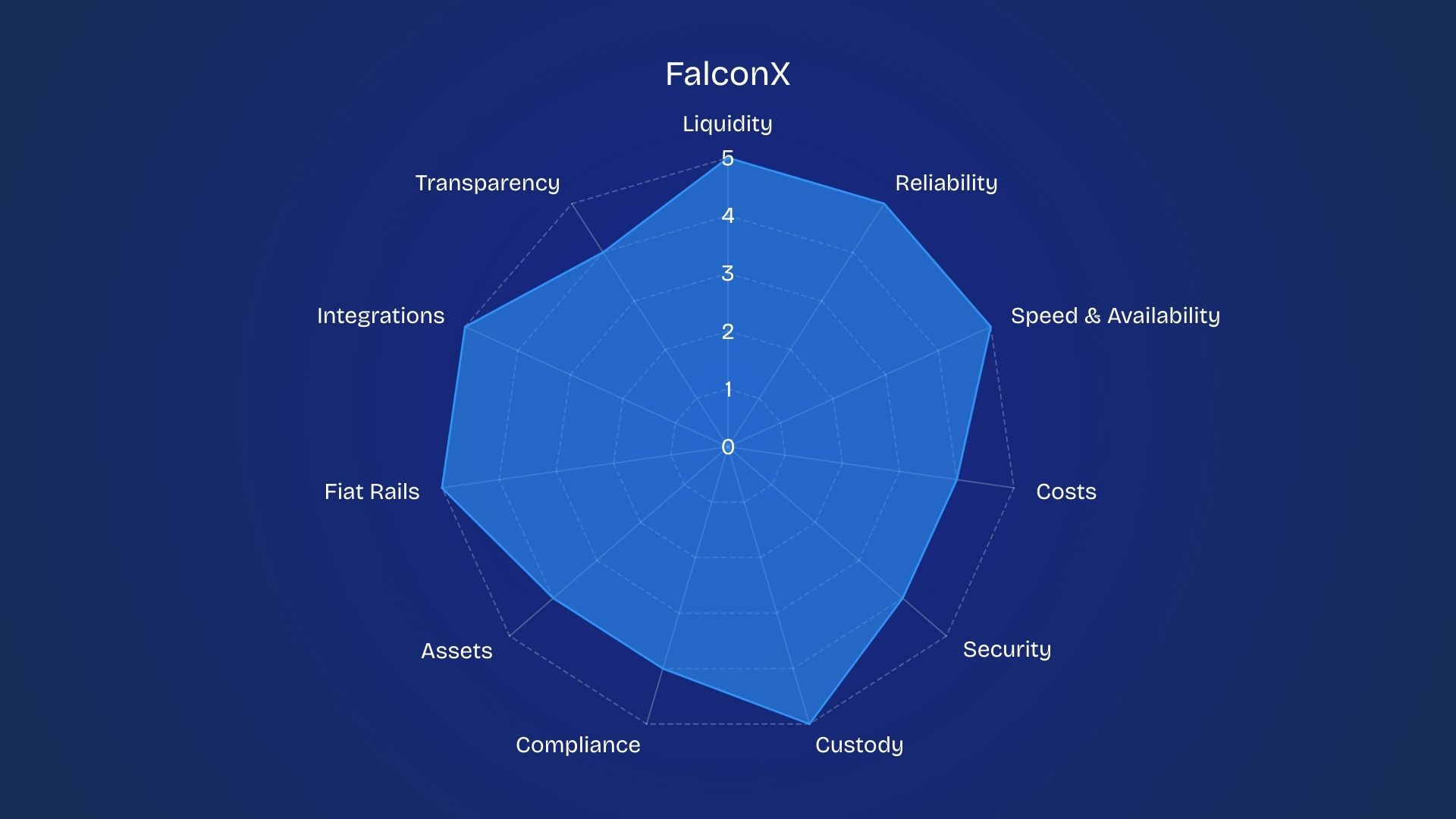
FalconX built its reputation on institutional-focused infrastructure with algorithmic execution and prime brokerage services. The platform uses smart order routing to achieve minimal slippage on large orders, and their credit facilities allow qualified institutions to trade on margin. FalconX particularly appeals to hedge funds and proprietary trading firms that need sophisticated execution tools and deep liquidity across multiple venues, including margin trading structures with controlled leverage.
Fidelity Digital Assets
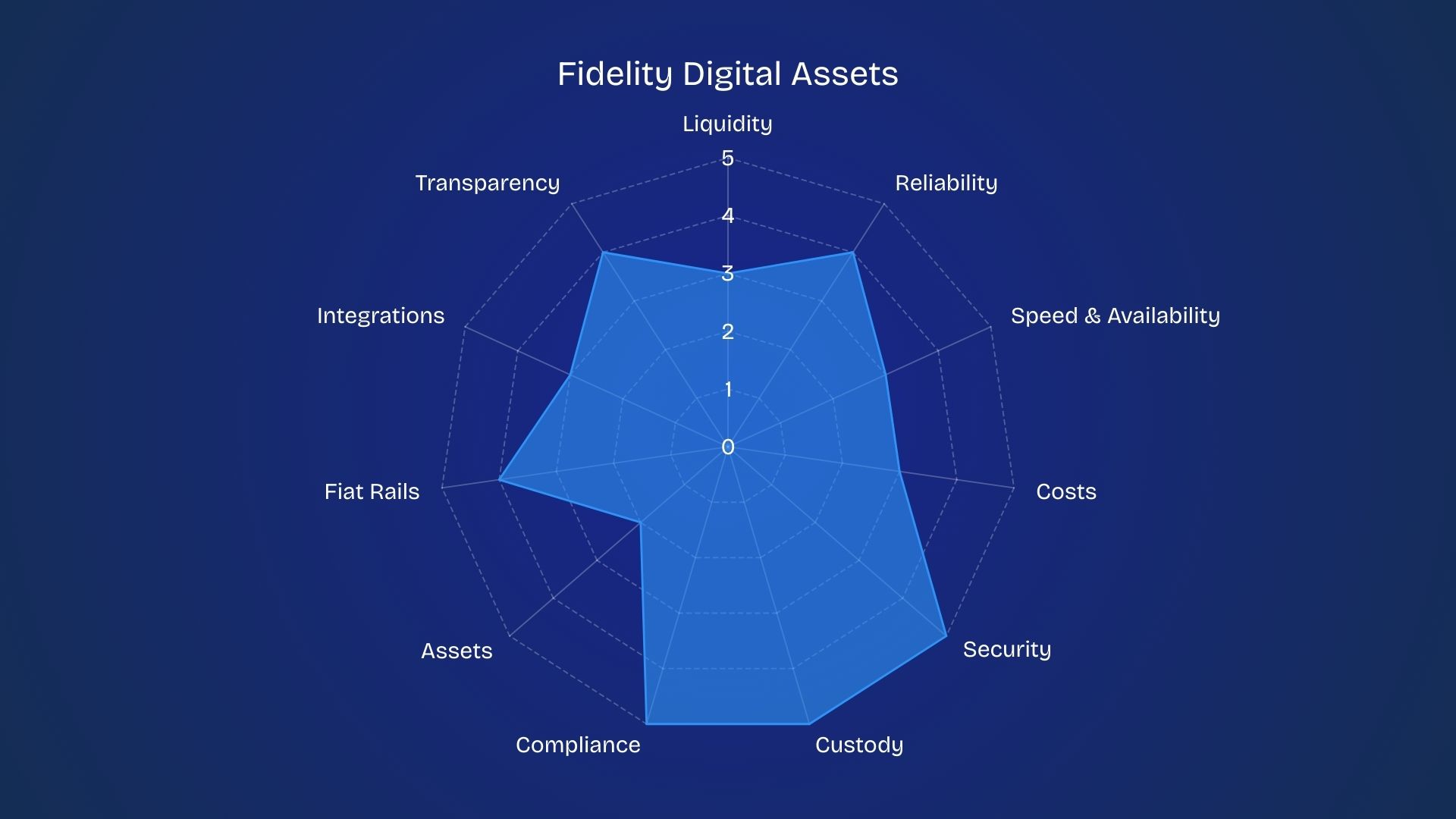
Fidelity Digital Assets serves traditional finance institutions entering crypto markets. Their offering combines OTC trading with enterprise-grade custody backed by Fidelity’s $4.5 trillion asset management legacy. The secure and compliant platform focuses on Bitcoin and Ethereum trades for pension funds, family offices, and endowments that prioritize regulatory compliance and institutional governance.
ChangeHero
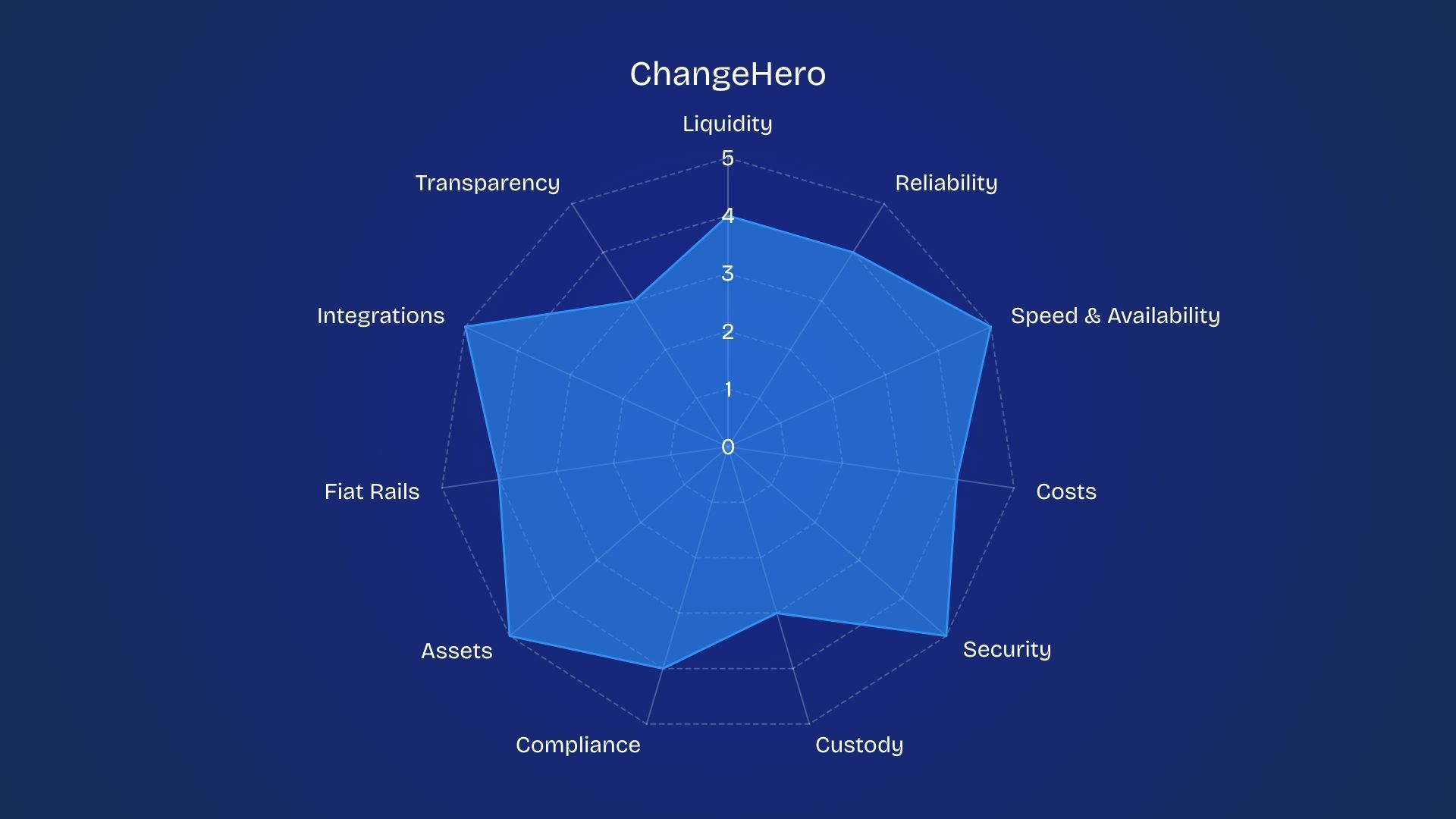
Since platforms with a network of liquidity providers qualify for OTC trading, ChangeHero can be viewed as one. The lack of upper limit on individual trades makes this platform suitable for large-scale trading.
The quote sources integrated with the exchange include a dozen liquidity providers ranging from major centralized exchanges to DEXs. A high-performance rate engine ensures the optimal live rates depending on trade’s volume.
The service is non-custodial, meaning that users send and receive their assets directly in their wallets, skipping the deposits, withdrawals and custody arrangements. As for geographical availability, admittedly, the service imposes certain restrictions but can be used in some locations which the desks above won’t serve.
Although the platform does not enforce KYC on users by default, for trading large amounts of cryptocurrencies without triggering identification procedures every time becoming a ChangeHero partner is advised—contact our business team for more information.
OTC Desk Models and Market Landscape
Largest OTC Desks: Who Provides Liquidity?
OTC crypto exchanges operate as specialized trading venues designed for institutional-grade transactions. The major players shaping this landscape include Binance OTC, Coinbase Prime, Kraken OTC, alongside regulated U.S. venues like Gemini that some institutions consider for large, compliance-sensitive flows. Each desk brings distinct strengths to the table.
These desks forge strategic alliances with exchanges for order book access, partner with mining operations for fresh supply, and collaborate with market makers to ensure continuous liquidity. The ecosystem works like a layered network where each participant contributes to pricing efficiency.
Liquidity Sources (Exchanges, Miners, Market Makers)
OTC desks pull liquidity from three primary sources, each serving a distinct function in the trade execution chain.
Exchanges provide the most visible liquidity. OTC desks maintain direct API connections to major venues, tapping into their order books without creating visible market impact. This access lets them source competitive pricing for large orders that would otherwise move the market.
Miners represent natural sellers with consistent supply. OTC desks establish relationships with mining operations to secure newly minted coins before they hit public markets. This fresh supply often comes at slight discounts since miners need to cover operational costs.
Market makers fill the gaps during periods of thin liquidity or for less common trading pairs. They provide two-sided quotes and help stabilize pricing during volatile periods. Market makers’ role becomes critical when executing trades outside standard market hours or in emerging tokens with limited exchange availability.
Principal vs Agency Execution Models
Execution models directly impact your counterparty risk and pricing structure.
Principal model: The OTC desk takes the opposite side of your trade, buying or selling from its own inventory. You get instant execution and price certainty, but the desk assumes the market risk. This model typically involves wider spreads since the desk needs compensation for holding inventory and managing exposure. Principal execution works best when you need immediate settlement or prefer transaction simplicity.
Source: The Jolly Contrarian
Agency model: The desk acts as your broker, sourcing liquidity from multiple venues on your behalf. You get tighter spreads and better average pricing, but execution takes longer and involves less price certainty. The desk charges a commission rather than profiting from the spread. Agency execution suits clients who prioritize best execution over speed and have some flexibility on timing.
Some desks offer hybrid models, switching between principal and agency depending on order size, asset type, and current market conditions.
Minimum Trade Sizes and Client Requirements
Entry thresholds vary significantly across OTC desks; however, unless you are familiar with the topic, don’t expect them to be anywhere near low. Most institutional platforms start at $100,000 minimum trade size, though some accept trades as low as $50,000. Premium desks often set minimums at $250,000 or higher.
Beyond trade size, desks typically require KYC/AML documentation, proof of funds, and sometimes references from banking partners. Institutional clients may need to demonstrate trading history, corporate registration, and regulatory compliance in their jurisdiction. Some desks tier their services—offering basic execution for smaller clients and dedicated relationship managers, custom settlement options, and advanced analytics for high-volume traders.
Asset Availability and Specialized Markets
Major OTC desks cover standard assets like Bitcoin, Ethereum, and top-20 altcoins with deep liquidity. The more interesting action happens in specialized markets with more proactive players.
Niche desks focus on specific asset classes: for example, DeFi tokens with irregular liquidity, tokenized securities, or emerging layer-1 protocols. Some desks specialize in non-custodial atomic swaps for clients prioritizing security over convenience. Others offer bespoke structuring for derivative-like trades or collateralized lending arrangements.
Geographic specialization also exists. Certain desks excel at Asian market hours, others at providing USD/EUR liquidity pairs, and some maintain relationships with specific mining pools or early-stage projects for exclusive access to new tokens.
Multi-Venue Routing and Smart Execution
Modern OTC desks deploy sophisticated technology to optimize execution across fragmented liquidity sources.
Smart order routing algorithms scan multiple exchanges, OTC platforms, and liquidity providers simultaneously. They calculate net pricing after fees, compare slippage potential, and route portions of large orders to different venues to minimize market impact. Some desks use time-weighted average price (TWAP) or volume-weighted average price (VWAP) strategies to spread execution over hours or days.
The technology monitors orderbook depth in real-time, adjusts routing based on current spreads, and can even predict short-term price movements using historical patterns. For clients, this means better net pricing without needing to manage multiple relationships or monitor markets constantly.
Performance Tracking and Transaction Cost Analysis (TCA)
At their level, institutional clients are justified to demand utmost transparency on execution quality, which is where TCA becomes essential.
Transaction cost analysis breaks down every component of trade execution: explicit costs (commissions, fees), implicit costs (market impact, slippage), and opportunity costs (price movement during order execution). OTC desks provide post-trade reports comparing actual execution prices against benchmarks like mid-market rates at order time, VWAP over the execution period, or arrival prices.

Source: CoinMarketCap
Key metrics include implementation shortfall (difference between decision price and execution price), effective spread, and market impact. Top-tier desks offer real-time dashboards showing these metrics across all trades, letting treasury teams evaluate desk performance objectively and make informed decisions about routing future orders.
OTC Desks vs OTC Brokers
In short, OTC desks execute trades directly from their own inventory, while OTC brokers connect buyers and sellers without taking the other side of the transaction. This fundamental difference shapes everything from how you’ll pay to how quickly your trade settles.
Execution Responsibilities
The execution model separates these two channels completely. OTC desks act as principals—they buy from you or sell to you directly, using their own liquidity pools. When you want to offload 50 BTC, the desk becomes your counterparty and absorbs that position into their inventory. They’re making a market.
Brokers, on the other hand, facilitate matches. They source liquidity from multiple venues and counterparties, then arrange the trade between you and whoever’s on the other side. They don’t touch the asset themselves. Think of it like the difference between selling your car to a dealership versus using a broker to find a private buyer.
Pricing and Incentive Structure
Desks typically quote you a single price that includes their spread. You won’t see the underlying market rate broken out—the desk’s profit is baked into the execution price. This can work in your favor during volatile markets when desks are motivated to move inventory quickly.
Brokers charge transparent fees or commissions on top of the execution price they secure. Their incentive is to get you the best available rate because they earn regardless of price movement.
Best-Fit Trade Sizes
Desks shine for mid-sized trades—roughly $100K to $5M—where their inventory can absorb the order without major market impact. They can execute immediately because they’re not hunting for matches.
Brokers become more cost-effective above $5M. At that scale, the broker’s ability to aggregate liquidity from multiple sources and negotiate competitive pricing outweighs the convenience of instant execution. Smaller trades (under $50K) often don’t justify either channel’s minimums.
Custody and Settlement Ownership
OTC desks settle directly—you send them crypto, they send you fiat (or vice versa). Custody is usually straightforward: assets are simply transferred between two parties. Settlement usually completes within 24 hours.
Brokers introduce a third party to the settlement process. They may use escrow arrangements or require both sides to deposit assets before release. This adds an extra layer of security but extends settlement to 24-48 hours in many cases.
Conflicts of Interest and Transparency
Here’s the key part: desks profit from the spread between their buy and sell prices. During volatile periods, those spreads can widen dramatically, and you won’t always know if you’re getting the tightest possible price. The conflict is structural—they benefit when you accept a wider spread.
Brokers face fewer conflicts because their fee is fixed regardless of execution price. Transparency is generally higher since they can show you the pre-fee rate. That said, not all brokers disclose their full liquidity sources, which can obscure whether you’re truly getting best execution.
USA-Specific Considerations in 2026

Photo by NASA on Unsplash
Over-the-counter crypto trading in the United States in particular is a topic worth investigating since it operates under a patchwork of federal oversight and state-level restrictions that firms and traders need to navigate carefully. By 2026, the regulatory landscape continues to evolve, with enforcement actions and new guidelines shaping how OTC desks serve American clients.
Regulatory Compliance Expectations
Federal agencies have tightened their stance on large-volume crypto transactions. The Financial Crimes Enforcement Network (FinCEN) now requires OTC desks to implement enhanced Know Your Customer (KYC) protocols for trades exceeding $10,000, while the Securities and Exchange Commission (SEC) classifies certain tokens as securities, affecting which assets OTC platforms can legally facilitate. International platforms serving US clients must register as Money Services Businesses (MSBs) and comply with Bank Secrecy Act (BSA) requirements. Some jurisdictions demand additional licensing at the state level, creating compliance costs that smaller OTC desks struggle to absorb.
The key shift by 2026 is proactive transparency. Platforms that share transaction data with regulators and maintain clear audit trails face fewer operational disruptions than those operating in gray areas. Recent projections indicate that state-specific crypto regulation changes will continue to fragment the market, with some states tightening restrictions while others create more welcoming frameworks for compliant OTC operations under a clearer legal framework.
Platform Availability and State Restrictions
Not all states welcome OTC crypto trading equally. New York’s BitLicense remains one of the most stringent barriers, requiring extensive documentation and capital reserves that exclude many platforms. Hawaii mandates dollar-for-dollar reserve backing for crypto held on behalf of residents, effectively limiting custody options. Texas and Wyoming, on the other hand, have established crypto-friendly regulatory frameworks that attract OTC desks looking for operational clarity.
Firms navigate these restrictions by partnering with compliant local entities or geo-blocking users from restrictive states. According to Kraken Institutions, some platforms offer limited services in challenging jurisdictions while maintaining full functionality in more permissive states. By 2026, state-level regulatory divergence creates a tiered access system where clients in restrictive states face reduced platform availability and higher operational costs.
Custody Options for US Clients
US clients most commonly face a choice between integrated custody solutions built into OTC platforms and third-party custodians like Coinbase Custody or BitGo. Integrated custody offers convenience but concentrates risk; third-party custodians provide institutional-grade security with insurance coverage and regulatory oversight, though they add complexity and cost to the trading process.
The deciding factor often comes down to trade size. Clients moving seven figures or more typically prefer segregated custody with established third-party providers, while smaller traders accept the platform’s integrated solutions for ease of access. Regulatory considerations increasingly favor third-party custody arrangements, as they provide clearer audit trails and reduce counterparty risk for large transactions.
Banking Access and Fiat Rails

Photo by Joseph Bobadilla on Unsplash
Securing reliable banking partnerships remains the Achilles’ heel of US OTC operations. Major banks still hesitate to service crypto businesses due to regulatory uncertainty and reputational concerns. This forces OTC desks to work with smaller regional banks or crypto-friendly financial institutions like Silvergate (though its 2023 closure highlighted systemic risks) and Signature Bank alternatives.
The solution lies in diversification. Successful platforms maintain relationships with multiple banking partners across different states and utilize stablecoin rails as backup liquidity channels when traditional fiat pathways experience friction. By 2026, bank partnerships remain selective, with OTC platforms needing to demonstrate robust compliance programs and regulatory standing to secure stable fiat on-ramps and off-ramps.
Tax Reporting and Recordkeeping
The IRS treats cryptocurrency as property, meaning every OTC trade triggers a taxable event. Clients must maintain detailed records of purchase prices, sale prices, dates, and transaction purposes. By 2026, the IRS requires broker reporting similar to traditional securities, placing compliance responsibility on OTC platforms themselves.
Best practices include automated transaction logging, annual Form 1099-B distribution to clients, and integration with crypto tax software like CoinTracker or TaxBit. Traders should reconcile their records quarterly rather than scrambling during tax season. The penalty for poor recordkeeping isn’t just financial—it's audit risk that can tie up resources for months, and it can complicate taxation outcomes.
Key Considerations, Risks, and Drawbacks
While OTC crypto trading eliminates public exchange limitations, it introduces layered risk that demands systematic evaluation. Understanding these vulnerabilities helps traders protect capital while capturing the flexibility that makes OTC desirable in the first place.
Legality, Licensing, and Registration
Regulatory frameworks for OTC crypto trading vary drastically by jurisdiction. In the United States, OTC desks operating as money services businesses must register with FinCEN and comply with state-level money transmitter licenses. The EU's MiCA regulation now requires OTC providers to obtain authorization for crypto asset services. Singapore's MAS enforces strict licensing under the Payment Services Act, while jurisdictions like Hong Kong maintain separate regimes for professional vs. retail OTC access.
Here’s the practical takeaway: verify that your OTC counterparty holds relevant licenses in your operating jurisdiction. An unlicensed desk exposes you to regulatory enforcement risk, potential fund seizures, and zero legal recourse if disputes arise. Understanding the regulatory landscape ensures compliance and protects your trading activities from legal complications.
Counterparty Risk and Credit Exposure
Trading directly with another party means you’re exposed to their solvency and operational integrity. If worst comes to worst and your counterparty defaults mid-settlement, you could lose funds with extremely limited recovery options.
Thus, risk management strategies for mitigation include:
- Due diligence upfront: Request audited financials, proof of reserves, and regulatory credentials before committing to large trades
- Credit limits per counterparty: Never concentrate more than 10-15% of your trading volume with a single desk
- Phased settlement: Structure large transactions in tranches rather than all-at-once transfers
- Reputation verification: Cross-check counterparty reviews through industry networks and past client references
In the absence of a clearinghouse, compliance and risk management are your responsibility; this is an example of complexity inherent in these direct trade relationships.
Custody Risk and Asset Segregation
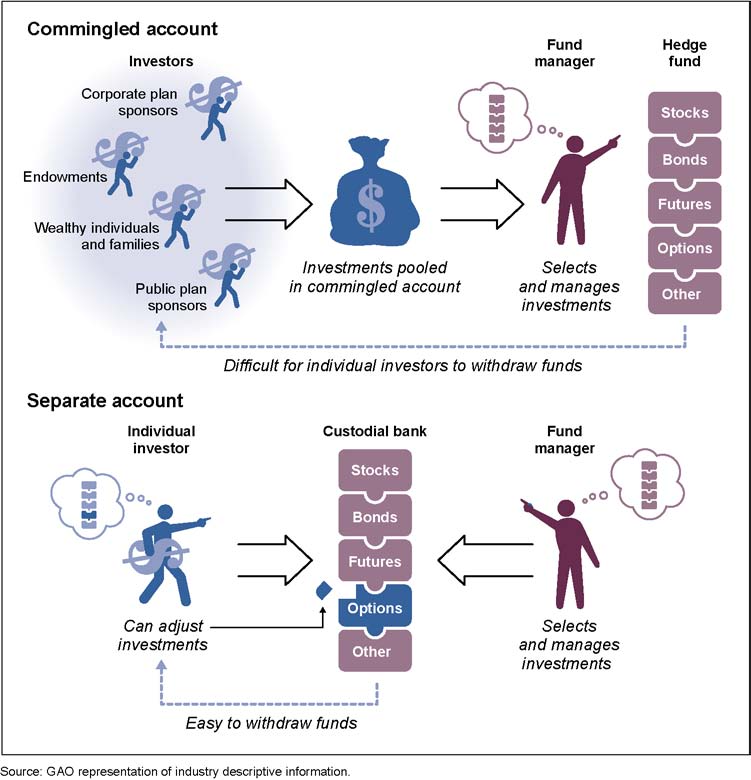
Unlike regulated exchanges with mandated asset segregation, OTC desks may commingle client funds with operational capital. So, if the desk faces insolvency, your assets could get trapped in bankruptcy proceedings.
Best practices for ensuring asset security include:
- Third-party custody solutions: Use institutional-grade custodians like Fireblocks, BitGo, or Copper for asset storage separate from the trading desk
- Proof of reserves: Request cryptographic attestations that verify your funds remain segregated
- Multi-signature wallets: Structure custody with multi-sig requirements (2-of-3 or 3-of-5) to prevent unilateral fund movement
- Avoid prepayment: When possible, structure trades for simultaneous settlement rather than sending funds in advance
For high-value transactions, third-party escrow adds a neutral intermediary that releases funds only when both parties fulfill their obligations, providing an additional layer of security.
Quote Integrity, Pricing Transparency, and Re-Quotes
OTC pricing lacks the transparency of order books. Some desks exploit this opacity by providing stale quotes, applying hidden spreads, or "re-quoting" during volatility to capture slippage.
Red flags include:
- Quotes that expire in seconds: Legitimate desks provide 30-60 second windows for decision-making
- Frequent re-quotes during execution: This suggests the desk is fishing for better pricing at your expense
- Spreads wider than competitive benchmarks: Compare quoted prices against aggregated exchange rates from CoinGecko or CoinMarketCap
Verify quote accuracy by requesting reference pricing sources upfront. Reputable desks cite specific exchange indices (like Kaiko or CF Benchmarks) in their price formation methodology. Transparency in price formation protects you from hidden costs and ensures fair execution, and is a core control for institutional authenticity of records.
Settlement Risk, Delivery-vs-Payment (DvP), and Finality
Settlement risk occurs when one party delivers their asset before receiving the counterpart. In traditional finance, Delivery-vs-Payment (DvP) protocols ensure atomic swaps—both legs settle simultaneously or neither does.
Crypto OTC markets often lack standardized DvP, creating settlement gaps. Standard practices to ensure secure and efficient settlement protocols include:
- Escrow services: Platforms like NYDIG or Zodia Custody offer DvP-like settlement through trusted escrow
- Smart contract automation: For compatible blockchains, atomic swaps eliminate counterparty settlement risk entirely
- Same-day settlement windows: Negotiate specific time windows (e.g., "settlement within 2 hours of trade confirmation") to reduce exposure duration
- Documentary confirmation: Require signed trade tickets with explicit settlement terms before any fund movement
Understanding finality is crucial. Bitcoin transactions achieve finality after 6 confirmations (~1 hour), while Ethereum finalizes in 12-15 minutes. Build settlement timelines around these realities, including expected network fee and chain-level gas fee costs on applicable networks.
Operational Risk and Human Error
Manual OTC processes introduce error vectors that automated exchanges eliminate. A mistyped wallet address, incorrect decimal placement, or failed communication can result in irreversible fund loss.
Safeguards like automation and checks to minimize human error in trading operations include:
- Dual authorization protocols: Require two independent approvals before executing any transaction over defined thresholds
- Address whitelisting: Pre-verify and save wallet addresses in secure systems; never copy-paste addresses from email or messaging apps
- Test transactions: For large settlements, send a small test amount first to confirm address accuracy
- Automated reconciliation: Use software to match trade confirmations against actual blockchain settlements

Human error peaks during high-stress periods like market crashes. Document standardized procedures and follow them mechanically, especially when volatility tempts shortcuts.
Common Scam Patterns and Social Engineering
Despite not being a common ground for run-of-the-mill fraud, OTC trading and its private nature attract more sophisticated scammers. Real-world examples of scam patterns commonly found in the field include:
1. Impersonation attacks: Scammers clone the branding, email domains, and Telegram handles of legitimate OTC desks. They alter one character in the domain (e.g., "tradingdesk.com" becomes "tradingd3sk.com") to trick victims into sending deposits.
2. Advance fee fraud: Fake desks request "security deposits" or "compliance fees" before providing liquidity. Legitimate desks never require upfront payments beyond the trade amount itself.
3. Wallet verification scams: Fraudsters claim they need to "verify" your wallet by having you send a small amount first. Real OTC providers never request test sends from clients—they verify addresses through documentation.
4. Bait-and-switch pricing: Scammers advertise unrealistically favorable rates to lure victims, then introduce "complications" requiring additional payments.
To recognize and avoid these and other scams:
- Verify contact details independently: Don’t trust links or contact info provided in unsolicited messages. Look up the desk’s official website through neutral sources
- Check domain age: Use tools like WHOIS to confirm the trading desk’s domain is established, not registered days ago
- Request video verification: Legitimate OTC professionals will conduct video calls to confirm identity and discuss trade terms
- Slow down: Scammers create artificial urgency ("rates expire in 10 minutes"). Real desks accommodate reasonable decision timelines
Required Documentation and Contract Terms
Professional OTC relationships depend on clear documentation that establishes legal enforceability. Essential documents necessary for establishing clear and enforceable OTC trading agreements include:
- Master Trading Agreements (MTAs): Framework contracts defining general terms, dispute resolution, governing law, and credit arrangements
- Know Your Customer (KYC) packets: Expect to provide government ID, proof of address, source of funds documentation, and sometimes tax identification
- Trade confirmations: Written records of every transaction specifying amount, price, settlement instructions, and timestamps
- Service Level Agreements (SLAs): Explicit commitments around quote response times, settlement windows, and customer support availability
For transactions exceeding $100,000, consider engaging legal counsel to review contract terms. Pay special attention to:
- Dispute resolution clauses: Do contracts mandate arbitration or allow litigation? Which jurisdiction governs?
- Limitation of liability: Are the desk’s liabilities capped? At what threshold?
- Force majeure provisions: What happens during network outages, regulatory changes, or market disruptions?
Verbal agreements mean nothing in crypto OTC trading. If terms aren’t documented and signed, they aren’t enforceable. Period.
How to Get Started (Step-by-Step)
In the vast majority of cases, OTC crypto trading platforms follow structured onboarding processes to verify users, secure funds, and authorize transactions. Each step builds on the previous one to create a secure environment for large-scale trades.
Step 1: Account Setup
Account creation starts with basic registration forms that collect your contact details and trading intentions. Most platforms require you to specify whether you’re an individual trader or representing a business entity.
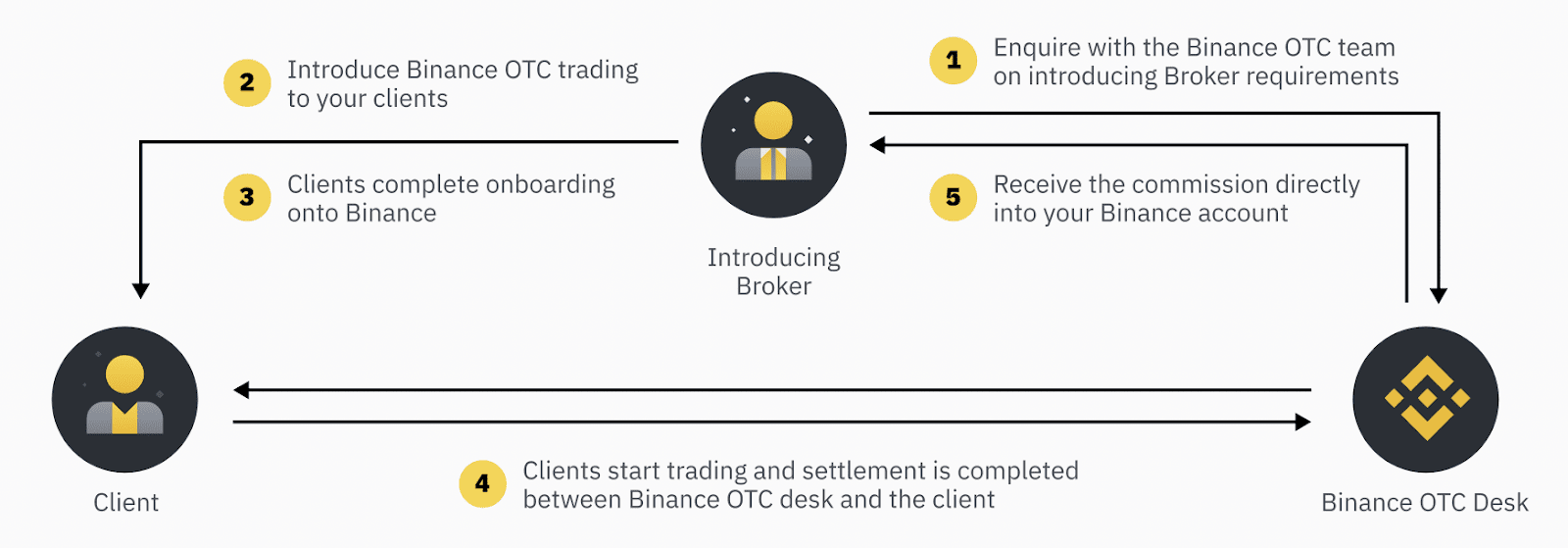
Source: Binance Help Center
The initial setup collects information like business registration numbers (for institutional clients), expected trading volumes, and preferred asset classes. Some platforms offer dedicated account managers for high-volume traders right from this stage. You’ll also choose platform-specific features during setup—things like API access for automated trading or multi-user permissions for team-based operations tied to your trading account.
Step 2: Identity Verification (KYC/KYB)
Individual verification (KYC) typically requires government-issued photo ID, proof of address dated within the last three months, and sometimes a selfie for biometric matching. Business verification (KYB) goes deeper: you’ll need corporate registration documents, shareholder information, beneficial ownership declarations, and director identification.
The verification process runs through compliance databases to verify and authorize your account. Processing times range from a few hours to several business days, depending on jurisdiction complexity and document quality. Some platforms use automated verification systems for individuals but manually review business applications.
Step 3: Funding Methods and Wallet Whitelisting
Secure funding methods include bank wire transfers, SEPA/SWIFT payments for fiat, and direct crypto deposits from verified wallets. Many platforms require you to whitelist withdrawal addresses before your first trade—this means pre-registering crypto wallet addresses and bank accounts you’ll use, including any relevant deposit limit constraints imposed by banking partners.
Whitelisting creates a secure barrier against unauthorized withdrawals. Once you verify your wallet address (usually through a small test transaction), the platform locks it into your account profile. Changes to whitelisted addresses trigger additional security checks or cooling-off periods.
Step 4: Requesting Quotes (RFQ)
The RFQ interface lets you specify exact trade parameters: asset pair, volume, settlement currency, and preferred execution timeline. Submit your request through the platform dashboard or direct messaging with your account manager.
Live quotes typically remain valid for 10-30 seconds on volatile assets and up to several minutes on stable pairs. The platform calculates spreads based on current liquidity, your trading history, and market conditions. Always verify the quote includes all fees before proceeding.
Step 5: Trade Confirmation and Trade Ticket Review
Trade tickets display critical transaction details: agreed price, total volume, counterparty (if disclosed), settlement date, and any associated fees. Review these fields carefully—particularly the decimal places on large volumes where errors compound quickly.
Common errors to catch: mismatched settlement instructions, incorrect wallet addresses, or outdated pricing from expired quotes. Most platforms require explicit confirmation (digital signature or two-factor authentication) before executing trades.
Step 6: Settlement Instructions and Reconciliation
Settlement begins once both parties authorize the transaction. Crypto settlements usually complete within hours, while fiat transfers follow standard banking timelines (1-3 business days for domestic, 3-5 for international).
Reconciliation means cross-checking your internal records against platform confirmations. Track position changes, verify exact amounts received against trade tickets, and document any pricing adjustments or slippage. Maintain spreadsheets or use platform-provided reconciliation tools to monitor cumulative positions across multiple trades.
Step 7: Post-Trade Reporting and Records
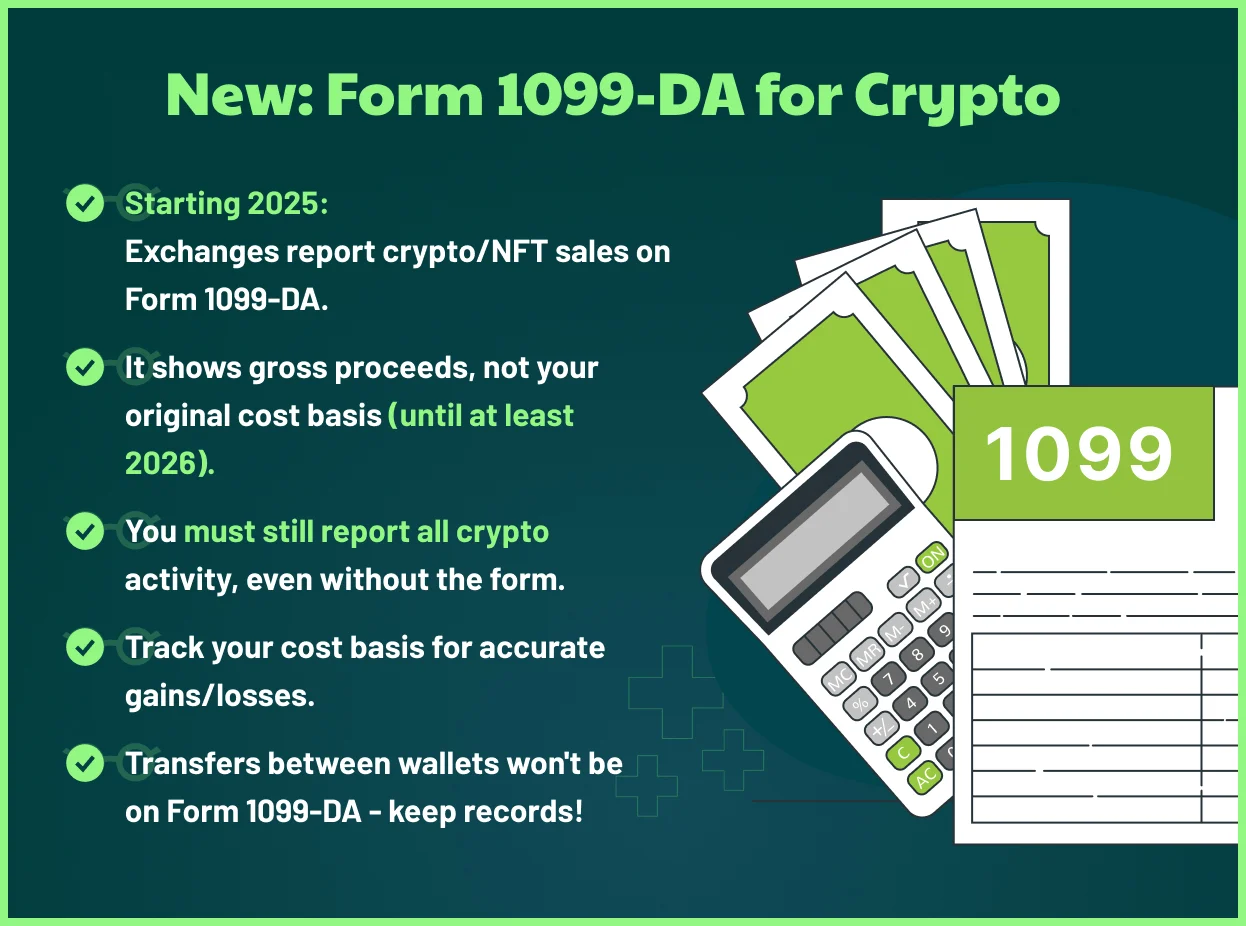
Platforms generate detailed trade reports including timestamps, execution prices, fees breakdown, and settlement confirmations. Download these records immediately—they’re essential for tax compliance, internal auditing, and regulatory reporting.
Source: Count On Sheep
Set up automated report generation if your platform offers it. Most jurisdictions require crypto businesses to maintain transaction records for 5-7 years. Organized records also help identify trading patterns, calculate cost basis accurately, and prepare for potential audits without scrambling for documentation.
Risk Management Best Practices
Risk management in OTC crypto exchanges operates on multiple interconnected layers, each requiring specific protocols and continuous oversight. The stakes are high: a single vulnerability in controls, security, or planning can expose millions in assets to loss or regulatory action. Here’s how the most secure OTC desks protect their operations and clients.
Limits, Controls, and Approval Policies
Effective OTC desks implement tiered transaction limits based on client verification levels, historical behavior, and asset volatility. A typical structure includes per-transaction caps ($50,000 for standard clients, $500,000+ for institutional), daily aggregate limits, and velocity checks that flag unusual patterns (like multiple large trades within an hour).
Approval workflows add another layer: trades below $100,000 might clear automatically, while those above require dual authorization from senior traders and compliance officers. Some desks use a "four-eyes principle" for all transactions exceeding $250,000, meaning two independent reviewers must verify counterparty details, wallet addresses, and price reasonableness before execution.
These controls have proven their worth. One mid-sized OTC desk avoided a $2.3 million loss when their velocity check flagged an account attempting five consecutive Bitcoin sales in rapid succession—turned out the client’s credentials had been compromised. The transaction hold gave them time to verify and prevent the fraudulent transfer.
Operational Security and Key Management
The foundation of OTC security rests on multi-signature wallet architecture and hardware security modules (HSMs). Leading desks store client assets in multi-sig setups requiring 3-of-5 or 4-of-7 key approvals, with keys distributed across geographically separated HSMs and cold storage devices.
Recent advancements have significantly strengthened these practices. Threshold signature schemes (TSS) eliminate single points of failure by generating signatures through distributed computation—no single party ever holds a complete private key. Multi-party computation (MPC) wallets have become standard among institutional desks, allowing cryptographic operations without key reconstruction.
On the encryption front, desks now implement zero-knowledge proofs for transaction validation and end-to-end encrypted communication channels for all client interactions. Regular security audits, penetration testing, and key rotation protocols (typically every 90 days for hot wallets) complete the operational security framework to protect against operational risk.
Dispute Resolution and Error Handling
When conflicts arise—whether from pricing discrepancies, delayed settlements, or address errors—OTC desks need clear frameworks. Top operators use the following procedure to handle issues and challenges:
Immediate Response (0-1 hour): Client reports issue → Support logs ticket → Trading desk freezes related transactions → Senior trader reviews trade records and blockchain confirmations
Investigation (1-24 hours): Compliance pulls communication logs → Technical team verifies wallet addresses and transaction hashes → Pricing team cross-references market data from the trade timestamp
Resolution (24-72 hours): If error confirmed on desk’s side → Immediate compensation or trade reversal → If client error → Educational explanation with documentation → If dispute remains → Escalation to mediation with transparent evidence sharing
Business Continuity and Contingency Planning
Source: Six Sigmas
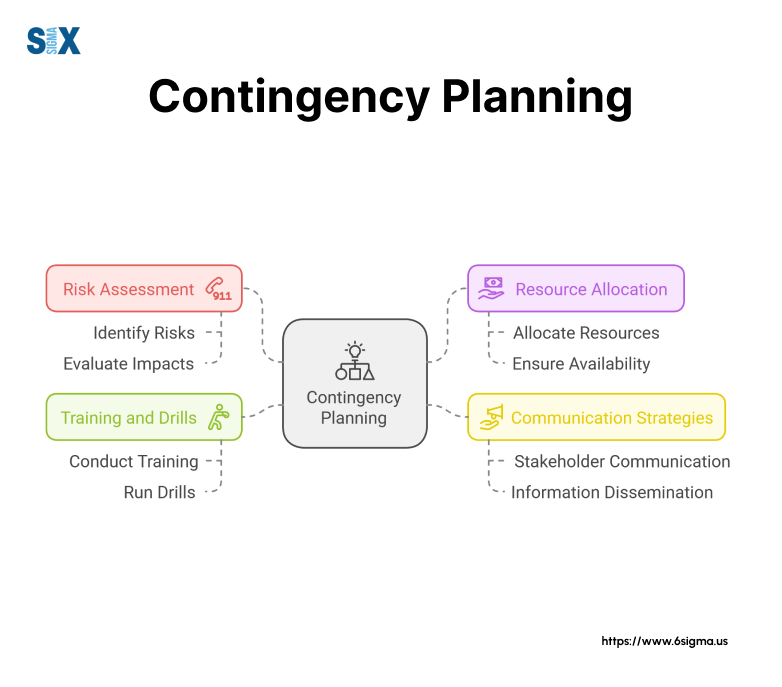
Business continuity plans (BCPs) for OTC desks must address scenarios traditional finance rarely encounters: exchange hacks, blockchain forks, regulatory crackdowns, sudden liquidity droughts, and key personnel unavailability.
Essential BCP components include redundant infrastructure across multiple cloud providers and physical locations, backup trading systems that can activate within 15 minutes, pre-established relationships with alternative liquidity providers, and documented decision trees for various crisis scenarios.
Kraken’s acquisition of Circle Trade exemplifies strategic business continuity planning—by integrating an established OTC desk with deep institutional relationships, Kraken ensured uninterrupted service delivery and expanded market access during a period of industry consolidation. This move protected clients from the operational disruptions that affected smaller desks during the same period.
The critical part: BCPs must be tested quarterly under realistic conditions. Run simulations where your primary exchange is unreachable, your lead trader is unavailable, or a major stablecoin loses its peg. Document what broke, update protocols, and retest. One desk discovered during testing that their backup liquidity provider had changed API endpoints—catching this in simulation rather than during an actual emergency saved them from potential trade failures and strengthened overall disaster recovery readiness.
Risk scenarios evolve constantly. What worked in 2024 may not protect you in 2026. Regular BCP revisions ensure your contingency plans account for new attack vectors, emerging regulations, and shifting market structures.
Conclusion
Selecting the right OTC crypto exchange in 2026 comes down to fit: liquidity depth, security infrastructure, regulatory compliance, and execution speed all matter, but not in the same way for every trader. If you’re handling serious size, the goal is simple—get clean execution without inheriting hidden risk.
The platforms we covered each bring a different “superpower.” Binance OTC remains a liquidity heavyweight. Coinbase Prime is built for compliance-first institutions, especially in the United States. And Kraken provides personalized services for large orders that hit the sweet spot between discretion and exchange-grade infrastructure.
Building on that, don’t underestimate desk structure. Principal execution is about speed and certainty (often with wider spreads). Agency execution is about best execution (often with more time and coordination). Pick the model that matches your operational reality, not just your preferred price.
To summarize: unsurprisingly, there’s no single “best OTC crypto exchange.” You might, however, find the one that matches your strategy, your compliance obligations, and your workflow—including whether you’re optimizing for asset allocation, hedging, or short-term speculation to target a defined return or incremental yield. Stay current, ask direct questions, and keep your process disciplined. In OTC, that’s what separates a smooth trade from a painful lesson.
Frequently Asked Questions
What is the typical OTC minimum order size?
OTC desks typically require minimum trades between $50,000 and $100,000, though this varies significantly across platforms. High-tier services like Kraken OTC might set their floor at $100,000, while regional desks or those targeting mid-sized institutions could accept orders starting at $25,000. The reasoning is straightforward: OTC operations involve dedicated account managers, personalized execution strategies, and manual oversight—all of which need to justify their operational costs.
Some platforms will technically accept smaller orders if you’re establishing a relationship or if market conditions favor it; just don’t expect white-glove service for a $10,000 trade. The minimum exists to ensure both parties benefit from the liquidity and market depth that OTC trading provides.
How fast does an RFQ quote expire?
Request for Quote (RFQ) pricing typically expires within 30 seconds to 2 minutes. Crypto markets move fast, and the quote you receive reflects real-time liquidity conditions at that exact moment. Platforms like Kraken OTC operate with 24/7 execution desks and personalized services, which means their quotes adjust constantly based on order flow and market volatility.
If you’re working with a desk during high volatility (say, a major market dump), expect quotes to expire even faster—sometimes in 15–20 seconds. The dealer can’t hold a price indefinitely when the underlying market is shifting by the second. That’s why decisive order execution matters in OTC: hesitation costs money.
What's the difference between spread and fee?
These terms get thrown around interchangeably, but they’re distinct:
Term What It Means Spread The difference between the buy price and sell price the dealer offers. This is how market makers earn on OTC trades. Wider spreads typically appear in low-liquidity assets or volatile conditions. Fee An explicit transaction charge, often a percentage of the trade or a flat rate. Some desks waive fees for large clients but bake their margin into the spread instead. In practice, you’re paying for both—just in different forms. A tight spread with a transparent fee structure is generally preferable to an opaque wide spread with "no fees."
Should I use exchange custody or third-party custody?
This comes down to control versus convenience. Exchange custody means the OTC desk or platform holds your assets during and after settlement. It’s faster, simpler, and works well if you trust the exchange’s security infrastructure and insurance policies. Kraken OTC, for example, offers personalized services within their custodial framework, which many institutional clients find sufficient.
Third-party custody (like Fireblocks or BitGo) gives you an extra layer of separation. Your assets sit with a specialized custodian, reducing counterparty risk if the exchange faces operational issues. The tradeoff? Settlement can take longer, and you’ll need to coordinate between three parties instead of two.
For most users, exchange custody works fine—especially if you’re trading frequently. If you’re parking large amounts long-term or operating under strict compliance mandates, third-party custody is worth the added friction.
How long does OTC settlement take?
Settlement typically completes within 24 hours for standard trades, though many desks can execute same-day or even same-hour transfers depending on the asset and network conditions. Bitcoin and Ethereum transactions might settle in 1–2 hours once initiated, while assets on faster networks like Solana or Polygon can finalize in minutes.
The variable here is network congestion and the desk’s internal processes. Some platforms batch settlements at specific times, while others like Kraken OTC offer 24/7 execution, meaning your trade can settle immediately if market conditions and network speed align. Wire transfers for fiat settlement generally take 1–2 business days, which can extend the overall timeline if you’re cashing out.
One often-overlooked factor: confirmation requirements. Larger trades might require additional compliance checks, which can add 12–24 hours to the process.
Which crypto assets are commonly supported OTC?
OTC desks prioritize assets with strong market depth and institutional demand. The usual suspects include:
- Bitcoin (BTC) and Ethereum (ETH)—universally supported
- Stablecoins (USDT, USDC, DAI)—high liquidity for fiat-crypto bridges
- Major altcoins (BNB, XRP, ADA, SOL, MATIC)—platform-dependent availability
- DeFi tokens (UNI, AAVE, LINK)—increasingly common at top-tier desks
- Wrapped assets (WBTC, stETH)—for traders navigating DeFi and CeFi
More exotic altcoins or new launches are harder to find OTC unless you’re working with a desk that specializes in emerging assets. Liquidity drives availability, so if an asset has thin order books on exchanges, OTC desks will either charge wider spreads or decline the trade entirely.
Are OTC services available in my region?
Regional access depends on two factors: the platform’s licensing and your jurisdiction’s regulations. Desks operating in the U.S., EU, and Singapore generally serve clients globally, but they’ll restrict access in countries with outright crypto bans (like China) or those on sanctions lists.
Some platforms (Kraken, Coinbase Prime) are transparent about their supported regions in their onboarding documentation. Others require you to apply and go through a compliance review before confirming eligibility. If you’re in a gray-zone jurisdiction, expect to provide extra documentation—and possibly face higher minimums or limited asset selection.
The bottom line: check the desk’s terms of service and ask directly during the application process. Regulatory landscapes shift constantly, and what’s available today might change tomorrow.


