
Best No KYC Crypto Exchanges: Review and Guide


Key Takeaways
- 🔘No-KYC is a label that does not always mean complete privacy, and frankly, should not be viewed as such. What you should expect from “No-KYC” platforms is conditional loosening of the identification requirements of the platform or the fully blockchain-based functionality that still requires you to on-ramp somewhere else.
- 🔘Based on the research performed by our team, we have compiled a shortlist of the most reliable "no-KYC" platforms that provide the optimal conditions without major drawbacks to security or user experience:
- 🔘Centralized exchange (CEX) platforms that got into our list are: MEXC, CoinEx, Bybit and ChangeHero for instant swapping.
- 🔘Decentralized exchange (DEX) we recommend: Uniswap, PancakeSwap, dYdX.
- 🔘Platforms for peer-to-peer (P2P) trading: Bisq, Hodl Hodl, RoboSats.
Contents
- 1. What "No KYC" Means in Practice
- 2. Top No KYC Crypto Exchanges for 2026
- 3. Comparison and Selection Criteria
- 4. Key Considerations, Risks, and Drawbacks
- 5. Legality Challenges of No-KYC Platforms
- 6. Safety and Safe Usage of No-KYC Exchanges
- 7. Buying Crypto with No KYC Using a Credit Card
- 8. P2P No KYC Exchanges
- 9. Conclusion
No-KYC crypto exchanges became a category users actively seek out for being a way to trade cryptocurrencies without submitting government-issued identification documents. Those users usually prioritize financial privacy, want to minimize data collection, or simply prefer streamlined onboarding without waiting for verification processes that can drag on.
Interest in no-KYC exchanges has grown alongside broader privacy concerns in digital finance. As traditional exchanges expand compliance programs and data-sharing practices with regulators, a segment of crypto users looks for alternatives that reduce personal information exposure. This isn’t “anonymity for the sake of it” but control over personal data, protection from potential breaches, and the freedom to transact without attaching your identity documents to every click.
It’s important to mention that no-KYC exchanges aren’t one single “type” of product. Instant swap services focus on quick crypto-to-crypto conversions; decentralized exchanges (DEXs) use smart contracts (code that executes trades automatically on a blockchain) and keep you in control of your funds. Some centralized platforms offer tier-based systems where lower limits work without KYC, while higher limits and certain payment methods require verification—including large global venues that are often discussed in this context.

In this guide, we will examine the top no-KYC crypto exchanges available in 2026 and break them down by privacy protections, supported cryptocurrencies, fee structures, security measures, and user experience. If you’re here because you don’t want to scan your passport just to swap tokens, you’re in the right place. Just keep the goal realistic: you’re choosing a privacy posture, not a magic invisibility cloak.
What "No KYC" Means in Practice
“No KYC” is a label that only sounds absolute, but in practice it’s usually conditional. For example, many platforms allow trading without verification at signup, then introduce identity checks once you hit certain limits or trigger certain risk flags. In other words: “no KYC now” doesn’t always mean “no KYC forever.”
Common Thresholds and Triggers for KYC After Limits
Most no-KYC exchanges use withdrawal or deposit thresholds that trigger identification requirements once crossed. Some allow users to withdraw up to 2 BTC per day without verification, while others set limits at $1,000 or €5,000 equivalent daily.
Here’s the key part: thresholds vary wildly. One exchange might enforce a cumulative monthly cap before asking for documents, while another watches a rolling 24-hour window. Some combine triggers—like a withdrawal limit and a transaction-frequency cap. Make enough small withdrawals, and you can still get flagged.
Also, these thresholds aren’t always obvious upfront. You might trade for weeks without friction, then hit a sudden KYC request on what feels like a routine transaction. So, reading the fine print before you deposit saves a lot of stress later.
Account vs Transaction-Level Identification
Account-level KYC is the “classic” model: your verification status applies to your whole profile, and your limits follow that status. Verified accounts get higher limits and vice versa, unverified accounts face broader restrictions.
Transaction-level identification, found on platforms such as instant exchangers, is more situational. You might do many small trades, then trigger verification because one withdrawal is large—or because the exchange’s risk system doesn’t like the pattern. That makes KYC harder to predict, especially given that these patterns are almost never public. In that case, you’re operating under conditional anonymity that can disappear at the worst possible time.
Common Misconceptions
The biggest misconception is that no-KYC equals full anonymity. Most platforms still see IP addresses, device fingerprints, wallet addresses, and transaction metadata. That information can be logged, correlated, and in some cases compelled by legal requests. Reminiscent of blockchain’s pseudonymity, isn’t it?
Another misconception, which is crucial to address, is that no-KYC platforms are automatically “rogue.” Some are registered businesses operating within specific thresholds or legal interpretations; others are decentralized protocols that aren’t “companies” in the usual sense. Either way, “no KYC” is a design choice—but still not a guarantee of zero records.
And lest you forget: blockchain transactions are permanent trails. The exchange might not have your passport, but your on-chain activity still exists forever.
Top No KYC Crypto Exchanges for 2026

Spoiler alert: do not walk into this guide expecting one single best no-KYC crypto exchange for everyone. In fact, the list is not in any particular order. The “best” depends on what you’re optimizing for: instant swaps, deep liquidity, derivatives trading, or full self-custody through a DEX. Not to mention, each platform can be drastically different by design to others in the niche.
MEXC
MEXC operates as a centralized crypto exchange that allows trading without mandatory identity verification for withdrawal limits up to 20 BTC daily (keep in mind that conditions may apply). The platform supports over 2,400 trading pairs and provides spot trading, futures, and margin trading features. Users can deposit crypto and start trading immediately, though payment method options expand significantly after completing KYC. The exchange implements robust security measures including cold wallet storage for the majority of user funds and two-factor authentication.
CoinEx
CoinEx lets users trade cryptocurrencies with a 10,000 USDT daily withdrawal limit before requiring verification. The platform offers perpetual contracts, spot trading, and automated market maker (AMM) features. Founded in 2017, it supports hundreds of trading pairs and provides relatively high liquidity for major cryptocurrencies. By CEX standards, the learning curve is minimal, which helps if you’re newer and want privacy without extra complexity.
Bybit
One of the largest market players, Bybit maintains a tiered verification system where unverified accounts can withdraw up to 20 BTC worth of crypto daily. The exchange specializes in derivatives trading with up to 100x leverage on certain pairs, though spot trading is also available. Security features include multi-signature cold wallets and mandatory two-factor authentication. The interface works for beginners, but the more advanced tools can keep experienced traders happy.
dYdX
dYdX operates as a decentralized exchange built on blockchain technology, eliminating KYC requirements entirely. Users trade perpetual contracts directly from their non-custodial wallets, maintaining complete control over their funds. The platform supports cross-margin trading and offers competitive fees through its token rewards program.
The trade-off is straightforward: limited fiat on-ramps and a steeper learning curve if decentralized finance (DeFi) is new to you.
Uniswap
Uniswap pioneered the automated market maker model on Ethereum, allowing completely anonymous token swaps. Users connect their Web3 wallets and trade directly without creating accounts. The protocol supports thousands of ERC-20 tokens, with pricing determined by liquidity pools.
On top of the same limitation concerning fiat on-ramps to use Uniswap, gas fees on Ethereum can be painful during congestion, though Layer 2 implementations that this DEX supports can reduce costs.
PancakeSwap
PancakeSwap offers a similar DEX experience on BNB Smart Chain, typically with lower transaction fees than Ethereum-based swaps due to living on the alternative blockchain network. What’s more, it adds extras like yield farming and lottery-style features. Trades execute from your wallet, so anonymity remains intact.
As for the fair warning about the downsides, for one, liquidity is usually fine for major pairs, while obscure tokens can have thin depth.
Bisq
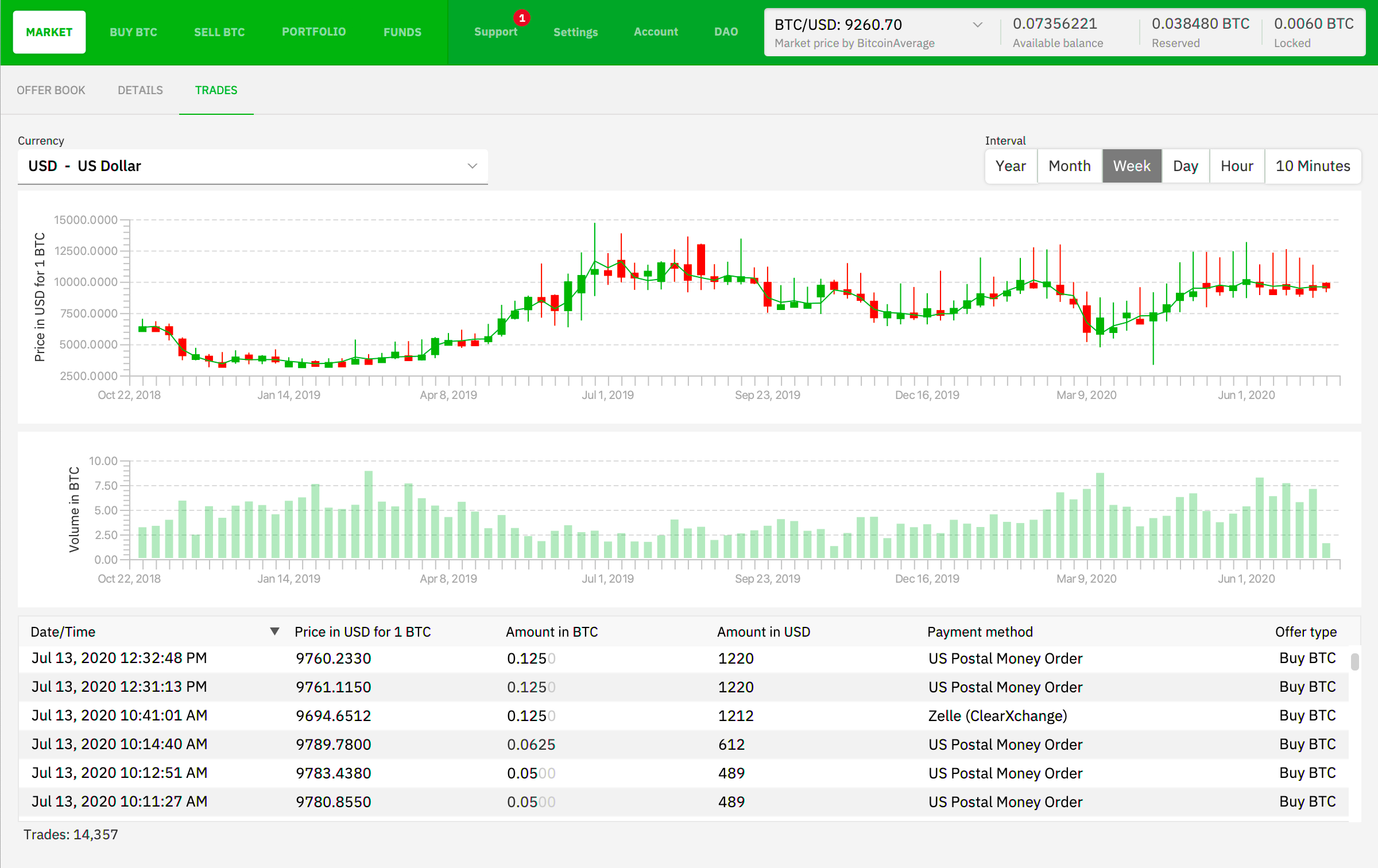
In 2026, Bisq is about as close as it gets to “true P2P.” This open-source desktop application connects buyers and sellers directly, supporting (which just means “letting you specify”) numerous fiat payment methods including bank transfers and cash deposits. There’s no registration, no withdrawal limits, and a strong privacy posture.
The downside is also predictable: longer settlement times (often 1–8 days depending on payment method) and much, much lower liquidity than a typical centralized venue.
HODL HODL
HODL HODL is another option that facilitates P2P Bitcoin (BTC) trading without holding user funds. Trades occur through multisignature escrow directly between users, with the platform acting only as a mediator. It supports various payment methods and doesn’t require registration for browsing offers. Users need to create accounts only when initiating trades, and identity verification is never mandatory.
Expect premiums on some offers: P2P sellers price at their own risk and convenience.
RoboSats
RoboSats is a privacy-focused P2P exchange particularly interesting for being built on the Lightning Network, Bitcoin’s Layer 2 scaling solution. Trades settle faster than on-chain transactions, and the platform generates temporary identities for each session (great for privacy!).
The trade-off is smaller trade sizes and a more technical setup—Lightning is easy once you get it, but it’s still a learning curve.
ChangeHero
ChangeHero, officially defined as an “instant cryptocurrency exchange platform”, functions as a cryptocurrency exchange rate aggregator, comparing them across multiple platforms in real time to find optimal prices. Users don’t create accounts—they enter recipient addresses and swap.
The service allows swaps without registration for amounts under certain thresholds, though larger transactions can trigger automated verification requests. It supports over 500 cryptocurrencies and offers fixed-rate and floating-rate options.
Processing times for swaps through ChangeHero usually land between 5 and 30 minutes, depending on network conditions. Fees, which seem higher than on CEXs but are rolled into quote, include fixed charges plus network costs.
Bitcoin Well
Bitcoin Well (formerly Bull Bitcoin) focuses exclusively on Bitcoin purchases without KYC for Canadian residents up to CAD 999 every 24 hours. The service is non-custodial—coins go directly to a user-specified address. It supports bill payments and voucher purchases at physical locations. Outside Canada, the platform requires verification but still emphasizes privacy practices.
Haveno
Haveno emerged as a decentralized successor to LocalBitcoins, running on the Monero network. This P2P platform requires no registration and uses multisignature escrow. Users can trade Monero for fiat currencies and other cryptocurrencies without sacrificing any privacy, which is the main draw to use XMR. Given the niche, though (P2P plus Monero plus privacy-focused), liquidity leaves a lot to be desired.
Comparison and Selection Criteria
Any type of crypto exchanges requires a more careful checklist than “sign up, deposit, trade” but platforms with loose KYC requirements even more so. The absence of identity verification even on the best no-KYC exchanges still shifts a lot of responsibility onto you. Before committing to using any platform, verify it against these criteria that matter most before you give a vote of confidence with your wallet.

Photo by Sable Flow on Unsplash
Trust Signals
Like it or not, KYC compliance is a major trust anchor. What do you do without it? These platforms instead try to build credibility through transparency, reputation, and (sometimes) audits.
Trustworthiness for centralized exchanges can manifest in proof-of-reserves disclosures, a track record of stable operations, and clear security practices, for a start. For decentralized projects, smart contract audits from firms like CertiK or Quantstamp can help validate that the code handling funds really does what it claims.
Independent user feedback can be useful too, although it requires an eye to be able to discern legitimate feedback from paid noise. Longevity matters as well: a platform that has been operating for years without major incidents can say more about itself than even the sleekest banner ad ever will.
Fees
Fees are a major factor in choosing any trading platform too but with no-KYC platforms it can get especially tricky. They can be obvious (trading fees) or more sneaky (spreads, routing costs, network fees). Given the variety of products that land under the no-KYC platform umbrella, the fees there often land around 0.1% to 1% per trade on the lower end. Instant swap services can charge fixed fees plus network costs, and DEX trades add gas fees.
Here’s the important detail: the “hidden spread markup” can quietly cost you more than the advertised fee. When comparing platforms, check the actual rate you receive against a reputable market price source and watch for price slippage.
Liquidity
Building on the previous factor, liquidity also decides the difference between a smooth trade and a painful surprise. High-liquidity venues fill orders quickly near market price; this is more common on CEXs or major DEX platforms. Low-liquidity venues like P2P markets or less popular DEX pairs create noticeable slippage—in these conditions, 3–5% or more on larger orders can seem like a nice deal.
DEX liquidity is like this due to being fragmented across pools and chains, L2s included. The same token pair might trade efficiently on Uniswap but poorly on PancakeSwap (or vice versa!). To avoid unpleasant surprises, it may be worth it to test with a small trade first, then scale up if execution looks reasonable.
Asset Coverage
You might have already noticed in the previous section that this type of crypto platform has quite a few entries that choose to focus on one crypto asset. You’re right to notice: no-KYC exchanges are more likely to support fewer assets than the biggest KYC-heavy platforms. The mix, if it’s even a mix, is often more “core” (Bitcoin, Ethereum, Monero, and other high-cap coins).
DEXs are the exception to this rule: if a token has a liquidity pool, it can trade. That’s all it takes. That same simplicity is a magnet for risky, low-quality tokens rather than “hidden gems”. In other words, ease of access and safety are two completely different concepts.
Withdrawal Limits

Another pattern that you might also have noticed in the rating is CEXs impose a limit on how much users can withdraw without identity verification. Trading fees may not matter as much when you are choosing where to trade KYC-free but these limits become almost the defining factor for the choice.
Daily withdrawal limits can range from low fiat equivalents to multi-BTC thresholds. Some platforms use tiers, some use rolling windows, but all of them have conditions that you must meet if you want to use a platform without KYC. Non-custodial protocols, on the other hand, effectively have “no limit” at all because you’re never asking permission to withdraw your own funds.
Limits exist partly for compliance risk management; a platform is taking on some risk if they allow you to trade unverified. What matters for you is knowing their conditions from the get-go: if you might need to move a larger amount quickly, don’t learn your limits the hard way.
Wallet Compatibility
It wouldn’t be an understatement to say that for DEXs, wallet compatibility is everything. In that regard, WalletConnect is a real lifesaver that can make mobile trading much easier on a large variety of crypto wallet apps. Non-custodial wallet options like MetaMask, Trust Wallet, and Ledger hardware wallets matter to users who want to trade privately because they let you interact with protocols without giving up control over your funds via private keys.
Centralized no-KYC exchanges are usually compatible with standard deposit/withdraw formats, but you still want to check supported networks. Sending assets on the wrong chain is a classic (and expensive) mistake.
Customer Support
Customer support in no-KYC environments is often pseudonymous: tickets, Telegram, Discord, and community moderators. Due to the sheer variety of the channels, response times can also range from hours to days.
One practical tip: before depositing meaningful funds, test support with a basic question. If you get no response for 72 hours, that’s a signal worth taking note of—especially because account recovery is harder without identity verification.
Key Considerations, Risks, and Drawbacks
It should be clear by now that no-KYC crypto exchanges remove one friction point (i.e. identity checks) at the cost of many others. In a way, it’s like driving without a seatbelt: sure, you’re more free to move, but you are at a much larger risk that may not even be worth it.
Legal and Regulatory Exposure
Regulators never cease to target platforms that facilitate anonymous transactions, shrinking the pool of choices with each passing year. The European Union’s Markets in Crypto-Assets (MiCA) regulation, effective from 2024, explicitly prohibits exchanges operating within EU jurisdictions from offering services without identity verification. Users accessing any no-KYC platforms from restricted regions face potential legal consequences, including fines and asset seizure.
Jurisdictional ambiguity makes this even harder to navigate. A platform can be legal where it’s registered and still be off-limits where you live. Exchange’s HQ address may not even matter if you live where all things crypto are banned.

Photo by Obi on Unsplash
Account Freezes, Forced KYC, and Withdrawal Holds
Due to that, no-KYC policies can change quickly. For example, ShapeShift’s pivot to mandatory verification is a classic example of users being pushed into retroactive KYC. More broadly, platforms can introduce “enhanced review” holds with no clear timeline—and during that time, withdrawals may be blocked altogether.
If you keep large balances on an exchange, policy changes become personal. You are exposed to disproportionately higher risks if you are not the owner and custodian of your own funds, but keep in mind that ShapeShift used to be considered a relatively loose enforcer of user identification in another time.
Custody Risk (CEX Solvency and Access)
Letting a CEX hold your assets on your behalf is risky not just because of account freezes. If the platform becomes insolvent—like QuadrigaCX (2019) or FTX (2022)—users may face long recovery processes, if they are able to be compensated at all. And without verified identities, bankruptcy proceedings can become even messier.
In cases like these, identification and account verification is not a pesky inconvenience and privacy sacrifice but the only chance of ever seeing your crypto assets again.
Counterparty Risk (P2P and OTC)
Broadly speaking, counterparty risk is understood as one that hinges on trust in the other party in the deal. It is present on CEXs, as we discussed, but this is not to say that other non-custodial options are exempt.
P2P trading also means you put trust into individual counterparties. It can somewhat be alleviated with escrow, provided by the platform, which is a third party but normally more trustworthy than an anonymous seller. Other things that you have to trust to the platform in case of a dispute are logs, screenshots, and their judgment.
Be mindful of reversible payment methods: there is quite an obvious risk. This is especially relevant on large P2P marketplaces, where screening counterparties and choosing safe payment rails becomes central.
Over-the-counter (OTC) deals raise the stakes further because the amounts involved are usually larger. Worst case? A default on a big trade is painful—and you likely won’t have regulatory arbitration as a fallback.
Smart Contract Risk (DEX Exploits)
Centralized platforms have risks, non-custodial exchanges are not an exception, and neither are DEXs! They run on smart contracts, and smart contracts just like any other code can have bugs at best and oversights at worst. The 2023 Euler Finance exploit drained $197 million through a flash loan attack targeting contract logic flaws. And unlike centralized platforms, DEX users can’t reverse transactions or let you “call support”!
Building on that, unaudited or brand-new protocols are higher risk. Of course, you do not have to be a smart contract developer to trade on a DEX but if you can’t read and audit the contract, you put your trust in it. Quite an uncomfortable tradeoff but one that can’t be avoided.
Scam and Impersonation Risk
No-KYC environments attract scams because the barriers to entry are lower than usual. Phishing sites copy interfaces and use lookalike domains (could be “changehero-io.com” vs changehero.io). Fake support accounts posing as employees of legitimate platforms appear in Telegram and Discord, looking for victims in groups. Some of the worst of them all, fake “recovery services”, promise miracles for upfront fees.

Photo by Muhammad Irfan on Unsplash
A good rule of thumb to help you avoid those scenarios is to treat urgency as a red flag. It’s a good idea to bookmark official URLs since search engine results can contain phishing sites; they move quickly but sometimes, scammers are quicker. Last but not least, never take “support” advice from unsolicited DMs and do not think of sharing sensitive data such as private keys or recovery phrases with no one, them especially.
Privacy Pitfalls (Chain Analysis, Metadata, IP Logs)
A common misconception that is somehow still around is that blockchain makes you anonymous. It is, in fact, the opposite: blockchain’s transparency enables chain analysis. Even without KYC, platforms may (quietly or not) log IP addresses, device identifiers, and wallet addresses. Combined with other data, that metadata can connect activity to real identities.
And yes, platforms can share logs under legal compulsion. No-KYC is a reduction in identity collection but definitely not a guarantee of zero traceability. And honestly, it shouldn’t always be.
Tax Obligations and Recordkeeping
Before the thought crosses your mind: “no KYC” does not mean a free pass to evade taxes. They don’t care whether you went through KYC or not! Most jurisdictions treat any crypto trades as taxable events. Moreover, no-KYC exchanges usually don’t provide tidy tax documents for reporting purposes, so recordkeeping becomes your job: tracking dates, amounts, wallet addresses, hashes, and cost basis.
At the same time, poor records can make your tax outcome worse, if not as bad as evading them. Without cost basis documentation, authorities may treat your sale proceeds as gains, not just your profits.
Legality Challenges of No-KYC Platforms
Compliance Landscape
Just like any other crypto platform, no-KYC crypto exchanges exist in a fragmented regulatory world but for this niche, the differences can be even more radical. In the United States and European Union, AML/CTF frameworks like the Bank Secrecy Act and the Fifth Anti-Money Laundering Directive (5AMLD) push exchanges toward identity verification, especially above certain thresholds.
On the other hand, jurisdictions like El Salvador, Singapore (with specific exemptions), and some Eastern European countries can be more permissive, especially for small-scale crypto-to-crypto activity. International bodies like the Financial Action Task Force (FATF) also push the “Travel Rule,” recommending user information sharing for transactions above $1,000.
Compliance overall isn’t binary. Many no-KYC platforms structure themselves around lighter enforcement zones or classify themselves as software providers to avoid stricter definitions without falling into too much of a gray territory.
Enforcement Risk
Enforcement likewise depends on jurisdiction and visibility. In the U.S., FinCEN and the Department of Justice have pursued operators of unregistered exchanges, including BTC-e. However, users are less commonly prosecuted for using no-KYC platforms unless activity connects to other offenses like money laundering or tax evasion.

Photo by Bruno Martins on Unsplash
The larger practical risk for users is platform disruption, disproportionately high for platforms that try to play loose with the law: they can face domain seizures, banking cutoffs, or sudden access restrictions. If you’re moving large volumes or creating suspicious patterns, your risk profile changes, and as you might already know, conditions apply. Countries with capital controls may monitor crypto activity aggressively, including P2P transactions.
Tax Reporting
Tax obligations apply regardless of the involvement of KYC in the process. In the United States, Canada, and the UK, capital gains and losses must be reported even if the exchange never asked your name.
Here’s where it gets tricky: while the exchange may not report you, blockchain transparency can still connect wallets to identities through other touchpoints like bank transfers or later use of KYC exchanges. The IRS has used blockchain analytics firms in enforcement actions, including penalties that can reach 75% of underpayment for willful evasion. The takeaway stays the same: no-KYC is not a tax exemption.
Safety and Safe Usage of No-KYC Exchanges
No-KYC crypto exchanges require you to pay extra attention because anonymity cuts both ways. If you lose access or get scammed, there’s often less support and fewer recovery paths. The good news is that a few habits make a huge difference.
Operational Security (OpSec) Basics
“Employing OpSec” can sound threatening if you are a non-technical person but you might already be doing this as a part of digital hygiene or security best practices. If not, what are you waiting for?
Use unique, randomly generated passwords for each platform. To be fair, a long but human-readable password is tougher to brute-force but human memory is too fallible to rely on this method. A password manager like Bitwarden or 1Password makes this a more realistic method.
Wherever possible, enable two-factor authentication (2FA) using an authenticator app like Google Authenticator or Authy rather than SMS-based 2FA (SIM swaps are still a thing). Backup codes, as well as other sensitive information, are best kept somewhere safe and away from the passwords.
Wallet Setup
Securing your wallet is already half of the job of using crypto securely. Non-custodial wallets, which mean you control the private keys, are the safest bet most of the time, albeit this arrangement places the responsibility on you. Software wallets like MetaMask or Trust Wallet are common starting points.
For larger balances, hardware wallets like Ledger or Trezor reduce the risk of online attacks by keeping private keys offline. Confirming transactions on the device itself helps prevent remote attacks. If you send your funds to a fraudulent party, though, most likely no one would be able to help.
Deposit and Withdrawal Hygiene
When depositing and withdrawing, triple-check destination addresses, even the saved ones. Remember that crypto transfers are irreversible.
If you want to withdraw a large amount, do a small test transaction first. Though it’s true that you will have to pay the extra network fee on it, it’s still less of an expensive mistake than sending a big amount into the void.
Phishing & Address Poisoning Avoidance

Adding to the previous section that discussed scams and phishing, here are a few more safety tips. First, it’s safer to bookmark the official exchange URL and use that bookmark every time. Next, keep it a rule not to log in via email links, especially in unsolicited ones.
If it’s your first time on a website and you got there through a link, check the domain carefully. Scammers generally rely on you being in a hurry or simply too careless to double-check.
Speaking of checking addresses, there is this method called address poisoning. It tries to trick you by putting lookalike addresses in your transaction history. The ruse may be sophisticated but the defense against it is not, and that’s why it works: verify the full address against a saved record, not your history list.
Device Security
Though system updates rarely contain bugs that get exploited and need hotfixes, keeping your OS and apps updated is still recommended most of the time.
When you are using a public WiFi, trading can and should wait. Logging on a platform where you do it exposes you to too much risk of interception. If you must, use a trustworthy VPN to protect traffic from local network snooping—but remember that some exchanges treat VPN usage as a risk signal, especially in restricted regions.
Buying Crypto with No KYC Using a Credit Card
Buying crypto with a credit card and keeping it no-KYC is one of the hardest combinations to pull off. Payment networks and fraud systems don’t like anonymous card purchases for obvious reasons. Is it even possible? The answer is yes; just don’t expect that you will stay completely anonymous 100% of the time.
Availability
Platforms that allow no-KYC credit card purchases are rare for a variety of reasons. Visa and Mastercard impose strict compliance expectations on merchants, crypto platforms included, and most regulated crypto exchange platforms can’t bypass those requirements if they don’t want law enforcement to come knocking at their door. Nevertheless, even the FATF “travel rule” allows some leeway, which crypto on-ramps can use.
Some P2P or decentralized services claim to support this payment method, but availability can still be limited, especially in the U.S. and EU. Even when a platform technically supports card buys, issuers may block the transaction anyway.
Bitcoin ATMs sometimes accept credit cards (debit is more common; cash is almost universal), but their no-KYC thresholds are often low and highly location-dependent.
Limits and Fees
If you do find a workable option, limits are usually tight—often $50–$200 per purchase, with low monthly caps to consider as well. Inconvenient but it’s how platforms reduce fraud exposure and stay solvent and compliant.
As mentioned before, fees for this category of platforms are typically high: 3–8% is not uncommon, and 10%+ happens once you add extra fees, spreads, and “risk premiums.” Some card issuers treat crypto purchases as cash advances, adding additional fees and immediate interest.
Chargebacks
Very much unlike crypto transactions, credit cards allow chargebacks. That mismatch is exactly why most legitimate platforms require identity verification before accepting credit cards.

Credit/source: Stripe.com
On platforms that do allow anonymous card buys, you may see long holds (up to 180 days) or aggressive risk controls that introduce so much friction in place of not having to go through KYC that it may just defeat the purpose altogether.
Fraud Controls
To manage other kinds of risk, platforms may use device fingerprinting, IP checks, velocity limits, and behavioral scoring. If you’re attempting card purchases on a CEX, expect 2FA requirements and possible withdrawal restrictions.
The practical reality is simple: secure, anonymous credit card purchases are strictly limited, if available at all. If anonymity is the priority, cash-based methods (like some Bitcoin ATMs) or P2P trades are usually more realistic; granted, they come with their own issues and limitations.
P2P No KYC Exchanges
As the name implies, P2P platforms match buyers and sellers directly. That can improve privacy (no centralized account profile), but it also means you’re responsible for choosing safe payment methods and, as much as these platforms try to help, avoiding bad counterparties.
Payment Methods
Payment methods supported (most often means mentioned; the rest is up to the parties) vary in privacy and risk. Consider these facts: bank transfers are somewhat convenient but inevitably leave trails; cash (in-person or deposit) is more private but requires trust and coordination. Gift cards can be privacy-friendly but are high-fraud in many marketplaces. Reversible apps like PayPal or Venmo can be just as risky as bank cards due to chargebacks.
Escrow & Dispute Resolution
On most platforms where it’s available, escrow is the backbone of P2P safety. The way it’s supposed to work is that the platform (or a smart contract) holds the crypto until payment is confirmed, reducing the chance that one side vanishes mid-trade.
After all, without escrow, you’re essentially trading on trust with a stranger. Considering that most of the time you won’t know who it is, the incentive to take the money and disappear is too high.
When disputes arise, they are usually handled with evidence: receipts, screenshots, and chat logs. Moderators decide the outcome of the dispute, typically within 24–48 hours. Reputation systems, present on a lot of the P2P platforms, can help, but they’re not perfect—accounts get compromised, and scammers adapt.
Scam Patterns
The P2P scamming landscape is a peculiar one; if you want to commit to this method of trading, take some time to learn from others’ mistakes. Expect to see some common patterns: fake payment confirmations, chargeback fraud, account takeovers, and attempts to move trades off-platform “to save fees.” If it’s not obvious, each one of those is a huge red flag.
What to do to avoid P2P-specific fraud? Verify payments inside your bank/payment app, not via screenshots. If possible, never trade outside escrow. Traders with long, consistent histories are less likely to sabotage their reputation—unless their account was compromised or sold. And one more tip: for large amounts, try to negotiate breaking the trade into smaller parts.
Conclusion
No-KYC crypto exchanges offer a practical alternative for users who value privacy and speed. Removing identity checks can mean faster onboarding and fewer personal data exposures. That’s the upside.

Satoshi Nakamoto by Valentina Picozzi on display at NYSE. Source: NYSE on X
The trade-off is responsibility. Platform quality varies, and the risks are real: policy changes, account freezes, custody risk on centralized venues, smart contract exploits on DEXs, and scams everywhere anonymity is possible. In simple terms, no-KYC doesn’t erase risk or friction—just rearranges them.
If you want the best no-KYC crypto exchange for your situation, focus on the fundamentals: trust signals, fees (including spreads), liquidity, withdrawal limits, and whether you prefer custodial convenience or non-custodial control. Then pair that choice with strong OpSec, careful wallet habits, and clear awareness of your local legal and tax obligations.
FAQs
Can I Trade Anonymously Without KYC?
Trading without KYC removes identity verification, but full anonymity usually requires additional steps. No-KYC exchanges won’t tie activity to your legal name through documents, but blockchain transactions remain traceable unless you actively protect your privacy.
Some users use VPNs and privacy-focused cryptocurrencies like Monero or Zcash, or route funds through multiple wallets. The important detail is that “no-KYC” and “anonymous” are related, but not identical.
Do No-KYC Exchanges Have Withdrawal Limits?
Many do. Limits can be daily, monthly, per-transaction, or tier-based. DEXs often have no centralized withdrawal limits because you’re trading from your own wallet.
If you anticipate larger withdrawals, check the platform’s current withdrawal policy before depositing. Policies can change, and surprises here are rarely pleasant.
Are No-KYC Exchanges Safe?
They can be, but safety varies. Some platforms use strong security practices—cold storage, 2FA, audits, and transparent operations. Others don’t.
The real difference is recourse. With less regulation and weaker identity links, account recovery and dispute resolution can be harder. That’s why platform selection and personal security habits matter more than usual.
Can I Buy Crypto with Fiat Without KYC?
Sometimes, but it’s less convenient. Credit cards and direct bank purchases often trigger verification even within permitted limits. P2P platforms (cash, bank transfer, gift cards) and some crypto ATMs can work, but fees can be higher and the process less streamlined.
What Happens If an Exchange Later Requires KYC?
Usually you’ll get a transition period. Your options are to complete KYC or withdraw funds before enforcement begins.
The best defense is simple: don’t store significant funds on exchanges long-term. Withdraw regularly to your own wallet so policy changes don’t trap your assets. Some traders also diversify across multiple no-KYC platforms to reduce the impact of forced-KYC shifts, and on P2P desks (including models associated with HodlHodl) they also diversify counterparties and payment rails to reduce single-point failure.


