
What Is Bitcoin Cash (BCH)? Beginner’s Guide


Key Takeaways
- Bitcoin Cash (BCH) is not Bitcoin (BTC) — it’s a separate SHA-256 proof-of-work blockchain with its own rules, history, nodes, and market.
- Born from the 2017 hard fork at block 478558 (Aug 1, 2017) — the split was driven by a scaling dispute, with BCH prioritizing on-chain capacity and implementing replay protection to prevent cross-chain transaction accidents.
- Core design goal: peer-to-peer electronic cash — BCH optimizes for low fees and routine payments (retail, remittances, micropayments) by expanding block capacity instead of relying primarily on second layers.
- Scaling mechanics: larger blocks + ABLA (2024) — BCH moved from fixed block-size increases to the Adaptive Block Limit Algorithm, which adjusts capacity based on demand; this boosts throughput but raises node bandwidth/CPU/storage requirements (a real decentralization trade-off).
- Fees are usually sub-cent, but not “free” or guaranteed — what you pay is driven by transaction size in bytes (inputs/outputs) and wallet fee policy (often ~1 sat/byte); dust limits and miner relay policies still apply.
This is purely informational content—not financial, tax, or legal advice—and cryptocurrency markets carry substantial risk; any decision involving BCH should be made with independent research and professional guidance where appropriate.
Bitcoin Cash (BCH) is a peer-to-peer electronic cash system that split from Bitcoin in 2017, designed to function as a faster, lower-cost medium for everyday transactions rather than primarily as a store of value. If you've heard of Bitcoin but are puzzled by the "Cash" variant, this guide answers what Bitcoin Cash is, how it differs from Bitcoin (BTC), and when people choose to use it over other cryptocurrencies.
Overview of Bitcoin Cash
Bitcoin Cash (BCH) is a standalone blockchain that uses proof-of-work to operate as peer-to-peer electronic cash. As a Bitcoin fork, the network exists as an independent ledger, not a Bitcoin sidechain or token, and maintains its own block history, node software, and protocol rules since 2017. Bitcoin Cash was created through a chain split from Bitcoin, when a group of miners, developers, and node operators executed a hard fork that modified consensus-critical parameters to accommodate a different transaction throughput model. The result is a distinct cryptocurrency that shares Bitcoin's cryptographic foundation but diverges in on-chain capacity and design philosophy and even politics.

Key identifiers:
- Ticker: BCH
- Network name: Bitcoin Cash
- Consensus algorithm: Proof-of-work (PoW)
- Hash algorithm: SHA-256
- Supply cap: Fixed maximum of 21 million BCH, identical to Bitcoin's hard cap model
Bitcoin Cash was created as a result of a hard fork from Bitcoin at block 478558 on August 1, 2017, triggered by disagreement over on-chain scaling strategy. After that block, Bitcoin (BTC) continued under its existing consensus rules, while Bitcoin Cash nodes began accepting blocks under the modified ruleset, creating a permanent separation in transaction history from that point forward.
Bitcoin Cash was designed to serve a specific use case that its supporters believed Bitcoin's then-current trajectory was compromising: direct peer-to-peer transactions for everyday commerce. The design decisions embedded in the fork — larger block size, modified difficulty adjustment, and replay protection — all point toward optimizing for a particular kind of transactions: frequent, low-value payments settled on-chain rather than deferred to second-layer protocols.
History
The 2017 Bitcoin Cash Fork
When the Bitcoin Cash chain split from the Bitcoin blockchain on August 1, 2017, it created a permanent divergence that duplicated every holder's balance across two separate networks. The split was not in a moment but the direct result of a years-long scaling dispute within the Bitcoin community: one faction advocated for increasing the on-chain block size limit to handle more transactions per block, while the opposing camp favored alternative scaling solutions like Segregated Witness (SegWit) and second-layer protocols such as the Lightning Network. When consensus could not be reached through Bitcoin Improvement Proposals (BIPs), the block-size proponents executed a hard fork—a protocol change incompatible with the existing Bitcoin rules—that effectively created a new chain with its own ruleset.
At the moment of the fork, users holding Bitcoin received an equivalent amount of Bitcoin Cash on the new chain, a phenomenon often described as "asset duplication." However, this duplication was not automatic in wallets or exchanges; holders needed to claim their BCH by importing their private keys into a Bitcoin Cash-compatible wallet or waiting for their exchange to credit the forked tokens. The two chains implemented replay protection—a technical safeguard that prevented a transaction signed on one chain from being unintentionally broadcast and executed on the other—ensuring that users could transact on Bitcoin and Bitcoin Cash independently without cross-chain interference.
The immediate technical parameter change that distinguished Bitcoin Cash at launch was the increase of the maximum block size limit from Bitcoin's 1 MB to 8 MB, a design decision aimed at increasing on-chain transaction throughput and reducing fee pressure during periods of high network activity.
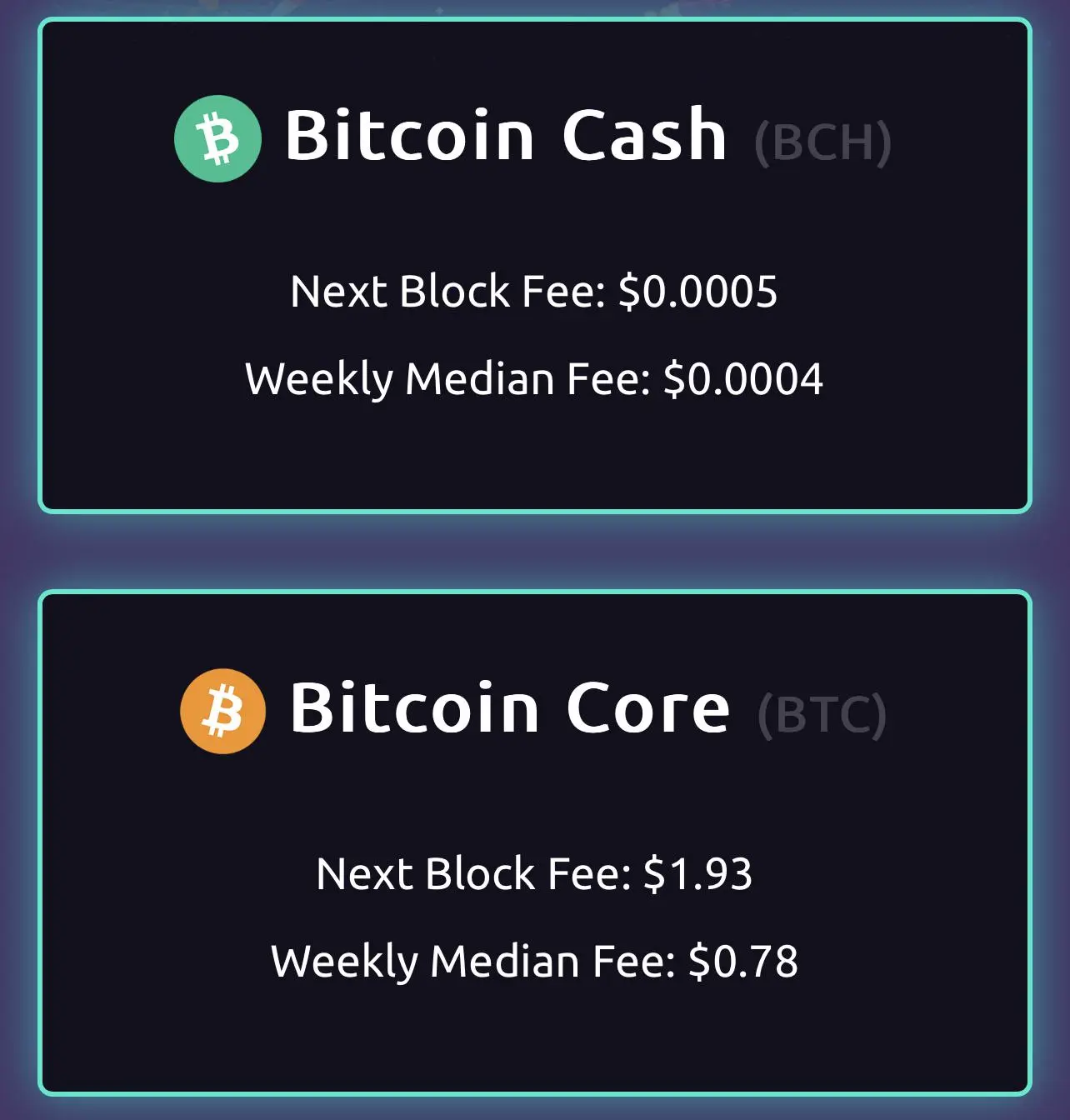
Bitcoin Cash's proponents positioned the new chain as a return to Bitcoin's original vision as peer-to-peer electronic cash, arguing that larger blocks would keep transaction fees low enough for everyday payments rather than relegating Bitcoin to a "store of value" role. The immediate practical effect was observable in fee differentials: during Bitcoin's late-2017 congestion peaks, median transaction fees on the BTC network sometimes exceeded $20, while Bitcoin Cash fees remained under $0.10.
The 2018 Bitcoin SV Fork
The Bitcoin Cash community itself fragmented in November 2018 when two competing protocol upgrade proposals—Bitcoin ABC and Bitcoin SV (Satoshi Vision)—could not reconcile further actions to improve scaling and protocol direction. Bitcoin SV advocated for a more aggressive increase in the block size limit to 128 MB and a restoration of original Bitcoin opcodes that had been disabled in earlier versions, arguing this represented a "purer" interpretation of Satoshi Nakamoto's original design.
The disagreement extended beyond technical parameters into governance philosophy: ABC's camp favored a developer-led, iterative upgrade path, while SV's supporters argued for minimal developer intervention and maximum on-chain data capacity. When neither side agreed to compromise, the network underwent another chain split on November 15, 2018, resulting in two distinct chains: Bitcoin Cash (BCH) and Bitcoin Satoshi Vision (BSV).
Mining pools had to further divide their hashrate between the two chains, with some pools temporarily redirecting resources from Bitcoin (BTC) mining to participate in what became known as the "hash war"—a brief period of competitive mining aimed at establishing chain dominance through proof-of-work accumulation. Exchanges and wallet providers were forced to choose whether to support one chain, both chains, or neither, leading to inconsistent user experiences. The split also fragmented developer talent and community attention, as projects built on Bitcoin Cash had to decide whether to remain neutral, support both forks, or align exclusively with one chain's technical direction. For newcomers entering the space after 2018, the existence of Bitcoin (BTC), Bitcoin Cash (BCH), and Bitcoin SV (BSV) created narrative confusion—three chains with overlapping names, each claiming legitimacy as the "real" Bitcoin.
Subsequent Milestones in Bitcoin Cash Evolution
Following the 2018 fork, the Bitcoin Cash (BCH) chain pursued a development path distinct from both Bitcoin and Bitcoin SV. In May 2023, Bitcoin Cash activated CashTokens, a protocol upgrade enabling the creation and transfer of fungible and non-fungible tokens directly on the BCH blockchain without requiring a separate token standard or second-layer solution. In May 2024, the network implemented the Adaptive Block Limit Algorithm (ABLA), which replaced the fixed block size cap with a dynamic adjustment mechanism that allows the maximum block size to increase or decrease in response to actual network demand: before, producing mostly empty blocks in low demand conditions severely reduced incentive for miners to participate in proof-of-work.
Methodic approach to development has caused the Bitcoin Cash community to implement scheduled updates twice a year: each May and November. What is now known as Bitcoin Cash (BCH) is actually a result of a third chain split in 2020, with Bitcoin Cash Node (BCHN) client side opposing a “developer tax” securing the majority of maintainers. The minority client, BCH ABC, has rebranded to eCash (XEC).
How Bitcoin Cash Works
Bitcoin Cash processes transactions through a five-step pipeline: a user broadcasts a signed transaction to the network, nodes relay it into their mempools, miners bundle mempool transactions into candidate blocks, the winning miner publishes the block to the network, and nodes validate then append it to their local chain copy—with each additional block layered on top increasing confirmation depth and reducing reversal probability.
Block Size and On-Chain Scaling

Bitcoin Cash initially increased the block size limit to 8 MB in 2017 and later raised it to support up to 32 MB or more, to expand on-chain transaction capacity. Larger blocks translate into higher throughput but also lower fee pressure through mempool congestion mechanics: more transactions can fit into each 10-minute interval, and the bidding “war” for limited block space that drives up transaction fees during demand spikes is a lot more subdued.
Adaptive Block Limit Algorithm (ABLA) has introduced a control loop that responds to actual transaction volume, allowing the limit to expand or contract within defined boundaries.
- What changes: Block capacity (total bytes available per block), mempool clearance speed, propagation and validation demands on nodes (bandwidth, CPU, storage I/O)
- Not a guarantee of: Instant finality (confirmations still take ~10 minutes per block), zero fees (miners still prioritize higher-fee transactions within available space), immunity to spam or abuse
Throughput capacity can be framed using transactions per second (TPS) as an illustrative metric: Bitcoin Cash can theoretically support more than 100 transactions per second under typical conditions, compared to Bitcoin's roughly 7 transactions per second. However, TPS is workload-dependent, so this figure represents potential capacity rather than a hard performance guarantee.
Another consequence of larger blocks is higher hardware and bandwidth requirements for participation alone: nodes with limited bandwidth or older hardware face higher operational costs, which can influence the geographic and economic diversity of the node operator base. As a result, Bitcoin Cash does not have as robust network security as does Bitcoin.
Consensus Mechanism
Bitcoin Cash uses Proof-of-Work as its consensus algorithm, specifically the SHA-256 hashing function, identical to Bitcoin's core mechanism. Within this framework, miners and regular nodes perform distinct roles: miners propose candidate blocks by solving the cryptographic puzzle (finding a hash below the difficulty target), while nodes independently validate that each proposed block follows protocol rules. Miners do not unilaterally dictate chain state; nodes enforce consensus rules and will ignore invalid blocks regardless of the miner's hash power.
Bitcoin Cash mining is economically linked to the broader SHA-256 ecosystem: hashpower can rotate between BTC and BCH based on relative profitability.
Proof-of-Work ties security to reorg risk and confirmation depth. A blockchain reorganization occurs when a competing chain branch overtakes the current longest chain, potentially reversing transactions included in the replaced blocks. A transaction with one confirmation can theoretically be reversed by a rival miner publishing a longer chain but a transaction with six confirmations requires an attacker to re-mine six blocks faster than the honest network mines one, a feat that demands majority hash power sustained over time. Simply put, this is the reason it is recommended to wait for more than a single block inclusion to consider a payment with BCH securely completed, even if it can take up to an hour.
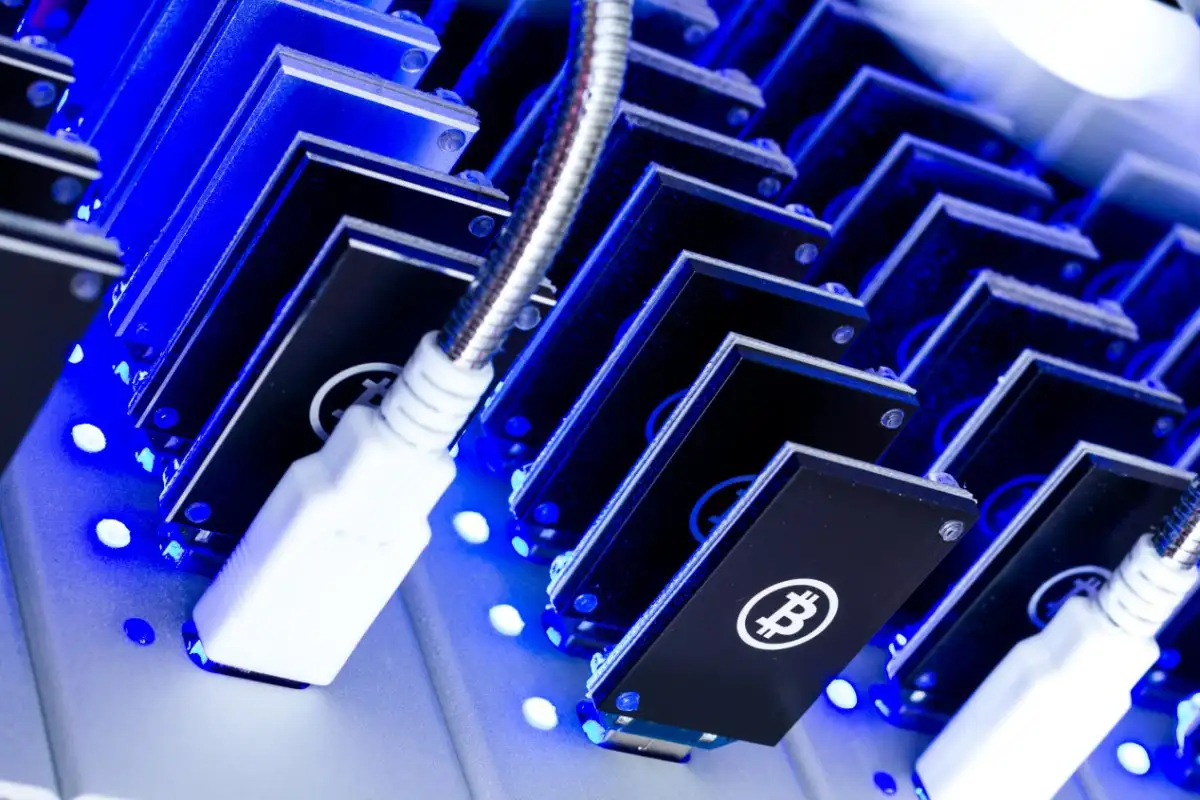
Like with Bitcoin, blocks take around 10 minutes to be added to the Bitcoin Cash blockchain. It is by design, and even if miners add enough computing power to start solving the puzzle faster, the difficulty adjustment mechanism would simply recalibrate the function so that the block production slows down again to the intended pace. Balancing works both ways and ensures that even if a lot of miners leave, the blocks can still be added by those who contribute.
Supply and Issuance
In monetary policy as well, Bitcoin Cash mirrors Bitcoin's original design: a fixed maximum supply capped at 21 million BCH, with new coins introduced through block subsidies and transaction fees paid to miners. The block subsidy represents fresh issuance—newly created coins that enter circulation with each mined block. Transaction fees are transfers of already-existing coins from users to miners as payment for block inclusion. Together, these two components constitute the total block reward that gives miners a reason to secure the network.
Therefore, Bitcoin Cash also inherits the Bitcoin halving mechanism: approximately every four years (or every 210,000 blocks), the block subsidy decreases by 50%. Bitcoin Cash's most recent halving occurred on April 3, 2024, reducing the block subsidy from 6.25 BCH to 3.125 BCH per block. This subsidy figure will halve again around 2028. As subsidies decline over successive halvings, transaction fees are expected to grow in proportion to compensate miners, eventually replacing block subsidy as the dominant revenue source.
Only 21 million BCH will ever exist but it does not mean that they all will be in circulation. There are already coins provably burned (sent to unrecoverable addresses), permanently lost (private keys destroyed or forgotten), or locked in time-locked contracts.
Benefits and Advantages
Even after all its forks, Bitcoin Cash has stuck rather close to the general design principles of Bitcoin. But what tangible difference can it offer to justify its continued existence?
Lower Fees
The economic logic behind Bitcoin Cash’s increased block space is competition between miners rather than users drives fees toward the minimum relay threshold rather than upward into multi-dollar territory. For the intended use cases of BCH, prioritizing users who can appreciate low costs over miners makes sense.
Two variables determine what you actually pay when sending BCH. The first is transaction size in bytes, which depends on the number of inputs and outputs your wallet assembles. A simple payment—one input (the UTXO you're spending from) and two outputs (recipient address plus change address returning leftover funds to you)—typically consumes around 225 bytes. A UTXO consolidation transaction, where you sweep many small inputs into a single output to tidy up your wallet, can easily exceed 1,000 bytes because every additional input adds roughly 148 bytes to the transaction structure. The second variable is wallet fee policy, expressed as satoshis per byte (sat/byte). Most wallets default to 1 sat/byte for BCH, but you can manually adjust this rate upward if you need priority or downward if you're willing to wait.

A standard 225-byte payment at 1 sat/byte costs 225 satoshis, or approximately $0.0006 at $0.27 per BCH. A 1,200-byte consolidation transaction at the same rate costs 1,200 satoshis, or roughly $0.003—five times more, not because the network got more expensive, but because you consumed five times the block space. This is why consolidating UTXOs during low-activity periods makes economic sense.
Low fees are the norm on Bitcoin Cash blockchain, but they're not guaranteed in every scenario. A sudden congestion spike can temporarily elevate the fee floor as users bid for inclusion in the next block. If you underpay relative to miner policies (some mining pools enforce higher relay minimums than the 1 sat/byte standard), your transaction might not propagate widely or could sit unconfirmed longer than expected. Additionally, node relay rules enforce a dust threshold (546 satoshis per output, as of 2026) and a minimum relay fee, so transactions falling below these boundaries won't enter the mempool at all, regardless of how empty blocks are.
Faster Confirmations
Bitcoin Cash inherits Bitcoin’s 10-minute block target time, so how does it have faster confirmations for everyday payments? On the protocol level, it does not, bluntly speaking.
However, based on risk tolerance, merchants can set confirmation requirements to as low as zero. A coffee shop accepting a $4 payment might treat a broadcast transaction as final—a policy often called "zero-confirmation" or "0-conf"—because the cost of a double-spend attack (running competing nodes, attempting a race attack, or bribing a miner) far exceeds the value at risk, especially when the merchant employs fraud controls like monitoring for conflicting transactions in the mempool. And broadcast and propagation happen in seconds: once you sign and transmit a transaction, it reaches the majority of network nodes within 1-3 seconds under normal conditions.
An electronics retailer shipping a $2,000 laptop remotely will almost certainly wait for at least one confirmation, and many wait for six confirmations (approximately one hour) before releasing high-value goods. Higher-value transactions, remote delivery scenarios, or any context where the recipient cannot tolerate the residual risk of a chain reorganization or successful double-spend.
Merchant Payments
Accepting BCH as a merchant requires more than philosophical alignment; it demands concrete operational steps. Here is the practical workflow that tends to separate “we accept crypto” marketing from a payment rail you can run daily:
- Choose a wallet or crypto payment processor: Select a solution that generates QR codes, tracks confirmations, and optionally converts to fiat in real time (examples include self-custody wallets like Electron Cash or third-party processors offering hosted solutions).
- Generate a payment request in URI format: A proper BCH payment URI embeds the recipient address, the amount (either in BCH or fiat-converted at the moment of invoice generation), and optional metadata like an invoice number, ensuring the customer's wallet auto-populates all fields correctly.
- Set confirmation policy by transaction size: Define thresholds—0-conf for payments under $20, one confirmation for $20-$500, six confirmations for amounts exceeding $500—and configure your system to release fulfillment only after the policy is satisfied.
- Handle refunds correctly: Issue refunds to a new address provided by the customer rather than reusing the original payment address, preserving privacy and avoiding address-reuse vulnerabilities.
- Maintain records for accounting and tax compliance: Log the BCH amount received, the fiat exchange rate at the time of receipt, the transaction hash, and the confirmation timestamp to satisfy tax-reporting obligations in jurisdictions that treat cryptocurrency as property.
Pricing and volatility handling: Most merchants set prices in their local fiat currency and convert to BCH in real time at the point of sale, using an exchange rate feed from a liquid market (Coinbase, Kraken, or Binance rates are common references). Once the payment settles, you face a binary choice: keep the BCH and accept exchange-rate risk, treating it as an investment or treasury-diversification move, or auto-convert to fiat immediately through your payment processor, locking in the fiat value at the moment the transaction is confirmed. Neither approach is universally superior; the decision hinges on your risk appetite and operational needs.
Customer experience: QR-based payments reduce manual errors—no one is typing a 42-character address by hand—and speed up checkout by seconds compared to card-swipe or chip-read flows. One operational pitfall to mitigate: address reuse and network selection errors. Reusing the same BCH address across multiple customers degrades privacy for both you and them, as all payments become linkable on-chain. Ensuring your point-of-sale system generates a fresh address per invoice is standard practice. Additionally, confirm that your payment interface clearly labels the network as "Bitcoin Cash" or "BCH" and not "Bitcoin" or "BTC," because sending BTC to a BCH address (or vice versa) results in lost funds unless the recipient controls the same key on both chains—a recovery process that is technically possible but operationally burdensome.
What is Bitcoin Cash Used For?
Bitcoin Cash serves as a functional payment rail in scenarios where transaction speed, low fees, and direct peer-to-peer transfer matter more than store-of-value expectations.
Peer-to-Peer Payments
Best for: In-person cash-equivalent transfers, online goods purchased between individuals, splitting bills with friends, or any scenario where both parties can verify a BCH wallet address and neither expects chargeback protection.
Bitcoin Cash peer-to-peer payments operate through a straightforward flow:
- Choose a BCH wallet — both sender and receiver must have a wallet that supports the Bitcoin Cash network (not Bitcoin).
- Obtain the recipient's address or QR code — the receiver generates a receiving address from their wallet or displays a static QR code.
- Initiate the send transaction — the sender enters the recipient's address, specifies the amount in BCH, and reviews the total including the on-chain fee.
- Broadcast the transaction — once confirmed by the sender, the transaction is broadcast to the Bitcoin Cash network.
- Wait for propagation — the transaction appears in the mempool and is visible to the recipient's wallet, typically within seconds.
- Confirm receipt — depending on the context, the recipient either accepts the transaction at zero confirmations or waits for one or more block confirmations.
Common failure modes:
- Wrong address or network — sending BCH to a Bitcoin (BTC) address or vice versa, which can result in permanent loss if the address format is incompatible
- Insufficient fee settings — setting a fee so low that the transaction remains unconfirmed for an extended period, although this is rare on BCH due to consistently low fee markets
- Address format mismatches — confusion between CashAddr format (native to BCH wallets) and legacy Bitcoin address formats
- Exchange withdrawal delays — if the sender is withdrawing from a centralized exchange, the exchange may impose internal hold periods or additional verification steps that delay the transaction even after the user initiates it
Remittances
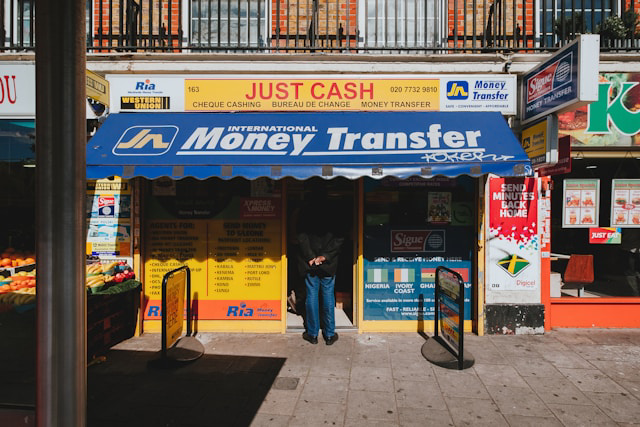
Remittance workflows differ from simple peer-to-peer payments because they involve two distinct legs: the origin funding step (converting fiat to BCH or funding a BCH wallet) and the destination cash-out or spend step (converting BCH back to local fiat or spending it directly). Bitcoin Cash remittances are advantageous when speed and cost matter more than immediate fiat liquidity at the destination, and when both the sender and receiver have access to BCH-compatible wallets or exchanges.
When BCH remittances work well:
- Cross-border transfers where traditional rails are slow or expensive — sending money from a high-fee corridor (e.g., United States to certain Latin American or African countries) where bank wires or legacy remittance services charge 5–10% in fees and take multiple business days
- Recipient has wallet access and spending options — the recipient can either hold BCH, spend it directly with merchants, or cash out via a local exchange with reasonable liquidity
- Speed is more valuable than fiat certainty — the sender and receiver prioritize settlement time over locking in a specific fiat exchange rate at the moment of transfer
Conversely, BCH remittances do not work well if the recipient cannot or will not set up a BCH wallet, or if local exchanges do not support BCH, the remittance cannot complete. Likewise, if the recipient needs guaranteed local currency within minutes and cannot tolerate the time or volatility involved in converting BCH to fiat, or if liquidity on the destination country's BCH/fiat pair is low, or if withdrawal limits or KYC requirements make cash-out impractical, other options are worth considering.
Micropayments
Micropayments refer to very small digital purchases, typically amounts that would be uneconomical on payment rails with high fixed fees or minimum transaction sizes. Common micropayment scenarios include tipping content creators, paying per article for journalism, purchasing in-game items, and usage-based billing for API calls or metered services.
Bitcoin Cash's throughput capacity and fee behavior make it structurally compatible with frequent, low-value payments. This means BCH can handle bursts of micropayment activity without fee spikes, which is critical when a single user might generate dozens or hundreds of small payments in a short time window.
Risks and Key Considerations
Security and Reorg Risk
Bitcoin Cash shares its SHA-256 proof-of-work algorithm with Bitcoin, placing both chains in direct competition for the same pool of mining hardware. Miners can — and do — switch between chains based on short-term profitability, leaving Bitcoin Cash exposed to sudden hashrate volatility that Bitcoin itself rarely experiences at scale. When hashpower migrates off BCH, the network temporarily becomes easier to attack, and when hashpower floods back in, the sudden spike can destabilize block production timing.
A reorganization (reorg) occurs when a competing chain of blocks overtakes the current longest chain, causing transactions in the original chain to be reversed or re-ordered. Reorgs of one or two blocks happen naturally on many blockchains and are not inherently malicious — they reflect normal network propagation delays or minor forks that resolve themselves.

A 51% attack, by contrast, is a deliberate exploit in which an attacker controls more than half of the network's hashpower and uses that control to produce a longer chain that rewrites transaction history. This enables a double-spend, where the attacker spends coins in one version of the chain (often to an exchange), withdraws fiat or another asset, and then publishes a competing chain that redirects those coins back to themselves, erasing the original spend. On Bitcoin Cash, profitability-driven hashrate swings can make reorgs more frequent without necessarily indicating malicious intent, but the same low hashrate that enables benign reorgs also lowers the cost of executing a deliberate attack.
What can you do? Monitor metrics such as hash rate and block time stability, and orphan block rates; if you have a reason for concern, wait for more confirmations when accepting BCH transfers.
Adoption and Liquidity
Bitcoin Cash is admittedly not a household name. Lower adoption does not just mean fewer users — it manifests as direct, measurable friction in every interaction with the asset. On exchanges with thin order books, market orders slip further from the quoted mid-price, meaning a buyer or seller moving even moderate volume will receive a worse fill than the headline price suggests. Bid-ask spreads widen, increasing the implicit cost of entering or exiting a position. Deposit and withdrawal infrastructure becomes less reliable: smaller exchanges pause BCH transfers more frequently during network events, and fewer crypto on-ramps support BCH directly, forcing users into multi-hop conversions that compound slippage and fee exposure. Most crucially, merchant acceptance remains narrow relative to larger-cap assets, reducing the practical utility that was a core value proposition in Bitcoin Cash's original positioning.
Network effects and tooling risk operate in parallel: fewer wallets support Bitcoin Cash features like CashTokens, fewer block explorers index advanced transaction types, fewer auditors and independent developers scrutinize protocol changes, and fewer integration libraries exist for merchants or payment processors. This translates into slower bug discovery, compatibility breakage between wallet versions, reduced customer support availability from service providers, and higher switching costs when tooling does fail. A protocol can be technically sound and still expose users to operational risk if the surrounding ecosystem lacks depth. When a popular wallet discontinues BCH support or an exchange delists the asset, users face forced migrations under time pressure, often at unfavorable prices or with limited alternatives.
Governance and Upgrade Coordination
From its tumultuous history, you can probably already tell that protocol change can be rough with this crypto project.
Bitcoin Cash operates on a scheduled protocol upgrade cadence, activating network-wide changes at predetermined block heights approximately every six months. This model prioritizes coordinated evolution over ossification, but it introduces version skew risk: nodes, miners, exchanges, wallets, and payment processors must all upgrade their software within a narrow time window, or they risk falling out of consensus with the active chain. Unlike Bitcoin's conservative approach, where upgrades happen infrequently and with extensive signaling periods, Bitcoin Cash upgrades are expected events — but expectation does not eliminate execution risk.
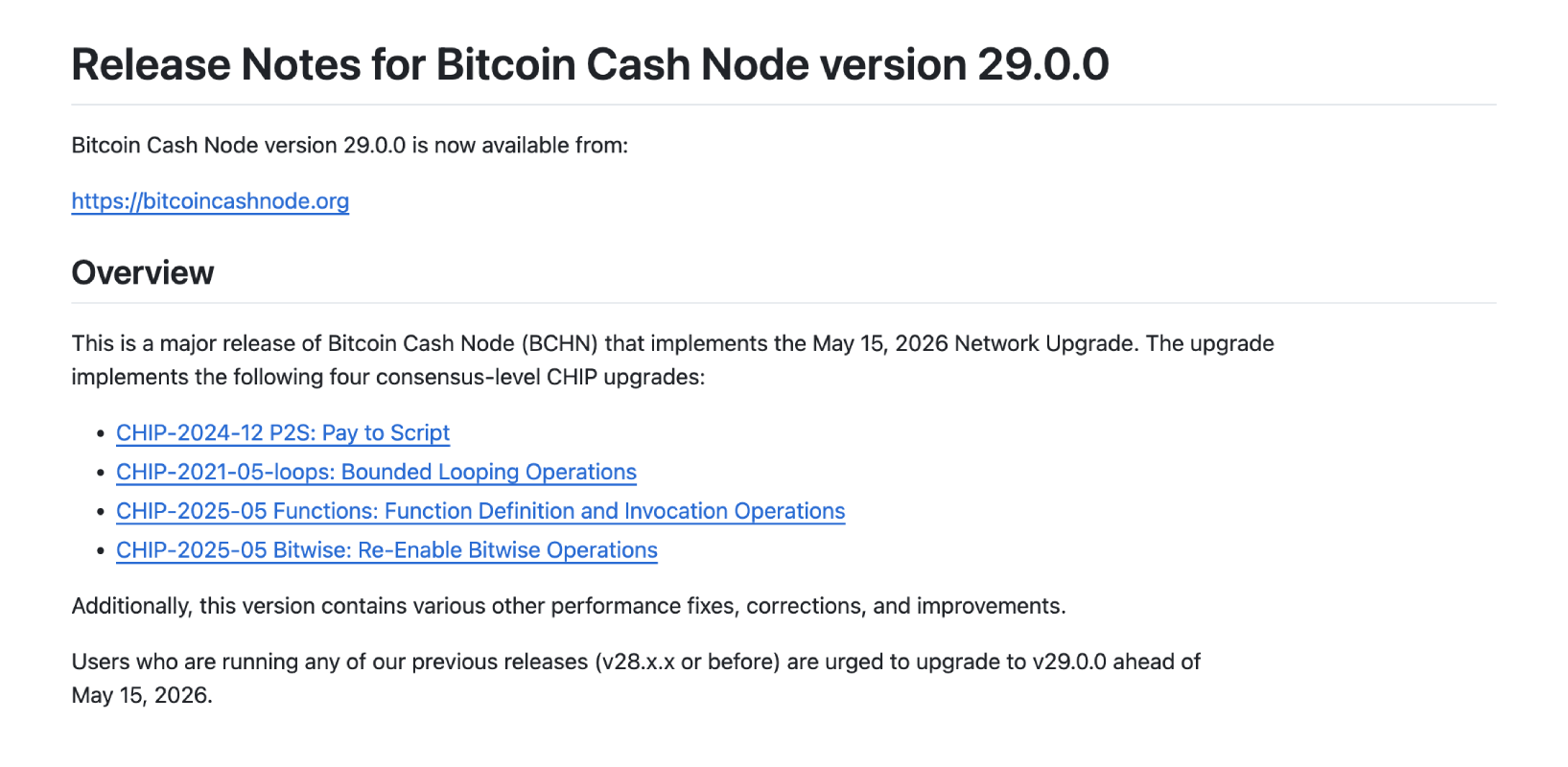
It is not a force of nature: you can review official resources to know what updates are coming. As a regular user, you will rarely have to take any action but you can check if the apps and platforms you are using are going to support the next update.
Bitcoin Cash vs Bitcoin
| Attribute | Bitcoin (BTC) | Bitcoin Cash (BCH) | Why it matters |
|---|---|---|---|
| Scaling approach | Layered (off-chain via Lightning Network) | On-chain (larger blocks) | Determines whether scaling happens inside the base protocol or through external solutions |
| Block size policy | 1 MB soft cap | 32 MB (as of 2024) | Directly affects transaction throughput during high demand |
| Typical fee pressure under congestion | High (mempool backlog) | Lower (more on-chain space) | Influences cost-per-transaction when usage spikes |
| Confirmation UX expectations | First-layer transactions settle slower during congestion | First-layer transactions settle faster with larger blocks | Changes how quickly a payment is practically final |
| Chain history / fork point | Original 2009 chain | Forked at block 478558 (August 1, 2017) | Both chains share transaction history prior to the split |
| Upgrade cadence / coordination style | Conservative; infrequent protocol changes | Scheduled upgrades every six months | Reflects philosophy on base-layer feature velocity |
| Token capability on base layer | None natively (requires separate layers) | Native tokens via CashTokens (2023) | Enables on-chain issuance of fungible and non-fungible assets without sidechains |
| Primary narrative / use positioning | Store of value; digital gold | Peer-to-peer electronic cash for everyday transactions | Shapes community focus, roadmap priorities, and marketing strategy |
| Throughput orientation | ~7 transactions per second (theoretical) | ~100+ transactions per second (theoretical, with 32 MB blocks) | Defines the maximum transaction capacity under optimal conditions |
| Supply / issuance parity | 21 million BTC cap | 21 million BCH cap | Both share the same hard cap and halving schedule |
| Consensus / mining algorithm | Proof-of-Work with SHA-256 | Proof-of-Work with SHA-256 | Both chains compete for the same SHA-256 hashrate pool |
Bitcoin Cash prioritizes increasing the base block size to accommodate more transactions directly on the main chain, while Bitcoin adopts a layered model where most transaction volume is expected to migrate to second-layer solutions like the Lightning Network. The common misconception is that one approach is inherently more "decentralized" — in reality, both involve trade-offs between node operation costs (larger blocks require more bandwidth and storage) and transaction settlement guarantees (off-chain channels introduce liquidity and routing complexity).
Bitcoin does not support token issuance natively on its base layer; projects building tokenized assets on BTC must use separate protocols like Omni Layer, RGB, or Liquid (a federated sidechain). Bitcoin Cash introduced CashTokens, a protocol upgrade that enables users to create fungible and non-fungible tokens directly on the BCH blockchain without requiring additional infrastructure.
- For everyday payments and merchant acceptance: Bitcoin Cash's lower fee pressure under load and explicit focus on transactional use cases make it more suitable for recurring, small-value payments without relying on second-layer adoption. Reference: block size policy and typical fee pressure rows in the table.
- For long-term holding and store-of-value narratives: Bitcoin's conservative upgrade cadence, stronger network effect, and entrenched positioning as "digital gold" align with holders prioritizing minimized protocol risk over transactional throughput. Reference: primary narrative row in the table.
- For on-chain token issuance or NFT projects: Bitcoin Cash's native CashTokens capability provides a first-layer option without bridging or sidechain dependencies, relevant for developers who want uniform security assumptions across base transactions and tokenized assets. Reference: token capability on base layer row in the table.
- For users managing multiple chains or exchanges: Understanding the fork point (block 478558) and the supply/issuance parity helps avoid confusion when reviewing historical transaction data or interpreting wallet balances that existed before August 1, 2017. Reference: chain history and supply/issuance parity rows in the table.
For a dedicated explainer comparing the two assets end to end, see Bitcoin vs Bitcoin Cash.
Comparison with Other Cryptocurrencies
Bitcoin Cash exists within a dense ecosystem of alternative cryptocurrencies, each built on different design assumptions about what matters most in a digital payment system. Positioning BCH against other networks requires mapping technical choices—security model, scaling approach, programmability, privacy guarantees—to the practical tradeoffs those choices impose on users. The table below provides a decision-first view of how BCH compares across architectures, not just origins.
| Network | Primary Purpose | Consensus / Security Model | Transaction Finality / Latency | Fee Cost Profile | Privacy Characteristics | Smart Contract / Programmability | Token Support Model | Key Tradeoff vs BCH |
|---|---|---|---|---|---|---|---|---|
| Bitcoin Cash (BCH) | Peer-to-peer electronic cash | Proof-of-Work (PoW), SHA-256 | ~10 min block time, probabilistic | Consistently sub-cent, scales on-chain | Transparent ledger, pseudonymous addresses | Limited scripting (CashScript) | SLP tokens (Simple Ledger Protocol) | Reference baseline for this table |
| Bitcoin (BTC) | Store of value / settlement layer | Proof-of-Work (PoW), SHA-256 | ~10 min block time, probabilistic | Variable, spikes during congestion | Transparent ledger, pseudonymous addresses | Limited scripting (Taproot expansion) | Rare Sats, Ordinals, BRC-20 inscriptions | Small-block conservatism limits throughput |
| BSV | Massive on-chain data storage | Proof-of-Work (PoW), SHA-256 | ~10 min block time, probabilistic | Very low per-transaction, assumes capacity | Transparent ledger, pseudonymous addresses | Limited scripting (sCrypt extensions) | Experimental token standards | Centralization risk from large blocks |
| Ethereum Classic (ETC) | Immutable smart contract platform | Proof-of-Work (PoW), Ethash/Etchash | ~13 sec block time, probabilistic | Moderate, less than ETH mainnet | Transparent ledger, account model | Full EVM execution environment | Native ERC-20 and ERC-721 support | Account model vs UTXO paradigm |
| Litecoin (LTC) | Digital silver / fast payments | Proof-of-Work (PoW), Scrypt | ~2.5 min block time, probabilistic | Very low, predictable | Transparent ledger, pseudonymous addresses | Limited scripting (Bitcoin-derived) | Rare, OmniLite experimental | Faster blocks, smaller ecosystem |
| Monero (XMR) | Private, untraceable transactions | Proof-of-Work (PoW), RandomX | ~2 min block time, probabilistic | Dynamic block size, moderate fees | Ring signatures, stealth addresses, RingCT | None (payment-focused scripting only) | None (fungible base layer only) | Privacy by default, no compliance transparency |
| Cardano (ADA) | Research-driven PoS platform | Ouroboros Proof-of-Stake (PoS) | ~20 sec block time, epoch finality | Predictable, parameterized fee curve | Transparent ledger, UTXO-based | Plutus smart contracts (Haskell-based) | Native tokens (no wrapping required) | Formal methods rigor, slower upgrade cadence |
BCH’s Future Outlook
What matters for anyone evaluating BCH in 2026 is distinguishing between protocol roadmap signals (what is technically possible and what developers are actively discussing) and adoption signals (how many merchants, wallets, and users are actually integrating and using these capabilities). Both categories move independently, and both are necessary to understand where BCH stands relative to its original value proposition.
Roadmap and Proposed Upgrades
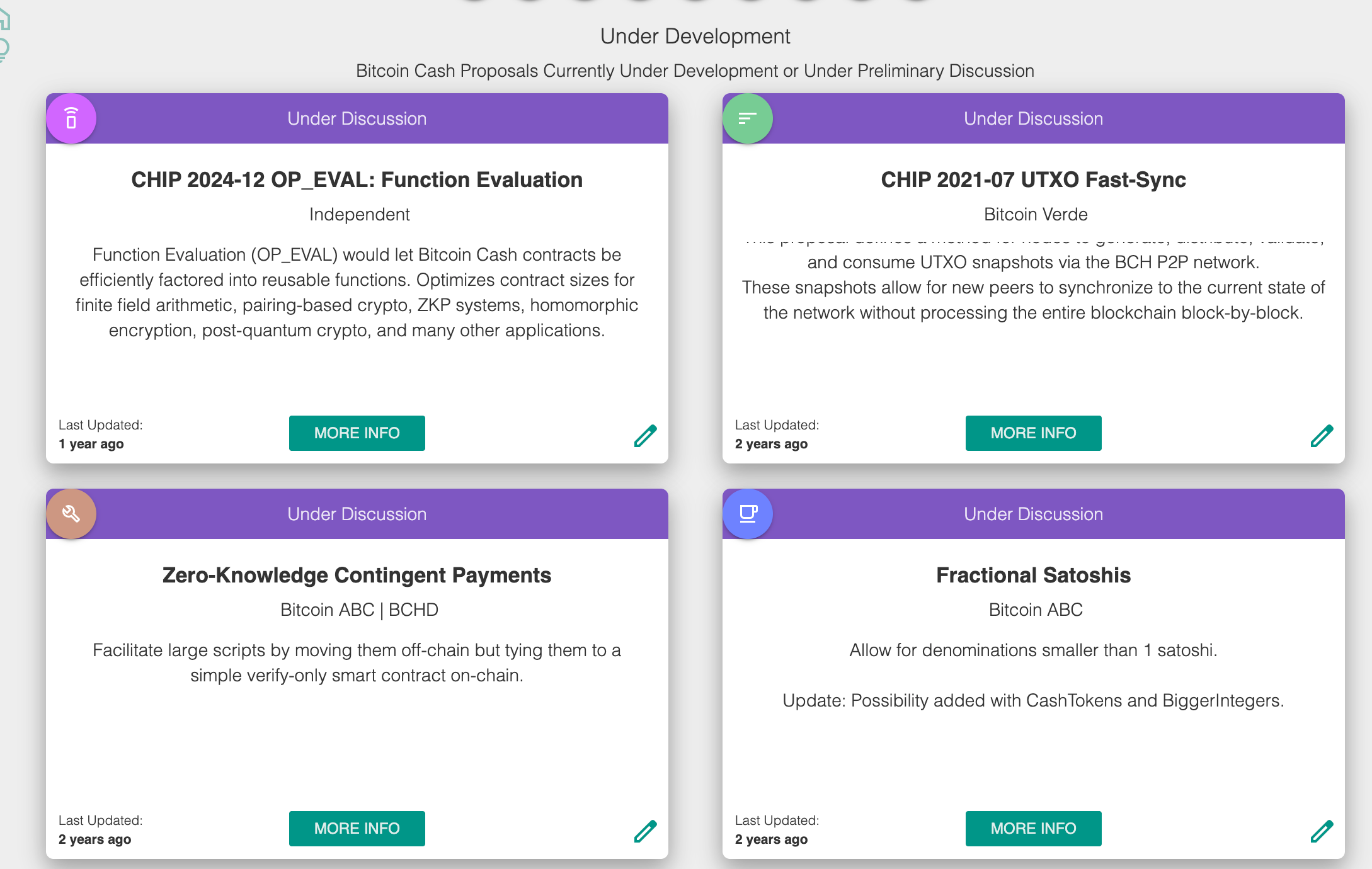
Bitcoin Cash protocol upgrades follow a semi-annual activation schedule, with changes locked in during the May and November network upgrade windows. Two upgrades now define the technical baseline heading into 2026:
- CashTokens (May 2023): Introduced native token issuance and fungible/non-fungible token support directly on the Bitcoin Cash blockchain without requiring a second-layer protocol. This activation enabled on-chain asset creation, token metadata embedding, and programmable token behavior through covenant scripts.
- ABLA (May 2024): Replaced the fixed 32 MB block size cap with an adaptive algorithm that adjusts the block size limit based on recent network demand, allowing the network to scale capacity dynamically rather than through periodic manual interventions.
- Script improvements (ongoing): Multiple opcodes have been re-enabled or refined over the past three years to support more complex contract logic, including introspection capabilities that allow contracts to examine their own transaction context.
- Mining and relay policy refinements: Changes to standardness rules and relay limits have gradually increased what types of transactions nodes will propagate, reducing friction for developers building token-based and contract-based applications.
The Bitcoin Cash development community maintains ongoing discussion across multiple technical working groups and public forums. Several threads are worth monitoring because they signal where protocol capability may expand next:
- VM limits and contract complexity: Discussions around increasing script execution limits and gas-style metering to allow more computationally intensive contracts without risking node performance.
- Covenant and introspection extensions: Proposals to expand what a contract can "see" and control, enabling more sophisticated decentralized applications like on-chain escrow, conditional payments, and automated market makers.
- Cross-chain interoperability primitives: Exploration of features that would make atomic swaps, cross-chain messaging, or wrapped-asset bridges easier to implement without third-party custodians.
- Network-level privacy improvements: Ongoing research into transaction graph obfuscation, CoinJoin protocol refinements, and wallet-level privacy tooling that would make BCH more fungible at the protocol layer.
- Token standard stabilization: Formal standardization of how CashTokens should be indexed, displayed, and managed across wallets and explorers to reduce fragmentation in implementation.
None of these are guaranteed to activate in 2026, but the presence or absence of consensus-building activity around each topic is a useful signal for how the protocol might evolve.
Adoption Trends
Adoption in 2026 should be measured through signals that reflect usage rather than price. The framework below groups adoption metrics into three categories: network usage, merchant and payment acceptance, and liquidity and access. Each metric comes with interpretive caution, because raw numbers can mislead without context.
Network Usage Metrics
- What it measures: Daily active addresses, transaction count, and transaction value (excluding known exchange consolidations).
- Why it can mislead: A spike in active addresses can come from airdrops, spam, or single-user scripts rather than genuine economic activity. Transaction count can be inflated by consolidation or zero-value token transfers.
- What would count as a meaningful 2026 improvement: Sustained growth in unique active addresses over a 90-day rolling window, combined with increasing average transaction value (suggesting economic rather than technical transactions).
Merchant and Payment Acceptance Metrics
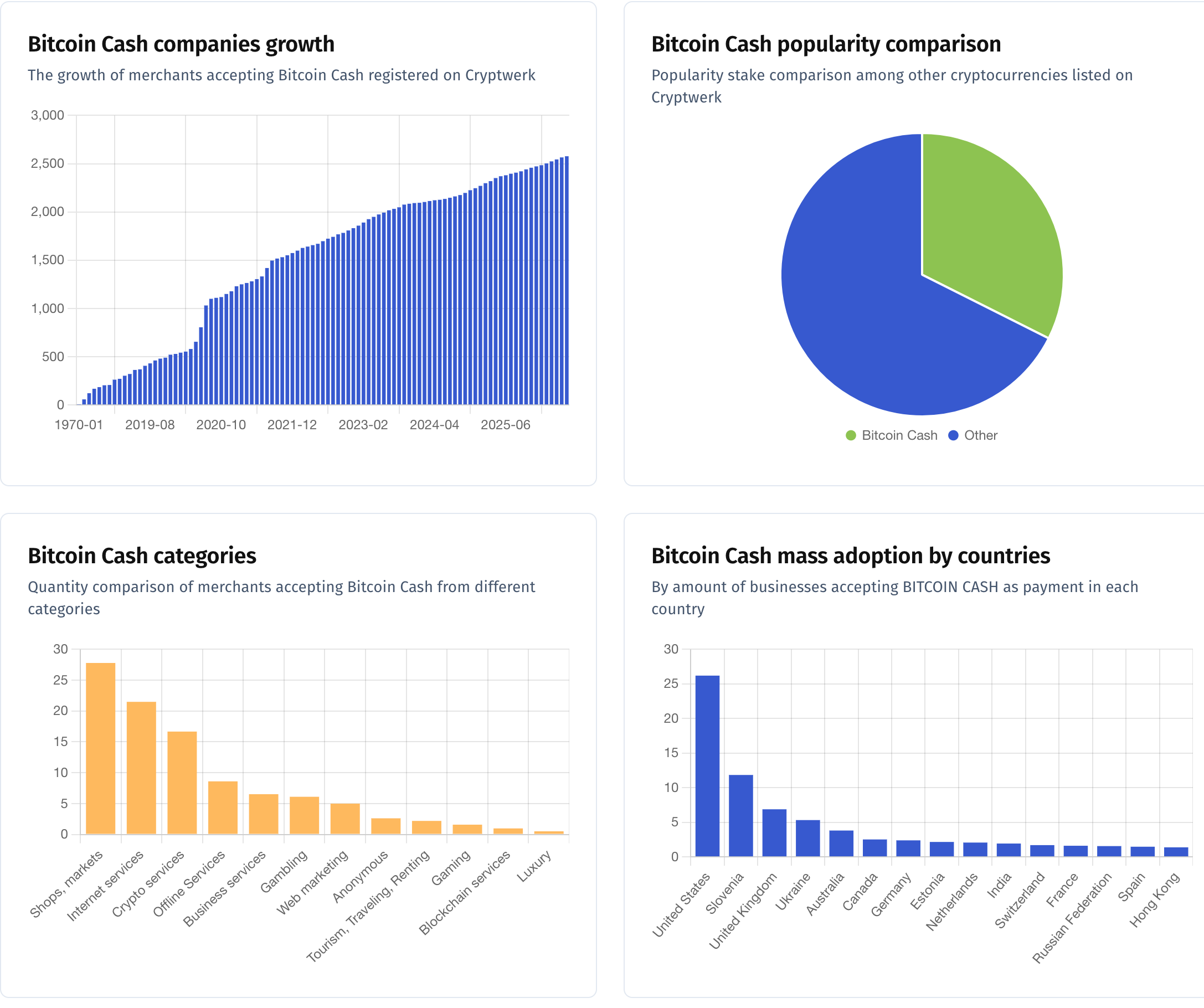
- What it measures: Number of merchants accepting BCH, payment processor transaction volume, and geographic distribution of acceptance.
- Why it can mislead: Merchant directories are often outdated or include businesses that no longer actively accept BCH. Payment processor volume can be dominated by a small number of large merchants, creating a fragile dependency.
- What would count as a meaningful 2026 improvement: New merchant categories (e.g., subscription services, digital goods platforms) adopting BCH rather than just point-of-sale retail, plus payment processor data showing volume growth distributed across multiple merchants rather than concentrated in one or two.
Liquidity and Access Metrics
- What it measures: Number of fiat on-ramps supporting BCH, spot trading volume on exchanges, and availability of BCH trading pairs.
- Why it can mislead: Trading volume can be wash-traded or inflated through incentive programs. A high number of listed exchanges does not guarantee deep liquidity if most pairs have wide spreads and low order book depth.
- What would count as a meaningful 2026 improvement: Increased availability of direct BCH-to-fiat pairs on regulated exchanges, tighter bid-ask spreads on high-volume pairs, and new institutional-grade custody or brokerage services offering BCH.
Conclusion
Bitcoin Cash is a distinct technical approach to peer-to-peer digital currency: on-chain scaling through larger blocks, designed to hold transaction fees at levels compatible with casual spending rather than high-value settlement. Where its original fork aimed solely at raising the block size, the current BCH value proposition layers payment infrastructure (low fees, fast confirmations) with programmability (CashTokens for token issuance, incremental smart contract upgrades) and capacity headroom (Adaptive Block Limit Algorithm activated in 2024).
For more content from our team, bookmark ChangeHero Blog, and follow us on Twitter, Facebook, Telegram and be the first to get notified.
How long do Bitcoin Cash transactions take?
Bitcoin Cash transactions typically appear on the network within 1–3 seconds of broadcast, reach first confirmation in about 10 minutes (one block), and are considered settled by most merchants after 1–6 confirmations depending on transaction value — with mempool congestion, wallet connectivity, and recipient policy being the primary factors that extend these windows.
What are Bitcoin Cash fees?
Bitcoin Cash network fees average $0.0015–$0.003 per transaction under normal conditions, with the actual cost determined by transaction size in bytes (number of inputs and outputs) rather than the BCH amount sent — and you should always distinguish between on-chain network fees paid to miners and additional service fees charged by wallets or exchanges before initiating any transfer.
How do you store Bitcoin Cash safely?
Bitcoin Cash storage safety follows a risk-tiered model: small spending balances belong in mobile wallets with biometric locks, medium holdings require non-custodial software wallets on secure devices with offline backups, and long-term holdings demand hardware wallets or air-gapped storage with geographically distributed seed phrase copies — matching your storage method to your use case prevents both inconvenience and catastrophic loss.
How do you buy Bitcoin Cash?
Bitcoin Cash can be purchased through centralized exchanges (CEX), broker apps, or peer-to-peer platforms — each trading fees and liquidity for different levels of custody, withdrawal control, and KYC requirements — with CEXs offering the deepest liquidity and fastest fiat onramps, brokers simplifying the user experience at the cost of higher spreads, and P2P networks maximizing privacy but requiring more effort and accepting counterparty risk.
Some buying paths and their tradeoffs:
- Centralized exchange (CEX) — examples include Binance, Coinbase, Kraken; tradeoff: lowest fees (0.1–0.5% maker/taker), highest liquidity, full KYC required, custodial by default (you must withdraw to self-custody).
- Broker app — examples include Robinhood, PayPal, Cash App; tradeoff: simplified interface, instant purchase, higher spreads (1–3%), often restricted or delayed withdrawals, heavy KYC.
- Peer-to-peer (P2P) — examples include LocalBitcoins, Bisq; tradeoff: maximum privacy (minimal or no KYC), slower trade execution, variable pricing (often above market rate), requires escrow trust or reputation vetting.
For clarity in exchange listings, you may see the asset described simply as the BCH coin; in all cases, confirm you are selecting the Bitcoin Cash network for deposits and withdrawals rather than Bitcoin (BTC) or another fork. If your next step is to execute a purchase, you can use a provider that lets you buy BCH.
For readers tracking market context, note that spot quoting such as BCH price and forward-looking research like a BCH price prediction should be treated as informational inputs rather than guarantees, and should always be paired with your own risk controls.