
Best Cheap Crypto to Buy Now (2026)


Key Takeaways
- 🪙 “Cheap” ≠ good value. Unit price is the sticker; real “cheap” is low valuation relative to utility + adoption, and that starts with market cap, not vibes.
- 🪙 Use the core lenses: Price = Market Cap ÷ Circulating Supply, plus circulating supply, FDV, and tokenomics to spot dilution, fake scarcity, and “reward-then-dump” designs.
- 🪙 Screen coins in this category like an adult: prioritize real token utility (fees, staking, governance, collateral, access), security posture, team, whale concentration, and whether the product would still work if the token didn’t exist.
- 🪙 Watch emissions and especially token unlocks (cliffs vs linear vesting, who receives them). Big market cap → FDV gaps are basically future sell pressure with a calendar.
- 🪙 Low-price picks for 2026 have very different risk profiles: VeChain (VET) supply-chain infrastructure, Hedera (HBAR) high-throughput “backend” reliability, Stellar (XLM) cross-border rails, Cardano (ADA) conservative smart-contract platform, Arbitrum (ARB) Ethereum L2 scaling; meme volatility lives in SHIB / PEPE / DOGE; interoperability + enterprise rails show up in FLR / XDC—utility stories are real, but so are dilution, liquidity, and narrative risk.
Disclaimer
This article does not constitute financial or investing advice. No price prediction or forecast is guaranteed to provide precise information on the future price. Past performance is not indicative of future results. When dealing with cryptocurrencies, remember that they are extremely volatile and thus, a high-risk investment. Always make sure to stay informed and be aware of those risks. Consider investing in cryptocurrencies only after careful consideration and analysis and at your own risk.
Cheap cryptocurrencies lower the entry cost for investors who want exposure to a fast-paced market without committing a large amount of capital upfront. In 2026, that matters more than ever because the crypto market dynamics keep shifting: narratives rotate faster, new tokens launch daily, and liquidity can move from one sector to another in a weekend. For many people, “cheap” is not really about the price per coin (a token can be $0.02 and still be overvalued). It’s about being able to start small, learn the ropes, and build a position gradually without feeling like every click needs to be a four-figure decision.

The reason cheap cryptocurrencies are getting so much attention in 2026 is simple: upside is easier to imagine when the unit price looks small. A coin priced under $1 feels like it has “room to run,” even if what actually drives returns is market cap, adoption, and token supply. That psychological angle can be a trap, sure—but it’s also why lower-priced assets often become magnets during hype cycles. Add in the practical benefit (you can buy more units, test different strategies, and diversify across several projects), and the appeal becomes less about fantasy and more about flexibility.
What makes them interesting is cheaper crypto picks can still be accessible without being “beginner-safe.” Low entry cost does not cancel out high risk. In a market where volatility is the default setting, smaller-cap and lower-priced coins can swing harder than large-cap assets, both up and down. That’s great when momentum is on your side but brutal when liquidity dries up or sentiment flips. Speculative practices (overhyped launches, aggressive token marketing, thin order books, or tokenomics that heavily favor insiders) tend to cluster in the same neighborhoods as “cheap” coins, so basic due diligence simply isn’t optional.
So when people look for the best cheap crypto to buy now in 2026, they’re usually balancing three things at once: affordability (entry cost), opportunity (potential upside), and survivability (risk control in a fast-paced market). Get that balance right, and cheaper cryptocurrencies can be a practical way to participate in new trends. Get it wrong, and “cheap” becomes expensive in the most annoying way possible.
What “Cheap Crypto” Means: Key Metrics
Before we touch any coin names, you need the measuring tools for yourself or at least, not to take our words at face value. Cheap crypto is one of those topics where the obvious metric (unit price) is also the most misleading, so think of this section as your quick overview of the lenses that keep you out of the weeds.
Unit Price
Unit price measures the cost of one coin or token, and it is the number most people instinctively label as “cheap.” A token trading at $0.01 feels like a bargain next to one trading at $1,000, because often your brain translates it into ownership (“I can buy 10,000 of these!”). That psychological pull is real, and in the crypto market it’s one of the fastest ways a project attracts small-scale investors who want to build a position without feeling like they’re “late.”
Unit price is just a slice of the puzzle. It is calculated from valuation and supply, not from vibes: Price = Market Cap ÷ Circulating Supply. So a low per-token price can exist simply because the project has issued a massive number of tokens. In other words, a “cheap” unit price might be the result of token quantity, not undervaluation or hidden potential.

Photo by Kanchanara on Unsplash
Here’s where market dynamics sneak in. A $0.01 token can still be “expensive” if its valuation is already huge, and a $500 token can be “cheap” if its valuation is small relative to its adoption and growth. Unit price is also easy to manipulate visually: token splits, redenominations, and supply expansions can make a chart look more approachable without changing the underlying value much (like slicing the same pizza into more pieces and calling it a bigger dinner).
A practical way to look at the price is to treat it as an accessibility metric, not a value metric. Low unit price can make dollar-cost averaging feel smoother (you buy more units per purchase), but it won’t tell you whether the project is overvalued, whether future dilution is coming, or whether the token’s utility actually creates demand.
Market Capitalization
Market capitalization (or “market cap” for short) measures the total market value of a crypto asset, and it is a stronger “cheap vs expensive” signal than unit price. Market cap takes the current price and multiplies it by the circulating supply, giving you a big-picture view of how the crypto market is valuing the network right now. That’s why serious investors start here: market cap answers “How big is this thing?” instead of “How affordable is one unit?”
So, market cap helps you compare apples to apples across wildly different token supplies. Two tokens can share the same unit price and still be in completely different leagues if one has 100 million coins circulating and the other has 100 billion. Market cap also frames upside and downside more realistically. A small-cap project may have more room to grow (and more room to fall), while a mega-cap asset usually needs much more capital inflow to move the needle.
The other hand of the story is liquidity and attention. Higher market caps often come with deeper markets, more exchange listings, and tighter spreads, meaning your buys and sells may cause less price disruption. Lower market caps, in contrast, can be jumpy: a few large orders can swing prices dramatically, which can look like “cheap opportunity” or “chaotic risk,” depending on your timing.
A useful mental model: unit price is the sticker on a single share; market cap is the price tag on the whole company. In market dynamics, “cheap crypto” usually means “low valuation relative to traction,” not “low sticker price.” Market cap, not the price tag, is the first checkpoint for that reality check.
Circulating Supply
Circulation measures how many tokens are currently available to the public, and it directly shapes how “cheap” a token appears and how it can move. Because price is tied to market cap ÷ circulating supply, a larger circulating supply can naturally push the unit price down even when the project is valued highly. That’s why two tokens with equal demand can trade at very different prices per coin: supply sets the denominator.
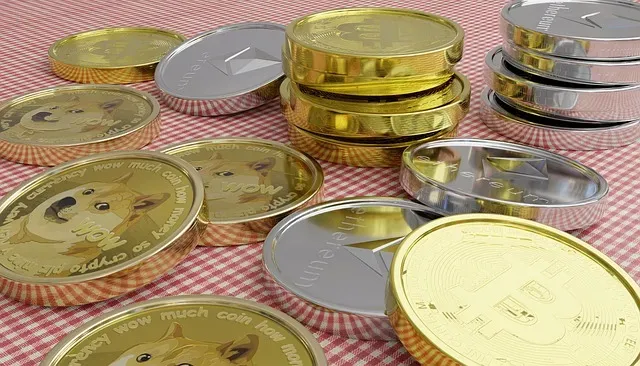
This metric is about what’s actually in play. Tokens that are locked, vesting, or held in reserves may not hit the open market today, but circulating supply tells you what buyers and sellers can trade right now. In the crypto market, that matters because price discovery happens on the tradable float, not on the theoretical maximum supply.
Circulating supply also affects price behavior during spikes and sell-offs. Lower circulating supply (especially with tight liquidity) can lead to sharper pumps because there are fewer tokens available at each price level. Sounds fun—until the reverse happens and there’s not enough buy support on the way down. Higher circulating supply can dampen volatility, but it can also mean the asset needs sustained demand to climb meaningfully.
A simple analogy: circulating supply is the number of concert tickets currently on resale sites, not the total seats in the stadium. If only a few tickets are listed, prices can jump fast; if thousands are listed, prices move slower. For “cheap crypto,” you want to know whether low unit price is simply the result of a huge circulating supply—and whether upcoming unlocks could change that supply fast.
Fully Diluted Valuation (FDV)
FDV estimates what a crypto’s valuation would be if all tokens that can ever exist were already circulating. In plain terms, FDV extends market cap into the future: FDV = Current Price × Max Supply (or total supply, depending on the project’s design). This metric matters because “cheap” today can quietly become “not cheap at all” once more tokens enter circulation.
On the other hand, high or low FDV is not automatically a red flag. Some projects have long vesting schedules and predictable emissions, and the market may already price that in. The problem shows up when there’s a huge gap between market cap and FDV and the release schedule is aggressive. That gap signals potential dilution: as new tokens unlock (team allocations, investor vesting, ecosystem incentives), additional supply can pressure the price unless demand grows at the same pace.
A concrete way to think about it: market cap is what the crypto market is paying for what exists in circulation today; FDV is what the market would be paying if the entire planned supply were tradable. If FDV is dramatically higher than market cap, you don’t need to panic, but you do need to ask one question: “Where will the future buy pressure come from to balance those new tokens?”
Tokenomics
Derived from “token economics”, it describes how a token is designed to work economically, and it is often the deciding factor between “cheap” and “cheap for a reason.” This is the mix of supply rules (emissions, burns, caps), demand drivers (utility, fees, staking needs), and incentive design (rewards, penalties, governance). Two projects can share the same market cap and circulating supply and still have totally different long-term trajectories because their tokenomics push behavior in different directions.
The important detail is incentives. If a token’s primary demand comes from real usage—paying fees, collateral, access, settlement—buyers have a reason to hold it beyond speculation. If demand mostly comes from rewards (high APYs funded by emissions), the price can look attractive early and then struggle when the incentive fades or when the selling pressure from rewards kicks in. In the crypto market, that “reward then dump” loop is a classic pattern, and it often hides behind a low unit price.
Token distribution is also a crucial component. If a large portion of supply is concentrated (early investors, team, treasury), the token may be more vulnerable to sharp moves when big holders sell. If distribution is broader and unlocks are transparent, price behavior can be more predictable. Add circulating supply and FDV into the mix, and tokenomics becomes the glue that explains how market dynamics might evolve over months—not just today’s chart.
A quick gut-check question: “What forces someone to buy this token next month?” If the answer is utility and growing usage, “cheap” might mean undervalued. If the answer is mostly “because it’s cheap,” you’re looking at psychology, not fundamentals—and psychology has a habit of changing overnight.
Top Cheap Cryptocurrencies to Buy Now (2026)
VeChain (VET)
VeChain connects blockchain to real-world supply chains, which makes VET feel less like a “maybe someday” asset and more like infrastructure (the less exciting stuff that tends to stick around). The core idea is simple: track goods and data from origin to consumer, then make that data verifiable. In 2026, that utility matters because compliance, provenance, and anti-counterfeit pressures keep rising across global trade.
The “how” is where it gets interesting. VeChain’s approach focuses on enterprise-friendly workflows: product IDs, batch tracking, and audit trails that companies can actually operationalize without turning every employee into a crypto native. When adoption works, it tends to be sticky—once a logistics process is built around immutable records, ripping it out is expensive.
A 2026 growth catalyst is the broader market’s renewed appetite for “use-case chains” after a few hype cycles. If liquidity rotates from purely narrative plays into utility networks, VET can benefit from that trend reversal. Another catalyst is increased demand for data integrity in AI-heavy operations: if businesses rely on automated decisions, they also need reliable input, and tamper-evident records help.
The challenge here is that enterprise blockchains often face long sales cycles and uneven token value capture. Translation: VeChain can win deployments while VET price prediction remains volatile if token demand doesn’t scale alongside usage. Add the usual risks—market drawdowns, competition from other supply-chain systems, and the “blockchain in business” skepticism—and you get an asset that can shine, but rarely in a straight line.
Hedera (HBAR)
Hedera positions itself as a high-throughput public network designed for real-world applications, and HBAR often appeals to investors who want performance without the constant “will this chain melt down at peak traffic?” anxiety. The big selling point in 2026 is predictable, enterprise-grade execution: fast finality, stable fees, and a structure that aims to reduce consensus drama.

Mechanically, Hedera’s tech stack is built for high-volume use cases like micropayments, identity primitives, and event logging. In plain English, it’s a network that’s comfortable being the backend: lots of small transactions, lots of records, lots of boring reliability. That’s a feature, not a bug.
A 2026 catalyst is the ongoing push for tokenized real-world workflows—things like receipts, credentials, and timestamped data streams. If the market rewards networks that can support commercial-grade throughput with consistent user costs, HBAR’s narrative gets stronger. Another factor is liquidity: when capital returns to altcoins, traders often chase networks with a “serious” vibe and a clearer path to adoption, which can amplify any bullish price prediction cycle.
Risks are still a factor, of course. Hedera’s differentiation can be misunderstood by retail (less meme power), and network economics can be hard to evaluate if you’re used to simple “more users = higher token price” stories. Also, any centralized-perception concerns can limit upside during hype phases. If you buy HBAR, you’re betting that 2026 rewards infrastructure over spectacle—and that’s not guaranteed.
Stellar (XLM)
The Stellar network focuses on moving value cheaply across borders, which keeps XLM in the conversation whenever people ask, “What does crypto do better than traditional finance today?” In 2026, that question comes up again because cross-border payments remain slow and fee-heavy in many corridors, even after years of fintech progress—and because users still need an on-ramp from fiat currency into digital rails that work across global economies.
The practical mechanism is straightforward: Stellar is optimized for fast settlement and low-cost transfers, with an ecosystem built around payment rails and asset issuance. Think of it as a “value router.” When it works, it turns messy international transfers into something closer to sending an email—simple, quick, and trackable.
A 2026 catalyst is the steady institutional interest in tokenized dollars and on-chain settlement. If more users interact with stable-value assets, networks that specialize in transfer and conversion can see increased throughput. That can support liquidity and make XLM more relevant in a market that’s tired of purely speculative activity. Another catalyst is the on-and-off trend reversal into “payments coins” when macro conditions favor utility narratives over high-beta DeFi risk.
The trade-off: payments networks can be brutally competitive, and end users often don’t care which chain they’re using. That’s a real risk for price prediction models, because usage can grow without necessarily driving a proportional token re-rating. Stellar also faces the usual crypto issues—regulatory uncertainty around cross-border rails, exchange liquidity shifts, and the fact that “working tech” does not always outperform “loud tech” in a bull run.
Cardano (ADA)
Cardano sells the idea of deliberate engineering, and ADA tends to attract investors who prefer “measured progress” over “move fast and break things.” In 2026, that posture can be a catalyst in itself: after enough hacks and unstable protocols across the industry, markets often rediscover the appeal of conservative design.

Source: Wikimedia Commons Under the hood, Cardano’s ecosystem revolves around smart contracts, staking, and a research-forward approach to protocol development. For beginners, the easiest way to picture it is as a city built with strict building codes. Construction can take longer, but the goal is fewer structural surprises later.
A 2026 growth catalyst is the ongoing expansion of on-chain applications that demand reliability: lending, tokenized assets, and governance-heavy communities. If liquidity rotates into platforms perceived as safer (or at least less chaotic), ADA can benefit from that sentiment shift. Another catalyst is staking culture: when yields matter and users want to stay productive during sideways markets, staking-friendly networks can maintain engagement even when price action is choppy.
The risks present in this case are: ironically, Cardano has historically faced criticism for pace and ecosystem density relative to faster-moving competitors. In bull markets, “good enough and already popular” sometimes beats “carefully built.” That makes ADA price prediction tricky—strong fundamentals can still underperform if developer mindshare or user activity lags. Also, the smart contract landscape is crowded, and Cardano must keep attracting builders to justify a premium narrative.
Arbitrum (ARB)
Arbitrum L2 stands out as a scaling layer that makes Ethereum feel usable at lower cost, and ARB is often treated as a “picks-and-shovels” bet on Ethereum’s ongoing dominance. In 2026, that’s a meaningful angle: if Ethereum remains the primary settlement layer for DeFi and tokenized finance, scaling networks that deliver cheaper execution can keep collecting activity—especially for applications that require broad smart contract compatibility.
The “how” is simple from a user perspective: you bridge assets, transact faster, and pay less. The deeper point is liquidity. Arbitrum has historically benefited from DeFi gravity—apps and traders follow the deepest pools, and deep pools tend to attract more apps. That feedback loop can turn ARB into a flexible proxy for Ethereum’s L2 economy.
A 2026 catalyst is renewed DeFi expansion after a cooling period, especially if traders regain risk appetite and on-chain activity rises. Another catalyst is the possibility of a broader trend reversal toward networks with real fees, real usage, and a credible path to long-term sustainability—metrics that scaling ecosystems can highlight better than many “empty” chains.
The risk side is not small. L2 competition is intense, and users can migrate quickly when incentives shift. ARB also faces governance and token supply dynamics that can pressure price narratives during unlocks or distribution events. Finally, if Ethereum’s roadmap or alternative L1s reduce the need for specific L2s, Arbitrum’s growth story could look less inevitable than it does today.
Shiba Inu (SHIB)
Shiba Inu is a meme coin that evolved into a broader ecosystem story, and SHIB remains a classic “community + attention” asset in 2026. That sounds fluffy until you realize attention is a form of liquidity. When markets heat up, meme coins often become the first stop for speculative capital because they’re simple, viral, and easy to trade.
Utility is the tricky part. SHIB’s ecosystem efforts aim to give the token more reasons to exist beyond memes, but the main driver is still social momentum and exchange accessibility. In practical terms, SHIB can move fast when retail interest returns, because it’s a familiar name and it trades like a sentiment indicator.
A 2026 catalyst is a risk-on cycle where meme coins regain dominance as a “beta trade.” If there’s a trend reversal from cautious accumulation into full-on speculation, SHIB can benefit disproportionately. Another catalyst is the continued gamification of crypto: tokens that feel like internet culture can outperform when the market narrative shifts from “utility first” to “fun first.”
Risks are obvious but worth saying out loud. SHIB price prediction is heavily dependent on market mood, and mood changes quickly. Whale concentration, rapid drawdowns, and dilution of attention (with new memes every week) can all hurt. If you buy SHIB, treat it like a high-volatility position, not a retirement plan—unless your retirement plan is “dramatic.”
Pepe (PEPE)
Pepe(coin) is pure meme coin energy, and PEPE token’s main edge in 2026 is the same thing that makes it dangerous: reflexive hype. When traders see a token ripping, they pile in, which can create self-fulfilling rallies—until liquidity dries up and the elevator goes down faster than it went up.
The mechanism here isn’t technological; it’s market structure. Meme coins like PEPE thrive on virality, exchange listings, and the psychological appeal of “low unit price” (even though unit price alone means nothing without market cap context). In a bullish phase, that illusion can be a powerful catalyst for new entrants who want “a lot of coins” for a small amount of money.
A 2026 catalyst is a broad altcoin rotation where traders chase high-volatility plays after majors move first. PEPE can also benefit from a trend reversal in social metrics—if attention on crypto TikTok, X, and Telegram spikes again, the coins with the strongest meme resonance often lead.
Speaking of risks, PEPE has limited fundamental utility, so its price momentum tends to be sentiment-driven and fragile. Liquidity can vanish in hours during a risk-off shift, and late entries are especially vulnerable to sharp corrections. This is not the token you buy because you believe in a roadmap; it’s the token you buy because you understand crowd behavior—and you accept that the crowd can change its mind before lunch.
Dogecoin (DOGE)
Dogecoin is the original meme coin with surprising staying power, and DOGE in 2026 still plays a unique role as “blue-chip meme.” That status matters because familiarity is a competitive advantage in crypto—new money often flows into names it already recognizes.
DOGE’s utility story is lightweight but real: simple transfers, broad exchange support, and cultural relevance. Its biggest strength is liquidity. When markets move quickly, traders want assets they can enter and exit without slippage nightmares, and DOGE often remains one of the more liquid meme-adjacent crypto tokens.

A 2026 catalyst is the recurring meme coin cycle: when retail comes back, DOGE tends to get attention as a first stop before people branch into riskier memes. Another catalyst is payment narrative resurgence: every so often, the market re-tests the idea of using crypto for everyday transfers, and DOGE’s simplicity fits that storyline.
DOGE can lag behind newer meme coins during peak mania because it does not feel like a hidden gem. Price analysis can also be distorted by social headlines rather than on-chain fundamentals, which makes it vulnerable to sudden reversals. And while DOGE is resilient, resilience doesn’t guarantee outperformance—sometimes it just means it survives the party with fewer bruises.
Flare (FLR)
Flare aims to connect blockchains and make more data available for smart contracts, and FLR’s 2026 appeal is tied to interoperability and on-chain utility expansion. When ecosystems fragment across L1s and L2s, networks that help assets and information move safely become more valuable—at least in theory.
The “how” is about bridging and data: enabling smart contracts to interact with assets or events beyond their native chain. Think of it as building better plumbing between separate buildings. If DeFi and tokenized assets keep spreading across multiple networks, that plumbing can become a meaningful growth engine.
A 2026 catalyst is the market’s ongoing push toward cross-chain experiences where users don’t want to care what chain they’re on. Another catalyst is a liquidity-driven expansion phase: as more capital moves on-chain, demand increases for tools that let value travel efficiently without forcing everyone into a single ecosystem.
Interoperability is a high-risk zone in crypto though, because bridges and cross-chain systems have historically been targeted by attackers. Even with careful design, reputation risk is real—one major incident anywhere in the category can pressure FLR sentiment. Token’s value also depends on adoption by developers and apps, and that’s competitive. If Flare doesn’t become “the default option” for something, it can get drowned out in a noisy market.
XDC Network (XDC)
XDC Network positions itself around trade finance and enterprise usage, which gives XDC a practical “business rails” narrative in 2026. That’s a different bet than most retail-driven tokens: you’re not buying vibes, you’re buying the idea that real companies will use blockchain to streamline invoices, settlements, and document workflows.
The mechanism is about bridging traditional finance processes with blockchain-based settlement. In a simple analogy, XDC tries to turn slow, paper-heavy trade operations into something closer to an API: faster verification, faster coordination, fewer manual errors. If that adoption happens, it can create consistent transaction demand rather than purely speculative spikes.
A 2026 catalyst is the continued digitization of trade and the broader tokenization trend—markets keep experimenting with putting real-world assets and obligations on-chain. If those experiments mature, networks focused on enterprise-friendly deployments can see increased usage and improved liquidity conditions as more participants interact with the ecosystem.
That being said, enterprise adoption is never a straight line. Sales cycles are long, integrations are complex, and macro conditions can freeze innovation budgets. XDC price prediction can also suffer if the market prioritizes flashy consumer apps over back-office infrastructure. In other words, XDC can be “right” and still be early—and in crypto, being early can feel suspiciously similar to being wrong.
Closing Thoughts
What’s important to know is cheap cryptocurrencies offer upside and concentrated risk. That is the trade-off you’re signing up for, and the only way to make it a reasonable one is to treat your process like an actual investment strategy, not a late-night impulse buy you regret in the morning.
A “cheap” coin can be cheap for two very different reasons: it’s early and undervalued, or it’s fading and ignored. Price per coin is not the same thing as value. The practical way to separate potential from hype is to keep coming back to utility assessment. Does the project solve a real problem, have a product people can use, and show credible progress, not just promises? If the only “utility” is a catchy ticker and a meme, your risk profile is not simply underbaked, it might as well not exist.
Community involvement is the second filter that tends to tell the truth over time. Not the loudness of the community, but the quality: builders shipping updates, users giving feedback, and discussions that aren’t 90% price talk. A healthy ecosystem usually looks boring in the best way—consistent, specific, and focused on execution. If every post reads like a lottery pitch, that’s a signal too.
Due diligence is non-negotiable in crypto because market volatility doesn’t politely wait for you to catch up. In practice, that means reading the project’s documentation, understanding the token’s role (why it needs to exist at all), and checking the basics of credibility: transparent team or governance, clear roadmap, realistic claims, and reasonable token distribution. Even small details matter—like whether you can explain the project to a friend in two sentences without using the word “revolutionary.”
And no, articles that feature language like “coins that could explode” or otherwise claim may perform very well without tying those claims to cited institutional targets or rigorous research methods are not substitutes for doing your own research. Price predictions that frame specific tokens as “the next to explode” without supporting analysis fall into the same category—high confidence tone, low verifiability—and that pattern shows up across everything from meme-heavy picks like Bonk and FLOKI to older low-unit-price names like BitTorrent and JasmyCoin.
Finally, remember the speculative nature of this market. Even “good enough” projects can drop hard, fast, and for reasons that have nothing to do with fundamentals. Caution looks like position sizing you can sleep with, a diversified portfolio instead of a single heroic bet, and a plan for what you’ll do if the price goes up—or down.

Cheap-coin selection also improves when you explicitly combine fundamental analysis (utility, tokenomics, adoption) with technical analysis (risk levels and execution). On the charting side, treat the price chart as a way to manage entries around overhead resistance and overhead supply, not as a fortune teller: you’re looking for consolidation that forms an accumulation zone, a credible accumulation phase with trend stabilization, and then a breakout with upside momentum and clear technical momentum. Practical tools include moving-average signal lines (to avoid chasing) and context like whether a move is a relief bounce in a downtrend or a real recovery attempt after an oversold condition; either way, watch for downside pressure returning if price fails to hold reclaimed levels. A cleaner bullish scenario often looks like a bullish curl from base-building into a higher low, but always weigh it against obvious overhead resistance (where sellers tend to defend) and the reality that many “breakouts” are just a short-lived relief rally—even in large, liquid names like Litecoin, Binance Coin, and Ripple.
In practice, that means pairing a thesis with execution: identify an accumulation candidate based on adoption metrics, then enter with vigilance around liquidity, unlocks, and your own rules. Cheap crypto is also a market cycle game: what looks dead can become one of the category’s hidden opportunities when market sentiment flips, and what looks unstoppable can fade fast when the cycle turns. Your edge is discipline—clear portfolio diversification, a defined investment horizon, and the humility to treat high-risk tactics (including gimmicks like crypto faucets) as entertainment, not strategy.
If you found some cheap altcoins to buy from our list, feel free to use ChangeHero! Even more crypto projects are covered in detail in the ChangeHero blog. Feel free to follow our pages on social media: Twitter, Facebook, and in Telegram.
Frequently Asked Questions
What is the difference between unit price and market capitalization?
Unit price shows the cost of one coin, while market capitalization estimates the total value of the network’s circulating supply. Both numbers describe “value,” but they answer different questions. Unit price answers “What do I pay per coin?” Market cap answers “How big is this asset in the crypto market relative to others?”
The how is straightforward: market cap is typically calculated as unit price × circulating supply. That’s why a coin priced at $0.05 isn’t automatically “small” or “undervalued.” If there are hundreds of billions of coins in circulation, that tiny-looking price can still add up to a massive valuation. (This is the part that trips people up when they’re hunting for the best cheap crypto to buy now.)
Here’s a practical example. Imagine Coin A costs $1 and has 10 million coins circulating—its market cap is $10 million. Coin B costs $0.01 but has 2 billion coins circulating—its market cap is $20 million. Coin B feels “cheaper” at a penny, yet it’s actually valued at twice the size of Coin A by market cap. Same crypto market, totally different reality.
Why does this matter? Market cap is often a better quick gauge for comparing projects, because it reflects how much value the market is already assigning to the asset. Unit price is mostly a packaging number influenced by supply design and token splits. If you want to understand potential upside (and downside), you look at supply, liquidity, and market cap—not just whether you can buy “a whole coin” for a few dollars.
Is cheap crypto always a better investment?
Cheap crypto is not always a better investment, because a low unit price can be a supply illusion rather than a value opportunity. A token can trade at fractions of a cent and still be “expensive” in market cap terms if the circulating supply is enormous. In other words, the sticker price is not the valuation—market capitalization is closer to that reality check.
The misleading part is psychological. Humans like whole numbers: owning 10,000 coins feels better than owning 0.02 of something. Crypto markets know this, and token supplies are often designed to make the unit price look approachable. But approachability doesn’t reduce risk, and it definitely doesn’t guarantee returns. If you only filter by “under $1,” you’re optimizing for optics, not fundamentals.
Moreover, cheap coins can carry hidden trading risks. Lower-priced, smaller-cap assets may have thinner order books, wider spreads, and more slippage—meaning you can lose value just entering and exiting a position. Volatility can be a feature if you’re disciplined, but it can also be a trap if your position size is too large or if you’re chasing pumps in a 24/7 crypto market.
Basic investing principles still apply (yes, even in crypto). Diversification helps you avoid making one token the single point of failure, and risk management helps you survive the days when the market moves against you. A smarter checklist is: compare market cap, understand supply dynamics, sanity-check liquidity, and spread exposure across a few theses instead of betting everything on “the cheapest coin on the list.” Staying in the game long enough to benefit from the winners without letting one “cheap” pick blow up your portfolio.