
Which Crypto to Buy Today for Short-Term Trades in 2026


Key Takeaways
- 🚀 For short-term trades, the best answer to which crypto to buy today for short-term is not the coin with the loudest narrative. It is the coin with enough liquidity, volume, and intraday range to enter and exit without giving away the edge in slippage.
- 🚀 BTC and ETH remain the main short-term benchmarks. BTC usually offers cleaner execution and deeper books; ETH can offer wider tradeable swings when ETH/BTC confirms genuine relative strength.
- 🚀 SOL, NEAR Protocol, BNB, XRP, Cardano, Dogecoin, Shiba Inu, ApeCoin, Monero, and high-volatility alternatives can all be tactical candidates, but only after stricter spread, order book depth, ATR, and catalyst-decay checks.
- 🚀 Short-term trading should be treated as an execution problem first and a market opinion second. If the bid-ask spread widens, depth disappears, or volume fades after the catalyst, the setup has already changed.
- 🚀 Position sizing, stop placement, leverage control, and slippage checks are not optional risk tools. They are the mechanism that keeps one bad fill from becoming an account-level mistake.
Disclaimer
Nothing in this guide constitutes financial, investment, tax, or legal advice. Short-term crypto trading involves high volatility, fast-changing liquidity, and the possibility of rapid loss, especially when leverage is used. Every setup described here must be re-validated on your own crypto exchange, on the exact pair you intend to trade, before execution. Market data, volume, spreads, and order book depth can change within minutes.
When you are deciding which crypto to buy today for short-term trades, the lens changes completely. You are no longer asking which asset has the strongest long-term thesis, as would be the case for long-term investing in crypto. You are asking which asset has enough liquidity, consistent trading volume, and tradeable intraday range to justify the risk of an entry right now.

After all, a token can have a compelling narrative and still be a poor short-term trade if the order book cannot absorb your size. Conversely, a large-cap coin with less dramatic upside can be the cleaner choice if it lets you enter, manage, and exit without excessive slippage.
This guide starts with the most practical short-term candidates, then moves into the selection criteria behind them: liquidity, ATR, volume, relative strength, and catalyst quality. From there, we’ll review altcoin and meme coin candidates, and finish with tips on execution, position sizing, and risk management.
Top Short-Term Crypto Picks Today
As far as this guide goes, “today” does not strictly mean the publishing date. Regardless of when you read it, these are coins that can be worth watching when current liquidity and trading volume are deep enough to trade cleanly, and when intraday range is wide enough to offer a realistic opportunity after fees and slippage.
Before choosing any coin, start with the baseline filter:
- Is the bid-ask spread stable?
- Is there real order book depth at your intended size?
- Is the current 24h volume above the coin’s recent baseline?
- Is the move supported by relative strength or a fresh catalyst?
- Is the intraday range wide enough to justify the stop and target?
A quick comparative read from CoinGecko’s market data can help frame the session: take BTC, ETH, and SOL. They often sit in different momentum phases over the same 30-day window. SOL typically shows the widest swings, ETH tends to sit between SOL and BTC, and BTC usually acts as the steadier anchor.
Bitcoin
Best for today when… BTC is trending cleanly from a clear catalyst, such as a macro print, ETF flow headline, or liquidation cascade. It also becomes attractive when it holds a range-expansion day after several quiet sessions, or when price retests a breakout level with volume confirming the move. A break and hold above the prior day’s high with rising volume is the type of trigger that qualifies.
Watch these market microstructure signals:
- The bid-ask spread on your venue’s BTC pair should stay tight even during fast moves.
- 24h volume should be running above the 7-day average, confirming real participation rather than a thin spike.
- Visible order book depth a few ticks from the touch should show actual size, not just top-of-book decoration.
Fast invalidation conditions: skip if spreads widen noticeably as price approaches your trigger level, or if the move stalls into tight, directionless chop right after the catalyst. That is often a sign the first move was liquidity-driven, not trend-driven.
Typical hold time fit: scalping to day-trade fit, with occasional short-swing extension when a trend day carries through the session.
BTC as market beta note: Bitcoin still tends to set the tone for the intraday risk-on/risk-off mood. When BTC grinds higher with tight spreads, alts often get bid alongside it. When BTC chops or sells off sharply, altcoin liquidity can thin out quickly as traders de-risk. This is why a clean BTC trend day is usually the safer, higher-liquidity trade, while a choppy BTC session is often the cue to either sit out or size down elsewhere.
Ethereum

Best for today when… ETH is showing range expansion after compression, breaking and holding above a prior session high on rising volume, or reacting to a fresh catalyst tied to network activity or on-chain flows rather than merely following BTC.
Watch these market microstructure signals:
- ETH spreads should remain reasonable relative to BTC, but assume they can widen faster during sharp moves.
- 24h trading volume should be meaningfully above the 7-day average before trusting a breakout.
- Order book depth should be checked for gaps that could create slippage on entry or exit.
Fast invalidation conditions: skip if the breakout fails to hold and price slips back into the prior range, or if order book depth looks thin at your intended trade size despite decent headline volume.
Typical hold time fit: day-trade fit, with scalping viable around confirmed catalyst reactions.
ETH-specific catalyst watchlist for the next 24–72 hours: monitor three categories of triggers: protocol upgrade or roadmap headlines, ETF and fee-market narrative shifts, and large DeFi TVL inflows or outflows. These are monitoring categories, not predictions. Check live news and on-chain dashboards before assuming any catalyst is active.
Solana
Best for today when… SOL is breaking out of a tight consolidation range with volume confirmation, extending a trend day that started earlier in the session, or reacting sharply to a network-specific catalyst such as outage recovery, a major app launch, or ecosystem news.
Watch these market microstructure signals:
- The bid-ask spread deserves closer attention than it does on BTC or ETH, because SOL’s spread can widen quickly during fast moves.
- 24h volume should be compared to the 7-day average to separate a real breakout from a short-lived spike.
- Order book depth should be checked carefully, because SOL’s book can look deep at the touch and thin out a few ticks away.
Fast invalidation conditions: skip if the breakout reverses into a whipsaw as the catalyst fades, or if spreads widen and depth disappears just as you try to size in.
Typical hold time fit: scalping to day-trade fit. SOL is less commonly a clean swing hold because conditions can shift quickly.
Volatility handling note: SOL’s larger intraday ranges can improve risk-to-reward on a well-timed entry, but the same volatility sharply raises liquidation risk when leverage is used. A move that would be a minor pullback on BTC can be enough to wipe a leveraged SOL position. In practice, this means smaller position sizes or lower leverage on SOL trades relative to BTC or ETH.
NEAR Protocol
Best for today when… NEAR is breaking and holding above a prior consolidation high with volume picking up, extending a move tied to an ecosystem or partnership catalyst, or showing range expansion after an unusually quiet multi-day stretch.
Watch these market microstructure signals:
- Compare 24h volume against the 7-day average so you are not chasing a low-liquidity spike.
- Check order book depth directly rather than assuming it mirrors BTC or ETH.
- Watch how the bid-ask spread behaves as you approach your intended size. NEAR’s spread can move more than larger-cap pairs under the same conditions.

Fast invalidation conditions: skip if the order book looks thin on your venue once you check real depth, or if the move compresses back into range shortly after the catalyst headline fades.
Typical hold time fit: scalping to short day-trade fit, because liquidity conditions can shift faster on lower-cap pairs.
Liquidity reality check: before trading NEAR, verify three things directly on your exchange:
- The specific NEAR pair you want is actually available and not a thin secondary listing.
- The spread is acceptable at your target trade size, not just at the quoted top-of-book level.
- A market order of your intended size would not noticeably move the price.
If depth looks patchy on any of these checks, prefer limit orders over market orders or skip the trade entirely.
Short-Term Selection Criteria
So far we have established the candidate list. The next step is filtering. A short-term setup is not tradeable just because the chart looks active. It becomes tradeable only when liquidity, volatility, participation, and catalyst quality all support the same conclusion.
Liquidity and Market Depth
Run this 60-second tradeability test before entering anything:
- Check the current bid-ask spread on the exact pair you intend to trade. A tight, stable spread suggests healthy two-sided interest. A wide or jumping spread signals nervous liquidity.
- Scan visible order book depth near mid-price. Look a few ticks above and below the touch. Is there real size resting there, or does the book look deep only at the surface?
- Estimate slippage and price impact at your order size. Do not just eyeball the top of book. Ask what happens if your order actually hits the book.
Rule of thumb: if spreads are widening and depth looks patchy, switch to limit orders or skip the trade. Chasing a thin book with a market order is one of the fastest ways to lose edge before the trade even begins.
A common microstructure pitfall is mistaking high headline 24h volume for real tradeable liquidity. A coin can show strong aggregate volume across all venues while the specific order book you are about to trade against — a particular perp contract, a USDT pair versus a USD pair, or a smaller crypto exchange — is thin. Always validate depth on the exact pair and venue where you will execute.
The price-impact risk is concrete. In thin liquidity conditions, even an order in the ballpark of $10,000 can move price materially before it fully fills because there is not enough resting size to absorb it at one level. What clears cleanly on a deep Bitcoin or Ethereum pair can noticeably move a lower-liquidity altcoin pair of the same dollar size.
Volatility and ATR
For short-term purposes, think of Average True Range (ATR) less as a formula and more as a range proxy. It answers two practical questions:
- How wide should my stop be?
- Is this market offering enough movement to justify fees and slippage?
If ATR is too compressed relative to your usual stop and target distance, you are paying costs for a move that may not materialize.
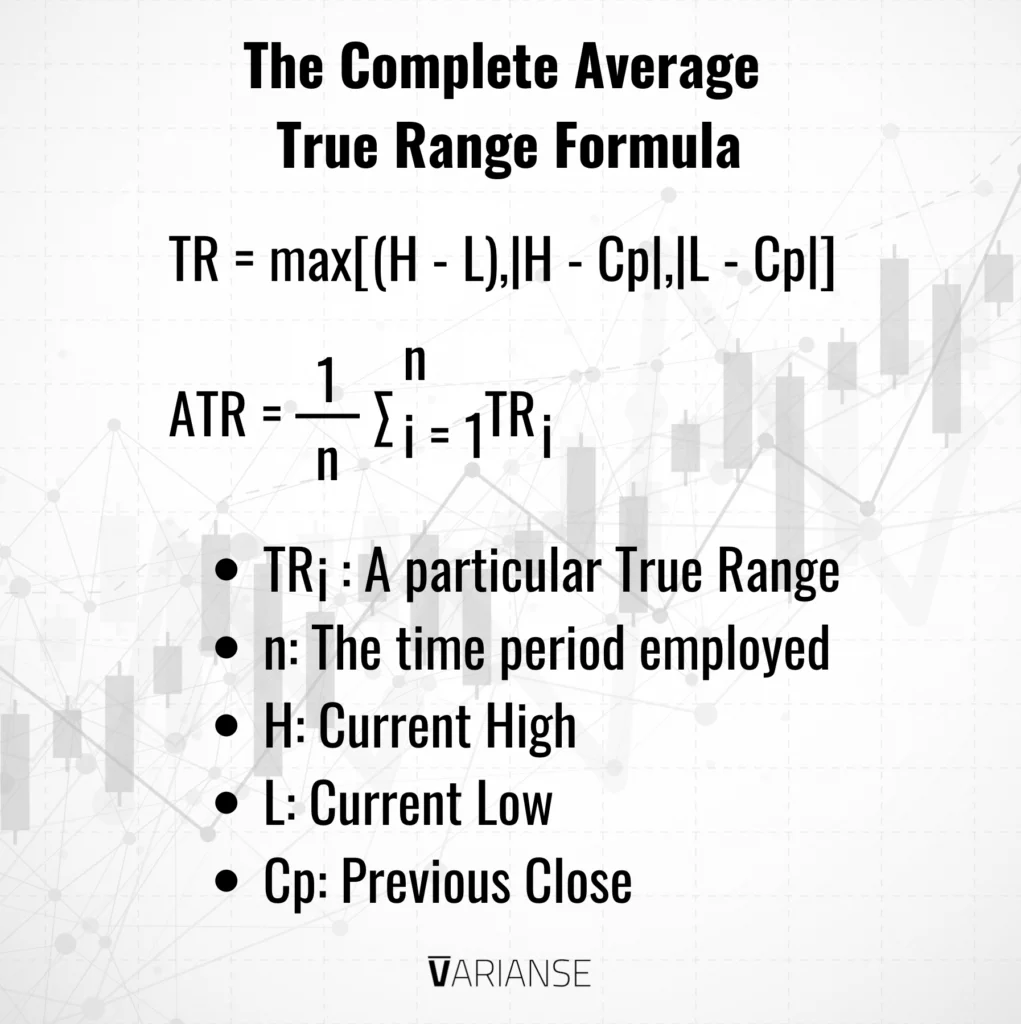
Use this framing:
- When ATR or intraday range is compressed, prioritize breakout and retest setups. The market is coiled, and expansion may still be ahead.
- When ATR is already expanded, prioritize pullback or mean-reversion entries with smaller size. A large portion of the day’s range may already be spent.
Match your ATR timeframe to your holding period:
- 5-minute or 15-minute ATR for scalps.
- 1-hour ATR for day trades.
- 4-hour or daily ATR for multi-day swings.
Using a daily ATR to size a 5-minute scalp hands you a stop so wide it defeats the purpose of a fast trade.
As context, not a promise, short-term crypto volatility can plausibly swing from the mid-single digits to the low teens as a percentage move within a single day. That is exactly why checking ATR before entry matters.
Volume and Relative Strength
Participation and direction are separate checks. Conflating them is how traders end up buying a coin that is only moving because the whole market is moving.
- Participation: compare current 24h volume against the coin’s own recent baseline. A simple 7-day average works as a proxy. Volume meaningfully above that baseline suggests real participation. Volume in line with or below baseline during a big price move is a warning sign.
- Relative strength: compare the coin’s behavior against Bitcoin and/or Ethereum. This confirms whether the move is independent strength or just market beta.
A clean relative-strength pattern is simple: if a coin holds up during Bitcoin pullbacks and then leads during Bitcoin rebounds, that points to genuine relative demand. If the coin drops harder than Bitcoin on the same dip, relative strength is weak and breakdown risk is higher.
News Catalysts and Sentiment
Short-term setups are frequently triggered by a narrow group of catalysts. The playbook changes depending on the catalyst type.
- Exchange listings/delistings — trade the initial impulse only while liquidity holds; if spreads blow out, wait for the retest.
- Protocol upgrade announcements — ride the first move only if the order book stays functional; otherwise wait until spreads normalize.
- Major security incidents — these often produce violent, illiquid moves. Letting the first spike pass and reassessing on the retest is usually safer than chasing.
- Regulatory headlines — impact can hit an entire sector, not only one coin, so check relative strength against BTC/ETH.
- Large partnership or treasury news — common on lower-cap names; verify depth before sizing in.
- Macro prints that move risk assets broadly — treat these as market-wide liquidity events first and coin-specific catalysts second.
Across all of them, apply a catalyst-decay check within the first 30 to 120 minutes. If volume starts fading and spreads widen again, the tradeable edge from the catalyst is likely gone even if the headline still feels fresh.
(No-)go checklist before every short-term trade:
- Liquidity OK — spread tight, depth real at your size, slippage estimated.
- Range/ATR sufficient — timeframe-matched ATR justifies the stop and cost.
- Volume confirms — participation above baseline, relative strength versus BTC/ETH checks out.
- Catalyst supports — impulse still fresh, spreads and volume have not decayed.
Bitcoin vs Ethereum for Short-Term Trades

BTC and ETH are often treated as interchangeable large-cap trades. They are not. Their liquidity profiles, catalyst sensitivity, and short-term behavior differ enough that the decision should be made deliberately.
| Decision Factor | Bitcoin (BTC) | Ethereum (ETH) |
|---|---|---|
| Typical lead signal | Break and hold through a prior session high/low with volume expansion | ETH/BTC turning up or down while BTC is flat or chopping |
| Best tape | Cleaner on trend days tied to macro or liquidation events | Cleaner on range-expansion days tied to network-specific news |
| Catalyst sensitivity | Macro prints, ETF flow headlines, broad risk-on/risk-off shifts | Protocol upgrades, DeFi/L2 flow data, ecosystem-specific headlines |
| Liquidity reliability at size | Generally deeper book; spreads hold better under stress | Usually thinner at the same notional size; spreads widen sooner |
| Wick/whipsaw tendency | Lower once confirmed | Higher inside its own range |
| Best pair to watch for confirmation | BTC dominance proxy or BTC/USD itself | ETH/BTC ratio |
| Where slippage risk shows up first | Mainly during extreme market-wide dislocations | Earlier, even during normal volatility on moderately sized orders |
| When to stand aside | BTC chopping directionless with no catalyst | ETH pumping on beta alone with ETH/BTC flat or falling |
Bitcoin-Led Market Scenarios
1. Macro-driven risk expansion.
This is the scenario where a scheduled macro print or sudden risk-on/risk-off headline hits, and BTC moves first because it is the main liquidity vehicle for many funds. ETH usually follows with a lag, often underperforming on the initial leg before catching up once direction is confirmed.
Lead/confirm checklist: BTC breaks the prior session high or low on a volume surge, correlated majors begin moving in the same direction, and ETH/BTC stays flat or dips during BTC’s first push.
Trade translation: BTC/USD momentum continuation is usually cleaner than chasing ETH/USD immediately, because BTC’s book absorbs the first surge with less slippage.
Failure mode to avoid: a headline spike that reverses as fast as it appeared. Instead of chasing the first candle, wait for a retest of the breakout level.
2. Liquidation cascade dislocation.
Forced liquidations on leveraged BTC positions can trigger a sharp, mechanical move that has little to do with fundamentals and everything to do with order book mechanics. ETH often mean-reverts hard once the cascade exhausts itself.
Lead/confirm checklist: BTC’s book shows large market orders sweeping multiple price levels, volume spikes above the session average, and ETH’s move outpaces what its own order flow would justify.
Trade translation: a breakout-retest setup on BTC/USD once the cascade slows is generally safer than fading ETH/USD mid-cascade.
Failure mode to avoid: trying to catch the exact bottom or top. Wait for spreads to normalize and volume to taper.
3. BTC dominance breakout.
Sometimes BTC trends while the broader altcoin complex lags. ETH may rise in dollar terms but still underperform on a relative basis.
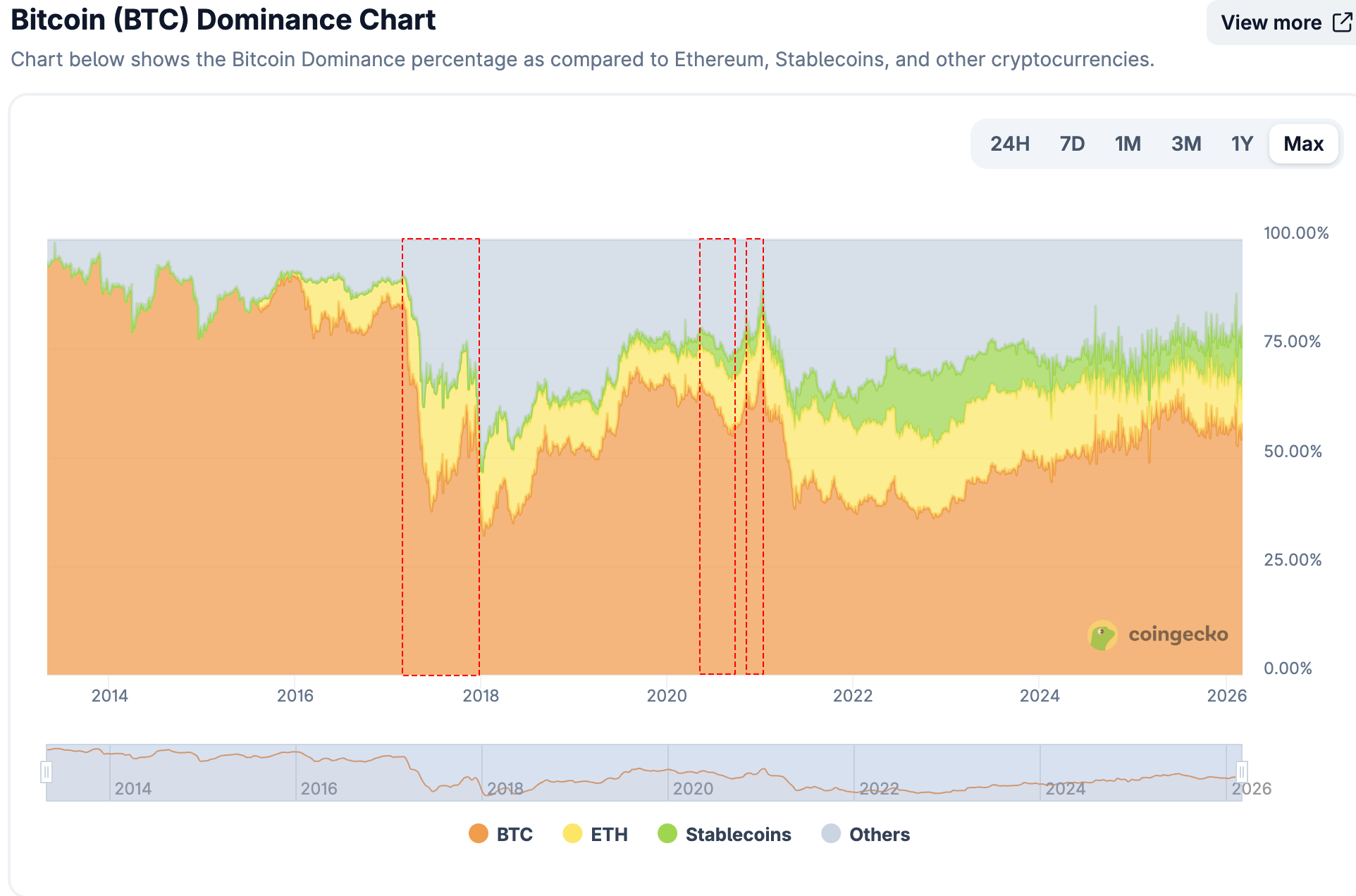
Lead/confirm checklist: BTC holds a breakout level on a retest with sustained volume, ETH/BTC grinds lower, and ETH’s candles look sluggish compared to BTC.
Trade translation: BTC/USD is the cleaner vehicle. ETH/BTC can also be traded directionally by traders comfortable with that pair.
Failure mode to avoid: assuming ETH will “catch up” simply because BTC is strong. If ETH/BTC keeps making lower highs, that is the signal to stay in BTC.
Ethereum-Led Market Scenarios
1. Network upgrade or roadmap catalyst.
When a protocol-specific headline lands — a mainnet upgrade, roadmap confirmation, or major scaling announcement — ETH can lead independently of BTC.
Proof ETH is leading: ETH/BTC rises while BTC chops sideways, and ETH holds its bid during brief BTC pullbacks.
Disqualifier: if ETH is pumping but ETH/BTC stays flat or slips, that is market beta dressed up as a catalyst reaction.
Volatility-handling note: ETH’s range on catalyst days tends to be wickier than BTC’s. Stops should sit further from the immediate range, using the same ATR-based range-proxy logic.
Rotation note: strength can spill into smart-contract and L2 beta shortly after, but ETH/BTC must confirm first.
2. DeFi/L2 rotation surge.
On days when on-chain activity data shows inflows, fee growth, or L2 usage spikes, ETH can lead while BTC sits quietly in a range.
Proof ETH is leading: ETH holds gains through a BTC pullback and ETH/BTC trends upward across multiple sessions, not just one candle.
Disqualifier: a one-session ETH spike with ETH/BTC unchanged is more likely noise than rotation.
Volatility-handling note: rotation days can produce sharp intraday reversals as capital moves between ETH and L2-correlated assets. Size stops accordingly.
Rotation note: this is often the case where trading ETH directly is cleaner than chasing smaller L2 or DeFi names.
3. ETH derivatives positioning day.
ETH can also lead because of its own derivatives market: funding rate resets, options expiry pressure, or open-interest unwinds.
Proof ETH is leading: ETH/BTC moves decisively around the derivatives event while BTC stays range-bound.
Disqualifier: if ETH gives back the move in the same session and ETH/BTC retraces fully, it was likely a short-lived positioning flush.
Volatility-handling note: these days often create fast wicks around expiry or funding windows. Widen stops around the event, then tighten once it passes.
Rotation note: this type of ETH-led move rarely spills meaningfully into broader alt or L2 beta.
Event-Driven Trade Setups
Scheduled events — macro data releases, pre-announced protocol upgrades, and ETF-related headlines — reward patience over speed. Let the initial spread widening settle, confirm that direction holds through a retest, and only then commit size.
Trading the very first tick means competing with the fastest algorithmic flow on the thinnest liquidity. BTC is usually cleaner for scheduled macro-type events because its book recovers faster. ETH becomes the cleaner choice when the scheduled event is ecosystem-specific, such as a pre-announced upgrade date.

Unscheduled events — security incidents, exchange outages, or sudden liquidation cascades — shift the priority from opportunity-seeking to liquidity survival. Use limit orders, reduce size, and expect wider spreads than usual. If a modest order would sweep several price levels, stand aside entirely.
BTC tends to be the more survivable vehicle during broad market shocks. ETH can be more logical when the unscheduled event is clearly ecosystem-specific, such as a smart-contract exploit isolated to the Ethereum DeFi stack.
Liquidity and Volatility Trade-Offs
The trade-off is liquidity at size versus opportunity per unit of time. Bitcoin generally offers tighter, more stable execution. Ethereum, under ETH-led conditions, can offer larger tradeable swings, but with thinner books and faster-moving spreads.
Before choosing between them, run this microstructure checklist on both:
- Is the bid-ask spread holding steady or jumping around?
- Is there visible depth a few ticks from mid-price, not just at the touch?
- Would a market order of your intended size sweep multiple levels or fill cleanly?
When the tape is thin or moving fast, limit orders are the safer default. When the book is deep and spreads are stable, market orders become acceptable. The cleaner book on your venue should determine the trade, not a general preference for BTC or ETH.
Altcoin and Meme Coin Candidates
Once you move past BTC, ETH, and the other large-cap anchors, intraday range can expand quickly. That extra range is the attraction, but it also raises the tradeability threshold. Thin depth, sentiment swings, and catalyst decay show up faster here than on the majors.
BNB and XRP
BNB — exchange-ecosystem beta.
BNB is decent as a proxy for exchange-ecosystem strength rather than a standalone narrative play.
- Best short-term when… BNB is showing range expansion after multi-session consolidation, or breaking and holding above a prior high on a retest with volume expansion above its own baseline.
- Catalyst types that actually move it: exchange/product announcements, chain activity narratives, and broader risk-on rotations that lift exchange-token beta.
- Execution constraint to check first: when the tape is moving fast and depth looks thin, default to limit orders.
- Fast invalidation: a pump that fades on declining volume within the first candle or two is liquidity-driven, not trend-driven.
XRP — headline-sensitive, bursty momentum.
In contrast, XRP is a name that moves in sharp, news-driven bursts rather than clean sustained trends.
- Best short-term when… XRP breaks a prior session range on a legal/regulatory or exchange-related headline with volume clearly above baseline, then holds the retest.
- Catalyst types that actually move it: legal/regulatory headlines, exchange listing or partnership news, and broader altcoin rotation.
- Execution constraint to check first: XRP’s 24-hour trading volume has regularly run in the multi-billion-dollar range across major venues, per CoinDCX market data, which is generally enough depth to clear a basic liquidity screen. However, confirm that volume on the specific pair you are trading, not the aggregate figure.
- Fast invalidation: if volume spikes but price prints lower highs immediately after the impulse, that is catalyst decay.
Cardano and Dogecoin

Cardano — slower-moving large-cap alt.
Cardano behaves more like a traditional trend/range name than a pure sentiment-driven mover.
- Best short-term when… ADA is holding a clean trend structure with rising volume, or completing a breakout-retest where the retest holds above the prior range.
- Catalyst types that actually move it: ecosystem upgrade or roadmap announcements, partnership/treasury news, and broader altcoin-rotation sentiment tied to BTC/ETH strength.
- Execution constraint to check first: confirm spread stability and resting depth near mid-price.
- Fast invalidation: skip if price is stuck mid-range with declining volume. That is chop, not a tradeable structure.
Dogecoin — meme-driven beta.
Dogecoin moves on market sentiment and social attention more than protocol-level development.
- Best short-term when… sudden volume expansion pairs with a clean break of the prior session’s range.
- Catalyst types that actually move it: social-media and influencer attention spikes, meme-coin sector rotation, and risk-on sentiment waves.
- Execution constraint to check first: check order book depth at your size before entering.
- Fast invalidation: mean-reversion whipsaws after the first impulse are common. If that happens, reduce hold time and tighten invalidation.
Shiba Inu and ApeCoin
These names require a microstructure-first read, partly because small per-token prices can create a misleading sense of safety.
Shiba Inu (SHIB)
- A cheap per-token price does not mean lower risk. This is unit bias. Size SHIB by notional value, not by how many tokens your order buys.
- Best short-term when… SHIB shows range expansion after consolidation alongside a broader meme-sector volume surge, or a breakout-retest holds with volume confirming real participation.
- Catalyst types that actually move it: social sentiment waves, meme-coin sector rotation, and exchange listing or token-burn announcements.
- Execution constraint to check first: verify spread and depth at the notional size you actually intend to trade.
- Fast invalidation: wicks through key levels or sudden spread blowouts are immediate stand-aside signals.
ApeCoin (APE)
- Treat the liquidity reality check as the central step. Verify that the specific pair — USD, USDT, or perp — holds stable spreads at your target size.
- Best short-term when… APE breaks and holds above a prior consolidation high with volume clearly above its own baseline, or shows relative strength against BTC/ETH during a broader altcoin bid.
- Catalyst types that actually move it: NFT/gaming ecosystem news, token utility or governance announcements, and broader altcoin rotation.
- Execution constraint to check first: if spreads are not stable at your size, avoid market orders entirely and use limits.
- Fast invalidation: a volume spike that immediately fades, or a book that thins out as you size in, is a clear skip signal.
Monero and High-Volatility Alternatives
If you go for it, this category should be treated as a controlled special-situations basket rather than a core rotation.

Monero (XMR)
- Venue availability and spread/depth behavior vary more for Monero than for most names on this list, partly due to listing differences across exchanges.
- Go/no-go rule: only trade Monero where spreads remain stable through your intended entry and exit.
- Best short-term when… XMR shows range expansion after a quiet stretch with volume confirming the move, or a breakout-retest holds on a venue where depth is confirmed stable.
- Catalyst types that actually move it: privacy-regulation headlines, exchange listing or delisting news, and sector-wide rotation into or out of privacy-focused assets.
- Fast invalidation: sudden spread blowout as you approach entry size is an immediate stand-aside signal.
High-Volatility Alternatives
- This category covers smaller-cap names, newer listings, and other high-beta tokens not otherwise detailed in this guide.
- Best short-term when… the name shows clear relative strength versus BTC/ETH alongside a volume surge well above its own baseline, or a breakout-retest holds on a venue where the book has already been checked.
- Catalyst types that actually move it: listing/delisting news, sudden social-sentiment spikes, and sector-wide speculative rotation.
- Execution constraint to check first: if the order book is thin at your size, treat the name as scalp-only at most — or skip.
- Fast invalidation: a pump with fading volume or sudden spread widening both mean the same thing: exit or avoid.
Rotation map: choose among these candidates in order:
- Identify which name is showing genuine relative strength versus BTC/ETH.
- Confirm that its volume is expanding against its own recent baseline.
- Check that spreads and order book depth are stable on your venue at your size.
- Only then choose the setup: breakout-retest if the move is extending, or range fade if it is oscillating without follow-through.
For higher-beta L1 rotations, Avalanche is a common example of the type of asset that can look explosive on the chart while still requiring an extra-strict spread/depth check before you treat it as anything other than a tactical trade.
Trade Execution Framework
Once a coin clears liquidity, ATR/range, volume, and catalyst checks, the next decision is not whether it is interesting. It is how to trade it.
The holding period must match the tape. Scalps, day trades, and multi-day swings are different playbooks. Do not blend them after entry in case the price moves against you.
Scalping Setups
Scalps are measured in minutes, not hours. Each setup needs a distinct trigger.
1. Breakout micro-structure: range break + immediate hold
- Market conditions required: tight, stable spread; visible depth a few ticks beyond the touch; and 1–5 minute ATR wide enough to cover spread plus stop.
- Execution method: limit-first at the breakout level or on a micro-pullback. Market orders are acceptable only if depth is thick and spread is stable.
- Invalidation: price closes back inside the prior range on the same timeframe.
- Common failure mode: spread widens the instant you are filled, turning a small-risk idea into a full loss before the trade works.
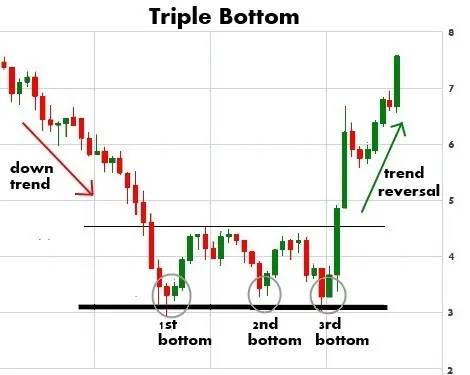
2. Breakdown reversal / liquidity sweep fade
- Market conditions required: a clear support zone or resistance area with resting liquidity above or below it, and a wick that pierces the level on a volume spike.
- Execution method: limit order at or just inside the reclaim level, entered only after price closes back above or below the swept level.
- Invalidation: a second sweep through the same level without reclaim.
- Common failure mode: entering on the wick itself instead of waiting for the reclaim candle.
3. Pullback continuation
- Market conditions required: clean impulse on rising volume, followed by a shallow retrace that holds a higher low or lower high.
- Execution method: limit order on the retrace into minor support or resistance, confirmed by a candlestick pattern rather than a blind limit drop.
- Invalidation: retrace deepens past 50–60% of the impulse leg.
- Common failure mode: averaging into a deepening retrace and turning a scalp into an unplanned swing.
One rule applies across all three: avoid trading into catalyst-decay chop. Once volume fades and the initial impulse is spent, momentum scalps should stop. At that point, only tight mean-reversion setups remain defensible.
Day Trading Setups
Day trades map to the intraday regime.
1. Trend day
- Regime confirmation: higher highs and higher lows, or the inverse, with sustained volume.
- Preferred entry: breakout-retest, entering on the pullback to a broken resistance area now acting as support zone.
- Management rule: one add maximum after a retest holds.
2. Range day
- Regime confirmation: price oscillates around a mid-range level with no breakout holding for more than a candle or two.
- Preferred entry: range extreme fade near support zone or resistance area, confirmed by a candlestick pattern.
- Management rule: no new entries after a second failed breakout attempt.
3. Event-driven day
- Regime confirmation: clear post-event direction that holds through an initial retest.
- Preferred entry: breakout-retest after the first move has been tested and the book has recovered.
- Management rule: add only on confirmed retests.
Pair selection rule: trade the cleanest pair available on your crypto exchange — USD, USDT, or perp — based on spread stability and resting liquidity. A good coin on a thin pair is still a thin-liquidity trade.
Multi-Day Swing Setups
1. Breakout-and-hold above consolidation
- Timeframes: daily chart for structure; 1-hour or 15-minute chart for retest entry.
- Stay-in vs get-out: stay in while price holds above the broken consolidation range on a daily close.
- Liquidity note: overnight liquidity can thin meaningfully. Avoid size that would require a market order exit.
2. Trend continuation after higher-timeframe pullback
- Timeframes: 4-hour or daily chart for trend; 1-hour chart for entry.
- Stay-in vs get-out: stay in while pullbacks continue printing higher lows or lower highs.
- Liquidity note: confirm that the pair maintains stable depth outside peak trading hours.
3. Mean-reversion swing from exhaustion
- Timeframes: daily chart to identify exhaustion; 1-hour chart to time entry.
- Stay-in vs get-out: stay in until price reaches the prior value area or consolidation zone.
- Liquidity note: use limit orders for entry and exit, especially around weekend or overnight liquidity gaps.
Entry and Exit Triggers
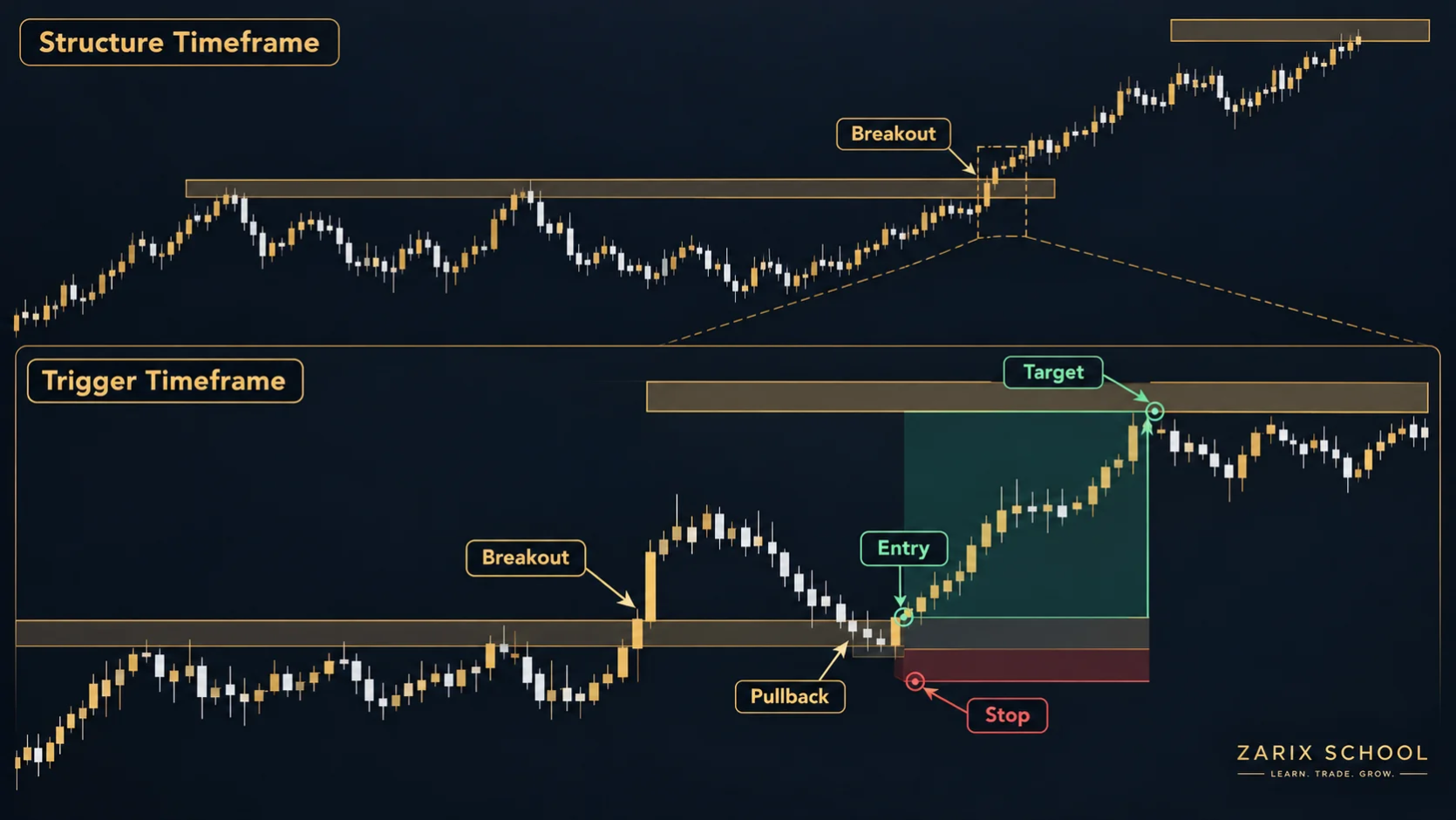
A standardized trigger library keeps your process consistent.
Entry triggers:
- Break and hold above the prior session high with rising participation.
- Retest of a breakout level holds with reduced wick length versus the initial breakout candle.
- Sweep of a prior low followed by reclaim within the same or next candle.
- Rejection at a support zone or resistance area with decreasing pressure in the candlestick pattern.
Exit triggers:
- Take profit into the opposite side of the established range.
- Take profit as price reaches a prior consolidation zone or value area.
- Exit when the invalidation level is hit.
- Exit or stop adding when spreads widen materially or top-of-book depth thins at your size.
Limit vs. market order decision tree:
- Check the current spread.
- If stable, check visible depth a few ticks beyond the touch.
- If both spread and depth are solid, a market order is acceptable.
- If spread is widening or depth is thin, use a limit order.
- If neither condition improves, treat it as a no-trade.
No-trade triggers:
- Repeated wicks through a key level without clean reclaim or breakdown.
- Sudden spread blowout while sizing in.
- Thin book at your target size despite normal-looking headline volume.
- Sharp volume collapse after a catalyst spike.
Position Sizing and Risk Management
Every playbook above assumes you survive long enough to execute it more than once. Position sizing is what makes that possible. It converts a setup into a trade you can afford to be wrong about.
Account Risk per Trade
Use a fixed risk budget expressed as a percentage of account equity.
- Conservative — 0.25–0.5% of equity per trade. Suitable for swing positions held over multiple days.
- Base — 0.5–1% of equity per trade. The default for day trades.
- Aggressive — 1–1.5% of equity per trade. Reserved for scalps with fast invalidation.
The tier should track holding period. Scalps happen frequently, so session risk can stack quickly. Swings happen less often but expose you to overnight liquidity changes, so they warrant smaller per-trade risk.
Position size (in $) = (Account equity × risk %) ÷ (Stop distance %)
For example, with $10,000 in equity, a 1% risk budget, and a 2% stop distance:
($10,000 × 0.01) ÷ 0.02 = $5,000 position size
If the stop distance widens to 4%:
($10,000 × 0.01) ÷ 0.04 = $2,500 position size
Same dollar risk, half the position size. This is the mechanical link between stop placement and position sizing.
One more constraint sits above per-trade sizing: correlation stacking. If you hold multiple highly correlated positions — BTC plus a beta alt that tends to move with it — treat them as one basket. Cap combined open risk across those positions at 2–3× a single trade’s risk budget.
Stop-Loss and Take-Profit Levels
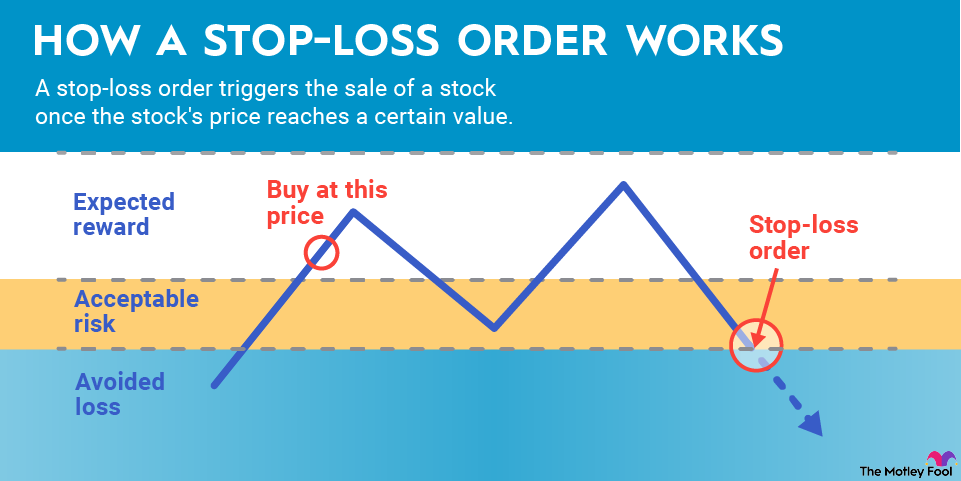
A stop-loss order should be built from three layers:
- Structure-based stop — beyond the relevant swing high or swing low.
- Volatility-based buffer — extra room based on the current timeframe’s range.
- Microstructure buffer — avoids placing the stop exactly at an obvious round number or prior session extreme.
Check reward-to-risk before entry. Planned trades should target at least 1.5R. Only strict scalps with fast, defined invalidation can justify 1R. If the nearest logical target offers less than 1R, skip or wait for a better entry.
Take-profit logic should match the holding period:
- Day trades: scale out a portion at 1R, then trail the remainder behind structure.
- Range days: use fixed targets at range boundaries.
- Scalps: apply a time-based exit if the trade does not move in your favor within a defined number of candles.
Layer one override on top: if the bid-ask spread widens materially or top-of-book depth thins at your trade size, exit or reduce even if price has not touched your stop. The liquidity backing the trade has failed.
Leverage and Liquidation Controls
Leverage decisions come after the stop is defined, never before.
The sequence is: define stop → calculate size → confirm liquidation buffer → place trade
In normal conditions, the stop should trigger well before liquidation becomes relevant. Reversing the sequence — choosing leverage first and then forcing a stop around it — is how traders end up with liquidation closer than their actual invalidation.
Scale leverage to setup quality:
- No leverage during event-driven chaos or immediately around major headlines.
- Low leverage only when spreads are stable and the stop distance is already tight.
- Never increase leverage to “fix” a wide stop. A wide stop calls for smaller size, not more leverage.
For perpetual swaps, check funding rate direction before entry. Persistent funding in one direction shows which side is crowded and paying to stay positioned. Holding a leveraged trade through a funding window working against you adds carrying cost and crowd risk.
Liquidation-cascade callout: Forced liquidations can trigger a sharp, mechanical price move that has little to do with fundamentals and everything to do with order book mechanics — a dynamic documented in cryptocurrency market analysis covering short-term trading conditions. That mechanism is the practical justification for keeping leverage caps conservative and for having a predefined "pause trading" rule during shock moves — by the time a cascade is visible on the chart, the safer move is usually to stay out of it rather than try to time the bottom or top.
When a cascade is underway, follow three steps:
- Reduce size or cut leverage immediately.
- Switch to limit orders or step away once fills behave erratically.
- Pause new entries until spreads and depth normalize.
This sequence exists to stop traders from averaging down into forced-liquidation flow.
Slippage and Order Book Checks

Before sizing into any trade, run a slippage test separate from the general liquidity screen. Simulate your order size against the top 3–10 visible levels of the order book and see how far price would move to fill it.
If a market order would sweep multiple visible levels, do not send a market order. Use a limit order with an acceptable slippage band, or skip the trade if no acceptable price is available.
One execution detail matters here: stop-market orders can fill far worse than expected during a fast move because, once triggered, they fill into whatever liquidity exists at that instant. During a sharp spike, that can be very little. Use stop-limit orders only when liquidity is stable enough that a brief gap is unlikely to skip the fill entirely. Otherwise, reduce size or avoid placing a stop where it is likely to trigger into an illiquid spike.
Frequently Asked Questions
Which crypto should beginners consider for short-term trading?
Beginners should default to the most liquid large caps: BTC and ETH, with SOL added only if liquidity and bid-ask spread checks pass cleanly on the chosen venue. Deep order books reduce slippage and whipsaw risk while execution skills are still developing.
“Beginner-friendly” does not mean profitable by default. It only means the execution environment is easier to manage.
Are stablecoins like USDT and USDC worth holding between trades?
Yes, conditionally. A stablecoin can be useful as a parking vehicle between trades because it reduces market exposure and lets capital redeploy quickly without converting back to fiat each time.
However, moving in and out of USDT or USDC can still create tracking and tax ledger events. Either stablecoin can also trade slightly off its $1 peg during stress on a given crypto exchange.
What crypto under $1 has short-term trading potential?
From our rating, Cardano and Dogecoin are the best candidates for this particular demand.
Price per token is not a signal. “Under $1” only becomes tradeable when the coin passes the same liquidity, bid-ask spread, and order book depth checks as any other asset, backed by real volume expansion.
Without participation, a sub-$1 token is simply a slippage trap dressed up as an opportunity. Evaluate by notional position size and realistic percentage move potential, not by how many tokens the order buys.
Are altcoins under $1 good for short-term trades?
Sometimes, but only when three conditions are present:
- Order book depth is sufficient at your actual trade size.
- Spreads remain stable through volatility.
- There is a clear catalyst or relative strength versus BTC/ETH.
Absent those conditions, sub-$1 altcoins are usually better left alone for short holding periods. A small nominal price can hide a large percentage spread and poor fills.
A practical data habit strengthens all of the above: cross-check a coin’s market capitalization and rank on CoinMarketCap before treating it as tradeable by default. Then validate whether the move is backed by real on-chain volume where applicable, and whether tokenomics — emissions, unlock schedules, and supply concentration — create predictable supply shocks that can distort short-term setups.