
What is Dogecoin (DOGE)? A Beginner's Guide


Key Takeaways
- 🐕 Dogecoin (DOGE) is a real Proof-of-Work payment chain, not “meme tech.” It’s a simple UTXO cryptocurrency with fast (~1 minute) blocks and typically low fees.
- 🐕 The 2014 security pivot is AuxPoW merged mining with Litecoin. Dogecoin became meaningfully more 51%‑attack resistant by piggybacking on Litecoin’s Scrypt mining ecosystem—shared proof-of-work, separate blockchains.
- 🐕 Tokenomics of DOGE come with uncapped supply but predictable inflation rate.
- 🐕 Dogecoin’s cycles are attention-driven. Price moves are typically triggered by social virality, celebrity mentions, exchange listings, community stunts, and broader altcoin rallies—not protocol upgrades—so volatility is a feature, not a surprise.
Contents
- 1. Dogecoin’s Origins and History
- 2. Technology behind Dogecoin and Its Network Security
- 3. Dogecoin Tokenomics: Supply Dynamics and Monetary Policy
- 4. What is Dogecoin Used For?
- 5. Risks and Concerns of Dogecoin (DOGE)
- 6. Public Figures and Organizations
- 7. Dogecoin vs Other Cryptocurrencies: BTC, LTC, SHIB
- 8. Dogecoin’s Outlook for 2026
- 9. Conclusion
Disclaimer:
This content serves educational purposes only and does not constitute investment, tax, or legal advice. Cryptocurrency prices, network fees, and protocol parameters change rapidly; specific figures referenced throughout this article include dates and sources to help readers verify current data. Always conduct independent research and consult qualified professionals before making financial decisions involving digital assets.
Dogecoin started as a joke and kicked off a meme coin phenomenon but it is much more than its humble beginnings. What began as a satirical project in 2013 evolved into a network secured through merged mining with Litecoin, processing transactions with lower fees than many established cryptocurrencies while maintaining an intentionally inflationary supply model. That magic mix of technical accessibility, community-driven adoption, and volatile price movements makes understanding Dogecoin’s fundamentals essential for anyone evaluating it as a payment method or considering exposure to its market dynamics within broader blockchain technology, and this is exactly what this guide aims to explain.
Dogecoin’s Origins and History
Dogecoin was created in December 2013 as a satirical response to a (relative) boom of speculative altcoins, combining the existing Doge meme with functional cryptocurrency technology. Dogecoin’s identity is technical second and cultural first.
Jackson Palmer

Jackson Palmer, an Adobe product manager based in Sydney, conceived the initial Dogecoin concept as commentary rather than engineering. His primary contribution was ideation and branding—he registered the dogecoin.com domain and crafted the positioning that framed the project as an accessible, non-serious counterpoint to Bitcoin’s increasingly earnest culture.
Palmer’s intent was explicitly satirical: he aimed to critique the speculative frenzy surrounding altcoins in 2013, using absurdity as a rhetorical tool. This satirical framing influenced every branding decision, from the choice of the Shiba Inu mascot to the use of Comic Sans in early promotional materials, signaling that Dogecoin was not seeking institutional legitimacy.
Palmer has first mentioned the project on Twitter as a joke, attracting Billy Markus and many other crypto enthusiasts within hours, who quickly grew fond of making the idea real. Palmer did not write the codebase himself but his framing decision had lasting consequences. By positioning Dogecoin as “fun” rather than “serious,” he inadvertently created space for a community culture that prioritized tipping, charity fundraisers, and viral marketing over protocol governance debates. Palmer left the project in 2015, citing discomfort with the crypto industry’s trajectory, but the brand identity he established persists as Dogecoin’s defining characteristic.
Billy Markus
Billy Markus, an IBM software engineer from Portland, Oregon, provided the technical execution that Palmer lacked. Within days of Palmer’s announcement, Markus adapted the Luckycoin codebase, which was a Litecoin (LTC) code fork, to create a functional Dogecoin network.
Markus’s early design choices supported “fun + usability” by prioritizing fast block times (one minute per block, significantly faster than Bitcoin’s ten minutes) and low transaction fees, making microtransactions viable. He intentionally avoided complex consensus mechanisms or governance layers, keeping the codebase simple enough for hobbyists to run nodes without expensive hardware. Markus, like Palmer, eventually stepped back from active development but not involvement. To the community, he is also known under the nickname Shibetoshi Nakamoto.
Litecoin Codebase
Dogecoin inherited its technical foundation more or less from Litecoin, which itself forked from Bitcoin’s code. This lineage explains both Dogecoin’s strengths (mature design patterns, known security assumptions) and its constraints (dependency on upstream maintenance culture).
- Scrypt Proof-of-Work: Dogecoin adopted Litecoin’s Scrypt hashing algorithm, originally chosen to resist ASIC mining dominance (though ASICs for Scrypt eventually emerged).
- Block time and difficulty adjustment: Retained Litecoin’s one-minute block generation target, making transactions confirm faster than Bitcoin but requiring more frequent difficulty recalibrations.
- Supply issuance logic: Initially mirrored Litecoin’s diminishing block rewards, but Markus later modified the schedule to introduce perpetual issuance (detailed in the Monetary Policy section).
- Codebase maintenance burden: Because Dogecoin is a Litecoin derivative, security patches and protocol upgrades from Bitcoin and Litecoin can often be backported, reducing the need for an independent core development team.
- Fork compatibility risks: Any breaking change in Litecoin’s codebase may require Dogecoin developers to evaluate compatibility, creating implicit technical debt when developer resources are limited.
This inheritance model allowed rapid deployment in 2013 but also meant Dogecoin’s long-term security depended on either independent expertise or coordination with upstream projects—a tension that became critical during the 2014 merged mining transition.
Shiba Inu Logo

The Shiba Inu logo was not an arbitrary design choice: it directly leveraged the Doge meme, which had achieved widespread cultural penetration across Reddit, Tumblr, and 4chan by mid-2013. The meme featured a Shiba Inu dog, originally from a 2010 photograph of a Japanese dog named Kabosu, overlaid with broken English phrases in Comic Sans, expressing internal monologues like “so scare” and “much wow.” This format became viral shorthand for ironic enthusiasm and self-aware absurdity.
Early adopters from Reddit’s /r/dogecoin subreddit embraced the meme identity, organizing tipping campaigns and charity fundraisers that generated positive media coverage (e.g., sponsoring a NASCAR driver, funding clean water projects in Kenya). Conversely, critics dismissed Dogecoin as frivolous, arguing that meme-based branding undermined cryptocurrency’s legitimacy and attracted uninformed retail investors prone to speculative losses. Both responses proved accurate: Dogecoin’s community became exceptionally engaged and generous, while its price volatility and lack of formal governance attracted repeated boom-bust cycles.
Launch in 2013
Dogecoin officially launched on December 8, 2013, with the genesis block mined and the network client made publicly available. Initial traction came from Reddit’s /r/dogecoin subreddit (created the same day) and Bitcointalk forums, where users experimented with mining on consumer-grade hardware and tipped each other Dogecoin for entertaining posts.
By mid-December, the subreddit had thousands of subscribers, the network hashrate was climbing, and Dogecoin had been listed on its first exchange, enabling price discovery against Bitcoin. Success was measured qualitatively—viral spread, active community participation, and media mentions—rather than through price or market capitalization, which remained negligible.
The launch’s informal nature set a precedent: Dogecoin had no pre-mine, no founder allocation, and no marketing budget. Distribution occurred entirely through mining and tipping, creating a relatively equitable initial supply distribution compared to later altcoins.
Milestones
- December 8, 2013: Network launch and genesis block creation.
- December 19, 2013: First major exchange listing, establishing initial market liquidity.
- January 2014: Community-funded sponsorship of the Jamaican bobsled team for the Sochi Winter Olympics, generating mainstream media coverage and demonstrating Dogecoin’s cultural capital.
- September 2014: Implemented AuxPoW (Auxiliary Proof-of-Work) merged mining with Litecoin, a critical security upgrade that allowed Litecoin miners to simultaneously mine Dogecoin without additional computational cost. This decision addressed declining hashrate and 51% attack vulnerability after the initial mining hype subsided, fundamentally changing Dogecoin’s security model.
- 2015: Original Dogecoin Foundation dissolved, as Palmer and Markus stepped away from active involvement. Development slowed significantly, with minimal protocol updates for several years.
- May 2017: Market capitalization briefly exceeded $2 billion during the broader altcoin rally, marking Dogecoin’s first major speculative cycle.
- 2021: Dogecoin Foundation reformed, with new board members including Ethereum co-founder Vitalik Buterin as advisor and Markus returning in a limited capacity, signaling renewed organizational legitimacy.
- May 8, 2021: Dogecoin reached its all-time high of $0.7376, driven by social media virality and celebrity endorsements, before correcting sharply in subsequent months.
Technology behind Dogecoin and Its Network Security
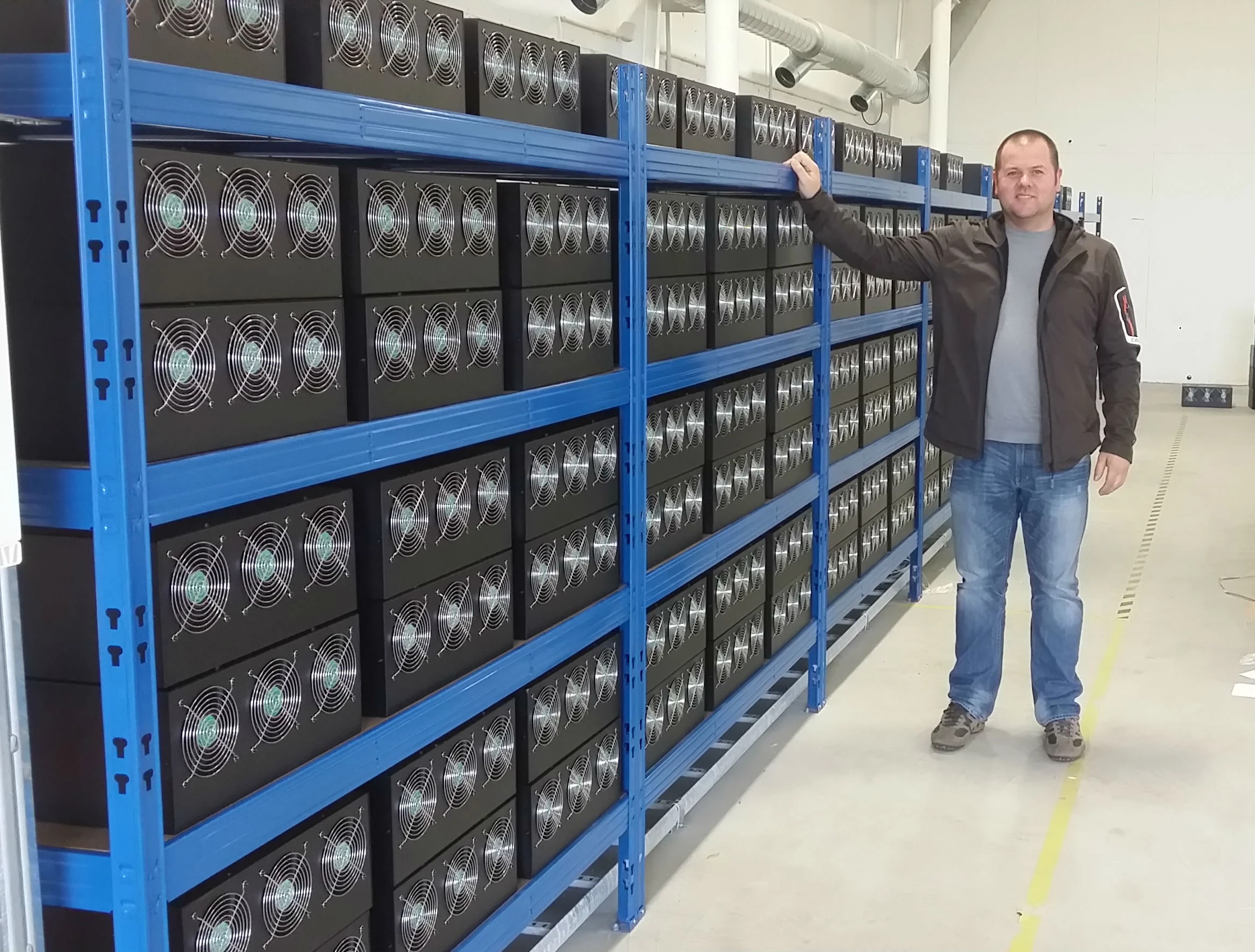
Dogecoin’s tech stack is not “meme tech.” It is a straightforward Proof-of-Work network with a familiar UTXO structure, a Scrypt mining algorithm, and a security model heavily improved by AuxPoW merged mining with Litecoin. The result is an old-school payment chain: simple, readable, and (when used correctly) reliable.
Open-Source Software
Dogecoin uses fully open-source client software, which enables independent verification of its consensus rules, networking protocols, and cryptographic implementations. In the context of blockchain development, “open-source” means that the reference node software (Dogecoin Core) and alternative client implementations are publicly available on repositories like GitHub, where anyone can examine the codebase that defines how transactions are validated, blocks are propagated, and wallets generate and manage private keys.
However, open-source alone does not guarantee security without active maintenance and coordinated response to discovered vulnerabilities. Open-source maximizes potential for community oversight, but real-world security depends on how many qualified reviewers actively participate and how quickly the project responds to emerging threats in the peer-to-peer network layer.
Peer-to-Peer Network
Much like the vast majority of cryptocurrencies, Dogecoin operates on a decentralized peer-to-peer network where nodes relay transactions and blocks via gossip protocols, propagating information without central coordination.
When a user broadcasts a transaction, it enters the mempool (unconfirmed transaction pool) of connected nodes, which then forward it to their peers until miners include it in a block. The gossip mechanism relies on each node maintaining connections to multiple peers—typically eight outbound connections in Dogecoin Core—and validating every relayed message against consensus rules before forwarding, which filters out invalid transactions but also means that heavily loaded nodes or network congestion can create temporary bottlenecks that slow confirmation times or cause legitimate transactions to stall in mempools.
What the Dogecoin blockchain network ultimately relies on for resilience is a large, geographically diverse set of honest nodes that outnumber attackers and maintain sufficient bandwidth to propagate blocks before malicious forks gain momentum.
Proof-of-Work
Dogecoin uses Proof-of-Work as its consensus mechanism, which means network participants running specialized software called miners compete with their computing power to produce a valid block to add to the chain (hence, the block chain). Without going into further detail, the security property Proof-of-Work provides is computational cost to rewrite history: an attacker trying to reverse a confirmed transaction must re-mine not just the block containing that transaction but all subsequent blocks faster than the honest network continues extending the chain, which becomes exponentially harder as more blocks accumulate.
Proof-of-Work security is proportional to the effective hashpower securing the chain, measured in the aggregate hash rate contributed by all miners. If total network hash rate is low, an attacker with modest resources can amass 51% of the computational power and reorganize recent blocks to double-spend or censor transaction; this “51% attack” was a significant concern for Dogecoin during its early years when Scrypt mining hardware was fragmented and hash rate fluctuated wildly. This is why merged mining with Litecoin was and is such a big deal; PoW is not secure by itself, but it can be nigh unbreakable in the right conditions.
Scrypt Algorithm
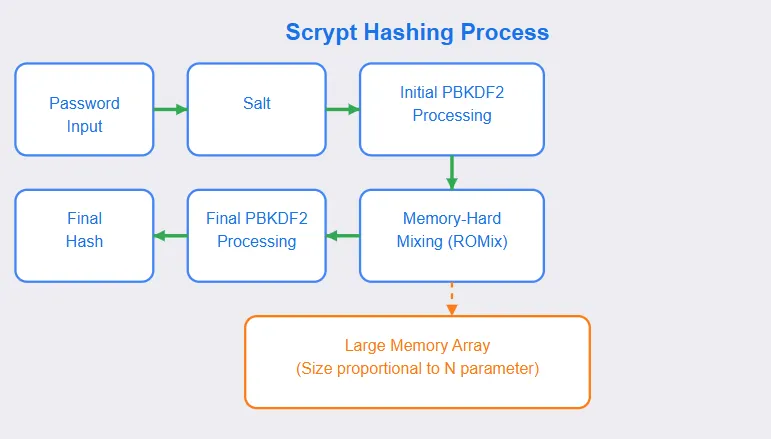
The Scrypt hash function to Dogecoin is the same as SHA-256 in Bitcoin’s protocol. What it means is cryptography powering Dogecoin mining requires memory-hard computations, translated into a practical implication that does not require a class of CompSci: Scrypt-based mining was more accessible to individuals with gaming PCs rather than concentrated in warehouses full of custom chips.
Although early on Scrypt was known to be ASIC-resistant, it did not prove to be immune. Eventually, specialized hardware was invented for the Scrypt hashing algorithm too. At the time of writing, Scrypt mining is dominated by hash rate provided by Application Specific Integrated Circuit (ASIC) machines, and hobbyist mining is not widely spread even for Dogecoin.
To address persistent concerns about low hash rate making consensus attacks economically feasible, Dogecoin adopted AuxPoW (Auxiliary Proof-of-Work) in September 2014. AuxPoW is a protocol extension that allows miners to submit proof-of-work that simultaneously secures both Litecoin (the parent chain) and Dogecoin (the auxiliary chain) without doubling computational effort: miners construct a Litecoin block that includes a commitment to a Dogecoin block header in its coinbase transaction, and if the resulting Litecoin block hash meets Dogecoin’s difficulty target, it counts as valid proof-of-work for Dogecoin as well.
The “merge” starts and ends at cryptographic proofs and work, though. In any other capacity, Dogecoin and Litecoin are entirely independent from each other. It is possible that for any reason, Litecoin miners could stop supporting Dogecoin but as long as they do, its network-level security remains at a good enough level.
Dogecoin Tokenomics: Supply Dynamics and Monetary Policy
Hopefully, by now the section title does not sound ridiculous to you; just like in the “crypto-” department, Dogecoin has got legitimate things going on in the “-currency” part as well. The key thesis of DOGE’s tokenomics is Dogecoin operates with no maximum supply cap, issuing a fixed 10,000 DOGE per block that translates to roughly 5 billion new coins annually, creating an inflationary model where the absolute issuance remains constant while the inflation rate declines over time as total supply grows.
This is the point where newcomers get tripped up. “No upper limit” sounds like chaos in the making, but Dogecoin’s issuance is actually one of its most predictable parameters.
Supply Model
Dogecoin’s monetary policy rests on a foundation of transparent, predictable rules that differ fundamentally from fiat currency systems. Here are the core mechanics:
- Uncapped supply: No protocol-level maximum exists; Dogecoin can theoretically expand indefinitely
- Proof-of-Work issuance: New DOGE enters circulation exclusively through block rewards paid to miners
- Static block reward: Each block awards exactly 10,000 DOGE, regardless of market conditions or total supply
- Abundant currency philosophy: Ongoing expansion prioritizes spendability and miner incentives over scarcity
The distinction between “no maximum supply” and “uncontrolled inflation” proves critical. While Dogecoin indeed has no cap on supply, the issuance follows strict protocol rules rather than arbitrary expansion. Moreover, “fixed issuance” means a constant absolute number of new coins annually, not a fixed percentage — a nuance that fundamentally shapes how inflation behaves over time.
Issuance Schedule and Inflation

The mathematics behind Dogecoin’s annual issuance becomes transparent when you break down the calculation: 10,000 DOGE per block × 1 block per minute (approximate target) × 525,600 minutes per year ≈ 5,256,000,000 DOGE per year.
This formula demonstrates why the “about 5 billion DOGE per year” figure appears consistently across market trackers and analyses. The calculation remains verifiable and constant, anchored to protocol-level parameters rather than external market forces.
The relationship between absolute issuance and inflation rate reveals Dogecoin’s most misunderstood characteristic: the absolute issuance remains constant (about 5.26B DOGE a year) but the inflation rate declines continuously because it is a percentage of the current circulating supply. The first figure stays fixed by protocol design, while the second naturally decreases as the circulating supply expands. This creates a predictable deflationary trajectory for the inflation rate itself, even as new coins continue entering circulation.
For miners, perpetual block rewards ensure ongoing incentives to secure the network even as transaction fees remain negligible (critical for a currency designed around microtransactions rather than store-of-value narratives). For everyday users, consistent supply expansion reduces hoarding incentives, promoting the “spend and replace” behavior essential for functional currency adoption.
What is Dogecoin Used For?
Dogecoin’s adoption centers on payment behavior—specifically, small-value transfers in social or community contexts where transaction friction matters more than formal invoicing. The low entry barrier to buy DOGE and start using it, along with its peer-to-peer network architecture attract users who prioritize speed and simplicity over institutional guarantees.
Tipping
Best for: Rewarding content creators, acknowledging helpful community contributions, and expressing appreciation in social contexts where traditional payment rails feel too formal.
How it works in practice:
- Acquire DOGE through an exchange or peer-to-peer transfer and hold it in a digital wallet.
- Locate the recipient’s public address on the Dogecoin network (often shared in a bio, social media profile, or livestream overlay). Optionally, for the peace of mind check the validity of this address with a blockchain explorer such as Dogechain.info.
- Send the desired amount from your wallet, confirming the transaction fee and network selection. The rule of thumb is a higher fee means higher priority, not necessarily speed: your transaction won’t move faster than the chain.
- Share the transaction ID (txid) with the recipient or verify receipt through a block explorer.
- Recipients check their wallet balance or block explorer for confirmation (typically 1–6 block confirmations for finality, or around 6 minutes).
Why DOGE is used here: Internet-based tipping thrives on low friction—DOGE’s sub-cent transaction fee makes micro-tips economically viable, unlike networks where fees exceed the tip value. The coin’s community-driven reputation signals goodwill and shared culture, creating social capital beyond the monetary transfer. Fast block times (around one minute) mean near-instant visibility in the recipient’s wallet, reinforcing positive feedback loops.
Donations

Best for: One-time or recurring financial support to nonprofits, open-source projects, disaster relief campaigns, and individual fundraisers where transparency and low overhead matter.
How it works in practice:
- Donors confirm the correct DOGE address published by the organization (cross-check on official websites, verified social accounts, or public registries).
- Select the donation amount, ensuring network selection matches Dogecoin’s mainnet (not test networks or other chains with similar tickers).
- Send the transaction; memo or tag fields are NOT required for DOGE transfers, unlike some other cryptocurrencies.
- Screenshot the confirmation page or copy the txid for personal recordkeeping and potential tax documentation.
- Organizations acknowledge receipt through automated notifications or manual thank-you messages, often including the txid for donor verification.
Why DOGE is used here: Crypto donations benefit from DOGE’s low fees, which preserve the donor’s intended contribution—traditional payment processors can take 2–5% plus fixed fees, while DOGE fees typically stay under $0.01. The transparent blockchain allows donors to independently verify fund movement without relying on intermediary reporting. Community alignment with charitable causes (historical examples include Dogecoin-funded initiatives for clean water and disaster relief) creates brand affinity.
Crowdfunding
Best for: Community-funded projects, creator patronage, and grassroots initiatives where decentralization matters and backers accept volatility risk in exchange for direct participation.
How it works in practice:
- Campaign organizers publish a single collection address (simpler but harder to attribute) or generate unique addresses per backer using wallet software or payment processors.
- Backers send pledged amounts to their assigned address or the shared campaign address, noting the txid for their records.
- Organizers track incoming transactions via block explorer or wallet software, matching txids to backers if using unique-address attribution.
- Upon campaign completion (time-based or goal-based), organizers either proceed with the project or execute refund policies if the goal isn’t met.
- Transparent reporting involves sharing wallet addresses publicly so backers can independently audit total raised amounts.
Why DOGE is used here: Crowdfunding benefits from DOGE’s censorship resistance—no payment processor can freeze funds or reject a campaign based on subjective content policies. Lower fees mean more of each pledge reaches the organizer rather than intermediaries. The community’s historical crowdfunding successes create cultural legitimacy, attracting backers who value participation in shared endeavors over purely transactional relationships.
Peer-to-Peer Payments
Best for: Informal value transfers between individuals: splitting bills, repaying friends, cross-border remittances, or any scenario where both parties hold crypto wallets and prefer avoiding traditional banking rails.
Why DOGE is used here: Peer-to-peer payments benefit from DOGE’s speed and cost—traditional payment apps may charge 1–3% for instant transfers or require both parties to use the same platform, while DOGE only requires compatible wallet software. Cross-border transfers avoid correspondent banking delays and fees, making international splits or repayments practical. The absence of intermediary approval means payments clear 24/7, including weekends and holidays.
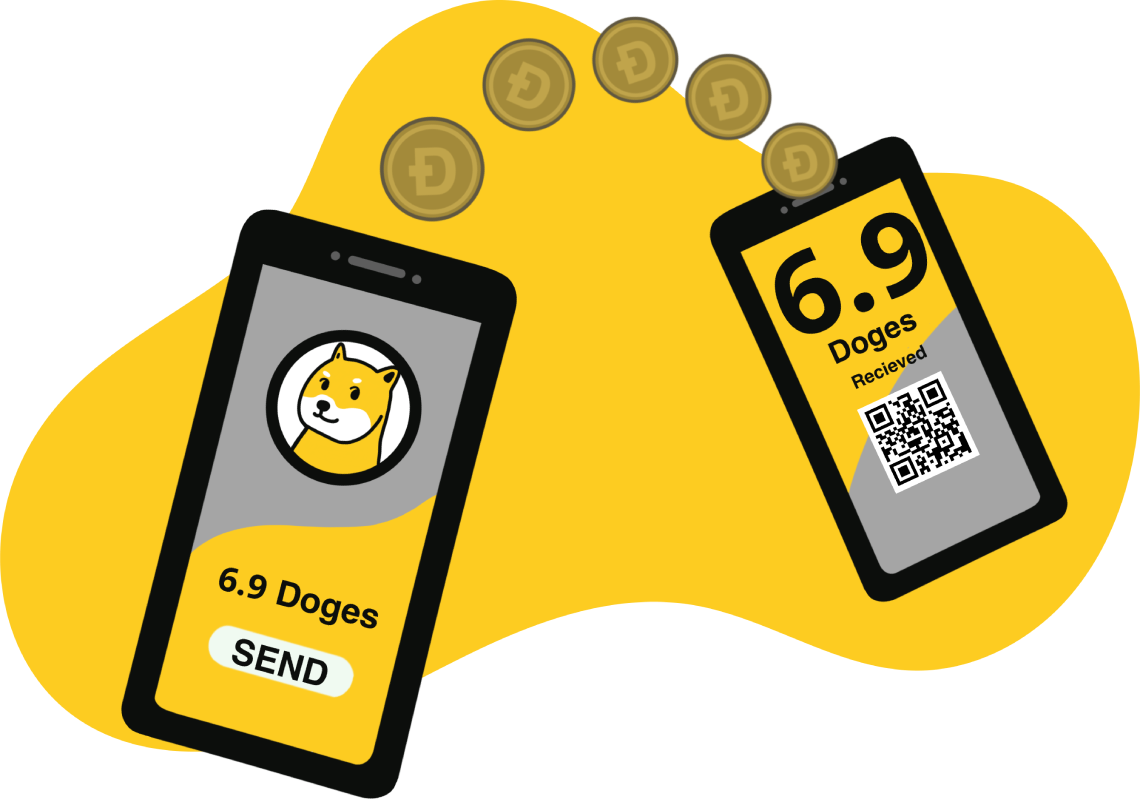
When NOT to use DOGE for P2P: If you need instant finality with zero confirmation wait (e.g., face-to-face transactions with strangers), require formal dispute resolution (purchase protection, chargebacks), or deal with parties who lack technical comfort with wallets, consider custodial balances within payment platforms or traditional payment rails instead. Conceptually, systems offering crypto escrow or third-party arbitration better fit these scenarios.
Additionally, Dogecoin is viable for merchant payments, either direct or through a crypto gateway service, and microtransactions (pay-per-call, in-game payments with real money, etc.). According to the Cryptwerk directory, there are no fewer than 2,200 merchants worldwide accepting Dogecoin. As for the latter, the fact that the daily average transaction value in DOGE has not gone below $200 USD equivalent for three years (data sourced from Bitinfocharts) is at the very least suggesting that the bulk of Dogecoin transactions daily is not in microtransactions; it is in speculative trading.
Risks and Concerns of Dogecoin (DOGE)
It is true that there is at least some inherent fundamental value even in Dogecoin, as far as cryptocurrencies go. However, it is not to claim that it is risk-free; Dogecoin operates as a high-volatility, sentiment-sensitive cryptocurrency asset that demands continuous monitoring of liquidity depth, network concentration patterns, regulatory exposure, and development cadence. Unlike traditional investments where fundamentals anchor price behavior, DOGE responds primarily to attention cycles, social media dynamics, and broad crypto market beta, making risk assessment a moving target.
Volatility
Dogecoin famously exhibits pronounced price swings that can exceed double-digit percentage moves within 24-hour windows, particularly during periods of heightened social media activity or macro market stress.
Event-driven gap risk represents another volatility dimension that DOGE holders must track. News cycles tied to cryptocurrency exchange listings, celebrity mentions, or sudden shifts in Bitcoin’s price can trigger immediate 20-30% gaps as liquidity providers widen spreads or temporarily withdraw. Moreover, weekend trading often sees exaggerated moves due to lower overall crypto market liquidity, compounding the risk for positions held through non-traditional trading hours.
Volatility catalysts to monitor include:
- Social-media-driven attention spikes from influencer posts or trending hashtags
- Exchange listing announcements or delistings that alter available liquidity pools
- Macro risk-on/risk-off shifts that amplify or dampen speculative asset flows
- Bitcoin and Ethereum price action, given DOGE’s high correlation to broader crypto sentiment
- Regulatory headline events that affect meme coins or speculative tokens broadly
Market Capitalization
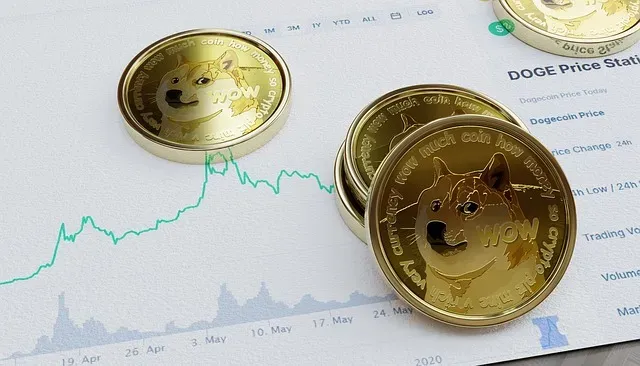
Market capitalization for Dogecoin represents the product of price multiplied by circulating supply, offering a snapshot of the asset’s aggregate nominal valuation. As far as meme coins go, by this metric Dogecoin is the most valuable one. However, this figure can mislead when comparing highly liquid assets to thinly traded ones, since market cap does not account for the actual capital required to move price or the depth of real buy-side demand. A high market cap with low trading volume suggests that the valuation is fragile—relatively small sell orders can trigger disproportionate price declines.
Plus, comparing market cap against total trading volume and exchange reserves provides a reality check on liquidity depth. If market cap grows rapidly without corresponding volume increases, the valuation may rest on thin conviction, vulnerable to sudden reversals when selling pressure emerges.
Dogecoin Price Drivers
DOGE price behavior stems from three distinct but interacting driver categories, each contributing different dynamics to valuation and volatility.
- Sentiment and Attention Drivers: Social media mentions, meme cycles, and influencer endorsements form the primary attention engine for DOGE. Spikes in Twitter trending activity, Reddit forum engagement, or celebrity posts correlate strongly with short-term price surges, often generating self-reinforcing feedback loops as new buyers chase momentum. These drivers create episodic demand bursts but rarely sustain price support once attention fades.
- Crypto Market Beta: Dogecoin exhibits high correlation with Bitcoin and Ethereum price movements, functioning as a leveraged expression of broader crypto risk sentiment. During risk-on conditions when BTC rallies, DOGE typically amplifies those gains; conversely, market-wide sell-offs hit DOGE harder than large-cap assets. This beta relationship means DOGE traders must monitor macro crypto conditions as closely as DOGE-specific news.
- Fundamentals and Utility: While less dominant than sentiment, payment adoption, transaction cost efficiency, user experience improvements, and merchant or platform integrations provide baseline utility support. Increased usage for tipping, micropayments, or remittances can stabilize demand and reduce reliance on speculative flows, though these developments unfold slowly compared to attention-driven moves.
Does Dogecoin Fit in My Crypto Portfolio?
At the end of the day, Dogecoin’s risk profile and return characteristics make it a speculative satellite holding rather than a core portfolio component. Potential role options include tactical trades capitalizing on attention cycles, small “fun money” sleeves for high-risk/high-reward exposure, or event-driven positions around anticipated catalysts like social media trends or exchange listings.
Legal Status and Regulation
Token classification uncertainty remains unresolved in many regions—whether DOGE constitutes a security vs commodity, or property for tax and regulatory purposes affects legal obligations and available trading venues. Unlike Bitcoin’s relatively clear commodity treatment in the U.S., meme coins occupy a gray zone that invites scrutiny during enforcement sweeps.
Exchange listing and compliance risk represents a tangible threat to liquidity and accessibility. Regulatory actions against exchanges for listing unregistered securities or failing anti-money laundering requirements can trigger sudden delistings, eliminating major liquidity sources overnight. In addition, taxation and reporting considerations grow more complex as jurisdictions implement crypto-specific tax rules—some treat each trade as a taxable event, requiring meticulous record-keeping that many casual holders overlook until facing audit risk.
Marketing and promotion scrutiny affects DOGE uniquely given its meme-driven nature and frequent celebrity endorsements. Regulators in multiple jurisdictions have signaled intent to crack down on misleading promotions or unlicensed financial advice, creating legal risk for influencers and indirect reputational risk for the asset itself.
Concentration Risk

While discussing the state of any coin or token, we cannot fail to mention one of the most prominent risks, and in DOGE’s case it’s concentration in whale addresses. Dogecoin concentration risk manifests in a few ways.
1. Wealth Concentration (Top Addresses): A small percentage of addresses control a disproportionate share of circulating supply. At the time of writing, 10 richest DOGE holders control 44.49% of the supply, the 100 richest control 66.30%, and the 1,000 richest account for 83.31% of all DOGE (source). Large holders moving coins to exchanges can signal impending sell pressure and trigger preemptive selling by smaller holders, creating cascading price impacts.
2. Mining and Hashrate Concentration: Dogecoin relies on merged mining with Litecoin, meaning miners validate both chains simultaneously. This structure concentrates hash power among Litecoin mining pools, creating dependency risk: if major Litecoin pools exit or redirect hash power, Dogecoin’s network security degrades. Furthermore, a small number of large pools controlling the majority of hash rate creates 51% attack theoretical risk, though economic incentives typically prevent such actions.
3. Exchange and Custodial Concentration: Most of the addresses in the rich list belong to centralized exchanges, where thousands of users actually avail of funds. Nevertheless, exchange concentration creates liquidity risk (if an exchange pauses withdrawals or goes offline), counterparty risk (exchange hacks or insolvency), and regulatory risk (exchange compliance actions affecting DOGE specifically).
Why concentration matters in concrete outcomes:
- Price Impact from Large-Holder Moves: Whale wallet transactions create immediate 5-15% price movements as markets react to perceived sell signals or supply shocks.
- Governance and Social Influence: Concentrated holdings grant outsized voice in community discussions and can shape narrative direction, potentially misaligning with broader holder interests.
- Chain Security Assumptions: Mining concentration reduces the cost of coordinating attacks and increases risk during periods of low profitability when marginal miners drop off.
Public Figures and Organizations
Dogecoin today is connected to a number of public figures. Commentary and community organizations influence Dogecoin’s visibility, market sentiment, and coordination efforts, but they do not control the network’s protocol rules directly. Network changes require technical adoption by core maintainers and validation by node operators—endorsements alone cannot alter consensus mechanisms, supply policies, or blockchain parameters.
Elon Musk
Elon Musk’s relationship with Dogecoin illustrates the distinction between social influence and technical governance. His public statements on social media platforms have repeatedly moved market sentiment, triggering price volatility that attracts mainstream attention to the cryptocurrency. When Elon Musk tweets about Dogecoin or mentions potential integration into payment systems for companies like Tesla or X (formerly Twitter), trading volumes spike and media coverage intensifies.

However, this visibility does not translate into protocol-level control. Elon Musk’s product aspirations—such as enabling Dogecoin payments for merchandise or exploring cryptocurrency tipping features—represent potential use cases rather than guaranteed development roadmap execution.
Moreover, media narratives often conflate Elon Musk’s influence with actual governance authority. His endorsements generate speculation about future developments, but they do not bind core developers to specific timelines or feature implementations. The gap between public statements and technical reality creates misconceptions that require careful scrutiny when evaluating Dogecoin’s trajectory.
Dogecoin Foundation
The Dogecoin Foundation operates as a coordination and advocacy entity rather than a protocol authority. Its role centers on fundraising for development initiatives, producing educational materials for newcomers, and supporting projects that enhance the ecosystem. It can organize community events, facilitate communication between stakeholders, and promote adoption through outreach campaigns.
What the Foundation cannot do is force network upgrades. It holds no veto power over code changes, cannot override miner preferences, and does not control which software versions node operators run. Even if the Foundation endorses a specific protocol improvement proposal, adoption depends entirely on whether maintainers merge the code and whether the network voluntarily upgrades through decentralized consensus.
Board of Advisors
Advisors to the Dogecoin Foundation provide strategic guidance, external partnership introductions, public communications support, product direction feedback, and ecosystem coordination recommendations. These contributions are even less binding—advisors suggest pathways, but maintainers and node operators ultimately decide whether proposed directions align with technical priorities and community values.
Key takeaway: Influence pathways for public figures and organizations are primarily social coordination and visibility amplification; network changes require technical adoption by maintainers and node operators through decentralized consensus mechanisms.
Dogecoin vs Other Cryptocurrencies: BTC, LTC, SHIB
| Attribute | Dogecoin | Bitcoin | Litecoin | Shiba Inu |
|---|---|---|---|---|
| Consensus Mechanism | Proof-of-Work (Scrypt-based) | Proof-of-Work (SHA-256) | Proof-of-Work (Scrypt-based) | Proof-of-Stake (Ethereum network) |
| Mining Approach | Merged mining via AuxPoW with Litecoin | Independent SHA-256 mining | Independent Scrypt mining | No mining; ERC-20 token |
| Hash Algorithm | Scrypt | SHA-256 | Scrypt | N/A (ERC-20 token) |
| Block Time | ~1 minute | ~10 minutes | ~2.5 minutes | Ethereum block time (~12 seconds) |
| Supply Policy | Uncapped (infinite) | Capped at 21 million | Capped at 84 million | Fixed at 1 quadrillion |
| Issuance | 10,000 DOGE per block, ongoing | Halving every 4 years until 2140 | Halving schedule until cap | Pre-minted; no new issuance |
| Transaction Fees & Throughput | Low fees (~$0.10-0.50); moderate throughput | Higher fees during congestion; lower throughput | Low fees; faster than Bitcoin | Ethereum gas fees apply; variable |
| Primary Use Cases | Tipping, microtransactions, payments | Store of value, institutional holdings | Payments, testing ground for Bitcoin updates | Speculative trading, DeFi experiments |
| Security and Decentralization | Moderate; benefits from Litecoin merged mining | Highest network security and decentralization | High security; independent mining network | Dependent on Ethereum network security |
| Best For | Frequent small transactions and community engagement | Long-term value storage and inflation hedge | Faster payments than Bitcoin with similar security | High-risk speculative plays and meme-driven communities |
Dogecoin’s Outlook for 2026
To forecast Dogecoin’s trajectory in 2026 and beyond, we’d need to separate what is mechanically certain from what remains contingent on human coordination and market forces. Protocol-level certainty exists: the blockchain will create 10,000 DOGE per block, adding approximately 5 billion DOGE to circulating supply annually, with no supply cap ever coming into play. Roadmap certainty, however, depends entirely on maintainer availability, funding, and community consensus—factors that carry execution risk.
For price analysis and DOGE price prediction, jump to a dedicated page we made.
Roadmap
Evaluating Dogecoin’s development trajectory in 2026 means tracking concrete indicators rather than relying on vague promises. The following checklist provides measurable signals that reveal whether the project is maintaining healthy maintenance practices or drifting toward stagnation.
Development signals offer the clearest window into whether Dogecoin Core remains actively maintained. Track the cadence of Dogecoin Core releases—a healthy project typically ships minor updates every 3-6 months and security patches within weeks of critical vulnerability disclosures. Monitor the number of active maintainers and reviewers by examining GitHub contributor activity; if commit authorship concentrates in fewer than three individuals for extended periods, coordination risk rises. Review the ratio of open versus closed critical issues in the project’s issue tracker; a growing backlog of unresolved high-priority bugs signals resource constraints. Quality release notes that clearly document changes, security fixes, and upgrade paths indicate professional maintenance standards, while vague or absent documentation suggests process degradation. Finally, the presence of reproducible builds and formal security advisory practices (CVE assignments, coordinated disclosure timelines) distinguishes mature infrastructure projects from hobby efforts. A positive trend shows quarterly releases with multiple reviewers per major commit and proactive security communication; a negative trend manifests as months-long silences, single-maintainer bottlenecks, and reactive-only issue handling.
Security and mining continuity in 2026 depends heavily on merged-mining dynamics established earlier in this article. Sustained hash rate participation from Litecoin miners remains the primary defense against 51% attacks, so track whether the hash rate floor holds above historical multi-year lows or shows concerning downward trends. Pool concentration shifts matter because if more than 40% of Dogecoin’s hash rate consolidates under a single mining pool’s control, network decentralization weakens. Monitor this through public block explorer data showing pool attribution tags in recent blocks.
Governance and coordination reality shapes whether Dogecoin’s roadmap evolves through structured processes or ad-hoc interventions. Direction typically emerges from core maintainers, who possess commit access and final merge authority, supplemented by community input via GitHub discussions, Reddit threads, and social media sentiment, with Dogecoin Foundation efforts occasionally coordinating funded initiatives or public messaging campaigns. The absence of formal governance structures does not indicate dysfunction—many successful projects operate through benevolent dictatorship or informal meritocracy—but it means coordination quality depends heavily on individual maintainer availability and community respect for their authority.
Dogecoin Adoption
Scenario framework for 2026 outlines observable outcomes without making unfounded predictions:
| Scenario | What Would Be Observable | Likely Drivers | What It Means for Users (Spenders) | What It Means for Holders (Risk Framing) |
|---|---|---|---|---|
| Base Case | Transaction count grows 10-20% YoY; 2-3 major exchanges maintain listings; median fees stay below 0.5 DOGE; 1-2 Dogecoin Core releases ship; hash rate holds within 20% of 2025 average | Organic growth from existing use cases; maintainer continuity; no major regulatory disruptions | Reliable network for tipping and P2P; stable fee environment; no infrastructure surprises | Predictable but unexciting; issuance dilution of ~3.6% annually requires modest demand growth to offset |
| Upside Case | Transaction count doubles; major payment processor adds Dogecoin; fees spike temporarily but stabilize under 0.3 DOGE; 3+ Core releases with new features; hash rate increases 30%+ | Viral adoption catalyst (celebrity endorsement, platform integration); developer funding secured; Litecoin miner profitability surge benefits merged mining | Expanding merchant acceptance; improved wallet UX; faster settlement confidence | Higher usage reduces relative dilution impact; network effect strengthens, but regulatory scrutiny increases with visibility |
| Downside Case | Transaction count declines 20%+; 1+ major exchange delists DOGE; fees volatile, occasionally exceeding 1 DOGE; no Core releases for 6+ months; hash rate drops 30%+ | Maintainer departure; competing memecoins fragment community; Litecoin mining profitability collapse; regulatory crackdowns | Reduced merchant options; unreliable fee predictability; potential security concerns if hash rate drops sharply | Dilution effect amplifies with stagnant demand; exit liquidity may narrow; reputational damage from neglect |
Conclusion
Dogecoin is the best example of a unique evolution from internet meme to functional cryptocurrency, shaped by three interconnected forces: its grassroots origins built on community enthusiasm rather than venture capital; an inflationary monetary policy; and a Scrypt-based proof-of-work model merged-mined with Litecoin to secure the network without independent mining infrastructure. Together, these elements make DOGE a full-fledged payments-focused digital asset rather than a digital store-of-value competitor to Bitcoin, though its role remains heavily influenced by social sentiment and speculative cycles.
As always, to share your thoughts and not to miss out on our articles and guides, subscribe to ChangeHero Blog and follow us on Twitter, Facebook, and Telegram.
Frequently Asked Questions
What is DOGE used for?
Dogecoin functions primarily as a peer-to-peer digital currency for micro-transactions, tipping, and online payments where speed and low fees matter more than smart contract capabilities.
Why does Dogecoin have no maximum supply?
Dogecoin deliberately lacks a supply cap, but it does enforce a fixed issuance rule: approximately Ð5 billion enters circulation each year through block rewards, creating predictable but unlimited inflation. This contrasts with Bitcoin’s capped 21 million supply, representing a design tradeoff: Bitcoin prioritizes scarcity and incentivizes holding, while Dogecoin encourages spending and rewards miners indefinitely to secure the network. The declining inflation rate (which is a percentage) means DOGE becomes relatively less inflationary over decades, though it never reaches zero.
Is Dogecoin a good investment in 2026?
This answer does not constitute financial advice—consult a licensed professional before making investment decisions. Evaluating Dogecoin as a portfolio addition requires balancing criteria tied to your risk profile and market outlook. DOGE historically exhibits sharp price swings driven by social media sentiment and celebrity endorsements; the Cryptocurrency reached an all-time high near $0.73 in 2021 before subsequent corrections—review this historical reference point to gauge your tolerance for drawdowns. Consider DOGE as a speculative allocation distinct from foundational holdings like Bitcoin or stablecoins—diversification logic matters.
Can Dogecoin reach $1?
Three specific drivers would need to align: (1) Sustained adoption growth beyond tipping into merchant and cross-border payment rails, (2) Broader crypto market expansion pulling retail and institutional capital into altcoins, and (3) Network improvements or integrations that enhance utility without sacrificing the low-fee, high-speed value proposition. Historical all-time highs near $0.73 in 2021 showed $1 is theoretically within reach during euphoric bull cycles, but sustaining that level requires fundamentals, not just speculation.
Is Dogecoin secure?
Dogecoin runs on Proof-of-work using the Scrypt-based hashing algorithm and benefits from merged mining with Litecoin (AuxPoW, implemented in 2014), meaning Litecoin miners simultaneously secure the Dogecoin Blockchain without additional energy costs—this dramatically increases the mining difficulty and computational power defending against 51% attacks. At the same time, your coins are only as secure as your wallet hygiene—phishing sites mimicking exchanges, malware targeting seed phrases, and social engineering scams exploit user behavior, not the blockchain itself.
Who created Dogecoin?
Jackson Palmer and Billy Markus launched Dogecoin in December 2013 as a satirical response to Bitcoin’s growing seriousness, branding it with the Shiba Inu “Doge” meme to appeal to internet culture.
How is Dogecoin mined?
Dogecoin mining follows a Proof-of-work consensus mechanism using the Scrypt algorithm, where miners solve computational puzzles to add new blocks to the Blockchain and earn rewards. To produce each mining block, miners search for a valid hash under the difficulty target, and the winning miner claims the reward. Each successfully mined block releases a block reward of 10,000 DOGE, distributed roughly every minute (a static block reward without a halving schedule). AuxPoW allows Litecoin miners to earn both LTC and DOGE simultaneously without splitting computational effort, which stabilizes Dogecoin’s security and mining difficulty.
Where can Dogecoin be stored?
Dogecoin storage options split into three categories—custodial exchanges, non-custodial software wallets, and hardware cold wallets—each balancing convenience, control, and risk differently.
- Custodial wallets (exchanges): The platform holds your private keys and manages security; you access funds through login credentials. Recovery relies on the exchange’s support system. Risk profile includes exchange hacks, regulatory seizures, or platform insolvency—you trust the company to safeguard your assets.
- Non-custodial software wallets (mobile/desktop apps): You control the private keys, stored locally on your device. Recovery requires your backed-up seed phrase. Risk profile shifts to device theft, malware, or losing access to your seed phrase—responsibility sits entirely with you.
- Hardware cold wallets (physical devices): Private keys never touch the internet; transactions are signed offline on the device. Recovery uses the seed phrase written during setup. Risk profile minimizes online attack vectors but introduces physical risks like device damage or loss—highest security for long-term holdings.