
What Does FOMO Mean? A Crypto-Related Perspective


Key Takeaways
- 😬 FOMO (fear of missing out) is the anxiety or regret response that hits when you perceive others are having rewarding experiences, opportunities, or connections that you are missing—often amplified by real-time visibility on social media.
- 😬 In crypto in particular, FOMO manifests as an express emotional response to perceived, sometimes without a strong basis in reality, expectation of a project delivering highly desired results. This impulse can lead to poorly thought out investment decisions and material loss as a result.
- 😬 FOMO usually shows up as a predictable loop: trigger (cue) → appraisal (am I missing something valuable?) → emotion (anxiety/envy/regret) → compulsion/action (check, buy, overcommit).
- 😬 As an emotional response, it can be recognized, managed, and treated in severe cases.
Ever felt the uneasy sense that others are experiencing something rewarding or meaningful that you are missing out on? Or as a crypto user, evaluated a project or made decisions with a similar lens: unless you buy in right now, you’ll be left behind? Meet FOMO, the “fear of missing out”.
What is FOMO exactly and how did the term emerge? What are the psychological drivers behind these feelings? And most importantly to a crypto investor, how does it influence decisions and your well-being, and what strategies help? In this guide, we will aim to inform and equip you with the knowledge to deal with this phenomenon.
Meaning of FOMO: Definition and Common Usage
FOMO describes the psychological state of anxiety or regret that arises when someone perceives they are missing out on rewarding experiences, opportunities, or social connections that others are enjoying. The term stands for “Fear Of Missing Out” and captures the distress driven by awareness of alternatives, compelling individuals to check feeds or make decisions they might otherwise avoid.
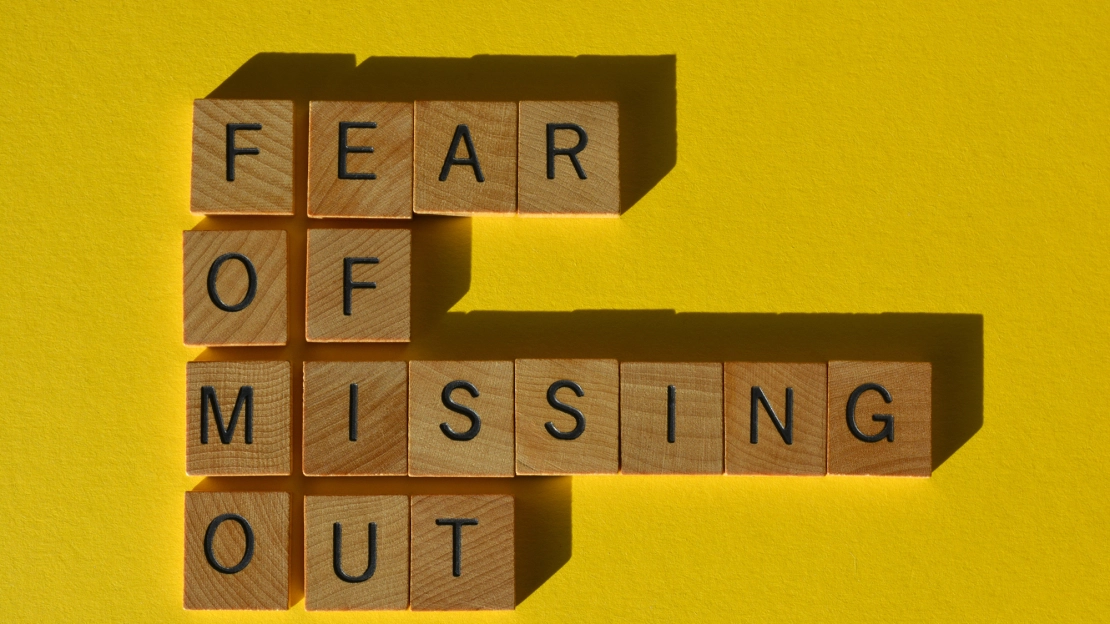
Source: Envato
FOMO tends to run on three interconnected components:
- Core meaning: The perceived loss of rewarding experiences that might or might not be happening. This perception centers on the belief that others are accessing something valuable, like financial gain, social connections, or personal growth, while you remain on the outside.
- Awareness of alternatives presented through social networks and digital environments is a typical trigger condition for social-network-induced FOMO. Don’t think that investing is exempt from it! The constant stream of updates, posts, stories, and notifications creates a feedback loop where exposure to others’ activities amplifies the sense that opportunities are slipping away in real time, intensifying social comparison and peer pressure.
- Anxiety, regret, or unease are the most common ways FOMO manifests internally that drive compulsive checking or joining in. This emotional response manifests as restlessness, the urge to refresh feeds repeatedly, or the impulse to accept purchases despite conflicting priorities or genuine interest.
Specialists note that FOMO differs from general anxiety, which is broader and not necessarily triggered by social comparison or awareness of specific alternatives. It also diverges from simple curiosity without accompanying distress and from opportunity cost, which is an economic concept describing foregone alternatives. FOMO represents the emotional response to perceived opportunity cost rather than the rational evaluation itself.
Usage
FOMO shows up in everyday language across multiple domains, and each one hints at what you fear you are “missing”:
- Social media scrolling: “I spent two hours on Instagram because of FOMO—I kept thinking I’d miss important updates from friends.” This usage highlights compulsive checking driven by social comparison and peer pressure to stay continuously informed.
- Event attendance and social plans: “I had FOMO about skipping the concert, even though I was exhausted and needed rest.” Here, the term captures the conflict between self-care and anxiety that others will form memories or connections without you.
- Shopping: “FOMO made me buy those sneakers during the flash sale, even though I didn’t need them.” This reflects impulsive financial decisions triggered by limited-time offers or the perception that others are securing valuable opportunities.
- Work and career moves: “I felt serious FOMO when my colleague got promoted—I wondered if I’d missed networking events that could have helped me advance.” This extends beyond social scenarios into professional contexts where advancement and recognition feel tied to being present and visible.
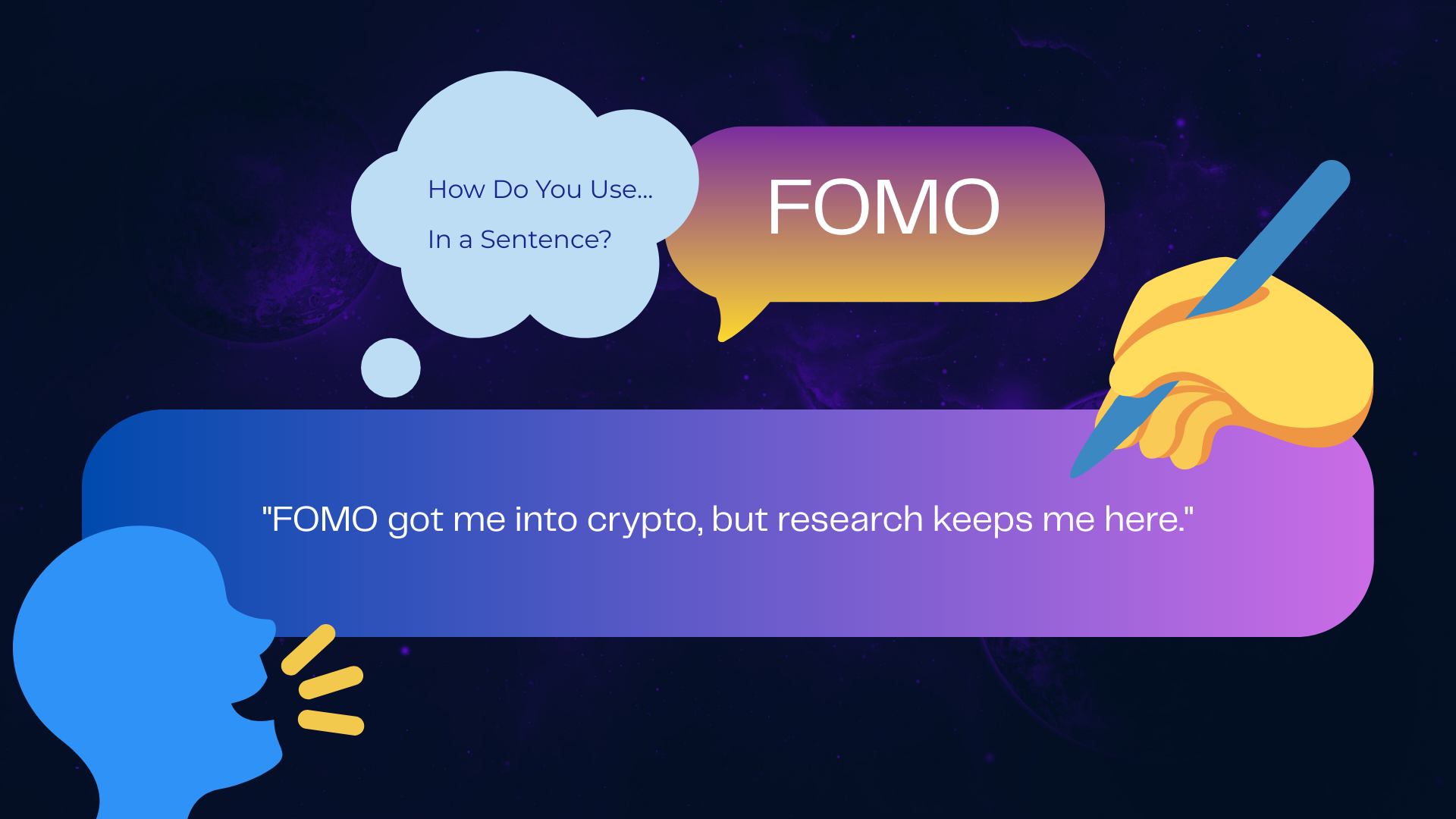
But most relevantly to our blog, invoking FOMO is not all too uncommon in investing, crypto included. Arguably, it is even more common due to a more online and socially involved nature of this type of investing. Crypto traders, investors and users in general rely heavily on social media and platforms for crucial information and signals than on more traditional media and journalism; in a market that moves at a breakneck speed, or at least is perceived to be, by the time professionals do all the fact-checking and peer-reviewing, opportunities might vanish. Which is why you see quotes like, “Were a few days of apprehensive action enough to reload the rally for a true year-end FOMO ramp?” (Michael Santoli, CNBC, 20 Oct. 2025) or “In a market whipped into a frenzy by a fear of missing out (FOMO) and algorithmic trading, doing nothing is often the superior strategy” (Nick Lichtenberg, Fortune, 5 Feb. 2026) in all sorts of coverage of this particular market.
The related term JOMO (joy of missing out) is often used as a counterpoint: instead of chasing alternatives, you practice intentional disconnection and feel content with your current experience.
Psychology Behind FOMO
FOMO tends to grow out of two forces working together: your brain constantly scanning for rewards you might miss, and your deep need for social belonging and status. (Keep in mind the difference between opportunity cost and FOMO.) Put those together, and a normal decision can start to feel like a high-stakes trade-off, where every refusal is interpreted as a loss and every post becomes an inventory of what others have that you do not.
The key point is this: once you can see the pattern, you can manage it. FOMO is usually a predictable loop—not a character flaw.
Cognitive Drivers of FOMO
In terms of cognitive reasons that make you feel FOMO, an investor is not at all different from a person compulsively checking their social media or a shopper spending too much on limited offers.
Self-Check: Which Mechanisms Drive Your FOMO?
Social comparison often runs as an upward comparison loop, where you measure your experiences, visible status signals, and belonging against people who appear to be doing better. Curated updates are especially potent because you are comparing your everyday performance to someone else’s highlight reel, which can quietly set a “deficit” baseline.
Photo by Jon Tyson on Unsplash
Scarcity and urgency cues inflate perceived value by pushing your brain into reactive mode. “Limited time” and “only 3 spots left” narrow your attention and compress your decision window, which makes it harder to weigh alternatives. Marketing leans into this with countdown timers and exclusive tiers because scarcity signals often bypass calm cost-benefit thinking.
Opportunity cost and counterfactual thinking explain why you can choose something you genuinely like and still feel dissatisfied. Your brain is not only processing what you chose—it is also simulating “the better option you did not choose.” That phantom alternative can feel more vivid than the real experience in front of you, especially when social media supplies rich imagery for what “could have been.”
Uncertainty reduction and information-seeking behavior is where compulsive checking thrives. When you do not know what is happening, your brain treats that ambiguity as a small threat. Checking social feeds or group chats becomes a way to resolve uncertainty, even though the information stream often creates more uncertainty and more comparison triggers.
Reward prediction and intermittent reinforcement is the engine behind the addictive feel of many platforms but also, a driver of reward-seeking behavior. The dopamine system responds strongly to unpredictable rewards. Guaranteed returns may feel nice but uncovering a hidden gem and watching it soar into the stratosphere despite all odds feels even better.
Normative pressure creates quiet tension between what you actually want and what you think you “should” do. If your peer group adopts a new platform or buys into a project, opting out can feel like social risk. FOMO can lead you to believe you want this when the real driver is discomfort about being out of step with group norms.
Emotional Patterns
The FOMO cycle typically runs in four steps:
- Trigger: A cue appears (a post or a conversation).
- Appraisal: Your brain evaluates “Am I missing something valuable?” and “What does my absence signal about my status?”
- Emotion: Anxiety, envy, or regret appears.
- Compulsion/Action: You check, you buy, you overcommit, or you rush into a decision to reduce discomfort.
Anticipatory emotions, as the name implies, tend to arrive first: restlessness, agitation, and worry tied to uncertainty and social evaluation. Even before anything happens, your nervous system can react to the possibility of exclusion as if rejection is already occurring—higher arousal, difficulty focusing, and an unsettled urge to check.
In-the-moment emotions often include loneliness, envy, and irritability triggered by specific cues: as a familiar example, cryptocurrency prices surging after you stay out. Even loneliness can accompany that particular case because it is comparative—being left out while others are in it feels different than the usual deal.
After-the-fact emotions show up as regret and harsh self-criticism rooted in counterfactual thinking. Your mind builds an alternative storyline and hindsight makes the “correct” choice feel obvious even though that clarity was not available at the time.

Photo by SCARECROW artworks on Unsplash
With all that being said, FOMO still differs from general anxiety and social anxiety through its comparative component: it is not just worry, but worry about your standing relative to others. It also differs from simple regret because it can operate before, during, and after a decision—meaning it can keep cycling even when nothing has “gone wrong.”
The catch is that the action often generates new cues, restarting the cycle rather than closing it.
FOMO in Investing
FOMO is the same core loop, but it wears different outfits depending on the domain. If you can identify the setting, you can usually predict the trigger, the thought pattern, and the “default behavior” your brain will push you toward.
Triggers: Price charts moving quickly, breaking news about institutional adoption, and social proof from amateur and professional investors create time pressure while emphasizing potential gains over risk assessment.
Thought pattern: “This asset is moving fast, everyone else is getting in, and if I don’t act immediately, I’ll miss the only chance to achieve financial freedom.”
Common behaviors:
- Entering positions based on price momentum rather than fundamental analysis
- Increasing position size after assets have already appreciated significantly
- Making investment decisions during high-volatility news cycles without researching the underlying claims
- Abandoning predetermined investment strategies when watching others profit from contrary approaches
Hidden cost: Chasing performance often means buying after significant appreciation, which can reduce risk-adjusted returns while increasing downside exposure when momentum reverses.
Quick self-check: Would you make this investment if you could not check its price for six months?
A counter-example of this type of FOMO would be executing an investment that aligns with your research, risk tolerance, and portfolio strategy, regardless of recent price action.
FOMO-Fueled Marketing
One of the areas where FOMO is a frequent guest is marketing, and crypto space is full of the type that seeks to intentionally induce this sentiment in consumers. Hence, you might want to know how to avoid and manage it.
Trigger: Limited-time offers, countdown timers, low-stock warnings, exclusive access language, and waitlist mechanics create artificial urgency.
Thought pattern: “This deal might never be available again at this price, and others are already buying it while I’m hesitating.”
Common behaviors:
- Purchasing during flash sales without comparing alternatives or verifying need
- Joining waitlists mainly because access is restricted
- Upgrading to premium tiers because of “limited spots remaining” messaging
- Making impulse purchases to avoid “regretting missing out” rather than feeling confident about the project itself
Hidden cost: Scarcity-driven impulse buying tends to produce financial waste and increases risk exposure while reinforcing reactive habits.
Quick self-check: Would you buy this token tomorrow at the same price without the urgency messaging?
Not FOMO: Buying during a sale because you have researched the project and the promotion simply aligns with your timing.
Across all domains where FOMO manifests, discussed here or not, the loop stays consistent: cue → comparison → urgency → compressed decisions. Once you can label the context, you can interrupt the cycle before it costs you time, money, sleep, or peace of mind.
Why FOMO is Worse Than You Might Think

Photo by Debby Hudson on Unsplash
Emotions fitting the FOMO bill are by themselves normal. Riskier FOMO is the kind you can measure: it disrupts sleep most nights, strains your budget and investment strategies through impulse buying, or leaves you scrambling for “better options” at the expense of your actual priorities.
At this rate, FOMO can have some quite material detrimental effects on your life. From financial damage to mental health, there are several key risks that might make you want to sort it out sooner rather than later.
When FOMO Signals a Bigger Mental Health Issue
Some red flags can be indicative of a problem even bigger than unchecked FOMO and deserve attention:
- Duration: FOMO feelings persist for weeks without relief, even when you act on the impulses.
- Intensity: Panic-level distress—rapid heartbeat, intrusive thoughts, dread—upon encountering a trigger.
- Functional impairment: Missed work, school, or important obligations because you were fixating or scrambling.
- Safety and compulsion: You cannot stop checking your phone during activities that demand focus (driving, conversations, meals) despite recognizing the risk.
- Comorbidity cues: FOMO often appears alongside escalating social anxiety, depressive symptoms, or substance use to cope.
More severe signs to contact a licensed mental health clinician include sleep disruption most nights tied to late-night scrolling or anxiety about missing out, avoidance of social situations because social comparison feels unbearable, escalating use of alcohol or other substances to numb distress, or thoughts of self-harm linked to feelings of inadequacy. If safety is involved—thoughts of harming yourself or others—contact emergency services immediately. In any case, if FOMO is stopping you from living the life you want in any way, this is a reason enough to consider help for things to improve.
Financial Risks
FOMO can distort financial judgment in two ways: investing and everyday spending. Regardless, the emotional root is the same—regret avoidance—but the mechanics differ.
Common FOMO-driven mistakes when investing include buying recent winners after big run-ups, abandoning a long-term allocation plan to chase hype, overconcentrating because “everyone’s talking about it,” and overtrading through volatile news cycles.
On the other hand, FOMO-based marketing often relies on artificial scarcity, social proof, and influencer-led urgency. To introduce immediate friction and give yourself a chance to act on reasoning other than emotions, use this three-step protocol:
- Cooling-off window: Wait 24 hours before any purchase over a set threshold (e.g., $50). Add to cart or wishlist, then close the tab.
- Budget cap: Consider creating a monthly “FOMO fund” for spontaneous purchases. Once it is spent, you stop until next month.
- Substitute activity: When the urge hits, do a 10-minute incompatible activity (walk, call a friend, instrument practice). Impulses often peak and fade quickly.
These steps slow the trigger-to-transaction path and give your prefrontal cortex time to assess what you actually want.
How to Manage and Reduce FOMO
So far, we have established that FOMO manifests differently, ranging from something you can recognize and manage with on your own to a crippling sensation that goes along with other mental health issues. Here is where the more practical part of the guide begins, with steps that make FOMO easier to manage in the moment and less powerful over time.
Self-awareness

Photo by Fethi Benattallah on Unsplash
To cope with FOMO, you must be self-aware enough to know it affects you. When you have an inkling, use this plan to turn it into something more actionable.
Map your last three FOMO moments:
- Situation (browsing groups or servers, receiving a sale notification)
- Thought (“I’m missing out,” “Everyone is ahead of me,” “Last chance”)
- Emotion (anxiety, regret, urgency)
- Behavior (checking, impulse buying, overcommitting)
Then look for common amplifiers:
- Scarcity thinking: Treating opportunities as one-time-only when they often recur
- Catastrophizing: Believing missing one opportunity will ruin your chances of succeeding
- All-or-nothing: Thinking you must buy into everything or you are disconnected
- Social comparison: Measuring your behind-the-scenes against highlight reels
Use this three-question filter when you feel the pull:
(1) “What am I actually afraid of losing?”
(2) “Is this fear based on facts or assumptions?”
(3) “Will I remember this choice in one week?”
Present Focus
The “what if” spiral can be halted by anchoring you in what is real now. Use one technique for spikes, and one for daily direction.
Mindfulness-based grounding (5-4-3-2-1): Name five things you can see, four you can hear, three you can touch, two you can smell, and one you can taste. If that feels too structured, use breath-counting: inhale for four, hold for four, exhale for six, repeat three times.
Values-based filter: Each morning, choose one priority for the day and define what you will intentionally miss. Write: “Today I am choosing [priority], which means I will miss [opportunity] without regret.” This reframes missing out as alignment, not loss, and helps you see opportunity cost clearly rather than reactively.
Stress Management
When emotions get too intense, the body treats it as stress, which can lead to more symptoms, psychological and even psychosomatic piling up. And vice versa, if you are subject to regular stress, it is easy for your emotions to go awry.
You can manage this by regulating physiology before you try to outthink the urge. Prioritize sleep (seven to nine hours), daily movement (even a 15-minute walk), and awareness of caffeine and alcohol intake. Moreover, a steady body supports better decision-making than an exhausted, overstimulated one.
Use this rule: If your body is dysregulated (less than six hours of sleep, high caffeine, or acute stress), postpone non-urgent decisions for 12 hours. FOMO thrives when you are tired or wired.
Digital Boundaries
For a state so easily induced by our online lives, the boundaries belong in the same realm. Luckily, the ways in which you can limit your screen time or compulsive checking and introduce friction to encourage yourself to reduce the use, are very diverse and numerous.

Photo by Philipp Katzenberger on Unsplash
- Notification triage: Disable non-essential notifications. Keep only necessary ones like direct messages from close contacts and calendar reminders. Turn off comments, large chat notifications, and promotions.
- Timeboxing templates: Set a couple of daily windows (e.g., 12:00–12:20 p.m. and 7:00–7:30 p.m.). Outside the windows, apps are off-limits.
- Friction tactics: Delete apps and use browser-only access, log out after each session, enable grayscale, move icons to the last screen, or place them in a folder labeled “Intentional Use Only.”
- Replacement plan: Decide in advance what you do instead: text one friend, research into a crypto topic or project, read one saved article, do ten push-ups, make tea.
Professional Support
Therapy or support might be appropriate if:
- FOMO causes distress most days of the week for more than two weeks
- You experience physical symptoms tied to missing out
- Compulsive checking interferes with work, study, or relationships
- You make impulsive decisions you later regret
- You feel panic or dread when seeing others’ posts
- FOMO co-occurs with depressive symptoms
If seeking help is needed, what does “help” imply? Cognitive-behavioral therapy (CBT) is particularly effective because it targets both thought patterns and behaviors. Group support or digital wellness communities can help as well. If FOMO connects to broader anxiety or compulsive behaviors, a therapist experienced in behavioral interventions is a strong match.
Conclusion
So, what does FOMO mean in real life? It is the fear of missing out—an anxiety or regret response triggered by the sense that others are gaining experiences, status, or opportunities you are not.
FOMO thrives in the digital age because it mistakes visibility for value. JOMO—the Joy of Missing Out—is the practical antidote: intentional presence, clearer lifestyle choices, and peace of mind that comes from living your priorities instead of chasing everyone else’s highlight reel.
Frequently Asked Questions
Is FOMO a mental health condition?
FOMO itself is not a classified mental health disorder in diagnostic manuals like the DSM-5. It is more of a psychological phenomenon — a common emotional response to social comparison and perceived exclusion that most people experience occasionally without clinical significance.
However, FOMO can become clinically relevant when it co-occurs with or amplifies existing conditions like anxiety disorders, depression, or problematic internet use. Research in clinical psychiatry has linked FOMO to problematic social-network use and sleep impacts, particularly when the fear drives compulsive patterns that interfere with daily functioning.
What is the opposite of FOMO?
The opposite of FOMO is JOMO — the Joy of Missing Out, which describes contentment with your current choices and a deliberate disengagement from the pressure to participate in everything.
Rather than anxiously tracking what others are doing, JOMO involves actively choosing presence over constant availability. For instance, someone practicing it might silence their phone during dinner with family and feel genuine satisfaction rather than nagging curiosity about unread notifications or Instagram stories they are missing.
What is FOBO?
What does FOBO mean? FOBO stands for "Fear of a Better Option", and it differs from FOMO in one crucial way: FOBO paralyzes you during the choosing process, while FOMO torments you after the choice is made. FOBO describes decision paralysis driven by anxiety that a superior alternative exists just beyond your current view, leading to endless research, comparison shopping, and postponed commitments. It thrives in high-choice environments like dating apps, job boards, and online shopping.
Is FOMO different from anxiety?
FOMO and anxiety overlap, but they usually run on different triggers: FOMO stems from social comparison and perceived exclusion; generalized anxiety arises from broader uncertainty across multiple life domains. FOMO focuses on “Others are experiencing something valuable that I’m missing”; anxiety focuses on “Something bad might happen” or “I’m inadequate.” FOMO drives compulsive checking and overcommitment; anxiety often produces avoidance, excessive worry, and physical tension
FOMO can amplify social anxiety, but experiencing FOMO does not automatically mean you have an anxiety disorder. A stronger signal for generalized anxiety is pervasive worry that persists even without social cues.
Can FOMO be beneficial?
Yes, in limited ways. FOMO can nudge you toward participation and help you notice opportunities you might genuinely end up valuing.
The benefit only holds with guardrails. Without them, FOMO tends to produce impulsive spending, overcommitment, and sacrificed sleep.