
Best Ethereum ETFs and How To Invest in Them


Disclaimer: Investment Risks and Professional Advice
This article provides educational information about Ethereum ETFs and should not be considered personalized financial advice. Cryptocurrency investments carry substantial risk, including the potential loss of principal. Ethereum's price volatility, regulatory uncertainty, and evolving technology create unique risks that differ from traditional securities. ETF performance depends on multiple factors beyond the underlying asset's price—including management decisions, fee structures, and market liquidity.
Before investing in any Ethereum ETF, consult with a qualified financial advisor who understands your specific financial situation, risk tolerance, and investment objectives. Past performance does not guarantee future results. The SEC's approval of spot Ethereum ETFs does not constitute an endorsement of cryptocurrency as an investment. Always conduct thorough due diligence and never invest money you cannot afford to lose.
Contents
- 1. What is Ethereum?
- 2. Understanding Exchange-Traded Funds (ETFs)
- 3. What is an Ethereum ETF?
- 4. Ethereum ETFs in 2025
- 5. Ethereum ETF Provider Analysis
- 6. Ethereum ETF Performance and Returns
- 7. How to Invest in Ethereum ETFs?
- 8. Understanding Ethereum's Investment Case
- 9. Ethereum Staking and Yield Considerations
- 10. Investment Strategies and Portfolio Allocation
- 11. Tax Implications and Optimization
- 12. Regulatory Landscape and Future Developments
- 13. Risks and Benefits of Ethereum ETFs
- 14. Choosing the Best Ethereum ETF for Your Portfolio
- 15. Future Outlook and Market Trends
- 16. Conclusion
If you're considering adding cryptocurrency exposure to your portfolio through traditional investment channels, Ethereum ETFs offer a regulated, accessible alternative to directly buying and managing digital assets.
In this guide, you'll learn how different Ethereum ETFs compare, what fee structures to expect, how staking rewards factor into returns, and which funds might suit your specific investment goals. We'll break down the mechanics of spot versus futures-based ETFs, walk through tax implications, and examine real performance data from 2024 and 2025.
Whether you're a beginner exploring cryptocurrency for the first time or an intermediate investor seeking portfolio diversification beyond Bitcoin, this guide will help you make informed decisions about Ethereum ETF investments. Let's start with the fundamentals.
What is Ethereum?
To start this guide, let’s briefly introduce the concepts at play, starting with Ethereum (ETH). It is the world's second-largest cryptocurrency by market value, but calling it just a "digital currency" misses the bigger picture. Ethereum has been pitched as a global computing platform: a decentralized network where developers build applications, financial services, and digital assets without needing permission from a central authority.
Here's what makes it different: unlike Bitcoin, which primarily functions as digital money, Ethereum enables smart contracts. These are self-executing programs that automatically enforce agreements when certain conditions are met. They power everything from decentralized finance (DeFi) applications to NFT marketplaces.
The network underwent a major transformation in September 2022 when it transitioned to a proof-of-stake (PoS) consensus mechanism. This shift reduced Ethereum's energy consumption by over 99.95 percent while replacing mining with staking—a process where users lock up their ETH to help secure the network for an economic incentive.
Understanding Exchange-Traded Funds (ETFs)
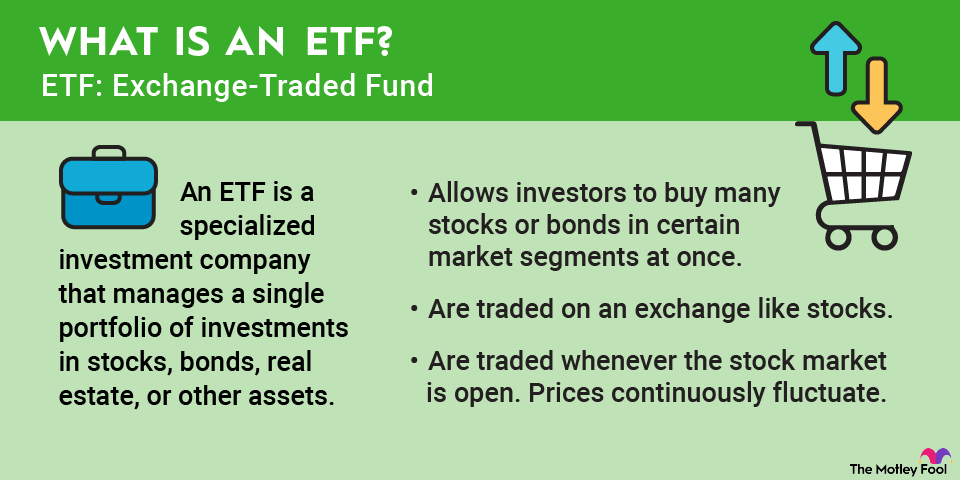
Another part of the concept we are going to be reviewing is financial instruments called exchange-traded funds. Abbreviated as “ETF”, this is an investment vehicle that holds a basket of assets—stocks, bonds, commodities, or in this case, cryptocurrency—and trades on traditional stock exchanges just like individual stocks. The composition of the basket can vary or even focus on one asset, which is the case for most current crypto spot ETFs, but the result is still the same: ETFs give you exposure to an underlying asset without having to directly own it.
Source: The Motley Fool
Here's why that matters for crypto investors. You can buy and sell ETFs through your regular brokerage account during market hours, manage them within tax-advantaged retirement accounts like IRAs, and avoid the technical complexities of crypto wallets, private keys, and blockchain transactions.
ETFs also provide regulatory oversight and professional management. Rather than setting up a crypto exchange account, transferring funds, securing your own storage, and managing tax reporting for every transaction, you simply buy shares of an ETF through familiar platforms like Fidelity, Schwab, or Robinhood. It's investing in crypto without the learning curve.
What is an Ethereum ETF?
Therefore, an Ethereum ETF is a professionally managed investment fund that tracks the price of Ethereum and trades on traditional stock exchanges like the NYSE or Nasdaq. It gives investors exposure to Ethereum's price movements without the need to buy, store, or secure the cryptocurrency directly.
ETFs bundle Ethereum (or Ethereum-related assets) into shares you can buy and sell just like you'd buy and trade stock in Apple or Microsoft. It’s all benefits of Ethereum exposure without dealing with crypto wallets, private keys, or seed phrases.
Spot Ethereum ETFs vs Ethereum Strategy ETFs
There are two main types of Ethereum ETFs, and they work quite differently.
Spot Ethereum ETFs invest directly in Ethereum. The fund buys actual ETH tokens and holds them in custody. When you buy a share of a spot ETF, you're effectively buying a claim to a piece of actual Ethereum.
Ethereum Strategy ETFs, also called futures-based ETFs, don't hold actual Ethereum. Instead, they invest in Ethereum futures contracts—agreements to buy or sell ETH at a future date. These ETFs aim to track Ethereum's price, but they do it indirectly through derivatives. Their performance can differ slightly from spot ETFs due to factors like contract rollover costs.
How Ethereum ETFs Work
By definition, when you invest in an Ethereum ETF, you're buying shares of a fund that holds ETH. Behind the scenes, the ETF provider (like BlackRock or Fidelity) handles all the technical work: purchasing Ethereum, securing it in institutional-grade custody, and managing regulatory compliance.
Your broker treats your ETF shares like any other stock. You can buy, sell, or hold them in standard investment accounts. The ETF's price moves throughout the trading day based on Ethereum's market value, supply and demand for the ETF itself, and the fund's net asset value (NAV).
These instruments have one important limitation: the SEC's initial May 2024 approval explicitly prohibited spot Ethereum ETFs from staking the ETH they hold. That means these funds don't generate staking rewards. Regulatory clarifications in May 2025 stated that certain protocol activities, including staking, do not themselves constitute securities offerings, opening the door for future staked ETF structures.
Ethereum ETFs vs Holding Ethereum Directly
There is a clear choice in this investment decision: do you buy and hold Ether directly or do you purchase an ETF? The points of comparison are numerous enough for every individual investor to be able to make it for themselves—it obviously depends.
| Factor | Ethereum ETFs | Holding Ethereum Directly |
| Custody | Professional custody by the fund | You control private keys and seed phrase |
| Security Risk | ETF provider handles security | You're responsible for wallet security |
| Trading Access | Traditional brokerage accounts | Crypto exchanges or DEXs |
| Tax Treatment | Standard capital gains on shares | Capital gains on crypto transactions |
| Staking Rewards | None (currently prohibited in U.S. spot ETFs) | Available if you stake yourself |
| Fees | Annual expense ratios (≈0.15%–2.50%) | Exchange fees + network gas fees |
| Regulatory Oversight | SEC-regulated | Varies by jurisdiction |
| Minimum Investment | One share (often ~$30–$50) | Any amount (fractional ETH available) |
ETFs make sense if you want regulatory protection, simplified tax reporting, or the ability to have Ethereum exposure in retirement accounts. They're also beginner-friendly because you avoid the technical complexity of wallets and private key management.
Direct ownership, on the other hand, works better if you want full control over your assets, plan to use Ethereum in DeFi applications, or want to earn staking rewards. You'll need to master proper wallet security, but in turn, you'll have complete sovereignty over your holdings.
When it comes to deciding between spot and strategy ETFs, one factor that can have a major influence on this decision is that futures-based Ethereum strategy ETFs follow a special 60/40 tax rule. It goes: 60 percent of gains receive long-term capital gains treatment and 40 percent receive short-term treatment, regardless of how long you hold the shares.
With the introductions over, we can look at the specific funds on the market to then dive deeper into how to pick the best Ethereum ETF for your needs.
Ethereum ETFs in 2025
As of December 2025, eight spot Ethereum ETFs are available to U.S. investors, each offering direct exposure to Ethereum's price movements through professionally managed funds.
BlackRock iShares Ethereum Trust (ETHA)
BlackRock's ETHA dominates the Ethereum ETF landscape, commanding approximately $16.1 billion in assets under management—the largest among all spot ETH ETFs. The fund charges a competitive 0.25% annual expense ratio and has led the market in net inflows.
What makes ETHA attractive? Why is it in the lead? For one, BlackRock's institutional reputation and operational infrastructure provide confidence for both retail and institutional investors. The fund invests directly in Ethereum held in secure custody arrangements, tracking ETH's spot price with minimal tracking error. Simply put, it’s Ethereum exposure backed by one of the world's largest asset managers.
Fidelity Wise Origin Ethereum Fund (FETH)
Fidelity's FETH offers another strong option with its 0.25% expense ratio, matching BlackRock's competitive fee structure. As a household name in traditional finance, Fidelity brings decades of ETF management experience to the crypto space.
FETH appeals particularly to investors already using Fidelity's brokerage platform, where integration with existing accounts simplifies portfolio management. The fund follows the same direct ownership model, holding physical Ethereum in cold storage for maximum security.
VanEck Ethereum ETF (ETHV)
VanEck's ETHV stands out for its even lower 0.20% expense ratio, making it one of the most cost-effective options among major providers. That might not sound like much, but the difference compounds meaningfully over time. VanEck was an early advocate for crypto ETFs, bringing deep expertise in digital asset fund management.
For cost-conscious investors planning long-term holdings, ETHV's fee advantage does add up. The fund maintains the same security standards and spot price tracking as its competitors, meaning you're not sacrificing safety for savings.
Grayscale Ethereum Trust (ETHE)

Source: SEC.gov
Originally a closed-end trust before converting to an ETF structure once given the opportunity, ETHE carries a notably higher 2.50% annual fee (that’s ten times the expense ratio of newer competitors). This premium reflects Grayscale's first-mover positioning along with some legacy infrastructure costs.
Despite higher fees, ETHE maintains substantial assets under management from investors who established positions before spot ETF approvals. However, for new investors, the fee disadvantage typically outweighs any historical brand preference. It's worth considering if you already hold it, but probably not the best starting point for fresh capital.
Ethereum ETFs Comparison
| ETF | Ticker | Expense Ratio | AUM (Approximate) | Key Advantage |
| BlackRock iShares Ethereum Trust | ETHA | 0.25% | $10.29B | Market leader, highest liquidity |
| Grayscale Ethereum Trust | ETHE | 2.50% | $2.68B | Established history (higher fees) |
| Fidelity Wise Origin Ethereum Fund | FETH | 0.25% | $2.19B | Fidelity ecosystem integration |
| VanEck Ethereum ETF | ETHV | 0.20% | $170.18M | Lower expense ratio |
By the way, the combined AUM for all Ethereum ETFs reached approximately $19.6 billion by December 2025, demonstrating substantial institutional adoption despite the occasional outflow periods.
After the introduction to major products, it helps to step back and look at the providers behind them and how their choices on fees and structure affect your returns.
Ethereum ETF Provider Analysis
Since May 2024, the Ethereum ETF landscape has been competitive and dominated by institutional heavyweights. BlackRock entered with the iShares Ethereum Trust (ETHA), which quickly became the market leader. Fidelity followed with the Wise Origin Ethereum Fund (FETH), while VanEck and Grayscale brought their own offerings to investors.
Major ETF Providers and Their Offerings
To begin with, each provider structures their fund slightly differently. BlackRock and Fidelity focus on direct Ethereum exposure through spot holdings, meaning they buy and hold actual ETH tokens in secure custody arrangements. VanEck's ETHV follows a similar model but competes aggressively on price with a lower expense ratio. Grayscale's Ethereum Trust (ETHE) converted from a closed-end trust structure, giving it a longer operational history but initially higher fees and less competitive pricing.
Fee Structure Comparison
Fee differences matter significantly over time. Grayscale's ETHE carries an annual expense ratio substantially higher than competitors, reflecting its legacy trust structure. By contrast, BlackRock, Fidelity, and VanEck entered with aggressive pricing strategies, offering attractive expense ratios to capture market share (which they evidently did).
To understand just how quickly these percentage points add up, here is an example. On a $10,000 investment, Grayscale's 2.50% fee costs $250 annually, while a 0.20% fee costs just $20. Over five years, that difference compounds significantly and directly impacts your returns.
Assets Under Management (AUM) Analysis
Out of the $19.6B total Ethereum ETF assets, BlackRock's ETHA dominates with over 50% of the market, reflecting both aggressive marketing and institutional trust in the BlackRock brand.
However, November 2025 told a different story. The market experienced $1.4 billion in combined outflows—the largest monthly exit since launch. These fluctuations reflect both Ethereum's price volatility, which is still in the picture, and shifting investor sentiment about crypto exposure.
Ethereum ETF Performance and Returns
Source: Galaxy
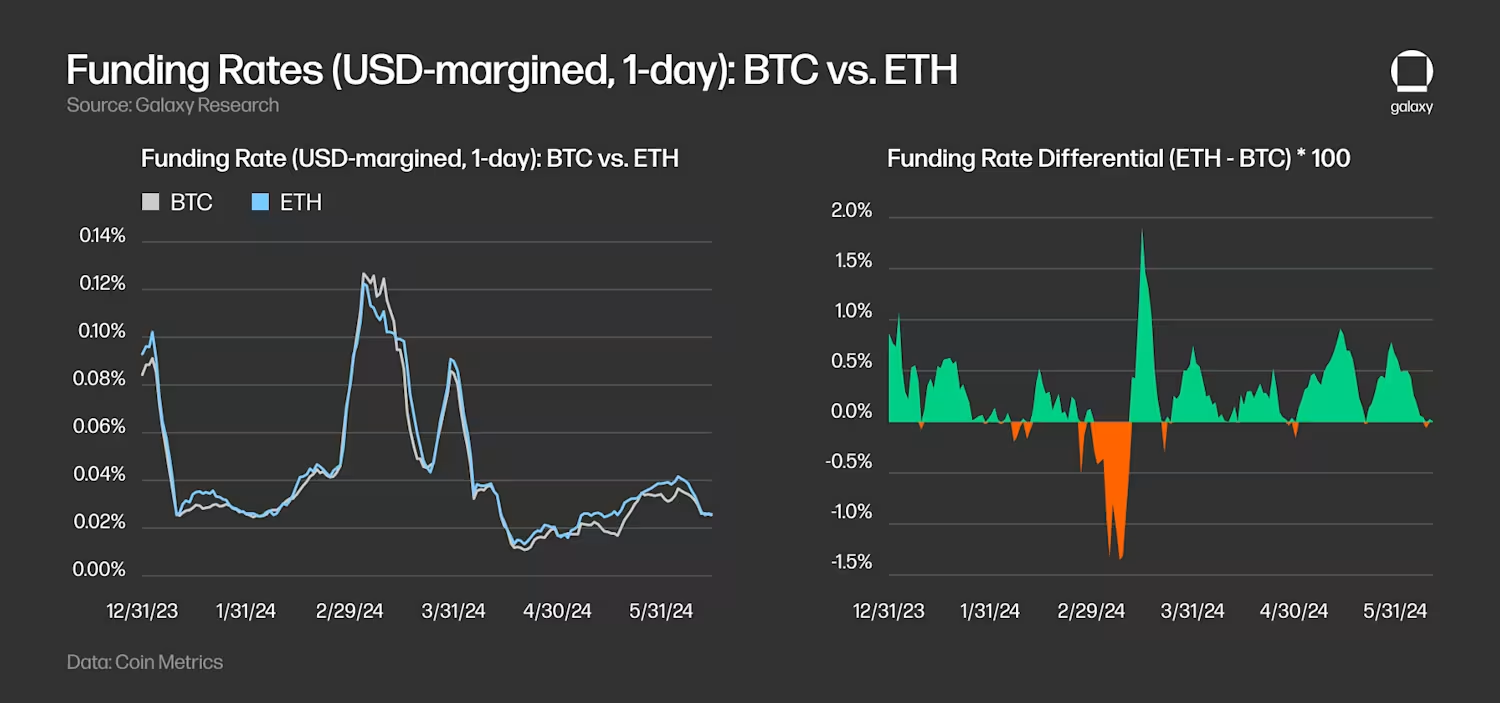
Before you've made your first purchase, the natural question is how these ETFs have actually performed and what drives their returns. Past performance does not guarantee future results but it can still make a difference in choosing where to put the money.
Historical Performance Analysis
Ethereum ETFs have experienced significant volatility since their SEC approval in May 2024. Given their mostly single-focus nature on a volatile digital asset, this comes as no surprise. As of December 2025, Ethereum itself traded near $3,298.76 after gaining 4.79 percent in a single session.
The launch period showed initial enthusiasm followed by turbulence but even a year and a half in, the situation was not set in stone. For one, November 2025 marked the largest monthly exit since launch. However, momentum shifted in early December when Ethereum ETFs recorded $35.49 million in net inflows during a single trading day, led primarily by BlackRock's continued institutional interest.
By the way, these swings mirror Ethereum's own price journey. The asset crashed almost 40 percent from its ~$4,950 peak, creating corresponding ETF value declines. This correlation is exactly what spot ETFs deliver—direct exposure to Ethereum's price movements in both directions.
These ETFs do not merely reflect; they have a direct ETH price impact. Both less and more directly: by reducing the volatility of the asset and increasing its legitimacy, among other things.
Returns of Ethereum ETFs
The highlighted spot ETFs may track the same asset, but performance varies across different Ethereum ETF structures. Spot ETFs like ETHA track Ethereum's price minus management fees, while futures-based strategy ETFs introduce additional layers of complexity through rolling contracts.
The important detail is this: lower fees compound dramatically over time. A 2.25 percent annual difference on a $10,000 investment costs you roughly $225 every year—money that could compound if invested.
Factors Influencing ETF Performance
Several forces drive Ethereum ETF returns beyond simple price tracking. Most obviously, the performance of Ethereum itself. Further in the guide, we’ll focus more on the investment case for Ether itself but for now, let’s briefly introduce it.
A major factor in ETH performance, and by extension, the ETFs’, is Layer-2 network adoption. It concentrates transaction activity within L2 ecosystems rather than Ethereum's mainnet, creating pressure on ETH's fundamental value proposition. Despite this structural shift, the total value locked (TVL) in Ethereum and layer-2 DeFi reached approximately $150 billion by July 2025—a three-year high that demonstrates ongoing utility despite price volatility.
Regulatory clarity also plays a crucial role. May 2025 clarifications regarding staking have prompted discussions about future yield-generating ETF structures, promising entirely new value structures. At the same time, market sentiment and institutional flows create short-term volatility.
With the landscape mapped out and the factors weighed in, the next step is figuring out how to actually buy these funds and integrate them into your existing accounts.
How to Invest in Ethereum ETFs?
Step-by-Step Investment Guide
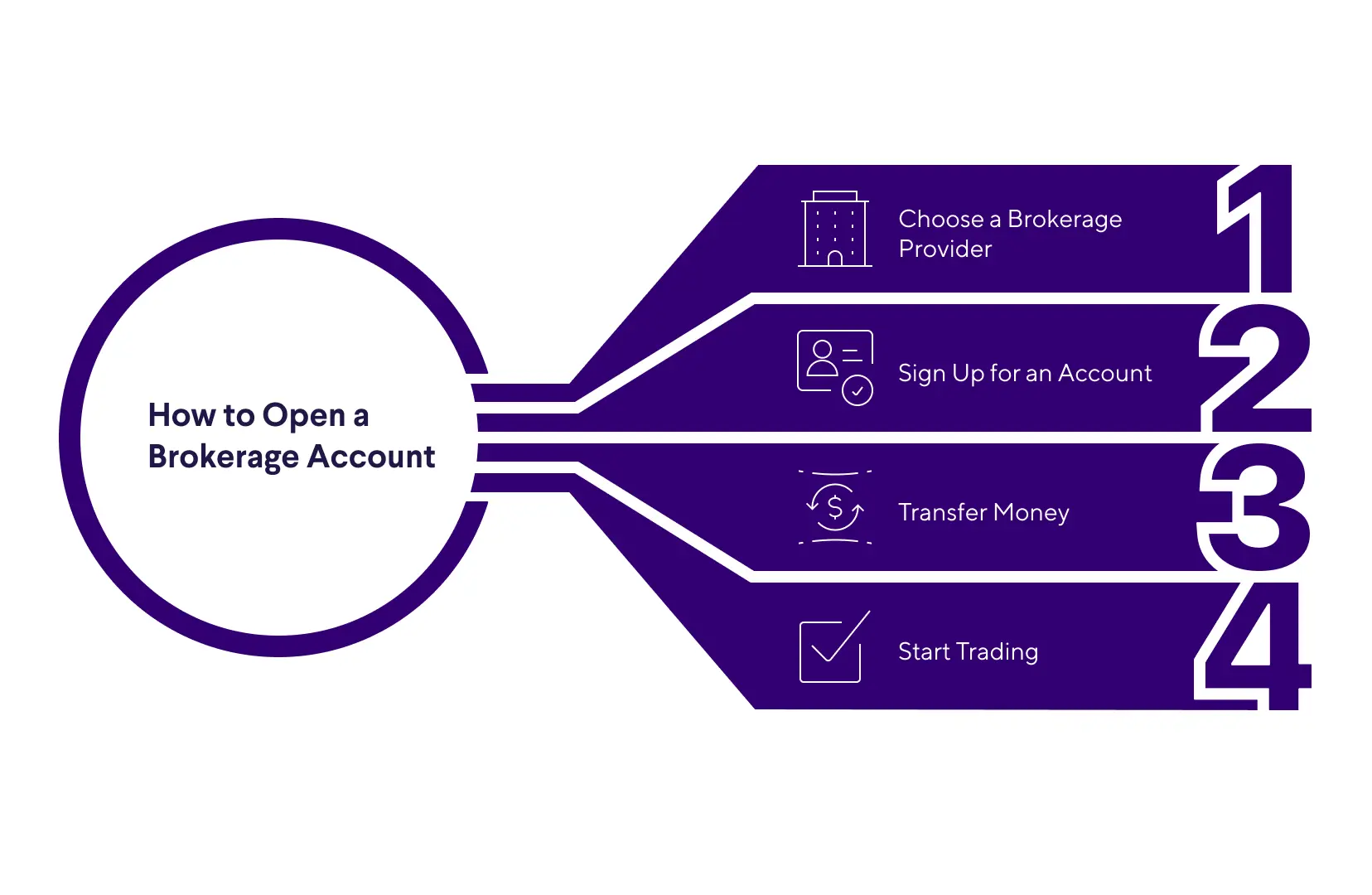
First, open a brokerage account if you don't have one already. Most major platforms like Fidelity, Charles Schwab, or TD Ameritrade offer access to spot Ethereum ETFs. Account setup typically takes 10–15 minutes and requires basic information—your Social Security number, employment details, and bank account for transfers.
Source: SoFi
Next, fund your account. You can transfer money via bank transfer (ACH), wire, or check. ACH transfers are free but take 2–3 business days. Wire transfers arrive same-day but often carry fees around $25–30.
Once funded, search for your chosen Ethereum ETF using its ticker symbol. Type the ticker into your platform's search bar and the ETF should appear immediately (but do pay attention to the full name).
Now you can place your order. Most investors use either a market order (buys at the current price) or a limit order (buys only at your specified price or better). For a $2,000 investment in ETHA trading at $25 per share, you'd purchase 80 shares. Some brokers even offer fractional shares, letting you invest exact dollar amounts—helpful if you want to invest $500 without worrying about share prices.
Finally, monitor and rebalance your position as needed. Remember, investing does not end with buying. ETFs trade throughout market hours (9:30 AM–4:00 PM ET), so you can buy or sell anytime the market is open.
Choosing the Right Brokerage Platform
Not all brokerages offer the same experience for ETF investors. For the purposes of this guide, we won’t dive deep into the platforms but we can give some tips to help you choose. Here's what matters:
- Commission structure is your first consideration. Most major brokers eliminated stock and ETF trading commissions in 2019, but verify there are no hidden fees just in case. Some platforms still charge for wire transfers, account maintenance, or paper statements—small costs that add up over time.
- Platform accessibility determines how easily you can manage your investment. Look for mobile apps, intuitive dashboards, and real-time price updates. If you're new to investing, platforms like Fidelity or Schwab offer extensive educational resources alongside their trading tools. You'll want somewhere that feels natural to navigate.
- Account types matter for tax planning. Traditional brokerage accounts work for most investors, but you might want an IRA (Individual Retirement Account) for tax-advantaged growth. Most platforms support both Traditional and Roth IRAs, which can hold Ethereum ETFs just like stocks. By the way, this is one major advantage over direct crypto holdings—IRAs don't typically support them.
- Customer support quality becomes crucial when issues arise. Check if the broker offers phone support, live chat, or in-person branches. Ethereum ETFs are still relatively new, so having access to knowledgeable representatives helps when questions come up.
Key Considerations Before Investing
Before buying your first Ethereum ETF share, think through these factors:
- Your investment timeline shapes which approach makes sense. Ethereum ETFs suit investors with at least a 3–5 year horizon given crypto's volatility.
- Risk tolerance determines your allocation size, which is best kept conservative.
- Fee awareness protects your returns.
- Tax implications require advance planning.
What exactly each point implies is covered in dedicated sections in this guide—keep reading!
Understanding Ethereum's Investment Case
Why would anyone want to invest in Ethereum ETFs in the first place? With a good portion of practical advice out, we can circle back to more fundamental analysis for deeper understanding.
Block message in the first post-Merge block. Source: Twitter
Ethereum's Proof-of-Stake Consensus Mechanism
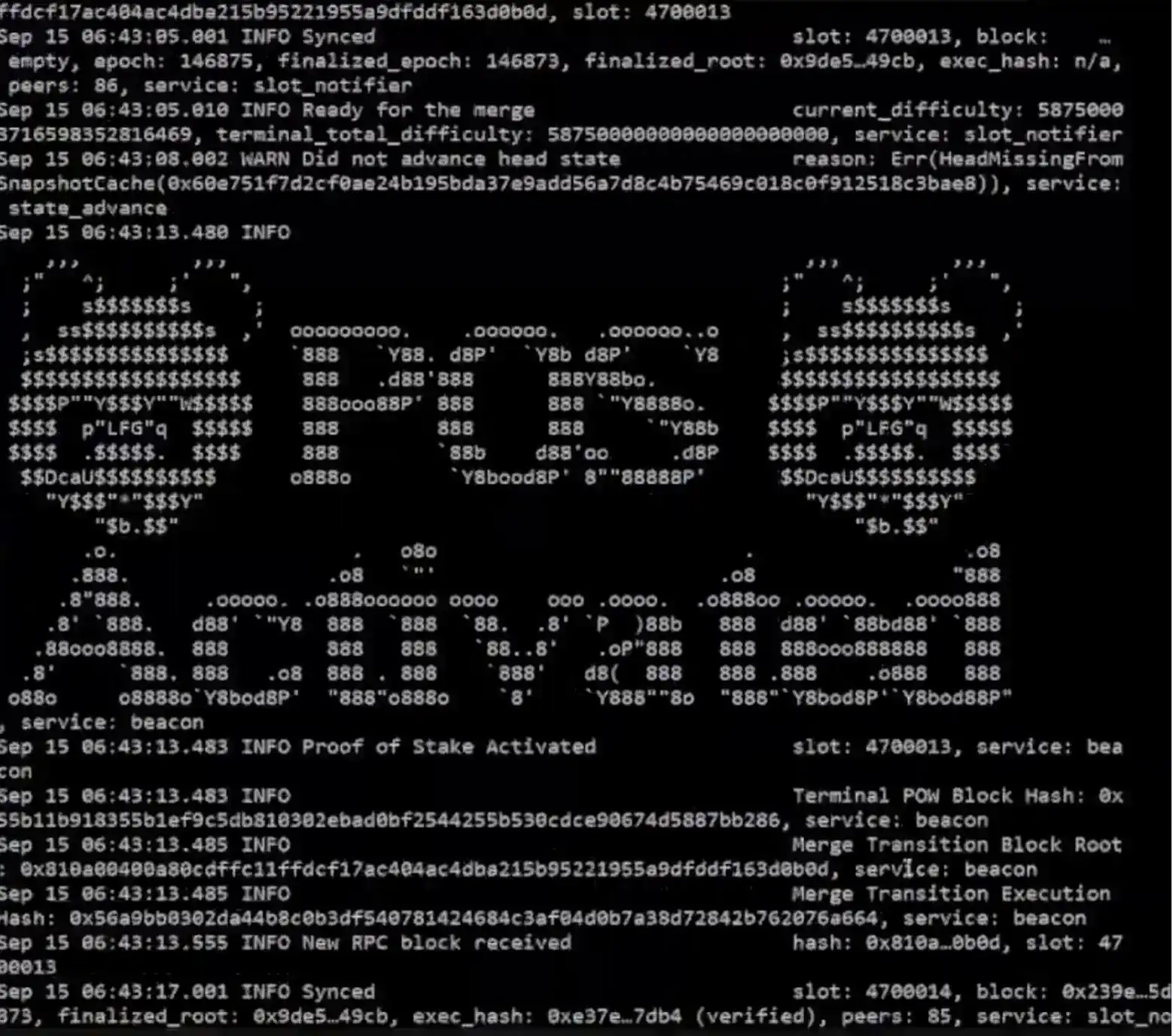
The major switch made by Ethereum to proof-of-stake consensus in September 2022 was not merely a technical update but fundamentally changed how the network operates and why it matters to investors. Instead of energy-intensive mining, Ethereum now relies on validators who stake ETH to secure the network.
By the way, this change slashed Ethereum's energy consumption by over 99.95 percent, bringing it more in line with the rest of environmentally efficient blockchain networks. For ETF investors, this matters because it removes regulatory and ESG concerns that plagued earlier crypto investments. The transition also introduced staking yields of roughly 3.8 to 5.5 percent annually, creating a new revenue stream that some ETFs may eventually capture. Last but not least, the proof-of-stake mechanism also makes Ethereum more scalable and developer-friendly, which directly supports its ecosystem growth.
Smart Contracts and DeFi Ecosystem Impact
As outlined in the introduction, Ethereum isn't only a digital currency but a programmable settlement layer for decentralized applications. Smart contracts (self-executing code) power everything from lending protocols to NFT marketplaces without intermediaries. By July 2025, the total value locked in Ethereum and layer-2 DeFi applications reached approximately $150 billion, the highest level in three years.
This ecosystem activity creates real demand for ETH as its fuel. Developers need ETH to deploy applications, users need it to interact with protocols, and validators need it to secure the network. When you invest in an Ethereum ETF, you're betting on this utility demand growing as more financial services migrate to blockchain infrastructure.
Here's the important detail: the majority of Ethereum-based transaction activity has migrated to layer-2 networks like Arbitrum, Optimism, and Base. That shift has sparked debate about whether it dilutes Ethereum's value capture. But these layer-2s still settle on Ethereum's mainnet, preserving Ethereum's role as the trust anchor for billions in economic activity. The mainnet remains the final source of truth.
Long-Term Potential of Ethereum
Ethereum's investment case rests on its position as the dominant smart contract platform. While newer blockchains offer speed advantages, Ethereum currently maintains the largest developer community, most battle-tested security, and deepest liquidity pools. For institutional investors entering through ETFs, this established infrastructure reduces platform risk compared to newer alternatives.
The network's roadmap includes continued scaling improvements that could support orders of magnitude more activity without sacrificing security. As regulatory clarity improves—remember, the SEC's 2024 approval language suggested Ethereum qualifies as a commodity rather than a security—institutional adoption through ETFs becomes more straightforward.
By the way, Ethereum's maturity matters more than many realize. Networks don't switch platforms lightly once billions in value and years of development have anchored there.
One of the biggest open questions for Ethereum ETFs is how they will ultimately handle staking and yield because that determines whether they can capture Ethereum's full value and return profile, not just the price.
Ethereum Staking and Yield Considerations
How ETFs Handle Staking Rewards
Regulatory uncertainty around whether staking constitutes a securities offering made providers cautious about crossing that line. However, in October 2025 the ETFs that offered staking Ether could finally enter the market.
Source: Lido
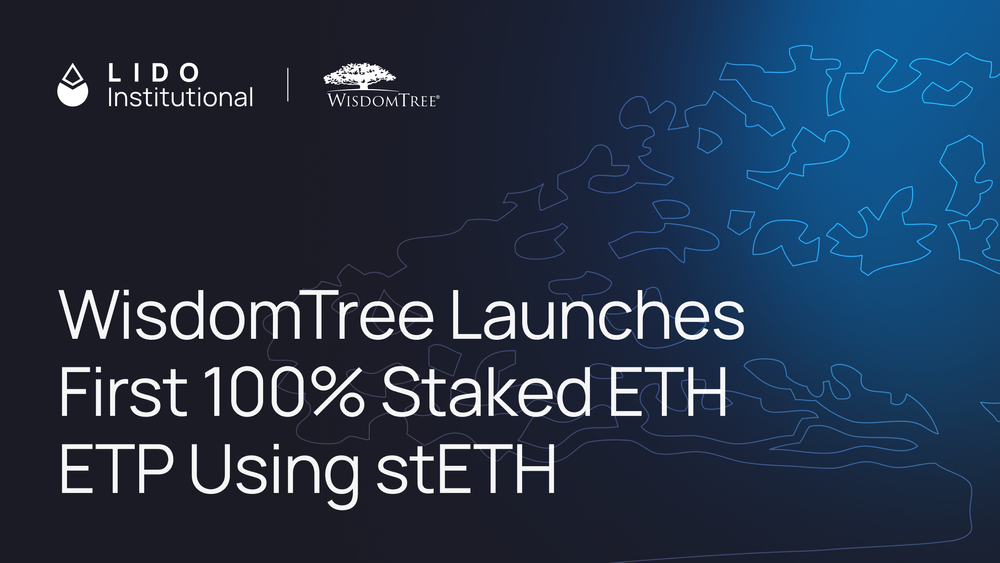
Outside the U.S., some funds have incorporated staking even before that. For example, WisdomTree launched a staked Ether ETP in Europe that holds stETH from the Lido protocol to provide staking rewards directly to investors. This structure captures Ethereum's native yield while maintaining the convenience of an ETF-style wrapper.
Yield Comparison Across Different ETF Structures
The yield picture varies significantly by structure:
- Spot Ethereum ETFs (non-staking) generate zero yield from their holdings. Investors pay management fees (typically 0.15% to 0.25%) without receiving any offsetting income from the underlying asset.
- Staked ETPs/ETFs distribute the staking rewards minus their management costs. The result is net yields of around 3.5% to 5% annually, on top of any price appreciation.
- Ethereum strategy ETFs using futures contracts face a different dynamic entirely. These funds don't hold actual ETH, so staking isn't relevant. Instead, they may capture (or lose) value through futures roll yields, depending on market conditions. The 60/40 tax treatment on futures gains adds another layer of complexity for yield calculations.
Staking Revenue Impact on ETF Performance
Staking revenue could become a meaningful performance differentiator once U.S. regulations allow it. A 4% annual staking yield might seem modest, but it compounds over time. On a $10,000 investment, that's an extra $400 per year—money that currently flows to validators rather than ETF holders.
The impact extends beyond direct returns. Funds that stake effectively reduce their net expense ratios by offsetting management fees with staking income. A fund charging 0.20% annually but earning 4% from staking delivers a net yield advantage over non-staking competitors. Sounds like a better deal, right?
Yield is only one side of the equation. To actually use these funds effectively, you need a strategy for how much to buy, when to buy it, and how to fit it alongside your other investments.
Investment Strategies and Portfolio Allocation
Building a smart Ethereum ETF investment approach means balancing timing, allocation size, and how these funds fit with your other holdings. Let's break down the strategies that work.
Dollar-Cost Averaging with Ethereum ETFs
Dollar-cost averaging (DCA) is recommended for the vast majority of investors who would prefer a less involved approach, plus it removes the pressure of timing the market perfectly. The way it works is instead of investing a lump sum all at once, you spread fixed amounts across regular intervals—weekly, biweekly, or monthly. This approach smooths out Ethereum's notorious volatility by buying more shares when prices dip and fewer when they spike.
Running the figures, analysis shows that investing $100 weekly into Ethereum from 2020 to 2025 would have turned a $26,000 total investment into approximately $195,000. That's the power of consistent buying through market ups and downs.
DCA works especially well with ETFs because most brokerages can automate purchases. Set it, and let the strategy do its work (don’t forget to manage the position, though). This removes emotional decision-making—no panic selling during crashes or FOMO buying during rallies.
Recommended Allocation Percentages
Source: Morningstar
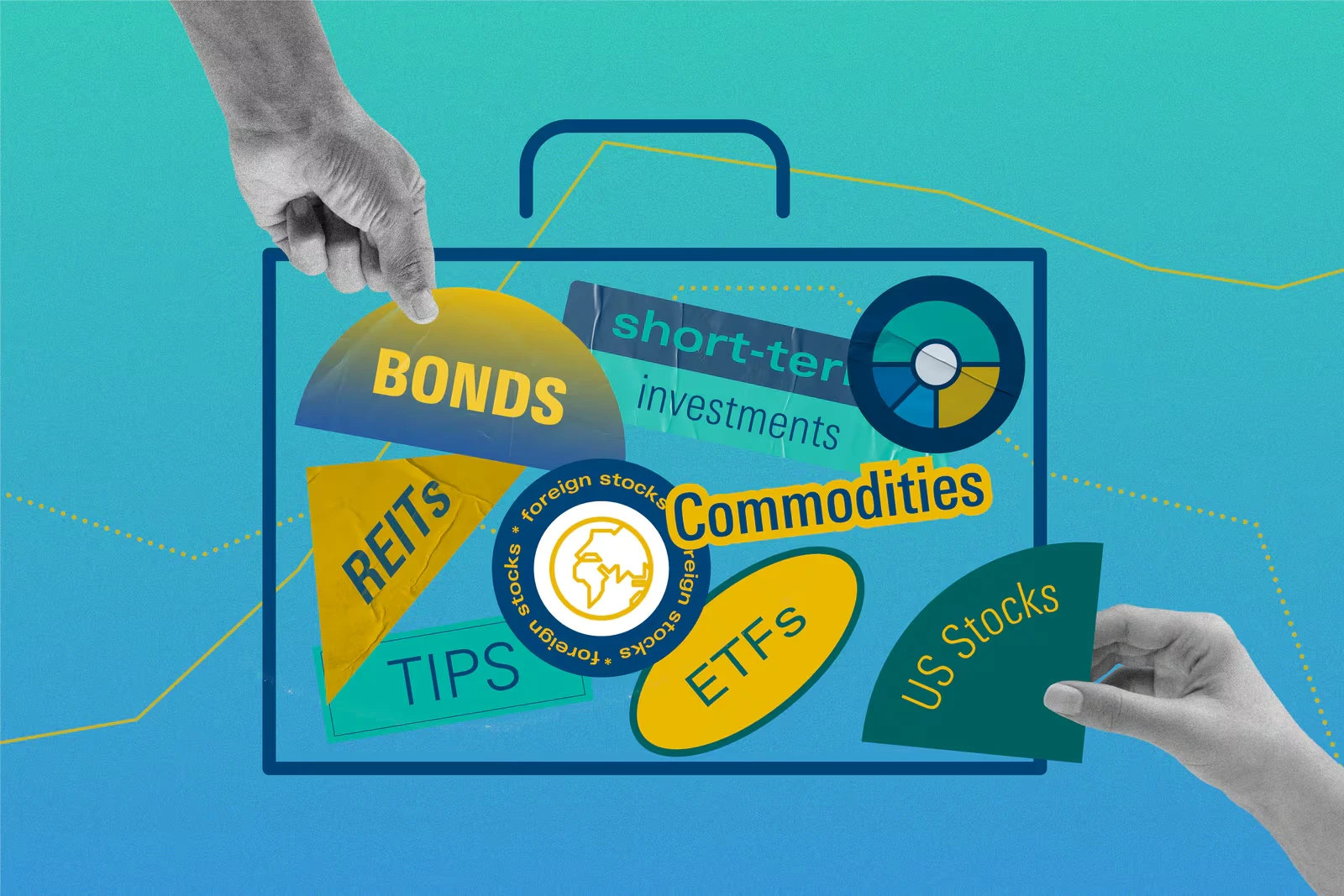
How much of your portfolio should go into Ethereum ETFs? Morgan Stanley's Global Investment Committee offers clear guidance based on risk tolerance:
- Balanced portfolios: 2% crypto allocation
- Moderate-growth portfolios: 3% crypto allocation
- Aggressive growth portfolios: Up to 4% crypto allocation
Evidently, these percentages treat crypto as a satellite holding, not a core position. The logic is straightforward: Ethereum offers high growth potential but carries significant volatility. A 2–4% allocation gives you meaningful upside exposure without risking your entire financial plan if crypto markets crash.
Conservative investors should stick to the lower end. If you're young with a long time horizon and can stomach short-term losses, you might push toward 4%. The key is matching your allocation to your actual risk tolerance, not just your growth goals.
Integration with Traditional Investment Portfolios
Ethereum ETFs integrate smoothly into standard investment accounts—no need for separate crypto wallets or exchange accounts. They trade during regular market hours alongside your stocks and bonds, settling in two business days just like traditional ETFs.
If holding ETH directly is a bet on the technology, Ethereum ETFs are a growth-oriented allocation similar to emerging markets or small-cap stocks. They add diversification because crypto often, though not always anymore, moves independently from traditional assets. During periods when stocks and bonds both struggle, crypto can provide portfolio balance (though this isn't guaranteed, and correlations change over time).
The key is maintaining discipline. DCA is one thing but you should probably rebalance annually to keep your crypto allocation within target percentages too. If Ethereum soars and suddenly represents 8% of your portfolio instead of 3%, trim back and lock in gains. This prevents any single asset from dominating your risk profile.
How Much to Invest in Ethereum ETFs
Frankly, there are no magic thresholds that will make any investment automatically worth it, Ethereum included. Instead of this mentality, you should start with what you can afford to lose without disrupting your financial security and build it up from there. Your Ethereum ETF investment should never compromise emergency savings, retirement contributions, or debt payments.
A practical starting point is to apply recommended percentages: calculate your investment portfolio's total value, then apply the 2–4% guideline. For example, if you have $100,000 invested, that means $2,000–$4,000 in Ethereum ETFs.
In any case, there's no minimum requirement beyond your brokerage's minimums—most ETFs trade like stocks, so you can start with a single share if needed.
Tax Implications and Optimization
Even with a good strategy, taxes can quietly eat into your returns. Understanding how Ethereum ETFs are taxed compared to direct crypto can help you keep more of what you earn.
ETF Tax Advantages vs Direct Crypto Holdings
One major benefit of Ethereum ETFs is they offer clearer tax treatment than holding cryptocurrency directly. When you own Ethereum ETFs in a standard brokerage account, gains and losses follow traditional securities tax rules: you pay capital gains taxes when you sell shares, with rates depending on how long you held them.

Source: Schwab Asset Management
Direct crypto holdings face more complexity in comparison. The IRS treats cryptocurrency as property, meaning every transaction—even swapping one crypto for another—creates a taxable event. By the way, if you're staking Ethereum directly, those rewards count as ordinary income at the time you receive them and are taxable at your marginal rate (which can be significantly higher than capital gains rates).
Furthermore, to their own advantage, Ethereum futures-based ETFs carry a unique tax structure under the 60/40 rule. Regardless of how long you hold these ETFs, 60% of your gains receive long-term capital gains treatment, while 40% gets taxed at short-term rates. This can actually work in your favor if you're a short-term trader.
Spot Ethereum ETFs are treated like regular securities, with gains subject to capital gains tax rates when you sell. Hold them over a year for long-term capital gains treatment; sell sooner, and you'll pay short-term rates.
Tax-Loss Harvesting with Ethereum ETFs
A method called tax-loss harvesting becomes much simpler with Ethereum ETFs. You would do it if you sell an ETF at a loss to offset gains elsewhere in your portfolio, then immediately buy a different Ethereum ETF without triggering the wash-sale rule—as long as the funds aren't "substantially identical."
Here's how it works in practice: if you hold losses in the Grayscale Ethereum Trust, you could sell those shares and immediately purchase the BlackRock iShares Ethereum Trust. The IRS doesn't consider these substantially identical because they're different securities with different structures and fee schedules.
Capital Gains Considerations
It’s common knowledge that your holding period also determines your tax rate. Long-term capital gains (for assets held over one year) face lower rates—0%, 15%, or 20% depending on your income level. Short-term gains get taxed as ordinary income at your marginal rate, which can reach 37% for high earners. That's a significant difference.
Interestingly, Ethereum ETFs held in tax-advantaged accounts like IRAs completely sidestep these considerations. You won't pay capital gains taxes on trades within the account—only on withdrawals in retirement (for traditional IRAs) or never (for Roth IRAs, where qualified distributions are tax-free).
| Feature | Spot Ethereum ETFs | Futures Ethereum ETFs | Direct Ethereum Holdings |
| Capital Gains Treatment | Standard (0–20% long-term, ordinary income short-term) | 60/40 rule (mixed treatment regardless of holding period) | Standard property rules |
| Staking Income Taxation | N/A | N/A | Ordinary income at receipt |
| Tax-Loss Harvesting | Simple between different ETFs | Simple between different ETFs | Uncertain wash-sale treatment |
| Transaction Reporting | 1099-B from broker | 1099-B from broker | Manual tracking required |
| IRA Eligibility | Yes | Yes | Limited (some IRAs allow) |
| Wash-Sale Rule | Applies | Applies | Currently unclear |
The key takeaway? Ethereum ETFs provide cleaner tax documentation, easier loss harvesting, and straightforward capital gains treatment—especially valuable if you're building long-term wealth without the complexity of managing crypto transactions directly.
Taxes are only one part of the broader backdrop. The regulatory environment itself has shaped and will continue to shape what Ethereum ETFs can and cannot do.
Regulatory Landscape and Future Developments
The regulatory path for Ethereum ETFs has been anything but straightforward, and understanding how these products came to market—and what comes next—matters for your investment decisions.
SEC Approval Process and Timeline
On May 23, 2024, the Securities and Exchange Commission (SEC) approved eight spot Ethereum ETFs for listing and trading. This marked a pivotal shift in how U.S. regulators view digital assets. The approval language suggested that Ethereum qualifies as a commodity rather than a security, removing significant legal uncertainty around the asset's classification.
Here's where it gets interesting: the initial approvals came with a major restriction. The SEC explicitly prohibited these funds from staking the underlying ETH they hold. The landscape evolved quickly, though. By May 2025, regulatory clarifications stated that certain protocol activities, including staking, do not themselves constitute securities offerings. By October, staked ETH ETFs were already a thing.
International Regulatory Differences
The SEC developments obviously concern the U.S. but regulatory approach varies significantly across jurisdictions, creating different investor experiences. For one, European markets operate under frameworks that allow more flexible product structures.
WisdomTree’s staked Ether ETP in Europe creates a meaningful performance gap for U.S. investors. European investors access both price appreciation and yield, while the latter capture only price movements through domestic ETFs. The disparity highlights how regulatory environments directly impact product structure and investor returns.
Regulatory Environment Impact on ETF Performance
Regulatory clarity correlates directly with market confidence. The May 2024 approvals triggered immediate capital inflows at record scales. However, the sentiment shifts in response to broader market conditions in matters of months or weeks.
And the regulatory evolution isn't finished just yet. As the SEC continues clarifying its stance on digital asset protocols and staking mechanisms, the competitive landscape for Ethereum ETFs could shift substantially. That's worth monitoring if you're considering these products for long-term holdings.
And now, the review of fundamentals of these investment vehicles should be more or less comprehensive. It’s the right opportunity to summarize them as pros and cons!
Risks and Benefits of Ethereum ETFs
Potential Risks
- Ethereum ETFs move with the price of Ethereum itself, which means significant volatility comes with the territory, and crypto drawdowns can be steep. Even established assets like Ethereum can experience double-digit percentage declines within weeks. If you're investing money you'll need in the short term, this volatility becomes a real problem.
- Regulatory clarity doesn't mean regulatory certainty. If regulations shift—either loosening to allow staking or tightening to restrict trading—your ETF's structure and performance could change overnight.
- While ETFs remove the need for you to manage private keys but introduce counterparty risk through the fund provider and the custodian holding the actual Ethereum. If a custody provider faces a security breach or operational failure, your investment could be affected.
Advantages of Ethereum ETFs

Source: CenterPoint Securities
- ETFs handle all the technical complexity for you. For investors who want Ethereum exposure without becoming crypto experts, that's a significant benefit.
- These ETFs trade on regulated exchanges and must follow strict SEC reporting requirements. That means audited holdings, transparent fee structures, and investor protections that don't exist when you're trading on decentralized exchanges.
- Ethereum ETFs let you add blockchain exposure to a traditional portfolio without concentrating too much risk in a single asset class. You can dollar-cost average with small purchases, and you can rebalance alongside your stocks and bonds using familiar tools.
Choosing the Best Ethereum ETF for Your Portfolio
In addition to pros and cons, the guide’s analysis calls for another summary for actionable criteria specifically. To recap, what exactly should inform your decision to invest in Ether ETFs?
- Your risk tolerance and investment timeline should guide your Ethereum ETF selection. If you're comfortable with high volatility and investing for five years or more, spot Ethereum ETFs like BlackRock's iShares Ethereum Trust (ETHA) or Fidelity's Wise Origin Ethereum Fund (FETH) provide direct exposure to Ethereum's price movements.
- Fee differences directly impact your returns over time. Most spot Ethereum ETFs charge between 0.15% and 0.25% annually—reasonable for professionally managed crypto exposure. However, Grayscale Ethereum Trust (ETHE) carries a significantly higher 2.50% annual fee, which can substantially erode returns over multi-year holding periods.
- Liquidity ensures you can enter and exit positions without moving prices against yourself. BlackRock's ETHA leads with over $10 billion in assets under management, providing deep liquidity and tight bid-ask spreads. High trading volume also signals strong market interest. Check average daily trading volume before investing; ETFs with low volume can be harder to sell quickly or at fair prices, especially during market stress.
Ethereum ETFs vs Bitcoin ETFs
It may be worth addressing the main alternative in the digital asset ETF space: Bitcoin ETFs. Both asset classes offer crypto exposure through regulated vehicles, but from the investment thesis point of view, they serve different purposes.
Bitcoin functions primarily as digital gold—a store of value with an established track record. Ethereum, on the other hand, powers $150 billion worth of smart contracts and decentralized applications.
Bitcoin ETFs may win on the liquidity and performance fronts but Ethereum offers utility beyond just holding value. Its proof-of-stake consensus mechanism, implemented in September 2022, reduced energy consumption by over 99.95% while enabling staking yields between roughly 3.8% and 5.5% annually. Bitcoin ETFs lack this embedded income-generating potential.
Future Outlook and Market Trends
Market Trends and Future Catalysts
Several structural trends shape Ethereum's outlook—and, as a result, the performance potential of Ethereum ETFs. One of them is that the continuously growing DeFi ecosystem demonstrates real-world utility, not just speculative interest.
One complicating factor? Layer-2 network growth. Layer-2s handle the majority of Ethereum-based transactions, which concentrates revenue flows within those networks rather than on Ethereum's mainnet settlement layer. This dynamic creates questions about Ethereum's long-term fee revenue, though mainnet remains the settlement backbone securing all L2 activity.
Staking regulation is also evolving, and even though it is challenging to make any assumptions about the impact of the approval on the ETH ETF markets due to recency just yet, it is without any doubt will be a crucial factor shaping it.
Ethereum Performance Outlook
Ethereum's performance depends on institutional adoption momentum, regulatory clarity, and DeFi ecosystem expansion. If Bitcoin ETFs’ influence is any indication, institutional involvement may improve stability of the digital asset going forward.
This volatility is normal for emerging asset classes, anyway. Long-term investors should focus on Ethereum's infrastructure role—it remains the settlement layer for DeFi, NFTs, and tokenized assets. As regulatory frameworks mature and staking integration advances, Ethereum ETFs could offer both capital appreciation and yield generation. Sounds promising, right? But only for investors who understand the technology and can tolerate near-term price swings.
Conclusion
Used thoughtfully, Ethereum ETFs can add a measured slice of blockchain innovation to a traditional portfolio without forcing you to become a full-time crypto technician in the process.
Check out ChangeHero blog for further reading after this guide. If you prefer social media, find us on X, Facebook, and Telegram.
Frequently Asked Questions
Are Ethereum ETFs Safe?
Ethereum ETFs offer a significantly safer investment structure compared to holding cryptocurrency directly on exchanges or in personal wallets. When you invest in an Ethereum ETF, you're purchasing shares of a regulated financial product overseen by the Securities and Exchange Commission—which means the fund must follow strict compliance standards and custody requirements. Here's the key difference: the underlying Ethereum is held by institutional custodians, not on potentially vulnerable exchanges where hacking risks exist. Since the SEC approved eight spot Ethereum ETFs in May 2024, these funds operate under the same regulatory framework as traditional ETFs, providing investor protections that direct crypto holdings simply don't offer. That said, "safe" doesn't mean risk-free. Ethereum itself remains highly volatile. It gained 4.79 percent in a single session in December 2025, trading near $3,298.76, but the broader market saw significant drawdowns throughout the year. Your investment value will fluctuate with Ethereum's price movements. Additionally, November 2025 saw $1.4 billion in combined ETF outflows, demonstrating that even regulated products experience substantial volatility. The key safety advantage? You avoid the risks of exchange hacks, lost private keys, or custody errors that plague direct cryptocurrency holdings. Your investment is protected by traditional securities regulations, SIPC insurance through your broker, and professional fund management. Just remember that market risk—Ethereum's price volatility—remains fully intact.
What's the Minimum Investment Amount for ETH ETF?
Most Ethereum ETFs have no official minimum investment requirement, which makes them accessible to virtually any investor. Since these funds trade on major stock exchanges just like regular stocks, you can purchase as little as one share through your brokerage account. In practical terms, the minimum investment equals the current share price of your chosen ETF. If an ETF trades at $25 per share, that's your entry point. Many major brokers like Fidelity, Charles Schwab, and Robinhood now offer fractional share trading, meaning you could invest even less—sometimes as little as $1 or $5—to gain exposure to Ethereum through an ETF. By the way, this accessibility represents a major advantage over direct Ethereum purchases, where exchange minimums, network fees (gas fees), and wallet setup costs create higher practical barriers to entry. With ETFs, you're simply buying shares through your existing investment account with no additional infrastructure needed.
How Do Ethereum ETFs Compare to Bitcoin ETFs?
Ethereum ETFs and Bitcoin ETFs share structural similarities—both offer regulated exposure to cryptocurrency without direct ownership—but they track fundamentally different assets with distinct characteristics and use cases. Bitcoin functions primarily as digital gold: a store of value with limited supply and relatively simple functionality. Ethereum operates as a programmable blockchain platform. It powers smart contracts, decentralized applications, and the entire decentralized finance ecosystem, with total value locked in Ethereum and layer-2 applications reaching approximately $150 billion by July 2025. The investment implications matter. Bitcoin ETFs have generally attracted larger initial capital flows and broader institutional adoption, partly because Bitcoin's narrative as "digital gold" resonates clearly with traditional investors. BlackRock's iShares Ethereum Trust (ETHA) commands approximately $16.1 billion in assets under management, making it the largest spot Ethereum ETF—but this still trails behind leading Bitcoin ETF products. One key difference involves staking potential. Ethereum transitioned to proof-of-stake consensus in September 2022, reducing energy consumption by over 99.95 percent and creating the possibility of staking yields (typically 3.8 to 5.5 percent annually). The initial SEC approval prohibited U.S. Ethereum ETFs from staking, though regulatory clarifications in May 2025 opened the door for staked products in the future. Bitcoin, by contrast, uses proof-of-work and generates no staking yields. From a volatility perspective, Ethereum typically exhibits higher price swings than Bitcoin. This means potentially greater returns during bull markets but steeper drawdowns during corrections.
Can I Hold Ethereum ETFs in IRA?
Yes, you can hold Ethereum ETFs in most Individual Retirement Accounts, including traditional IRAs, Roth IRAs, SEP IRAs, and SIMPLE IRAs. Since Ethereum ETFs are SEC-regulated securities that trade on major stock exchanges, they qualify as standard investment options within retirement accounts—just like any other ETF or stock. This creates significant advantages for long-term crypto investors. In a traditional IRA, your investment grows tax-deferred, meaning you won't pay taxes on gains until withdrawal. In a Roth IRA, qualified withdrawals are entirely tax-free after age 59½, assuming you've held the account for at least five years. This tax treatment stands in sharp contrast to holding Ethereum directly, where every transaction—even converting between cryptocurrencies—triggers a taxable event. The practical process is straightforward. Open an IRA with any major brokerage that offers ETF trading, fund your account up to annual contribution limits, and purchase Ethereum ETF shares just like you would any other security. Keep in mind Morgan Stanley's Global Investment Committee recommendation: limit crypto allocations to 2 percent for balanced portfolios, 3 percent for moderate-growth portfolios, and up to 4 percent for aggressive growth portfolios. This guidance applies equally to tax-advantaged retirement accounts, where diversification and risk management remain essential principles.


