
Full Guide to Choosing the Right Bitcoin ETF for Your Portfolio


Disclaimer
This article does not substitute professional financial or investment advice but serves as educational material on crypto and digital assets. When dealing with cryptocurrencies, remember that they are extremely volatile and thus a high-risk investment. Always stay informed and aware of those risks. Consider investing in cryptocurrencies only after careful consideration and analysis of your own research and at your own risk.
Contents
- 1. Introduction to Bitcoin ETFs
- 2. Why Consider Bitcoin ETFs Instead of Buying Crypto Directly?
- 3. How to Choose the Best Bitcoin ETF for 2025
- 4. Top Bitcoin ETFs by Performance and Cost
- 5. Bitcoin ETF Market Dynamics
- 6. How to Invest in Bitcoin ETFs
- 7. Advanced Bitcoin ETF Strategies
- 8. Tax Considerations for Bitcoin ETF Investors in the U.S.
- 9. Bitcoin ETFs vs More Crypto Investment Options
- 10. Regulatory Environment and Future Outlook
- 11. Are Bitcoin ETFs a Good Investment Right Now?
- 12. Conclusion
If for some reason or another you'd rather have Bitcoin exposure through your traditional brokerage account over holding it yourself, currently available Bitcoin ETFs offer a straightforward path—no digital wallets, no private keys, just familiar investment tools. Since the SEC approved eleven spot Bitcoin ETF applications in January 2024, these funds have fundamentally changed how investors access cryptocurrency.
This guide breaks down everything you need to evaluate when choosing the best Bitcoin ETF for your portfolio. We'll cover the differences between spot and futures-based Bitcoin ETFs, compare the best performing options by both returns and fees, and explain the key factors that separate market leaders from the rest.
Here's what makes Bitcoin ETFs particularly appealing right now: they've helped reduce Bitcoin's volatility while preserving upside potential. The average daily volatility of Bitcoin declined from 4.2% in the pre-ETF era (2020–2023) to 1.8% in the post-ETF era (2024–2025). That makes crypto exposure more palatable for traditional portfolios.
And choosing the right Bitcoin ETF matters more than you might think! Today's spot Bitcoin ETFs offer cleaner tracking, lower costs, and institutional-grade custody—and that combination is what makes them so relevant for investment portfolios going into 2026.
Introduction to Bitcoin ETFs
What is a Bitcoin ETF?
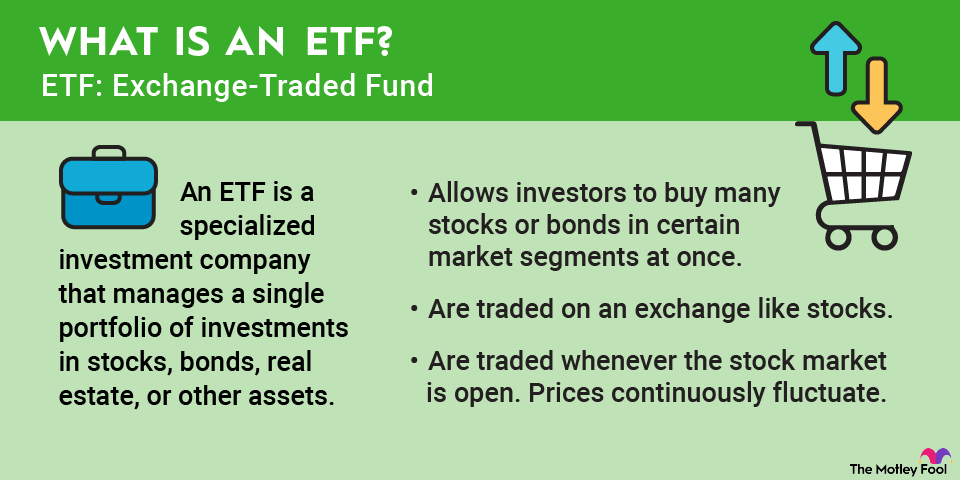
A Bitcoin ETF (exchange-traded fund) is an investment fund that tracks the price of Bitcoin (BTC) and trades on traditional stock exchanges, just like shares of companies. In simple terms, it lets you invest in Bitcoin without actually owning or storing the cryptocurrency yourself.
ℹ️ Not sure what is an ETF itself? Check the quick explanation in our glossary.
Here's how it works: when you buy shares of a Bitcoin ETF, you're buying a piece of a fund that either holds Bitcoin directly (a spot Bitcoin ETF) or invests in Bitcoin futures contracts (a futures-based Bitcoin ETF). The fund's price moves up and down with Bitcoin's market price, giving you exposure to Bitcoin's performance through your regular brokerage account.
On January 10, 2024, the United States SEC approved eleven spot Bitcoin exchange-traded product applications. This approval came after a U.S. Court of Appeals ruling that the SEC had acted "arbitrarily and capriciously" in rejecting earlier applications to convert existing products into ETFs. By December 2025, these spot Bitcoin ETFs had accumulated over $118 billion in assets under management.
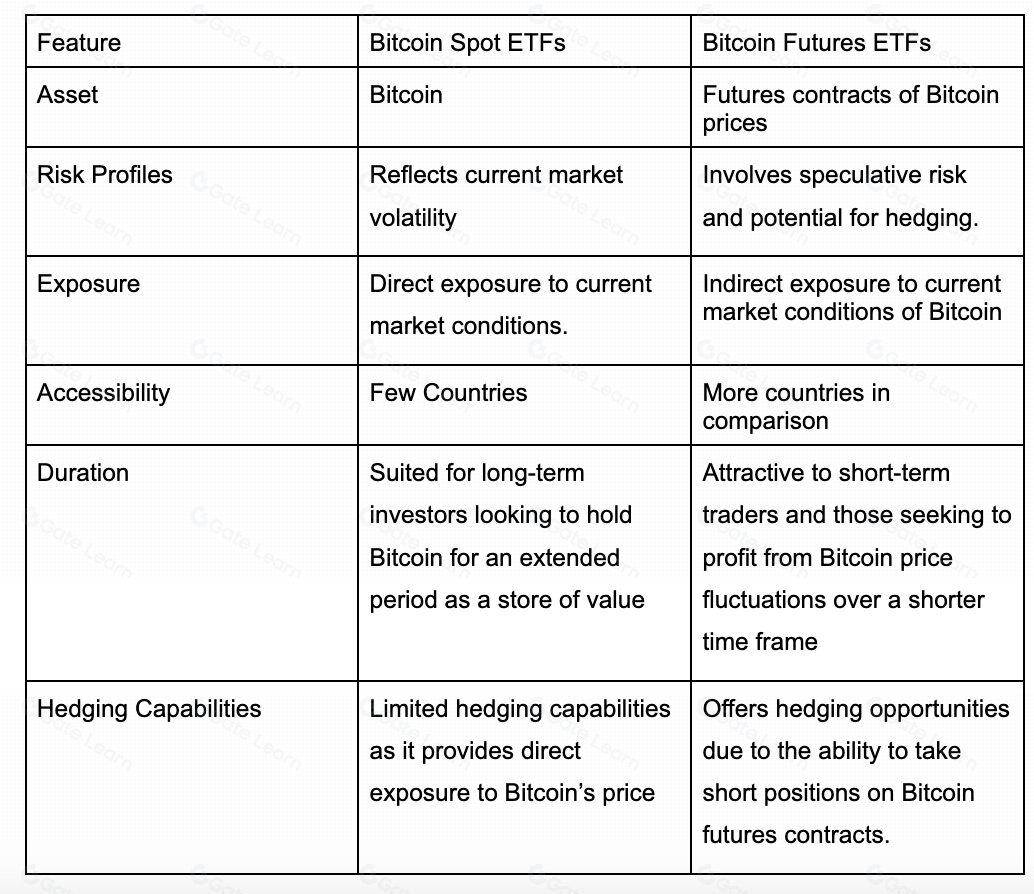
The difference between spot and futures-based Bitcoin ETFs matters, particularly for your returns. Spot Bitcoin ETFs directly hold Bitcoin and closely track its price, with expense ratios typically between 0.15% and 0.25%. Futures-based ETFs invest in Bitcoin futures contracts instead, which can lead to tracking errors and higher costs (from 0.95% to 2.38%) because the fund must repeatedly roll contracts forward as they expire. That's a significant cost and performance difference.
Benefits of Investing in Bitcoin ETFs
Source: The Motley Fool
Bitcoin ETFs solve several practical problems that make direct crypto ownership challenging for many investors. The most obvious benefit? You can invest in Bitcoin through your existing brokerage account without setting up a crypto wallet, managing private keys, or worrying about seed phrases.
Tax efficiency represents another significant advantage: for instance, spot Bitcoin ETFs are treated as property for tax purposes, allowing for capital gains treatment without being subject to wash sale rules. This means you can harvest tax losses more flexibly than with futures-based ETFs, which do fall under wash sale restrictions.
Beyond convenience, Bitcoin ETFs offer regulatory oversight and institutional-grade custody. You're investing through regulated funds with established financial infrastructure and disclosure standards. The best Bitcoin ETF options for 2025, like the iShares Bitcoin Trust (IBIT), use multiple custodians to reduce concentration risk—a smart safety feature in a market where custody is everything.
Portfolio integration also becomes straightforward with Bitcoin ETFs. Research shows that even a 1% allocation of Bitcoin to a traditional portfolio improves annual returns while reducing overall volatility. On top of that, you can hold these funds in tax-advantaged retirement accounts, allowing for tax-deferred or tax-free growth. That makes them practical tools for long-term wealth building, not just speculative trades.
Why Consider Bitcoin ETFs Instead of Buying Crypto Directly?
Advantages of Using ETFs to Invest in Bitcoin
Quite straightforwardly, for many investors, the best Bitcoin ETF to invest in is the one that removes the most friction. Even though Bitcoin ETFs trade on traditional exchanges during market hours, just like stocks, and settle in your existing brokerage account, they remove the need to master self-custody and adequately secure crypto holdings (which can be a lot).
Holding these assets in tax-advantaged retirement accounts allows for tax-deferred growth of capital. From a cost perspective, spot Bitcoin ETFs typically charge expense ratios significantly lower than the fees seen in futures-based ETFs. Over a decade, those percentage points compound into real money.
Finally, the regulatory framework adds another layer of comfort. The approval process established transparency requirements, custody standards, and investor protections that simply don't exist in unregulated crypto exchanges.
Risks and Limitations of Bitcoin ETFs
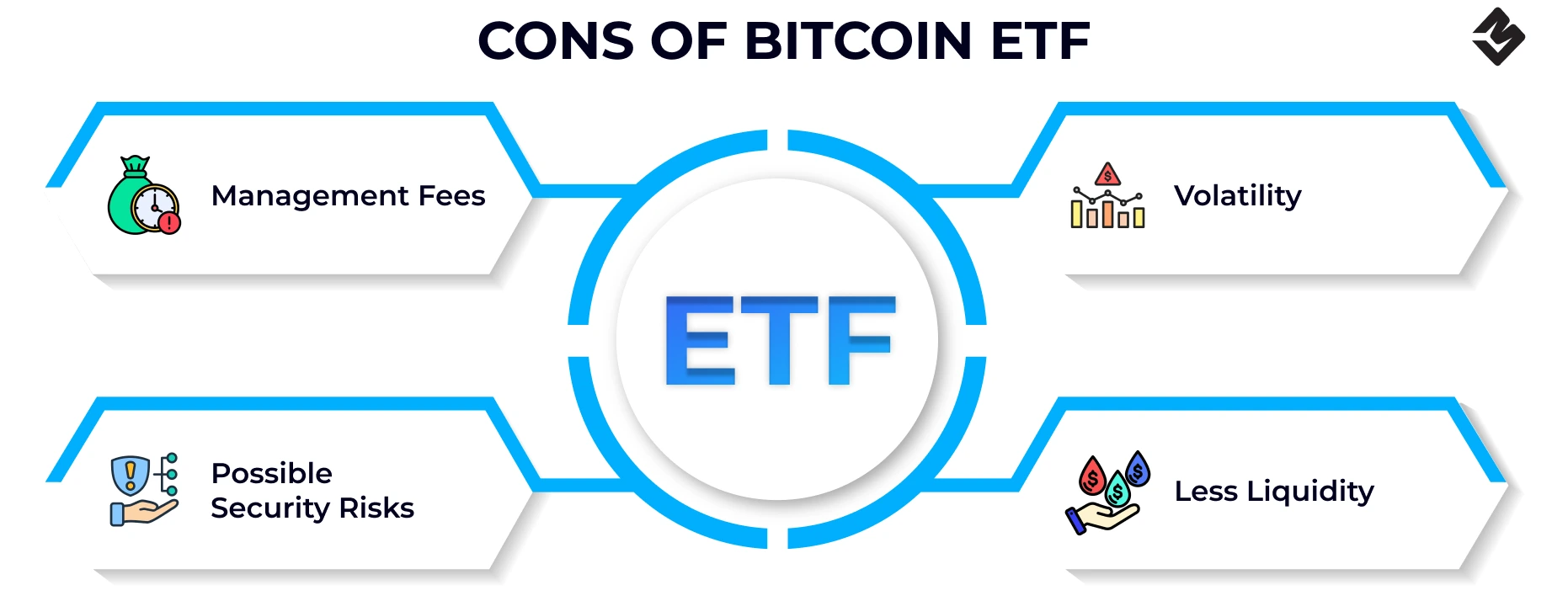
Naturally, Bitcoin ETFs aren't without tradeoffs. They track Bitcoin's price, meaning you're still exposed to the asset's volatility. In the post-ETF Bitcoin markets the swings are less wild, but still swings.
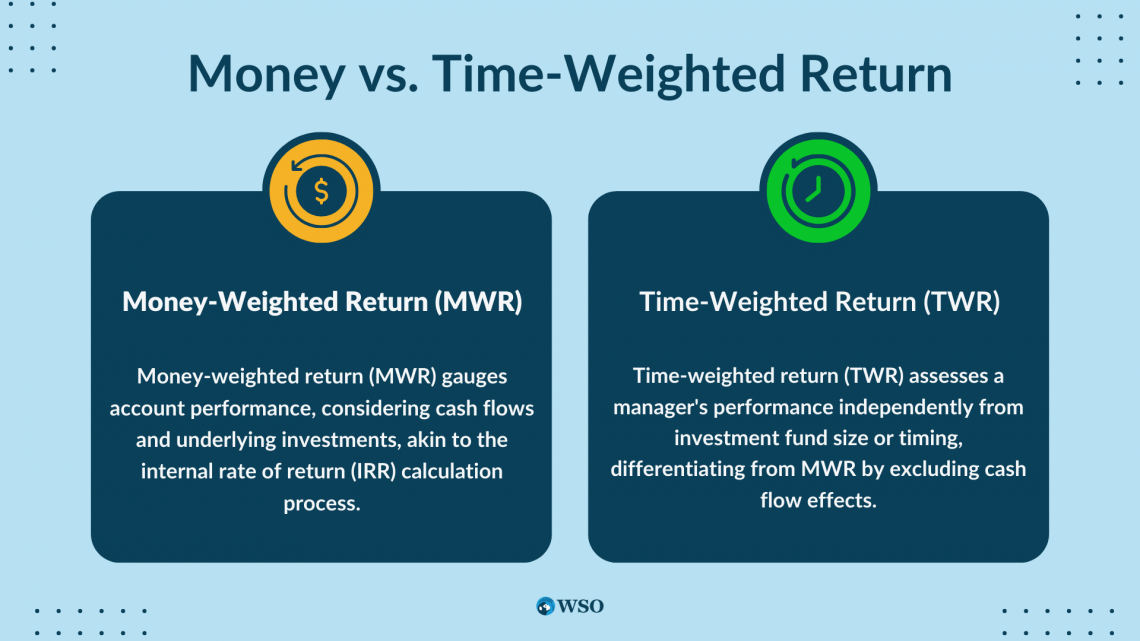
Here's where timing matters: according to Morningstar, while the iShares Bitcoin Trust (IBIT) delivered annualized returns of 46%, the average dollar invested in it only earned 11.2% due to when investors chose to buy. This gap highlights how market timing affects real investor outcomes versus fund performance headlines. Simply put, buying after big rallies can turn the "best performing Bitcoin ETF" into a much less impressive experience.
Source: Wall Street Oasis
Giving up direct control over the asset can matter too. You can't move ETF Bitcoin into a secure hardware wallet, spend it on-chain, or use it in decentralized finance (DeFi). If your goal is to engage with the Bitcoin network itself, ETFs are a financial wrapper at best, not a substitute for direct ownership.
Custodianship and Counterparty Risk
Here's the important detail: if Coinbase, which currently holds the vast majority of BTC backing the ETFs, faced operational issues or security breaches, multiple ETFs would be affected simultaneously. Not ideal when diversification is the whole point.
To address this concentration risk, some issuers are diversifying. When doing your Bitcoin ETF comparison, check which custodian each fund uses—it's a meaningful risk variable worth understanding before you invest a dollar.
How to Choose the Best Bitcoin ETF for 2025
Choosing the best Bitcoin ETF to buy requires evaluating six core factors, which we take as foundation when evaluating them: fees, fund size, liquidity, pricing accuracy, issuer credibility, and investment strategy. Each element directly affects your returns, trading costs, and overall risk exposure.
Expense Ratio and Fees Analysis
The expense ratio is the annual percentage fee you pay to own the ETF—and it compounds over time.
That difference matters. A 1% expense gap on a $10,000 investment costs you roughly $100 per year, plus lost compounding potential over decades. When comparing Bitcoin ETFs with the lowest fees, focus on total cost, not just the headline expense ratio. Some funds waive fees temporarily to attract assets, then revert to higher rates. Check whether the stated rate is promotional or permanent.
Fund Size and Assets Under Management
Fund size tells you whether an ETF has staying power. As opposed to market leaders, smaller Bitcoin ETFs may struggle with economies of scale or even close if they don't attract sufficient capital.
Larger funds also typically offer better liquidity and tighter bid-ask spreads, meaning you pay less when entering or exiting positions. That's especially important for long-term investors who plan to dollar-cost average into Bitcoin exposure.
Liquidity and Trading Volume
Liquidity determines how easily you can buy or sell shares without moving the price, and it matters as much in BTC markets as for its ETFs. High trading volume usually translates to narrower spreads—the difference between the buy price and sell price. For Bitcoin ETFs, daily trading volume above a healthy baseline tends to be sufficient for retail investors.
Here's the catch: illiquid ETFs can cost you money even if their expense ratio looks attractive. If the bid-ask spread is 0.5%, you're effectively paying that percentage every time you trade. Sounds small, but it adds up over repeated buys and sells.
Premium and Discount to Net Asset Value
NAV (net asset value) represents the actual value of the Bitcoin held by the ETF per share. The ETF's market price should track NAV closely, but sometimes it trades at a premium (above NAV) or discount (below NAV).

Source: GPI Europe
Persistent premiums mean you're overpaying relative to the underlying Bitcoin. Persistent discounts suggest structural issues or low demand. Spot Bitcoin ETFs generally maintain tighter NAV tracking than futures-based ETFs because they hold actual Bitcoin rather than derivative contracts. It’s a good idea to check historical premium/discount data before committing capital, especially if you're investing a lump sum.
Issuer Reputation and Track Record
Most importantly, since you are relying on one, the issuer's credibility affects everything from custodianship to operational execution. BlackRock's IBIT and Fidelity's Wise Origin Bitcoin Fund (FBTC) are backed by firms with decades of ETF management experience and robust custodial infrastructure even before Bitcoin.
Newer issuers may offer competitive fees but lack the operational resilience of established players. In crypto, where custody and security are critical, issuer reputation equals safeguarding your assets.
Portfolio Characteristics and Strategy
Most spot Bitcoin ETFs hold Bitcoin directly and track its price with minimal deviation. Simple enough. Futures-based Bitcoin ETFs, however, invest in Bitcoin futures contracts, which can introduce tracking error due to rollover costs and contango (when future prices exceed spot prices). This structure often results in lower returns compared to holding Bitcoin directly.
If your goal is pure Bitcoin exposure, a spot ETF is typically the best Bitcoin ETF to invest in. Futures-based products are better suited for tactical trades or specific derivative strategies rather than long-term, buy-and-hold positions.
Comparison Table: Top Bitcoin ETFs by Key Metrics
| ETF Name | Ticker | Type | Expense Ratio | AUM (Approx.) | Custodian | Launch Date |
| iShares Bitcoin Trust | IBIT | Spot | 0.25% | $70B | Coinbase, Anchorage | Jan 2024 |
| Fidelity Wise Origin Bitcoin Fund | FBTC | Spot | 0.25% | $18B | Fidelity Digital Assets | Jan 2024 |
| Grayscale Bitcoin Trust | GBTC | Spot | 1.50% | $14.5B | Coinbase | Converted 2024 |
| ProShares Bitcoin Strategy ETF | BITO | Futures | 0.95% | $2.35B | N/A (Futures-Based Exposure) | Oct 2021 |
Top Bitcoin ETFs by Performance and Cost
Keeping everything covered so far in mind, first things first: when choosing the best Bitcoin ETF to buy, performance and fees are still two of the most important metrics because both directly shape your net outcome.
Best Performing Bitcoin ETFs
The iShares Bitcoin Trust (IBIT) has emerged as the market leader since spot Bitcoin ETFs launched in January 2024 in the U.S. By December 2025, IBIT accumulated $70 billion in assets in just 341 days—significantly faster than the SPDR Gold Shares Trust's 1,691-day timeline to reach similar milestones for comparison.
Alternatively, Fidelity's Wise Origin Bitcoin Fund (FBTC) ranks as the second-largest spot Bitcoin ETF and offers a diversification alternative through its use of Fidelity Digital Assets as custodian (i.e. you can spread your position in spot Bitcoin ETFs among products that use different custodians to reduce associated risks).
Coming from the spot vs. futures ETF angle, the former tend to perform better due to lower fees and discrepancies concerning value tracking. Knowing this, it comes as no surprise why the approval of spot BTC ETF was such a big deal. The operational complexity adds friction that chips away at returns over time, which is why many long-term investors favor spot products instead.
Bitcoin ETFs with the Lowest Fees
Source: Gate
Spot Bitcoin ETFs offer the lowest fees in the category. Their expense ratios are competitive with traditional equity ETFs and dramatically lower than futures-based alternatives.
The cost structure matters because over time, fees compound. A 0.20% fee versus a 1.50% fee translates into thousands of dollars in savings on a $50,000 investment held for several years. Small percentage differences create big dollar impacts.
Bitcoin futures ETFs fees reflect the operational complexity of managing futures positions, including the cost of rolling contracts as they expire.
For most investors, spot Bitcoin ETFs represent the more cost-efficient choice. The fee difference alone can erode a substantial portion of your returns, especially in a sideways or choppy market.
Bitcoin ETF Market Dynamics
Understanding how Bitcoin ETFs function in the market will help you interpret pricing, liquidity, and performance differences when you’re comparing products.
Creation and Redemption Process Explained
Bitcoin ETFs maintain their market price close to their net asset value through a mechanism called the creation and redemption process. This system allows large institutional investors, known as authorized participants (APs), to create or redeem ETF shares directly with the fund.
Here's how it works in simple terms: when an ETF's market price trades above its NAV, authorized participants can buy Bitcoin on the open market and deliver it to the ETF sponsor in exchange for new ETF shares. They then sell these shares at the higher market price, pocketing the difference while bringing the ETF's price back down toward its NAV. The reverse happens when the ETF trades below NAV—APs buy ETF shares cheaply, redeem them for Bitcoin, and sell the Bitcoin at the higher market price. This arbitrage mechanism keeps prices aligned; they are not decided arbitrarily (pun not intended).
This process became significantly more efficient in July 2025 when the SEC permitted in-kind creations and redemptions for Bitcoin ETPs. This shift from the initial cash-only model (in place since the January 2024 launch) enhanced both cost efficiency and tax efficiency for the best Bitcoin ETF options available today.
Market Maker Role and Liquidity Provision
In that particular arrangement, market makers play a critical role in ensuring you can buy or sell Bitcoin ETF shares quickly and at fair prices. These specialized trading firms continuously post bid and ask prices throughout the trading day, creating liquidity even when there aren't natural buyers or sellers in the market. (How do they make a profit then? Read in the linked guide!)
The result? The best performing Bitcoin ETF funds tend to have robust market maker participation, which translates into tighter bid-ask spreads and smoother trading experiences. This liquidity provision is one reason why institutional investors often prefer Bitcoin ETFs over direct cryptocurrency ownership when making large allocations.
Understanding Tracking Error and Basis Risk
Not all Bitcoin ETFs track Bitcoin's price with the same precision, and understanding why matters when choosing the best Bitcoin ETF to invest in.

Source: Morningstar, via Geowealth
Tracking error refers to the difference between an ETF's returns and the returns of its underlying asset. Spot Bitcoin ETFs directly hold Bitcoin, so they closely track its price with minimal tracking error. In contrast, futures-based Bitcoin ETFs invest in Bitcoin futures contracts rather than actual Bitcoin, which can lead to significant tracking errors and higher costs from rolling contracts forward each month.
Basis risk is particularly relevant for futures-based ETFs. It's the risk that the futures price doesn't perfectly match the spot price of Bitcoin. When futures trade at a premium to spot prices (a situation called contango), futures-based ETFs face higher costs over time. This explains why spot Bitcoin ETFs with the lowest fees have become the preferred choice over futures-based alternatives.
For any Bitcoin ETF comparison, these market dynamics directly impact your long-term returns and should factor into your investment decision. With the emphasis on “your”—there is no universal recipe for this.
How to Invest in Bitcoin ETFs
Learning how to actually buy them through your existing accounts is not just a practical step for when you have made the decision to invest but a crucial step in and of itself; do not postpone it until the very end but view the whole process with it in mind too.
Basic Steps to Invest in ETFs Through a Broker
Getting started with a Bitcoin ETF is straightforward if you already have a brokerage account. The process looks like this: open an account (if you don't have one), search for your chosen ETF by its ticker symbol, decide how many shares you want to buy, and place your order. That's it.
Most major brokerages like Fidelity, Schwab, TD Ameritrade, or Interactive Brokers now offer access to spot Bitcoin ETFs. You'll search for the ETF the same way you'd look up any stock. For instance, if you want to invest in the iShares Bitcoin Trust, you'd type in "IBIT." The platform shows you the current price, and you can place a market order (buy at current price) or a limit order (set your maximum price).
How to Approach Buying Spot Bitcoin ETFs
When comparing options, focus on finding the best Bitcoin ETF to invest in based on your priorities. Are you looking for the Bitcoin ETF with lowest fees? Spot over futures is the first filter.
The best performing Bitcoin ETF might catch your eye, but timing matters more than you'd think. High fund returns don't automatically translate to high personal gains if you buy at the wrong moment.
For a practical Bitcoin ETF comparison, consider the market leaders. BlackRock's IBIT holds about the most amount in assets, while Fidelity's FBTC is the second-largest. Both track Bitcoin's price directly, but IBIT uses Coinbase plus Anchorage Digital Bank as custodians, while FBTC relies on Fidelity Digital Assets—a detail worth noting for custodial diversification.
Key Caveats and Practical Considerations
Source: CryptominerBros
Before you buy, understand these realities. Most Bitcoin ETFs don't pay dividends—they're growth investments tracking Bitcoin's price. The custodianship question matters too. If Coinbase experiences issues, it could impact multiple ETFs simultaneously.
Also remember that even the best Bitcoin ETF to buy won't eliminate Bitcoin's volatility entirely. Start with a position size that won't disrupt your sleep—research suggests 3–6% of your portfolio is optimal for risk-adjusted returns, with 1–3% more appropriate for conservative investors.
By the way, dollar-cost averaging works well for Bitcoin ETFs if you're nervous about timing. It lets you build a position gradually instead of committing all at once.
Advanced Bitcoin ETF Strategies
Once you've chosen the best Bitcoin ETF to invest in in your situation, the next step is figuring out how to use it strategically. Here's how experienced investors approach Bitcoin ETF allocation, timing, and portfolio integration.
Dollar-Cost Averaging with Bitcoin ETFs
Dollar-cost averaging (DCA) is one of the most effective strategies for building a Bitcoin position without trying to time the market, direct or indirect. Instead of investing a lump sum all at once, you invest a fixed amount at regular intervals—weekly, biweekly, or monthly—regardless of where Bitcoin's price happens to be.
Why does this work? Because it removes the emotional pressure of timing your entry. You automatically buy more shares when prices are low and fewer when prices are high, smoothing out your average cost over time.
Here's a practical example: instead of investing $6,000 in a spot Bitcoin ETF like IBIT or FBTC all at once, you could invest $500 per month over 12 months. This approach helps you avoid the regret of buying right before a price drop. It also builds discipline into your investment process.
Bitcoin ETF Allocation in Retirement Portfolios
We’ve already mentioned that Bitcoin ETFs can be held in tax-advantaged retirement accounts like IRAs and 401(k)s, allowing for tax-deferred or tax-free growth. This makes them particularly attractive for long-term investors focused on wealth accumulation.
But how much should you allocate? Research from VanEck suggests that even a 1% allocation of Bitcoin to a traditional 60/40 portfolio (60% stocks, 40% bonds) can improve annual returns by 1.5% while also reducing overall portfolio volatility. For investors seeking to maximize risk-adjusted returns, an optimal strategic allocation falls between 3% and 6% of portfolio value.
The key is treating Bitcoin as a small but meaningful diversifier, not as your entire retirement strategy. By the way, choosing the best performing Bitcoin ETF with low fees becomes even more important in an extremely long-term commitment that is a retirement account. Those savings compound tax-free over decades.
Tax Considerations for Bitcoin ETF Investors in the U.S.
Tax Efficiency of Spot vs Futures-Based Bitcoin ETFs
The tax structure differs significantly between spot and futures-based Bitcoin ETFs—and that difference can impact your returns in a big way.

Photo by Jakub Żerdzicki on Unsplash
Spot Bitcoin ETFs are treated as property for tax purposes, which means your gains follow standard capital gains tax rules. Hold shares for more than a year, and you pay long-term capital gains rates. Sell within a year, and you pay short-term rates based on your ordinary income tax bracket.
One major advantage? Spot ETFs aren't subject to wash sale rules. That means you can sell at a loss for tax purposes and immediately rebuy the same ETF without triggering IRS restrictions. This flexibility can be a powerful tool for tax-loss harvesting strategies.
Futures-based Bitcoin ETFs follow different rules. They are subject to wash sale rules, which limits your ability to claim losses if you repurchase within 30 days. However, they benefit from Section 1256 treatment: 60% of your gains are taxed at long-term rates and 40% at short-term rates, regardless of how long you held the shares. For high-income investors in the top tax bracket, this blended rate can be advantageous compared to short-term capital gains on spot ETFs.
Bitcoin ETF Tax Implications for Different Account Types
Where you hold your Bitcoin ETF matters as much as which one you choose.
In taxable brokerage accounts, you'll owe taxes on gains when you sell. This gives you full control over timing—you can harvest losses, hold for long-term rates, or rebalance as needed. But every sale is a taxable event, which can complicate year-end planning. The trade-off is flexibility versus annual tax complexity.
In tax-advantaged retirement accounts, Bitcoin ETFs grow tax-deferred or tax-free. Traditional IRAs defer taxes until withdrawal, while Roth IRAs offer tax-free growth if you follow the rules. This is a powerful option for investors building long-term Bitcoin exposure without annual tax drag.
One important note: not all 401(k) plans allow Bitcoin ETF purchases. Check with your plan administrator first. IRAs generally offer more flexibility, making them ideal for self-directed investors who want Bitcoin exposure alongside traditional assets.
Here's something worth thinking about: if you're dollar-cost averaging into a Bitcoin ETF with the lowest fees and doing it inside a Roth IRA, all those compounding gains come out tax-free in retirement. That's a meaningful edge over taxable accounts, especially for assets with Bitcoin's historical growth trajectory.
Bitcoin ETFs vs More Crypto Investment Options
Comparing crypto vs stocks, how do ETFs stack up against other ways of getting crypto exposure? Before you think ETFs are the way to go, take a moment to consider the alternatives.
Bitcoin ETFs vs Direct Cryptocurrency Ownership
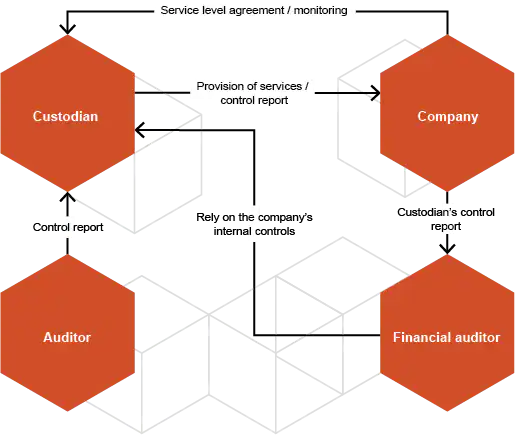
The biggest difference between owning a Bitcoin ETF and buying cryptocurrency directly comes down to responsibility, custody and control. When you buy Bitcoin directly, you own the actual asset and hold the private keys (or trust an exchange to hold them). With a Bitcoin ETF, you own shares in a fund that holds Bitcoin on your behalf—you never touch the underlying asset.
Source: PwC
Here's why that matters: direct ownership gives you complete control. You can transfer Bitcoin whenever you want, use it for transactions, or move it to a hardware wallet for security. Bitcoin ETFs, on the other hand, trade only during market hours and settle through traditional brokerage accounts. You can't withdraw actual Bitcoin from an ETF.
Bitcoin ETFs vs Ethereum ETFs
Both Bitcoin and Ethereum ETFs offer regulated exposure to major cryptocurrencies, but they target different use cases and risk profiles, despite both tracking cryptocurrencies. Bitcoin ETFs focus on a store-of-value asset with established institutional adoption. Ethereum ETFs, on the other hand, provide exposure to a smart contract platform that powers DeFi, NFTs, and Web3 applications.
In July 2025, the SEC permitted in-kind creations and redemptions for both Bitcoin and Ether ETPs, improving cost and tax efficiency for both asset classes. This regulatory parity means both ETF types now operate under similar structural mechanics.
The key difference lies in volatility and purpose. Bitcoin is typically seen as "digital gold"—a hedge against inflation and currency debasement. Ethereum's value ties more closely to the adoption of decentralized applications and network activity. Both can fit in a portfolio, but they serve different roles: Bitcoin as a macro hedge and store of value, Ethereum as a growth bet on blockchain utility.
Bitcoin ETFs vs Crypto Index Funds
Crypto index funds offer diversified exposure across multiple digital assets, while Bitcoin ETFs concentrate solely on one. If you believe in the broader crypto market but aren't sure which assets will outperform, index funds spread risk across Bitcoin, Ethereum, and sometimes smaller altcoins.
The downside? Higher fees and more complexity. Index funds must rebalance holdings, which can trigger taxable events and tracking errors. Bitcoin ETFs are relatively simpler and cheaper while crypto index funds often carry higher expense ratios.
Long story short, for investors who want focused exposure to the best performing Bitcoin ETF or the Bitcoin ETF with lowest fees, a single-asset Bitcoin ETF offers clarity. For those seeking broader crypto diversification, index funds trade simplicity for spread.
| Investment Type | Custody & Control | Tax Treatment | Liquidity | Fees | Best For |
| Bitcoin ETF | Fund holds Bitcoin; investor owns shares | Capital gains; no wash sale rules | High (market hours only) | 0.15%–0.25% | Investors wanting simple, regulated exposure |
| Direct Bitcoin | Investor holds private keys (or exchange custody) | Property; capital gains | 24/7 | Exchange/network fees | Users comfortable with wallets and security |
| Ethereum ETF | Fund holds Ethereum; investor owns shares | Capital gains; no wash sale rules | High (market hours only) | 0.15%–0.25% | Exposure to smart contract platform growth |
| Crypto Index Fund | Fund holds multiple assets | Capital gains; rebalancing may trigger events | Varies | Higher than single-asset ETFs | Diversified crypto exposure |
Regulatory Environment and Future Outlook
The Bitcoin ETF approval process represented one of the most significant shifts in crypto regulation since the SEC first began reviewing applications nearly a decade ago. Understanding this backdrop helps explain why the market looks the way it does in 2025 and imagine how it can develop from here on.

Photo by Vlad Tchompalov on Unsplash
SEC Approval Process and Regulatory Requirements
The SEC spot Bitcoin approval wasn't a sudden change of heart but it still came with strict requirements. Every approved Bitcoin ETF must use qualified custodians (like Coinbase or Fidelity Digital Assets), implement robust surveillance-sharing agreements with exchanges, and follow comprehensive investor protection protocols.
Initially, the SEC required cash-only creations and redemptions. But in July 2025, they permitted in-kind transactions—a shift that significantly improved cost and tax efficiency for the best Bitcoin ETF options available today.
Here's what matters: the SEC now treats spot Bitcoin ETFs similarly to traditional commodity ETFs. That means detailed disclosures about custody arrangements, fees, and risks.
International Bitcoin ETF Landscape
The conversation often overlooks that the U.S. wasn't first to Bitcoin ETFs: Canada launched the Purpose Bitcoin ETF in February 2021, giving North American investors a three-year head start. European markets followed with their own products, though regulatory frameworks varied significantly by jurisdiction.
What changed after U.S. approval was scale. The combination of America's deep capital markets and institutional investor participation created a new benchmark for Bitcoin ETF comparison globally.
Other countries are now reassessing their frameworks to remain competitive, particularly as they watch institutional money flow into U.S. products. The Bitcoin ETF with lowest fees and strongest governance often leads the charge in attracting this capital.
Are Bitcoin ETFs a Good Investment Right Now?
Pulling all these threads together, it's time to summarize how Bitcoin ETFs would look in the context of your broader portfolio and risk profile.
Pros and Cons of Investing in Crypto via ETFs
All in all, Bitcoin ETFs offer a regulated, accessible entry point into crypto markets without the technical complexity of managing private keys or wallets. The core advantages are straightforward: you can buy them through any brokerage account, hold them in tax-advantaged accounts, and benefit from standard capital gains tax treatment without wash sale rules applying to spot ETFs.
On the flip side, you're introducing counterparty risk, among other things. About 85% of Bitcoin held in ETFs sits with Coinbase as custodian, creating a concentration risk some investors find uncomfortable.
How Bitcoin ETFs Fit in a Diversified Portfolio
Crypto may have matured but Bitcoin's role is still not a core holding—it's a diversification tool that behaves differently from stocks and bonds. The key to reducing volatility and emotional strain is treating it as a long-term position, not a trading vehicle.
Lower volatility doesn't mean Bitcoin has become "safe" in absolute terms. It just means the wild daily swings have calmed compared to the early years.
Which Type of Bitcoin ETF May Suit Different Investors
- For beginners or retirement accounts: Spot Bitcoin ETFs like IBIT or Fidelity's FBTC offer the cleanest exposure. They directly hold Bitcoin, track price closely, and work seamlessly in IRAs and many brokerage platforms.
- For cost-conscious investors: Compare expense ratios carefully—the best Bitcoin ETF with lowest fees will save you meaningful money over time. Leading spot ETFs cluster around 0.20%, making them competitive long-term holds.
- For active traders: Consider liquidity and trading volume. The best performing Bitcoin ETF by raw returns might not be the best Bitcoin ETF to invest in if spreads are wide or volume is thin. Trading costs matter when you're moving in and out frequently.
Futures-based ETFs simply rarely make sense for individual investors—higher fees and tracking errors often offset any tax advantages. Sticking with spot ETFs seems beneficial on virtually all fronts unless you have a very specific strategic reason to do otherwise.
Conclusion
To summarize, the best Bitcoin ETF for you depends on your goals, risk tolerance, and time horizon. Focus on spot ETFs with low fees, strong liquidity, and credible custodianship. Use dollar-cost averaging to reduce timing risk, keep allocations modest, and treat Bitcoin as a long-term diversifier—not a shortcut to overnight riches. Sounds straightforward, because with the right structure, it can be.
Check out ChangeHero blog for further reading after this Bitcoin-related guide. If you prefer social media, find us on X, Facebook, and Telegram.
Frequently Asked Questions
What is the minimum investment for Bitcoin ETFs?
Most Bitcoin ETFs have no minimum investment beyond the cost of a single share. Spot Bitcoin ETFs like the iShares Bitcoin Trust (IBIT) trade like regular stocks, meaning you can buy just one share if your broker allows fractional shares. Many online brokerages now support fractional investing, letting you start with very small amounts in some cases.
The real minimum depends on your brokerage platform. Traditional brokers might require you to purchase full shares—typically in the $20–$100 per-share range for many Bitcoin ETFs. Apps like Robinhood or Fidelity allow fractional purchases. By the way, this accessibility is one reason Bitcoin ETFs have grown so quickly. They remove the technical barriers of setting up crypto wallets and managing private keys.
Can I hold Bitcoin ETFs in my IRA or 401(k)?
Yes. Bitcoin ETFs can be held in tax-advantaged retirement accounts like IRAs and 401(k)s, allowing for tax-deferred or tax-free growth of capital. This is a major advantage over buying Bitcoin directly, where you'd typically hold it in a taxable account and face capital gains tax on every sale.
The exact options depend on your plan administrator. Most self-directed IRAs now support Bitcoin ETF purchases, and some 401(k) plans have begun adding them as investment options. Keep in mind that withdrawals from traditional IRAs and 401(k)s follow normal tax rules—you'll pay ordinary income tax when you take distributions, regardless of whether they came from Bitcoin ETFs or other investments.
How often do Bitcoin ETFs pay dividends?
Most Bitcoin ETFs don't pay regular dividends because Bitcoin itself doesn't generate income. Spot Bitcoin ETFs like IBIT or the Fidelity Wise Origin Bitcoin Fund (FBTC) hold actual Bitcoin, which doesn't produce cash flow the way dividend-paying stocks do.
However, some Bitcoin strategy ETFs may distribute small capital gains or other taxable events at year-end, depending on how they manage their futures contracts or other holdings. If you're searching for a Bitcoin ETF with dividends, understand that this isn't how Bitcoin-focused funds typically work—they're designed for price appreciation, not income generation.
What happens to Bitcoin ETFs during market crashes?
Bitcoin ETFs follow Bitcoin's price movements, which means they experience significant volatility during market downturns.
During crashes, Bitcoin ETFs trade continuously during market hours, offering liquidity that direct Bitcoin ownership sometimes lacks during extreme volatility. However, you'll still see sharp price declines matching Bitcoin's movements. The key difference? You won't face the technical risks of exchange outages or liquidity freezes that sometimes affect crypto platforms during high-stress periods. Your ETF shares remain accessible through your standard brokerage account, and market makers continue providing liquidity even when prices drop sharply.


