
What is Bitcoin: The Ultimate Guide to the First Crypto


Contents
- 1. Introduction to Bitcoin: What It Is and How It Works
- 2. History and Background of Bitcoin
- 3. The Technology Behind Bitcoin
- 4. Advanced Bitcoin Concepts
- 5. Why Does Bitcoin Have Value?
- 6. Is Bitcoin a Currency, Investment, or Bubble?
- 7. Institutional and Corporate Adoption of Bitcoin
- 8. Bitcoin in the Global Economy
- 9. Bitcoin's Environmental Impact and Sustainability
- 10. How to Keep Your Bitcoin Secured
- 11. How to Buy Bitcoin?
- 12. Investing in Bitcoin
- 13. Tax and Legal Considerations
- 14. The Future of Bitcoin and Cryptocurrency Trends
- 15. Summary
Introduction to Bitcoin: What It Is and How It Works
Bitcoin is the world's first decentralized digital currency, a form of money that exists purely online, operates without banks or governments, and uses cryptography to secure transactions. Created in 2008 by the enigmatic Satoshi Nakamoto, Bitcoin introduced a revolutionary concept: peer-to-peer electronic cash that anyone could send anywhere in the world without needing a middleman.
Think of Bitcoin as digital gold to a payment network built around it. Like gold, it's scarce—only 21 million bitcoins will ever exist. Unlike gold, you can send it across the globe in minutes, divide it into tiny fractions, and verify its authenticity without having to trust anyone.
Since its launch in early 2009, Bitcoin has evolved from an experimental technology used by cryptography enthusiasts into a recognized financial asset. By 2025, Bitcoin went through dramatic price swings, regulatory scrutiny, institutional adoption, and ongoing debates about whether it's a currency, investment, or something entirely new.
For all the talk of Bitcoin’s investment potential, it is much more than that. In lower-middle income countries, Bitcoin serves practical purposes such as remittances, protection against currency devaluation, and financial access for people without traditional banking. Meanwhile, corporations like Strategy hold considerable amounts in bitcoin on their balance sheets, treating it as a treasury reserve asset.
This guide breaks down everything you need to understand Bitcoin in 2025. You'll learn how Bitcoin actually works (blockchain, mining, wallets), why it has value, how to buy and store it safely, what the risks are, and where Bitcoin fits in the global economy. Whether you're exploring Bitcoin for the first time or want to deepen your knowledge, this guide covers the fundamentals through advanced concepts with real-world context and up-to-date insights.
By the end, you'll understand not just what Bitcoin is, but why it matters and how to navigate it confidently.
What is Bitcoin?
By definition, Bitcoin is a digital currency that exists entirely online. There are no physical coins, no bills, just data stored on thousands of computers around the world. Created in 2009 by an anonymous person (or group) using the name Satoshi Nakamoto, Bitcoin was a continuation of cypherpunk ideas for money that can work without banks, governments, or any central authority controlling it.
Think of it like digital cash that you can send directly to someone else, anywhere in the world, without needing a middleman like PayPal or a bank to approve the transaction. The entire system runs on something called a blockchain, a public record of every Bitcoin transaction ever made, maintained by a network of computers called nodes (essentially, computers running the software that help validate and store transactions).
Apart from being purely digital, three key things set it apart from regular money: it's decentralized (no single entity controls it), it's limited in supply (only 21 million will ever exist), and every transaction is recorded permanently on the blockchain. This combination creates a form of currency that can't be inflated away by printing more of it, and that anyone with internet access can use.
How Does Bitcoin Work?

Bitcoin operates through a peer-to-peer network where transactions occur directly between users, without any central server or anything like it. When you send Bitcoin to someone, you're broadcasting a message to the network instead of a server, saying, "I'm transferring this amount from my address to yours." Your transaction then gets double-checked by other network participants called miners.
Here's the simplified version: miners use powerful computers to solve complex mathematical puzzles while bundling your transaction with others into a "block." The miner who solves the puzzle gets to add their block to the blockchain—the permanent record we mentioned earlier. The process that involves cracking that puzzle is called proof of work, ensuring no one can spend the same Bitcoin twice or fake transactions.
To use Bitcoin, you need a wallet: software that actually stores your private keys (think of them as ultra-secure passwords that prove you own your Bitcoin) and generates digital signatures. Your wallet gives you a public address and keeps your private key secret. When you want to send Bitcoin, your wallet uses your private key to prove it's really you authorizing the transaction and broadcast it to the rest of the network.
The entire network works together to be in agreement—maintain consensus—about who owns what. By the way, this distributed approach means no single point of failure—no bank can freeze your account, no government can seize your funds directly, and the network keeps running even if thousands of computers go offline. That's the core idea behind Bitcoin and arguably, one that's driven Bitcoin's growth from an experiment to a digital asset holding significant market value in 2025.
Bitcoin Wallets and Addresses
A Bitcoin wallet doesn't actually store your bitcoins, remember that there is nothing to store? Instead, it keeps the cryptographic keys that prove you own them. In fact, as far as the blockchain is concerned, those keys equal ownership, so if you lose access one way or another, you lose the bitcoins too.
Your public key generates your Bitcoin address (a string of letters and numbers like 1A1zP1eP5QGefi2DMPTfTL5SLmv7DivfNa), which works like an email address where others can send you bitcoin. It is more or less safe to share around.
Your private key, on the other hand, is like your password. It's what allows you to authorize transactions and spend your bitcoin. The golden rule here: never share your private key with anyone. If someone gets access to it, they control your bitcoin.
When you set up a wallet, you'll also receive a seed phrase (usually 12 or 24 words). You can think of it as a human-readable backup of your private key. As long as you have this phrase, you can restore a wallet if you lose access to it. Write it down and store it safely offline, never expose it because this phrase can have several private keys connected with it (for example, if you keep other cryptocurrencies in the same wallet app with your bitcoins).
Bitcoin Units and Divisibility (What are Sats or satoshis)
One Bitcoin costs a lot these days but the neat part is that BTC is highly divisible; you don't need to buy a whole coin. The smallest unit of bitcoin is called a satoshi after Bitcoin's creator, and one bitcoin equals 100 million satoshis.
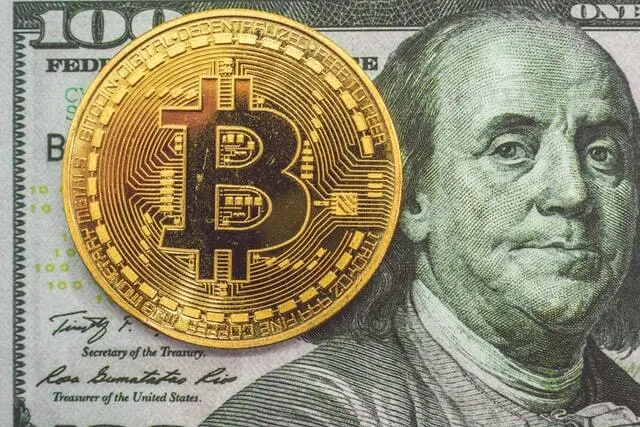
If one dollar equals 100 cents, while one bitcoin equals 100,000,000 satoshis. It was made like this to support use in day-to-day transactions. You can send as little as one satoshi to anyone.
Some bitcoiners prefer thinking in satoshis when dealing with smaller amounts, especially as bitcoin's price has grown over the years. Some exchanges have the option to display balances in satoshis to make numbers feel more approachable.
History and Background of Bitcoin
Bitcoin grew from decades of research in cryptography, digital cash, and monetary theory; it spent whole years as a niche experiment before becoming a mainstream topic.
Creation and Early Years (2008–2012)
Bitcoin emerged in October 2008 when Satoshi Nakamoto, whoever they may be, published a whitepaper titled "Bitcoin: A Peer-to-Peer Electronic Cash System." By January 2009, Nakamoto mined the first Bitcoin block (the "genesis block"), marking the network's official launch. Early adopters were mostly cryptographers and tech enthusiasts who saw potential in this experiment. The first real-world Bitcoin transaction happened in May 2010, when one of those early adopters Laszlo Hanyecz paid 10,000 bitcoins for two pizzas; that purchase is worth hundreds of millions today.
During its formative years, Bitcoin was essentially worthless in traditional currency terms. By 2011, it reached parity with the U.S. dollar for the first time, then briefly spiked to $31 before crashing back down. The ecosystem was small, the software experimental, and the vast majority of people had never heard of cryptocurrency.
Market Growth and Major Milestones
Bitcoin's journey from experiment to mainstream awareness happened through several pivotal moments. In 2013, the price crossed $1,000 for the first time, driven by growing interest in China and Cyprus's banking crises and alternatives to traditional finance.
However, it was the 2017 bull run that truly brought Bitcoin into public consciousness. Prices surged to nearly $20,000, mainstream media covered it extensively, and suddenly everyone was talking about crypto. This cycle introduced millions of new users, though many learned hard lessons when the crypto market crashed throughout 2018.
By 2020–2021, institutional players entered the picture. Companies like Strategy began adding Bitcoin to their corporate treasuries: Strategy now holds approximately 660,624 bitcoins as of late 2025. In this regard, a particular moment marked the fact that institutions were serious about BTC: in January 2024, the U.S. SEC officially approved spot Bitcoin ETFs.
From Experiment to Established Digital Asset
Even the abridged version shows that Bitcoin's identity has shifted dramatically over fifteen years. Still, it is worth looking at the timeline of how what started as a peer-to-peer payment experiment evolved into a digital store of value, often called "digital gold."
Today, Bitcoin exists in multiple contexts simultaneously. It's a speculative asset for tech-savvy traders, a treasury reserve for corporations, an inflation hedge for investors, and still a payment method in certain contexts.
The network itself has matured significantly. Layer 2 solutions like the Lightning Network address Bitcoin's scalability limitations; its current public capacity sits at around 5,300 BTC. Mining operations became large-scale professional industries and huge businesses.
Bitcoin transformed from a fringe technological curiosity into a recognized asset class worth trillions at peak valuations. Whether it fulfills its original payment vision or settles into a store-of-value role remains an open question but its impact on finance, technology, and monetary thinking is undeniable.

"Bitcoin is a remarkable cryptographic achievement and the ability to create something that is not duplicable in the digital world has enormous value... The notion that it's lost its way, I think that's a wrong statement. I think it's finding its way."
— Eric Lombrozo, Bitcoin Core developer.
The Technology Behind Bitcoin
How exactly do thousands of computers process Bitcoin transactions and keep the network secure and free from exploits? There are three core systems working to this end: validation or mining, communication layer that spreads information, and cryptography which protects the users’ funds.
Bitcoin Mining Process and Validation
Mining is a competitive process that confirms Bitcoin transactions and adds them to the blockchain. Whoever solves complex math puzzles first gets to write the next page in Bitcoin's permanent ledger for a nice reward of 3.125 BTC.
Proof of Work (PoW) is the name of Bitcoin's security system. Originally intended as an anti-spam measure for emails, implemented in Bitcoin it grew to a massive scale. Miners must use computational power at their disposal to guess a very specific number called a hash that meets strict criteria dictated by the protocol. There are so many miners in the Bitcoin network with computing power so high that the process is extremely difficult and energy-intensive, making it nearly impossible for anyone to cheat or rewrite transaction history.
Each valid block takes roughly 10 minutes to get mined on purpose, and the difficulty adjusts automatically to maintain this pace. Bitcoin mining started with regular computers but quickly evolved into specialized machines called ASICs (Application-Specific Integrated Circuits). These devices can perform trillions of calculations per second but consume significant electricity. And still, the problem’s difficulty sets the pace at 10 minutes to maintain a very sound consensus and precisely control Bitcoin’s emission.
Bitcoin Network Architecture
Bitcoin's network is a peer-to-peer system where no single company or server controls operations. Instead, thousands of independent nodes maintain identical copies of the blockchain to maintain agreement on the state of the network.
Full nodes store the complete blockchain history and verify every transaction against Bitcoin's rules. As opposed to them, light nodes (or SPV nodes) store only essential data and rely on full nodes for verification. Your smartphone crypto wallet app is an example, because if only the full nodes were an option, those would take up hundreds of gigabytes of space and be too inaccessible.
When you send Bitcoin, your transaction broadcasts to nearby nodes. Each node verifies it meets Bitcoin's rules (correct signature, sufficient balance, proper format), then forwards it to other nodes. Within seconds, your transaction reaches miners worldwide who include it in the next block. Trying to broadcast a transaction that does not meet those rules (i.e. spending more than you have) would not even make it to this queue, rejected by the node network.
This redundant verification system means no single point of failure exists. Even if thousands of nodes go offline, the network will keep running.
Privacy and Security Features
The stereotype that only criminals use Bitcoin seems to no longer be as persistent, which is good because this is not even true! Bitcoin isn't anonymous—it's pseudonymous. Every transaction appears on the public blockchain, it’s just that addresses aren't inherently directly linked to real identities. Your Bitcoin address works like a username; people can see transaction amounts and history but not necessarily who you are. Even then, by recognizing certain activity patterns, it is possible to deanonymize someone, and this is not a flaw but designed transparency at play.
Security of transactions, manifest in the fact they can’t be faked or rewritten, comes from cryptographic keys. Your private key, which you must keep secret, signs transactions and proves ownership. Someone else gets it, and the full access to your funds on that address is theirs. Your public key derives your Bitcoin address and is supposed to be shared. As long as you protect your private key, your funds remain secure.
Ownership is not the only thing that proves the blockchain is a stubborn beast. Changing any past transaction would require recalculating every block that came after that, which is computationally impossible with current technology. That's why Bitcoin has never been hacked at the protocol level, but (and it’s a big ‘but’) individual exchanges and wallets certainly have been compromised, which is why where you store your Bitcoin matters.
Advanced Bitcoin Concepts
Bitcoin’s protocol early on found so many followers because of being a successful implementation of various exciting technologies. To boil down Bitcoin only to its basic job is a huge disservice; since the launch, it continued to improve and introduce new features and inventions.
Lightning Network and Layer 2 Solutions
The Lightning Network (LN) is Bitcoin's most prominent Layer 2 solution and one of the first L2s in general. It tackles a fundamental problem: Bitcoin's main blockchain can only process about seven transactions per second, making it too slow and expensive for daily use or micropayments.
LN is somewhat like opening a tab at your favorite coffee shop. Instead of paying for each coffee individually, involving the chain and racking up fees quickly, you open a payment channel by locking funds in a multi-signature address. You and the shop can then exchange as many payments off-chain as you want, instantly updating the balance between you. When you're done, you close the channel and settle only the final balance on Bitcoin's main chain. One on-chain transaction to open, unlimited off-chain transactions while it's active, one on-chain transaction to close.
Channels can be routed with no direct connection, amplifying the network effects massively. The Lightning Network creates an interconnected web of payment channels, enabling fast, cheap transactions across the entire network, which currently accounts for well over 5,000 BTC.
Bitcoin Improvement Proposals (BIPs) and Protocol Evolution
Bitcoin introduces huge features like LN and minor fixes alike through Bitcoin Improvement Proposals, or BIPs. These are formal documents describing potential changes to the protocol. Technically, anyone can submit a BIP, but implementation requires broad consensus from developers, miners, and node operators. It's a deliberately slow and careful process.

Protocol upgrades happen through forks. A soft fork is backward-compatible, meaning nodes that don't upgrade can still validate transactions under the new rules. SegWit (Segregated Witness), activated in 2017, was a soft fork that increased block capacity and fixed transaction malleability. A hard fork requires all nodes to upgrade because the old rules become invalid. Bitcoin Cash's 2017 split was a hard fork that created an entirely separate cryptocurrency with different rules.
Taproot, activated in November 2021, was Bitcoin's most significant upgrade in years. It improved privacy by making complex transactions look identical to simple ones on the blockchain, enhanced smart contract flexibility, and reduced data requirements for certain transaction types. The upgrade passed with overwhelming miner support, showing Bitcoin's ability to evolve through consensus rather than a central authority at the helm.
"Bitcoin's scripting capabilities are often underestimated. The protocol was designed with programmability in mind from day one, but the philosophy has always been conservative—add features only when they're proven safe and necessary. Taproot shows we can expand functionality while maintaining Bitcoin's core security guarantees."
— Dr. Pieter Wuille, Bitcoin Core Developer and Cryptographer
Why Does Bitcoin Have Value?
If it’s not backed by anything at all and is purely numbers online, where does the price tag on Bitcoin come from? Bitcoin's value comes from a unique combination of its programmatic scarcity, network effects, and market dynamics that set it apart from traditional assets.
Unlike fiat currencies that central banks can print whenever they choose, Bitcoin operates under strict mathematical rules which create verifiable scarcity and precisely predictable supply mechanics.
21 Million Supply and Halving Cycles
Bitcoin's maximum supply is hard-capped at 21 million coins. No central authority can change this limit, and it is extremely unlikely Bitcoin adopters will agree to it without splitting the network. New bitcoins enter circulation through mining rewards, but here's the key part: these rewards are cut in half approximately every four years in preprogrammed events called "halvings." This means the rate of new bitcoin creation steadily decreases over time, making the asset progressively scarcer (and hard to mine, hence the gold comparisons).
The most recent halving occurred in 2024, reducing mining rewards from 6.25 BTC to 3.125 BTC per block. Only by around 2140, all 21 million bitcoins will be mined, and no new supply will enter the market. This predictable scarcity schedule creates a fundamental supply constraint that traditional assets simply can't match.
Store of Value Properties
Furthermore, Bitcoin shares several characteristics with traditional stores of value like gold: durability (digital records don't degrade), portability (you can transfer billions instantly), divisibility (down to 100 millionth of a bitcoin, called a satoshi), and verifiability (blockchain transparency confirms authenticity).
Unlike gold, however, Bitcoin's supply schedule is transparent and mathematically enforced rather than dependent on mining discoveries or production capacity. Some investors view Bitcoin as "digital gold"—a hedge against inflation and currency devaluation. While this comparison remains debated, Bitcoin's fixed supply contrasts sharply with fiat currencies subject to monetary policy changes.
Network Effects and Adoption Metrics
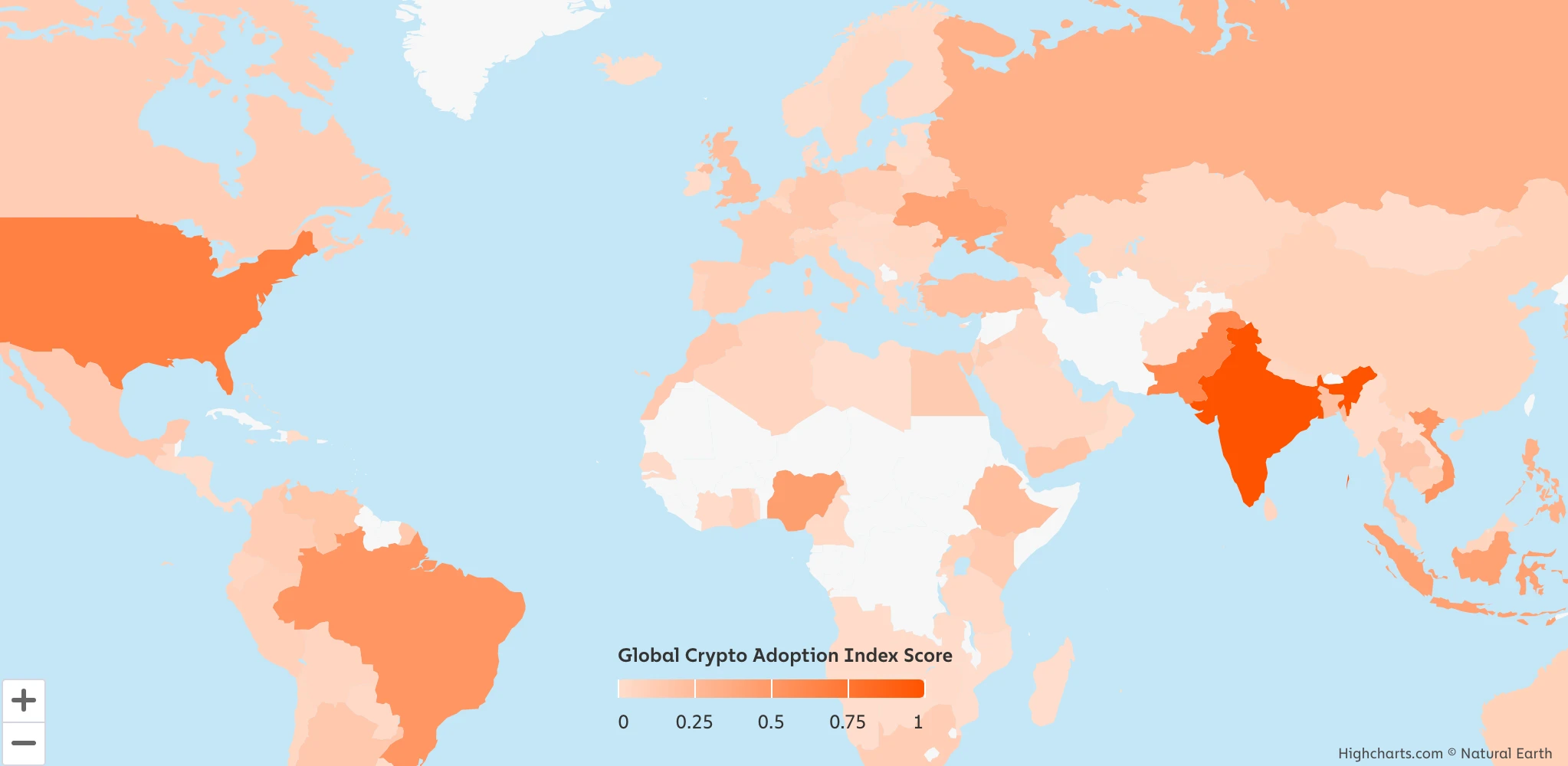
Bitcoin's value grows as more people use, accept, and trust the network. By 2025, the U.S. is only the runner-up globally in terms of crypto adoption according to Chainalysis, with India being the global leader, and the adoption styles between these two nations are very different. In the former, institutions drive the most activity while in the latter, as well as in Pakistan and Vietnam, high adoption metrics are informed by grassroots adoption.
Market Characteristics and Price History
Bitcoin's price history shows distinct four-year cycles roughly aligned with halving events. Each cycle has historically featured periods of rapid appreciation followed by corrections, though past performance doesn't guarantee future results and the dynamics of this cycle are slightly different with lower volatility. BTC remains highly volatile compared to traditional investments, with daily price swings sometimes exceeding 10%.
Is Bitcoin a Currency, Investment, or Bubble?
Bitcoin was designed as peer-to-peer electronic cash, functions as a speculative asset for many, and gets dismissed as a bubble by skeptics. The reality? It fits all three boxes, depending on how you use it.
Use of Bitcoin for Payments
Bitcoin works as a payment method, but adoption remains selective if we are being real. Some major companies accept Bitcoin through payment processors like BitPay and BTCPay Server. Even then, many processors convert Bitcoin to fiat instantly instead of working purely in crypto, although shielding merchants from volatility is a nice feature.
High transaction fees, especially during network congestion, make small purchases impractical. A $5 coffee purchase could carry a $3 fee during busy periods, which is not exactly ideal for daily spending. Layer 2 solutions like the Lightning Network try to address this by enabling near-instant, low-cost transactions but they come with a host of other limitations that curb their spread.
Where Bitcoin shines is for international money transfers. Traditional international transfers take days and charge 5–10% in fees. Compare that to Bitcoin that settles in minutes to hours, with fees typically under 2%. It’s no wonder for someone sending money home across borders, Bitcoin offers real advantages over legacy banking systems.
Use of Bitcoin for Investment and Speculation
Bitcoin's role as an investment asset has matured significantly and it is now a borderline conservative bet by crypto standards. The January 2024 approval of the U.S. Spot Bitcoin ETFs legitimized Bitcoin as an institutional asset class.
Strategy's strategy exemplifies corporate adoption. Institutions often view Bitcoin as somewhat decoupled from traditional assets, offering portfolio diversification during periods of monetary uncertainty. Whether that diversification holds during market stress remains an open question, but the institutional interest is clear.
Financial advisors typically recommend 1–5% Bitcoin allocation for risk-tolerant portfolios. The logic of this move is that Bitcoin's potential upside can outweigh downside risk when position-sized appropriately. However, this comes with accepting significant volatility and potential short-term losses. The ‘don't invest more than you can afford to lose’ adage is an apt translation for this principle. Bitcoin's price swings can be stomach-churning, even for experienced investors.
Arguments That Bitcoin Is a Bubble

Critics point to Bitcoin's price swings—multiple drawdowns of over 80% historically—as evidence of speculative mania fuelling the moments in the spotlight rather than legitimate value. Bitcoin has crashed multiple times, and volatility remains far higher than traditional assets. But does volatility alone disqualify something as a legitimate asset?
Bitcoin’s price action occasionally shares characteristics with historical bubbles: rapid price appreciation, retail frenzy, and boom-bust cycles. However, unlike tulip bulbs or Beanie Babies, Bitcoin has survived multiple "death" predictions and continues growing its user base. The network keeps running, developers keep building, and adoption keeps expanding even through bear markets.
Institutional and Corporate Adoption of Bitcoin
We have already mentioned multiple times how major companies now hold bitcoin on their balance sheets, regulated investment products have launched, and traditional financial institutions are integrating crypto services. How exactly did Bitcoin find adoption with financial institutions and what it means for everyone involved?
Major Companies Holding Bitcoin on Balance Sheets
Strategy is so frequently mentioned since it stands out as the most aggressive corporate bitcoin adopter. CEO Michael Saylor positioned Bitcoin as a superior treasury reserve asset compared to cash, arguing it protects against inflation while offering long-term appreciation potential.
But it’s not the only one. Tesla made headlines in 2021 when it purchased $1.5 billion worth of Bitcoin (though the company later sold a portion of its holdings). Other notable corporate holders include Block (formerly Square) and several publicly traded mining companies that retain Bitcoin as a core asset.
Why do companies add Bitcoin to their treasuries? The strategy centers on three main goals: hedging against inflation, diversifying reserves beyond traditional currencies, and potentially benefiting from long-term price appreciation. In simple terms, companies convert excess cash reserves into Bitcoin while maintaining enough liquidity for day-to-day operations.
Strategy's approach includes issuing convertible debt to fund Bitcoin purchases—essentially betting the company's financial future on Bitcoin's success. Other companies take more conservative approaches, allocating just 1–5% of treasury reserves to Bitcoin as a portfolio diversification strategy.
Bitcoin ETFs and Traditional Investment Products
Another elephant in the room to address is the Bitcoin-backed financial instruments such as the spot ETFs. When the U.S. SEC officially approved the listing and trading of multiple spot Bitcoin exchange-traded products, this decision ended years of regulatory uncertainty (at least in the West).
Why does this matter? Spot ETFs provide institutional investors and retirement accounts a regulated, familiar way to gain Bitcoin exposure without dealing with private keys, custody solutions, or exchange accounts. It's the bridge between traditional finance and crypto, finally making Bitcoin accessible through the same channels as for stocks and bonds.
Other instruments like Bitcoin futures have traded on regulated exchanges like the Chicago Mercantile Exchange (CME) since 2017, giving institutions tools for hedging, speculation, and portfolio management. Likewise, these derivatives allow investors to gain Bitcoin exposure without holding the actual asset—particularly useful for funds with restrictions on direct crypto ownership.
The derivatives market also provides important price discovery mechanisms and liquidity. On the flip side, critics note that futures trading can sometimes amplify volatility through leverage, creating price swings that affect spot markets.
Banking and Financial Services Integration

Even traditional banks are cautiously entering the Bitcoin space. Some major institutions now offer crypto custody services for wealthy clients, while others provide advisory services around digital asset allocation.
Admittedly, the integration remains uneven; regulatory uncertainty and compliance concerns mean many banks limit their crypto offerings. However, the trend is clear: financial institutions recognize they can't ignore Bitcoin's growing role in the global financial system.
Bitcoin in the Global Economy
In many emerging markets, opening a bank account requires documentation, minimum balances, or proximity to physical branches—barriers that exclude millions. Bitcoin only requires an internet connection and a smartphone. A digital wallet becomes a savings account, payment tool, and store of value rolled into one.
In countries experiencing currency devaluation or capital controls, Bitcoin offers an alternative that governments can't easily confiscate or inflate away.
Central Bank Digital Currencies vs Bitcoin
Perhaps seeing what cryptocurrencies can do, central banks worldwide are racing to launch their own digital currencies (CBDCs). China's digital yuan is already in pilot programs, while the U.S. Federal Reserve continues researching a digital dollar. These could not be more different from crypto—government-issued, centrally controlled digital versions of existing fiat currencies.
CBDCs aim to modernize payment infrastructure, reduce transaction costs, and maintain monetary policy control. They offer programmability (money that follows rules), instant settlement, and integration with existing financial systems.
But here's the key distinction: CBDCs preserve centralized control. Governments can track every transaction, enforce spending restrictions, or implement negative interest rates directly. Bitcoin operates on the opposite principle—decentralized, permissionless, and resistant to censorship.
Will CBDCs replace Bitcoin? The evidence suggests coexistence rather than direct replacement. CBDCs solve different problems than Bitcoin does. They're designed for efficient domestic payments and government oversight, not as a store of value independent from government policy. Users might transact in CBDCs for daily purchases while holding bitcoin as long-term savings—similar to how people spend cash but save in gold or stocks.
Bitcoin as Inflation Hedge
The track record of Bitcoin as a hedge against inflation is mixed but notable. During 2020–2021, when major central banks expanded money supplies dramatically in response to the pandemic, Bitcoin's price increased significantly. However, its volatility remains higher than traditional inflation hedges, no matter how much they liken it to gold, making it a more speculative position than established alternatives.
On the other hand, in countries experiencing severe inflation, Bitcoin has provided a practical store of value when local currencies weakened dramatically. The important detail is this: Bitcoin serves different purposes in different economic contexts—speculation in stable economies, or a borderline survival tool in fragile ones.
Bitcoin's Environmental Impact and Sustainability
At some point, Bitcoin's energy consumption was one of the most debated topics in cryptocurrency. Understanding the real mechanics, the context behind them, and the industry's shift toward sustainability helps separate legitimate concerns from common misconceptions.
Energy Consumption Analysis and Concerns
Bitcoin mining is mostly known for requiring significant electricity because miners spare no available energy to power rigs that solve complex mathematical puzzles. Proof of work does make it economically infeasible to attack the network but it is also essentially wasting a lot of electricity. The energy intensity comes from specialized hardware (ASICs) running 24/7. Bitcoin's value increases, more miners join the network, which further drives up total energy consumption.
Renewable Mining Trends and Solutions
Partially as a response to this criticism, the Bitcoin mining industry has shifted significantly toward renewable energy. Partially, because in reality miners tend to seek the cheapest electricity available, which increasingly means renewable sources. Hydroelectric power, geothermal energy, and solar installations now power a growing percentage of mining operations.
Some mining operations specifically target stranded energy—power that would otherwise go unused, like excess hydroelectric generation during rainy seasons or flared natural gas from oil fields. In these cases, Bitcoin mining can reduce waste in certain energy systems.
Environmental Criticism and Responses
Critics rightfully point out that any energy consumption has environmental impact, especially when sourced from fossil fuels. The key question isn't whether Bitcoin uses energy—it does—but whether that energy expenditure provides proportional value through financial inclusion, censorship resistance, and a decentralized alternative to traditional systems.
The industry response has focused on transparency, renewable adoption, and efficiency improvements. As mining hardware becomes more efficient and renewable energy grows cheaper, Bitcoin's environmental footprint per transaction continues to improve.
How to Keep Your Bitcoin Secured
Now that you hopefully have the full picture, let’s move on to a more practical part of this guide. Why does the process behind Bitcoin transactions matter? Because you’d need to know what to do and not to do when managing your own bitcoins! Why dive deep into the legal and adoption milestones it achieved? Because it directly impacts how you get your hands on BTC and report it for tax purposes.
Unlike traditional banking where the institution safeguards your funds, Bitcoin puts full responsibility for practically everything in your hands—incredibly empowering, but also insanely risky if you're not prepared. So let’s do just that.
How to Store Bitcoin Safely
When it comes to setting up your Bitcoin wallet, your choice will start with two options: hot and cold storage.
Hot wallets stay connected to the internet, making them convenient for quick transactions but vulnerable to hacks. They’re like cash in your physical wallet: perfect for daily spending, but we’d hope you wouldn't keep your life savings there.
Cold storage, on the other hand, keeps your Bitcoin completely offline. Hardware wallets and paper wallets fall into this category. The trade-off? You sacrifice convenience for security. Most serious Bitcoin holders keep the majority of their funds in cold storage, while hot wallets handle smaller amounts for regular use.
Hardware wallets (read this guide for our recommendations!) provide the best balance of security and usability. These physical devices store your private keys offline, only connecting to your computer when you need to sign a transaction. They protect against malware and remote attacks because the keys never leave the device. Price points range from around $50 to $200, and they're worth it if you're holding any meaningful amount of Bitcoin.
More Types of Bitcoin Wallets

The hot-cold dichotomy is not the only way to categorize crypto wallets. They also come in different forms depending on the platform. Desktop wallets like Electrum give you full control over your keys while staying on your computer. Mobile wallets such as Exodus or Edge make Bitcoin accessible on-the-go. Exchange wallets, which are better called user balance rather than a wallet, offer maximum convenience for instant access to trading but minimum security since the exchange holds your keys.
Then there are multi-signature (multisig) wallets that require multiple keys to authorize a transaction—like needing two out of three signatures to access a safety deposit box. This setup protects against single points of failure. If someone steals one key, they still can't move your funds. Advanced users also implement time-locked transactions and inheritance protocols. But multisig alone significantly upgrades security for larger holdings, even if you're not a technical expert.
Protecting Your Bitcoin Investments with Security Best Practices
Let’s give some more tips on how you can safeguard your BTC holdings. We already mentioned writing down your seed phrase on paper and never storing it digitally; if something’s ever been exposed online, it is automatically vulnerable to hacks and leaks. Keep multiple copies of the seed phrase backup in secure locations like a fireproof safe. Enable two-factor authentication everywhere possible (using authenticator apps, not SMS). Use strong, unique passwords for every crypto-related account.
Although the addresses are not human-readable, which makes it a hassle, verify receiving addresses character by character before sending Bitcoin regardless. Scammers sometimes use malware that swaps addresses in your clipboard. This one habit prevents devastating mistakes.
Hackers are not the only reason for losing bitcoins, and even more often, it’s the users themselves falling for fraud. Phishing emails impersonating exchanges, fake giveaways promising to "double your Bitcoin," and fraudulent investment schemes plague the crypto space. If someone contacts you first promising returns, it's a scam.
And looping back, never share your seed phrase with anyone—legitimate services will never ask for it. Be skeptical of "urgent" messages claiming your account needs immediate verification. When in doubt, navigate directly to the official website rather than clicking links in emails.
How to Buy Bitcoin?
The most accessible path to Bitcoin these days is not mining or receiving it for free but straightforwardly buying it with real money. It isn't complicated once you understand the basics, but choosing where and how to buy matters for your security and costs.
Choosing Where to Buy Bitcoin
Most beginners start with centralized exchanges (CEX): platforms like Coinbase, Kraken, or Binance that act as intermediaries between you and the Bitcoin network. These platforms hold your funds and manage transactions for you, similar to how a traditional brokerage works. They're user-friendly, support credit cards and bank transfers, and provide customer support when things go wrong.

Decentralized exchanges (DEX), on the other hand, let you trade directly from your own wallet without an intermediary. While this gives you full control over your funds, it requires more technical knowledge and typically involves higher transaction fees (called gas fees). Besides, the DEX ecosystem for Bitcoin is practically non-existent. For first-time buyers or users looking for Bitcoin specifically, centralized exchanges are usually the better starting point.
Not all exchanges are created equal. Look for platforms that implement strong security measures like two-factor authentication (2FA), cold storage for most user funds, and insurance protection, even if you intend to keep funds on your own wallet. Regulatory compliance matters too—exchanges registered with financial authorities in your jurisdiction must follow stricter security standards and anti-money laundering (AML) requirements.
Step-by-Step Guide to Buying Bitcoin
Most reputable exchanges require identity verification (KYC) before you can buy Bitcoin. Here's what to expect:
- Create an account; using a new or dedicated email and a strong password from the get-go is advised
- Enable two-factor authentication as soon as you can, preferably immediately
- Submit identification documents (usually a government ID and proof of address)
- Wait for verification. This typically takes 1-3 business days
The verification process exists to prevent fraud and comply with financial regulations. While it might feel invasive, it protects both the platform and you by proxy from illegal activity.
Once verified, you can fund your account using:
- Bank transfer (ACH or wire) — lowest fees, 3–5 day processing
- Debit card — instant but higher fees (around 3–4%)
- Credit card — fastest but most expensive (often 4–5% fees)
- PayPal or other payment apps — convenience with moderate fees
After funding, buying Bitcoin is a generally similar process:
- Navigate to the buy/trade section
- Find and choose Bitcoin (BTC)
- Enter the amount you want to purchase (in the local currency or BTC)
- Review the exchange rate and total cost
- Confirm the purchase
Your Bitcoin appears in your exchange wallet within minutes for most payment methods. But remember, to the blockchain, the exchange is its true owner.
Common Fees and Costs When Buying Bitcoin
When you use a CEX, there is a whole variety of fees that you will pay at the different stages of the process.
| Fee Type | Typical Range | When It Applies |
| Trading fee | 0.1%–1.5% | Every purchase |
| Deposit fee | Free–4% | Funding your account |
| Withdrawal fee | $5–$25 | Moving Bitcoin off exchange |
| Network fee | $1–$5 | Blockchain transaction cost |
Trading fees often decrease as you buy more volume. Some exchanges offer fee discounts if you hold their native token or use specific payment methods. If it’s a one-off, though, expect no privileges.
Only the network fees aren't set by the exchange: they go to Bitcoin miners who process transactions on the blockchain. These fees fluctuate based on network load, so they might be higher during busy periods.
If it sounds like a lot to keep in mind, you are not alone. Which is why fiat-to-crypto gateways exist, services which streamline the Bitcoin purchase into a checkout and roll all fees and spreads into one calculation. ChangeHero integrates with regulated and licensed providers to let you buy Bitcoin without jumping through all the hoops, directly into your wallet, with an option to forego a KYC procedure for purchases under 700 EUR.
Converting Bitcoin to Cash

When you're ready to sell, the process mirrors buying:
- Navigate to the sell section
- Enter the amount of Bitcoin to sell
- Choose where to receive funds (bank account, PayPal, etc.)
- Confirm and wait for processing
Most exchanges process withdrawals to your bank account within 1–5 business days. Alternatively, you can use a fiat-to-crypto gateway to sell BTC.
In any case, keep detailed transaction records for tax purposes—in most jurisdictions, converting Bitcoin to cash is a taxable event. Your local tax authority typically treats it like selling an asset, so you'll need to report capital gains or losses.
Investing in Bitcoin
Whether Bitcoin makes sense for your portfolio depends on your goals, risk tolerance, and investment timeline. In any case, investment does not end with buying BTC—it’s only the beginning.
Is Bitcoin a Good Investment?
Bitcoin has delivered exceptional returns over its lifetime, but those gains come with serious volatility. Historical data shows Bitcoin has experienced multiple drawdowns of 70% or more during bear markets. At the same time, it has also produced multi-year returns that far exceed traditional assets. In other words, it’s a high-risk, high-reward bet for those who answer “can you stomach the swings?” affirmatively.
From a risk perspective, Bitcoin sits at the aggressive end of the investment spectrum. Its price can move 10–20% in a single day based on regulatory news, macroeconomic shifts, or market sentiment. That level of volatility makes it unsuitable as a core holding for conservative investors. However, it can be valuable as a small allocation—typically 1–5% of a portfolio—for those seeking asymmetric upside.
Bitcoin's correlation with traditional markets has evolved over time. Early on, it moved independently of stocks and bonds, which on paper made it attractive as a portfolio diversifier. In recent years though, Bitcoin is increasingly correlated with tech stocks and risk assets during periods of market stress, particularly when liquidity tightens.
But that said, over longer timeframes, Bitcoin still exhibits low correlation with traditional assets like gold, real estate, and government bonds. This makes it a potential hedge against monetary debasement and inflation, though its behavior during economic downturns remains debated among analysts.
Given Bitcoin's volatility, many experienced investors prefer dollar-cost averaging (DCA) over lump-sum purchases. DCA means investing fixed amounts at regular intervals—say, $100 every week—regardless of price.
Why this works:
- Removes emotion—you’re not trying to time the market
- Averages your entry price—you buy more when prices are low, less when high
- Reduces regret—no single point of entry to second-guess
- Builds discipline—forces consistent, long-term thinking
For beginners especially, DCA reduces the risk of buying at a local top and experiencing immediate drawdown. It's not perfect, but it's practical.
Bitcoin vs Other Major Cryptocurrencies
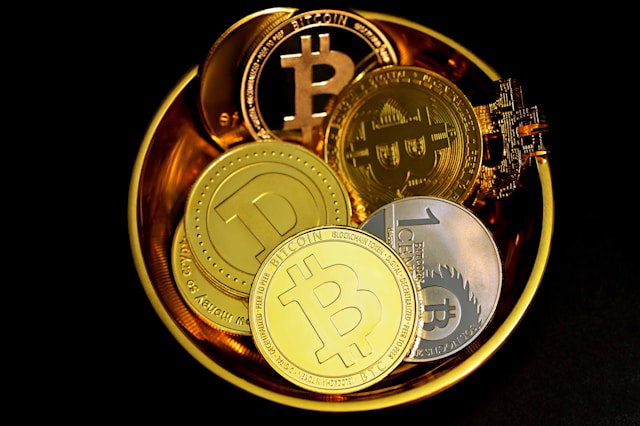
Since 2009, Bitcoin remains the dominant cryptocurrency by market capitalization and network security, but it's not the only option. There are hundreds of thousands coins and tokens on the crypto market today, with hundreds being valued in billions of dollars. Since each altcoin, “alternative coin”, had to offer something different from Bitcoin, the divergence increased with variety, and other digital assets arrived at places very far from the original design.
Bitcoin's advantages:
- Strongest network security and decentralization
- Longest track record and highest liquidity
- Widely recognized as "digital gold"
- Simplest value proposition (store of value, not utility platform)
Other cryptocurrencies offer:
- Ethereum: Smart contract functionality and DeFi ecosystem
- Stablecoins: Price stability for transactions and saving
- Layer 2 solutions: Faster, cheaper transactions built on Bitcoin or Ethereum
Bitcoin's role is focused in comparison: it's designed to be sound money, not a general-purpose computing platform. That narrow focus is both its strength and limitation.
Tax and Legal Considerations
You can’t have recognition as a legitimate asset without tax authorities taking notice. Bitcoin becoming a taxable asset is a logical consequence of it becoming more widely accepted, especially as an investment vehicle.
Still, there is no single framework regulating taxes on Bitcoin. However, understanding the tax implications of your actions with BTC is a part of any informed strategy.
Bitcoin Taxation in Major Jurisdictions
In the United States, the IRS (Internat Revenue Service) treats Bitcoin as property, not currency. What does this mean for you? Every Bitcoin transaction, whether you're buying coffee or selling for profit, can trigger a taxable event.
For example: if you buy Bitcoin for $100,000 and sell it for $105,000, you owe capital gains tax on that $5,000 profit. Short-term gains (i.e. held less than a year) are taxed at your ordinary income rate. Long-term gains get preferential tax rates ranging from 0% to 20%, depending on your income bracket.
You're also required to report Bitcoin income such as mining rewards or similar earnings as ordinary income based on the fair market value when you received it. The IRS has become increasingly serious about crypto compliance. Starting in 2024, exchanges must report certain user transactions via Form 1099-DA, making it harder to ignore tax obligations.
The European Union takes a more fragmented approach since tax policy remains largely national. Germany exempts Bitcoin gains from tax if you hold for more than a year—a significant advantage for long-term holders. Portugal previously offered tax-free treatment for crypto gains but reversed course in 2023, now taxing capital gains at a flat rate.
In the UK, HMRC treats Bitcoin as property subject to capital gains tax. Canada follows a similar model, taxing 50% of capital gains as income. Australia applies standard capital gains tax rules, with a discount for assets held longer than a year. Long story short, your tax obligations depend heavily on where you live.
Regulatory Developments and Compliance Requirements

In the United States, Bitcoin regulation involves multiple agencies. The SEC (Securities and Exchange Commission) primarily oversees securities and other instrument such as these spot Bitcoin ETFs it approved. The CFTC (Commodity Futures Trading Commission) classifies Bitcoin as a commodity and regulates Bitcoin futures markets, creating a sort of dual-oversight situation.
Most regulated Bitcoin exchanges now enforce strict Know Your Customer (KYC) and Anti-Money Laundering (AML) protocols. When you sign up for an exchange like Coinbase or Kraken, you'll need to provide government-issued ID, proof of address, and sometimes additional verification documents.
These requirements are mandated by financial regulators to prevent money laundering, terrorist financing, and other illicit activities. While some users prefer non-custodial, privacy-focused solutions, using regulated exchanges offers legal protection and recourse if something goes wrong. It's a tradeoff between privacy and security.
Legal Status Across Different Countries
Bitcoin's legal status varies dramatically worldwide. El Salvador famously adopted Bitcoin as legal tender in 2021, making it the first country to do so. The Central African Republic briefly followed suit but later adjusted its approach.
On the opposite side of the spectrum is China, which maintains one of the strictest stances, banning Bitcoin trading and mining entirely. India has taken a middle path: crypto isn't banned, but a 30% tax on gains and 1% TDS (Tax Deducted at Source) on certain transactions significantly impacts trading activity. These policies effectively discourage trading without outright prohibition.
In contrast, countries like Switzerland, Singapore, and Malta have positioned themselves as crypto-friendly jurisdictions with clearer regulatory frameworks. These jurisdictions attract Bitcoin businesses and investors seeking legal clarity.
SEC Commissioner Hester Peirce (2024):
"The approval of spot Bitcoin ETFs represents a significant milestone in bringing digital assets into the mainstream investment landscape while maintaining investor protections."
European Central Bank Position Paper (2023):
"While Bitcoin and other crypto-assets present risks, outright bans are not effective. A comprehensive regulatory framework addressing consumer protection, market integrity, and financial stability is the appropriate path forward."
Bank for International Settlements (BIS) Assessment (2024):
"Central banks should neither dismiss nor embrace crypto-assets uncritically. The focus should be on ensuring financial stability while allowing for responsible innovation within appropriate regulatory guardrails."
The Future of Bitcoin and Cryptocurrency Trends
Although this guide focused on the present with a segue into the past, what is the future of Bitcoin? It has already charted a trajectory through increasing presence in the financial system, legal clarity, and even technological updates. But where does it lead?
Technological Developments and Roadmap
Bitcoin's current development roadmap focuses on strengthening security, efficiency, and functionality without sacrificing decentralization. BIPs that require broad consensus before implementation drive this evolution.
Recent protocol discussions center on optimizing transaction batching, improving fee estimation algorithms, and refining signature aggregation. These changes aim to make Bitcoin more cost-effective for everyday users while maintaining its core security model. Developers also continue exploring cross-chain compatibility features that could enable Bitcoin to interact more seamlessly with other blockchain networks.

Bitcoin's integration potential extends beyond traditional finance. The Lightning Network demonstrates Layer 2 scaling in action. Smart contracts on Bitcoin (enabled through Taproot) and decentralized identity solutions are expanding Bitcoin's utility. While Ethereum has traditionally dominated smart contract functionality, Bitcoin's scripting capabilities continue evolving to support more programmable money scenarios without compromising security.
Market Predictions and Expert Opinions
Price predictions for Bitcoin vary widely depending on who you ask. Conservative analysts point to Bitcoin's historical volatility and regulatory uncertainty as reasons for caution. Optimistic forecasters cite increasing institutional adoption, limited supply (only 21 million BTC will ever exist), and growing recognition as digital gold.
If Bitcoin transitions from speculative asset to mainstream treasury reserve or payment system, demand fundamentals shift dramatically. Some experts suggest Bitcoin could reach much higher valuations even if a small percentage of global institutional portfolios allocate to it.
Realistic scenarios acknowledge both possibilities: continued volatility with gradual institutional integration, or breakthrough adoption moments (like widespread corporate treasury adoption) that accelerate price discovery.
Challenges and Potential Solutions
Bitcoin faces real obstacles that need acknowledgment. Scalability remains a concern—the base layer processes roughly seven transactions per second, far below Visa's capacity. Layer 2 solutions like LN address this, but widespread adoption requires better user interfaces and merchant integration.
Then, there is the fact that regulatory clarity stil varies globally. Some countries embrace Bitcoin; others restrict it. Standardized international frameworks would reduce uncertainty for businesses and investors, but achieving that consensus takes time.
Even though the discourse has mellowed out, Bitcoin’s energy consumption continues drawing criticism despite increasing renewable mining trends. Solutions include carbon-neutral mining initiatives and proof-of-work efficiency improvements, but public perception challenges persist.
Remember that Bitcoin's decentralized nature means no single authority can force changes? Progress requires community consensus, a slow, deliberate, process but also one resistant to capture or manipulation. That characteristic defines both Bitcoin's greatest strength and its most persistent challenge.
Summary
To summarize, Bitcoin is more than just "internet money." It's a decentralized network, a scarce digital asset, a payment system, and a catalyst for rethinking how money should work in a digital world. If you understand the basics—how it works, why it has value, how to secure it, and what risks you're taking—you can participate in this ecosystem with confidence instead of fear.
Check out ChangeHero blog for further reading after this Bitcoin beginner’s guide. If you prefer social media, find us on X, Facebook, and Telegram.
Frequently Asked Questions
Is Bitcoin Safe?
Bitcoin's safety depends on how you handle it. The Bitcoin network itself has never been hacked: its blockchain has operated continuously since 2009 without successful attacks. But here's the key part: your personal Bitcoin security depends entirely on how you store and manage your private keys.
If you use strong security practices (hardware wallets, proper seed phrase backup, two-factor authentication), your Bitcoin is relatively safe. If you store it carelessly—on exchanges with weak passwords, or lose your seed phrase—you're vulnerable. Common risks include phishing scams, malware, and exchange hacks. The network is secure. User behavior creates most vulnerabilities.Is Bitcoin Legal?
Bitcoin is legal in most countries, including the United States, Canada, the United Kingdom, and much of Europe. That said, a handful of countries have restricted or banned Bitcoin—including China, Egypt, and Morocco. Legal status varies: some countries treat it as property, others as a commodity. Before buying Bitcoin, check your local regulations regarding taxation and reporting requirements.
Can Bitcoin Make You a Millionaire?
Possibly, but not guaranteed. Early Bitcoin adopters who bought at low prices and held through multiple market cycles have indeed become millionaires. Someone who invested a small amount in 2013 could have seen massive returns by 2021's peak.
But Bitcoin's volatility works both ways. Past performance doesn't guarantee future results. Bitcoin could continue growing—or face extended downturns. Think of it like this: Bitcoin offers high potential returns with equally high risk. It's not a guaranteed wealth-building tool.Should I Invest in Bitcoin Right Now?
That depends on your financial situation, risk tolerance, and investment goals. Bitcoin historically moves in cycles—periods of explosive growth followed by significant corrections. Market timing is notoriously difficult, even for professionals.
A more balanced approach is dollar-cost averaging (DCA). Instead of investing a lump sum, buy small amounts regularly over time. This reduces timing risk and smooths out volatility. Never invest money you can't afford to lose. Bitcoin should be a small percentage of a diversified portfolio—often 5–10% maximum for most investors, depending on your risk profile.How Much Bitcoin Should I Buy?
Only invest what you're comfortable losing entirely. Many financial experts suggest allocating no more than 5–10% of your investment portfolio to Bitcoin, depending on your risk tolerance and financial goals.
For beginners, start small. Buy $50 or $100 worth to learn how wallets and transactions work before committing larger amounts. By the way, Bitcoin is divisible into 100 million units called satoshis (sats)—you don't need to buy a whole coin. Even small purchases give you exposure to Bitcoin's potential upside while limiting downside risk.What Happens If I Lose My Bitcoin?
If you lose access to your Bitcoin wallet by forgetting your seed phrase or losing your hardware wallet without backup, your Bitcoin is gone permanently. There's no customer service to call. No password reset button. Bitcoin's decentralized nature means no central authority can recover lost funds.
This is why proper backup is critical. Write your seed phrase on paper (never digitally), store it in multiple secure locations, and never share it with anyone. A significant portion of all Bitcoin is estimated to be lost forever due to forgotten passwords and lost keys. Your security practices determine whether you keep your Bitcoin or lose it.Can Bitcoin Be Hacked?
The Bitcoin network itself has not been successfully hacked. Its proof-of-work consensus mechanism and decentralized structure make it extraordinarily secure—breaking Bitcoin's core cryptography would require computational power that doesn't currently exist.
However, individual users, exchanges, and wallets can be compromised. Hackers target weak points: phishing attacks, exchange security breaches, malware on personal devices. The distinction matters: Bitcoin's protocol is secure, but your personal security practices determine your risk. Use hardware wallets, enable two-factor authentication, keep your devices clean, and avoid keeping large amounts on exchanges.How Long Does a Bitcoin Transaction Take?
Bitcoin transactions typically confirm within 10 to 60 minutes, depending on network congestion and the transaction fee you pay. Here's why: Bitcoin blocks are mined approximately every 10 minutes, and transactions need one or more confirmations to be considered final.
For small purchases, one confirmation (around 10 minutes) is usually sufficient. For larger amounts, most services wait for three to six confirmations—30 to 60 minutes—to ensure security. If you pay a higher transaction fee, miners prioritize your transaction, speeding up confirmation. During periods of high network activity, low-fee transactions might take several hours.


