
Best Crypto APIs: 2026 Overview and Rating


Key Takeaways
- 🔘 Application programming interfaces (API) in crypto come in various forms: data points, exchange or swap integrations, SDKs and so on. These versatile tools address the needs of advanced traders, builders, product developers, chain analysts, depending on what the API exactly does.
- 🔘 Some of the most popular and reputable exchanges also provide the most robust and functional APIs: the ChangeHero team particularly highlights Gemini, Kraken, Alpaca and Crypto.com as the best providers of trading APIs.
- 🔘 Trading is not the full extent of crypto APIs: for data, CoinAPI and CoinGecko are some of the best in the industry. For businesses seeking to integrate crypto swapping in their products (wallet apps, web platforms, payment gateways etc.), ChangeHero offers a robust solution that is completely free to integrate and use.
Contents
- 1. Introduction to Crypto Exchange APIs
- 2. Crypto API Overview
- 3. Core API Types
- 4. Key Features to Evaluate
- 5. Top Crypto Exchange API Providers (2026)
- 6. Free vs Paid Crypto APIs
- 7. Common Crypto API Use Cases
- 8. Technical Considerations
- 9. How to Choose a Provider
- 10. Risks, Drawbacks, and Key Considerations (YMYL)
- 11. Conclusion
Introduction to Crypto Exchange APIs
The global crypto exchange market is projected to reach USD $314 billion by 2033, driven by the rapid integration of exchange APIs into financial infrastructure. A crypto exchange API is the connective tissue between a digital asset platform and everything that wants to “plug into” it: trading bots, portfolio trackers, crypto tax tools, payment processors, and even fintech dashboards. In simple terms, it’s the bridge that lets software talk to a platform without a human clicking buttons.
In even simpler terms, when you use a trading bot or a crypto tax calculator, you’re not manually entering every transaction. The app connects to your exchange account through an API, requests your trading history or account balance, and then processes that data according to its programming. The API acts like a secure messenger and translator, moving requests between your third-party app and the exchange’s database.
The numbers also explain why API infrastructure is getting so much attention. Centralized exchanges currently hold a dominant 87.4% market share, largely because their APIs are more mature and feature-rich than most decentralized alternatives. These platforms have had years to refine endpoints for market data, order management, account information, and even staking operations. As a result, institutional traders and fintech developers usually pick centralized exchange APIs for reliability and documentation quality, not just brand recognition.

Photo by Vlad Tchompalov on Unsplash
Regional dynamics add another practical constraint: North America is expected to control 37.2% of the global market by 2026, reflecting both regulatory clarity in certain jurisdictions and the concentration of crypto-native companies in the U.S. and Canada. That shapes API roadmaps too: exchanges competing for North American market share tend to prioritize tax reporting endpoints, compliance tooling, and integration with traditional banking APIs.
What’s particularly interesting is how APIs reshape who gets to build in crypto. You no longer need to be a hardcore engineer to get started. Many exchanges and data providers now ship ready-to-use code samples, SDKs in multiple programming languages, and sandbox environments. It’s also why we’re seeing “small team” products like portfolio dashboards or niche analytics tools compete with much larger fintech players.
Crypto API Overview
Definition
Crypto exchange APIs are standardized interfaces that let external applications communicate programmatically with cryptocurrency trading platforms. These Application Programming Interfaces act as digital bridges, enabling software to retrieve market data, execute trades, manage accounts, and access order books without using the exchange’s graphical interface.
Under the hood, the flow is usually HTTP requests and responses. Your bot or app sends a command to an API endpoint, and the exchange returns the requested data or confirms the action. For example, when you request the current Bitcoin price, you’re not scraping a webpage but querying the exchange in a structured way (typically via REST or WebSocket). The exchange in turn replies in a standardized format like JSON, which your software can parse instantly.
What makes this so powerful is speed and repeatability. A human can place a few trades an hour; an API-connected system can monitor hundreds of markets and react within milliseconds. That’s why API integration has become the backbone of modern crypto trading systems.
Role in Trading Systems
In trading infrastructure, crypto exchange APIs do three jobs at once: execution, data, and automation.
First, they enable automated trading execution. A trading bot can place, modify, and cancel orders based on predefined rules without you hovering over a chart. A momentum strategy, for example, can watch price movement across multiple exchanges and execute a buy order the moment conditions match, all within the time it takes for a human trader to refresh a trading dashboard manually.
Second, APIs are the data backbone. Real-time endpoints give you order book depth, recent trades, candlestick data, and ticker information—the raw ingredients for technical analysis and sentiment evaluation. That same stream also powers backtesting, where you validate strategies against historical data before you risk real money.
This infrastructure is not a “nice-to-have.” According to research from Coherent Market Insights, the global crypto exchange market is projected to reach USD 85.75 billion by 2026, with centralized exchanges maintaining market dominance. That entire ecosystem depends on API access: bots, arbitrage engines, portfolio tools; and institutional execution systems don’t scale without it.
Third, APIs support portfolio automation. You can monitor holdings across exchanges from one interface, rebalance automatically, and trigger risk controls like stop-loss orders without manual monitoring. In a 24/7 market, that’s more than just convenience.
Core API Types

Crypto exchange APIs usually fall into a few buckets. Knowing which bucket you need saves you from wiring the wrong tool into your system and then wondering why it feels clunky.
Market Data APIs
As the name implies, these interfaces provide market data—the information that fuels trading decisions: real-time and historical prices, order book depth, recent trades, and candlestick charts across timeframes.
Order book data, for instance, is the “depth map.” It shows buy and sell orders stacked at different price levels, which helps you estimate liquidity and potential slippage. If you’re watching BTC/USDT, you can see not just the last price, but how much demand and supply sits above and below it.
Historical data serves a different purpose: backtesting and pattern analysis. Most exchanges offer it via REST API endpoints where you specify timeframe and granularity—from minute-level data to daily summaries.
For real-time updates, WebSockets are the workhorse. Instead of polling, your application keeps an open connection and receives continuous updates. For high-frequency strategies or market making, this stream is essential.
Trading APIs
Another category entirely, trading APIs give you programmatic control over your account: place orders, modify orders, cancel orders. If you’re running any kind of automated strategy, API integration here is the whole point.
At the basic level, you’ll use market orders and limit orders. More capable APIs add stop-loss orders, trailing stops, and other conditional logic. Many exchanges also support permissions-based API keys (read-only, trading only, or full access) to limit damage if keys leak.
The real power is in the loop: WebSocket feeds deliver signals, your system evaluates conditions, and the trading API executes instantly, all in milliseconds.
Account & Wallet APIs
Account and wallet APIs cover balances, deposits, withdrawals, addresses, and transaction history.
Balance endpoints typically show available funds vs. funds locked in open orders (returned in JSON, easy to parse). Transaction history endpoints provide deposit and withdrawal records, timestamps, transaction IDs, and confirmation status—useful for accounting, reconciliation, and tax reporting.
Security is one of the major points of attack on these interfaces. These endpoints can expose sensitive data and sometimes authorize withdrawals. Many exchanges require two-factor authentication for API key creation, support IP whitelisting, and restrict withdrawals via API. To avoid unauthorized actions, never share your API keys, and never store them in public repositories. If you suspect a compromise has occurred, revoke access immediately.
Exchange Rates & FX Conversion APIs
Exchange rates and FX conversion APIs return pricing for crypto-to-crypto and crypto-to-fiat pairs, like BTC/EUR or ETH/GBP. They’re essential for merchants pricing goods in fiat while accepting crypto, and for traders tracking profit and loss in a home currency.
Some providers also include historical FX data for reporting. Architectures vary (JSON-RPC or REST API are common), but integration is typically straightforward.
The important detail is refresh frequency. Rates can update every few seconds in volatile periods, so your system should refresh automatically rather than relying on stale conversions.
Crypto Swap APIs

Dai, Chris. (2020). DEX: A DApp for the Decentralized Marketplace. 10.1007/978-981-15-3376-1_6.
By now the purpose of these integrations is more or less clear: when you graduate to a level higher than casual, automation becomes near unavoidable. And this is true not only for trading setups or websites but for crypto-related products. Remember we mentioned how APIs make integrations more accessible to a less hardcore audience of builders?
Crypto swap APIs are one example of this integrable feature that enable plug-and-play solutions instead of building functionality from the ground up, in this case—crypto exchange capabilities. The usual endpoints include live rate fetching like in the APIs from the previous section but also transactions like in account and wallet APIs. By integrating a crypto swap API, crypto app developers can include the full package instant exchanges offer for their own users.
Key Features to Evaluate
Regardless of purpose, any crypto exchange API can look great on a feature list but still be painful in real usage. These are the features that separate “works on my laptop” from production-ready.
Order Management
Order management endpoints are where money is made—or lost. Beyond basic market and limit orders, stronger APIs support stop-loss orders, take-profit orders, trailing stops, and iceberg orders (splitting large orders into smaller chunks to reduce market impact).
Latency is the silent enemy. When servers slow down, you can get fills far from your intended price. Features like “fill or kill” and “immediate or cancel” reduce partial fills and unintended exposure in fast markets.
Do not write fail-safes off as bells and whistles: the difference between having guardrails and not can be painful. Idempotent order placement (covered later) prevents duplicates from being created during retries. Rate limiting protections help stop runaway bots; unique order identifiers let you trace every action during post-trade investigation.
Account, Balance, and Positions Endpoints
API performance matters not only when there is action involved: data matters too. Stale balance data can break strategies quickly, especially when you’re juggling multiple positions or derivatives exposure.
Better endpoints don’t just report “balance.” They split totals into available, locked, margin-allocated, and pending deposits. Derivatives position endpoints should show unrealized PnL, liquidation prices, leverage, and funding-rate dynamics in near real-time.
REST API polling works, but WebSocket updates are more efficient. On the other hand, many exchanges keep sensitive account endpoints on REST for security reasons (extra authentication overhead per request). That trade-off is common—and usually intentional.
Historical Data Coverage
Backtesting, which relies on historical data points, lives or dies on data quality.
You’ll typically want OHLCV across multiple timeframes (1m, 5m, 15m, 1h, 4h, 1d). Trade-by-trade history adds microstructure detail, with millisecond timestamps supporting order book reconstruction.
Some exchanges also expose funding rate history and liquidation data for leveraged products. That’s valuable for understanding behavior during drawdowns.
The practical limitation is volume and rate limits. Pulling years of minute data across dozens of pairs can take thousands of calls. Bulk downloads or snapshots can save days of work.
Real-Time Streaming (WebSockets)
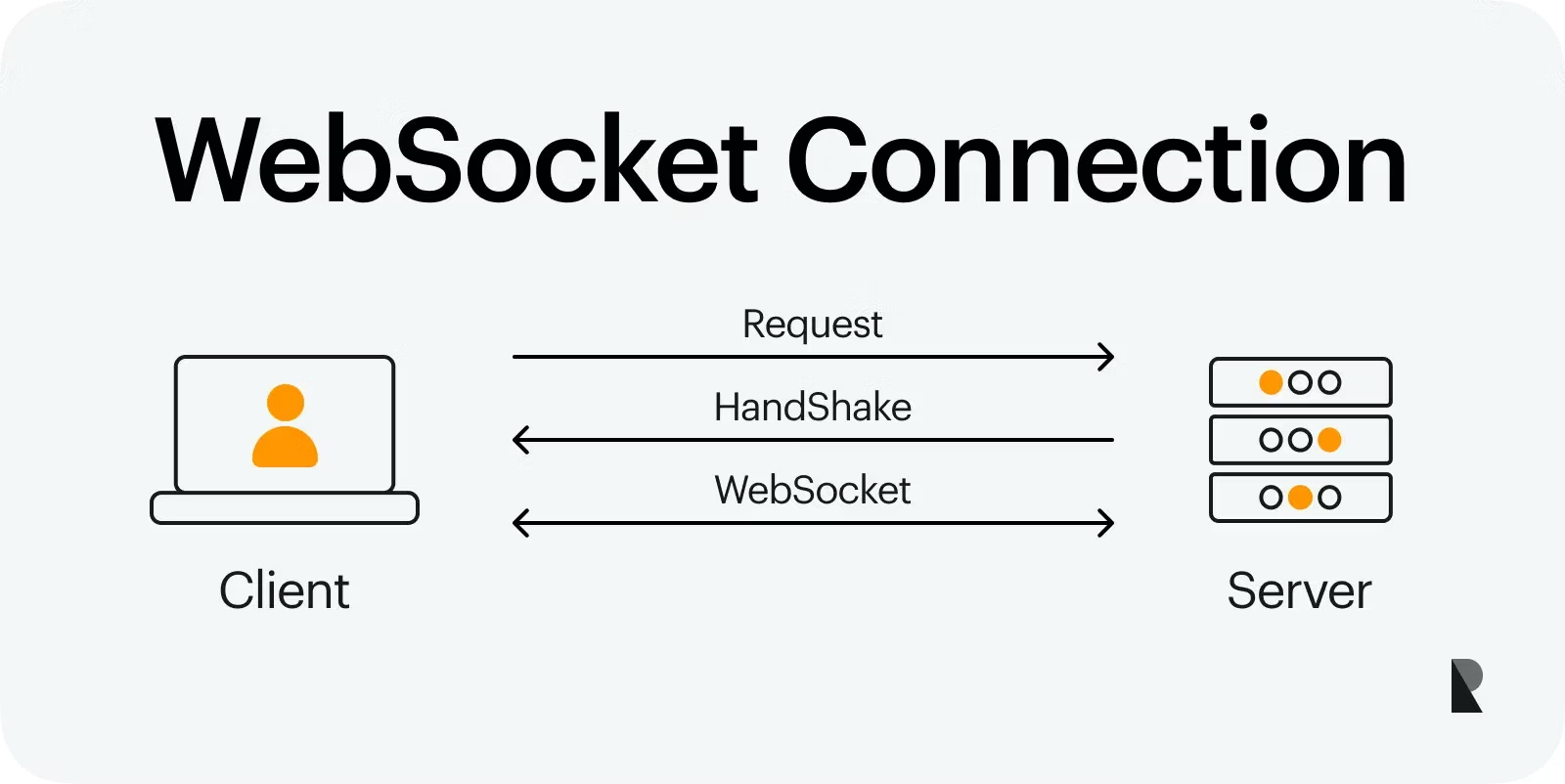
Source: Ramotion Blog
WebSockets replace polling with continuous streams. Instead of asking “any updates?” repeatedly, you subscribe once and receive updates instantly.
For order books, this is critical. Polling via REST burns rate limits and still misses fast changes. WebSocket feeds deliver incremental updates, letting you maintain a live view of depth and liquidity.
The trade-off is complexity: connection management, reconnection logic, backpressure handling, and message parsing. By the way, security differs too—some exchanges require signed subscription messages or authenticated session channels. Protecting long-lived connections is part of the job.
Sandbox / Paper Trading Environments
For an overview of simulated trading and its benefits, you can read our guide to paper trading in crypto. There is a lot more than we can cover briefly here!
But in short, sandboxes let you test strategies without risking funds. The best ones mirror production: same endpoints, authentication, rate limits, and response formats—only the balances are fake.
Order matching models vary between production and sandboxes sometimes. Some simulate fills against live order books; others fill at last traded price (faster, but less realistic). Strong sandboxes also let you test error handling, webhooks, and rate-limit behavior.
Naturally, it comes with limitations: sandbox data may lag behind production, and you can’t meaningfully test large fills without real liquidity. Still, skipping a sandbox when integrating an API is one of the most expensive “shortcuts” in crypto.
Idempotency, Time Sync, and Replay Protection
It’s time to circle back to these safeguards that protect you from network unreliability and security attacks.
Idempotency prevents duplicate orders when your system retries after a timeout. With idempotency tokens, the exchange can reject duplicates and point back to the original request.
Time synchronization reduces replay attacks. Exchanges typically reject signed requests outside a narrow window (often ±5 seconds). That means your system needs accurate time (usually via NTP).
Replay protection can also include nonces or signature components that change per request. For multi-threaded systems, nonce management is not “just a detail.” It’s stability.
Top Crypto Exchange API Providers (2026)
As we covered in detail, APIs fall into different categories that serve different needs. Therefore, choosing a provider is less about “best overall” and more about fit: data depth vs trading access, simplicity vs advanced order types, aggregation vs direct execution.
ChangeNOW
The ChangeNOW crypto exchange API lets businesses add crypto exchange functionality directly into their products. For teams focused on fast integration and monetization, many consider that the ChangeNOW API is the best crypto exchange API when speed and simplicity matter.
The API fits apps, wallets, iGaming platforms, and payment services that need non-custodial swaps. It supports cross-chain exchanges across 1,500+ assets and 110+ networks. Liquidity is aggregated from both centralized and decentralized sources. This setup lets partners integrate swaps without building their own exchange infrastructure or sourcing liquidity independently.
It supports both fixed-rate and floating-rate swaps. Commissions are customizable and start from 0.4%. Fiat on- and off-ramp flows are optional. All assets are inter-exchangeable, so
new pairs do not require separate integrations.
Response time averages around 350 ms. The API works across web and mobile environments. Integration is free. Revenue is generated through a revenue-share model. The service runs at 99.99% availability. Documentation includes clear integration flows and examples, and partners receive 24/7 support, including help with edge cases such as failed or misrouted transactions.
CoinAPI
CoinAPI focuses on unified market data across 300+ exchanges, standardizing formats from Binance, Coinbase, and smaller venues into one structure. If you’re building cross-platform analytics, that normalization saves real engineering time.
Historical depth is a key differentiator for CoinAPI: it provides tick-by-tick archives back to 2016 for major pairs like BTC/USD and ETH/USDT. The free tier caps at 100 daily requests; production typically starts at $79/month.
Documentation is clear, with interactive examples and error code explanations. CoinAPI also offers pre-aggregated OHLCV in 1-second intervals, which reduces compute overhead for charting and modeling. Their reliability is listed at 99.95% uptime based on 2025 monitoring data.
Gemini
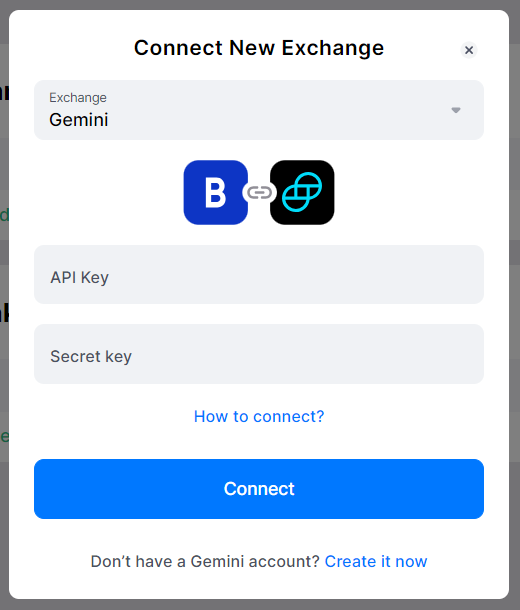
Bitsgap is a service to which users can connect APIs sich as Gemini's for automated trading.
Gemini is positioned for institutional-grade centralized exchange usage, and its API reflects that with strict rate limits and compliance-friendly metadata. Public endpoints run at 120 requests per minute; authenticated endpoints at 600.
For US-focused products, the tax and audit trail formatting is a practical win. Gemini’s market coverage is on the more conservative side with 100+ markets in major assets and stablecoins. Order types include limit, market, immediate-or-cancel, and maker-or-cancel.
Documentation is thorough but not beginner-friendly. Sandboxes are available, which is essential for debugging order logic. A 2025 collaboration with Fireblocks added institutional custody integration through the API.
Kraken
Kraken is another centralized exchange with an API known for reliability and advanced order types. Their infrastructure separates API servers from the retail web interface, helping stability during volatility.
Kraken supports public and private endpoints via REST, and a well-designed WebSocket model with subscriptions that reduce bandwidth waste. Coverage exceeds 200 markets, including margin and futures through separate endpoints. Order types include stop-loss, take-profit, trailing stops, and iceberg orders.
Historical OHLC goes back to listing date with up to 1-minute granularity. Tick data requires capturing WebSocket feeds. The free tier is generous (no request caps, just rate limiting around 15–20 calls per second depending on verification). Documentation is comprehensive but dense, with strong community support and wrapper libraries.
ChangeHero
Instant exchange platform ChangeHero’s API targets projects that need to integrate crypto swaps without excessive complexity. The API covers exchange rate data, orders, and trade history, focusing on swaps between 400+ popular cryptocurrencies.
The ChangeHero API documentation is straightforward with comprehensive detailing and curl examples. As the crypto swap API page claims, the uptime is 99% with latency as low as ~100-500ms response time.
As a crypto swap API, this feature has a different pricing model. The integration is free regardless of processing volume with full API access, and the main benefit from doing so is adjustable partner commission from each transaction. The flexibility does not end there, as partners who integrate the ChangeHero API get extra perks such as dedicated support channels and asset listing priorities.
CoinGecko
CoinGecko is a market data aggregator, not a trading API. You can’t place orders, but you can pull market metrics for 10,000+ cryptocurrencies across 800+ exchanges.
The free tier allows 10–50 calls per minute, no daily caps. Pro starts at $129/month. CoinGecko cross-references multiple sources and flags anomalies, returning market cap, volume, supply metrics, and historical prices (daily granularity on free, hourly on paid).
Documentation is beginner-friendly with a browser-based tester. The trade-off is latency: free tier updates every 2–3 minutes. That’s fine for consumer apps, not for high-frequency execution. Recent additions include DeFi protocol data and NFT floor prices, with a 2026 roadmap mentioning on-chain analytics integration.
Alpaca
Alpaca comes from stock trading APIs and brought that developer experience into crypto. The REST design is consistent, with predictable error handling.
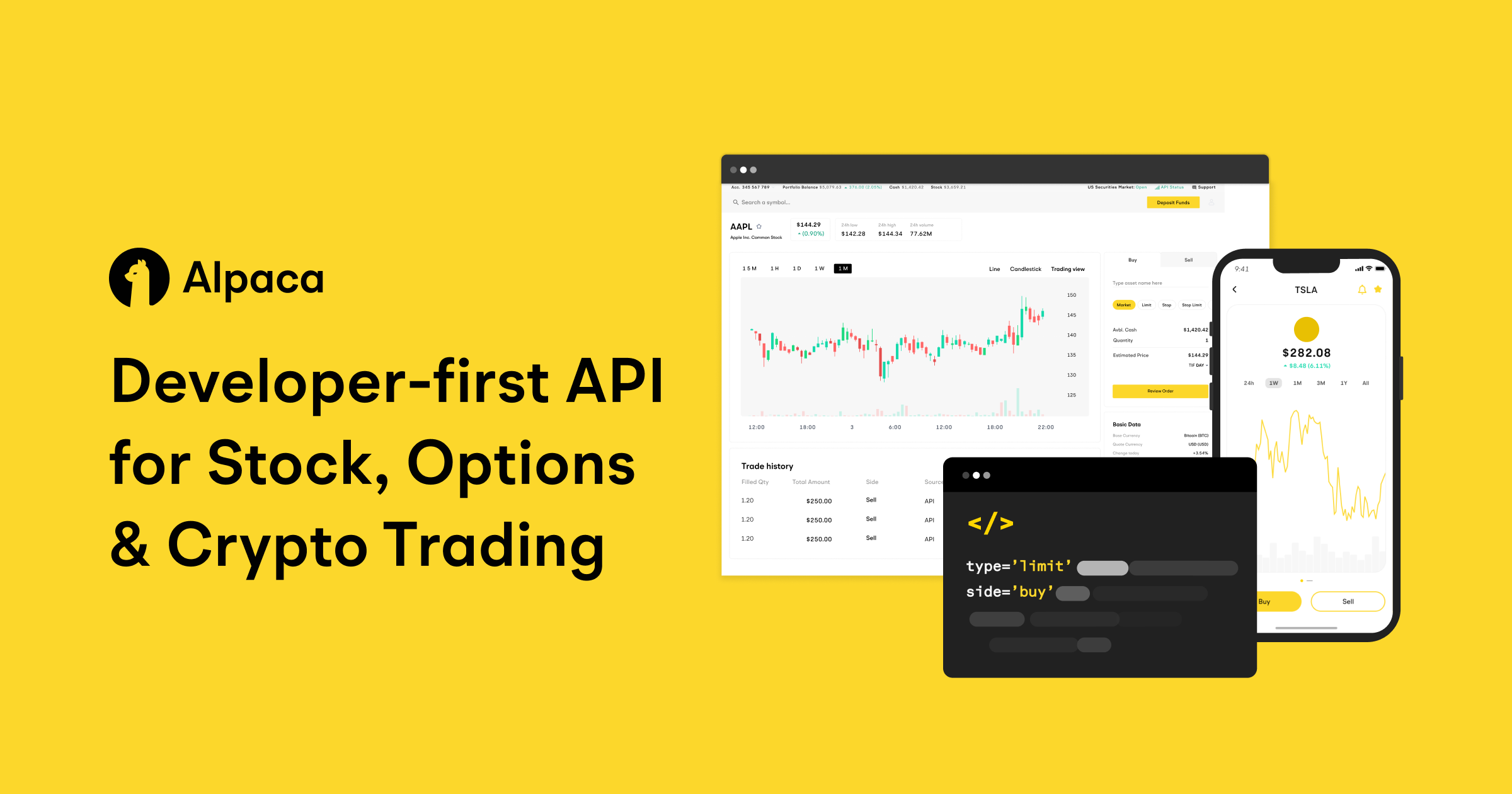
Source: alpaca.markets
Alpaca doesn’t run its own matching engine; orders route through partners like Coinbase and Binance. Execution is typically under 200ms—slightly more latency, but simplified compliance and custody.
The big perk is one unified API for stocks and crypto. Documentation is excellent, with tutorials, sample repos, Postman collections, and an active Discord. Historical crypto data available with this service goes back to 2023. The free tier includes paper trading and commission-free live trading, and 2025 liquidity partnerships improved fills during volatility.
Crypto.com Exchange
Last but not least, Crypto.com exchange offers deep liquidity across 250+ pairs and fee incentives for API traders, including maker rebates up to 0.10% for high-volume accounts.
It provides REST and WebSocket feeds with sub-100ms latency for order updates, plus reconnection and heartbeat support. Authentication uses HMAC-SHA256 signatures. Rate limits are generous (around 100 requests/second public and 15/second private). Historical OHLCV retention goes back to the listing date.
The ecosystem includes CRO token fee discounts (useful, but adds complexity to cost modeling). Late-2025 infrastructure upgrades improved matching speed by 40% and reduced latency during peak hours.
Free vs Paid Crypto APIs
When considering a crypto API, this choice comes up almost inevitably. A very brief comparison is free tiers are great for learning and prototypes; paid plans are about reliability, scale, and legal clarity. And the latter are not always the default choice!
Rate Limits
Rate limits cap request volume over time. Free tiers often sit around 10–100 requests per minute (or ~1,000 daily calls). That’s fine for a personal tracker, although it obviously breaks quickly at scale.
Paid plans raise limits dramatically, sometimes into tens of thousands per minute, with enterprise contracts customizing thresholds. During volatility, shared free-tier capacity can cause failures simply because too many users spike traffic at once.
Data Quality and Coverage
Free APIs do not always bother with timely data, higher granularity, or great historical depth. Sometimes, the downgrade is intentional. Paid APIs offer tick-level detail, deeper order book access, millisecond timestamps, and longer archives.
For purposes that call for automation, precision matters. A bot running on stale data can execute at the wrong prices. An analytics product with incomplete coverage misses trends in smaller venues, and so on.
Commercial Use Rights and Attribution
The choice between free and paid options most often comes down to this factor in particular, even if you do not need top performance from the API. Free tiers often restrict commercial use, require attribution, or forbid redistribution. Paid licenses typically allow commercial usage, white-labeling, and broader product integration.
In short, if your app makes money (tax tools, signals, dashboards), ignoring these terms can become a legal problem fast. Always make sure to read the terms.
SLAs, Support, and Uptime Guarantees
Free APIs rarely promise uptime or support. Paid plans often include SLAs (99.9%+), priority support, and faster incident resolution.

Photo by LumenSoft Technologies on Unsplash
During major market events, this difference becomes painfully real. If downtime equals lost revenue, paid reliability is part of your cost structure, not an optional upgrade.
Pricing Models (Per-Call, Tiered, Enterprise)
Even the paid plans are not all of the same thing. Paid pricing usually comes as:
- Per-call (usage-based, but bills can spike),
- Tiered subscriptions (predictable monthly plans),
- Enterprise contracts (custom SLAs, infra, feeds, and pricing).
Your choice depends on how stable your usage pattern is and how critical uptime becomes as you scale.
Common Crypto API Use Cases
Despite what the guide may have implied so far, crypto exchange APIs aren’t just for trading bots. They power the “plumbing” of modern crypto apps, from accounting to research.
Portfolio Management
APIs turn portfolio tracking into a live dashboard. Tools like CoinTracking or Delta can pull balances and transactions across exchanges, giving you one view instead of five logins.
They also empower real strategies with features such as rebalancing automation. If your target allocation drifts (say, BTC grows from 40% to 50%), an API-connected system can detect it way earlier before you do and execute trades to rebalance. You decide the rules; the system does the repetitive work.
Analytics improve too: realized/unrealized gains, time-weighted returns, and cost basis tracking across venues become measurable instead of guesswork.
Trading Bots and Automation
That being said, bots are absolutely fair game. Bots exist because crypto never sleeps. Platforms like 3Commas or Cryptohopper connect via API and run strategies like DCA, grid trading, and momentum entries.
You define the rules (“buy when RSI drops below 30,” “take profit at 5%”), the bot monitors market endpoints, and it executes through trading endpoints. With global combined spot and derivatives trading volume reaching $18.6 trillion in 2025, automation helps you compete in a market where opportunities can last mere seconds.
Bots also reduce emotional trading. They won’t panic-sell because a candle looks scary. They just follow your logic consistently, for better or worse.
Taxes and Accounting
For users in jurisdictions with less relaxed crypto tax laws, API integration turns the tax season from “CSV chaos” into an automated pipeline. Services like CoinTracker or Koinly import trades, deposits, withdrawals, staking rewards, and airdrops automatically.
This matters because each trade needs timestamps, amounts, prices, and fees for cost basis and capital gains calculations. API-driven tools can generate reports for multiple jurisdictions and methods like FIFO, LIFO, or specific identification.
It also enables real-time PnL tracking throughout the year, not just after you remember to export records.
Research and Analytics
Researchers use crypto APIs to pull structured data at scale: multi-year price history, volume spikes, order book depth, and real-time trade flow.
Historical datasets feed backtesting and modeling; real-time WebSockets reveal order flow and liquidity shifts. JSON output makes it easy to pipe into Python tools like analytics platforms.
Market-Making and Arbitrage (Advanced)
Market makers are participants who post bid and ask orders continuously, adjusting them as the market moves. At the rate crypto markets move, that’s just impossible manually; it’s an API-native strategy.

Arbitrage bots scan price differences across venues and execute near-simultaneously—buy cheaper, sell higher. These gaps can exist for seconds, so automation is mandatory here as well.
The catch for these types of advanced trading is that capital requirements, latency sensitivity, and execution risk are all real. Fees, transfer delays, and partial fills can wipe out theoretical profits. These strategies are powerful, but they demand strong engineering and risk controls.
Technical Considerations
Rate Limits and Quotas
Almost all REST API endpoints enforce rate limits, not to make a profit but to protect infrastructure and distribute resources fairly. Limits vary widely by exchange, account tier, and API key permissions.
Managing your budget for API(s) is as important as knowing the limit. Bots often implement adaptive throttling to spread requests across windows, and resource allocation frameworks to prioritize critical calls (order placement/cancel) over low-urgency tasks (historical pulls). Token bucket models are common.
Different exchanges reset limits differently (rolling windows vs fixed resets), so timing mistakes can lock you out during volatility. So, a protip: using only ~80% of quota builds emergency headroom.
Latency and Data Delays
As briefly mentioned, latency is very effective if you want to lose the edge (irony-free translation: avoid it). WebSockets, as nice as they are, still introduce delays, which are often 50–150ms extra. REST calls can lag 300–500ms during peak traffic.
If, say, you’re arbitraging between Coinbase and Kraken, a 400ms round-trip can be the difference between capturing a spread and catching the knife. Mitigation includes geographic proximity (choosing servers close to you), colocation, and incremental order book updates. Suspect anything? Timestamp everything so you can measure staleness.
Backtesting Data Requirements
Serious backtesting needs more than candles: tick trades, order book dynamics, funding rates, and sometimes liquidation data. Availability varies. Some exchanges offer deep OHLCV; others charge for granular datasets.
Data gaps are particularly dangerous because they make backtests look smoother than reality and therefore, undermine their whole purpose. Mark missing intervals explicitly and test how your system behaves when data disappears.
It should not surprise anyone familiar with blockchains but storage becomes a real constraint: a year of tick data for one pair can be tens of gigabytes. Many teams store long-term aggregates and only keep raw tick data for recent windows.
Error Handling and Retries
Like it or not, API failures are normal: downtime, malformed requests, insufficient balance, nonce conflicts, rate limits. But without robust handling, a single 503 can cascade into a blown system.
Use error categorization: don’t retry permanent errors, do retry transient ones (503, 429, timeouts) with exponential backoff. For order placement, don’t blindly retry after timeouts—query order status first because the first request might have succeeded.
Idempotency is central here. If the exchange doesn’t support it, you’ll need your own deduplication layer.
Monitoring, Alerting, and Logging
Monitoring is what prevents situations you’d describe as “I woke up and everything was broken.” Tools like Prometheus and Grafana track latency, errors, fill ratios, and WebSocket stability.

If you apply them, alerts should be layered (log one failure, notify on repeated failures, auto-pause trading on prolonged unresponsiveness). Structured logging (JSON) makes incident investigation searchable instead of miserable.
Log requests, responses, order lifecycle events, balance changes, and reconnections. Then manage retention—hot logs for ~30 days, cold archive after.
Versioning, Deprecations, and Change Management
It’s worth keeping in mind that exchanges and other platforms change APIs constantly: new versions, response format shifts, endpoint deprecations. Deprecation windows can be short, and some of the more breaking changes can take bots offline.
Use version pinning (e.g., /api/v3/order) and abstraction layers to normalize exchange differences. Libraries like CCXT help, but custom wrappers are often needed for exchange-specific features and API integration details outside standard specs.
How to Choose a Provider
Reliability and Uptime
Uptime is not just a marketing stat. Providers like Binance, Coinbase, and Kraken often advertise 99.9% uptime, but maintenance windows and volatility behavior matter more than the number on the booklet.
Look for granular API endpoint uptime metrics, not just “platform uptime.” Also watch for 429 spikes during peak demand—an API can be “up” but still unusable. The scale of CEX APIs definitely helps reliability, but it also makes them targets for DDoS and regulatory disruptions.
Support Responsiveness
Tech support or even customer service becomes important the first time something breaks at 3 AM. Something else you should know in advance is that exchanges typically prioritize high-volume clients, so response times vary massively.
A simple test: open a pre-sales ticket with a technical question about API integration and see how quickly you get a real answer. If the response is generic or slow now, it won’t improve during an outage.
Outage History and Status Pages
Status pages tell you how providers behave under stress. Look for transparency and post-mortems that explain root causes, not vague “unprecedented volume” statements. Community search (“API outage” on Twitter/Reddit) also reveals incidents that never make it into the official logs.
Community-Vetted Comparisons and Benchmarks
Developers benchmark what documentation won’t admit: real rate limits, regional latency, WebSocket disconnect patterns, and undocumented quirks.
GitHub comparison repos, Stack Overflow threads, Reddit communities, and framework Discords (ccxt, Hummingbot) are practical sources. The best signals come from technical posts with error codes, JSON examples, and reproducible issues.
Coverage: Spot vs Derivatives vs On-Chain
Remember us mentioning that paid plans are not always a must? It comes down to the coverage matching your roadmap more than anything else.
Looking to trade on the spot market and that’s it? You’re in luck. Spot trading is projected to represent 62.6% of API activity in 2026 according to industry research. As a result, spot APIs are usually the most mature.
Derivatives APIs, as capable as those are, are a different beast: there is leverage, funding, liquidation, margin health to consider on top of all else. Some exchanges do spot well but ship underbaked futures endpoints. If derivatives are in your plan, evaluate them early.
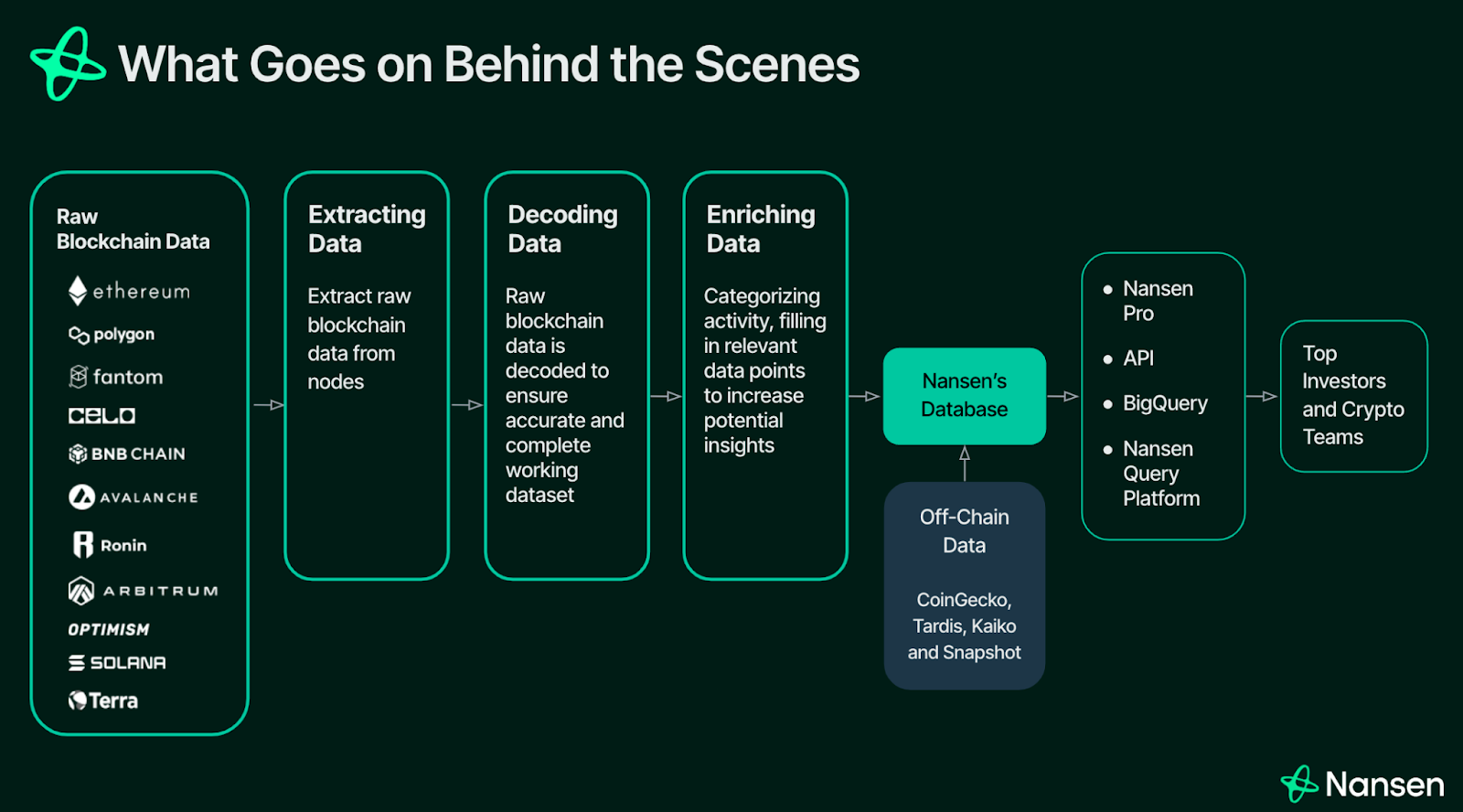
How Onchain Data is Sourced and Used. Source: Nansen
On-chain data is the newer frontier: hybrid endpoints that combine CEX data with DeFi and settlement context. Useful, but keep in mind that it is not the remedy as it adds complexity and new integrity checks, for a start.
Risks, Drawbacks, and Key Considerations (YMYL)
Regulatory and Compliance Risk (KYC/AML, Jurisdiction)
Just because you do not use the user interface, APIs don’t bypass compliance. KYC and AML regulations still apply, and restrictions vary by jurisdiction.
Regulatory conditions also tend to change more quickly than one would expect. When it comes to API integrations, exchanges can adjust API access across regions with little notice. If your business depends on cross-border API integration, you need monitoring for compliance changes and operational flexibility for sudden jurisdiction blocks.
Security Risk (Key Theft, Phishing, Supply Chain)
API keys are not exactly skeleton keys but they might as well be when it’s security we are talking about. If compromised, attackers can trade—and sometimes withdraw—without touching your login session.
Other risks include accidental Git commits, compromised environments, phishing via fake docs or malicious libraries, and supply chain attacks. Mitigation strategies have to answer to each attack vector: environment variables or vaults (AWS Secrets Manager, HashiCorp Vault), IP whitelisting, least-privilege permissions, MFA, and regular key rotation.
Security protocols are not optional when a leaked secret can drain an account in minutes.
Market and Liquidity Risk (Slippage, Volatility)
Even the fastest APIs don’t guarantee stable market conditions. Slippage happens when the market moves between your snapshot and execution, and in high volatility, milliseconds can matter.
Thin order books are arguably even worse. Even modest market orders can move low-liquidity pairs by multiple percentage points. Defensive habits against this include limit orders, depth checks, conservative sizing, and avoiding orders that represent too much of recent volume.
Data Integrity Risk (Bad Ticks, Gaps, Revisions)
Don’t think that just because it’s not wrapped in a slick interface, it’s infallible. API data is best described as “probably correct,” not perfect. Bad ticks can trigger false signals. Data gaps occur during outages. Historical data can be revised. Need we say more?
Protect yourself with outlier detection, redundant sources for cross-validation, and dual timestamps (exchange time and local receipt time). Order book depth can be especially misleading during extreme volatility.
Operational Risk (Outages, Rate-Limit Bans, Account Freezes)
Outages happen—not seldom that it happens at the worst times, like during volatility. Rate-limit bans can lock your IP for minutes or hours. Account freezes can halt operations entirely due to compliance flags or perceived TOS violations.
Again, each situation calls for specific mitigation: exponential backoff, request queuing, failover accounts/providers, and status-page monitoring. You can’t eliminate operational risk; you can only design around it.
Legal, Licensing, and Terms-of-Service Constraints
To add to the legal risks, terms of service are still contracts. Many exchanges prohibit reselling raw market data. Commercial usage may require licenses or enterprise tiers.
Terms can also impose technical constraints (API key limits, prohibited strategies, restrictions on automation patterns). Since terms can change, portability across exchanges is a real defensive architecture choice.
Conclusion
A crypto exchange API is not just a developer feature—it’s the engine room of modern crypto products. REST APIs handle standard requests, WebSocket feeds deliver real-time market data, and FIX protocols support institutional-grade execution. Pick the wrong architecture and you’ll feel it immediately (in latency, missed fills, and operational headaches).
Security protocols are the non-negotiable foundation: API key permissions, IP whitelisting, withdrawal controls, and sane credential storage. Rate limits aren’t arbitrary friction either—they’re guardrails that keep exchanges stable and your bots honest.
The crypto market expansion is essentially an API expansion, too. More users, more instruments, more automation, more demand for stable programmatic access. If you build with portability, observability, and risk controls from day one, by just integrating an API, you’re building infrastructure that can survive real markets.
Frequently Asked Questions
How long does crypto API integration typically take?
Basic REST APIs often take two to five days, assuming your team has experience with API integration. WebSocket APIs usually take three to seven days due to persistent connection handling and reconnection logic.
Well-documented APIs (like Binance or Coinbase) shorten timelines. Sparse documentation can double the work. Also budget time for testing and security audits before putting real funds behind your code.
How secure are crypto exchange APIs?
They can be very secure but if and only if you implement them correctly. Exchanges commonly use features like OAuth 2.0, API Key permissions, IP whitelisting, and HTTPS encryption.
Most real incidents come from user mistakes: insecure storage, over-permissioned keys, or trusting unvetted third-party tools. It’s manageable and preventable: avoid withdrawal permissions unless necessary, whitelist IPs, and keep secrets out of plaintext storage.
What are typical transaction and withdrawal limits?
Limits vary by verification level. Basic KYC regulations often allow daily withdrawals in the $2,000–$10,000 range, while advanced verification can raise limits significantly.
Binance sets base withdrawal limits like 2 BTC per day for verified accounts. Coinbase uses dollar-based tiers that start higher for many users. Account age, trading history, and asset liquidity also affect limits. If you need increases, request them before deployment: approvals can take several business days.
What fees and licensing terms should I expect?
Trading fees typically follow maker-taker models. Binance charges 0.1% standard maker and taker fees (with reductions via BNB discounts and VIP tiers). Coinbase fees range from 0.05% to 0.60% depending on volume. Some platforms like Crypto.com, however, introduce special perks for API traders to incentivize them to amp up their volumes. Withdrawal fees are fixed per asset and change with network conditions.
Licensing is often permissive for normal usage, but reselling raw data usually requires separate agreements (often $500–$2,000 monthly depending on scope).
Are APIs allowed for automated trading in my country?
It depends on jurisdiction. In the United States, automated trading is legal, but exchanges must comply with FinCEN and state licensing rules—so some platforms restrict U.S. customers. Canada generally allows API trading with MSB registration requirements, with extra rules in some provinces.
The European Union permits API trading under MiCA, but residency verification and tax reporting still apply. Some countries restrict or ban crypto trading outright. Verify both exchange legality and how your jurisdiction treats algorithmic trading specifically.
How do I handle taxes when using API-driven trading?
API-driven trading increases transaction volume, which increases tax complexity. In the U.S., crypto is treated as property and each trade can be a taxable event.
The solution is adding even more automation and record retention and other APIs help: use tools like CoinTracking or Koinly early, not after the fact. Export and preserve records before exchange history windows expire (often 90 days to 12 months). Jurisdictions differ, so understand local rules before deploying high-frequency strategies.