
Which Crypto to Buy Today for Short-Term Gains?


Risk Disclaimer:
Cryptocurrency markets remain extremely volatile, and short-term trading carries substantial risk of capital loss. The information presented here is educational, not financial advice from a financial advisor. Always conduct thorough research, assess your risk tolerance, and never invest more than you can afford to lose—this is a high-risk investment category. Past performance doesn't guarantee future results.
Short-term crypto trading in 2026, and this kind of trading in general, demands a different mindset than long-term holding. Traditional investing is mostly about fundamentals playing out over years; short-term gains, on the other hand, come from reading trading momentum, catching price swings, and timing market cycles that can flip within days—or even hours. A crypto coin you buy today might double in a week or drop 30% before recovering. That’s the deal you’re signing up for in a global market that’s now tightly woven into the digital economy.
In practice, 2026 short-term trading is mostly about the leaders, not random newcomers. When these “leader chains” move, they often kick off sector rotation into smaller caps and help signal altcoin season phases where capital broadens beyond BTC—but more on that in the guide itself.
This guide breaks down specific opportunities across different risk categories, helping you decide which crypto to buy today for short-term based on timeframe and risk appetite—and how to form a defensible investment thesis rather than blindly chase hype and set yourself up for failure in this risky environment.
Overview
Short-term crypto trading in 2026 is a venture worth investigating for a few reasons. The market runs 24/7, orders settle quickly, and infrastructure keeps improving across a decentralized system built for transparency. It’s a clear departure from the traditional stock markets with fixed hours and slower settlement; crypto gives you constant access—which is both a gift and a temptation, especially when you’re running real time market feeds and a real-time update workflow powered by live data.

Photo by Jakub Żerdzicki on Unsplash
The appeal is simple: volatility creates opportunity. A coin can surge 15% on a protocol headline, then correct 8% as traders take profit—all within a single session. While usually volatility is described as an inherent risk in the crypto space, savvy traders can use it to their advantage. If you’re comfortable with that pace, those swings become multiple entry and exit points across short timeframes—whether you’re day trading, swing trading, or running scalping strategies.
What makes short-term crypto trading viable usually comes down to three pillars:
- Momentum shifts fast on news cycles, regulatory updates, and technical developments.
- Volume clusters on major exchanges, giving the liquidity needed to execute without massive slippage.
- Speedy blockchain infrastructure supports advanced approaches like arbitrage and perpetual futures trading, often aided by execution automation in professional tooling.
These three factors alone characterize short-term trading as more than speculation: in the right conditions, traders can compound modest moves into meaningful returns—if they manage risk and execution. Naturally, volatility cuts both ways. What trips up newcomers is the part nobody wants to hear: reversals can be sudden, violent, and sometimes unfair. Exchange outages happen. Coordinated sell-offs happen. And smaller caps can still be pushed around by whales. A 20% drop can occur while you sleep because the market never closes.
Trading short-term means you’re not just picking coins but managing intensity at the same time. If you can’t handle fast swings without panic decisions, this strategy will feel like sprinting on ice. Even if you can handle it, you still need rules.
Selection Criteria for Short-Term Picks
Short-term cryptocurrency trading uses a different lens than long-term investing. Long-term asks: “Will this win in five years?” Short-term asks: “Can this move now, and can I get in and out cleanly?” Think of it as a tactical liquidity play in the spot market, built around execution quality and timing.
So what actually matters for short-term plays? Three things: volume, liquidity, and catalysts. You want coins that trade heavily enough to enter and exit without ugly slippage. You want near-term events (upgrades, partnerships, regulatory decisions) that create volatility. And you need a way to track both technical signals and sentiment because short-term crypto moves on momentum as much as fundamentals—especially during macroeconomic event windows, shifting macro condition regimes, and changing interest rate expectations.
Nevertheless, those three criteria can’t tell the whole story. They’re good for preliminary filtering but not a substitute for real due diligence. What else should you be considering on top of these three, then? Let’s discuss each factor in more detail to place them in your framework.
Liquidity (Order Books, Slippage, Spreads)
Liquidity decides whether the price you see matches the price you actually trade at. High liquidity means thick order books: lots of buy and sell orders near the current price. That density lets you enter and exit quickly without your own order pushing price against you.

Photo by Daniele Levis Pelusi on Unsplash
Slippage is what happens when reality disagrees with your expectations. You click “buy,” and your average fill price comes in worse than expected because the order book can’t absorb your size. With thin liquidity, even a $10,000 order can move the price 2–3% before it fills.
Bid-ask spreads tell the same story: wide spreads are a hidden fee. For short-term trading, tight spreads aren’t a nice-to-have—they’re the whole game.
Volatility & ATR Range
Volatility is something long-term investors avoid but it is the fuel for short-term profits. Average True Range (ATR) measures that fuel by calculating the average distance between highs and lows over a set period (often 14 days).
Here’s how ATR becomes useful, in simple terms: it helps you set targets and stops that match the coin’s “normal” movement. If Bitcoin’s 14-day ATR is $2,000, expecting a $5,000 daily move is wishful thinking in these circumstances. How exactly does it help? Many traders place stop-loss levels around 1.5x to 2x ATR from entry to avoid getting shaken out by ordinary noise.
High ATR coins can deliver bigger wins per trade, but they can punish you faster, too. Lower ATR assets may feel calmer, yet they often don’t move enough to justify short-term risk unless you size up (which introduces its own problems). The “right” ATR depends on your position sizing and your stomach.
Volume & Market Depth
Volume shows activity—how much is actually being traded. High volume helps validate moves and supports cleaner execution. Low volume, on the other hand, makes you a target: orders sit unfilled, spreads widen, and a single whale can push price through your stop like it wasn’t even there.
Market depth is the next layer. A coin can show decent volume but still have weak depth, meaning orders are stacked far away from the current price. If you try to execute size, you “eat the book” and your average fill gets worse with every chunk.
For short-term picks, you want both. Look for healthy 24-hour trading volume, observable trade volume, and meaningful trading volume spikes that support the move—not just a lonely candle with no follow-through.
Your ability to maintain chart monitoring discipline often matters more than being “right,” especially when a watchlist shows rapid crypto price shifts. Many traders rely on a simple traffic tracker view highlighting top gaining and top losing assets by 24H change to spot where capital is rotating and where bursts of trading activity are clustering.
Narrative Strength & Sentiment
Narratives are not just for long-term commitments: they drive short-term crypto moves more than fundamentals. When a story catches fire—AI coins, Layer-2s, “the next big chain”—money flows in fast. Strong community engagement can accelerate that flow even when fundamentals aren’t catching up yet.
Social channels often act like a weather forecast. Twitter (X), Telegram, and Reddit can signal sentiment shifts before charts fully reflect them. When Elon Musk tweets about Dogecoin, the market reacts. When a project suddenly dominates discussion threads, you often see price follow. Paying attention to social media trends and trustworthy social signals is part of practical news analysis.
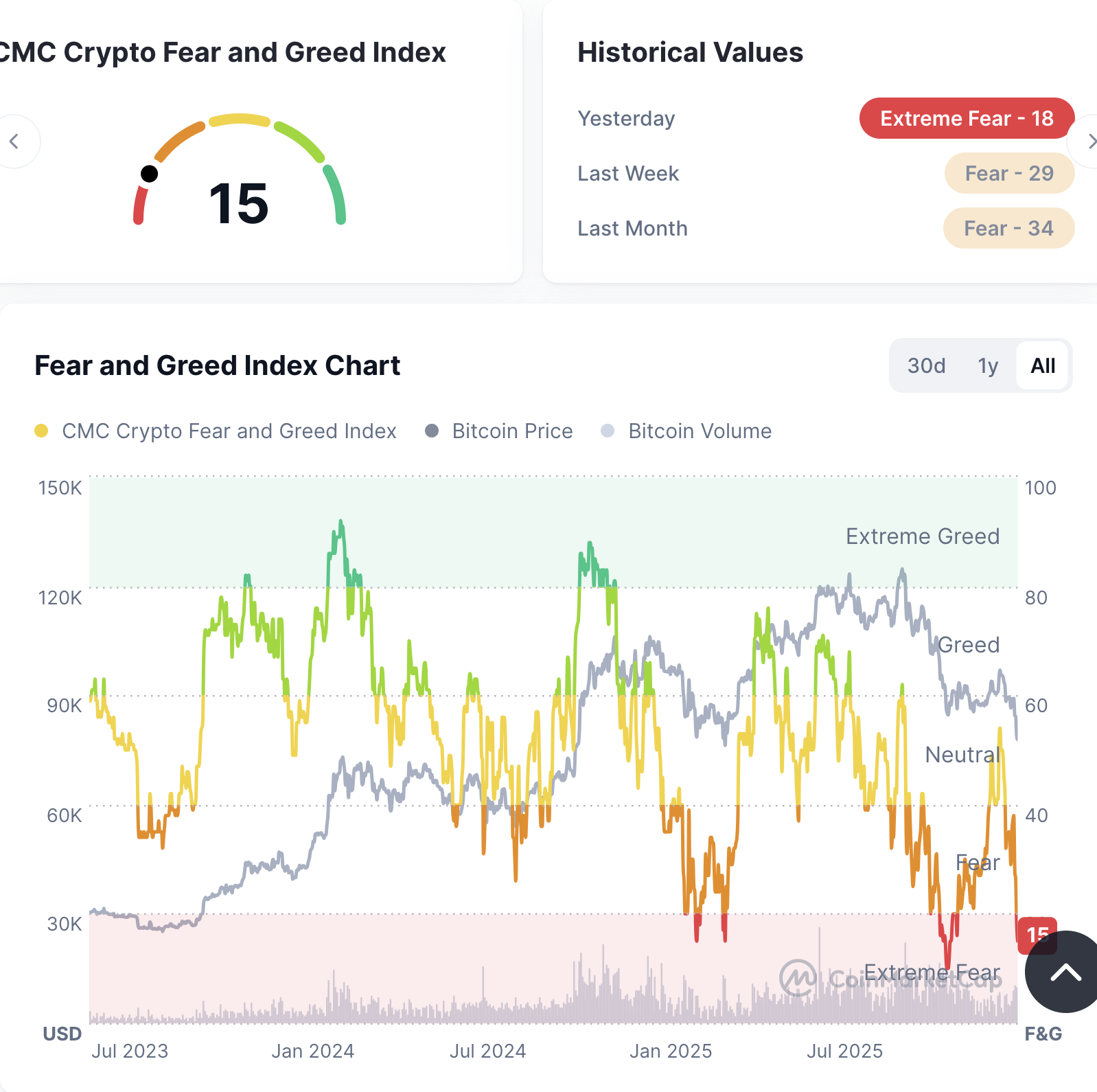
Source: CoinMarketCap
Many traders also watch the Crypto Fear and Greed Index as a sanity check: extreme greed can be the necessary lightning rod to prepare for a pullback, while extreme fear can mean “capitulation is near.” It’s not a trading system by itself, but it helps contextualize risk.
Technical Structure (Support/Resistance, Breakouts)
Technical structure gives you a map. Support is where buying historically shows up. Resistance is where selling historically shows up. They aren’t mystical—just areas where traders have consistently placed real orders, creating a practical technical level framework.
Breakouts happen when price pushes through a level with force, ideally backed by volume. A well-defined technical breakout is often the trigger for short-term entries. Traders commonly watch patterns like ascending triangles, bull flags, and cup-and-handle formations.
The important detail is confluence. One signal is a hint. Several aligned signals are a setup. A breakout plus strong volume plus trend confirmation is usually more actionable than any single indicator alone.
On-Chain Signals
On-chain data shows what’s happening beneath the chart. Wallet distribution can hint at concentration risk: if whales control a large share, price can be pushed around more easily.
Transaction activity can hint at usage, and flows to and from exchanges can hint at intent. Coins moving from cold storage to exchange wallets often point to selling pressure; the reverse can suggest accumulation. These signals aren’t perfect, but they add context—especially when price action feels “too quiet” for the amount of underlying activity.
Near-Term Catalysts (News, Listings, Unlocks)
Catalysts are the calendar events that create short-term volatility. Exchange listings are the classic example. When Binance or Coinbase announces a listing, price often rallies in anticipation of one and once again on the listing day. The tricky part is that many moves happen before the official news hits—so you’re often trading the expectation, not the announcement.
These events can create a news-driven surge, especially when it’s a new listed asset and early order books are thin enough to exaggerate a move.
Token unlocks can work the opposite way. When locked tokens become tradable, supply increases. If demand doesn’t absorb it, price drops. Short-term traders who ignore unlock schedules often learn that lesson the expensive way.
Other catalysts include protocol upgrades, partnerships, founder conference appearances, and regulatory developments. Timing matters. You want to position before the catalyst and exit after the initial repricing using clear take-profit rules. Short-term trading is about anticipation, not long-term storytelling.
Best Cryptos to Buy Today for Short-Term (2026)
Short-term crypto trading is a game of liquidity, volatility, and catalysts. The assets below stand out for trading momentum and near-term opportunity, but they also demand active monitoring and faster decision-making—whether you’re placing a swing trade, running scalp trading, or building a longer swing trading setup.
Bitcoin (BTC)
Bitcoin still anchors liquidity and sets the tone when institutional flows enter the market. Many traders still frame BTC as digital gold with a capped supply, secured by proof-of-work consensus and supported by ongoing crypto mining debates around energy footprint.
Photo by Rostislav Uzunov on Unsplash
Despite being the largest rep of the crypto space, Bitcoin dominates short-term trading volume across major venues, which makes it the most liquid option for fast entries and exits. The important detail is that Bitcoin ETFs are predicted to purchase more than 100% of new Bitcoin supply, creating a narrative of structural demand that can amplify both upside momentum and volatility around flow updates.
In practice, BTC often trades like a macro instrument. ETF flows, Federal Reserve commentary, and inflation data can move it quickly. Many traders also treat BTC as a hedge when altcoin risk unwinds and correlation spikes.
Weekend conditions can matter, too. With different liquidity profiles across the week, some traders watch for weekend dips and then plan exits around the return of heavier Monday flows—especially when sessions overlap and volatility expands.
Ethereum (ETH)
Ethereum continues to dominate smart contract platforms, capturing most DeFi activity and NFT trading volume—classic smart contract dominance and DeFi dominance.
Ethereum also offers the next-best liquidity after Bitcoin, and its short-term momentum often tracks network usage signals—especially gas fees (a proxy for demand to use blockspace). That neatly ties back to Ethereum’s role as a decentralized blockchain network built around smart contracts and decentralized applications.
But here is something interesting: ETH occasionally decouples from Bitcoin during major protocol updates or DeFi bursts. That opens up trades where ETH moves independently rather than simply mirroring BTC.
Regulatory narratives can also matter more than people expect in short windows. For example, new all-time highs for Ethereum are described as expected if the CLARITY Act passes—exactly the kind of binary headline that can drive fast repricing as probability shifts.
Also keep an eye on Layer 2 adoption headlines and institutional staking updates. Both can trigger quick moves, particularly when ETH is used as a base asset for a liquid staking coin strategy tied to proof of stake economics.
Solana (SOL)
Solana has carved out the high-performance lane, attracting traders who prioritize speed and cheaper transactions—and it’s also been described as the most used chain in 2025, with 2025 network usage reported as 2–3x the rest of the industry combined, reinforcing why SOL headlines can translate into outsized short-term price moves.
Solana processes up to 2,600 transactions per second currently, and the upcoming Firedancer upgrade targeting 1 million TPS is a speculative catalyst that can influence sentiment and perceived scaling solution upside.
Traders tend to price the adoption narrative of Solana aggressively when “usage” headlines hit. Regulatory framing can also become a catalyst: new all-time highs for Solana are described as expected if the CLARITY Act passes, which traders may treat as high-impact event risk into votes, hearings, and enforcement commentary.
SOL typically carries higher volatility than BTC or ETH, which can mean larger short-term gains—and sharper losses. The strategy here often leans toward momentum and breakouts rather than slow range trades. When SOL clears key resistance, it has a habit of trending hard. Great for active monitoring but not that great if you can’t watch the chart.
BNB
BNB’s short-term behavior is closely tied to Binance activity, especially new launches via the Launchpad platform, which acts like a project incubator for listings. When Binance announces a new project, traders often accumulate BNB ahead of time to meet participation requirements—using it as a gating token.
That predictable rhythm can create tradable windows if you track the announcement cycle. BNB also experiences volatility around quarterly burn events, where Binance removes tokens from circulation; this burn mechanism is central to BNB’s tokenomics.
Liquidity tends to be relatively strong in BNB markets, and it quite often respects technical levels more cleanly than smaller hype-driven assets. For short-term traders, that “technical obedience” can be a practical edge.
Dogecoin (DOGE)
Dogecoin is what happens when sentiment becomes a trading instrument. It thrives on social momentum, celebrity attention, and viral cycles, making it a pure news catalyst asset. Short-term traders often monitor Twitter trends, Elon Musk’s posts, and dashboards for abrupt shifts in correlated trending coins.
Volatility in DOGE markets can be extreme, with 20–30% daily swings in hype phases. The upside is that DOGE’s massive volume makes it easier to enter and exit without the slippage you’d see in smaller memecoins. The downside is that timing matters more than “perfect analysis.” DOGE can rally violently and then unwind just as fast, which favors traders who can react quickly.
XRP (Ripple)
XRP’s short-term trading is heavily influenced by regulatory developments and partnership headlines involving banks and payment rails. Even with improved clarity, the market still reprices XRP sharply when any new legal or adoption information hits.
Liquidity is also relatively solid (though typically below the very top tier, as one would expect). XRP often consolidates for long stretches and then moves suddenly on a specific trigger. Many traders also watch time-of-day behavior, since trading momentum can intensify during Asian hours when partner-institution narratives feel “closer to the market.”
Cardano (ADA)
Cardano’s deliberate release cadence means fewer surprise catalysts, but that predictability can actually help short-term positioning. When major upgrades are scheduled in advance, speculation often ramps into the date and fades after—classic “buy the rumor, sell the news” behavior. That’s where visible development progress becomes a tradable narrative.
ADA’s volatility is generally more moderate than in SOL or meme coins, which can make it more approachable for lower-risk short-term traders. It also tends to participate when broader altcoin momentum returns—especially when traders rotate after a BTC move.
Shiba Inu (SHIB)
SHIB in particular is one of the crypto assets famous for being driven by social sentiment and speculative momentum. SHIB’s enormous supply (almost 6 hundred trillion tokens) means percentage gains usually come from heavy volume waves, not scarcity narratives.
Short-term opportunities often show up when social chatter spikes around listings or burn announcements. SHIB can look dormant for days, then move 30–50% in a tight window when the crowd shows up. That makes it more of an alert-driven trade than a “set and forget” setup.
ApeCoin (APE)
Source: ApeCoin DAO
APE tends to track Yuga Labs headlines and broader NFT sentiment. When blue-chip collections see volume increases, APE often responds within days, and moves can spill over from major NFT marketplace shifts.
Volatility usually sits between established majors and meme coins. As the market matures, technical analysis can become more reliable than it was during early speculative phases. Watch for ApeCoin DAO votes and metaverse partnership headlines—APE often trades like a high-beta governance token during those windows.
Monero (XMR)
Monero trades differently because privacy is its core feature, which attracts a distinct user base and changes how narratives form. Short-term moves can correlate inversely with enforcement headlines: when governments discuss privacy coin restrictions, XMR can spike on demand shifts; something similar could be observed in January 2026.
Because of limitations caused by the coin’s privacy-preserving nature, XMR’s liquidity is lower than mainstream assets, and execution matters more. On the other hand, that thinner liquidity can create sharper moves that experienced traders attempt to exploit. Technical setups can work, but you have to respect the “unexpected move” risk that comes with smaller market depth.
Risks, Drawbacks, and Key Considerations
Short-term trading isn’t risky just because the price can go down. It’s risky because speed, leverage, liquidity conditions, and infrastructure issues can all compound at the worst possible moment.
Volatility & Gap Risk
Hiccups can still happen even on liquid trading pair routes like BTC/USDT or ETH/USD on a reputable crypto exchange with consistent trading support. It's because BTC, ETH, and altcoins can swing 5–15% in a day—sometimes in hours. That creates “gap risk”: price moves so fast between checks that your next action happens at a totally different level than you planned. Since crypto runs 24/7, global news can hit while you’re asleep.
For example, in May 2024, Bitcoin dropped from $67,000 to $56,000 in less than 48 hours after unexpected regulatory announcements. Traders who set stop-losses at $65,000 found their positions liquidated at $62,000 due to slippage during the cascade. Dogecoin experienced similar whipsaws, losing 18% in six hours after a single influential tweet reversed market sentiment. These aren’t anomalies but a part of the landscape by now.
Leverage & Liquidation Risk
To further accelerate the process and boost results, some risk-taking traders use leverage that magnifies outcomes. All outcomes. A 10x position means a 5% move against you wipes out 50% of your capital. Many platforms offer 20x, 50x, even 125x—numbers that look exciting until you experience a liquidation cascade.
To add insult to injury, liquidation is automatic. If your losses approach your collateral, the exchange closes your position for you—often at the worst price. During the Bitcoin flash crash in March 2025, over $2.3 billion in leveraged positions liquidated in four hours as prices dropped 12%. Traders who were right long-term still lost because short-term volatility hit liquidation thresholds first. This is especially pronounced in futures trading and other derivatives venues.
Slippage, Spreads, and Liquidity Traps

Photo by Artur Opala on Unsplash
Slippage is common in fast markets and mid-cap assets. Even a “reasonable” order can fill across multiple price levels, leaving you with a worse average price than expected.
Liquidity traps are even nastier than that. You see a coin up by 30%, but when you try to exit, the book is thin and your sell order actually pushes the price down by 10–15%. That displayed price was never really yours to take. Majors like Ethereum and BNB tend to behave better in this regard, but even they can experience spread widening during volatility spikes—times exactly when you need clean execution most.
News/Listing Manipulation & Whipsaws
Crypto reacts to news fast, and not all news is real. Coordinated pump-and-dump groups still exist. “Buy the rumor, sell the fact” is practically a market law around listings.
In January 2025, a fabricated rumor about Ethereum ETF approval triggered a 9% spike in 20 minutes, followed by a 12% drop when the news was debunked an hour later. That’s a classic whipsaw: momentum traders get trapped, and both long and short positions can be punished in the same session.
Nevertheless, when the news is legit, short-term wins even more than HODLers. A couple of 2026-specific tailwinds make the short-term landscape especially interesting. Regulatory clarity has improved compared to earlier cycles, with major jurisdictions setting frameworks that reduce uncertainty without shutting down innovation—an important signal of overall regulatory health. The United States, European Union, and key Asian markets have implemented clearer guidelines for exchanges, stablecoins, and digital asset custody, including more explicit compliance requirement language and improved consumer protections. It doesn’t remove risk, but it does make price reactions to regulatory headlines more predictable—especially when routing orders through a regulated exchange (or working with a compliant brokerage) is part of the plan.
Smart-Contract, Bridge, and Exchange Risks
Speaking of exchanges and trading routes, infrastructure risk is real. Smart contract bugs have drained major sums from DeFi protocols before, whether by exploit or accident. Cross-chain bridges that accumulate value are frequent exploit targets, with $2.5 billion stolen from bridge hacks in 2024 alone.
Even large ecosystems carry narrative risk. For a long time, Solana faced criticism for centralization, with 35% of stake reported in top validators—an ongoing sentiment factor that can reprice quickly during outages, performance incidents, or governance debates.
Exchange risk matters, too. Active traders often have to or choose to keep funds on centralized platforms for speed and convenience without acknowledging that while these funds are on an exchange, they do not belong to them. They have no other choice but to trust in the platform’s security, operations, and solvency. History shows, time and again, that trust can be misplaced.
Taxes, Reporting, and Recordkeeping
Every trade can be taxable in many jurisdictions, and even infrequent short-term trading turns taxes into an operational problem. In the United States, for example, gains on holdings under a year are typically taxed as ordinary income (up to 37%), higher than long-term capital gains (often 15–20%).

Photo by Jakub Żerdzicki on Unsplash
It gets messy quickly. If you make 200 trades in a month, you’re tracking cost basis, fees, dates, and holding periods—trade by trade. The IRS has increased cryptocurrency enforcement, and poor reporting can lead to penalties that erase profits. Common issues include unreported staking rewards, misunderstanding crypto-to-crypto taxation (often taxable), and ignoring fees in cost basis. Using dedicated crypto tax software early is not optional if you trade actively—especially around taxation.
Common Mistakes in Short-Term Crypto Trading
No matter what you trade, short-term trading is risky most of the time—but risk can be managed. The path to a more painless experience can start with educating yourself on common pitfalls and learning from others’ mistakes.
Over-leveraging is the fastest way to blow up. Leverage isn’t “extra profit” not even half of the time. It’s amplified fragility, though. Borrowing to control a bigger position means small moves can wipe you out before you even process what happened.
How do you keep the balance? At least initially, stick to lower leverage (2x–3x maximum) until you’ve proven you can trade profitably across different conditions. And never risk more than 2–3% of trading capital on a single leveraged position. In successful strategies, the goal isn’t one heroic win. It’s survival plus consistency.
Emotional decision-making is the quieter account killer. FOMO pushes you to buy after a 50% pump—right into resistance where experienced traders take profit. Panic selling tends to happen at bottoms, not tops. The important takeaway is learning to notice this pattern in yourself. Set entry and exit rules well before the trade, then follow them even when it feels uncomfortable.
Inadequate research is another classic trap. If you don’t know why an asset moves, you’re guessing, gambling, but not trading. And when it comes to the combination of short-term and crypto, the crowd is almost always late. DYOR is not optional unless you want to miss every shot you make.
Technical mistakes, that is, interpreting the signals wrong, tend to pile on. Confusing a bounce for a reversal, ignoring trend changes because a pattern “should” continue, or forcing signals to match your bias—these are expensive habits. Learn to separate noise from structural shifts.
Taxes and compliance mistakes, as mentioned before, are also more common than people admit. Every trade can create a taxable event where applicable. If you don’t track it as you go, tax season becomes a scramble, and surprises are rarely pleasant. Keep records from day one and consult professionals who understand crypto regulations.
Finally, weak risk management ends trading careers quickly. No stop-losses, oversized positions, and “all-in” trades are how small losses become catastrophic ones. Use stop-losses, limit single positions to 5–10% of capital, and treat losses as a normal operating cost. The edge comes from controlling downside, not from pretending downside won’t happen.
Conclusion
Short-term crypto trading is equal parts opportunity and pressure. The same volatility that creates fast upside can also wipe out months of progress in a single bad session. That’s why the focus in 2026 isn’t just “which coin”—it’s liquidity, catalysts, and execution.
The recommended cryptocurrencies—Bitcoin, Ethereum, Solana, plus a selective set of higher-volatility plays—each serve different objectives. Bitcoin is the liquidity anchor; Ethereum gives exposure to DeFi-driven activity; Solana offers higher-beta momentum tied to speed and scaling narratives. In tactical rotations, traders also watch network-specific catalysts on platforms like XRP Ledger that can pull liquidity across sectors quickly.
Markets change, narratives fade, and what worked last quarter can stop working next week. If you treat short-term trading as a skill—start small, keep records, adapt to conditions—you give yourself a fighting chance. If you treat it like a lottery ticket, the market usually collects tuition fast.
Frequently Asked Questions
Is short-term crypto trading risky?
Yes—mainly because volatility, liquidity issues, and emotion collide in real time.
Bitcoin can swing 10% in a day, and smaller altcoins can move 20–30% in hours. That means a $1,000 position can be down $300 before you’ve finished breakfast. Stop-losses help, but they’re not perfect protection during flash crashes when price gaps faster than orders execute.
Liquidity traps are the second danger. A chart can look perfect, but if the token is thinly traded, you may not be able to exit at anything close to the displayed price—especially during panics when everyone tries to sell at once.
The hardest part is psychological. Short-term trading demands rapid decisions under stress, and many traders abandon their plan after a few losses, then “revenge trade” into bigger damage.
Risk management is what separates survivors from casualties: keep risk per trade small, use stops, and accept that losses are part of the process.
How do I identify short-term crypto opportunities?
Look for technical setups supported by volume and a catalyst—ideally all at once.
Breakouts from consolidation are common entry frameworks: price trades sideways, then breaks above resistance with increasing volume. Volume matters because a breakout without participation often fails.
Real-time tooling makes this manageable. Platforms like TradingView let you combine moving averages, RSI, and volume tools to spot confluence. When multiple indicators align—trend support, RSI improvement, and volume expansion—you’re dealing with a higher-probability setup than a single signal.
Catalysts strengthen chart signals. For example, Bitwise Investments’ 2026 predictions suggest the CLARITY Act passing could push Ethereum and Solana to new all-time highs. Whether or not that outcome happens, the narrative probability itself can create tradable repricing as headlines evolve.
Also watch sentiment, but use it carefully. If something is already explosively trending, you may be late.
How much can I realistically earn from short-term trading?
For consistent traders, something like 2–5% monthly can be realistic over time, with occasional 20–30% months during strong trends. Many beginners lose money before they develop discipline and a working system.
A practical example: with $10,000, targeting 3% monthly is $300—about $4,300 per year before taxes if compounding holds. That’s strong performance, but it typically requires a win rate around 55–60% and strict control over losses.
Big months tend to come during strong market trends, when momentum strategies work across multiple coins. But those conditions aren’t constant.
The main account destroyers are predictable: overleveraging, overtrading (fees), and holding losers too long. And yes—most retail traders lose over a 12-month window. The profitable minority treats trading like a business: rules, records, risk limits.
What's the most suitable crypto wallet for short-term trading?
Most short-term traders lean on hot wallets because speed matters when you’re making frequent moves.
Hot wallets (software wallets connected to the internet) are convenient for quick transfers and DeFi activity. MetaMask is common for Ethereum and EVM ecosystems. Trust Wallet offers broader chain support with a clean mobile experience. Many traders also keep a stablecoin balance (like USDC) ready for quick re-entries.
If you trade mostly on centralized exchanges like Binance or Coinbase, keeping funds on-exchange can be practical for speed—fewer transfer delays, faster reaction time. The trade-off is counterparty risk, since you don’t control private keys.
Cold wallets (Ledger, Trezor) offer stronger security but slower and unwieldy operation. They’re usually better for long-term holdings and for storing profits you’ve already taken off the table.
A realistic setup is hybrid: exchange/hot wallet for active trading capital, cold wallet for profits and reserves. And regardless of wallet type: use 2FA, strong unique passwords, and never store seed phrases digitally.