
Crypto Day Trading Strategies to Try in 2026


Key Takeaways
- ☀️ Day trading means engaging in trading that is characterized by frequent transactions and holding assets short-term. Day traders also spend their time monitoring the news and applying technical analysis to markets of interest.
- ☀️ Day trading crypto is not only possible but rather popular thanks to the volatile nature of cryptocurrencies that lets traders score more on short-term price fluctuations. Nevertheless, the most popular assets to day trade crypto are the most liquid and relatively stable: BTC, ETH, and BNB, to name a few.
- ☀️ There are many day trading strategies applicable in crypto: from scalping and range trading to copy trading and high-frequency trading, anything goes! The key is to manage risks and find the strategy that suits you.
Risk Disclosure
High volatility combined with leverage in cryptocurrency markets can accelerate losses dramatically, often exceeding initial capital in minutes during extreme moves. You should expect the possibility of rapid, substantial capital loss when day trading crypto. This content is educational only—not financial, tax, or legal advice—and does not constitute recommendations to buy, sell, or trade any asset. Verify local regulations, exchange margin requirements, and tax obligations before trading; rules vary widely by jurisdiction and platform.
Results Expectations: Process Over Profit
If you want consistency, you measure what you control. That means execution consistency, adherence to risk limits, and decision quality—not daily profit targets.
A trader with a 40% win rate can be profitable if wins are systematically larger than losses through disciplined take-profit and stop-loss placement. Conversely, chasing high win-rates often leads to holding losing positions too long, hoping for reversals.
Measure success weekly through journal reviews: Did you follow your plan? Did you exit when stop-loss levels were hit? Did emotions drive revenge trading after losses? These process metrics predict long-term survival in volatile markets like Bitcoin and Ethereum far better than short-term P&L swings.
Contents
- 1. Crypto Day Trading Basics
- 2. Crypto Day Trading vs Other Trading Styles
- 3. Market Structure Fundamentals
- 4. Timeframes and Charting for Day Traders
- 5. Exchange and Markets for Day Trading Crypto
- 6. Best Coins and Tokens for Day Trading
- 7. Best Crypto Day Trading Strategies
- 8. Tools and Data for Day Trading Decisions
- 9. Risk Management and Key Considerations
- 10. Day Trading Plan and Execution
- 11. Conclusion

Crypto day trading strategies are built around one simple idea: you open and close positions within the same trading session, aiming to capture intraday price moves in spot markets or derivatives like futures and perpetual swaps. Sounds straightforward, but the reality is that execution friction, leverage mechanics, and emotional decision-making can turn a “good setup” into a fast loss if your process is not airtight.
This guide keeps things practical. You’ll learn how to define your trading session, choose instruments, read market structure and liquidity, pick timeframes that match your holding period, compare exchange features that actually affect fills, apply proven intraday tactics, and—most importantly—build risk controls that keep you in the game long enough to improve.
Crypto Day Trading Basics
Day trading crypto involves buying and selling digital assets within the same trading session to profit from short-term price movements rather than long-term fundamental growth. It demands constant attention, rapid decision-making, and a structured approach to risk management—very different from position trading or dollar-cost averaging.
Before You Start
This guide assumes that you have already taken care of these steps before looking into day trading:
- Exchange Account + Security: Active account on a reputable platform with two-factor authentication (2FA) enabled via authenticator app (not SMS).
- Order Type Mastery: Practical understanding of market orders, limit orders, stop-limit orders, and post-only settings to avoid unintended fills.
- Basic Chart Reading: Ability to identify support/resistance zones, recognize candlestick patterns (e.g., doji, engulfing), and interpret moving averages.
- Risk-Per-Trade Definition: Pre-calculated maximum loss per trade (commonly 1% of portfolio) and daily loss cap (typically 3–5%).
- Fee Awareness: Knowledge of maker/taker fee structures on your chosen exchange and how they impact breakeven price calculations.
- Position Sizing Calculator: Spreadsheet or tool to compute exact quantities based on stop-loss distance and risk budget.
- Journaling Method: Digital or physical system to log entry/exit prices, rationale, emotional state, and post-trade analysis for every position.
What counts as a day trade in crypto?
This question would not really occur for a trader in more traditional markets but it is worth asking when it comes to crypto. Crypto markets run 24/7, so you have to define your own “trading day.” Most traders choose a consistent time window—say, 9 AM to 5 PM local time—or align with peak liquidity hours when US and European markets overlap.
The critical rule is: positions must be opened and closed within your chosen session window. “Flat by end of session” means you hold no open positions when your trading day concludes, regardless of the calendar date. Some traders prefer “flat by calendar day,” closing all positions before midnight UTC. Pick one definition and stick to it—this single habit prevents unintended overnight exposure and protects the rest of your risk framework.
Markets you can day trade
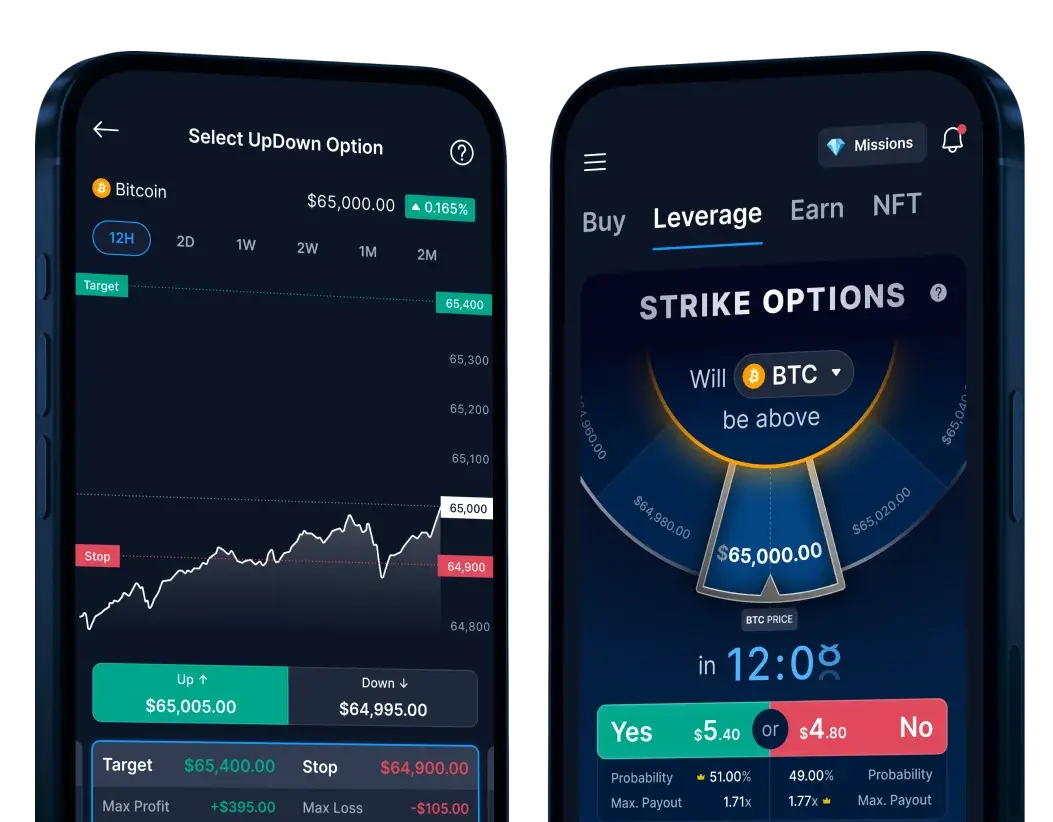
The instrument you select changes your costs, risk profile, and even the mistakes you’re likely to make:
- Spot trading: You purchase actual Bitcoin or Ethereum and sell them later the same day. No leverage, no liquidation risk, but you need sufficient capital and you pay fees twice per round trip.
- Perpetual futures: Contracts that track spot prices without expiration dates. They offer leverage (amplifying both gains and losses), introduce funding rates, and carry liquidation risk.
- Margin trading: Borrowing funds from the exchange to increase position size on spot markets. You pay interest on borrowed capital, and positions can be liquidated if collateral drops below maintenance requirements.
- Options: More complex derivatives that grant the right (not obligation) to buy or sell at a specific price. Premium costs and theta decay make them less suitable for pure day trading beginners.
Core mechanics day traders must understand
Every intraday position lives or dies by a few market mechanics:
- Volatility: Bitcoin and Ethereum regularly move 3-8% daily, creating profit opportunity and rapid drawdowns.
- High liquidity: Deep order books help you enter and exit without significant slippage. Major pairs like BTC/USDT typically behave well; small altcoins often don’t.
- Spread: The bid-ask gap. Tighter spreads reduce implicit costs; wider spreads quietly drain your edge.
- Slippage: When orders fill worse than expected, often during fast moves or thin liquidity.
- Order book depth: How much buy/sell volume exists at different price levels. Thin books amplify price impact.
- Fees: Maker fees often range 0.02-0.10%, taker fees 0.04-0.15%. Multiple round trips per day can become a meaningful drag.
- Leverage and liquidation: Borrowed capital magnifies returns but introduces tail risk. If price moves against you beyond margin thresholds, the exchange force-closes the position—often at the worst time.
Day trading becomes something you can improve at when it stops being impulsive. Locking in all crucial parts of the process becomes your edge: outline the setup criteria, entry triggers, exit logic and position sizing. What are the exact market conditions, i.e. levels, patterns, and momentum context, when you trade? Which specific signal initiates a trade? Are your stop-loss and take-profit levels defined before entry? How much risk can you take per trade so losing streaks don’t end your account?
Who should not day trade crypto?
Some constraints make intraday trading a poor fit, even with motivation. If you can’t monitor positions during your session; volatility causes stress that pushes you into premature exits or delayed stop-outs; you rely on leverage above 5x without proven profitability at lower levels, or you won’t test a plan or track trades consistently, then it isn’t for you. If any of these are true, swing trading or systematic investing will likely fit your reality better.
To get value from the rest of this guide, a few commitments are assumed:
- You understand losses are possible—especially early.
- You will paper trade first and log at least 50 consecutive trades.
- You will track every trade with reasoning and emotional state.
- You will enforce predefined daily loss limits to avoid revenge trading.
Crypto Day Trading vs Other Trading Styles
Just like day trading in general, in crypto this strategy is defined by its intraday execution window and its reliance on short-term price movement rather than long-term fundamentals. Comparing it to other styles helps you match the approach to your schedule, fee tolerance, and appetite for rapid decision-making.
| Style | Day Trading | HODLing | Swing Trading | Scalping | Arbitrage |
|---|---|---|---|---|---|
| Typical Holding Period | Minutes to hours (closed same day) | Months to years | Days to weeks | Seconds to minutes | Seconds to minutes (cross-venue) |
| Primary Edge Source | Intraday momentum, breakouts | Long-term trend, fundamentals | Multi-day momentum, mean reversion | Spread capture, micro-moves | Price discrepancies between venues |
| Trade Frequency | Multiple per day | Rare (buy-and-hold) | Few per week | Dozens to hundreds per day | Variable (opportunity-driven) |
| Charting Dependence | High (1H, 15m, 5m) | Low (weekly/monthly checks) | Moderate (daily, 4H) | Very high (1m, 5m) | Low (order book monitoring) |
| Fee Sensitivity | Moderate: taker fees stack | Low | Low to moderate | Very high | High |
| Slippage Sensitivity | Moderate | Low | Low | Very high | High (partial fills, slippage) |
| Volatility Exposure | Full intraday swings | Full cycle drawdowns | Multi-day price swings | Minimal per trade | Minimal (hedged positions) |
| Tooling Needs | Live charts, alerts | Basic wallet, price tracker | Daily chart reviews, alerts | Fast execution, API/bots | Multi-exchange API, fast transfers |
| Tax/Record Burden | High (every trade taxable) | Low (few events) | Moderate | Very high (hundreds of events) | High (complex cross-venue logs) |
| Best Market Conditions | High liquidity, clear trends | Strong fundamentals, adoption phase | Trending or range-bound periods | Deep order book, stable spreads | Inefficient markets, low transfer costs |
| Common Failure Modes | Overtrading, stop hunts | Panic selling, no exit plan | Holding through reversals | Spread erosion, execution delays | Transfer delays, funding rate shifts |
To summarize, if you can monitor markets for hours and execute quickly, day trading or scalping may fit. If you can only check in once or twice a day, swing trading is usually a better match. If you want minimal decision-making and can handle multi-month drawdowns, HODLing has far less operational stress. Moreover, if you have API access and can automate, arbitrage can work—but only when fees and transfer times don’t erase the spread.
HODLing
As opposed to day trading, HODLing (which is just bastardized “holding”) relies on thesis changes over weeks or months, not intraday support/resistance breaks. The tradeoffs versus day trading are clear:
- Opportunity cost: You give up intraday compounding.
- Drawdown tolerance: You must endure full cycle drawdowns.
- Lower fees and operational overhead: Fewer transactions and less screen time.
Incidentally, tax reporting is also simpler: fewer taxable events and less cost-basis complexity.
Swing Trading
Swing trading holds positions for days to weeks, which changes how you treat intraday noise. Stops are wider, chart checks are less frequent, and spreads and execution speed matter less than in day trading.
It suits traders who want momentum exposure without constant monitoring—often the most realistic “active” style for busy schedules.
Scalping
On the other side of the frequency scale, scalping targets small moves on 1-minute and 5-minute charts, so friction becomes everything. Fees, spread, and slippage can erase the entire edge.
A 0.15% scalp edge can vanish after two taker fees, the spread, and minor slippage. That’s why scalpers focus on maker execution, stable spreads, and strict trade selection.
Scalping requires deep liquidity and a stable order book. Without depth near mid, consistent prints and limited gaps, execution—not analysis—kills performance.
Arbitrage
Arbitrage aims to capture cross-venue discrepancies, but it is far from risk-free.
Transfer delays, network fees, settlement price movement, partial fills, and venue downtime can flip a “locked” profit into a loss.
Common variants include cross-exchange spot arbitrage, triangular arbitrage, spot–perp basis and funding capture, and DEX–CEX price discrepancy trades. Each requires specific tooling and careful operational controls.
Market Structure Fundamentals
Market structure determines execution quality. In crypto day trading, volatility, liquidity, slippage, and spread are the mechanics that decide whether your planned entry is tradeable in real life.
Volatility
Volatility sets stop distance, position sizing, and the odds your stop gets hit by normal noise.
Practical volatility tools to measure volatility include:
- Average True Range (ATR) on intraday charts for stop placement.
- Rolling percentage returns over the past 20 or 50 bars.
- Range expansion vs. contraction.
- Inside bar compression and breakout candles.
When volatility rises, stops generally need to widen to avoid random stop-outs. In addition, wider stops require smaller position sizes to keep dollar risk constant. You’re always choosing between tight stops with frequent stop-outs or wider stops with smaller size—there is no free lunch.
What signals regime changes? Quite a few things: opening range breaks, volume spikes on small price moves, funding-rate-driven squeezes, consecutive inside bars breaking, and even session transitions (Asian-to-European, European-to-US).
Liquidity

Liquidity determines how easily you can enter and exit without moving the price.
Order book depth is passive liquidity and can disappear; traded volume reflects executed liquidity. A simple heuristic: if your position is more than 10–15% of typical 1-minute candle volume, expect meaningful slippage.
Liquidity clusters around round numbers (a psychological effect of traders placing orders there), prior highs/lows, and volume-weighted average price (VWAP). Once a pocket is consumed, price can move fast through gaps until it hits the next cluster. This is why breakouts can accelerate—and why exits into the next pocket are often more realistic than “hoping for continuation.”
Slippage
Building on that, slippage is the hidden tax that turns backtests into disappointments.
Its primary drivers are market impact (your size vs. depth), spread costs and volatility during order transmission.
Most of the time, its impact can be reduced by preferring limit orders in normal conditions, splitting orders, avoiding low-liquidity hours altogether, watching top-of-book depth, using post-only where appropriate, or respecting partial fill risk.
Spread
Spread is the cost of immediacy. Quoted spread is what you see. Effective spread includes fees and slippage. A 0.02% quoted spread can become 0.07%–0.12% effective after taker fees.
Spread widens with news spikes, exchange instability, in low-liquidity pairs, with sudden volatility bursts, or funding rate resets in perpetual futures in particular.
With wider spreads, momentum and breakout systems can still work. Tight targets (scalping/mean reversion): wide effective spread can make the strategy unviable.
Timeframes and Charting for Day Traders
There is no one-size-fits-all in day trading when it comes to timeframes. They are a decision about how many signals you will see, how tight your stops can realistically be, and how fast you need to react.
Choose the 5-minute chart when you intend to enter and exit within 15–30 minutes. Choose the 15-minute chart when you want cleaner structure and fewer false breaks. Avoid the 5-minute chart during low-volume periods; avoid the 15-minute chart during explosive breakouts when delayed confirmation costs you entry quality.
5-Minute Chart
The 5-minute chart is mainly for execution timing, scalping-style trade management, and trailing stops. According to Gemini's cryptopedia, 5-minute charts anchor scalping strategies that prioritize rapid trading entry and trading exit cycles.
Your 5-minute entry checklist should include: a clear level, a single trigger condition (break-and-retest or rejection wick), and a price-based invalidation point for the stop-loss.
Edge case warning: low-liquidity altcoins can print misleading wicks due to wide spreads and gaps. If daily volume is under $500,000, expect slippage to consume your edge.
15-Minute Chart
The 15-minute chart reduces noise and helps prevent overtrading. It’s often the better primary chart for momentum and range boundaries. According to Kraken's day trading strategy guide, the 15-minute to 1-hour trading time frame aligns with momentum trading approaches that balance signal quality with execution opportunity.
It still needs higher-timeframe context. A perfect 15-minute breakout can fail immediately if it runs into 4-hour or monthly resistance. Always cross-check.
Multi-Timeframe Alignment

Use exactly three layers:
- 1-hour bias + key levels
- 15-minute setup confirmation
- 5-minute trigger + stop definition
Then lock your discipline: once in a trade, don’t hunt for excuses on random timeframes. That habit is the quiet killer of consistency.
Exchange and Markets for Day Trading Crypto
Your exchange and market choice likewise shapes every trade’s cost and fill quality. Beyond spot vs derivatives, focus on what actually affects P&L: jurisdictional access, proof-of-reserves or solvency signals, uptime during volatility, advanced order types, and liquidity where you actually trade (not just on BTC).
Spot markets suit traders who want direct ownership and no liquidation risk. Screen venues using order book depth, daily volume, spread behavior, and stablecoin-quoted pairs for fast capital deployment.
Perpetual swaps introduce funding rates, contract specification risk (inverse vs linear), and liquidation mechanics driven by mark price vs last price. If you are using leverage, you must understand how stops trigger on your venue.
Total fee-related costs are calculated as: maker/taker + spread + slippage + funding + non-trading fees. It may not be evident but “cheap” fee schedule is meaningless if the order book is thin.
When it comes to order types, market, limit, stop-market, stop-limit, take-profit, OCO, post-only—each has a best use case and a failure mode. Two common traps: stops triggering on outlier prints (mark vs last price), and stop-limit orders not filling in cascades.
Best Coins and Tokens for Day Trading
Before trading any coin, measure tradeability: volume vs your size, spread during your hours, depth near price, empirical slippage, and derivatives availability/funding stability. Luckily, the staples of this trading strategy are well-known and generally work well for most setups due to scoring high across the board.
Bitcoin
Bitcoin (BTC) is usually the cleanest execution environment.
- Volatility Behavior: Bitcoin's volatility compressed significantly heading into 2026, with average daily price movements of approximately 3% compared to the 5-7% ranges seen in previous bull markets, according to Kraken's market analysis.
- Main Pitfalls: liquidation cascades and news-driven spread expansion.
- Filter: use BTC as a risk-on/risk-off signal for altcoin longs.
Ethereum
Ethereum often moves in “impulse + mean reversion” patterns and reacts strongly to ecosystem catalysts. Watch funding stability. Expect even more false breaks than BTC.
ETH/BTC Strength Filter is a handy metric to confirm relative momentum.
Altcoins
Previously, we have highlighted BNB, XRP, DOGE and SOL as prime candidates for this strategy, and the recommendation stands the test of time in 2026.
Large-caps like these can be tradeable with strict liquidity thresholds; if you are willing to dabble in mid/small-caps, mind that they require wider stops, smaller size, and respect for wick risk. Event-driven altcoin trades demand hard caps on risk and aggressive scaling.
Stablecoin Pairs
It may come as a surprise if you are not familiar with short-term trading but stablecoin pairs dominate intraday crypto for practical reasons: simple accounting and usually better liquidity. Stablecoin activity now represents over 50% of total transaction volume across major blockchains, with the combined market capitalization of stablecoins exceeding $220 billion in early 2026, according to Binance Research.

Stablecoin Risk Management: diversify quote exposure, avoid holding large idle balances on one venue, and watch for persistent cross-venue stablecoin price divergence.
Best Crypto Day Trading Strategies
Strategy selection is a market-structure decision first, and a personal preference decision second. How do you match the regime to approach?
| Market Regime | Best-Fit Strategy | Key Confirmation Metric |
|---|---|---|
| Strong trending | Trend Following, Momentum Trading | EMA alignment + higher highs/lows |
| Range-bound consolidation | Range Trading | Multiple touch rejections at boundaries |
| High-impact news event | News Trading | Scheduled release + pre-marked levels |
| Low liquidity hours | Arbitrage | Spread stability + correlation above 0.7 |
| High volatility expansion | Breakout Trading, Momentum Trading | Volume expansion + volatility compression exit |
| Mean-reverting chop | VWAP Trading | VWAP slope flattening + POC acceptance |
Scalping is small targets, fast exits, execution sensitivity.
- Best market conditions: tight spreads, stable depth, no imminent news.
- Primary signal(s): order book imbalance + 1-minute/5-minute patterns.
- Stop placement: 0.3-0.5% beyond entry.
- Take-profit logic: 0.2-0.4% targets, partials, tight trail.
- Do NOT scalp when spread exceeds 0.1% or when major releases are near.
Range trading works when boundaries are respected, signaled by multiple touches and clear acceptance/rejection rules. Ensure range height is large enough to beat spread + fees (2% BTC, 3% ETH minimum).
Momentum trading needs an impulse and volume expansion. Avoid late entries, give preference to consolidation continuation or EMA pullback entries.
When trend following, ride structure with disciplined trailing. Enter pullbacks to key trend EMA or flags; exit on structure breaks, not hope.
The golden rule of breakout trading: compression → expansion. It means volume expansion confirms validity. Retest entries often improve risk-reward.
News trading requires preparation plus restraint. Do not trade the first candle; confirm direction, wait for spread normalization, prefer limits. If spread exceeds 0.3% or depth evaporates, step away.
If you are VWAP trading, this metric acts like a benchmark and a map. Use slope for bias, trade trend pullbacks or mean reversion when extension is clear. In this strategy, it’s best to avoid the first 30 minutes and major news spikes.
Tools and Data for Day Trading Decisions
Technical Indicators
Indicators help when they are assigned distinct jobs:
- Trend indicators (exponential moving average (EMA) etc.): direction + dynamic levels.
- Momentum indicators (RSI, MACD): acceleration/exhaustion.
- Volatility indicators (Bollinger Bands, ATR): compression/expansion + stop sizing.
- Level indicators (Fibonacci retracement): mapped zones with confluence.
- Participation indicators (Volume): validates moves.
Relative Strength Index (RSI), for instance, is a momentum oscillator that behaves differently in ranges vs trends.
- In ranges: 70/30 can work for mean reversion when structure is clear.
- In trends: treat 50 as the regime line; pullbacks to 40–50 can be continuation zones in uptrends.
Critical rule: pair RSI with a trend filter like a 50-period or 200-period EMA.
EMAs define bias, act as dynamic support/resistance, and clarify pullback vs breakout confirmation.
Warning: low-liquidity whipsaws can slice through EMAs without real trend change—look for volume and higher-timeframe confirmation.
RSI’s best companion, Moving Average Convergence Divergence (MACD) is best for momentum shift confirmation and divergence as a risk flag (not a trigger).

Bollinger Bands have two main uses:
- Squeeze → expansion (requires direction filter).
- Band rides in trends (don’t fade a trend just because price touches the outer band).
Fibonacci Retracement works when the impulse leg is clear and confluence exists (structure, EMAs, VWAP, profile nodes).
Volume is the reality check. Use relative volume vs a baseline and cross-venue comparisons to reduce distortion risk.
Fast sentiment drives short-lived volatility; slow sentiment shapes bias. Treat sentiment as a filter that must align with price structure and volume, not as a standalone trigger.
Risk Management and Key Considerations
In any case, capital preservation is the job; profit is the byproduct of doing the job well.
Trade-level controls such as position sizing, stop-loss order, take-profit level protect individual positions, and account-level controls like drawdown limits, leverage caps, concentration rules protect your trading business.
Position Sizing uses two common models:
- Fixed-fraction: risk 1–2% per trade.
- Volatility-aware: use ATR to scale size down when volatility rises.
Remember: calculate risk size (stop distance × position size). Moreover, account for fees and slippage—your “$200 stop” can become a $220 loss in fast conditions.
Stop-loss has three main archetypes: structure-based, volatility-based, time-based.
Avoid obvious clustered stop placements. Combine structure with a volatility buffer when possible.
For Take-Profit purposes, scaling out is a practical way to reduce stress and lock gains while still giving trades room. Define targets before entry and avoid moving them emotionally.
Risk-Reward Ratio only matters with win rate and execution quality. Don’t force targets that don’t exist on the chart.
Leverage is a magnifier, so isolated vs cross margin, maintenance margin, and mark/last price mechanics must be understood before using leverage. Doubling down with leverage after losses is the classic account-ending behavior.
Drawdown limits should use daily, weekly, and consecutive-loss circuit breakers. Once triggered, stop. Journal. Reduce size next session. Psychological drawdown matters as much as equity drawdown.
Avoid portfolio concentration with stacking correlated exposure and pretending it’s diversification. BTC and ETH longs at the same time are usually one bet with two labels.
Oversizing, widening stops mid-trade, revenge trading, over-leveraging, ignoring execution costs, trading illiquid altcoins, ignoring funding, and skipping records are all too common mistakes to be wary of.
Day Trading Plan and Execution
A trading plan is what you lean on even (and especially) when your emotions are loud. It turns strategy into repeatable decisions.
Setup Checklist
Use three pass/fail gates: market conditions, account/exchange conditions, and trader conditions. If one gate fails, you don’t trade. This is how professionals keep consistency when the market tries to pull them into chaos.
Entry Rules
On top of that, use another three-layer entry gate:
- Regime filter
- Setup trigger
- Execution confirmation (liquidity, spread, volume)
Write entries using a simple IF/AND/THEN grammar. It keeps you honest.
Exit Rules

Define protective exits and profit exits before entry. Stops can only move to reduce risk—never away.
Leverage-Loss Example:
A 5% adverse move on 10x leverage results in a 50% loss of capital. This is why hard stops and take-profit levels exist as non-negotiable rules, not suggestions. Consider the mathematics:
- At 10x leverage, a 5% adverse move results in a 50% account loss
- At 5x leverage, a 10% adverse move results in a 50% account loss
- At 20x leverage, a 2.5% adverse move results in a 50% account loss
Leverage magnifies both gains and losses. The math is unforgiving: a 50% loss requires a 100% gain to recover.
Circuit breakers for daily limits keep you solvent and mentally stable. It’s a good rule to never risk more than 1–2% of capital on a single trading day.
By the way, a trading journal is your skill engine. Use it to track triggers, fills, slippage, adherence, and market conditions. A losing trade with perfect adherence is a success; a winning trade with rule violations is a problem.
It also helps with the review process. Daily review protects consistency, weekly review improves strategy. Should you change it, do it one variable at a time.
Conclusion
Day trading crypto in 2026 is about building a system that you can execute the same way on good days and bad days. Master one market and one primary timeframe, document one strategy with explicit entry, stop-loss order, and take-profit level logic, enforce a hard daily loss limit and keep track of execution details, and you already have a good start.
Subscribe to our Twitter, Facebook, and Telegram for a daily stream of educational content from the ChangeHero blog and crypto news updates from our team.
Frequently Asked Questions
Is Day Trading Crypto Legal?
Day trading cryptocurrency remains legal in most jurisdictions, though specific products and trading methods face varying restrictions depending on your country of residence and the regulatory framework governing digital assets. Trading spot cryptocurrencies like Bitcoin and Ethereum is generally permissible, but derivatives products—including futures, options, and leveraged tokens—may be restricted or outright banned in certain regions.
How Much Can a Crypto Day Trader Make?
Returns vary widely and depend on volatility, cost structure, leverage, and execution discipline. Focus on expectancy:
Expectancy = (Win Rate × Average Win) − (Loss Rate × Average Loss) − Total Costs per Trade
What Are the Best Indicators for Crypto Day Trading?
Use a clean system: one trend indicator, one momentum indicator, and one volatility/range tool.
Examples include RSI thresholds, Bollinger Bands, and Fibonacci retracement levels.
Avoid stacking redundant indicators. Your workflow should stay intuitive and clean.
What Is the Best Timeframe for Crypto Day Trading?
Match timeframe to strategy: scalping needs 1-minute or 5-minute charts, and momentum trading relies on 15-minute, 1-hour, 4-hour charts. Multi-timeframe structure provides higher timeframe bias, lower timeframe execution.
How Does Market Sentiment Affect Crypto Day Trading?
Sentiment can create the volatility day traders need, but it’s tradable only when it persists and aligns with price structure and volume.
Key sources: social metrics, derivatives positioning (funding rates, open interest), and on-chain flows. Treat sentiment as an operational filter—never as a standalone entry signal.